On This Page
Description
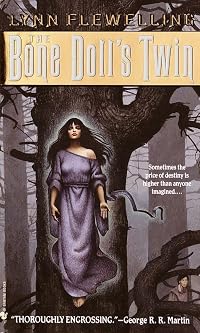
HTML:Sometimes the price of destiny is higher than anyone imagined....Dark Magic, Hidden Destiny
For three centuries a divine prophecy and a line of warrior queens protected Skala. But the people grew complacent and Erius, a usurper king, claimed his young half sister’s throne.
Now plague and drought stalk the land, war with Skala’s ancient rival Plenimar drains the country’s lifeblood, and to be born female into the royal line has become a death sentence as the king fights to ensure show more the succession of his only heir, a son. For King Erius the greatest threat comes from his own line — and from Illior’s faithful, who spread the Oracle’s words to a doubting populace.
As noblewomen young and old perish mysteriously, the king’s nephew — his sister’s only child — grows toward manhood. But unbeknownst to the king or the boy, strange, haunted Tobin is the princess’s daughter, given male form by a dark magic to protect her until she can claim her rightful destiny.
Only Tobin’s noble father, two wizards of Illior, and an outlawed forest witch know the truth. Only they can protect young Tobin from a king’s wrath, a mother’s madness, and the terrifying rage of her brother’s demon spirit, determined to avenge his brutal murder.... Literature. Fantasy. Fiction. show less
Tags
Recommendations
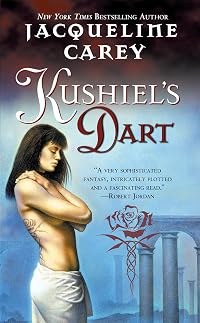
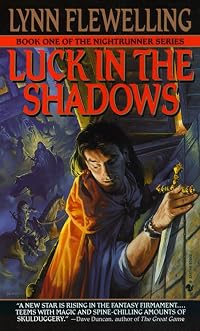
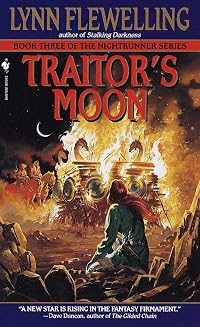
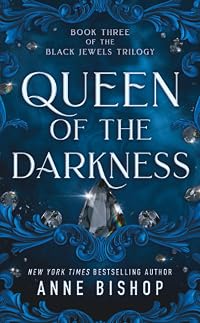
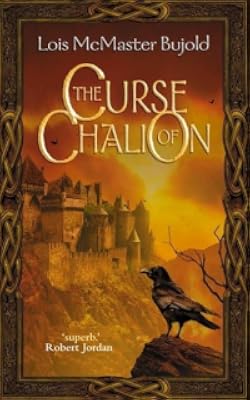
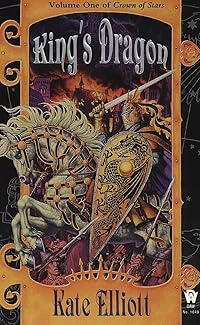
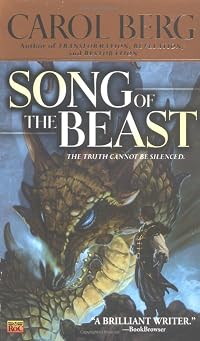
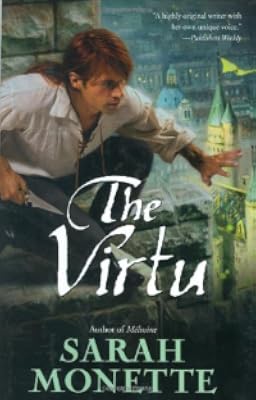
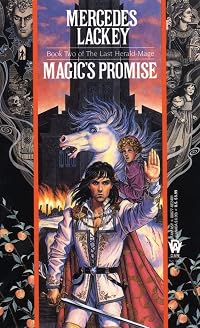
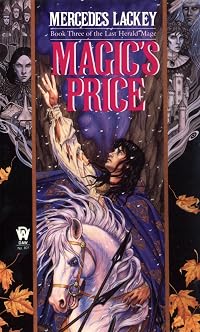
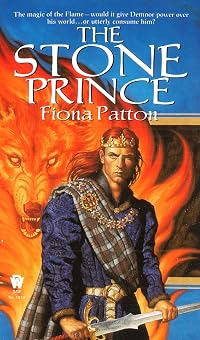
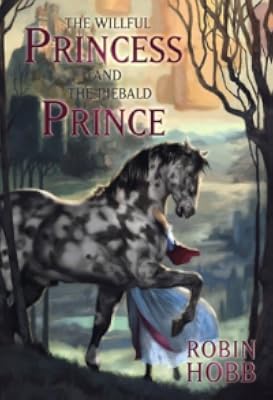
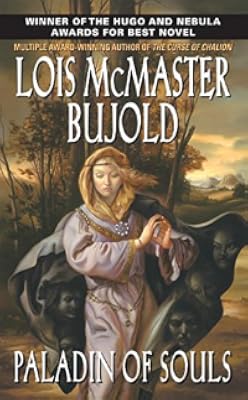
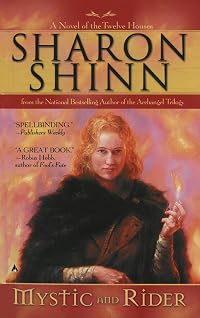
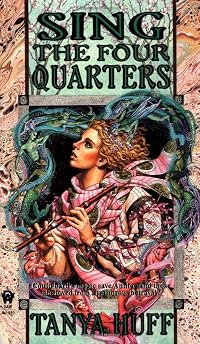
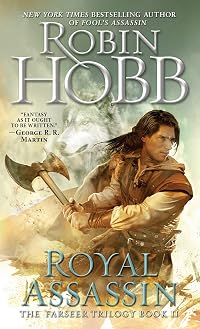
Member Recommendations
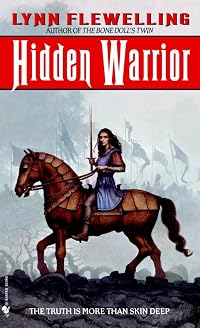
infiniteletters Alanna is much lighter than The Bone Doll's Twin, but they share some of the same themes.
20


Euryale Historical fiction rather than fantasy, but it has some of the same tone--medieval politics, gender politics, and wyrd.
Member Reviews
This is, without a doubt, one of the most interesting books I've read where almost nothing happens. It is the fantasy equivalent of [b:Something Happened|10718|Something Happened|Joseph Heller|https://images.gr-assets.com/books/1388183272s/10718.jpg|2703812], by Joseph Heller, when almost assuredly, very little does. Honestly, I'm a little surprised I haven't heard fans of [b:The Way of Kings|7235533|The Way of Kings (The Stormlight Archive, #1)|Brandon Sanderson|https://images.gr-assets.com/books/1388184640s/7235533.jpg|8134945] raving about this, the three-dimensional statue to Sanderson's bas-relief; though there is a solid sense of world-building, the focus here is thorough character development. And that is, perhaps, why I couldn't show more ultimately throw this on the DNF pile (besides Cillian's threat of terrorizing me with nitrite-filled intestinal casings), and why a part of me is considering continuing the series.
The writing is, quite honestly, some of the most solid I've read in epic fantasy in a long while. Descriptive and evocative; Flewelling does atmosphere very well. Which is fortunate, as a ghost is a critical character.
The blurb, as almost always, gets it wrong. This is about the kingdom Skala in the microcosm of the king's sister and her child. It begins with the well-known foretelling, "so long as a daughter of Thelatimos' line defends and rules, Skala shall never be subjugated," the Oracle whispered." A sympathetic advisor offers the king another explanation and female relatives to the throne begin meeting mysterious accidents. An elderly female wizard, Iya, and her protégé receive a vision from their god about how to save the kingdom from invaders. They develop an awful plan to protect the king's sister's unborn child. The king's sister is due with twins, and the night they are born, some truly awful magic is done. Tobin, of course, knows none of this growing up, only that he has a ghostly brother haunting him and his mother. His mother has gone mad and doesn't seem to notice the ghost, at least not in the same way. From there, the narrative follows Tobin through the next few years of his life.
"The princess sat by the fire, sewing away as madly as ever. For the first time since the birth, she had changed her nightdress for a loose gown and put on her rings again. The hem was wet and streaked with mud. Ariani's long hair hung in damp strands around her face. The window was shut tight as always, but Nari could smell the night air on her, and the hint of something else besides. Nari wrinkled her nose, trying to place the raw, unpleasant odor."
Although Flewelling plays a bit with the early narrative--the first couple of chapters from the point of view of the wizards, Iya and Arkoniel; the third from a hill-witch, Lhel; and the fourth from Nani, the witness to the birth and wetnurse--the majority of the remaining story is from Tobin's, with occasional forays into Arkoniel's thoughts as he works to protect Tobin, the future queen.
It's a great premise, and quite honestly, I think I picked it up partly to see how a fantasy book would deal with gender identity/assignment. Alas that this part of the trilogy is very straightforward (ha-ha); young Tobin is convinced he is male, although he has moments of feeling troubled by wanting a doll when very young. I'm almost tempted to pick up the next book for the psychology of the issue; it's a very cruel thing that Iya, Arkoniel, Lhel and Tobin's father have done. You see, Tobin is not gender dysmorphic--his belief in his gender matches his appearance--but will have to be told, eventually, that (s)he is not what (s)he thinks.
What I ended up with instead of an exploration of gender is Tobin learning to deal with the ghost/poltergeist Brother and his efforts to find his place in the household. It is an immersive story; when I read, I could see it happening very clearly in my mind's eye and was engrossed in the detail of the story. But--and this is a big one--when I set it down, it was without deep regret, and there was no particular impetus to pick it up again. I don't know what to make of that; the combination of absorbing without addicting is very rare in the books I read. Had I felt like being unkind, I might point out how each chapter has a semi-significant event. For instance, in chapter 16, Arkoniel comes to visit Tobin and becomes his tutor; in chapter 18, Arkoniel suggests to Tobin's father, the prince, that they find him a young companion, and in chapter 23, Tobin gets his own squire. This is, perhaps, The Belgariad at quarter speed (with better writing).
Would I read it again? Hell, no. Would I read the next? Possibly. It depends on what threats incentives Cillian offers me.
As an aside, this has been on my TBR list since 2011. I'm not quite sure what that says, but it seems appropriate. show less
The writing is, quite honestly, some of the most solid I've read in epic fantasy in a long while. Descriptive and evocative; Flewelling does atmosphere very well. Which is fortunate, as a ghost is a critical character.
The blurb, as almost always, gets it wrong. This is about the kingdom Skala in the microcosm of the king's sister and her child. It begins with the well-known foretelling, "so long as a daughter of Thelatimos' line defends and rules, Skala shall never be subjugated," the Oracle whispered." A sympathetic advisor offers the king another explanation and female relatives to the throne begin meeting mysterious accidents. An elderly female wizard, Iya, and her protégé receive a vision from their god about how to save the kingdom from invaders. They develop an awful plan to protect the king's sister's unborn child. The king's sister is due with twins, and the night they are born, some truly awful magic is done. Tobin, of course, knows none of this growing up, only that he has a ghostly brother haunting him and his mother. His mother has gone mad and doesn't seem to notice the ghost, at least not in the same way. From there, the narrative follows Tobin through the next few years of his life.
"The princess sat by the fire, sewing away as madly as ever. For the first time since the birth, she had changed her nightdress for a loose gown and put on her rings again. The hem was wet and streaked with mud. Ariani's long hair hung in damp strands around her face. The window was shut tight as always, but Nari could smell the night air on her, and the hint of something else besides. Nari wrinkled her nose, trying to place the raw, unpleasant odor."
Although Flewelling plays a bit with the early narrative--the first couple of chapters from the point of view of the wizards, Iya and Arkoniel; the third from a hill-witch, Lhel; and the fourth from Nani, the witness to the birth and wetnurse--the majority of the remaining story is from Tobin's, with occasional forays into Arkoniel's thoughts as he works to protect Tobin, the future queen.
It's a great premise, and quite honestly, I think I picked it up partly to see how a fantasy book would deal with gender identity/assignment. Alas that this part of the trilogy is very straightforward (ha-ha); young Tobin is convinced he is male, although he has moments of feeling troubled by wanting a doll when very young. I'm almost tempted to pick up the next book for the psychology of the issue; it's a very cruel thing that Iya, Arkoniel, Lhel and Tobin's father have done. You see, Tobin is not gender dysmorphic--his belief in his gender matches his appearance--but will have to be told, eventually, that (s)he is not what (s)he thinks.
What I ended up with instead of an exploration of gender is Tobin learning to deal with the ghost/poltergeist Brother and his efforts to find his place in the household. It is an immersive story; when I read, I could see it happening very clearly in my mind's eye and was engrossed in the detail of the story. But--and this is a big one--when I set it down, it was without deep regret, and there was no particular impetus to pick it up again. I don't know what to make of that; the combination of absorbing without addicting is very rare in the books I read. Had I felt like being unkind, I might point out how each chapter has a semi-significant event. For instance, in chapter 16, Arkoniel comes to visit Tobin and becomes his tutor; in chapter 18, Arkoniel suggests to Tobin's father, the prince, that they find him a young companion, and in chapter 23, Tobin gets his own squire. This is, perhaps, The Belgariad at quarter speed (with better writing).
Would I read it again? Hell, no. Would I read the next? Possibly. It depends on what threats incentives Cillian offers me.
As an aside, this has been on my TBR list since 2011. I'm not quite sure what that says, but it seems appropriate. show less
The Tamir Trilogy is truly a `proper' trilogy - that is, a single story, broken up into three volumes, as opposed to a series of self-contained, interconnected books. Book 1 (The Bone Doll's Twin) sets-up the story and sends us on our way. In an age of plague and war, a girl child is destined to take her place as the rightful Queen, to reunite the people, and to bring peace back to the land. To thwart this prophecy and ensure his continued rule, the King carefully monitors all noble births and arranges to have the female children murdered. When a daughter is born into the king's family, the odds of her escaping notice (much less death) are decidedly bleak. However, there is another child - a boy - sharing their mother's womb. Sadly, for show more one to live (and rule), the other must die. An act of darkest magic binds the twins together, concealing Tobin's true gender with that of her brother. Fittingly, for night of such dark magic, events do not go as planned. The boy child, who was to be declared stillborn, draws a single breath before his life is cut short. That bleak mistake leaves the future queen tormented by the angry ghost of her death brother, drives their father into near-exile, and sets their unwitting mother on the path to madness and death. This is a dark, creepy, and deeply unsettling story that will have you questioning whether the end ever really can justify the means. Prince Tobin is brought up believing herself to be a boy, with only her father, her nanny, and a trio of wizards privy to the truth. We watch as she grows up, alone, isolated from the world, trapped in the confines of a gothic castle. Perhaps not surprisingly for an author who so tenderly dealt with the intricacies of bisexual romance in her Nightrunner Series, Lynn Flewelling does an absolutely masterful job of handling Tobin's growing gender conflict. As readers who know the secret, the very subtle cues as to Tobin's true gender are as clear as they are heartbreaking, even while it remains completely conceivable how others can remain oblivious. Transgender readers especially will sympathise with Tobin's plight. For us, the cure may be surgical rather than magical, but we are no less trapped in the wrong sex than her. show less
Originally posted at FanLit. http://www.fantasyliterature.com/reviews/the-bone-dolls-twin/
I finished listening to the audio version of The Bone Doll’s Twin, the first in Lynn Flewelling’s fantasy epic THE TAMIR TRIAD, around midnight a few days ago. Instead of going to bed, like normal people might, I immediately downloaded book two, The Hidden Warrior, and listened for a couple more hours. That’s how much I was involved in this story about a young girl who doesn’t know she’s magically hidden in the body of a boy.
Tobin, who’s really a girl, has had a difficult childhood. When he was born, his uncle, the king of Skala, was covertly killing off the royal women and girls because a prophecy says that the land must have a queen show more as ruler. King Erius had gained his throne through treachery and he intends to keep it. Tobin’s parents asked a magician to hide their newborn daughter, but they didn’t realize what kind of dark magic they were getting into. The cost was heavy and now Tobin’s mother has gone mad and Tobin’s twin brother is an evil ghost. On top of that, Tobin’s family has moved to their country estate because they fear that the king’s magicians might be able to detect the cover up. Tobin is an odd child already, so it doesn’t help that he’s being raised so far from noble society. His father and the magicians who help him must mold Tobin into someone worthy to take the throne someday.
These days I don’t have as much patience as I used to for long epic fantasies involving prophecies and boys coming of age, so I was pleasantly surprised to find myself enjoying The Bone Doll’s Twin so much. Lynn Flewelling’s writing style is pleasant and her story gently moves along at a pace that’s leisurely without becoming dull, most comparable perhaps to Robin Hobb’s FARSEER saga. There is a large cast of male and female, young and old, magical and normal, common and noble characters who are well developed, not simply stock characters. It helps that we see the story from several of their perspectives, not just Tobin’s.
A main theme in The Bone Doll’s Twin is gender identity and Flewelling handles this very well. While Tobin, who doesn’t know he’s a girl, wants to be a famous warrior like his father, and is successfully working toward that goal, he has a softer side, too, which he thinks is a weakness and fears to show others. He sleeps with a doll but we’re not really sure if that’s because he’s a girl and it’s natural for him to like dolls, or if the doll is a connection to his mother who made it. Similarly, he loves to spend his time building a model of the capitol city, a pursuit that could be seen as either a masculine or feminine hobby. While we see hints of Tobin’s feminine side, it’s all tantalizingly ambiguous so far. Things will begin to look different when Tobin reaches puberty in the next book, The Hidden Warrior.
I’m listening to the audio version of THE TAMIR TRIAD which was produced by Audible Frontiers and expertly narrated by Victor Bevine. Lynn Flewelling reads her introduction to the book. As I mentioned at the beginning of this review, I immediately downloaded and started listening to The Hidden Warrior when I finished The Bone Doll’s Twin. This is a story that’s worth my time. show less
I finished listening to the audio version of The Bone Doll’s Twin, the first in Lynn Flewelling’s fantasy epic THE TAMIR TRIAD, around midnight a few days ago. Instead of going to bed, like normal people might, I immediately downloaded book two, The Hidden Warrior, and listened for a couple more hours. That’s how much I was involved in this story about a young girl who doesn’t know she’s magically hidden in the body of a boy.
Tobin, who’s really a girl, has had a difficult childhood. When he was born, his uncle, the king of Skala, was covertly killing off the royal women and girls because a prophecy says that the land must have a queen show more as ruler. King Erius had gained his throne through treachery and he intends to keep it. Tobin’s parents asked a magician to hide their newborn daughter, but they didn’t realize what kind of dark magic they were getting into. The cost was heavy and now Tobin’s mother has gone mad and Tobin’s twin brother is an evil ghost. On top of that, Tobin’s family has moved to their country estate because they fear that the king’s magicians might be able to detect the cover up. Tobin is an odd child already, so it doesn’t help that he’s being raised so far from noble society. His father and the magicians who help him must mold Tobin into someone worthy to take the throne someday.
These days I don’t have as much patience as I used to for long epic fantasies involving prophecies and boys coming of age, so I was pleasantly surprised to find myself enjoying The Bone Doll’s Twin so much. Lynn Flewelling’s writing style is pleasant and her story gently moves along at a pace that’s leisurely without becoming dull, most comparable perhaps to Robin Hobb’s FARSEER saga. There is a large cast of male and female, young and old, magical and normal, common and noble characters who are well developed, not simply stock characters. It helps that we see the story from several of their perspectives, not just Tobin’s.
A main theme in The Bone Doll’s Twin is gender identity and Flewelling handles this very well. While Tobin, who doesn’t know he’s a girl, wants to be a famous warrior like his father, and is successfully working toward that goal, he has a softer side, too, which he thinks is a weakness and fears to show others. He sleeps with a doll but we’re not really sure if that’s because he’s a girl and it’s natural for him to like dolls, or if the doll is a connection to his mother who made it. Similarly, he loves to spend his time building a model of the capitol city, a pursuit that could be seen as either a masculine or feminine hobby. While we see hints of Tobin’s feminine side, it’s all tantalizingly ambiguous so far. Things will begin to look different when Tobin reaches puberty in the next book, The Hidden Warrior.
I’m listening to the audio version of THE TAMIR TRIAD which was produced by Audible Frontiers and expertly narrated by Victor Bevine. Lynn Flewelling reads her introduction to the book. As I mentioned at the beginning of this review, I immediately downloaded and started listening to The Hidden Warrior when I finished The Bone Doll’s Twin. This is a story that’s worth my time. show less
I just finished reading the Bone Doll's Twin for the second time and was once again struck by the care and skill that Flewelling brings to her writing. This trilogy is marked by the careful crafting of all the characters, from our central hero/ine to the supporting cast. Her success in this area creates an emotional power which is the hallmark of good fiction and, sadly, rather uncommon withing the fantasy genre.
thoughts before reading
I read this as a teenager and absolutely adore it. I read it so many times. sometimes I would start all over again just as I finished book 3. What I remember the most were the feelings it evoked in me. The way the main character felt out of places in their own skin. But gradually being ok with who they were even after life changing events.
I also remember liking the main male character. The was the friend I wanted to have. funny, goofy but with an iron core. loyal to a fault. Also when the main character falls in love with him I did too. But even after he rejected the main character (he goes for girls not boys) he goes it in a way... that I couldn't hell loving. way different than all this 'macho' guys who thought show more that you could somehow catch the gay? And thought that if someone of the same sex fancied you that was an insult.
Yup this book (and series) had an impact on teenager me.
I'm a bit scared to read this again after so many years. But I believe books should've be reread and that the great ones will hold up through time.
(Note to myself: stop using goodreads on your tablet. autocorrect is a bitch and you always end up retyping some part of your review. show less
I read this as a teenager and absolutely adore it. I read it so many times. sometimes I would start all over again just as I finished book 3. What I remember the most were the feelings it evoked in me. The way the main character felt out of places in their own skin. But gradually being ok with who they were even after life changing events.
I also remember liking the main male character. The was the friend I wanted to have. funny, goofy but with an iron core. loyal to a fault. Also when the main character falls in love with him I did too. But even after he rejected the main character (he goes for girls not boys) he goes it in a way... that I couldn't hell loving. way different than all this 'macho' guys who thought show more that you could somehow catch the gay? And thought that if someone of the same sex fancied you that was an insult.
Yup this book (and series) had an impact on teenager me.
I'm a bit scared to read this again after so many years. But I believe books should've be reread and that the great ones will hold up through time.
(Note to myself: stop using goodreads on your tablet. autocorrect is a bitch and you always end up retyping some part of your review. show less
This series is a great exploration into what is gender - how can it be defined and what does it do (or not do) to shape our minds?
The country of Skala has been ruled by Queen's from its inception, guarded by a prophecy stating that as long as a daughter of the royal line sits on the throne, Skala will not fall to outsiders. However, when the insane queen of the previous generation was disposed by her subjects, her son took the throne as his sister was too young to rule. But the taste of power is sweet and he refuses to give up his power as his sister grows, determined to pass on the title to his only surviving child, a son.
Misfortune is slowly destroying the realm, and the people cry for a female ruler, but the King kills any who might show more claim the throne from his son. Another prophecy gives hope to a select few: the King's sister is to bear twins - a girl child and a boy. In an elaborate plan featuring forbidden magic, two magicians kill the boy and bestow her form on the girl. For all purposes, Tobin is now a boy, his "sister" having died at birth. In this way, they hope to hide her, the only hope left for Skala, until she is old enough to take back the throne from her cousin.
This is Flwelling's second series in this world, this one set far before the first one, but you can read either series independently of the other without missing anything (other than a really good fantasy series). This is the first book in a trilogy.
Her characters are again, interesting and compelling, her magic system is fascinating, and her premise is fabulous and haunting. I recommend this series to fantasy readers but also to queer fiction readers as it explores gender in a really interesting way. show less
The country of Skala has been ruled by Queen's from its inception, guarded by a prophecy stating that as long as a daughter of the royal line sits on the throne, Skala will not fall to outsiders. However, when the insane queen of the previous generation was disposed by her subjects, her son took the throne as his sister was too young to rule. But the taste of power is sweet and he refuses to give up his power as his sister grows, determined to pass on the title to his only surviving child, a son.
Misfortune is slowly destroying the realm, and the people cry for a female ruler, but the King kills any who might show more claim the throne from his son. Another prophecy gives hope to a select few: the King's sister is to bear twins - a girl child and a boy. In an elaborate plan featuring forbidden magic, two magicians kill the boy and bestow her form on the girl. For all purposes, Tobin is now a boy, his "sister" having died at birth. In this way, they hope to hide her, the only hope left for Skala, until she is old enough to take back the throne from her cousin.
This is Flwelling's second series in this world, this one set far before the first one, but you can read either series independently of the other without missing anything (other than a really good fantasy series). This is the first book in a trilogy.
Her characters are again, interesting and compelling, her magic system is fascinating, and her premise is fabulous and haunting. I recommend this series to fantasy readers but also to queer fiction readers as it explores gender in a really interesting way. show less
The Bone Doll’s Twin is the first installment in a gender bending high fantasy series set in the same world as Luck in the Shadows. The connection between the two series is loose (The Bone Doll’s Twin takes place at least several hundred years before), and they can be read completely independently. I actually wish I’d read The Bone Doll’s Twin first, since I liked it more than Luck in the Shadows.
A divine prophecy says that the kingdom of Skala will be prosperous as long as a queen of royal lineage rules. But a king usurps the throne and starts killing all potential female heirs. When the king’s younger sister gives birth twins, conspirators use dark magic to give the female twin the guise of her brother, killing him in the show more process. The secret heir is raised isolated from court and away from the king, haunted by the demon of the dead brother and the madness of their mother, without any idea of the conspiracy.
Something important to note about The Bone Doll’s Twin is that it’s not a complete story. It ends on a cliffhanger and is very much a “Part I.” This book also isn’t a story based around action or suspense but is more a coming of age story about the protagonist. I think it’s possible that fans of The Assassin’s Apprentice and Robin Hobb might like it.
I think one of The Bone Doll’s Twin‘s strongest points is the characters. These characters feel well rounded and like they could be real people. Tobin (the protagonist’s current name, I think it will change in future books?) reads like a child and not just a precocious adult. The adult conspirators were also well done, and there was a lot of moral grayness there. In particular, Iya, the wizardly mastermind, makes Dumbledore look non-manipulative by comparison.
One of the things I didn’t like about the book was the heavy reliance on prophecy. For the most part, prophecy feels like a trope used to create hand wavey explanations for dubious reasoning. “Because, it is prophesied!” is a familiar and annoying refrain from the fantasy genre. In this case, it feels like a reason to try and make the conspirators more sympathetic. There actions don’t have to be explained by prophecy, but it provides a convenient alternate explanation to a sheer power grab.
A defining topic of the trilogy is gender, but it is hard to say much at this early point. I think I’d really need to read the second novel to say more. The closest (and obvious) real world parallel is the transgender experience, and I can’t say how that’s reflected in the novel. However, I did find a positive review from a transgender reviewer.
The Bone Doll’s Twin is a haunting coming of age story with an underlying darkness. I look forward to reading the sequel and would recommend it.
Originally posted on The Illustrated Page. show less
A divine prophecy says that the kingdom of Skala will be prosperous as long as a queen of royal lineage rules. But a king usurps the throne and starts killing all potential female heirs. When the king’s younger sister gives birth twins, conspirators use dark magic to give the female twin the guise of her brother, killing him in the show more process. The secret heir is raised isolated from court and away from the king, haunted by the demon of the dead brother and the madness of their mother, without any idea of the conspiracy.
Something important to note about The Bone Doll’s Twin is that it’s not a complete story. It ends on a cliffhanger and is very much a “Part I.” This book also isn’t a story based around action or suspense but is more a coming of age story about the protagonist. I think it’s possible that fans of The Assassin’s Apprentice and Robin Hobb might like it.
I think one of The Bone Doll’s Twin‘s strongest points is the characters. These characters feel well rounded and like they could be real people. Tobin (the protagonist’s current name, I think it will change in future books?) reads like a child and not just a precocious adult. The adult conspirators were also well done, and there was a lot of moral grayness there. In particular, Iya, the wizardly mastermind, makes Dumbledore look non-manipulative by comparison.
One of the things I didn’t like about the book was the heavy reliance on prophecy. For the most part, prophecy feels like a trope used to create hand wavey explanations for dubious reasoning. “Because, it is prophesied!” is a familiar and annoying refrain from the fantasy genre. In this case, it feels like a reason to try and make the conspirators more sympathetic. There actions don’t have to be explained by prophecy, but it provides a convenient alternate explanation to a sheer power grab.
A defining topic of the trilogy is gender, but it is hard to say much at this early point. I think I’d really need to read the second novel to say more. The closest (and obvious) real world parallel is the transgender experience, and I can’t say how that’s reflected in the novel. However, I did find a positive review from a transgender reviewer.
The Bone Doll’s Twin is a haunting coming of age story with an underlying darkness. I look forward to reading the sequel and would recommend it.
Originally posted on The Illustrated Page. show less
Members
- Recently Added By
Lists

Best Fantasy Novels
821 works; 358 members

Female Protagonist
1,056 works; 57 members

Top Five Books of 2020
982 works; 348 members

Recommended Speculative Fiction by Women and People of Color
298 works; 45 members

Death of one twin -- children's/young adult fiction
59 works; 4 members

Transgender Characters
91 works; 5 members

Top Five Books of 2025
954 works; 303 members
Author Information

24+ Works 14,285 Members
Some Editions
Awards and Honors
Awards
Series

Work Relationships
Common Knowledge
- Canonical title
- The Bone Doll's Twin
- Original title
- The Bone Doll's Twin
- Original publication date
- 2001
- People/Characters
- Tobin of Skalar; Kirothieus; Arkoniel; Lhel; Tharin; Iya (show all 9); Duke Rhius; Nari; Tamir of Skalar
- Important places
- Skala
- Dedication
- For l.e. and the knapp kids up the magic staircase a long time ago
- First words
- An old man looks back at me from my mirror now. Even among the other wizards here in Rhiminee, I'm a relic of forgotten times.
- Last words
- (Click to show. Warning: May contain spoilers.)Then Brother was gone and Tobin was free, curling away from Lhel's stained hands, curling into the sweetsmelling softness of the catamount skin, and sobbing aloud with the hoarse, ugly voice of a boy.
- Blurbers
- Martin, George R.R.
- Original language
- English
- Disambiguation notice
- The 3-volume Tamir Triad was also published in French as 6 volumes.
Classifications
Statistics
- Members
- 2,097
- Popularity
- 9,809
- Reviews
- 47
- Rating
- (4.11)
- Languages
- 5 — Czech, Dutch, English, French, German
- Media
- Paper, Audiobook, Ebook
- ISBNs
- 15
- ASINs
- 9