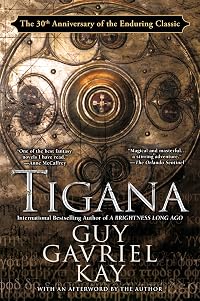
Tigana
by Guy Gavriel Kay
On This Page
Description
Acclaimed author Guy Gavriel Kay has been honored with the World Fantasy Award for Best Novel (Ysabel) and the International Goliardos Award for his work in fantasy. Eight of the nine Palm provinces of the Peninsula have been overcome by warrior sorcerers Brandin and Alberico. But the sorcerers don't know that a small band of survivors is plotting their removal. With tensions mounting, the sorcerers become increasingly at odds as each decides where his own path-and that of the land-should show more truly lie. show lessTags
Recommendations
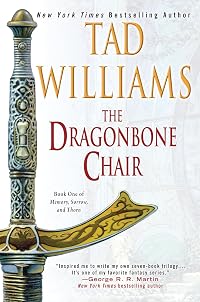
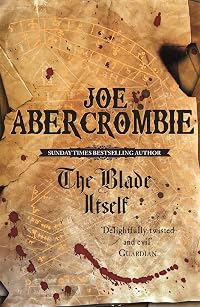
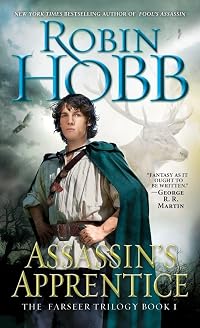
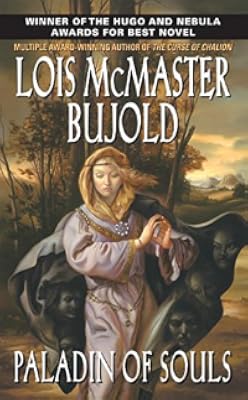


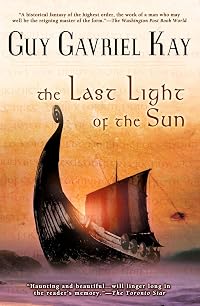


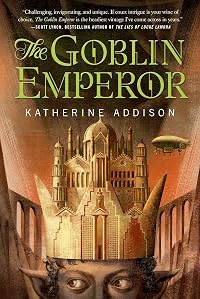
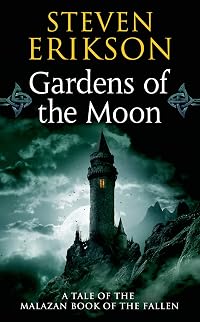
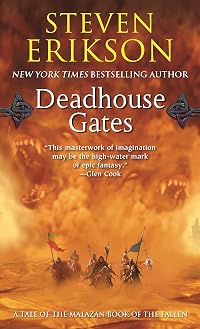
Member Recommendations

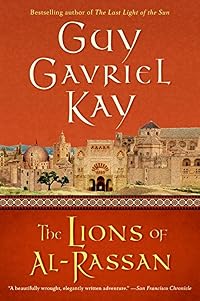
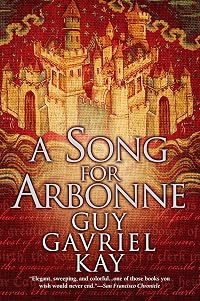
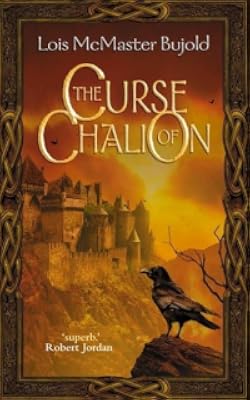
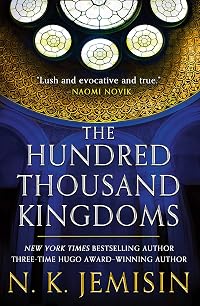
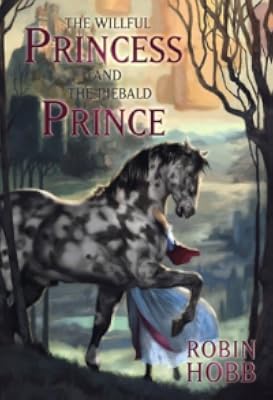
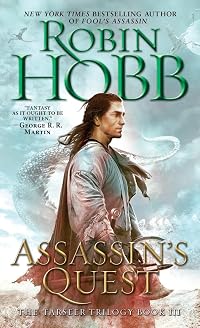
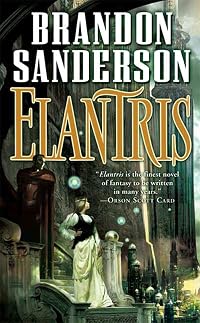
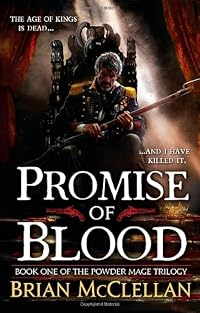
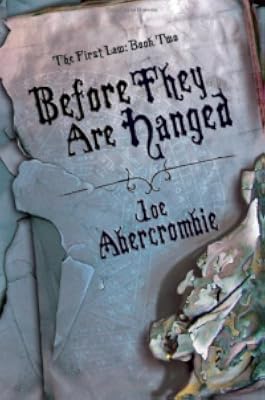
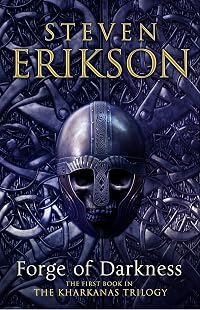
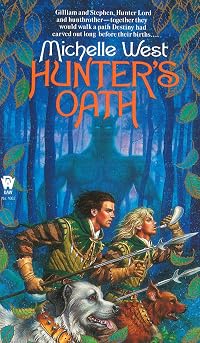
reading_fox Both set in vaguely historical Europe with minimal fantastic elements

reading_fox Historical european fantasy
Member Reviews
A song of grief, a triumph of memory.
I finished Tigana at 2 AM, closed the cover, and sat in the dark for twenty minutes. Not because I was confused. Because I was grieving for a country that never existed, for names that cannot be spoken, for a melody I will never hear again. That is what Guy Gavriel Kay does to you.
What it is:
A peninsula called the Palm, resembling Renaissance Italy, divided into nine provinces. Two tyrants have conquered it: Brandin of Ygrath in the west, Alberico of Barbadior in the east. But this is not a simple war story. Brandin, a sorcerer-king of terrifying power, committed an act of such profound cruelty that it defines the entire novel: when the province of Tigana defied him, he wiped its very name from show more existence. Anyone born in Tigana forgets their homeland. Anyone from elsewhere cannot hear the name "Tigana." It has been erased from memory, from language, from reality. Only the descendants of Tigana, those born before the spell remember. And they are dying.
The story follows a small band of rebels who dare to remember. Their goal is not to defeat Brandin militarily. Their goal is to make the name "Tigana" heard again to break the spell, to restore the dead to memory, to give their lost province a second life in the hearts of the living.
Why it's a masterpiece (and why it will break you):
1. The prose is among the most beautiful in fantasy. Kay writes like a poet who loves history and a historian who loves music. Every sentence is crafted. Descriptions of food, weather, architecture, and the shifting light of the Palm are rendered with a tenderness that makes the world feel alive. But it is the dialogue, the things left unsaid, the pauses, the weight of grief behind a simple "Goodnight" that haunts me most.
2. The central moral tension is devastating. Brandin, the tyrant who erased a people's identity, is also a loving father, a patron of the arts, a man capable of tenderness. Kay refuses to make him a cartoon villain. When the rebels' plan forces a choice between vengeance and mercy, between restoring Tigana and destroying Brandin's last remaining reason to live, the novel asks: Is the suffering of one innocent worth the freedom of many? There is no easy answer. You will argue with yourself for days.
3. The characters are unforgettable. Devin d'Arro, the young singer who discovers his heritage. Alessan, the prince of Tigana in hiding, carrying the weight of a dead nation. Catriana, a woman torn between vengeance and love. And Dianora, the woman who has infiltrated Brandin's court to assassinate him, only to find herself torn in ways she never anticipated. Her chapters are some of the most agonizingly beautiful passages I have ever read. Kay makes you sympathize with a woman who is planning to kill a man she has come to love, for the sake of a country she has never seen.
4. The theme of memory as resistance. In a world where tyrants can erase history, the act of remembering becomes revolutionary. The rebels do not fight with swords alone; they fight with songs, with stories, with whispered names. "Tigana." Just saying the word is an act of defiance. This book made me think about what I would be willing to die for and what I would be willing to live for.
5. The ending is perfect. Not happy. Not tidy. But earned. I cried. Then I sat in silence for a long time.
Where it might lose some readers (honest critiques):
1. The pacing is slow. Kay luxuriates in description, in interior monologue, in the quiet moments between action. If you need constant plot momentum or battle scenes every fifty pages, this will frustrate you. Tigana is a book to be savored, not devoured.
2. The geography and names can be confusing. A map is provided; use it. The Italianate naming conventions (Sandre, Tregea, Certando, Astibar) blur together if you are not paying attention.
3. Some readers find the Brandin sympathy arc unforgivable. If you believe that a tyrant who commits cultural genocide cannot be humanized, you may struggle with Kay's refusal to condemn him outright. The novel does not excuse Brandin. It asks you to understand him. For some, that is a bridge too far.
Who should read this:
Lovers of literary fantasy (Ursula Le Guin, Patrick Rothfuss, Susanna Clarke).
Readers who want fantasy that engages with politics, ethics, and grief.
Anyone who believes that memory and identity are worth fighting for.
Musicians, poets, and artists; this book is, at its core, about the power of art to resist erasure.
Who should skip it:
If you need fast-paced action and clear good-vs-evil binaries.
If you are uncomfortable with moral ambiguity and sympathetic villains.
If slow, lyrical prose bores you.
Final verdict:
Tigana is not a book. It is an experience. It is a song sung in a minor key, a requiem for a place that never existed but that I will mourn as if it were my own homeland. Kay has written other masterpieces (The Lions of Al-Rassan, A Song for Arbonne), but Tigana is the one that carved itself into my chest. I finished it, closed the cover, and immediately turned back to the first page to find the line: "The summer that Brandin of Ygrath came down from the north, the leaves of the great forest turned gold before their time."
I will never forget that summer. I will never forget Tigana.
Five stars. A thousand stars. Read it with tissues nearby and a quiet evening ahead. show less
I finished Tigana at 2 AM, closed the cover, and sat in the dark for twenty minutes. Not because I was confused. Because I was grieving for a country that never existed, for names that cannot be spoken, for a melody I will never hear again. That is what Guy Gavriel Kay does to you.
What it is:
A peninsula called the Palm, resembling Renaissance Italy, divided into nine provinces. Two tyrants have conquered it: Brandin of Ygrath in the west, Alberico of Barbadior in the east. But this is not a simple war story. Brandin, a sorcerer-king of terrifying power, committed an act of such profound cruelty that it defines the entire novel: when the province of Tigana defied him, he wiped its very name from show more existence. Anyone born in Tigana forgets their homeland. Anyone from elsewhere cannot hear the name "Tigana." It has been erased from memory, from language, from reality. Only the descendants of Tigana, those born before the spell remember. And they are dying.
The story follows a small band of rebels who dare to remember. Their goal is not to defeat Brandin militarily. Their goal is to make the name "Tigana" heard again to break the spell, to restore the dead to memory, to give their lost province a second life in the hearts of the living.
Why it's a masterpiece (and why it will break you):
1. The prose is among the most beautiful in fantasy. Kay writes like a poet who loves history and a historian who loves music. Every sentence is crafted. Descriptions of food, weather, architecture, and the shifting light of the Palm are rendered with a tenderness that makes the world feel alive. But it is the dialogue, the things left unsaid, the pauses, the weight of grief behind a simple "Goodnight" that haunts me most.
2. The central moral tension is devastating. Brandin, the tyrant who erased a people's identity, is also a loving father, a patron of the arts, a man capable of tenderness. Kay refuses to make him a cartoon villain. When the rebels' plan forces a choice between vengeance and mercy, between restoring Tigana and destroying Brandin's last remaining reason to live, the novel asks: Is the suffering of one innocent worth the freedom of many? There is no easy answer. You will argue with yourself for days.
3. The characters are unforgettable. Devin d'Arro, the young singer who discovers his heritage. Alessan, the prince of Tigana in hiding, carrying the weight of a dead nation. Catriana, a woman torn between vengeance and love. And Dianora, the woman who has infiltrated Brandin's court to assassinate him, only to find herself torn in ways she never anticipated. Her chapters are some of the most agonizingly beautiful passages I have ever read. Kay makes you sympathize with a woman who is planning to kill a man she has come to love, for the sake of a country she has never seen.
4. The theme of memory as resistance. In a world where tyrants can erase history, the act of remembering becomes revolutionary. The rebels do not fight with swords alone; they fight with songs, with stories, with whispered names. "Tigana." Just saying the word is an act of defiance. This book made me think about what I would be willing to die for and what I would be willing to live for.
5. The ending is perfect. Not happy. Not tidy. But earned. I cried. Then I sat in silence for a long time.
Where it might lose some readers (honest critiques):
1. The pacing is slow. Kay luxuriates in description, in interior monologue, in the quiet moments between action. If you need constant plot momentum or battle scenes every fifty pages, this will frustrate you. Tigana is a book to be savored, not devoured.
2. The geography and names can be confusing. A map is provided; use it. The Italianate naming conventions (Sandre, Tregea, Certando, Astibar) blur together if you are not paying attention.
3. Some readers find the Brandin sympathy arc unforgivable. If you believe that a tyrant who commits cultural genocide cannot be humanized, you may struggle with Kay's refusal to condemn him outright. The novel does not excuse Brandin. It asks you to understand him. For some, that is a bridge too far.
Who should read this:
Lovers of literary fantasy (Ursula Le Guin, Patrick Rothfuss, Susanna Clarke).
Readers who want fantasy that engages with politics, ethics, and grief.
Anyone who believes that memory and identity are worth fighting for.
Musicians, poets, and artists; this book is, at its core, about the power of art to resist erasure.
Who should skip it:
If you need fast-paced action and clear good-vs-evil binaries.
If you are uncomfortable with moral ambiguity and sympathetic villains.
If slow, lyrical prose bores you.
Final verdict:
Tigana is not a book. It is an experience. It is a song sung in a minor key, a requiem for a place that never existed but that I will mourn as if it were my own homeland. Kay has written other masterpieces (The Lions of Al-Rassan, A Song for Arbonne), but Tigana is the one that carved itself into my chest. I finished it, closed the cover, and immediately turned back to the first page to find the line: "The summer that Brandin of Ygrath came down from the north, the leaves of the great forest turned gold before their time."
I will never forget that summer. I will never forget Tigana.
Five stars. A thousand stars. Read it with tissues nearby and a quiet evening ahead. show less
One of the finest novels I've read. Kay beautifully explores the power, love and grief of history and memory without it ever slowing down the page-turning thrill of following a small resistance movement on a peninsula ruled by two invading tyrants. Kay has throughout his novels always had an admirable ability to wed heightened sentiment to mundane realism, and that, too, is on splendid display here, the sixth (and so far my favourite) novel I've read by him.
It’s hard to believe that, at this advanced stage in my life, I could be enticed to sample a new genre, one I was convinced would never, ever appeal to me. But when an LT friend dared me to read Guy Gavriel Kay’s historical fantasy, it was with some trepidation that I took on the challenge. I figured I’d give it fifty pages to make it appear that I’d at least given it the old college try before dumping it for something more in my comfort zone. Instead something totally unexpected happened. After fifty pages I noticed that I was very anxious to get back to reading. Well, I thought to myself, that must be just a quirk. I’ll read another fifty just to make sure I really hate this book. What are all these complex characters doing show more here? Maybe I should give it a little more time. This writing is, well, pretty darn close to sublime. What’s a girl to do? I was so sure this would never work out, but now, well, I was pretty much loving it. And so on I went for 676 pages. Apparently, unbeknown to me, I’m a fan of historical fantasy. Who knew?
As the author says in his Afterward,
”Tigana is in good part a novel about memory: the necessity of it, in cultural terms, and the dangers that come when it is too intense….The world today offers more than enough examples of both pitfalls: ignorance of history and its lessons, and the refusal to let the past be the past.” (Page 674)
He advanced this theme through an epic novel about a people robbed of their beloved homeland by a despotic king who used sorcery and torture to achieve his ends. He even went so far as to make the name of that country anathema to be spoken or even remembered.
Fast forward twenty years and a small passionate group of brave men and women initiate a treacherous campaign to take back their beloved country, Tigana. So I learned a lesson from this delicious narrative: never underestimate the power of a new genre to make you an enthusiastic fan. show less
As the author says in his Afterward,
”Tigana is in good part a novel about memory: the necessity of it, in cultural terms, and the dangers that come when it is too intense….The world today offers more than enough examples of both pitfalls: ignorance of history and its lessons, and the refusal to let the past be the past.” (Page 674)
He advanced this theme through an epic novel about a people robbed of their beloved homeland by a despotic king who used sorcery and torture to achieve his ends. He even went so far as to make the name of that country anathema to be spoken or even remembered.
Fast forward twenty years and a small passionate group of brave men and women initiate a treacherous campaign to take back their beloved country, Tigana. So I learned a lesson from this delicious narrative: never underestimate the power of a new genre to make you an enthusiastic fan. show less
What is a memory worth? Which memory is most valuable: the memory of a nation, a lover, or a child who died?
This story explores acts of heroism and villainy which memories might inspire. The depth and variety of the characters was an unexpected gem. Some are clever and idealistic, with clear relatable goals and unwavering morals. Others are conflicted, uncertain, and self-doubting, obviously moving through their lives with more momentum than purpose.
The tone of this book was perfect for my tastes. It was sometimes harsh, but never grating or gratuitously nasty. This is not a world where the good guys win every fight with stylish quips and flashing white smiles. Neither is it a world where "heroes" are butchers with bloody broken show more teeth. Instead, this story reaches a balance between happiness and sadness. The standard tropes of Fantasy fiction are present, but it is the drama of realistic human relationships which carry the reader through the text. In fact I think the setting of a Fantasy variation on Pre-Renaissance Italy was fresh, but the culture was too generic for my tastes.
Perhaps most notably this is a book which feels like an epic series, and yet manages to wrap up very satisfyingly in a single volume. show less
This story explores acts of heroism and villainy which memories might inspire. The depth and variety of the characters was an unexpected gem. Some are clever and idealistic, with clear relatable goals and unwavering morals. Others are conflicted, uncertain, and self-doubting, obviously moving through their lives with more momentum than purpose.
The tone of this book was perfect for my tastes. It was sometimes harsh, but never grating or gratuitously nasty. This is not a world where the good guys win every fight with stylish quips and flashing white smiles. Neither is it a world where "heroes" are butchers with bloody broken show more teeth. Instead, this story reaches a balance between happiness and sadness. The standard tropes of Fantasy fiction are present, but it is the drama of realistic human relationships which carry the reader through the text. In fact I think the setting of a Fantasy variation on Pre-Renaissance Italy was fresh, but the culture was too generic for my tastes.
Perhaps most notably this is a book which feels like an epic series, and yet manages to wrap up very satisfyingly in a single volume. show less
Review from TenaciousReader: http://www.tenaciousreader.com/2015/01/30/backlist-burndown-review-tigana-by-guy...
4.5 stars
If you have not read anything by Guy Gavriel Kay, I really encourage you to. His prose is beautiful without being flowery or ostentatious. It just flows and and leaves both wonderful images and reflections in its wake. And to make the deal even sweeter, the audiobook is narrated by Simon Vance. If you haven’t listened to a book narrated by Simon Vance, your life is just not as fulfilled as it could be! His voice is just magic, and pair that voice with Kay’s prose? The result is an audible heaven. Seriously.
Tigana is a magical exploration of history and memory. A grieving sorcerer casts a spell in vengeance, show more causing everyone from Tigana to be caught in the middle. It is the story of a land that has been erased from everyone’s memory, and the even then name Tigana is not able to be heard or understood by anyone from outside of Tigana. Whoever you are, wherever you are from, imagine not being able to speak the name of where you are from much less speak of its history. It’s a sad loss that most of the world is unaware of.
In addition to that, it’s also a story that causes you to pause and think about “the bad guy”. I always love getting the perspective of the supposed villain because whenever you get that, you start to see shades of grey instead of black and white. You may still know the character’s actions were poor choices that caused harm, but once a villain is humanized and their motivations are understood, to me, this is where a story can get way more interesting. Tigana does this by giving us the POV of both the sorcerer and someone that has grown close to him. His curse on Tigana may not be justified, but I loved getting to understand the character that cast that curse. And then there is the question of is the cost of repealing this curse (the lives that would be lost) worth getting back the memory and history of Tigana? A very interesting dilemma.
I enjoyed this, I enjoyed the prose and the ways it makes you think about the world, not just the fictional world the story is about, but how this can apply to the world we know. (For those interested in hearing the author’s take on how this applies to our world, I highly encourage you to read the Kay’s afterword.)
I will say I did not love this on quite the same level as I did Lions of Al-Rassan. I’m still giving it 4.5 stars, so don’t take that as a negative, sometimes we’re allowed to pick favorites without it being insulting. But I couldn’t help but try and decide what made me love this one slightly less. Lions was very very light on magic. This book, was quite heavy with it, the entire premise of the book was dependent upon it. I have to say, I think I prefered the lighter level of magic in Lions. I also don’t think I ever grew quite as attached to the characters in this one as I did in Lions (but I still enjoyed them and I don’t think they were two dimensional). Minor things, but ultimately, probably what made it slightly easier for me to pick a favorite between these two books. But then, who knows, this could be one of those books I continue to think about over time and hence raise my rating. Only time will tell. Regardless, the difference would only be between 4.5 versus 5 stars, I loved this story either way. It’s a book and author that I highly recommend to pretty much anyone and everyone. show less
4.5 stars
If you have not read anything by Guy Gavriel Kay, I really encourage you to. His prose is beautiful without being flowery or ostentatious. It just flows and and leaves both wonderful images and reflections in its wake. And to make the deal even sweeter, the audiobook is narrated by Simon Vance. If you haven’t listened to a book narrated by Simon Vance, your life is just not as fulfilled as it could be! His voice is just magic, and pair that voice with Kay’s prose? The result is an audible heaven. Seriously.
Tigana is a magical exploration of history and memory. A grieving sorcerer casts a spell in vengeance, show more causing everyone from Tigana to be caught in the middle. It is the story of a land that has been erased from everyone’s memory, and the even then name Tigana is not able to be heard or understood by anyone from outside of Tigana. Whoever you are, wherever you are from, imagine not being able to speak the name of where you are from much less speak of its history. It’s a sad loss that most of the world is unaware of.
In addition to that, it’s also a story that causes you to pause and think about “the bad guy”. I always love getting the perspective of the supposed villain because whenever you get that, you start to see shades of grey instead of black and white. You may still know the character’s actions were poor choices that caused harm, but once a villain is humanized and their motivations are understood, to me, this is where a story can get way more interesting. Tigana does this by giving us the POV of both the sorcerer and someone that has grown close to him. His curse on Tigana may not be justified, but I loved getting to understand the character that cast that curse. And then there is the question of is the cost of repealing this curse (the lives that would be lost) worth getting back the memory and history of Tigana? A very interesting dilemma.
I enjoyed this, I enjoyed the prose and the ways it makes you think about the world, not just the fictional world the story is about, but how this can apply to the world we know. (For those interested in hearing the author’s take on how this applies to our world, I highly encourage you to read the Kay’s afterword.)
I will say I did not love this on quite the same level as I did Lions of Al-Rassan. I’m still giving it 4.5 stars, so don’t take that as a negative, sometimes we’re allowed to pick favorites without it being insulting. But I couldn’t help but try and decide what made me love this one slightly less. Lions was very very light on magic. This book, was quite heavy with it, the entire premise of the book was dependent upon it. I have to say, I think I prefered the lighter level of magic in Lions. I also don’t think I ever grew quite as attached to the characters in this one as I did in Lions (but I still enjoyed them and I don’t think they were two dimensional). Minor things, but ultimately, probably what made it slightly easier for me to pick a favorite between these two books. But then, who knows, this could be one of those books I continue to think about over time and hence raise my rating. Only time will tell. Regardless, the difference would only be between 4.5 versus 5 stars, I loved this story either way. It’s a book and author that I highly recommend to pretty much anyone and everyone. show less
Wow. Tigana is the complete deal, and of a maturity not seen enough in Fantasy literature.
I love the elegiac tone Kay uses, and the rich humanity of his characters. The dense moral ambiguities are really more satisfying than childish good/evil dichotomies and all actions have their consequences, even ones that play out over generations. I expect I'll return to this book again, to visit with my friends there and look on the towers of Avalle.
I love the elegiac tone Kay uses, and the rich humanity of his characters. The dense moral ambiguities are really more satisfying than childish good/evil dichotomies and all actions have their consequences, even ones that play out over generations. I expect I'll return to this book again, to visit with my friends there and look on the towers of Avalle.
Kay writes grief the way most fantasy writers write battles, and that is what stayed with me. The whole book turns on a wound to memory itself, a name pressed out of the world, and he makes you feel the weight of that loss in the language before you ever understand its full shape. What got me is that nobody here is simply the enemy. The man you should hate carries a sorrow you end up sitting with, and Kay never lets you off the hook by telling you how to feel about any of them.
Members
- Recently Added By
Lists

Best Fantasy Novels
821 works; 361 members
Favourite High Fantasy Books
113 works; 23 members

Top-Rated Books on LibraryThing
272 works; 117 members

Slipstream or Interstitial Fiction
160 works; 19 members

Books I've Read More Than Once
602 works; 49 members

Nineties
43 works; 10 members

Books tagged favorites
390 works; 30 members

Survey of Science Fiction and Fantasy
101 works; 13 members
Favourite Books
1,819 works; 309 members

Introduction to Fantasy and Science Fiction (Proposed Reading List)
28 works; 6 members

Fantasy novels with a female protagonist
76 works; 15 members

Recommend the 20 best books you've read in the last five years
2,168 works; 606 members

The 100 Best Fantasy Books of All Time
100 works; 15 members
One Book, Many Authors
441 works; 40 members
1990s
309 works; 17 members

Pleasant Surprises: Books That Exceeded Our Expectations
418 works; 143 members
Best SciFi and Fantasy Classics
53 works; 6 members
Speculative Fiction to Read
706 works; 32 members
LibraryThingers' 1001 Books You Must Read Before You Die
442 works; 30 members

Books Read in 2023
5,547 works; 145 members

Favorite Books from the 1990s
32 works; 3 members

LIBROS DE CIENCIA FICCIÓN Y FANTASIA
60 works; 1 member

What are your favourite books?
121 works; 11 members
Best Books of the 20th Century
193 works; 5 members
Books We Couldn't Put Down
443 works; 197 members

EGBERTINA'S List of childhood books worthy of merit or unspeakable delight
155 works; 6 members

Top Five Books of 2025
954 works; 303 members

Books Read in 2026
1,951 works; 66 members
Five star books
1,767 works; 110 members
Recommend Fantasy Books
100 works; 1 member

Books Read in 2002
197 works; 8 members

Books That Will Take You Out of This World
19 works; 5 members

CBC Books - Canada's 100 (+ bonus 10): Which have you read?
110 works; 23 members
Epic Fantasy of the 90s
111 works; 4 members

Books Bought & Received as Gifts in 2014
81 works; 1 member
Antiheroes
17 works; 3 members
The Best of Canadian Literature
235 works; 33 members

Unread books
1,063 works; 87 members

Canadian Jurist-Novelists
313 works; 1 member
Survey of Fantasy Classics
111 works; 23 members
Talk Discussions
Past Discussions
Tigana Spoiler Thread: Fantasy February Group Read in 75 Books Challenge for 2013 (February 2013)
Tigana by Guy Gavriel Kay: Fantasy February Group Read in 75 Books Challenge for 2013 (February 2013)
Tigana discussion! Part Four: The Price of Blood in The Green Dragon (July 2008)
At last, it is time to begin discussing Tigana! Part One Discussion in The Green Dragon (June 2008)
Tigana Part Five Discussion: THE MEMORY OF A FLAME in The Green Dragon (February 2007)
Tigana Part Three Discussion: EMBER TO EMBER in The Green Dragon (October 2006)
Tigana Part Two - Dianora - discuss in The Green Dragon (October 2006)
Author Information

Guy Gavriel Kay was born on November 7, 1954 in Weyburn, Saskatchewan, Canada. He became interested in fantasy fiction while working as an assistant to Christopher Tolkien. He assisted him with the editing of J. R. R. Tolkien's The Silmarillion. After receiving a law degree from the University of Toronto, he became principal writer and associate show more producer for the CBC radio series, The Scales of Justice. He also wrote several episodes when the series moved to television. He has written social and political commentary for several publications including the National Post, The Globe and Mail, and The Guardian. His first fantasy novels were The Summer Tree, The Wandering Fire, and The Darkest Road, which make up the Fionavar Tapestry Trilogy. His other works include A Song for Arbonne, The Lions of Al-Rassan, Beyond This Dark House, The Last Light of the Sun, and Under Heaven. He has received numerous awards including and the Aurora Award for Tigana and The Wandering Fire, the 2008 World Fantasy Award for Best Novel for Ysabel, and the International Goliardos Award for his work in the fantasy field. (Bowker Author Biography) show less
Some Editions
Awards and Honors
Awards
Series
Belongs to Publisher Series
Work Relationships
Contains
Common Knowledge
- Canonical title
- Tigana
- Original title
- Tigana
- Original publication date
- 1990-09
- People/Characters
- Alessan bar Valentin; Baerd bar Saevar; Devin bar Garin di Tigana; Duke Sandre d'Astibar; Brandin of Ygrath; Alberico of Barbadior (show all 16); Dianora bren Saevar; Catriana d'Astibar; Marius of Quileia; Alienor of Castle Borso; Rhovigo d'Astibar; Alais bren Rovigo; Erlein di Senzio; Scelto; Rhun; Elena
- Important places
- the Peninsula of the Palm; Astibar; Quileia; Chiara; Tigana; Senzio (show all 9); Ygrath; Barbadior; Tregea
- Epigraph
- All that you held most dear you will put by
and leave behind you; and this is the arrow
the longbow of your exile first lets fly.
You will come to know how bitter as salt and stone
is the bread o... (show all)f others, how hard the way that goes
up and down stairs that never are your own.
—Dante, The Paradiso
What can a flame remember? If it remembers a little less
than is necessary, it goes out; if it remembers a little
more than is necessary, it goes out. If only it could
teach us, while it burns, to remember correctly.... (show all)
—George Seferis, "Stratis the Sailor Describes a Man" - Dedication
- For my brothers, Jeffrey and Rex
- First words
- Both moons were high, dimming the light of all but the brightest stars.
- Last words
- (Click to show. Warning: May contain spoilers.)And it is there that they see the riselka, three men see a riselka, sitting on a rock beside the sunlit path, her long sea-green hair blowing back in the freshening breeze.
- Blurbers
- McCaffrey, Anne
- Original language
- English
- Disambiguation notice
- This is the complete story in one volume. Please do not combine this with either part one (Tigana Chapters 1 - 12) or part two (Tigana Chapters 13 - 20).
Classifications
Statistics
- Members
- 5,569
- Popularity
- 2,390
- Reviews
- 160
- Rating
- (4.13)
- Languages
- 11 — Czech, Dutch, English, Estonian, French, Greek, Hebrew, Italian, Polish, Romanian, Spanish
- Media
- Paper, Audiobook, Ebook
- ISBNs
- 48
- UPCs
- 1
- ASINs
- 21