On This Page
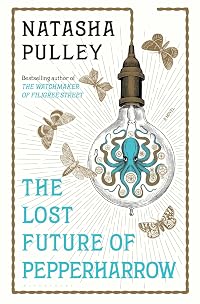
Description
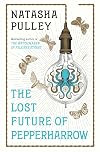
1888. Five years after they met in The Watchmaker of Filigree Street, Thaniel Steepleton, an unassuming translator, and Keita Mori, the watchmaker who remembers the future, are traveling to Japan. Thaniel has received an unexpected posting to the British legation in Tokyo, and Mori has business that is taking him to Yokohama. Thaniel's brief is odd: the legation staff have been seeing ghosts, and Thaniel's first task is to find out what's really going on. But while staying with Mori, he show more starts to experience ghostly happenings himself. For reasons Mori won't--or can't--share, he is frightened. Then he vanishes. Meanwhile, something strange is happening in a frozen labor camp in Northern Japan. Takiko Pepperharrow, an old friend of Mori's, must investigate. As the weather turns bizarrely electrical and ghosts haunt the country from Tokyo to Aokigahara forest, Thaniel grows convinced that it all has something to do with Mori's disappearance--and that Mori may be in serious danger.-- show lessTags
Recommendations





























Member Reviews
After I realised that reading [b:Corona, Climate, Chronic Emergency: War Communism in the Twenty-First Century|54619224|Corona, Climate, Chronic Emergency War Communism in the Twenty-First Century|Andreas Malm|https://i.gr-assets.com/images/S/compressed.photo.goodreads.com/books/1595822734l/54619224._SY75_.jpg|85217012] was making me feel terrible, it was obvious that I should pick an escapist book instead. 'The Lost Future of Pepperharrow' was ideal for the purpose, as well as being apposite for halloween. It returns the reader to the world of [b:The Watchmaker of Filigree Street|22929563|The Watchmaker of Filigree Street (The Watchmaker of Filigree Street, #1)|Natasha show more Pulley|https://i.gr-assets.com/images/S/compressed.photo.goodreads.com/books/1418113344l/22929563._SY75_.jpg|42499104] and [b:The Bedlam Stacks|31450615|The Bedlam Stacks|Natasha Pulley|https://i.gr-assets.com/images/S/compressed.photo.goodreads.com/books/1475259529l/31450615._SY75_.jpg|52153500], although I found the plot more compelling in this book. It's also more eerie than [b:The Watchmaker of Filigree Street|22929563|The Watchmaker of Filigree Street (The Watchmaker of Filigree Street, #1)|Natasha Pulley|https://i.gr-assets.com/images/S/compressed.photo.goodreads.com/books/1418113344l/22929563._SY75_.jpg|42499104], an aspect I enjoyed very much. I was recently describing the appeal of Pulley's novels to a friend and I think atmosphere is key. Her settings are Victorian with carefully inserted supernatural and fantastical elements and a deliberately casual dialogue style. (Pulley discusses this latter in an afterword.) While plenty of other books have ostensibly similar setups, there is a distinctive strangeness and mystery about Pulley's three novels. I also appreciate her main characters, none of whom are straight white men. 'The Lost Future of Pepperharrow' gradually reveals its secrets, including the meaning of the title. Weirdly enough, the pace and tone reminded me somewhat of Tintin stories. I mean that as a compliment! The depiction of Japan seen through the eyes of a dogged and perceptive European man investigating bizarre happenings was vivid and fascinating. The sections from Takiko's point of view made an excellent contrast. While there are some very striking scenes and I'm fond of the characters, ultimately it was the atmosphere and well-paced plot that made the book a pleasure to read.
Mori was deployed sparingly throughout, although his clairvoyant machinations drove the entire plot. Kuroda made an excellent antagonist, ingenious and ruthless enough to counter Mori's magical powers. His use of random data from lightning strikes to foil Mori is a stroke of brilliance. Although I never believed Mori had actually been killed, his disappearance and the destruction of Yoruji created considerable tension. The most memorably eerie sections of the book were set in the prison where Takiko becomes a cleaner and watches more and more of the staff die. Indeed, quite a lot of people die during the book, although this is not treated flippantly. Thaniel confronts his own mortality and meets a great many ghosts. The eventual explanation for the ghosts is nicely done and I loved the association with owls. The combination of Victorian science and supernatural weirdness is well-judged, better than in [b:The Watchmaker of Filigree Street|22929563|The Watchmaker of Filigree Street (The Watchmaker of Filigree Street, #1)|Natasha Pulley|https://i.gr-assets.com/images/S/compressed.photo.goodreads.com/books/1418113344l/22929563._SY75_.jpg|42499104] I think. There was less twee clockwork and more hazardous electricity. Grace was deployed strategically and the romance between Thaniel and Mori was given importance without dominating the plot. Kuroda's dismissal of Thaniel as Mori's geisha was amusing, as were Takiko's discussions with prisoners. Her dramatic sacrifice of her life did not seem entirely necessary, but made for a shocking denouement and certainly justified the title. The happy ending for Thaniel and Mori was suitably sweet, although I doubt Mori's clairvoyance has permanently vanished. I hope Pulley writes more novels set in this particular world, as I very much enjoy exploring it. show less
Natasha Pulley’s writing superpower is to make me not care about the flaws in her books. (And, yes, there always are some.) I’m generally too entranced to care about the problems. That didn’t happen with this book.
A friend of mine said, about a different and far worse book, “the book is bad, but the feelings ... the feelings are good,” and while this book is far from bad, its primary value for me was the feelings. If you like a ton of pining in your pining, and then topped with extra pining, my friend, this is the book for you. Yes, there is also an intricate plot, but frankly it was fairly obvious from the midpoint where that was going and how it would work out. Yes, there are some great new characters, as well as the great show more old characters, but I’ll get to that in a bit. Mostly, there are feelings. And I did enjoy them QUITE a lot.
Now for what I didn’t enjoy. And these are truly massive spoilers, so read with caution.First and foremost, the deaths of both Countess Kuroda and Takiko Pepperharrow. Look, I could handle one woman sacrificing herself for the good of the timeline, but when it’s every adult female character with more than fifteen lines doing it, I start to feel a bit ... uncomfortable. Especially given the treatment of Grace in the previous book, although, to be fair, Grace does get a better deal here. I also did not at all enjoy the absolute buckets of animal death that pervade this book. And, honestly, I wasn’t a terribly big fan of the ending, which felt — more like a forced attempt to tie everything up neatly than the actual right ending for the book.
So did I enjoy this? Yes, absolutely, and very much. But it is definitely below Pulley’s usual mark, at least for me. show less
A friend of mine said, about a different and far worse book, “the book is bad, but the feelings ... the feelings are good,” and while this book is far from bad, its primary value for me was the feelings. If you like a ton of pining in your pining, and then topped with extra pining, my friend, this is the book for you. Yes, there is also an intricate plot, but frankly it was fairly obvious from the midpoint where that was going and how it would work out. Yes, there are some great new characters, as well as the great show more old characters, but I’ll get to that in a bit. Mostly, there are feelings. And I did enjoy them QUITE a lot.
Now for what I didn’t enjoy. And these are truly massive spoilers, so read with caution.
So did I enjoy this? Yes, absolutely, and very much. But it is definitely below Pulley’s usual mark, at least for me. show less
After reading Natasha Pulley's first book (The Watchmaker of Filigree Street) and loved it, I dove in hard to this book, the sequel in that series. It was a good book and fun to read, but just a little less than Watchmaker was. I felt the plot wasn't as tightly woven as in the first one, as if she planned the first novel to the nth degree but for this one came up with a basic outline and then let it go where it took her. The characters weren't as impressive, either. Thaniel begins and ends this book mostly the same, very little growth or development. Mori ends quite different, but more on that later. Six was probably the most interesting of them all, but she was barely utilized. Most of the new characters introduced in this novel were show more formulaic.
Also, I struggled with the concept of the future ghost "images" in the clouds of dust. It's meant to be a clever way to expand Mori's own clairvoyance and make it a useful tool for others as well. I get that. But it just doesn't work. I can suspend my disbelief enough to accept that a man walking around with precognitive abilities can see into many possible futures, and I like what she did with that. But this ghost business, I mean seriously, if that was something discovered in late 19th century Japan, the entire course of human history would have been radically changed and our own modern landscape today would be vastly different. Although maybe I'm overthinking that.
Ultimately I liked the book. I did. I'm nitpicking in here, but it's a good one. Well written, and if she ever writes a third in this series, I'll jump at the chance to learn what adventures Thaniel and Mori (and hopefully Six as well) go on next. It's just not quite the same caliber as the first.
That said, let me lay out a theory that I've been working on since I finished this book. I feel like Pulley fell into a common trap when writing about superheroes. And I do feel that's what this is. Mori is not that far off from one of the heros in any of the current spate of Marvel or DC movies. He's a man with a gift that allows him to do great things that nobody else could do, pure and simple: super. And he saves people: hero. Q.E.D.
Anyway, in the first book, you get something of an introduction. Sometimes in comics this comes in the form of an "origin story" but we don't get that in Watchmaker, per se. We get an introduction to Mori as seen through the eyes of an ordinary man, Thaniel, who represents us (the readers) learning about this super person along with Thaniel. This is a common enough trope in superhero fiction. In the first book, we learned what Mori can do and we got a good tale of something great he does. So where can Pulley go after that? This is the trap. Once you've done that, you have to increase the stakes, up the ante. Give Mori some kryptonite. Put him in a situation where his "powers" cannot help him. If he can always see the future, he should never be able to get hurt, so do something to take that way. And make the "great" thing he does even greater than the first. You can't do the exact same things the second time around. The reader will get bored.
Now, whether or not she did this on purpose (based on a personal study of superhero fiction?) is irrelevant. This is where she found herself. And when you increase the stakes and add new elements, you have to work harder to make the plot weave around those in believable ways. And if you want your characters to be beloved (or at least draw on the reader's compassion), you have to build them better, too. Instead I feel she took some shortcuts. Stock characters. Loosely threaded plot lines. (Is that fair? "Loosely?" Let's back off on that and just say, "Not as tightly woven as in the first book.") In short: I think Mori could have easily accomplished what he set out to accomplish withoutnearly dying and losing his powers while doing it.
But if she is borrowing from common themes in modern cinema, let me lay one more out there. Too many spoilers in here, so I'll hide the whole thing.Leaving Mori without his "powers" at the end of this book is akin to leaving Han Solo encased in carbonite and Luke with his hand cut off at the end of The Empire Strikes Back. And the briefest hint that his powers might be returning is reminiscent of Magneto moving the chess piece at the end of X-Men: The Last Stand. Either way, both are signs of a possible third book coming. Which I'm excited about. show less
Also, I struggled with the concept of the future ghost "images" in the clouds of dust. It's meant to be a clever way to expand Mori's own clairvoyance and make it a useful tool for others as well. I get that. But it just doesn't work. I can suspend my disbelief enough to accept that a man walking around with precognitive abilities can see into many possible futures, and I like what she did with that. But this ghost business, I mean seriously, if that was something discovered in late 19th century Japan, the entire course of human history would have been radically changed and our own modern landscape today would be vastly different. Although maybe I'm overthinking that.
Ultimately I liked the book. I did. I'm nitpicking in here, but it's a good one. Well written, and if she ever writes a third in this series, I'll jump at the chance to learn what adventures Thaniel and Mori (and hopefully Six as well) go on next. It's just not quite the same caliber as the first.
That said, let me lay out a theory that I've been working on since I finished this book. I feel like Pulley fell into a common trap when writing about superheroes. And I do feel that's what this is. Mori is not that far off from one of the heros in any of the current spate of Marvel or DC movies. He's a man with a gift that allows him to do great things that nobody else could do, pure and simple: super. And he saves people: hero. Q.E.D.
Anyway, in the first book, you get something of an introduction. Sometimes in comics this comes in the form of an "origin story" but we don't get that in Watchmaker, per se. We get an introduction to Mori as seen through the eyes of an ordinary man, Thaniel, who represents us (the readers) learning about this super person along with Thaniel. This is a common enough trope in superhero fiction. In the first book, we learned what Mori can do and we got a good tale of something great he does. So where can Pulley go after that? This is the trap. Once you've done that, you have to increase the stakes, up the ante. Give Mori some kryptonite. Put him in a situation where his "powers" cannot help him. If he can always see the future, he should never be able to get hurt, so do something to take that way. And make the "great" thing he does even greater than the first. You can't do the exact same things the second time around. The reader will get bored.
Now, whether or not she did this on purpose (based on a personal study of superhero fiction?) is irrelevant. This is where she found herself. And when you increase the stakes and add new elements, you have to work harder to make the plot weave around those in believable ways. And if you want your characters to be beloved (or at least draw on the reader's compassion), you have to build them better, too. Instead I feel she took some shortcuts. Stock characters. Loosely threaded plot lines. (Is that fair? "Loosely?" Let's back off on that and just say, "Not as tightly woven as in the first book.") In short: I think Mori could have easily accomplished what he set out to accomplish without
But if she is borrowing from common themes in modern cinema, let me lay one more out there. Too many spoilers in here, so I'll hide the whole thing.
I don’t know whether this book was genuinely weaker than The Watchmaker of Filigree Street, whether I read it at the wrong time, or whether I fell so hard for Watchmaker that no sequel would ever hold up, but I didn’t enjoy this nearly as much as I thought I was going to. Which is to say this is a perfectly entertaining story and a lovely return to the world, and has some marvelously inventive bits, but I wasn’t swooning.
People who like Thaniel, Mori, Thaniel-and-Mori, Pulley’s plotting, her asides and general quirkiness, or who want to see more of Six, will close the book happy. So will the people who liked the aether and steampunk stuff from Watchmaker, or want more timey-wimeyness and precognitive and/or gay angst. There are show more some very tense sequences, some painfully sad moments, a lot of wondering what is going on, and enough sweet, cute moments to balance things out. It is, basically, a fitting sequel and a good cap to Thaniel and Mori’s tale. (At least, I assume it’s the end.)
I also liked that Pulley doesn’t truly lean into the idea that 1880s Japan was somehow better than either modern Japan or the rest of the 1880s world. Yes, there are scenes and settings that are beautiful, gentle, and feel distinctly … Miyazaki, shall we say, but there are also grimier, working class settings, and discontent and inequality on several levels. That’s another continuation from Watchmaker, by the way, but done on a wider scale simply because Japan is larger than London and so Pulley has more scope to work with.
Also: the stuff with the ghosts was very cool, even if/because it was kind of weird and creepy, and the final reveals were great. Six, who’s basically confirmed here as autistic, was an absolute delight, as was watching Thaniel and Mori be her dads. A lot of stuff about Mori’s personality makes much more sense now too. So lots of wonderful things! Yes!
But, I don’t know…. I think I was meant to like one of the main Japanese characters more than I did, and I remember connecting to Thaniel more in Watchmaker, and I feel like some of the foreshadowing was overdone and I could have stood to know less about what was coming. Overall, the reading experience didn’t feel as rich in general, either, for all that there’s still plenty of detail and Pulley’s style hasn’t really changed—but maybe that just means it’s been a few years, my taste have changed, I’ve forgotten things, it might be time to mount a reread, etc.
Still, this is a solidly plotted novel, a good sequel, and an enjoyable read with a lot of lightness and humour as well as tension and tragedy. It’s definitely a Pulley novel and I’m glad I picked it up. I just can’t shake the feeling it could have, somehow, been better.
To bear in mind: Contains depictions of anxiety, depression, suicidal thoughts, jail, riots, and people who think they’re justified treating others as less-than.
7/10 show less
People who like Thaniel, Mori, Thaniel-and-Mori, Pulley’s plotting, her asides and general quirkiness, or who want to see more of Six, will close the book happy. So will the people who liked the aether and steampunk stuff from Watchmaker, or want more timey-wimeyness and precognitive and/or gay angst. There are show more some very tense sequences, some painfully sad moments, a lot of wondering what is going on, and enough sweet, cute moments to balance things out. It is, basically, a fitting sequel and a good cap to Thaniel and Mori’s tale. (At least, I assume it’s the end.)
I also liked that Pulley doesn’t truly lean into the idea that 1880s Japan was somehow better than either modern Japan or the rest of the 1880s world. Yes, there are scenes and settings that are beautiful, gentle, and feel distinctly … Miyazaki, shall we say, but there are also grimier, working class settings, and discontent and inequality on several levels. That’s another continuation from Watchmaker, by the way, but done on a wider scale simply because Japan is larger than London and so Pulley has more scope to work with.
Also: the stuff with the ghosts was very cool, even if/because it was kind of weird and creepy, and the final reveals were great. Six, who’s basically confirmed here as autistic, was an absolute delight, as was watching Thaniel and Mori be her dads. A lot of stuff about Mori’s personality makes much more sense now too. So lots of wonderful things! Yes!
But, I don’t know…. I think I was meant to like one of the main Japanese characters more than I did, and I remember connecting to Thaniel more in Watchmaker, and I feel like some of the foreshadowing was overdone and I could have stood to know less about what was coming. Overall, the reading experience didn’t feel as rich in general, either, for all that there’s still plenty of detail and Pulley’s style hasn’t really changed—but maybe that just means it’s been a few years, my taste have changed, I’ve forgotten things, it might be time to mount a reread, etc.
Still, this is a solidly plotted novel, a good sequel, and an enjoyable read with a lot of lightness and humour as well as tension and tragedy. It’s definitely a Pulley novel and I’m glad I picked it up. I just can’t shake the feeling it could have, somehow, been better.
To bear in mind: Contains depictions of anxiety, depression, suicidal thoughts, jail, riots, and people who think they’re justified treating others as less-than.
7/10 show less
I've become a real fan of Natasha Pulley's writing, and this book added to my appreciation.
Her stories are what might be called 'light fantasy' - not quite limited to reality, but no witches and dragons.
The writing is so clear and flowing - there's never a clunky sentence and the author's meaning and intent glows in the text.
Most of her books seem to include a gay male relationship among the characters - not my usual territory, and not what I look for in a book, but probably a necessary education for this aging hetero male.
I hope she continues to produce these wonderful books.
Her stories are what might be called 'light fantasy' - not quite limited to reality, but no witches and dragons.
The writing is so clear and flowing - there's never a clunky sentence and the author's meaning and intent glows in the text.
Most of her books seem to include a gay male relationship among the characters - not my usual territory, and not what I look for in a book, but probably a necessary education for this aging hetero male.
I hope she continues to produce these wonderful books.
The Lost Future of Pepperharrow - Pulley
4 stars
This is the sequel to The Watchmaker of Filigree Street. It is (mostly) set five years on from the previous book. There are some significant sections of backstory that add to the Keita Mori legend. As in the first book, it takes place in an alternative, late 19th century, with an underlying paranormal magical realism surrounding the clockwork mechanisms of steampunk. Most of the story takes place in Japan with all of my favorite characters from the first book; Thaniel, Six, Grace, and Katsu (yeah!). The first book worked because the characters were so likable. They eventually carried this book, as well, but it was a near thing.
This book suffered from the same convoluted plotting as the show more ‘prequel’, The Bedlam Stacks . The various plot threads did nothing to build suspense, they just went on and on and on. Also, poor Thaniel! Why must he suffer so much for love? Tuberculosis, beatings, gunshot, and a false accusation of murder! The poor guy deserved better. It was also more than could be believable even in a fantasy. The book slowed to tedium for a while. If it hadn’t been for Six, and bits of Thaniel’s sarcastic humor at the British Legation, I might have given up.
In the end, I forgive the author because I love her characters. I like the way she treats the relationship between Thaniel and Mori; the love, the complications, the genuine friendship, and the fragility. I like the way they share the parenting of the unusual Six. I like that she has created a queer family; a family that has a clairvoyant parent, a musically talented parent, with a bilingual, possibly autistic, adopted child; and somehow, it’s just a family. show less
4 stars
This is the sequel to The Watchmaker of Filigree Street. It is (mostly) set five years on from the previous book. There are some significant sections of backstory that add to the Keita Mori legend. As in the first book, it takes place in an alternative, late 19th century, with an underlying paranormal magical realism surrounding the clockwork mechanisms of steampunk. Most of the story takes place in Japan with all of my favorite characters from the first book; Thaniel, Six, Grace, and Katsu (yeah!). The first book worked because the characters were so likable. They eventually carried this book, as well, but it was a near thing.
This book suffered from the same convoluted plotting as the show more ‘prequel’, The Bedlam Stacks . The various plot threads did nothing to build suspense, they just went on and on and on. Also, poor Thaniel! Why must he suffer so much for love?
In the end, I forgive the author because I love her characters. I like the way she treats the relationship between Thaniel and Mori; the love, the complications, the genuine friendship, and the fragility. I like the way they share the parenting of the unusual Six. I like that she has created a queer family; a family that has a clairvoyant parent, a musically talented parent, with a bilingual, possibly autistic, adopted child; and somehow, it’s just a family. show less
Satisfying conclusion. Really expands on how it can affect a person whose every decision turns into The Trolley Problem.
Thaniel is precious; I want to keep him and Mori safe form all the ills of the world.
Thaniel is precious; I want to keep him and Mori safe form all the ills of the world.
Members
- Recently Added By
Lists

Favourite Steampunk Books
80 works; 16 members

Stories set on Island Country of Japan
18 works; 3 members

Five star books
1,757 works; 107 members

Books Read in 2020
4,379 works; 124 members

LGBTQ+ Speculative Fiction
821 works; 51 members

Good LGBT fiction for LGBT folk and friends
546 works; 54 members

Genre Benders: Historical Speculative Fiction
22 works; 7 members

Global Reads: Books Set in East Asia
139 works; 12 members
Author Information

10+ Works 5,107 Members
Awards and Honors
Series

Common Knowledge
- Canonical title
- The Lost Future of Pepperharrow
- Original title
- The lost future of Pepperharrow
- Original publication date
- 2020-02
- People/Characters
- Nathaniel Steepleton; Keita Mori
- Important places
- Yokohama, Japan
- Dedication
- For Jacob
- First words
- It's easy to think that nobody could really rearrange the world like clockwork.
- Last words
- (Click to show. Warning: May contain spoilers.)Thaniel took a deeper breath, felt the familiar catch in his lungs, clocked the end of the baton against the music stand, and brought in the strings.
- Original language
- English
- Canonical DDC/MDS
- 823.914
- Canonical LCC
- PR6116.U55
Classifications
Statistics
- Members
- 462
- Popularity
- 65,962
- Reviews
- 21
- Rating
- (3.95)
- Languages
- Dutch, English, German, Italian
- Media
- Paper, Audiobook, Ebook
- ISBNs
- 14
- ASINs
- 6