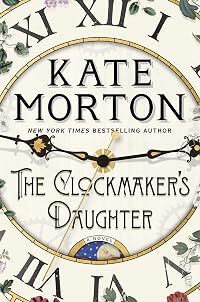
The Clockmaker's Daughter
by Kate Morton
On This Page
Description
"A rich, spellbinding new novel from the author of The Lake House - the story of a love affair and a mysterious murder that cast their shadows across generations, set in England from the 1860's until the present day"--Tags
Recommendations



Member Recommendations
Member Reviews
Kate Morton is one of my favourite writers. Every time I finish one of her books, I'm sure it's the best one yet. And it is, until the next one comes along. The Clockmaker's Daughter is her latest - and yes, it's the best one yet!
Morton again employs all the elements that are hallmarks of her work. Past and present narratives, houses, their history, love lost, love found, an element of other otherworldliness this time and so much more.
"My real name, no one remembers. The truth about that summer, no one else knows."
Summer 1862. A group of artists and friends plan to spend a month at Edward Radcliffe's new home, Birchwood Manor. But before the month is out, one of them will be dead, a priceless heirloom is missing and Edward's life will show more never the same. Over one hundred and fifty years later, Elodie, a young archivist, uncovers photographs that seem somehow familiar to her....
"The woman in the white gloves unlatched the dull silver buckle and the satchel held its breath. Open me, open me, open me....She pushed back its leather strap and for the first time in over a century light swept into the satchel's dark corners."
The past has always fascinated me, bits of history and lore woven into family stories. Pictures of those now gone, houses now emptied. What is their story? I was immediately drawn to Elodie and couldn't wait to discover and uncover what happened in the past at Birchwood and why she seems to know the house. But it's not only Elodie we hear from. The past is unfolded from many different, yet intertwined viewpoints and time frames. Each and every one of those characters are so very well drawn. All of them have a connection to Birchwood Manor and feel inexplicably drawn to the house.
"Edward used to say that the river possessed a primeval memory of everything that had ever happened. It occurs to me that this house is like that, too. It remembers, just as I do. It remembers everything." It is this voice that I found the most poignant - the voice in the house. (No spoilers, so not saying another word about this.)
Kate Morton's descriptions are so wonderful. The house sprang alive for me - I could feel the warm spot on the turn of the stairs, smell the flowers in the garden, envision myself under a shady tree listening to the sound of the river going by.
I started reading slower as I realized I was reaching the end. I knew what was coming and I just didn't want to face it. But I wanted to see how all of those threads and lives would weave together.
My review doesn't do this book justice. But suffice it to say that I loved it. Absolutely, positively recommended. Pick up a copy for snowy nights reading.
"Each clock is unique, he used to tell me. And just like a person, its face, whether plain or pretty, is but a mask for the intricate mechanism it concealed." show less
Morton again employs all the elements that are hallmarks of her work. Past and present narratives, houses, their history, love lost, love found, an element of other otherworldliness this time and so much more.
"My real name, no one remembers. The truth about that summer, no one else knows."
Summer 1862. A group of artists and friends plan to spend a month at Edward Radcliffe's new home, Birchwood Manor. But before the month is out, one of them will be dead, a priceless heirloom is missing and Edward's life will show more never the same. Over one hundred and fifty years later, Elodie, a young archivist, uncovers photographs that seem somehow familiar to her....
"The woman in the white gloves unlatched the dull silver buckle and the satchel held its breath. Open me, open me, open me....She pushed back its leather strap and for the first time in over a century light swept into the satchel's dark corners."
The past has always fascinated me, bits of history and lore woven into family stories. Pictures of those now gone, houses now emptied. What is their story? I was immediately drawn to Elodie and couldn't wait to discover and uncover what happened in the past at Birchwood and why she seems to know the house. But it's not only Elodie we hear from. The past is unfolded from many different, yet intertwined viewpoints and time frames. Each and every one of those characters are so very well drawn. All of them have a connection to Birchwood Manor and feel inexplicably drawn to the house.
"Edward used to say that the river possessed a primeval memory of everything that had ever happened. It occurs to me that this house is like that, too. It remembers, just as I do. It remembers everything." It is this voice that I found the most poignant - the voice in the house. (No spoilers, so not saying another word about this.)
Kate Morton's descriptions are so wonderful. The house sprang alive for me - I could feel the warm spot on the turn of the stairs, smell the flowers in the garden, envision myself under a shady tree listening to the sound of the river going by.
I started reading slower as I realized I was reaching the end. I knew what was coming and I just didn't want to face it. But I wanted to see how all of those threads and lives would weave together.
My review doesn't do this book justice. But suffice it to say that I loved it. Absolutely, positively recommended. Pick up a copy for snowy nights reading.
"Each clock is unique, he used to tell me. And just like a person, its face, whether plain or pretty, is but a mask for the intricate mechanism it concealed." show less
You know those kinds of stories that are made up of a bunch of different smaller stories connected by a few details that bring everything together in one larger story? I love those stories. This is a prime example of that.
In The Clockmaker’s Daughter, the threads that tie everything together are an old house in England and a mystery surrounding a fatal incident that took place there in 1862. A century and a half later, the mystery begins to unravel as we uncover pieces of the puzzle one by one, tracing the story through history as it is told by the characters who played a part in its unfolding.
One woman dead, and another missing; a priceless heirloom and a special painting disappeared; and the questions hovering over everything: what show more really happened that day? And who is the clockmaker’s daughter?
This was the first Kate Morton book I’ve read, and I plan to read more! show less
In The Clockmaker’s Daughter, the threads that tie everything together are an old house in England and a mystery surrounding a fatal incident that took place there in 1862. A century and a half later, the mystery begins to unravel as we uncover pieces of the puzzle one by one, tracing the story through history as it is told by the characters who played a part in its unfolding.
One woman dead, and another missing; a priceless heirloom and a special painting disappeared; and the questions hovering over everything: what show more really happened that day? And who is the clockmaker’s daughter?
This was the first Kate Morton book I’ve read, and I plan to read more! show less
If you ever watch The Great British Baking Show, you'll know there's always one contestant on every season that is style over substance. Their confections are beautiful but not very tasty. If Kate Morton baked, she would be that contestant. Her writing was evocative and descriptive and refreshing. However, not even the beautiful prose could make up for a shell of a story.
The jacket of this book makes it seem like there are two timelines: 1862's "clockmaker's daughter" and 2017's Elodie, the sensitive young woman who just doesn't fit in with her fiancé's wealthy and flashy life. First of all, I feel like this character is in every contemporary novel: a young woman who isn't interesting in the slightest except for her love of antiques show more and sentimentality, but everyone else is interested in her, for some reason. I can't stand her, let alone sympathize with her, but I digress.
Maybe I would've grown to like Elodie if I spent more time with her. Instead, there are about 6 more storylines: Ada, Lucy, Leonard, Julie, the treasure hunter, Tip, and I think even Lauren, Elodie's dead mother. Each character got about three chapters and then disappeared. No evolution. No resolution. Nothing. Just poof. It was extremely aggravating. The only person I was sympathetic with was Julie because her story seemed to have an arc while the others didn't. Morton bit off more than she could chew in this book, trying to make it all fancy and literary by jumping around in the timeline and trying to turn the house into a character.
I could go on and on about how boring Elodie was, how her sudden revelation at the end of the book was completely out of character and made no sense, and just how useless she was. I could also wax poetic on how obnoxious it was jumping timelines, how it felt like I was being conned into a caring about a character only to have them disappear. Instead, I'm just going to tell you to stay away from this unless you're one of those people who only reads what everyone else is talking about. Lucky for you, no one seems to be talking about this book or author. show less
The jacket of this book makes it seem like there are two timelines: 1862's "clockmaker's daughter" and 2017's Elodie, the sensitive young woman who just doesn't fit in with her fiancé's wealthy and flashy life. First of all, I feel like this character is in every contemporary novel: a young woman who isn't interesting in the slightest except for her love of antiques show more and sentimentality, but everyone else is interested in her, for some reason. I can't stand her, let alone sympathize with her, but I digress.
Maybe I would've grown to like Elodie if I spent more time with her. Instead, there are about 6 more storylines: Ada, Lucy, Leonard, Julie, the treasure hunter, Tip, and I think even Lauren, Elodie's dead mother. Each character got about three chapters and then disappeared. No evolution. No resolution. Nothing. Just poof. It was extremely aggravating. The only person I was sympathetic with was Julie because her story seemed to have an arc while the others didn't. Morton bit off more than she could chew in this book, trying to make it all fancy and literary by jumping around in the timeline and trying to turn the house into a character.
I could go on and on about how boring Elodie was, how her sudden revelation at the end of the book was completely out of character and made no sense, and just how useless she was. I could also wax poetic on how obnoxious it was jumping timelines, how it felt like I was being conned into a caring about a character only to have them disappear. Instead, I'm just going to tell you to stay away from this unless you're one of those people who only reads what everyone else is talking about. Lucky for you, no one seems to be talking about this book or author. show less
I don’t know why it took me so long to get around to reading Kate Morton’s The Clockmaker’s Daughter. After all, I always enjoy her writing and appreciate how finely layered her stories are. Plus, I particularly love the mix of Gothic and historical fiction she brings to each story.
The Clockmaker’s Daughter is a slow burn of a story, one in which the pace exponentially speeds up the further into the story you go. Told between different time periods and differing points of view, the mystery at the heart of the story comes into focus piece by piece. As is often the case in a Kate Morton novel, you will probably be able to predict one plot mystery, but the other will confound you until the very end. Ms. Morton seems to excel at show more keeping all her cards close to her chest so that you have no choice but to go along for the full ride if you want to see the full answer to the mystery.
The Clockmaker’s Daughter is another strong novel by someone who seems to do nothing but write good, atmospheric historical fiction mysteries. Ms. Morton’s consistently strong characters, her attention to detail, her delicate balancing act between story-telling and story-showing, and the added Gothic touches always appeal to a wide audience, and this one is no different. show less
The Clockmaker’s Daughter is a slow burn of a story, one in which the pace exponentially speeds up the further into the story you go. Told between different time periods and differing points of view, the mystery at the heart of the story comes into focus piece by piece. As is often the case in a Kate Morton novel, you will probably be able to predict one plot mystery, but the other will confound you until the very end. Ms. Morton seems to excel at show more keeping all her cards close to her chest so that you have no choice but to go along for the full ride if you want to see the full answer to the mystery.
The Clockmaker’s Daughter is another strong novel by someone who seems to do nothing but write good, atmospheric historical fiction mysteries. Ms. Morton’s consistently strong characters, her attention to detail, her delicate balancing act between story-telling and story-showing, and the added Gothic touches always appeal to a wide audience, and this one is no different. show less
As someone who loved Kate Morton's The Secret Keeper, I was eager to get my hands on the galley of her newest book. When I began it, I was startled to find that one of the main points of view was that of a ghost. I usually don't like ghost stories, but I persevered, and I was glad I did. This is a story that is told across the ages, from victorian times to present-day. The the story lines wove together in ways that were surprising, and must have taken quite a bit of forethought from the author. The ending was satisfying, but at the same time left partially open to the reader's interpretation. While the Secret Keeper is still my favorite from Kate Morton, I liked this one as well.
There's something so magical about a new Kate Morton book. I love her writing style and I have to say that when I was reading The Clockmaker's Daughter, I found myself marvelling at the way she manages to write with such authenticity where other writers might struggle with bringing such a story to life through the page. She's absolutely at the top of her game.
Reading a Kate Morton is a time undertaking. They're always big, this one is 600 pages, but the undertaking is one well worth making as it's like starting out on a whole new adventure. Having said that, I did find this book took a little getting into, not in a 'I'm bored with this' kind of way but more in terms of having to take it slowly, absorb it all and wait whilst this show more incredibly talented writer started to bring all the threads together.
And it was worth waiting for. The story is wonderfully intricate and involving. It's told by multiple voices over the course of 160 or so years which seem at first to have little connection to each other, but then secrets are revealed, mysteries start to be resolved and all of a sudden there is a dawning realisation of how everything and everybody is interlinked. The main characters are Elodie Winslow, the archivist who finds something in the course of her work that not only piques her interest but actually seems to have an invisible thread drawing her to Birchwood Manor, and an at first unknown narrator whose story is the glue that binds herself and Elodie with the other voices that we hear. I loved both of them, even though they're quite different people, but I also very much enjoyed the sections looking at the other characters' and their time at Birchwood Manor.
As is customary with Morton's work, a house is at the very heart of the action and this time it is Birchwood Manor which takes centre stage. It has an ethereal presence in the narrative and if you're thinking that a house can't have a presence then you're wrong as this one most definitely does.
The Clockmaker's Daughter is just utterly beautiful and enchanting, engrossing and moving. It covers a large period in time in fine fashion, taking us from a group of artists, through the two world wars, through the various incarnations of the house, right up to the present day, delighting the reader with an array of fascinating characters with their very own stories to tell. It's a book to savour and enjoy and to thoroughly absorb yourself in. That's what I did and I had myself an absolutely amazing experience. show less
Reading a Kate Morton is a time undertaking. They're always big, this one is 600 pages, but the undertaking is one well worth making as it's like starting out on a whole new adventure. Having said that, I did find this book took a little getting into, not in a 'I'm bored with this' kind of way but more in terms of having to take it slowly, absorb it all and wait whilst this show more incredibly talented writer started to bring all the threads together.
And it was worth waiting for. The story is wonderfully intricate and involving. It's told by multiple voices over the course of 160 or so years which seem at first to have little connection to each other, but then secrets are revealed, mysteries start to be resolved and all of a sudden there is a dawning realisation of how everything and everybody is interlinked. The main characters are Elodie Winslow, the archivist who finds something in the course of her work that not only piques her interest but actually seems to have an invisible thread drawing her to Birchwood Manor, and an at first unknown narrator whose story is the glue that binds herself and Elodie with the other voices that we hear. I loved both of them, even though they're quite different people, but I also very much enjoyed the sections looking at the other characters' and their time at Birchwood Manor.
As is customary with Morton's work, a house is at the very heart of the action and this time it is Birchwood Manor which takes centre stage. It has an ethereal presence in the narrative and if you're thinking that a house can't have a presence then you're wrong as this one most definitely does.
The Clockmaker's Daughter is just utterly beautiful and enchanting, engrossing and moving. It covers a large period in time in fine fashion, taking us from a group of artists, through the two world wars, through the various incarnations of the house, right up to the present day, delighting the reader with an array of fascinating characters with their very own stories to tell. It's a book to savour and enjoy and to thoroughly absorb yourself in. That's what I did and I had myself an absolutely amazing experience. show less
I always look forward to a new Kate Morton novel. Seeing her name on the cover means I’m guaranteed a read full of history, plot twists and mystery. The Clockmaker’s Daughter will not disappoint her fans and will bring her many new ones. It has all the ingredients you need for a great weekend of reading – many pages (don’t worry, they fly by), a house with a mysterious history and a plot of seemingly unlinked characters that all comes together in the end.
It’s a little difficult to explain the plot of The Clockmaker’s Daughter without spoiling some of the surprises. There is also quite a big cast of characters across the time periods, which can be briefly confusing to work out where they fit. In the present day, Elodie is an show more archivist. She finds in a forgotten box a number of items that belong to Edward Radcliffe, a Victorian painter. It doesn’t make a lot of sense to her, as the person’s items she is archiving didn’t know him well. But a photograph and sketchbook bring back memories to Elodie and she isn’t sure why. How is the house, Birchwood Manor, linked to her family? She undertakes a journey to find out why. Separately, the story of Edward Radcliffe’s fateful summer is told by an unknown narrator in the first person. How did a man whose star was rising disappear into obscurity? What happened to Birchwood Manor in the years after Edward left? This is revealed from the viewpoints of different characters at momentous points in history.
Overall, The Clockmaker’s Daughter is a historical mystery, explored over a century later. But there are additional elements and twists to the mystery which will keep readers enthralled through all 585 pages. There are also a few hints of romance as well as fascinating points of history. The English countryside setting gives the book a hint of the Gothic, particularly at night, but is also infused with light. Morton cleverly uses the weather at Birchwood Manor to echo the feelings of the characters – the wonder of summer in full sunlight and the terror of stormy darkness. Birchwood Manor is not only a setting, but a character in its own right. The house gradually reveals to both the characters and the reader its secrets, but only when it wants to. (Sometimes that is decades after the fact). Birchwood Manor also greatly contributes to the atmosphere of the story (especially when combined with the weather). It comes across as more than just a collection of bricks and wood, but a living, breathing soul. It tends to affect all the characters in some way – from Edward’s first encounter to Elodie’s recognition after seeing the sketch.
As for the characters, the major ones are easy to recognise as they are all so different. Each has a clear reason for their involvement with Birchwood Manor and secrets to tell. Some of the minor characters, although unique, were slightly more difficult to recall. (One example being Tip – he’s a fairly minor character in Elodie’s story, but when the setting moves back to his youth, it took me some time to reconcile the child with the old man). Perhaps the most mysterious and memorable was the unnamed narrator. She has a lot to reveal and she does so slowly, like peeling layers of an onion. I looked forward to her chapters most as they provided ‘clues’ linking everyone together.
The Clockmaker’s Daughter is a satisfying read that takes the reader through history of ordinary people with extraordinary stories. Definitely one for the holiday reading list.
Thank you to Allen & Unwin for the copy of this book. My review is honest.
http://samstillreading.wordpress.com show less
It’s a little difficult to explain the plot of The Clockmaker’s Daughter without spoiling some of the surprises. There is also quite a big cast of characters across the time periods, which can be briefly confusing to work out where they fit. In the present day, Elodie is an show more archivist. She finds in a forgotten box a number of items that belong to Edward Radcliffe, a Victorian painter. It doesn’t make a lot of sense to her, as the person’s items she is archiving didn’t know him well. But a photograph and sketchbook bring back memories to Elodie and she isn’t sure why. How is the house, Birchwood Manor, linked to her family? She undertakes a journey to find out why. Separately, the story of Edward Radcliffe’s fateful summer is told by an unknown narrator in the first person. How did a man whose star was rising disappear into obscurity? What happened to Birchwood Manor in the years after Edward left? This is revealed from the viewpoints of different characters at momentous points in history.
Overall, The Clockmaker’s Daughter is a historical mystery, explored over a century later. But there are additional elements and twists to the mystery which will keep readers enthralled through all 585 pages. There are also a few hints of romance as well as fascinating points of history. The English countryside setting gives the book a hint of the Gothic, particularly at night, but is also infused with light. Morton cleverly uses the weather at Birchwood Manor to echo the feelings of the characters – the wonder of summer in full sunlight and the terror of stormy darkness. Birchwood Manor is not only a setting, but a character in its own right. The house gradually reveals to both the characters and the reader its secrets, but only when it wants to. (Sometimes that is decades after the fact). Birchwood Manor also greatly contributes to the atmosphere of the story (especially when combined with the weather). It comes across as more than just a collection of bricks and wood, but a living, breathing soul. It tends to affect all the characters in some way – from Edward’s first encounter to Elodie’s recognition after seeing the sketch.
As for the characters, the major ones are easy to recognise as they are all so different. Each has a clear reason for their involvement with Birchwood Manor and secrets to tell. Some of the minor characters, although unique, were slightly more difficult to recall. (One example being Tip – he’s a fairly minor character in Elodie’s story, but when the setting moves back to his youth, it took me some time to reconcile the child with the old man). Perhaps the most mysterious and memorable was the unnamed narrator. She has a lot to reveal and she does so slowly, like peeling layers of an onion. I looked forward to her chapters most as they provided ‘clues’ linking everyone together.
The Clockmaker’s Daughter is a satisfying read that takes the reader through history of ordinary people with extraordinary stories. Definitely one for the holiday reading list.
Thank you to Allen & Unwin for the copy of this book. My review is honest.
http://samstillreading.wordpress.com show less
Members
- Recently Added By
Lists

Top Five Books of 2018
802 works; 265 members

Historical Fiction
889 works; 89 members

Litsy Awards 2018
248 works; 9 members

Books Read in 2018
4,360 works; 110 members

Books Read in 2019
4,052 works; 108 members

Books Read in 2021
5,361 works; 113 members

Book of the Month Selections 2016 to Present
130 works; 5 members
Author Information

19+ Works 31,233 Members
Kate Morton was born in South Australia in 1976. She earned a degree in speech and drama from Trinity College London, an English literature degree from the University of Queensland, and a master's degree focusing on tragedy in Victorian literature from the University of Queensland. She also completed a summer Shakespeare course at the Royal show more Academy of Dramatic Art in London. She is currently enrolled in a Ph.D. program researching contemporary novels that marry elements of gothic and mystery fiction. She won the Australian Book Industry Award for General Fiction Book of the Year in 2007 for her debut novel, The Shifting Fog, also known as The House at Riverton. Her other books include The Distant Hours, and The Forgotten Garden, which won the Australian Book Industry Award for General Fiction Book of the Year in 2009. Her books The Secret Keeper and The Lake House were New York Times bestsellers. (Bowker Author Biography) show less
Some Editions
Awards and Honors
Awards
Distinctions
Work Relationships
Is contained in
Has as a student's study guide
Common Knowledge
- Canonical title
- The Clockmaker's Daughter
- Original title
- The Clockmaker's Daughter
- Original publication date
- 2018-10-09
- People/Characters*
- Elodie Winslow; Edward Radcliffe; Lily Millington; Lucy Radcliffe; Ada Lovegrove; Thurston Holmes (show all 7); Fanny Brown
- Important places
- London, England, UK; England, UK
- Important events
- World War I
- Dedication
- Für Didee, weil sie eine von den Müttern ist, die uns ein Leben auf dem Gipfel des Berges hat führen lassen, und weil sie mir den besten Rat für das Schreeben gegeben hat, den ich je bekommen habe.
To Didee, for be... (show all)ing the sort of mother who took us to live on a mountaintop and for giving me the best piece of writing advice I've ever received. - First words
- Wir waren auch Birchwood Manor gekommen, weil Edward gesagt hast, dort spuke es.
We came to Birchwood Manor because Edward said that it was haunted. - Last words
- (Click to show. Warning: May contain spoilers.)Ich bin die Sterne im Dunkeln, wenn Du Dich alleine fühlst.
I am the stars in the dark when you feel yourself alone. - Original language
- English
- Canonical DDC/MDS
- 823.92
- Canonical LCC
- PR9619.4.M74
*Some information comes from Common Knowledge in other languages. Click "Edit" for more information.
Classifications
Statistics
- Members
- 3,280
- Popularity
- 5,208
- Reviews
- 141
- Rating
- (3.64)
- Languages
- 14 — Catalan, Czech, Danish, Dutch, English, Finnish, French, German, Italian, Polish, Romanian, Spanish, Swedish, Portuguese (Portugal)
- Media
- Paper, Audiobook, Ebook
- ISBNs
- 78
- ASINs
- 17