On This Page
Description
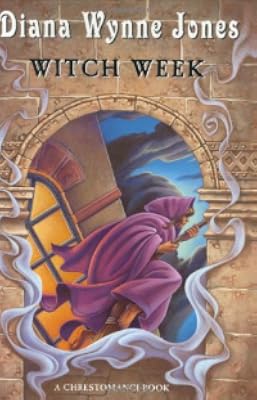
When a teacher at an English boarding school finds a note on his desk accusing someone in the class of being a witch, magical things begin to happen and an Inquisitor is summoned.Tags
Recommendations







Member Reviews
A funny, quick read as entertaining for adults as it is for children. With the obvious similarities in the boarding school setting and the children's discovery of their magical powers, Harry Potter comparisons abound. While they are similar on several levels (and I love both), the tone and feeling of this novel is all its own. Jones is obviously adept at building worlds and populating them with interesting magical details, but even more impressive is her characterization of the kids of 6B - the main characters of Nan and Charles seem especially real, and even with the more minor characters like Nirupam and Estelle, Jones is precise enough with her dialogue and descriptions to make them seem like real people. She clearly has a profound show more understanding of how children of this age relate to one another, and what's more, she doesn't write down to her readers or make her characters any less complex simply because they are young. The beginning may be somewhat slow, but the second half is just a delight. Recommended for anyone who likes boarding school books, quality YA fantasy, or laughing. show less
The best so-far of the “Chrestomanci” books, this story takes on so many complex and difficult things to do in a YA frame, and succeeds. And, just for fun, there’s something clever on every page, Middle-school angst done in a way that remains readable even as you cringe, and magic that isn’t boring. Author makes head-jumping look easy.
One of the very best of Jones' books that I have read. Nominally part of the Chrestomanci series, but Chrestomanci's appearance, while crucial, is brief. The introductory chapter, with each student introduced by their journal entries, is a bravura opening. I want to go back and read the first chapter again, to better connect the characters with their first entries.
The grimness of the school made it hard for me to decide whether I should identify more with Charles Morgan, Nan Pilgrim, or Brian Wentworth. On the other hand, some parts were so hilarious that I laughed out loud.
The grimness of the school made it hard for me to decide whether I should identify more with Charles Morgan, Nan Pilgrim, or Brian Wentworth. On the other hand, some parts were so hilarious that I laughed out loud.
At a rather miserable English boarding school called Larwood House, an anonymous note claiming that "someone in 6B is a witch" sends the school into an uproar. Witchcraft is illegal, and if anyone is found to be a witch, they'll be burned. It transpires that at least four and possibly more students are, in fact, witches, though not all of them realize it - and when they finally escape and run for help, the former safe house is no longer operational; the old lady there can only give them a spell and tell them to run. The spell, when they use it, summons an enchanter called Chrestomanci, who determines that something is wrong with their world, and it will take all their efforts to fix it.
Quotes
[He]...was not sure that a person's character show more could be separated from his situation in quite this way. (147)
"It never ceases to amaze me," he said, "the way people always manage to worry about the wrong things." (Chrestomanci, 172)
"[Alternative worlds] are made from the great events in history...where it is possible for things to go two ways." (Nirupam, 172-173)
"A surprisingly small change always alters the new world almost out of recognition." (Chrestomanci, 173)
"Do you know what I think?" she whispered. "When you grow up to be an author and write books, you'll think you're making the books up, but they'll all really be true, somewhere." (Estelle to Nan, 211) show less
Quotes
[He]...was not sure that a person's character show more could be separated from his situation in quite this way. (147)
"It never ceases to amaze me," he said, "the way people always manage to worry about the wrong things." (Chrestomanci, 172)
"[Alternative worlds] are made from the great events in history...where it is possible for things to go two ways." (Nirupam, 172-173)
"A surprisingly small change always alters the new world almost out of recognition." (Chrestomanci, 173)
"Do you know what I think?" she whispered. "When you grow up to be an author and write books, you'll think you're making the books up, but they'll all really be true, somewhere." (Estelle to Nan, 211) show less
Witch Week was one of the first Chrestomanci books to focus on a female protagonist’s point of view, and is much the better for that. It feels as though Diana Wynne Jones has included a lot of autobiographical details in her treatment of Nan, an orphan witch girl who is at Larwood House, a boarding school in Hertfordshire. Nan is much more of a rounded character than the young male leads in previous books in the sequence, Christopher, Cat and Conrad, who sometimes come across as pleasant wimps or clueless actors in the unfolding story. True, Nan is largely pleasant and clueless in her attempt to discover the truth about the magic that is happening around her, but I get more of a sense of a real person here than the ciphers that are show more Christopher, Cat and Conrad.
The premise of the story is that Nan and her classmates exist in a world where witchcraft is punishable by death but where magic undeniably exists. When it is suggested that someone in class 2Y is a witch, the ball starts rolling that inevitably leads to a literal witch-hunt, in which not only Nan but several other students are put under suspicion. Add to that the tedium of lessons, the institutionalised bullying and the sense of control slipping away, and we have the inevitable conflicts that drive the story forward towards its denouement and final resolution. Along the way we have Jones’ confident handling of themes, personalities and atmosphere that makes her writing such a joy to read, not to mention the puns and other examples of humour that contrast with the fear that grips the heart when witch-burnings are mentioned.
I'm going to mention the dreaded P word, only because so many readers seem to latch on to the very superficial similarities with the Harry Potter books. But Larwood House is the antithesis of Hogwarts (as well as significantly predating the appearance of Rowling's books): magic is discouraged rather than encouraged. Interestingly, there is the similar-sounding and equally unpleasant Lowood House in Jane Eyre which many commentators point to as an influence, but I've also found out that there is a Larwood School, founded in 1971, in Stevenage, Hertfordshire (the county where Witch Week is set); however, this is a modern building, purpose-built for primary schoolchildren with special needs, and though witches could be said to have special needs in this Series 12 world I don't think that was what Jones had in mind.
I loved the final resolution, though I was still left with the logical confusion familiar from other DWJ books. If that world split off from our own world (12B is it?) in 1605 when Parliament was blown up, why was it necessary to merge the two worlds again when it wasn't necessary to do the same with others in Series 12?
Finally, I see that in North American books the pupils are in class 6B, which makes them sixth grade and therefore 11 years old, going on 12. In the UK the pupils are in 2Y which, in the old system before the National Curriculum was established, would have made them 12 going on 13. The UK version seems to me to render the children more believable--more mature, more bolshie, less awkward than if they had just moved from primary school. show less
The premise of the story is that Nan and her classmates exist in a world where witchcraft is punishable by death but where magic undeniably exists. When it is suggested that someone in class 2Y is a witch, the ball starts rolling that inevitably leads to a literal witch-hunt, in which not only Nan but several other students are put under suspicion. Add to that the tedium of lessons, the institutionalised bullying and the sense of control slipping away, and we have the inevitable conflicts that drive the story forward towards its denouement and final resolution. Along the way we have Jones’ confident handling of themes, personalities and atmosphere that makes her writing such a joy to read, not to mention the puns and other examples of humour that contrast with the fear that grips the heart when witch-burnings are mentioned.
I'm going to mention the dreaded P word, only because so many readers seem to latch on to the very superficial similarities with the Harry Potter books. But Larwood House is the antithesis of Hogwarts (as well as significantly predating the appearance of Rowling's books): magic is discouraged rather than encouraged. Interestingly, there is the similar-sounding and equally unpleasant Lowood House in Jane Eyre which many commentators point to as an influence, but I've also found out that there is a Larwood School, founded in 1971, in Stevenage, Hertfordshire (the county where Witch Week is set); however, this is a modern building, purpose-built for primary schoolchildren with special needs, and though witches could be said to have special needs in this Series 12 world I don't think that was what Jones had in mind.
I loved the final resolution, though I was still left with the logical confusion familiar from other DWJ books. If that world split off from our own world (12B is it?) in 1605 when Parliament was blown up, why was it necessary to merge the two worlds again when it wasn't necessary to do the same with others in Series 12?
Finally, I see that in North American books the pupils are in class 6B, which makes them sixth grade and therefore 11 years old, going on 12. In the UK the pupils are in 2Y which, in the old system before the National Curriculum was established, would have made them 12 going on 13. The UK version seems to me to render the children more believable--more mature, more bolshie, less awkward than if they had just moved from primary school. show less
This was my first DWJ book. I read it because I really liked Harry Potter and was searching for something in a similar vein. I had to be younger than ten at the time. My sister Erin pointed it out to me in the library because the cover of this book had kids riding brooms (or mops, etc.) and I immediately became invested in it. This one is compared to the Potter series the most, because hey, witches in boarding school? But there are a few notable differences.
1) All the kids hate each other. There is no Golden Trio bullshit. They're all unhappy and annoyed by everyone else, and it is hilarious.
2) This predates Harry by at least a decade.
3) Larwood House (likely a spin-off of Jane Eyre's Lowood) is an unhappy place to be. No Great Hall, no show more cheerful Headmaster.
4) Witchcraft is a bad thing here. However, almost all of the students are witches. Isn't THAT a dilemma.
On top of that the plot is just so much more complex, particularly around the end, which is sort of Diana's trademark. Endings you aren't expecting that have more than one level to them, and, I've noticed, she tends to culminate things with very large groups present all talking at once, with this book as no exception.
Oh yes, and Christopher Chant/Chrestomanci? Is still the best ever. show less
1) All the kids hate each other. There is no Golden Trio bullshit. They're all unhappy and annoyed by everyone else, and it is hilarious.
2) This predates Harry by at least a decade.
3) Larwood House (likely a spin-off of Jane Eyre's Lowood) is an unhappy place to be. No Great Hall, no show more cheerful Headmaster.
4) Witchcraft is a bad thing here. However, almost all of the students are witches. Isn't THAT a dilemma.
On top of that the plot is just so much more complex, particularly around the end, which is sort of Diana's trademark. Endings you aren't expecting that have more than one level to them, and, I've noticed, she tends to culminate things with very large groups present all talking at once, with this book as no exception.
Oh yes, and Christopher Chant/Chrestomanci? Is still the best ever. show less
This is a school story about magic; but not a la Hogwarts. In fact, the story takes place on a parallel Earth where magic is forbidden (as opposed to merely hidden). Though this is part of the Chrestomanci series (book 5), we don't see the connection until around the final quarter of the book.
At the beginning of Witch Week, a supernaturally powerful time of the year between Hallowe'en and Guy Fawkes day, an anonymous note claiming that one of the class members is a witch lands on a teacher's desk. In an universe where magic practitioners are persecuted and burned at the stake, this leads to a fraught week where accusations and untamed magic abound, until the Chrestomanci is called in to save the day.
Although I found the ambience of this show more book (a school story with cliques and bullies and lots of people keeping secrets) very different from other Chrestomanci books, it had me laughing out aloud at points. Mind you, each book in the series does have a different 'flavour'.
A very nice read, up to Ms Wynne Jones's usual high standards.
Recommended. show less
At the beginning of Witch Week, a supernaturally powerful time of the year between Hallowe'en and Guy Fawkes day, an anonymous note claiming that one of the class members is a witch lands on a teacher's desk. In an universe where magic practitioners are persecuted and burned at the stake, this leads to a fraught week where accusations and untamed magic abound, until the Chrestomanci is called in to save the day.
Although I found the ambience of this show more book (a school story with cliques and bullies and lots of people keeping secrets) very different from other Chrestomanci books, it had me laughing out aloud at points. Mind you, each book in the series does have a different 'flavour'.
A very nice read, up to Ms Wynne Jones's usual high standards.
Recommended. show less
Members
- Recently Added By
Lists

Favorite Childhood Books
1,651 works; 515 members

Best Fantasy Novels
821 works; 361 members

Best Books Set in Boarding Schools
160 works; 56 members

NPRs your favorites: 100 Best Ever Teen Novels
237 works; 49 members

Best School Stories
219 works; 22 members

Favourite books by Diana Wynne Jones
35 works; 3 members

Elevenses
316 works; 88 members

Magic School Kidlit
43 works; 3 members

1980s
356 works; 23 members

Best First Lines
133 works; 8 members

Alternate Englands
34 works; 7 members

Witches and Wizards Oh My
135 works; 12 members

Main Character is aged 10-19
363 works; 6 members

Books Read in 2011
684 works; 20 members

Witch Hunts
30 works; 7 members

Books With Time Words in the Title
160 works; 4 members

Books Read in 2018
4,360 works; 110 members
Witchy Fiction
253 works; 126 members
Author Information

112+ Works 80,588 Members
Diana Wynne Jones was born in London on August 16, 1934. In 1953, she began school at St. Anne's College Oxford and attended lectures by J. R. R. Tolkien and C. S. Lewis. After graduation, she created plays for children that were performed at the London Arts Theatre. Her first book was published in 1973. She wrote over 40 books during her lifetime show more including Dark Lord of Derkholm, Earwig and the Witch, and the Chrestomanci series. She won numerous awards including the Guardian Award for Children's Books in 1977 for Charmed Life, the Boston Globe-Horn Book Award in 1984 for Archer's Goon, the Mythopeic Award in 1999, the Karl Edward Wagner Award in 1999, and the Life Achievement Award from the World Fantasy Organization in 2007. Her book Howl's Moving Castle was adapted into an animated film by director Hayao Miyazaki, and the film was nominated for an Academy Award for Best Animated Feature. She died from lung cancer on March 26, 2011 at the age of 76. (Bowker Author Biography) show less
Some Editions
Awards and Honors
Awards
Notable Lists
Series


Work Relationships
Common Knowledge
- Canonical title
- Witch Week
- Original title
- Witch Week
- Original publication date
- 1982
- People/Characters
- Chrestomanci; Miss Cadwallader; Mr Crossley; Mr Wentworth; Brian Wentworth; Charles Morgan (show all 9); Nan Pilgrim; Nirupam Singh; Simon Silverson
- Important places
- Series Twelve (Related Worlds)
- First words
- The note said: someone in this class is a witch.
- Last words
- (Click to show. Warning: May contain spoilers.)'Me, Mr. Crossley, me, me, me!'
Classifications
- Genres
- Fiction and Literature, Kids, Tween, Fantasy
- DDC/MDS
- 823.914 — Literature & rhetoric English & Old English literatures English fiction 1900- 1901-1999 1945-1999
- LCC
- PZ7 .J684 .W — Language and Literature Fiction and juvenile belles lettres Fiction and juvenile belles lettres Juvenile belles lettres
- BISAC
Statistics
- Members
- 2,066
- Popularity
- 10,077
- Reviews
- 45
- Rating
- (3.88)
- Languages
- 10 — Danish, Dutch, English, French, German, Hebrew, Italian, Portuguese, Russian, Swedish
- Media
- Paper, Audiobook, Ebook
- ISBNs
- 46
- ASINs
- 12