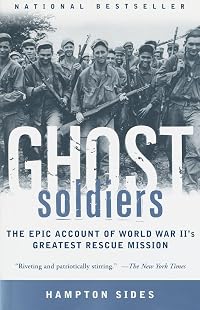
Ghost Soldiers: The Epic Account of World War II's Greatest Rescue Mission
by Hampton Sides
On This Page
Description
NATIONAL BESTSELLER • “The greatest World War II story never told” (Esquire)—an enthralling account of the heroic mission to rescue the last survivors of the Bataan Death March.On January 28, 1945, 121 hand-selected U.S. troops slipped behind enemy lines in the Philippines. Their mission: March thirty rugged miles to rescue 513 POWs languishing in a hellish camp, among them the last survivors of the infamous Bataan Death March. A recent prison massacre by Japanese soldiers elsewhere show more in the Philippines made the stakes impossibly high and left little time to plan the complex operation.
In Ghost Soldiers Hampton Sides vividly re-creates this daring raid, offering a minute-by-minute narration that unfolds alongside intimate portraits of the prisoners and their lives in the camp. Sides shows how the POWs banded together to survive, defying the Japanese authorities even as they endured starvation, tropical diseases, and torture. Harrowing, poignant, and inspiring, Ghost Soldiers is the mesmerizing story of a remarkable mission. It is also a testament to the human spirit, an account of enormous bravery and self-sacrifice amid the most trying conditions. show less
Tags
Recommendations
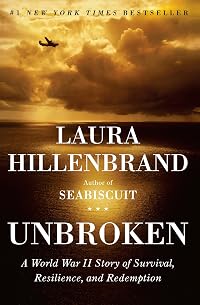


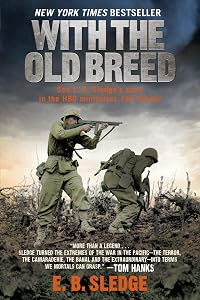












Member Recommendations
The Ghost Mountain Boys: Their Epic March and the Terrifying Battle for New Guinea--The Forgotten War of the South Pacific by James Campbell
NickBlasta Similar stories about jungle fighting in WW2.
kjuliff Both WWII POW historical war novels
Member Reviews
A nice supplement to the recently reviewed Tears in the Darkness, Ghost Soldiers covers both the Bataan Death march in 1942 and the rescue of remaining POWs from a camp near Cabanatuan in 1945. It’s a good, workmanlike, military history of both. I prefer Tears for the Death March – especially because it shows a little more understanding toward the Japanese side – but Ghost Soldiers has to cover twice as much material in the same size volume so it’s understandable a lot has to be condensed.
The reaction of the POWs to their own rescue was interesting; there was almost Stockholm Syndrome at work. The POWs hadn’t seen any Americans in years. Suddenly their camp routine was interrupted by a hail of gunfire as the Japanese guard show more posts and barracks were riddled by the Ranger raiding party, then the Rangers stormed into the camp and began rounding up the POWs to get them out. Well, nobody had ever heard of “US Army Rangers”. They’d never seen US troops in those particular uniforms. They’d never seen M1 rifles, M1 carbines, M3 “grease guns” or bazookas. And all the incoming troops had yellow-tinged skin from the antimalarial Atabrine. The senior POW officer, Colonel Duckworth, outranked anybody in the raiding party and didn’t want to leave. Duckworth was a medical officer and had been performing heroically to keep POWs alive; one of his principles was “Don’t do anything to provoke the Japanese” – follow orders, don’t argue, don’t resist, don’t try to escape (escape was punished by shooting the escapee’s barrack mates, and Duckworth had actually established POW patrols to intercept escape attempts). Well, now suddenly, in the middle of the night, all the Japanese guards had been shot – certainly definable as “provoking” – and everybody was escaping. Duckworth had to be manhandled by a couple of Rangers – his arm was broken, ostensibly by “falling into a ditch” – and forced to leave. Many of the other POWs had spent years accumulating tiny caches of possessions – a few more rags, an extra canteen – and scurried back to their hiding places to pick them, unless intercepted by Rangers and turned around. The prisoners outnumbered the Rangers by about 5:1, so it must have been like herding cats. Eventually everybody was maneuvered out the camp gate, walking, hobbling, staggering and being carried.
The Rangers get the main focus, but they didn’t have to fight so much as they had to machine-gun completely surprised Japanese guards, then drag out POWs. The real fighting, in the sense that a lot of bullets went each way, was done at roadblocks set up by Filipino guerillas to intercept Japanese columns trying to reach the camp. The guerillas were eminently successfully, knocking out several Japanese tanks with a bazooka they had only received the previous day and withdrawing with few casualties and no KIA.
The freed POWs reacted the same way that the Tears in the Darkness POWs did – for several months, they ate anything they could get their hands on. They went back to the States together on the same transport, and as they passed under the Golden Gate they were greeted by an enormous “WELCOME HOME” banner and showered with money, food - and lingerie. Welcome was equally enthusiastic once they got ashore.
I’d like to read more about the POWs lives afterwards, especially to compare their experience to survivors of places like Auschwitz and the Gulag (and now the Hanoi Hilton). There must be a book about that somewhere.
Excellent maps on the endpapers, but no references (except as acknowledgements) and no index. There was a Signal Corps photographic section accompanying the raid, but it took place at night and, well, flashbulbs would have been a poor idea. There are some great pictures of the raiding column on the way in and the POWs on the way out, though, and a rather haunting page of pictures of participants at a 55-year reunion. show less
The reaction of the POWs to their own rescue was interesting; there was almost Stockholm Syndrome at work. The POWs hadn’t seen any Americans in years. Suddenly their camp routine was interrupted by a hail of gunfire as the Japanese guard show more posts and barracks were riddled by the Ranger raiding party, then the Rangers stormed into the camp and began rounding up the POWs to get them out. Well, nobody had ever heard of “US Army Rangers”. They’d never seen US troops in those particular uniforms. They’d never seen M1 rifles, M1 carbines, M3 “grease guns” or bazookas. And all the incoming troops had yellow-tinged skin from the antimalarial Atabrine. The senior POW officer, Colonel Duckworth, outranked anybody in the raiding party and didn’t want to leave. Duckworth was a medical officer and had been performing heroically to keep POWs alive; one of his principles was “Don’t do anything to provoke the Japanese” – follow orders, don’t argue, don’t resist, don’t try to escape (escape was punished by shooting the escapee’s barrack mates, and Duckworth had actually established POW patrols to intercept escape attempts). Well, now suddenly, in the middle of the night, all the Japanese guards had been shot – certainly definable as “provoking” – and everybody was escaping. Duckworth had to be manhandled by a couple of Rangers – his arm was broken, ostensibly by “falling into a ditch” – and forced to leave. Many of the other POWs had spent years accumulating tiny caches of possessions – a few more rags, an extra canteen – and scurried back to their hiding places to pick them, unless intercepted by Rangers and turned around. The prisoners outnumbered the Rangers by about 5:1, so it must have been like herding cats. Eventually everybody was maneuvered out the camp gate, walking, hobbling, staggering and being carried.
The Rangers get the main focus, but they didn’t have to fight so much as they had to machine-gun completely surprised Japanese guards, then drag out POWs. The real fighting, in the sense that a lot of bullets went each way, was done at roadblocks set up by Filipino guerillas to intercept Japanese columns trying to reach the camp. The guerillas were eminently successfully, knocking out several Japanese tanks with a bazooka they had only received the previous day and withdrawing with few casualties and no KIA.
The freed POWs reacted the same way that the Tears in the Darkness POWs did – for several months, they ate anything they could get their hands on. They went back to the States together on the same transport, and as they passed under the Golden Gate they were greeted by an enormous “WELCOME HOME” banner and showered with money, food - and lingerie. Welcome was equally enthusiastic once they got ashore.
I’d like to read more about the POWs lives afterwards, especially to compare their experience to survivors of places like Auschwitz and the Gulag (and now the Hanoi Hilton). There must be a book about that somewhere.
Excellent maps on the endpapers, but no references (except as acknowledgements) and no index. There was a Signal Corps photographic section accompanying the raid, but it took place at night and, well, flashbulbs would have been a poor idea. There are some great pictures of the raiding column on the way in and the POWs on the way out, though, and a rather haunting page of pictures of participants at a 55-year reunion. show less
This is my third Hampton Sides book, and in my humble opinion, no one writes better nonfiction than Sides does. His research is thorough, and his use of the language is masterful.
If you are like President Trump, and you think that American POWs are not heroes (“I like people who weren’t captured”), don’t bother reading this book. If, however, you revere the men and women who served this country and sacrificed years of their lives, often with brutal and severe mistreatment, this book will give you a graphic idea of what it is like to be a prisoner of war. This is the story of the American soldiers who after the Bataan Death March ended up in the Cabanatuan camp in the Philippines. The Japanese treatment of American soldiers is show more legendary, but this book will bring those war crimes to such a graphic and realistic level that it is almost impossible to read without frequent breaks. The heroes of this story, in addition to the POWs, are the members of the 6th Ranger Battalion and the Filipino guerrillas, who risked their lives and the lives of their families to help the rangers free the POWs. If you think you’ve read everything there is to read about the war in the Pacific, you haven’t unless you’ve read Hampton Sides’ “Ghost Soldiers.” It’s a difficult book to read, but it’s an important book in our nation’s history. show less
If you are like President Trump, and you think that American POWs are not heroes (“I like people who weren’t captured”), don’t bother reading this book. If, however, you revere the men and women who served this country and sacrificed years of their lives, often with brutal and severe mistreatment, this book will give you a graphic idea of what it is like to be a prisoner of war. This is the story of the American soldiers who after the Bataan Death March ended up in the Cabanatuan camp in the Philippines. The Japanese treatment of American soldiers is show more legendary, but this book will bring those war crimes to such a graphic and realistic level that it is almost impossible to read without frequent breaks. The heroes of this story, in addition to the POWs, are the members of the 6th Ranger Battalion and the Filipino guerrillas, who risked their lives and the lives of their families to help the rangers free the POWs. If you think you’ve read everything there is to read about the war in the Pacific, you haven’t unless you’ve read Hampton Sides’ “Ghost Soldiers.” It’s a difficult book to read, but it’s an important book in our nation’s history. show less
This book tells of the relatively unknown heroic rescue by US Army Rangers of Allied prisoners of the Japanese in the Philippines during WWII. The author covers not only the rescue itself, but also related information, such as the surreptitious provision of much-needed supplies needed to offset the brutally negligent treatment of the prisoners. The perspective alternates between the prisoners and the rescuers, at first jumping forward and backward by several years, which may be off-putting to some readers. I thought it was informative, but it was difficult for me to read about the atrocities, which were described in graphic detail. I had read In the Kingdom of Ice by this author, which was outstanding, so I think that l may have had show more unrealistic expectations for this one. show less
Well-written, breath-holding, stomach-churning, laughs, and tears fill the pages of [Ghost Soldiers] by Hampton Sides. It is the story of just over 100 soldiers, including members of the 6th Rangers, trekked through the rice paddies and fields to free the 513 POWs at the Cabanatuan Camp in the Philippines with little time to plan and no time to spare before the prisoners would be put to death by the departing Japanese. The book combines moment by moment movements of the rescuers, events transpiring in the camp, and individual cameos of the people involved - Japanese and American, prisoner and liberators.
Bought this book in 2022 purely because I loved the author's book called "On Desperate Ground" and hoped this book would draw me in as much as that one did. I read it during the summer of 2022 and finished it while on my way to exercise NATIVE FURY in Saudi Arabia. It's a good book and does a great job displaying the struggles these POWs went through during WWII that helped put things into perspective for me during an easy exercise in Saudi. I would only recommend this to someone who is very interested in this specific story, one of its characters, or WWII in the Philippines.
**Mom found the hardcover version of this book in 2024 somewhere cheap and bought it for me to replace my paperback version.
**Mom found the hardcover version of this book in 2024 somewhere cheap and bought it for me to replace my paperback version.
In Ghost Soldiers, author Hampton Sides tells not only the story of the rescue of the last prisoners of the Bataan Death March, but of the men involved- the battle for Bataan that was lost by the American's, the surrender, the march itself, and the imprisonment. Sides weaves the story of this epic rescue with an engrossing narrative of how it all came to be. He uses personal accounts as spoken/written by the actual participants to paint a vivid story of three years of hell in this Japanese POW camp. He pulls no punches when it comes to discussing/describing the life of these men.
As you read, you become acquainted with many of the individuals whose lives were irrevocably changed during this time.
Sides tells what is known not only of the show more POW's, Rangers, and Philippine scouts, but also of some of the Japanese involved, and (for me) he tells the story of a woman I had never heard of- a woman who had the. code name of Side Pockets. Claire Fisher was an American living in Manilla when the Japanese took over. Through a series of events described in the book she became a life saving espionage agent who not only passed information she got from the Japanese to the Americans, but also was able to secret lifesaving food and drugs to the camp for the benefit of the POW's.
This book is a must read for anyone with any interest at all in the Pacific Theater WWII experience. I don't see it as just a story of this one episode but as an overview of what the fighters in the Pacific Theater were against. show less
As you read, you become acquainted with many of the individuals whose lives were irrevocably changed during this time.
Sides tells what is known not only of the show more POW's, Rangers, and Philippine scouts, but also of some of the Japanese involved, and (for me) he tells the story of a woman I had never heard of- a woman who had the. code name of Side Pockets. Claire Fisher was an American living in Manilla when the Japanese took over. Through a series of events described in the book she became a life saving espionage agent who not only passed information she got from the Japanese to the Americans, but also was able to secret lifesaving food and drugs to the camp for the benefit of the POW's.
This book is a must read for anyone with any interest at all in the Pacific Theater WWII experience. I don't see it as just a story of this one episode but as an overview of what the fighters in the Pacific Theater were against. show less
Book on CD performed by James Naughton
From the book jacket On January 28, 1945, 121 hand-selected troops from the elite U.S. Army 6th Ranger Battalion slipped behind enemy lines in the Philippines. Their mission: March thirty miles in an attempt to rescue 513 American and British POWs who had spent three years in a surreally hellish camp near the city of Cabanatuan. The prisoners included the last survivors of the Bataan Death March. …. Elsewhere in the Philippines, the Japanese Army had already executed American prisoners as it retreated from the advancing U.S. Army.
My Reactions
Sides crafts a story that is gripping, informative, horrifying and inspiring. I was captured from page one and mesmerized throughout. I felt that I really show more got to know the men involved – prisoners and rescuers.
My reaction to this book was somewhat personal. I could not help but think of my father, who served in the Pacific for 33 months, making seven landings with MacArthur’s forces. I remember his stories of how the Filipino guerillas helped them “string wire around Manila Bay. They said it couldn’t be done, but we did it.” I have a collage of photos of him hanging over my desk – including one where he stares into the camera, cigarette in one corner of his mouth, while he and six other men stand holding a large snake that Daddy had killed (Daddy holds the head). And I thought of my husband, an Airborne Ranger who served in Vietnam. In the 1990s, when visiting the Philippines on business, he walked about a hundred meters of the Bataan Death March route – “Just to get the feel of what they endured.”
This is a history that will appeal to fans of Laura Hillenbrand’s Unbroken or Doug Stanton’s In Harm’s Way.
James Naughton does a fabulous job of narrating the audio book. I really felt I was in the heart of the action. show less
From the book jacket On January 28, 1945, 121 hand-selected troops from the elite U.S. Army 6th Ranger Battalion slipped behind enemy lines in the Philippines. Their mission: March thirty miles in an attempt to rescue 513 American and British POWs who had spent three years in a surreally hellish camp near the city of Cabanatuan. The prisoners included the last survivors of the Bataan Death March. …. Elsewhere in the Philippines, the Japanese Army had already executed American prisoners as it retreated from the advancing U.S. Army.
My Reactions
Sides crafts a story that is gripping, informative, horrifying and inspiring. I was captured from page one and mesmerized throughout. I felt that I really show more got to know the men involved – prisoners and rescuers.
My reaction to this book was somewhat personal. I could not help but think of my father, who served in the Pacific for 33 months, making seven landings with MacArthur’s forces. I remember his stories of how the Filipino guerillas helped them “string wire around Manila Bay. They said it couldn’t be done, but we did it.” I have a collage of photos of him hanging over my desk – including one where he stares into the camera, cigarette in one corner of his mouth, while he and six other men stand holding a large snake that Daddy had killed (Daddy holds the head). And I thought of my husband, an Airborne Ranger who served in Vietnam. In the 1990s, when visiting the Philippines on business, he walked about a hundred meters of the Bataan Death March route – “Just to get the feel of what they endured.”
This is a history that will appeal to fans of Laura Hillenbrand’s Unbroken or Doug Stanton’s In Harm’s Way.
James Naughton does a fabulous job of narrating the audio book. I really felt I was in the heart of the action. show less
Members
- Recently Added By
Lists

Stories of War and Revolution
146 works; 55 members

Non-Fiction Worth Reading
1,025 works; 264 members
THE WAR ROOM
813 works; 24 members
Author Information

16+ Works 9,676 Members
Hampton Sides, contributing editor of "Outside" & editor of "The Wild File," is also the author of "Ghost Soldiers". He lives in Santa Fe, New Mexico. (Publisher Provided) Hampton Sides received a BA in history from Yale University. He is editor-at-large for Outside Magazine and has also written for National Geographic, The New Yorker, Esquire, show more Preservation, and Men's Journal. His magazine work has been nominated twice for National Magazine Awards for feature writing. He is the author of several books including Ghost Soldiers, Blood and Thunder, Hellhound on His Trail, and In the Kingdom of Ice. (Bowker Author Biography) show less
Some Editions
Awards and Honors
Awards
Distinctions
Work Relationships
Common Knowledge
- Original title
- Ghost Soldiers: The Forgotten Epic Story of World War II’s Most Dramatic Mission
- Alternate titles
- Ghost Soldiers: The Epic Account of World War II’s Greatest Rescue Mission
- Original publication date
- 2001-05-15
- People/Characters
- Ralph Emerson Hibbs; Lt. Col. Henry Mucci; Capt. Robert Prince
- Important places
- The Philippines; Philippines; Cabanatuan Camp; Corregidor; Bataan
- Important events
- World War II (1939 | 1945); World War II, Pacific Theater; World War II, Pacific Theater (1941-12-07 | 1945-09-02); Bataan Death March; Raid on Cabanatuan [POW] Camp
- Related movies
- The Great Raid (2005 | IMDb)
- Epigraph
- Let us not speak of them; but look, and pass on.
Dante's Inferno
[ followed by list of prisoners held at Cabanatuan at time of Ranger raid ] - Dedication
- To my Mother,
for her grace and equanamity,
and for teaching me to keep my eyes open
...
And to the mothers and wives of the men of Bataan - First words
- All about them, their work lay in ruins.
- Quotations
- In August 1944, the War Ministry in Tokyo had issued a directive to the commandants of various POW camps, outlining a policy for what it called the "final disposition" of prisoners. A copy of this document, which came to be ... (show all)known as the "August 1 Kill-All Order," would surface in the war crimes investigations in Tokyo. [23]
Colonel Mucci had proposed the sweetest imaginable use of force, to defend and avenge in the same act. [64]
Over time, the prisoners perfected the sport of gastrosado-masochism. At night the men would swap recipes for dishes that were ludicrously, obscenely rich -- chocolate syrup on mashed potatoes, molasses and whipped cream ove... (show all)r a whole stick of butter. They would torment each other with elaborate recitations of the meals they were going to prepare. They'd be lying on their bunks in the dark, and without preface or provocation, someone would say, in a tone of perverse glee: Bacon, lettuce, and tomato sandwich! Everyone would writhe and groan. A few minutes would pass, and someone would break the silence: New England clam chowder! On and on it would go until they finally became sated and drifted off to miserable sleep. [142]
In the [prison camp] hospital for the critically ill, known as Zero Ward, the doctors labored with improvised equipment and conducted operations with nothing more than what was termed vocal anesthetic ("It won't hurt much"). ... (show all)[151]
Rumormongering was an assiduously practiced sport around camp. The rumors spread even faster than disease. [...] It was not a malicious tendency, however. Very seldom were rumors hatched that prisoners didn't want to hear.... (show all) If the rumors preyed on people's hopes, they were themselves a reflection of hope. They were spread in the spirit of certain universal understandings, the main one being that prisoners of war are not interested in the truth. [159] - Last words
- (Click to show. Warning: May contain spoilers.)A memorial wall of white marble lists the names of 2,656 Americans [sic] who perished there.
- Blurbers
- Halberstam, David; Krakauer, Jon; Larson, Erik; Chang, Iris; O'Nan, Stewart; Alexander, Caroline (show all 7); Bradley, James
- Original language
- English
Classifications
- Genres
- History, General Nonfiction, Nonfiction
- DDC/MDS
- 940.5425 — History & geography History of Europe History of Europe 1918- Military history of World War II Campaigns and battles by theatre East and South Asian theaters
- LCC
- D767.4 .S54 — History of Europe, Asia, Africa and Oceania History (General) World War II (1939-1945)
- BISAC
Statistics
- Members
- 3,182
- Popularity
- 5,483
- Reviews
- 62
- Rating
- (4.11)
- Languages
- 7 — Czech, Dutch, English, German, Hungarian, Polish, Spanish
- Media
- Paper, Audiobook, Ebook
- ISBNs
- 25
- ASINs
- 10