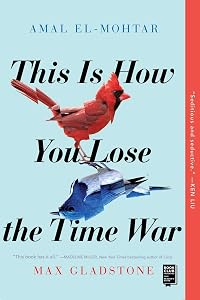
This Is How You Lose the Time War
by Amal El-Mohtar (Author)  , Max Gladstone (Author)
On This Page
Description
Among the ashes of a dying world, an agent of the Commandant finds a letter. It reads: Burn before reading. Thus begins an unlikely correspondence between two rival agents hellbent on securing the best possible future for their warring factions. Now, what began as a taunt, a battlefield boast, grows into something more. Something epic. Something romantic. Something that could change the past and the future. Except the discovery of their bond would mean death for each of them.Tags
Recommendations



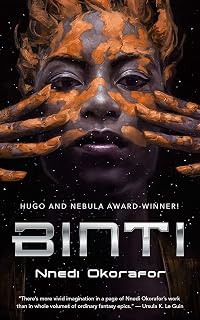
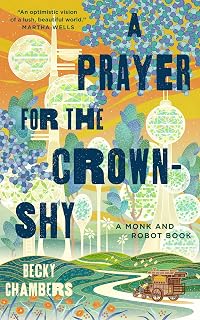
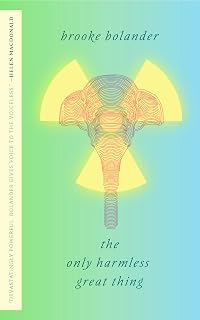
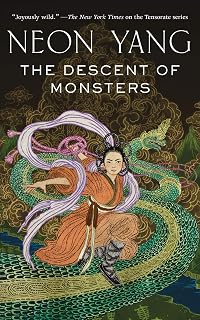



Member Recommendations
cassidybolton sci-fi elements and writing style
MiserableFlower enemies to lovers
Member Reviews
Red and Blue are on opposite sides of a war throughout time. They jump back and forth, in and out of different timelines to engineer the future their side wants, or foil their enemy’s plan to do the same. They start exchanging letters, first to taunt each other, but then they fall in love and must decide what future they would really like to have, and what they’re willing to do to get it.
A very sweet and short novel. I loved the format, which is a few pages about when in time the character is on their mission, how they find the latest letter from the other character, and then the text of the letter. The perspective of the first half of the chapter is fairly detached 3rd person and then the text of the letter is so intimate you can show more feel it in your bones. I don’t think the text supported these two people falling so in love through just a few letters but the letters make you feel it’s true anyway. Because we never see Red or Blue writing the letters, only receiving them, it’s not so much a story about falling deeply in love as it is about being deeply loved. Not a lot happens through most of the book, since Red and Blue eventually jump out of any timeline they’re in, until the end, which is very satisfying. The vibe really reminds me of the Marvel tv show Loki, if you’re into that. show less
A very sweet and short novel. I loved the format, which is a few pages about when in time the character is on their mission, how they find the latest letter from the other character, and then the text of the letter. The perspective of the first half of the chapter is fairly detached 3rd person and then the text of the letter is so intimate you can show more feel it in your bones. I don’t think the text supported these two people falling so in love through just a few letters but the letters make you feel it’s true anyway. Because we never see Red or Blue writing the letters, only receiving them, it’s not so much a story about falling deeply in love as it is about being deeply loved. Not a lot happens through most of the book, since Red and Blue eventually jump out of any timeline they’re in, until the end, which is very satisfying. The vibe really reminds me of the Marvel tv show Loki, if you’re into that. show less
Two agents in the time war encounter each other again and again in different strands of time, upthread and downthread, and go from being enemy rivals to falling in love. But neither Blue's Garden nor Red's Commandant of the Agency will allow their best agents to be compromised - can they find a way to be together? They leave each other ingeniously hidden, coded letters - in tea, in feathers, in entrails - and play a dangerous game of hide and seek through strands of time.
Quotes
Not every battle's grand, not every weapon fierce. Even we who fight wars through time forget the value of a word in the right moment, a rattle in the right car engine, a nail in the right horseshoe....It's so easy to crush a planet that you may overlook the value show more of a whisper to a snowbank. (Red to Blue, 13)
Some days Blue wonders why anyone ever bothered making numbers so small; other days she supposes even infinity needs to start somewhere. (39)
We treat the past as trellis... (Blue to Red, 70)
Thinking builds patterns in the brain, and those patterns can be read by one sufficiently determined.... (Red to Blue, 81)
All good stories travel from the outside in. (Blue to Red, 119)
I want to meet you in every place I have ever loved. (Blue to Red, 142)
It is always too late to say what must be said. I cannot stop you now. I cannot save you. Love is what we have, against time and death, against all the powers ranged to crush us down. (Red to Blue, 165) show less
Quotes
Not every battle's grand, not every weapon fierce. Even we who fight wars through time forget the value of a word in the right moment, a rattle in the right car engine, a nail in the right horseshoe....It's so easy to crush a planet that you may overlook the value show more of a whisper to a snowbank. (Red to Blue, 13)
Some days Blue wonders why anyone ever bothered making numbers so small; other days she supposes even infinity needs to start somewhere. (39)
We treat the past as trellis... (Blue to Red, 70)
Thinking builds patterns in the brain, and those patterns can be read by one sufficiently determined.... (Red to Blue, 81)
All good stories travel from the outside in. (Blue to Red, 119)
I want to meet you in every place I have ever loved. (Blue to Red, 142)
It is always too late to say what must be said. I cannot stop you now. I cannot save you. Love is what we have, against time and death, against all the powers ranged to crush us down. (Red to Blue, 165) show less
This is one of the most original novels I've ever read, and it's definitely the best romance novel I've ever read. I'm not a huge fan of these, but if people write more like this one, I may just change my opinion.
Content warnings:
- self-harm
Representation:
- both protagonists are sapphic
- one of the protagonists is a person of color
Two sides fight a war using time and potential futures, trying to win the best possible future for themselves. What begins as an agent from one side writing a mocking letter to another on the opposite side ends with both of them falling in love. But in this war in which winning means losing a love, is it possible to find a happy outcome?
I don't think I've ever read an epistolary novel … it gets a bit show more tedious, to be honest, but perhaps that's just because I'm not used to it. That said, I fell in love with the writing style(s) at the very first line. And there are some absolutely gorgeous lines, too — my favorite being "I want to meet you in every place I ever loved." The main characters also give us information about things, even about themselves, at a very satisfyingly slow rate. It's a good way to keep the interest up.
Another interesting thing about this book is the lack of any described setting, or not much of it. Another reviewer said it very well (and I can't remember who it was, sorry!): "We never get a setting, because the setting doesn't matter. This is, in essence, a pure romance book." What matters is not the war around them, but the relationship developing between these two agents themselves.
I do wish, however, that the two leads had more distinct voices. I don't doubt that they're two different people, Red being a robot or cyborg who's kind of stiff and not used to being social, and Blue being an organic shape-shifting creature with a sense of humor and a love for pop culture. But very little of this comes through the actual language of the letters themselves. I don't think I could tell their voices apart if I was shown an example (which is funny, because each author wrote a different character — they work really well together!).
Afterthoughts: after sitting on this for a couple months, I think one of the reasons people love this book so much is that apart from 2-3 character traits, the MCs don't really have fully fleshed personalities to distinguish them. In this way, it's easy to project onto them as a sort of wish fulfillment. And this isn't a criticism. Because this book is so unique, I think it works here. show less
Content warnings:
- self-harm
Representation:
- both protagonists are sapphic
- one of the protagonists is a person of color
Two sides fight a war using time and potential futures, trying to win the best possible future for themselves. What begins as an agent from one side writing a mocking letter to another on the opposite side ends with both of them falling in love. But in this war in which winning means losing a love, is it possible to find a happy outcome?
I don't think I've ever read an epistolary novel … it gets a bit show more tedious, to be honest, but perhaps that's just because I'm not used to it. That said, I fell in love with the writing style(s) at the very first line. And there are some absolutely gorgeous lines, too — my favorite being "I want to meet you in every place I ever loved." The main characters also give us information about things, even about themselves, at a very satisfyingly slow rate. It's a good way to keep the interest up.
Another interesting thing about this book is the lack of any described setting, or not much of it. Another reviewer said it very well (and I can't remember who it was, sorry!): "We never get a setting, because the setting doesn't matter. This is, in essence, a pure romance book." What matters is not the war around them, but the relationship developing between these two agents themselves.
I do wish, however, that the two leads had more distinct voices. I don't doubt that they're two different people, Red being a robot or cyborg who's kind of stiff and not used to being social, and Blue being an organic shape-shifting creature with a sense of humor and a love for pop culture. But very little of this comes through the actual language of the letters themselves. I don't think I could tell their voices apart if I was shown an example (which is funny, because each author wrote a different character — they work really well together!).
Afterthoughts: after sitting on this for a couple months, I think one of the reasons people love this book so much is that apart from 2-3 character traits, the MCs don't really have fully fleshed personalities to distinguish them. In this way, it's easy to project onto them as a sort of wish fulfillment. And this isn't a criticism. Because this book is so unique, I think it works here. show less
Burn before reading.
A time travelling, spy versus spy, Romeo and Juliet-esqe love story with each of the two parts written by a different author ([a:Amal El-Mohtar|4175512|Amal El-Mohtar|https://images.gr-assets.com/authors/1299879154p2/4175512.jpg] and [a:Max Gladstone|3405346|Max Gladstone|https://images.gr-assets.com/authors/1440009008p2/3405346.jpg]) as they travel through time and space and parallel realities, each trying to bend history and reality to the whim of their handlers... all the while trying to hide their correspondence from the same.
Books are letters in bottles, cast into the waves of time, from one person trying to save the world to another.
It's weird, it's wonderful. It's hard to describe, but beautifully written. show more The wordplay is excellent and the love story feels romantic in the age of letters / long style courting sense of the word. And it's funny!
PS. The keyboard’s coated with slow-acting contact poison. You’ll be dead in an hour.
PPS. Just kidding! Or . . . am I?
PPPS. I’m just screwing with you. But postscripts sure are fun!
The style is probably not for everyone--it's two authors, part letters between the two agents and part their context and missions and thoughts--but give it a chance. I expect you'll either love it or hate it, but either way, it's worth a try.
There’s a kind of time travel in letters, isn’t there? I imagine you laughing at my small joke; I imagine you groaning; I imagine you throwing my words away. Do I have you still? Do I address empty air and the flies that will eat this carcass? You could leave me for five years, you could return never—and I have to write the rest of this not knowing.show less
My heart hurts all over because of this book. It's seriously so intricate and creative, a definite sci-fi standout that is unlike any other story I've read. I actually tried to read it at the end of 2019 and ended up putting it down after like 8 pages, mostly because it DOES require a decent amount of attention that I just didn't have at the time. But a friend encouraged me to try it again, and I'm SO FREAKIN GLAD I did (thank you a million times, Chris!). There is a brief period of getting into the format of the book and finding the pacing, but after that the book becomes a surprisingly immersive, intimate, and beguiling story that refuses to succumb to stereotype or predictability. And holy cow, the WRITING! It's borderline show more pretentious, but honestly I love that in a book, and it is just so so SO beautiful and full of emotion.
If you don't like flowery, complicated writing or settings that bounce around from world to world, then this probably isn't the book for you. I can see why certain readers wouldn't click with the writing style or plot (think Dickens writing crafty, flirty sci-fi) but for me personally it ended up hitting every mark. I can't wait to reread it! show less
If you don't like flowery, complicated writing or settings that bounce around from world to world, then this probably isn't the book for you. I can see why certain readers wouldn't click with the writing style or plot (think Dickens writing crafty, flirty sci-fi) but for me personally it ended up hitting every mark. I can't wait to reread it! show less
This feels less like reading a conventional sci-fi novel and more like accidentally intercepting impossibly poetic love letters between two women fighting across time, space, and what may or may not be reality itself.
I spent at least the first quarter mildly confused—which, honestly, seems to be the correct reading experience. The book drops you directly into its strange, genre-bending little world and simply trusts you to catch up eventually. Somehow it works. The prose is lush and almost absurdly beautiful at times, and the epistolary format gives the whole thing an intimacy that sneaks up on you.
Do I fully understand the mechanics of the Time War? Absolutely not. Did I enjoy watching two sapphic rivals flirt poetically through show more timelines anyway? Very much so. Strange, clever, romantic, and surprisingly moving. show less
I spent at least the first quarter mildly confused—which, honestly, seems to be the correct reading experience. The book drops you directly into its strange, genre-bending little world and simply trusts you to catch up eventually. Somehow it works. The prose is lush and almost absurdly beautiful at times, and the epistolary format gives the whole thing an intimacy that sneaks up on you.
Do I fully understand the mechanics of the Time War? Absolutely not. Did I enjoy watching two sapphic rivals flirt poetically through show more timelines anyway? Very much so. Strange, clever, romantic, and surprisingly moving. show less
Letters are many things in Amal El-Mohtar and Max Gladstone’s This Is How You Lose the Time War. Taunts between foes. Invitations to friendship. Missives of love.
They are also, at various points, tree rings, magma, and bubbles. (Seal guts are involved at one point too.)
This epistolary novella begins as a contest between two time travelers, the preeminent members of competing organizations bent on shaping the multiverse to fit their respective visions. Red works for the Agency, a technologically advanced version of humanity that’s implanted her with weapons and armor and pseudo-skin that can change form as required. Blue works for Garden, an organic hivemind whose members have evolved natural corollaries to these tools of destruction show more and deception. When deployed against each other, Red and Blue are “equal and opposite reaction[s],” as Blue terms them at one point, “a microcosm … of the war as a whole.”
Their struggle is the next thing to endless. Both are essentially immortal, capable of playing the longest of long games in one “strand” (i.e., potential timeline) after another. They might live out an entire life advising a variation of Genghis Khan, for example, and then skip to a resulting future to alter the outcome of a space battle, before circling back to a connecting past to ensure that the wind in an underground labyrinth “whistles over the right fluted bones,” so that “one pilgrim will hear the cry as an omen that will drive him to renounce all worldly goods and retreat to build a hermitage on a distant mountain slope, so that hermitage will exist in two hundred years to shelter a woman fleeing with child in a storm, and so it goes.” Sometimes these actions seem noble, like immunizing Native Americans centuries before contact with Europeans. But in other missions Red and Blue massacre millions.
And it wears. Early in the time war, it was probably easy for these adversaries to shrug off the psychic toll levied by their work—why bother with morality when there are multitudes, when London has so many incarnations they’re labeled with numbers and letters? Yet after eons of plotting and maneuvering and killing, the war goes on, and Red and Blue have little to show for their service.
Except their rivalry.
One-upping each other becomes a new challenge. Not just in the field—although they do plenty of showing off there too (subtle and otherwise). But after Blue rubs in a victory by sending Red a letter that can only be read by burning it, Red responds with a message that can only be read by boiling. From there, they concoct increasingly elaborate ways to continue their correspondence. In the process, their relationship changes, morphing from competition to curiosity to … something more.
It’s a fascinating tale.
The prose borders on poetry—mostly to the good, although I occasionally had trouble following the action. And I’m not sure all the time travel mechanics add up. (If Red and Blue can pinpoint their communications to the exact time and place the other will receive them, how have their parent organizations not figured out when and where to assassinate each other’s agents?) But I loved the ways El-Mohtar and Gladstone play with the concept of letters. “There’s a kind of time travel in letters, isn’t there?” muses Red at one point—words you can reread to take you back to a specific moment, no matter how long it’s been since you first read them.
The paper can vary. Same with the ink. But the transportive quality of letters endures. I only wish we wrote more of them in our current “strand.”
(For more reviews like this one, see www.nickwisseman.com) show less
They are also, at various points, tree rings, magma, and bubbles. (Seal guts are involved at one point too.)
This epistolary novella begins as a contest between two time travelers, the preeminent members of competing organizations bent on shaping the multiverse to fit their respective visions. Red works for the Agency, a technologically advanced version of humanity that’s implanted her with weapons and armor and pseudo-skin that can change form as required. Blue works for Garden, an organic hivemind whose members have evolved natural corollaries to these tools of destruction show more and deception. When deployed against each other, Red and Blue are “equal and opposite reaction[s],” as Blue terms them at one point, “a microcosm … of the war as a whole.”
Their struggle is the next thing to endless. Both are essentially immortal, capable of playing the longest of long games in one “strand” (i.e., potential timeline) after another. They might live out an entire life advising a variation of Genghis Khan, for example, and then skip to a resulting future to alter the outcome of a space battle, before circling back to a connecting past to ensure that the wind in an underground labyrinth “whistles over the right fluted bones,” so that “one pilgrim will hear the cry as an omen that will drive him to renounce all worldly goods and retreat to build a hermitage on a distant mountain slope, so that hermitage will exist in two hundred years to shelter a woman fleeing with child in a storm, and so it goes.” Sometimes these actions seem noble, like immunizing Native Americans centuries before contact with Europeans. But in other missions Red and Blue massacre millions.
And it wears. Early in the time war, it was probably easy for these adversaries to shrug off the psychic toll levied by their work—why bother with morality when there are multitudes, when London has so many incarnations they’re labeled with numbers and letters? Yet after eons of plotting and maneuvering and killing, the war goes on, and Red and Blue have little to show for their service.
Except their rivalry.
One-upping each other becomes a new challenge. Not just in the field—although they do plenty of showing off there too (subtle and otherwise). But after Blue rubs in a victory by sending Red a letter that can only be read by burning it, Red responds with a message that can only be read by boiling. From there, they concoct increasingly elaborate ways to continue their correspondence. In the process, their relationship changes, morphing from competition to curiosity to … something more.
It’s a fascinating tale.
The prose borders on poetry—mostly to the good, although I occasionally had trouble following the action. And I’m not sure all the time travel mechanics add up. (If Red and Blue can pinpoint their communications to the exact time and place the other will receive them, how have their parent organizations not figured out when and where to assassinate each other’s agents?) But I loved the ways El-Mohtar and Gladstone play with the concept of letters. “There’s a kind of time travel in letters, isn’t there?” muses Red at one point—words you can reread to take you back to a specific moment, no matter how long it’s been since you first read them.
The paper can vary. Same with the ink. But the transportive quality of letters endures. I only wish we wrote more of them in our current “strand.”
(For more reviews like this one, see www.nickwisseman.com) show less
Members
- Recently Added By
Published Reviews
ThingScore 100
Part epistolary romance, part mind-blowing science fiction adventure, this dazzling story unfolds bit by bit, revealing layers of meaning as it plays with cause and effect, wildly imaginative technologies, and increasingly intricate wordplay.
added by g33kgrrl
Lists

Favorite Science Fiction by Women Authors
737 works; 202 members

Best Science Fiction Novels
816 works; 426 members

Best Time Travel Novels
165 works; 125 members

Best Lesbian Fiction (And Narrative Non-Fiction)
155 works; 36 members

Recommend the 20 best books you've read in the last five years
2,168 works; 606 members

Best 21st Century Books (So Far)
679 works; 86 members

Favorite Literary Love Stories
182 works; 101 members

Female Author
1,234 works; 67 members

Top Five Books of 2020
982 works; 350 members
Nebula Award
111 works; 14 members

Books for a Queer Valentine's Day
46 works; 6 members

2020 Hugo Eligible Novellas
36 works; 7 members

Top Five Books of 2022
736 works; 272 members

Top Five Books of 2021
604 works; 181 members
LGBTQ+ Speculative Fiction
821 works; 51 members

Top Five Books of 2019
387 works; 111 members

Speculative Fiction to Read
706 works; 32 members

tumblr recommends Sci-Fi
35 works; 1 member

Books Read in 2024
4,727 works; 128 members

Top Five Books of 2023
767 works; 317 members

2023 Update: The Best Twenty Books You've Read in the Past Five Years
40 works; 3 members

My Library
43 works; 1 member

TBR of Books I Don't Own
132 works; 1 member

QLAP
14 works; 1 member

Sapph-Lit
78 works; 4 members

KayStJ's to-read list
1,616 works; 11 members

Books Read in 2025
4,128 works; 98 members

Favourite Books
1,820 works; 316 members

Books We Discovered On LibraryThing
530 works; 130 members
naturallogg's 2025 in Books
50 works; 1 member

Books With Time Words in the Title
160 works; 4 members

Books With Complete Sentence Titles
501 works; 17 members
Favorite Science Fiction
456 works; 218 members
Literary SF/F
19 works; 1 member

Simon & Schuster
136 works; 4 members

Illumicrates 100 Best Sci-Fi, Fantasy & Horror Books of the 21st Century
27 works; 1 member

What Twitter Talks About
14 works; 1 member

The Five Books That Represent Us
391 works; 149 members

Books to Read
95 works; 2 members
Overdue Podcast
808 works; 9 members

At the Library
217 works; 1 member

Books With the Most Memorable Titles
478 works; 158 members

Books Read in 2019
4,052 works; 110 members

Time Travel Stories
12 works; 2 members

9 Mind-Bending Books About Parallel Universes
9 works; 1 member

Books Read in 2020
4,379 works; 124 members

Biggest Disappointments
606 works; 168 members

Books Read in 2021
5,361 works; 114 members

Books Read in 2022
5,226 works; 115 members

SFF standalone novellas with female protagonists
101 works; 4 members

LGBTQ+ SFF standalone novellas
42 works; 2 members

Books Mentioned in the A+ Autostraddle Pop Up Discords Nov 2022 & Dec 2022
223 works; 3 members
Favorite Romance Fiction
247 works; 115 members

Books Read in 2023
5,638 works; 147 members

Favorite Epistolary Fiction
143 works; 144 members

Pride Wishlist
54 works; 1 member

LIBROS DE CIENCIA FICCIÓN Y FANTASIA
60 works; 1 member

Globe and Mail | Canadian Fiction: May 20, 2023
10 works; 1 member
Globe and Mail | Canadian Fiction: May 27, 2023
10 works; 1 member
Globe and Mail | Canadian Fiction: June 10, 2023
10 works; 1 member

Phi Beta Kappa reading list
260 works; 8 members

Queer Fiction (Owned TBR)
142 works; 1 member

NPR Summer 2021: 50 Favorite Sci-Fi And Fantasy Books Of The Past Decade
50 works; 8 members

2020 Hugo Eligible Novels
71 works; 12 members
Author Information

Amal El-Mohtar won the Locus Awards 2015 award in the Short Story category with her title The Truth About Owls, which is featured in the anthology Kaleidoscope. (Bowker Author Biography)
Amal El-Mohtar is a LibraryThing Author, an author who lists their personal library on LibraryThing.

Some Editions
Awards and Honors
Awards
Distinctions
Work Relationships
Common Knowledge
- Canonical title*
- Les oiseaux du temps
- Original title
- This Is How You Lose the Time War
- Original publication date
- 2019-07-16
- People/Characters
- Red; Blue; Commandant; Garden; Socrates; Genghis Khan (show all 7); Julius Caesar
- Important places
- Earth; London, England, UK; Atlantis; Tawantinsuyu
- Dedication
- To you.
PS. Yes, you. - First words
- When Red wins, she stands alone.
- Quotations
- (Adventure works in any strand—it calls to those who care more for living than for their lives.)
Viewed from sufficient height, all problems are simple. All knots can be untied with a few deaths, or ten thousand.
I am yours in other ways as well: yours as I watch the world for your signs, apophenic as a haruspex; yours as I debate methods, motives, chances of delivery; yours as I review your words by their sequence, their sound, smell... (show all), taste, taking care no one memory of them becomes too worn.
I want to meet you in every place I ever loved. - Last words
- (Click to show. Warning: May contain spoilers.)This is how we win.
- Publisher's editor
- Wolfe, Navah
- Blurbers
- Wells, Martha; Scalzi, John; Miller, Madeline; DeConnick, Kelly Sue; North, Ryan; Link, Kelly (show all 8); Leckie, Ann; Bigolas Dickolas Wolfwood
- Original language
- English US
- Canonical DDC/MDS
- 813.6
- Canonical LCC
- PR9199.4.E424
*Some information comes from Common Knowledge in other languages. Click "Edit" for more information.
Classifications
Statistics
- Members
- 7,531
- Popularity
- 1,530
- Reviews
- 325
- Rating
- (3.91)
- Languages
- 11 — Catalan, English, Finnish, French, German, Italian, Polish, Russian, Spanish, Turkish, Portuguese (Portugal)
- Media
- Paper, Audiobook, Ebook
- ISBNs
- 26
- ASINs
- 13