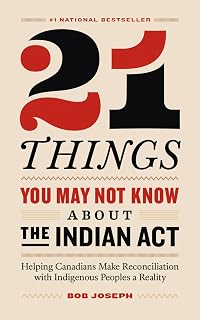
21 Things You May Not Know About the Indian Act: Helping Canadians Make Reconciliation with Indigenous Peoples a Reality
by Bob Joseph
On This Page
Description
Since its creation in 1876, the Indian Act has dictated and constrained the lives and opportunities of Indigenous Peoples, and is at the root of many enduring stereotypes. Bob Joseph's book comes at a key time in the reconciliation process, when awareness from both Indigenous and non-Indigenous communities is at a crescendo. Joseph examines how Indigenous Peoples can return to self-government, self-determination, and self-reliance—and why doing so would result in a better country for every show more Canadian. He dissects the complex issues around the Indian Act, and demonstrates why learning about its cruel and irrevocable legacy is vital for the country to move toward true reconciliation.* * * * * * *
Bob Joseph, founder of Indigenous Corporate Training Inc., has provided training on Indigenous relations since 1994. As a certified Master Trainer, Bob has assisted both individuals and organizations in building Indigenous relations. His Canadian clients include all levels of government, Fortune 500 companies, financial institutions, including the World Bank, small and medium-sized corporate enterprises, and Indigenous Peoples. He has worked internationally for clients in the United States, Guatemala, Peru, and New Caledonia in the South Pacific. Bob Joseph is an Indigenous person, or more specifically a status Indian, and is a member of the Gwawaenuk Nation. The Gwawaenuk is one of the many Kwakwaka'wakw tribes located between Comox and Port Hardy on Vancouver Island and the adjacent mainland of British Columbia. He comes from a proud potlatch family and is an initiated member of the Hamatsa Society. As the son of a hereditary chief, he will one day, in accordance with strict cultural laws, become a hereditary chief.
* * * * * * *
Advance praise:
"I have a deep hope for Canada that there can be reconciliation. I want every Canadian to imagine a Canada in which every person will live with dignity, value, and purpose. But to do that, there must be reflection on our shared history and the harmful periods and events that continue to haunt us as a nation. Understanding the Indian Act is fundamental to understanding why those harmful periods and events took place. Bob Joseph's book is an invaluable tool for Canadians who want to understand the past in order to contribute to reconciliation in our country."
—Chief Dr. Robert Joseph, O.B.C., Ambassador, Reconciliation Canada
"From declaring cultural ceremonies illegal, to prohibiting pool hall owners from granting Indigenous Peoples entrance, from forbidding the speaking of Indigenous languages, to the devastating policy that created residential schools, Bob Joseph reveals the hold this paternalistic act, with its roots in the 1800s, still has on the lives of Indigenous Peoples in Canada in the twenty-first century. This straightforward book is an invaluable resource. There is much for non-Indigenous people to learn and to do. But equally important, there is much to unlearn and to undo. The time is right for this book. Thank you, Bob Joseph. Gilakas'la."
—Shelagh Rogers, O.C., Truth and Reconciliation Commission of Canada
"Increasing Canadians' knowledge about the terrible foundation this country has been built on is a critical part of reconciliation. Bob Joseph has highlighted some of the unbelievable provisions of the Indian Act and how they have impacted First Nations in Canada, and gives a brief overview of what we may replace it with going forward. His book provides helpful context to the dialogue that needs to take place in Canada."
—Kim Baird, O.C., O.B.C.; Owner, Kim Baird Strategic Consulting; Member of the Tsawwassen First Nation
. show less
Tags
Recommendations













Member Reviews
3.5 stars
This book goes through to explain parts of Canada’s Indian Act, originally created in 1876. Though there have been some updates, much remains. The author also includes, in an appendix, all 94 calls to action in the recent Truth and Reconciliation Commission. Ultimately, though some (Indigenous people) are concerned about ramifications of getting rid of the outdated Indian Act altogether, the author (also Indigenous) believes it should go, and explains why.
Most people don’t know much about the Indian Act. I didn’t until earlier this year when I took an extremely comprehensive online (free!) course from the University of Alberta called Indigenous Canada (highly recommended, though it does take a chunk of time). So, I had show more heard (via that course) a lot of what the author mentions in this book. But that doesn’t mean a reminder wasn’t a good thing, because it is. It’s a short book; it sounds like the author did that on purpose. It’s not super-exciting reading (it’s explaining legal things), but it’s something that Canadians should read and educate themselves about. show less
This book goes through to explain parts of Canada’s Indian Act, originally created in 1876. Though there have been some updates, much remains. The author also includes, in an appendix, all 94 calls to action in the recent Truth and Reconciliation Commission. Ultimately, though some (Indigenous people) are concerned about ramifications of getting rid of the outdated Indian Act altogether, the author (also Indigenous) believes it should go, and explains why.
Most people don’t know much about the Indian Act. I didn’t until earlier this year when I took an extremely comprehensive online (free!) course from the University of Alberta called Indigenous Canada (highly recommended, though it does take a chunk of time). So, I had show more heard (via that course) a lot of what the author mentions in this book. But that doesn’t mean a reminder wasn’t a good thing, because it is. It’s a short book; it sounds like the author did that on purpose. It’s not super-exciting reading (it’s explaining legal things), but it’s something that Canadians should read and educate themselves about. show less
Personally, I didn't learn much about the Indian Act that I didn't already know. Which isn't a bad thing...there should be more Canadians who understand the extent of Colonialism, as well as its ongoing effects. The examples and explanations of various Indian Act provisions is well written and an excellent reference.
The parts of the book I gained the most from dealt with challenges in dismantling the Indian Act. I also got a better understanding of why some First Nations are leery of doing so. I enjoyed the chronology of residential schools and finally read the Calls to Action of the Truth and Reconciliation Commission.
A very important book!
The parts of the book I gained the most from dealt with challenges in dismantling the Indian Act. I also got a better understanding of why some First Nations are leery of doing so. I enjoyed the chronology of residential schools and finally read the Calls to Action of the Truth and Reconciliation Commission.
A very important book!
This is an excellent guide to the background of the Canadian Indian Act and the consequences its implementation had for Canada's Indigenous people. Joseph is a Status Indian who has written this very readable brief guide to the issues and suggestions on how to improve how our government can rectify its polices towards native people and how to eliminate racism towards Indigenous people in our institutions and by our citizens.
This small book is an important read for descendants of settlers in Canada. It explains the history of cultural conflict where one culture believes itself to be superior to the other, is determined to eradicate any trace of the other culture, and in fact, in many cases eradicate not just the culture, but the people themselves.
I read this book in a discussion group and I would recommend others do the same. It leads to some passionate discussion, self-revelation and understanding of present inequities and injustices.
I read this book in a discussion group and I would recommend others do the same. It leads to some passionate discussion, self-revelation and understanding of present inequities and injustices.
Very approachable introduction to The Indian Act.
***WHO SUCKED ME IN***
Kayla from BooksandLala on YouTube in their Reading Booktubers' Favourite 2020 Books video published on 31 jan. 2021
It sounds like it would also be good for people like me, European and without a word in their own language that isn't outdated that describes people whose ancestors were fucked over and whose descenders still are.
Kayla from BooksandLala on YouTube in their Reading Booktubers' Favourite 2020 Books video published on 31 jan. 2021
It sounds like it would also be good for people like me, European and without a word in their own language that isn't outdated that describes people whose ancestors were fucked over and whose descenders still are.
Amazing and alarming book, every Canadian should definitely read this!
Members
- Recently Added By
Lists

Native American / Indigenous Literature
172 works; 99 members

Globe and Mail | Canadian Non-Fiction: Oct. 9, 2021
10 works; 1 member

Globe and Mail | Canadian Non-Fiction: September 10, 2022
10 works; 1 member

Globe and Mail | Canadian Non-Fiction: July 9, 2022
10 works; 1 member

Globe and Mail | Canadian Non-Fiction: Feb. 19, 2022
10 works; 1 member

Globe and Mail | Canadian Non-Fiction: January 14, 2023
10 works; 1 member
Globe and Mail | Canadian Non-Fiction: Feb. 12, 2022
10 works; 1 member

Globe and Mail | Canadian Non-Fiction: October 8, 2022
10 works; 1 member

Globe and Mail | Canadian Non-Fiction: Oct. 23, 2021
9 works; 1 member
Globe and Mail | Canadian Non-Fiction: Feb. 5, 2022
10 works; 1 member

Globe and Mail | Canadian Non-Fiction: July 16, 2022
10 works; 1 member
Globe and Mail | Canadian Non-Fiction: July 30, 2022
10 works; 1 member
Globe and Mail | Canadian Non-Fiction: October 1, 2022
10 works; 1 member

Globe and Mail | Canadian Non-Fiction: March 12, 2022
10 works; 1 member
Globe and Mail | Canadian Non-Fiction: March 5, 2022
10 works; 1 member
Globe and Mail | Canadian Non-Fiction: July 23, 2022
10 works; 1 member
Globe and Mail | Canadian Non-Fiction: September 3, 2022
10 works; 1 member

Globe and Mail | Canadian Non-Fiction: Oct. 16, 2021
10 works; 1 member
Globe and Mail | Canadian Non-Fiction: Feb. 26, 2022
10 works; 1 member

Globe and Mail | Canadian Non-Fiction: June 4, 2022
10 works; 1 member
Globe and Mail | Canadian Non-Fiction: October 29, 2022
10 works; 1 member
Globe and Mail | Canadian Non-Fiction: September 24, 2022
10 works; 1 member
Globe and Mail | Canadian Non-Fiction: August 20, 2022
10 works; 1 member
Globe and Mail | Canadian Non-Fiction: Jan. 29, 2022
10 works; 1 member

Globe and Mail | Canadian Non-Fiction: June 11, 2022
10 works; 1 member
Globe and Mail | Canadian Non-Fiction: August 27, 2022
10 works; 1 member
Globe and Mail | Canadian Non-Fiction: August 6, 2022
10 works; 1 member
Globe and Mail | Canadian Non-Fiction: October 22, 2022
10 works; 1 member

Globe and Mail | Canadian Non-Fiction: April 2, 2022
10 works; 1 member

Globe and Mail | Canadian Non-Fiction: April 23, 2022
10 works; 1 member

Globe and Mail | Canadian Non-Fiction: June 18, 2022
10 works; 1 member
Globe and Mail | Canadian Non-Fiction: Oct. 30, 2021
10 works; 1 member
Globe and Mail | Canadian Non-Fiction: August 13, 2022
10 works; 1 member
Globe and Mail | Canadian Non-Fiction: July 2, 2022
10 works; 1 member

Globe and Mail | Canadian Non-Fiction: June 25, 2022
10 works; 1 member
Globe and Mail | Canadian Non-Fiction: October 15, 2022
10 works; 1 member
Globe and Mail | Canadian Non-Fiction: May 28, 2022
10 works; 1 member

Globe and Mail | Canadian Non-Fiction: Jan. 8, 2022
10 works; 1 member
Globe and Mail | Canadian Non-Fiction: May 14, 2022
10 works; 1 member
Globe and Mail | Canadian Non-Fiction: May 21, 2022
10 works; 1 member

Globe and Mail | Canadian Non-Fiction: Nov. 6, 2021
9 works; 1 member
Globe and Mail | Canadian Non-Fiction: April 9, 2022
10 works; 1 member

Globe and Mail | Canadian Non-Fiction: Jan. 22, 2022
10 works; 1 member

Globe and Mail | Canadian Non-Fiction: January 27, 2024
10 works; 1 member

Globe and Mail | Canadian Non-Fiction: March 9, 2024
10 works; 1 member
Globe and Mail | Canadian Non-Fiction: March 23, 2024
10 works; 1 member
Globe and Mail | Canadian Non-Fiction: March 30, 2024
10 works; 1 member

Globe and Mail | Canadian Non-Fiction: June 29, 2024
10 works; 1 member
Globe and Mail | Canadian Non-Fiction: July 20, 2024
10 works; 1 member
Globe and Mail | Canadian Non-Fiction: August 3, 2024
10 works; 1 member
Globe and Mail | Canadian Non-Fiction: October 7, 2023
10 works; 1 member
Globe and Mail | Canadian Non-Fiction: August 10, 2024
10 works; 1 member

Globe and Mail | Canadian Non-Fiction: September 7, 2024
10 works; 1 member

Globe and Mail | Canadian Non-Fiction: September 14, 2024
10 works; 1 member

Globe and Mail | Canadian Non-Fiction: September 21, 2024
10 works; 1 member

Globe and Mail | Canadian Non-Fiction: October 5, 2024
10 works; 1 member

Globe and Mail | Canadian Non-Fiction: October 12, 2024
10 works; 1 member

Globe and Mail | Canadian Non-Fiction: June 28, 2025
10 works; 1 member
Globe and Mail | Canadian Non-Fiction: July 5, 2025
10 works; 1 member
Globe and Mail | Canadian Non-Fiction: August 23, 2025
10 works; 1 member

Globe and Mail | Canadian Non-Fiction: October 14, 2023
10 works; 1 member
Globe and Mail | Canadian Non-Fiction: March 18, 2023
10 works; 1 member
Globe and Mail | Canadian Non-Fiction: September 30, 2023
10 works; 1 member

Globe and Mail | Canadian Non-Fiction: April 8, 2023
10 works; 1 member
Globe and Mail | Canadian Non-Fiction: January 21, 2023
10 works; 1 member
Globe and Mail | Canadian Non-Fiction: January 28, 2023
10 works; 1 member
Globe and Mail | Canadian Non-Fiction: February 4, 2023
10 works; 1 member

Globe and Mail | Canadian Non-Fiction: February 11, 2023
10 works; 1 member
Globe and Mail | Canadian Non-Fiction: February 18, 2023
10 works; 1 member
Globe and Mail | Canadian Non-Fiction: February 25, 2023
10 works; 1 member

Globe and Mail | Canadian Non-Fiction: March 4, 2023
10 works; 1 member
Globe and Mail | Canadian Non-Fiction: March 11, 2023
10 works; 1 member
Globe and Mail | Canadian Non-Fiction: April 22, 2023
10 works; 1 member

Globe and Mail | Canadian Non-Fiction: September 23, 2023
10 works; 1 member
Globe and Mail | Canadian Non-Fiction: July 1, 2023
10 works; 1 member
Globe and Mail | Canadian Non-Fiction: July 8, 2023
10 works; 1 member
Globe and Mail | Canadian Non-Fiction: August 5, 2023
10 works; 1 member
Globe and Mail | Canadian Non-Fiction: August 12, 2023
10 works; 1 member
Globe and Mail | Canadian Non-Fiction: August 19, 2023
10 works; 1 member

Globe and Mail | Canadian Non-Fiction: September 2, 2023
10 works; 2 members
Globe and Mail | Canadian Non-Fiction: September 9, 2023
10 works; 1 member
Globe and Mail | Canadian Non-Fiction: September 16, 2023
10 works; 1 member

The (So-Called) Canada Pill
150 works; 1 member
Author Information

5 Works 574 Members
Awards and Honors
Common Knowledge
- Epigraph
- When the present does not recognize the wrongs of the past, the future takes its revenge. For that reason, we must never, never turn away from the opportunity of confronting history together -- the opportunity to right a hist... (show all)orical wrong. -- Governor Genera Michaelle Jean at relaunch of the Truth and Reconciliation Commission of Canada, October 2009
It is readily acknowledged that Indian children lose their natural resistance to illness by habituating so closely in the residential schools and that they die at a much higher rate than in their villages. But this alone does... (show all) not justify a change in the policy of the Department, which is geared towards a final solution of our Indian Problem. -- Duncan Campbell Scott, Deputy Superintendent of Indian Affairs, 1910 - Dedication
- To Canada and reconciliation
- First words
- As a blogger and trainer on Indigenous topics, in 2015 I decided to write an article about the Indian Act.
- Last words
- (Click to show. Warning: May contain spoilers.)In the short term, if Canadians can stay committed to reconciliation, personally review the 94 recommendations drawn up by the Truth and Reconciliation Commission of Canada. and pursue the ones relevant to them, perhaps we could see the strengthening of the nation-to-nation relationship and create a better, more prosperous Canada that lives up to its fundamental ideology of human rights not just abroad but at home as well.
- Blurbers
- Rogers, Shelagh; Joseph, Chief Dr. Robert; Baird, Kim; Davis, Clint; Gosnell-Myers, Ginger; Gladu, J.P. (show all 7); guujaaw
- Canonical DDC/MDS
- 342.710872
- Canonical LCC
- KE7709.J67
Classifications
Statistics
- Members
- 464
- Popularity
- 65,699
- Reviews
- 8
- Rating
- (4.38)
- Languages
- English
- Media
- Paper, Audiobook, Ebook
- ISBNs
- 4
- ASINs
- 3