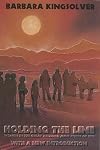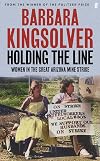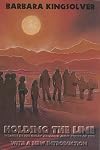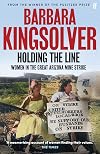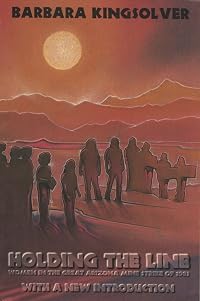
Holding the Line: Women in the Great Arizona Mine Strike
by Barbara Kingsolver
On This Page
Description
Holding the Line, Barbara Kingsolver's first non-fiction book, is the story of women's lives transformed by a signal event. Set in the small mining towns of Arizona, it is part oral history and part social criticism, exploring the process of empowerment which occurs when people work together as a community. Like Kingsolver's award-winning novels, Holding the Line is a beautifully written book grounded on the strength of its characters. Hundreds of families held the line in the 1983 strike show more against Phelps Dodge Copper in Arizona. After more than a year the strikers lost their union certification, but the battle permanently altered the social order in these small, predominantly Hispanic mining towns. At the time the strike began, many women said they couldn't leave the house without their husband's permission. Yet, when injunctions barred union men from picketing, their wives and daughters turned out for the daily picket lines. When the strike dragged on and men left to seek jobs elsewhere, women continued to picket, organize support, and defend their rights even when the towns were occupied by the National Guard. "Nothing can ever be the same as it was before," said Diane McCormick of the Morenci Miners Women's Auxiliary. "Look at us. At the beginning of this strike, we were just a bunch of ladies.". show lessTags
Recommendations















Member Reviews
In 1983 a group of miners went on strike for eighteen months in the small mining towns of Arizona. This is not the story of the men but of the women, who were both workers at the mine and supporters because of family connections. Kingsolver allows the women to tell their story, their struggle, and their commitment to seeking justice. Not only did they endure an 18 month long strike but they had to overcome and rebuild after a flood devastated the area.
Phelps Dodge Copper Corporation in 1983 and the union clashed over the negotiation of a new contract. Not being able to resolve the matter to their satisfaction Phelps resorted to a series of tactics that included bringing in ‘scab’ workforce and intimidation of the strikers. The show more strikers remained steadfast, despite a natural disaster that destroys the community and harassment by the National Guard and police.
As a person not from the US, it was a surprise to me that a company owned a town, from the housing, the supermarket, the library, the police, everything in that town they owned. It was however, not a surprise, as to how Phelps would use that ownership as leverage to manipulate and coerce.
This is a complex story to follow as there are many moving elements leading up to and during the strike. You have the inherent racism against the Mexicans, the misogyny against the women and the inequality of conditions and wages. You have the machinations of the unions, companies and state and federal agencies that either assisted or impeded any progress to resolution. Kingsolver is masterful in laying out all these moving parts so that you do not feel overwhelmed in trying to ascertain all the major players.
Kingsolver then brings you into the world of people and the remarkable women and their journeys who bore the brunt of the strike action. For what does get lost in the endless media reporting is the impact it has on the ordinary person. You often see the Ceo’s, the union bosses in front of the camera talking about negotiations, outcomes, turnover and productivity. What is always is missing is the ordinary person trying to survive the impasse. The men, the women and the children who are caught up in a situation where they often have limited agency for change.
Kingsolver takes a deep dive into two groups of women who were involved in the strikes. First you had the women who worked in the mine who were subjected to the most horrendous sexual harassment and demeaning treatment. Then the women who supported their husbands on strike. Initially they were in the background, cooking, supporting the family, waving a placard here and there but they soon came to the fore front. When the two groups of women merges, they become the front line, the leaders of the strike and an absolute force to be reckoned with.
I want to be a tad coy here, as I do not want to reveal any details of the experiences of the women. As part of the journey in ‘Holding the Line’ are the revelations of what occurs and how the women deal with the situations. Plus reading their words makes it extremely powerful and all so real.
This book was first published in 1989 and has been re-issued in 2024 with a new introduction and a revised first chapter. It is an amazing book that documents how women just did just not survive but demonstrated amazing courage and determination to continue against overwhelming adversity. show less
Phelps Dodge Copper Corporation in 1983 and the union clashed over the negotiation of a new contract. Not being able to resolve the matter to their satisfaction Phelps resorted to a series of tactics that included bringing in ‘scab’ workforce and intimidation of the strikers. The show more strikers remained steadfast, despite a natural disaster that destroys the community and harassment by the National Guard and police.
As a person not from the US, it was a surprise to me that a company owned a town, from the housing, the supermarket, the library, the police, everything in that town they owned. It was however, not a surprise, as to how Phelps would use that ownership as leverage to manipulate and coerce.
This is a complex story to follow as there are many moving elements leading up to and during the strike. You have the inherent racism against the Mexicans, the misogyny against the women and the inequality of conditions and wages. You have the machinations of the unions, companies and state and federal agencies that either assisted or impeded any progress to resolution. Kingsolver is masterful in laying out all these moving parts so that you do not feel overwhelmed in trying to ascertain all the major players.
Kingsolver then brings you into the world of people and the remarkable women and their journeys who bore the brunt of the strike action. For what does get lost in the endless media reporting is the impact it has on the ordinary person. You often see the Ceo’s, the union bosses in front of the camera talking about negotiations, outcomes, turnover and productivity. What is always is missing is the ordinary person trying to survive the impasse. The men, the women and the children who are caught up in a situation where they often have limited agency for change.
Kingsolver takes a deep dive into two groups of women who were involved in the strikes. First you had the women who worked in the mine who were subjected to the most horrendous sexual harassment and demeaning treatment. Then the women who supported their husbands on strike. Initially they were in the background, cooking, supporting the family, waving a placard here and there but they soon came to the fore front. When the two groups of women merges, they become the front line, the leaders of the strike and an absolute force to be reckoned with.
I want to be a tad coy here, as I do not want to reveal any details of the experiences of the women. As part of the journey in ‘Holding the Line’ are the revelations of what occurs and how the women deal with the situations. Plus reading their words makes it extremely powerful and all so real.
This book was first published in 1989 and has been re-issued in 2024 with a new introduction and a revised first chapter. It is an amazing book that documents how women just did just not survive but demonstrated amazing courage and determination to continue against overwhelming adversity. show less
Holding the Line is the first book Barbara Kingsolver wrote, though this non fiction work was published after her first novel, The Bean Trees in 1989. Over 40 years later, her UK publisher, Faber, has reissued it with a new introduction by Kingsolver.
In 1983, Barbara Kingsolver was "fresh out of grad school", working as a science writer, seeking to break into journalism. She landed work covering the Phelps Dodge copper mine strike for several news outlets, driving for several hours from her home in Tucson, Arizona to several small mining towns in the south of the state.
The book details the background to the strike, the responses from Phelps Dodge and from state and national government including the machinery of state represssion, show more police and troops. Kingsolver's focus is on the many women and their families - female copper miners, wives of strikers organised in the Miners Women's Auxiliary, who took on organising pickets. She also details the historical context - many of the copper miners were Mexican Americans and their unions had organised against discrimination at work and beyond, extending to local schools, services and other businesses in copper mining towns. But also, she mixes writing about the history and the before and after with lots of interviews, and we hear the voices of a whole range of women involved.
There is no happy ever after in this story - the workers lost their jobs and more in these towns entirely owned or very dominated by Phelps Dodge. But the stories of resistance and determination, and of how women developed and grew - some travelled to take their campaign and their story beyond Arizona - is really inspiring. While this is a story from the US, there are many parallels with the Miners Strike in the UK which also took place from 1983 to 1984.
This is non fiction as gripping to read as any novel. show less
In 1983, Barbara Kingsolver was "fresh out of grad school", working as a science writer, seeking to break into journalism. She landed work covering the Phelps Dodge copper mine strike for several news outlets, driving for several hours from her home in Tucson, Arizona to several small mining towns in the south of the state.
The book details the background to the strike, the responses from Phelps Dodge and from state and national government including the machinery of state represssion, show more police and troops. Kingsolver's focus is on the many women and their families - female copper miners, wives of strikers organised in the Miners Women's Auxiliary, who took on organising pickets. She also details the historical context - many of the copper miners were Mexican Americans and their unions had organised against discrimination at work and beyond, extending to local schools, services and other businesses in copper mining towns. But also, she mixes writing about the history and the before and after with lots of interviews, and we hear the voices of a whole range of women involved.
There is no happy ever after in this story - the workers lost their jobs and more in these towns entirely owned or very dominated by Phelps Dodge. But the stories of resistance and determination, and of how women developed and grew - some travelled to take their campaign and their story beyond Arizona - is really inspiring. While this is a story from the US, there are many parallels with the Miners Strike in the UK which also took place from 1983 to 1984.
This is non fiction as gripping to read as any novel. show less
WHAT A FANTASTIC BOOK!!!
Thank you Left Book Club; this is another book that I would have missed without you!
This is the story of a US copper miners' strike. The comparisons between this and the UK coal miners' strike are obvious. The timing is similar and the unacceptable use of force is comparable but, the tactics of the American company were FAR worse than those of Thatcher and the Coal Board in the UK: miners were summarily sacked for going on strike, untrained scab labour brought in and picketing by the miners forbidden.
The strikers wives went from dutiful lackies to their men to pickets, supporters of destitute families and all round heroes.
The strike was lost, in terms of the miners getting their jobs back, a decent pay for the show more new miners, etc. but, the women grew and their outlook on life, trust in their politicians and their view of their o=place in society changed. The children of those miners will not be taught to 'know their place', they will go out and, some, will do great things. The human spirit is indomitable.
A GREAT read!!! show less
Thank you Left Book Club; this is another book that I would have missed without you!
This is the story of a US copper miners' strike. The comparisons between this and the UK coal miners' strike are obvious. The timing is similar and the unacceptable use of force is comparable but, the tactics of the American company were FAR worse than those of Thatcher and the Coal Board in the UK: miners were summarily sacked for going on strike, untrained scab labour brought in and picketing by the miners forbidden.
The strikers wives went from dutiful lackies to their men to pickets, supporters of destitute families and all round heroes.
The strike was lost, in terms of the miners getting their jobs back, a decent pay for the show more new miners, etc. but, the women grew and their outlook on life, trust in their politicians and their view of their o=place in society changed. The children of those miners will not be taught to 'know their place', they will go out and, some, will do great things. The human spirit is indomitable.
A GREAT read!!! show less
This was Barbara Kingsolver’s first book, written during her work as a reporter while living in Arizona. She covers the 1983 strike at the Morenci Copper Mine where women played a key role. The union workers began striking at the end of their contract with corporate giant Phelps Dodge, and thus began a standoff that lasted a year and a half. The company brought in “scab” labor to try to break both the strike and the union itself.
Kingsolver states in the preface that she personally knew the strikers and was on their side. There are many interviews with women involved in working the picket lines, organizing strike-related events, making food for the strikers, and maintaining morale. Some of the women were employed in the mine and show more others were there in support of their husbands.
There are many power plays and abuse of human rights documented in this book. The police and National Guard were called in. The situation escalated. The media coverage focused on sensationalistic headlines. It is hard to believe this all took place in the 1980s. It reads as something you might expect in the early days of unions.
One of the main themes is how these women found a sense of empowerment. Barbara Kingsolver uses her strong writing skills in portraying the anger, frustration, determination, and accomplishments of these women. There are probably a few too many interviews and long quotations. It is fairly obvious this is an early work, but definitely shows Kingsolver’s potential, which she has since developed into a successful writing career. show less
Kingsolver states in the preface that she personally knew the strikers and was on their side. There are many interviews with women involved in working the picket lines, organizing strike-related events, making food for the strikers, and maintaining morale. Some of the women were employed in the mine and show more others were there in support of their husbands.
There are many power plays and abuse of human rights documented in this book. The police and National Guard were called in. The situation escalated. The media coverage focused on sensationalistic headlines. It is hard to believe this all took place in the 1980s. It reads as something you might expect in the early days of unions.
One of the main themes is how these women found a sense of empowerment. Barbara Kingsolver uses her strong writing skills in portraying the anger, frustration, determination, and accomplishments of these women. There are probably a few too many interviews and long quotations. It is fairly obvious this is an early work, but definitely shows Kingsolver’s potential, which she has since developed into a successful writing career. show less
Ratings
Members
- Recently Added By
Lists

Labor History
77 works; 5 members

Books Read in 2025
4,128 works; 98 members
Author Information

48+ Works 99,275 Members
Barbara Kingsolver was born on April 8, 1955 in Annapolis, Maryland and grew up in Eastern Kentucky. As a child, Kingsolver used to beg her mother to tell her bedtime stories. She soon started to write stories and essays of her own, and at the age of nine, she began to keep a journal. After graduating with a degree in biology form De Pauw show more University in Indiana in 1977, Kingsolver pursued graduate studies in biology and ecology at the University of Arizona in Tucson. She earned her Master of Science degree in the early 1980s. A position as a science writer for the University of Arizona soon led Kingsolver into feature writing for journals and newspapers. Her articles have appeared in a number of publications, including The Nation, The New York Times, and Smithsonian magazines. In 1985, she married a chemist, becoming pregnant the following year. During her pregnancy, Kingsolver suffered from insomnia. To ease her boredom when she couldn't sleep, she began writing fiction Barbara Kingsolver's first fiction novel, The Bean Trees, published in 1988, is about a young woman who leaves rural Kentucky and finds herself living in urban Tucson. Since then, Kingsolver has written other novels, including Holding the Line, Homeland, and Pigs in Heaven. In 1995, after the publication of her essay collection High Tide in Tucson: Essays from Now or Never, Kingsolver was awarded an Honorary Doctorate of Letters from her alma mater, De Pauw University. Her latest works include The Lacuna and Flight Behavior. Barbara's nonfiction book, Animal, Vegetable, Miracle was written with her family. This is the true story of the family's adventures as they move to a farm in rural Virginia and vow to eat locally for one year. They grow their own vegetables, raise their own poultry and buy the rest of their food directly from farmers markets and other local sources. (Bowker Author Biography) show less
Common Knowledge
- Canonical title
- Holding the Line: Women in the Great Arizona Mine Strike
- Original title
- Holding the Line: Women in the Great Arizona Mine Strike of 1983
- Original publication date
- 1989
- Important places
- Clifton, Arizona, USA; Morenci, Arizona, USA; Ajo, Arizona, USA; Douglas, Arizona, USA
- Important events
- Great Arizona Copper Mine Strike of 1983 (1983)
- Epigraph
- "No nation is greater than its women" --Mother Jones
- Dedication
- For the families who held the line, and those who will have to do it again
- First words
- Flossie Navarro is a sturdy woman, strong-boned and handsome, with a lightness in her bearing that has stood up to some seventy years of a rock-hard life. Those years have neither dulled her mind nor dented her will.
- Blurbers
- Sayles, John
- Original language
- English
Classifications
- Genres
- Nonfiction, General Nonfiction, History, Sexuality and Gender Studies
- DDC/MDS
- 331.89 — Society, government, & culture Economics Labor economics Labor unions, labor-management bargaining and disputes Labour-management bargaining and disputes
- LCC
- HD5325 .M73 — Social sciences Industries. Land use. Labor Industries. Land use. Labor Labor. Work. Working class Labor disputes. Strikes and lockouts
- BISAC
Statistics
- Members
- 258
- Popularity
- 125,958
- Reviews
- 4
- Rating
- (3.80)
- Languages
- English, French
- Media
- Paper, Audiobook, Ebook
- ISBNs
- 11
- ASINs
- 2