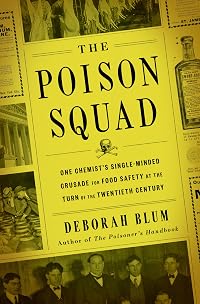
The Poison Squad: One Chemist's Single-Minded Crusade for Food Safety at the Turn of the Twentieth Century
by Deborah Blum
On This Page
Description
Dr. Harvey Washington Wiley set out to ensure food safety. He selected food tasters to test various food additives and preservatives, letting them know that the substances could be harmful or deadly. The tasters were recognized for their courage, and became known as the poison squad.Tags
Recommendations
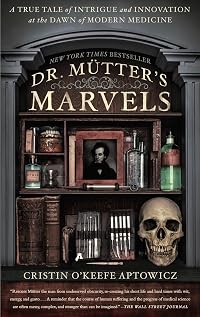
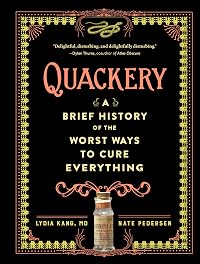
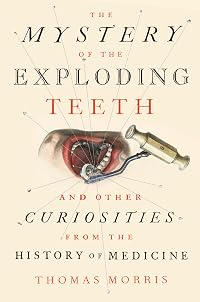
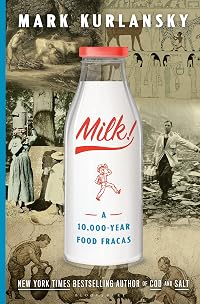


Member Recommendations
Member Reviews
This is a very well written book about the fight for food safety legislation in the U.S. It is clear that the writer is a journalist because of the amount of research she undertook and because of the clear picture she drew of the situation without the writing ever becoming dry or boring. She provided information on the almost unbelievable lengths manufacturers went to in order to make food more cheaply. And just what they added to food. The author also provided the right amount of context about the times to give a broader perspective on the issues.
Dr. Wiley was a man to be admired for many reasons. As a former federal employee, I'm impressed with how he was able to maintain his position despite lack of support from his Secretary and, at show more times, a similar lack from the President. Yet he build networks effectively and I admire the way he worked with women's organizations, recognizing the power of their voices in this issue. He also kept his eye firmly on his goal, ignoring "lesser" issues such as the appointment of a rival colleague to usurp his authority.
There are many parallels to today's society, notably the calls for deregulation in many sectors. This book shows the value of government oversight. There are still places in the world where research is buried or ignored, where the truth is not told to consumers or the public. We must continue to be vigilant. show less
Dr. Wiley was a man to be admired for many reasons. As a former federal employee, I'm impressed with how he was able to maintain his position despite lack of support from his Secretary and, at show more times, a similar lack from the President. Yet he build networks effectively and I admire the way he worked with women's organizations, recognizing the power of their voices in this issue. He also kept his eye firmly on his goal, ignoring "lesser" issues such as the appointment of a rival colleague to usurp his authority.
There are many parallels to today's society, notably the calls for deregulation in many sectors. This book shows the value of government oversight. There are still places in the world where research is buried or ignored, where the truth is not told to consumers or the public. We must continue to be vigilant. show less
A fascinating read, albeit not one to undertake on a full stomach. Deborah Blum's The Poison Squad recounts the origins of food safety laws in the United States in the late 19th and early 20th century U.S. Come for the anecdotes which you will be forced, forced, to read aloud to anyone unlucky enough to be in earshot of you (the U.S. government once sued some barrels of Coca-Cola! It used to be possible, and indeed legal, to buy 42lb barrels of decaying eggs mixed with borax to use in cake baking!), stay for the horrifying realisation of how little has truly changed in the battle between those working for food safety and environmental health standards and pro-business capitalists with their eye only on a corporation's bottom line.
At the turn of the 20th century, food safety standards were non-existent in the U.S. You name it, and it was probably contaminated or adulterated in some way as unscrupulous food processing companies scraped out profits at the expense of consumers. People buying “butter”, for example, might actually be buying tinted oleomargarine, and their “milk” might be coloured with chalk, preserved with formaldehyde, and garnished with a layer of pureed calves’ brains to simulate cream. Manufacturers were not required to meet a certain standard of cleanliness in their facilities or disclose what preservatives they used in their foods (or indeed what was even IN their foods). And the government had no way of testing the new preservatives show more on the market and identifying safe dosage levels for the average human.
Enter Harvey Washington Wiley, the chemist who crusaded for basic food safety legislation and consumer protection. His battles were many and arduous, as he fought industry lobbyists, presidents, and even his own boss. He was occasionally a little *too* uncompromising, but his drive and determination, and his collaboration with groups across the country, were inspiring. I particularly liked reading about his work with women’s suffrage groups. He was quick to see the value of getting women on his side in the quest for food safety, given that they were usually the ones doing the grocery shopping and cooking, and he wrote his Good Housekeeping pieces for the intelligent, thoughtful audience he knew they were (he resisted the editors’ suggestions to tone down the potentially “difficult” chemistry).
And what about the Poison Squad? This doesn’t play *that* big a role in the book, but here you go: they’re a group of young men who were recruited to eat meals laced with (either in pill form or in the food itself) varying doses of chemical preservatives in active use, to determine whether there were any harmful negative effects. These were in essence very early clinical trials. And while they were not structured in the best possible way, they still pointed to the fact that cumulative doses were what really caused health problems.
Blum writes smoothly and clearly, and the facts she presents make the reader alternate between “What?!” and “EWWW”. And in the clashes between Big Business and the government, there are some distressing parallels with the present day, making this an important book to read in today’s climate. The government deploys valuable safety nets that protect all citizens—we cannot take them for granted. show less
Enter Harvey Washington Wiley, the chemist who crusaded for basic food safety legislation and consumer protection. His battles were many and arduous, as he fought industry lobbyists, presidents, and even his own boss. He was occasionally a little *too* uncompromising, but his drive and determination, and his collaboration with groups across the country, were inspiring. I particularly liked reading about his work with women’s suffrage groups. He was quick to see the value of getting women on his side in the quest for food safety, given that they were usually the ones doing the grocery shopping and cooking, and he wrote his Good Housekeeping pieces for the intelligent, thoughtful audience he knew they were (he resisted the editors’ suggestions to tone down the potentially “difficult” chemistry).
And what about the Poison Squad? This doesn’t play *that* big a role in the book, but here you go: they’re a group of young men who were recruited to eat meals laced with (either in pill form or in the food itself) varying doses of chemical preservatives in active use, to determine whether there were any harmful negative effects. These were in essence very early clinical trials. And while they were not structured in the best possible way, they still pointed to the fact that cumulative doses were what really caused health problems.
Blum writes smoothly and clearly, and the facts she presents make the reader alternate between “What?!” and “EWWW”. And in the clashes between Big Business and the government, there are some distressing parallels with the present day, making this an important book to read in today’s climate. The government deploys valuable safety nets that protect all citizens—we cannot take them for granted. show less
Initial Thoughts: “Deborah Blum’s novel about the fight to develop food safety regulations and the beginnings of the Food and Drug Administration is fascinating if gruesome. To all the people concerned about genetically modified foods, I say that after reading this book, GMOs do not concern me anymore because our food could be SO much worse.”
Now: There are two things I take away from The Poison Squad. The first thing is that there has always been a political party that concerns itself more with corporations and corporate profit than with the health and welfare of the citizens of the United States. At the turn of the twentieth century, this party happened to be the Democratic Party. Today, it is the Republican Party. Same issues show more when it comes to voting on legislation that will help consumers versus help maintain the profits of corporations – and those kickbacks corporations provide members of Congress and senators. The second thing is that corporations never have and will never care for anything other than making the most money as possible, even if it means their products kill people. Working in business as I do, I understand this idea at a fundamental level, but this idea of profit over life struck home after reading all of the ways food manufacturers justified using lethal chemicals or other ingredients in their foodstuffs to make them cheaper to produce but keep consumer prices the same. Formaldehyde. Stone. Chalk. Coal tar. Salicylic acid. Lead. Borax. And these are the items they purposely used. Let’s not even talk about the cleanliness of their manufacturing processes! The whole thing is sickening. And depressing. The optimistic part of me would like to think that we, as a country, are better than we were in the late 1800s/early 1900s. Instead, I read about the decade-long fight Harvey Wiley had to make changes in food production, and I look at the ongoing war regarding healthcare, immigration, women’s rights, transgender rights, etc., and I know that we are no better than we were. Not by a long shot.
The Poison Squad may show how little changes there are on a political front, but it also shows just how many changes there are when it comes to foodstuffs. To my mind, worrying about hormones or food origins pales in comparison to wondering if your food is going to kill you. We joke about first world problems when we complain that something is not farm-fresh or organic, but seriously, milk used to contain formaldehyde. Embalming fluid. It makes all arguments in favor of organic ingredients feel like a joke.
Plus, men voluntarily ingested these toxic ingredients in human experiments because no one knew just how toxic they were to a human. This is not a case of watch factory workers using radium paint and developing cancer later in life. These were men who participated in experiments knowing they would be ingesting an ingredient that may be toxic. I cannot even fathom holding such human trials today, let alone finding volunteers to participate.
The political aspect of the fight for food safety may hit a little too close to home given today’s political vituperativeness, but the down and dirty details about the reasons for the need for food safety are fascinating. The Poison Squad does drag at times, but then you read about the fact that Upton Sinclair toned down those sections of his story regarding the slaughterhouse (and made them more palatable), and you are right back into the horror story that was food manufacturing in the Victorian era. Crazy stuff. It only makes you wonder how or why we as a species have lasted as long as we have. show less
Now: There are two things I take away from The Poison Squad. The first thing is that there has always been a political party that concerns itself more with corporations and corporate profit than with the health and welfare of the citizens of the United States. At the turn of the twentieth century, this party happened to be the Democratic Party. Today, it is the Republican Party. Same issues show more when it comes to voting on legislation that will help consumers versus help maintain the profits of corporations – and those kickbacks corporations provide members of Congress and senators. The second thing is that corporations never have and will never care for anything other than making the most money as possible, even if it means their products kill people. Working in business as I do, I understand this idea at a fundamental level, but this idea of profit over life struck home after reading all of the ways food manufacturers justified using lethal chemicals or other ingredients in their foodstuffs to make them cheaper to produce but keep consumer prices the same. Formaldehyde. Stone. Chalk. Coal tar. Salicylic acid. Lead. Borax. And these are the items they purposely used. Let’s not even talk about the cleanliness of their manufacturing processes! The whole thing is sickening. And depressing. The optimistic part of me would like to think that we, as a country, are better than we were in the late 1800s/early 1900s. Instead, I read about the decade-long fight Harvey Wiley had to make changes in food production, and I look at the ongoing war regarding healthcare, immigration, women’s rights, transgender rights, etc., and I know that we are no better than we were. Not by a long shot.
The Poison Squad may show how little changes there are on a political front, but it also shows just how many changes there are when it comes to foodstuffs. To my mind, worrying about hormones or food origins pales in comparison to wondering if your food is going to kill you. We joke about first world problems when we complain that something is not farm-fresh or organic, but seriously, milk used to contain formaldehyde. Embalming fluid. It makes all arguments in favor of organic ingredients feel like a joke.
Plus, men voluntarily ingested these toxic ingredients in human experiments because no one knew just how toxic they were to a human. This is not a case of watch factory workers using radium paint and developing cancer later in life. These were men who participated in experiments knowing they would be ingesting an ingredient that may be toxic. I cannot even fathom holding such human trials today, let alone finding volunteers to participate.
The political aspect of the fight for food safety may hit a little too close to home given today’s political vituperativeness, but the down and dirty details about the reasons for the need for food safety are fascinating. The Poison Squad does drag at times, but then you read about the fact that Upton Sinclair toned down those sections of his story regarding the slaughterhouse (and made them more palatable), and you are right back into the horror story that was food manufacturing in the Victorian era. Crazy stuff. It only makes you wonder how or why we as a species have lasted as long as we have. show less
Did you know that lead has recently been found in some cinnamon spice products? You should have been around before , and even after 1906, when anything that could be added to food was added, and nothing was ever inspected. People, and especially children, died after consuming bad milk, candy (legally laced with arsenic as a decoration), and all kinds of additives.
I found the pictures of old, white men helpful as I tried to keep track of the good guys (chemists and muckraking journalists) vs the baddies, (food processors, corrupt politicians).
Made me appreciate the fight it took to even pass safe food laws, never mind enforcing them. Of course, even today, the fight continues.
I appreciate the good fight the original heroes fought.
I show more also have a new respect for Good Housekeeping Magazine, an early food safety champion. show less
I found the pictures of old, white men helpful as I tried to keep track of the good guys (chemists and muckraking journalists) vs the baddies, (food processors, corrupt politicians).
Made me appreciate the fight it took to even pass safe food laws, never mind enforcing them. Of course, even today, the fight continues.
I appreciate the good fight the original heroes fought.
I show more also have a new respect for Good Housekeeping Magazine, an early food safety champion. show less
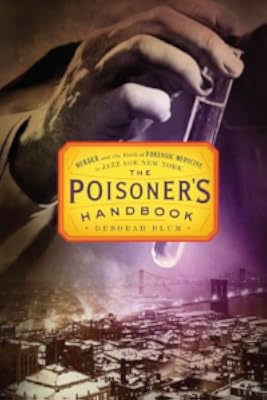
I really enjoyed Deborah Blum's The Poisoner's Handbook: Murder and the Birth of Forensic Medicine in Jazz Age New York about poison in the Jazz Age, and this prequel, so-to-speak, of the turn of the century push for food purity was fascinating. Many popular non-fiction books read like an afterthought of stitched together essays masquerading as a book, but Blum's journalism background really shines. The narrative flows nicely from one section to the next, painting a complete picture of an America held captive to corporate interests and party politics on one side and activists, suffragettes, socialists and scientists on the other. This may feel a little on the nose for modern politics, but Blum never lets a parallel slip out, instead show more sticking strictly to history. She does so largely by focusing on the story of Dr. Wiley, the titular "one chemist," who forms the also titular, "poison squad" -- a randomized controlled trial to determine the effects of preservatives on food.
Perhaps my biggest complaints about the books are the flip side of its virtues. With a singular narrative focus, Blum loses the opportunities to draw parallels and also address how the FDA and food regulation has evolved since FDR. Wiley's campaign against preservatives like saccharin and benzoate is addressed with complete credulity analogously to his campaigns against formaldehyde and copper salts in food. Blum never even mentions that both are FDA-approved now (a tangent: as a professional biochemical geneticist, I use benzoate all the time as a nitrogen scavenger because it binds to the amino acid glycine to form hippuric acid, which is easily excreted in the urine. When I first started interpreting urine organic acid analyses, I turned to my mentor confused -- why do so many samples have hippurate in them? I assumed that some hippuric acid might be naturally occurring. Instead, my mentor handed me a diet soda bottle, clearly labeled "contained potassium benzoate to preserve flavor."). She also didn't address the modern "pure food" movement or how that may be different with a more robust FDA who does approve the chemical additives... show less
Perhaps my biggest complaints about the books are the flip side of its virtues. With a singular narrative focus, Blum loses the opportunities to draw parallels and also address how the FDA and food regulation has evolved since FDR. Wiley's campaign against preservatives like saccharin and benzoate is addressed with complete credulity analogously to his campaigns against formaldehyde and copper salts in food. Blum never even mentions that both are FDA-approved now (a tangent: as a professional biochemical geneticist, I use benzoate all the time as a nitrogen scavenger because it binds to the amino acid glycine to form hippuric acid, which is easily excreted in the urine. When I first started interpreting urine organic acid analyses, I turned to my mentor confused -- why do so many samples have hippurate in them? I assumed that some hippuric acid might be naturally occurring. Instead, my mentor handed me a diet soda bottle, clearly labeled "contained potassium benzoate to preserve flavor."). She also didn't address the modern "pure food" movement or how that may be different with a more robust FDA who does approve the chemical additives... show less
This is the fascinating, alarming, and encouraging story of the first great round in the fight for food safety in the USA.
In the second half of the 19th century, the food industry embraced the chemical industry, and preservatives, colorants, and substitutions became common. This might not sound all that alarming, as all those terms apply to things legitimately used in food now. However, at that time, milk could contain formaldehyde, jellies and jams might contain none of the claimed fruit at all and get their color from coal tar dyes, and there were no labeling requirements at all. Basic food safety legislation was making progress in Europe, but was completely squelched by industry efforts in America.
In 1883, Dr. Harvey Washington Wiley show more was appointed chief chemist of the Department of Agriculture, and began a thirty-year crusade for clean, safe, and honestly packaged food. Under him, the agency began methodically investigating fraud in the manufacture and sale of food and drink. This included tests on human volunteers dubbed "The Poison Squad," tests that probably wouldn't pass an ethics committee review now, but were for the time a serious early attempt at controlled testing with informed volunteer test subjects. Among the commonly used preservatives in food at the time, aside from formaldehyde, were borax (a cleaning compound) and salicylic acid (a pharmaceutical). Saccharine was used as a sugar substitute in food products that continued to be labeled, if they were at all, as being sweetened with sugar. Even honest labeling was seen as an outrageous infringement on noble American business.
Wiley wasn't just fighting industry greed; he was often fighting politicians in the House and Senate, and even his own colleagues in the Department of Agriculture. On the other hand, he also had allies: the American Medical Association, women's suffrage groups, Fannie Farmer and other popular cookbook writers, women's magazines, and even those companies in the food industry, such as J.B. Heinz, who took pride in their products being manufactured to high standards with only the expected ingredients (ketchup made primarily of tomatoes, for instance.)
It's a fascinating battle, with victories and setbacks, and Wiley himself is an interesting character. Nor is he the only interesting character here. It was never a one-man battle, on either side of the fight, and Blum truly does justice to the story.
Highly recommended.
I bought this audiobook. show less
In the second half of the 19th century, the food industry embraced the chemical industry, and preservatives, colorants, and substitutions became common. This might not sound all that alarming, as all those terms apply to things legitimately used in food now. However, at that time, milk could contain formaldehyde, jellies and jams might contain none of the claimed fruit at all and get their color from coal tar dyes, and there were no labeling requirements at all. Basic food safety legislation was making progress in Europe, but was completely squelched by industry efforts in America.
In 1883, Dr. Harvey Washington Wiley show more was appointed chief chemist of the Department of Agriculture, and began a thirty-year crusade for clean, safe, and honestly packaged food. Under him, the agency began methodically investigating fraud in the manufacture and sale of food and drink. This included tests on human volunteers dubbed "The Poison Squad," tests that probably wouldn't pass an ethics committee review now, but were for the time a serious early attempt at controlled testing with informed volunteer test subjects. Among the commonly used preservatives in food at the time, aside from formaldehyde, were borax (a cleaning compound) and salicylic acid (a pharmaceutical). Saccharine was used as a sugar substitute in food products that continued to be labeled, if they were at all, as being sweetened with sugar. Even honest labeling was seen as an outrageous infringement on noble American business.
Wiley wasn't just fighting industry greed; he was often fighting politicians in the House and Senate, and even his own colleagues in the Department of Agriculture. On the other hand, he also had allies: the American Medical Association, women's suffrage groups, Fannie Farmer and other popular cookbook writers, women's magazines, and even those companies in the food industry, such as J.B. Heinz, who took pride in their products being manufactured to high standards with only the expected ingredients (ketchup made primarily of tomatoes, for instance.)
It's a fascinating battle, with victories and setbacks, and Wiley himself is an interesting character. Nor is he the only interesting character here. It was never a one-man battle, on either side of the fight, and Blum truly does justice to the story.
Highly recommended.
I bought this audiobook. show less
Members
- Recently Added By
Lists

2018 Ten Best Science Books
10 works; 1 member

The r/AskScience Reading List
159 works; 3 members
Author Information

13+ Works 4,788 Members
Deborah Blum won a Pulitzer Prize in 1992 for her writing and reporting about primate experiments and ethics, a subject that she further explored in her first book, The Monkey Wars. Her second book, Sex on the Brain, was a New York Times Notable Book for 1997. Blum is a professor of journalism at the University of Wisconsin, and president-elect of show more the National Association of Science Writers. She lives with her husband and two sons in Madison, Wisconsin show less
Some Editions
Awards and Honors
Awards
Distinctions
Notable Lists
Common Knowledge
- Original publication date
- 2018-09-25
- People/Characters
- Harvey Washington Wiley; Peter Collier; Julius Sterling Morton; Alexander Wedderburn; Anna Kelton Wiley; Theodore Roosevelt (show all 20); John Hurty; Leon Czolgosz; Edwin Ladd; George Rothwell Brown; Alice Lakey; Upton Sinclair; James Wilson; Frederick Dunlap; Walter Hines Page; Lyman Kebler; Willard Bigelow; George P. McCabe; William Howard Taft; Woodrow Wilson
- Important places
- Chicago, Illinois, USA; New York, New York, USA; Washington, D.C., USA
- Important events
- Britain's Act for Preventing Adulteration in Food and Drink (1860); The Butter Act (1886); Bottled-in-Bond Act (1897); Beef Court (1899); Pure Food Law (1898); McKinley Assassination (1901-09-06) (show all 8); Spanish American War; Food, Drug, and Cosmetic Act (1938)
- Dedication
- To Peter, who makes all things possible
- First words
- The sixth of seven children, Harvey Washington Wiley was born on April 16, 1844 in a log cabin on a small farm in Kent, Indiana, about a hundred miles northeast of the farm where Abraham Lincoln had grown up a few decades ear... (show all)lier.
- Quotations
- O we're the merriest heard of hulks / That ever the world has seen; / We don't shy off from your / Rough on Rats or even from Paris green / We're on the hunt for a toxic dope / That's certain to kill sans fail / But it is a t... (show all)ricky elusive thing and / Knows we are on its trail / For all the things that could kill / We've downed many a gruesome wad / And still we're gaining a pound a day / For we are the Pizen Squad - Song of the Poison Squad by S.W. Gillilan
- Last words
- (Click to show. Warning: May contain spoilers.)But if it does, if that long-awaited final victory is achieved, it will be because we, like Wily, refused to give up.
- Publisher's editor
- Godoff, Ann
Classifications
- Genres
- General Nonfiction, Science & Nature, History, Nonfiction, Politics and Government, Biography & Memoir
- DDC/MDS
- 363.19 — Society, government, & culture Social problems and social services Public Safety - Police, Crime Investigation Public safety from hazards Food
- LCC
- TX518 .W5 .B58 — Technology Home economics Home economics Nutrition. Foods and food supply
- BISAC
Statistics
- Members
- 553
- Popularity
- 53,651
- Reviews
- 21
- Rating
- (3.97)
- Languages
- English
- Media
- Paper, Audiobook, Ebook
- ISBNs
- 8
- ASINs
- 4