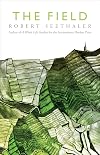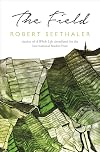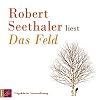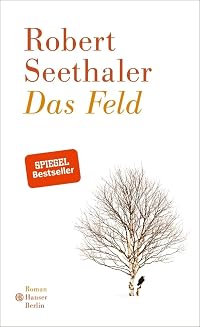
The Field
by Robert Seethaler
On This Page
Description
If the dead could speak, what would they say to the living? From their graves in the field, the oldest part of Paulstadt's cemetery, the town's late inhabitants tell stories from their lives. Some recall just a moment, perhaps the one in which they left this world, perhaps the one that they now realize shaped their life forever. Some remember all the people they've been with, or the only person they ever loved. These voices together - young, old, rich poor - build a picture of a community, show more as viewed from below ground instead of from above. The streets of the small, sleepy provincial town of Paulstadt are given shape and meaning by those who lived, loved, worked, mourned and died there. From the author of the Booker International-shortlisted A Whole Life, Robert Seethaler's The Field is about what happens at the end. It is a book of human lives - each one different, yet connected to countless others - that ultimately shows how life, for all its fleetingness, still has meaning. show lessTags
Recommendations






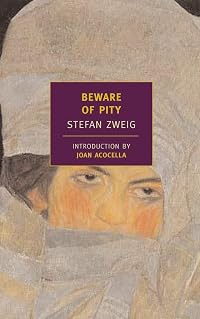
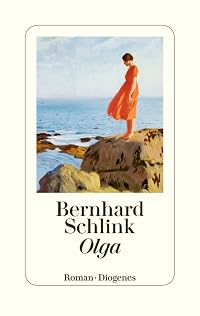
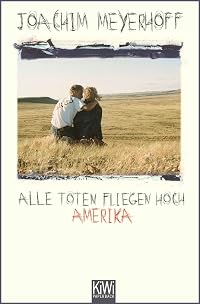
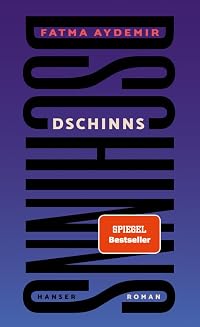




Member Recommendations

Member Reviews
Robert Seethaler is a hedgehog by Isaiah Berlin's definition, the one thing he does extremely well being to write concise, moving accounts of the lives of "unimportant" people. In A whole life he fills a short novel with the life of one man; here he creates a composite portrait of a small Austrian town by giving voices to a selection of the occupants of its graveyard.
This could be a self-indulgent and sentimental project in other hands, but Seethaler handles it with compassion, wit and a non-judgmental ear that gives the same weight to a centenarian as to a teenager killed in a road accident, or puts the crazed priest who burnt down his own church on the same level as a Middle Eastern greengrocer or a gambling-addicted council workman. show more Sometimes we hear two conflicting versions of the same events, and have to decide for ourselves whom to believe, at other times there is little or no overlap with the stories of other characters. One character condenses everything she wants to tell the living into a single word, others take all the space they can get.
I don't think you'd want to read several of Seethaler's books in quick succession, but taken every now and then they can be quite rewarding. show less
This could be a self-indulgent and sentimental project in other hands, but Seethaler handles it with compassion, wit and a non-judgmental ear that gives the same weight to a centenarian as to a teenager killed in a road accident, or puts the crazed priest who burnt down his own church on the same level as a Middle Eastern greengrocer or a gambling-addicted council workman. show more Sometimes we hear two conflicting versions of the same events, and have to decide for ourselves whom to believe, at other times there is little or no overlap with the stories of other characters. One character condenses everything she wants to tell the living into a single word, others take all the space they can get.
I don't think you'd want to read several of Seethaler's books in quick succession, but taken every now and then they can be quite rewarding. show less
‘’Did I talk about tomorrow? Did I tell you that I love you? Do you remember?’’
In a German town, the dead have indeed their own stories to tell. Imagine if the deceased got together to narrate their lives and the way they came to the Certain end. Not as spooks but as actual spirits, with a voice like our own, but deepened with the wisdom of the Other Side.
In Robert Seethaler’s exceptional novel, a diverse Chorus narrates personal stories of love, loss, hope, companionship and isolation, spanning the stormy years of the previous century. Voices within a community, people locked in flats, people tending their gardens, strolling down sunlit streets, falling in love or into despair. A woman says goodbye to her husband, a man show more thinks of unrequited love, a priest loses his faith. Families coming together, families falling apart. People fall prey to addictions, others try to find their independence. We search for love and understanding. Some of us are fortunate, others less so. But the end of the journey is there.
A novel such as this is hard to describe. Seethaler’s writing is haunting and quiet, not morbid. The voices of the characters are direct, moving. This is not a dark journey. It is a strange concert, a walk down memory lane, a cry that should be heard.
‘’But perhaps the dead had no interest whatsoever in the things that lay behind them. Perhaps they would talk about what it was like over there. How it felt to stand on the other side. Summoned. Called home. Gathered in. Transformed.’’
Many thanks to Picador and NetGalley for the ARC in exchange for an honest review.
My reviews can also be found on https://theopinionatedreaderblog.wordpress.com/ show less
In a German town, the dead have indeed their own stories to tell. Imagine if the deceased got together to narrate their lives and the way they came to the Certain end. Not as spooks but as actual spirits, with a voice like our own, but deepened with the wisdom of the Other Side.
In Robert Seethaler’s exceptional novel, a diverse Chorus narrates personal stories of love, loss, hope, companionship and isolation, spanning the stormy years of the previous century. Voices within a community, people locked in flats, people tending their gardens, strolling down sunlit streets, falling in love or into despair. A woman says goodbye to her husband, a man show more thinks of unrequited love, a priest loses his faith. Families coming together, families falling apart. People fall prey to addictions, others try to find their independence. We search for love and understanding. Some of us are fortunate, others less so. But the end of the journey is there.
A novel such as this is hard to describe. Seethaler’s writing is haunting and quiet, not morbid. The voices of the characters are direct, moving. This is not a dark journey. It is a strange concert, a walk down memory lane, a cry that should be heard.
‘’But perhaps the dead had no interest whatsoever in the things that lay behind them. Perhaps they would talk about what it was like over there. How it felt to stand on the other side. Summoned. Called home. Gathered in. Transformed.’’
Many thanks to Picador and NetGalley for the ARC in exchange for an honest review.
My reviews can also be found on https://theopinionatedreaderblog.wordpress.com/ show less
Die Geschichten der Toten des Feldes, des Friedhofes des kleinen Städtchens, sind wie ein Palimpsest. Denn die neuen Toten werden auf den alten begraben ('Man rutscht ab mit der Zeit', S. 99) und erzählen dann ihre Geschichten - und damit so ganz nebenbei auch die Geschichte ihrer Stadt. Sie handeln von den Dramen des Lebens wie auch vom kleinen Glück, das für die Einzelnen nicht selten das große ist. Liebe, Tod, Glück und Tragik liegen nah beieinander, nicht selten auch im selben Haus. Manche stellen sich ihren Lebenslügen, andere halten selbst im Tod noch daran fest - wie die Menschen eben sind. Schön ist die Verbundenheit einiger Figuren, die bei manchen enger (beispielsweise als Paar), bei anderen nur lose besteht. Auf diese show more Weise erlebt man beim Lesen immer wieder eine unterschiedliche Sicht auf dasselbe Geschehen, was immer wieder faszinierend ist.
Es ist ein Buch, das unglaublich die Phantasie anregt, denn Vieles wird nur angedeutet. Jedoch stets in einem Maße, das ausreicht, um eine Vorstellung zu vermitteln und schon beginnen die eigenen Gedanken eigene Wege zu gehen. Der Postbote - welches Drama spielt sich bei ihm daheim ab? Mit wem sitzt die Witwe auf der Terrasse? Was war Buxters letzte Tat? Es gibt mehr Fragen als Antworten, aber das macht auch den Reiz dieses Buches aus.
Doch mit einer Sache haderte ich: Der Tonfall war für alle Toten annähernd gleich. Ob ein Kind oder eine alte Frau erzählen - die Unterschiede sind marginal und fallen kaum ins Gewicht. So wird es schwer, die einzelnen Stimmen als Person im Gedächtnis zu behalten, es sind die Geschichten, die sich einem einprägen müssen.
Dennoch eine schöne Lektüre mit viel Raum für die eigene Phantasie. show less
Es ist ein Buch, das unglaublich die Phantasie anregt, denn Vieles wird nur angedeutet. Jedoch stets in einem Maße, das ausreicht, um eine Vorstellung zu vermitteln und schon beginnen die eigenen Gedanken eigene Wege zu gehen. Der Postbote - welches Drama spielt sich bei ihm daheim ab? Mit wem sitzt die Witwe auf der Terrasse? Was war Buxters letzte Tat? Es gibt mehr Fragen als Antworten, aber das macht auch den Reiz dieses Buches aus.
Doch mit einer Sache haderte ich: Der Tonfall war für alle Toten annähernd gleich. Ob ein Kind oder eine alte Frau erzählen - die Unterschiede sind marginal und fallen kaum ins Gewicht. So wird es schwer, die einzelnen Stimmen als Person im Gedächtnis zu behalten, es sind die Geschichten, die sich einem einprägen müssen.
Dennoch eine schöne Lektüre mit viel Raum für die eigene Phantasie. show less
This is an unusual and very interesting approach to story telling. The author lets the dead and buried speak to us from beyond the grave. The individual stories place both life and death in a new perspective. Another enjoyable read by Robert Seethaler!
I read Robert Seethaler’s A Whole Life a few months ago. Although I enjoyed its lyricism and focus on man’s place in the natural world, I didn’t find it in any way remarkable. A solid work; perhaps even a stolid work. I was more impressed with this work, a collection of a few dozen short and longer chapters, each the voice and thoughts of someone buried in the local cemetery. They illuminate individual personalities and lives and at the same time cast light on each other and on the history and life of the town itself. The voices and stories are unique, so well-done that they don’t sound as if they were all written by the same hand and Seethaler’s strength lies, in part, in a judicious and understated manner. In the end, though show more I enjoyed the book and think that it is a more accomplished work than A Whole Life, and though I will read at least another book or two of his, I am not yet convinced that Seethaler is a great writer. show less
The novel has a good variety of characters, incidents and moods, is competently written, and by the time I'd got halfway through it I was too bored to read further. What Seethaler has to say simply lies flat on the page, so flat that not only does the novel lack immediacy, it's devoid of interest.
I'm not sure why this is so given that I can't point to a specific passage that was tedious or badly written. Thougj the conventionally expository way of telling the stories was once or twice relieved with a terse and fragmented one overall the book is like the background monotone hum heard from a nearby factory. The novel reads to me as if the author had decided to make his book a take on Spoon River Anthology or Cré na Cikele and approached show more the monologues as tasks to be ticked off a list, the completion of each the only goal. Disappointing, almost instantaneously forgettable. show less
I'm not sure why this is so given that I can't point to a specific passage that was tedious or badly written. Thougj the conventionally expository way of telling the stories was once or twice relieved with a terse and fragmented one overall the book is like the background monotone hum heard from a nearby factory. The novel reads to me as if the author had decided to make his book a take on Spoon River Anthology or Cré na Cikele and approached show more the monologues as tasks to be ticked off a list, the completion of each the only goal. Disappointing, almost instantaneously forgettable. show less
Die Toten erzählen, vom Leben, Lieben, Sterben. Wie unterschiedlich gemeinsame Leben empfunden werden können. Gefühlvoll, einfühlsam geschildert.
Members
- Recently Added By
Lists

German Literature
518 works; 56 members

EU Fiction: 1950-2022
223 works; 70 members

Books Read in 2020
4,379 works; 124 members

Dead narrators
50 works; 4 members

Books Read in 2021
5,361 works; 114 members
Author Information

18 Works 2,614 Members
Robert Seethaler was born in Vienna, Austria on August 7, 1966. He is a writer. His work includes the novel A Whole Life. He is also an actor. His movies include My Mother, My Bride and I, and La Grande Bellezza. (Bowker Author Biography)
All Editions
Awards and Honors
Series
Belongs to Publisher Series
Gallimard, Folio (7023)
Common Knowledge
- Canonical title
- The Field
- Original title
- Das Feld
- Original publication date
- 2018
- Original language*
- Duits
*Some information comes from Common Knowledge in other languages. Click "Edit" for more information.
Classifications
Statistics
- Members
- 252
- Popularity
- 129,043
- Reviews
- 11
- Rating
- (3.76)
- Languages
- 5 — Dutch, English, French, German, Swedish
- Media
- Paper, Audiobook, Ebook
- ISBNs
- 20
- ASINs
- 4