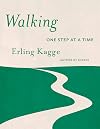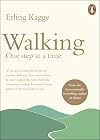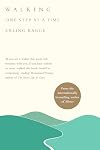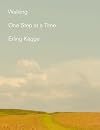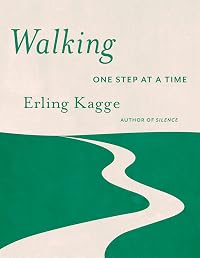
Walking: One Step At a Time
by Erling Kagge
On This Page
Description
"Placing one foot in front of the other, embarking on the journey of discovery, and experiencing the joy of exploration--these activities are intrinsic to our nature. Our ancestors traveled long distances on foot, gaining new experiences and learning from them. But as universal as walking is, each of us will experience it differently. For Erling Kagge, it is the gateway to the questions that fascinate him--Why do we walk? Where do we walk from? What is our destination?--and in this book he show more invites us to investigate them along with him. Language reflects the idea that life is one single walk; the word "journey" comes from the distance we travel in the course of a day. Walking for Kagge is a natural accompaniment to creativity: the occasion for the unspoken dialogue of thinking. Walking is also the antidote to the speed at which we conduct our lives, to our insistence on rushing, on doing everything in a precipitous manner--walking is among the most radical things we can do." -- Front flap. show lessTags
Recommendations









Member Reviews
If only as inhabitants of the 21st century we could just for a moment, step outside the structured manic lives we lead and simply make the time to "be", to observe, to glorify and appreciate this wondrous beauty all around us. We live in a technological age, a time where we are made to believe that anything is possible, a 24 hour harvesting machine that consumes us, surrounding us with unbelievable choice and wealth abound if only we buy into it.
How wrong we are, how blind we are; wealth creates wealth...creates wealth.....creates consumerism...creates a never ending want, an illusion that possessions are the key to happiness when in reality they are the answer to nothing and only create a society wallowing in depression and mental show more health creating a whirlpool which we (if we allow it) are sucked into.
Walking, one step at a time, by Norwegian explorer Erling Kagge is a celebration of the immense beauty of this wonderful universe that surrounds us and all we need to do to appreciate this wealth is to observe, to become immersed in nature, wildlife, changing seasons, to take time, to slow down, to touch, to feel and only by doing this is it possible to make some sense of a society gone mad. Kagge's writing is sublime taking the inquisitive reader into the heart of what is really important in our lives showing us a world in glorious colour when often we only view in black and white. To enter this garden of Eden all that is required is the ability to put one foot in front of the other...to walk one step at a time....."with the utmost love and attention the man who walks must study and observe every smallest living thing"....."just as the body requires sunlight, the skin loves to feel the wind, and the ears delight in the sound of birdsong"......"to take one step at a time- can be about loving the earth, seeing yourself and letting your body travel at the same speed as your soul"....
A short read, a great read and one that may change your life, Highly Recommended. show less
How wrong we are, how blind we are; wealth creates wealth...creates wealth.....creates consumerism...creates a never ending want, an illusion that possessions are the key to happiness when in reality they are the answer to nothing and only create a society wallowing in depression and mental show more health creating a whirlpool which we (if we allow it) are sucked into.
Walking, one step at a time, by Norwegian explorer Erling Kagge is a celebration of the immense beauty of this wonderful universe that surrounds us and all we need to do to appreciate this wealth is to observe, to become immersed in nature, wildlife, changing seasons, to take time, to slow down, to touch, to feel and only by doing this is it possible to make some sense of a society gone mad. Kagge's writing is sublime taking the inquisitive reader into the heart of what is really important in our lives showing us a world in glorious colour when often we only view in black and white. To enter this garden of Eden all that is required is the ability to put one foot in front of the other...to walk one step at a time....."with the utmost love and attention the man who walks must study and observe every smallest living thing"....."just as the body requires sunlight, the skin loves to feel the wind, and the ears delight in the sound of birdsong"......"to take one step at a time- can be about loving the earth, seeing yourself and letting your body travel at the same speed as your soul"....
A short read, a great read and one that may change your life, Highly Recommended. show less
Erling Kagge has written a wonderful book on walking. Most of us don't walk enough. Indians walk less than Americans and Europeans, and our laziness shows up in our poor health outcomes. Gym work and 'going for a walk' alleviate some problems, but don't do enough.
Walking is not just physical exercise: deep philosophy exists in walking. When you walk in silence, you notice your physical surroundings. Erling Kagge does not pretend to be a saint or perfect, and this attitude lifts the book above the mundane.
Walking is not just physical exercise: deep philosophy exists in walking. When you walk in silence, you notice your physical surroundings. Erling Kagge does not pretend to be a saint or perfect, and this attitude lifts the book above the mundane.
Walking is travel at a speed that humans are comfortable with, you can take everything in as you pass by. The act of us walking on two feet, upright and able to observe what is around us is a movement that is millennia old. We as a species though are not walking as much as we used to, the modern transport options are so easy and we lose that sense of time.
The ability to walk, to put one foot in front of the other, invented us.
Erling Kagge has loved walking for as long as he can remember, when he was growing up in Norway his parents did not own a car so he had to walk. He walked to the North Pole in his mid-twenties and then walked to the South Pole, solo. Now in charge of a publishing house, he still walks when he can and wherever he show more happens to be. For him it is the best way to discover a place, find what makes it tick and to feel the pulse of it.
I learned that the spiritual was the opposite of the material, but in the woods these two are not opposites – they are equals. To walk reflects this.
Walking not only helps our physical health, but can benefit our mind too. Research has shown that time spent away from a screen, regardless if it is a walk along city streets or heading up over a moor works wonders for your mind too. This is a good companion volume to his other book on silence. Both are small acts of defiance against the fast-paced, relentless and loud world. I really enjoyed this too. I really like his sparse writing style and philosophical outlook on life. Stunning cover too. Well worth reading. show less
The ability to walk, to put one foot in front of the other, invented us.
Erling Kagge has loved walking for as long as he can remember, when he was growing up in Norway his parents did not own a car so he had to walk. He walked to the North Pole in his mid-twenties and then walked to the South Pole, solo. Now in charge of a publishing house, he still walks when he can and wherever he show more happens to be. For him it is the best way to discover a place, find what makes it tick and to feel the pulse of it.
I learned that the spiritual was the opposite of the material, but in the woods these two are not opposites – they are equals. To walk reflects this.
Walking not only helps our physical health, but can benefit our mind too. Research has shown that time spent away from a screen, regardless if it is a walk along city streets or heading up over a moor works wonders for your mind too. This is a good companion volume to his other book on silence. Both are small acts of defiance against the fast-paced, relentless and loud world. I really enjoyed this too. I really like his sparse writing style and philosophical outlook on life. Stunning cover too. Well worth reading. show less
I have become aware of the great benefits of walking so am planning to read lots of books about it – to encourage and inspire me.
This book by a Norwegian writer exceeded my expectations. It is a lovely book.
Erling Kagge is an explorer who was the first in history to reach the “three poles” – North, South and the summit of Everest.
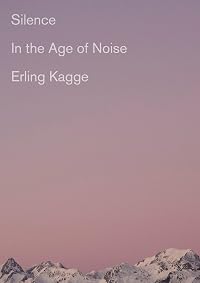
He tells us he has walked and walked – with inner silence. (He has penned a book called “Silence” – which I will now be reading as soon as I get hold of it.)
He is sure of one thing – “to put one foot on front of the other is one of the most important things we do.”
“Life is prolonged when you walk. Walking expands time rather than collapses it.”
So much in our lives is fast-paced. show more Walking is a slow undertaking and among the most radical things you can do.
Erling writes in a very personal way, telling us stories from his adventures. He mentions that ¾ of all English children spend less time outdoors than prison inmates in the same country. Every fifth child is indoors all day, and every ninth child has not set foot in a park, forest or on a beach in the course of the entire year. Their time is spent indoors in front of a screen.
In the UK poor children spend even less time outside.
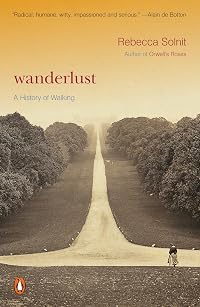
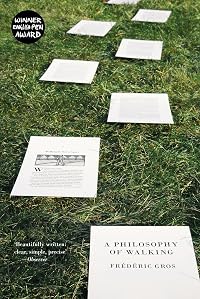
He tells us of other walkers who have written books about walking, so I’ve noted those names and titles, of course.
He lives in Oslo and takes walks through most of the city neighbourhoods. It is a thrill for him to watch people. He observes the same people across the years and can see how they have aged through the spring in their step.
We learn that if you walk in Los Angeles you can get stopped by the police, who are suspicious of people on foot.
He describes a walk through LA with two friends. On his walks in LA he sees a lot of stoned people.
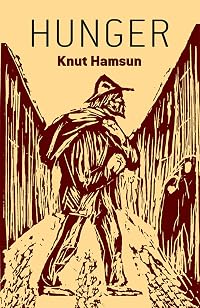
Erling is a well-read man and refers to many authors and books e.g. by Joyce, Hamsun and Nabokov.
We don’t only learn about walking, but are inaugurated in the author’s personal beliefs and thoughts about walking. “A policeman walks in a completely different manner than a hipster, who in turn walks differently than a beggar.”
Your walk doesn’t lie, but you can bluff and teach yourself to walk in a different manner. For example if you are walking through a dangerous area at night you can learn to walk more confidently and thus decrease your chances of being assaulted.
Erling walks away from his problems, not all of them, but as many as possible. Most of those he knows with big personal problems are those who don’t take walks.
I found this to be a fascinating, engaging book and am greatly looking forward to reading “Silence”.
I highly recommend that you read the present book. show less
This book by a Norwegian writer exceeded my expectations. It is a lovely book.
Erling Kagge is an explorer who was the first in history to reach the “three poles” – North, South and the summit of Everest.
He tells us he has walked and walked – with inner silence. (He has penned a book called “Silence” – which I will now be reading as soon as I get hold of it.)
He is sure of one thing – “to put one foot on front of the other is one of the most important things we do.”
“Life is prolonged when you walk. Walking expands time rather than collapses it.”
So much in our lives is fast-paced. show more Walking is a slow undertaking and among the most radical things you can do.
Erling writes in a very personal way, telling us stories from his adventures. He mentions that ¾ of all English children spend less time outdoors than prison inmates in the same country. Every fifth child is indoors all day, and every ninth child has not set foot in a park, forest or on a beach in the course of the entire year. Their time is spent indoors in front of a screen.
In the UK poor children spend even less time outside.
He tells us of other walkers who have written books about walking, so I’ve noted those names and titles, of course.
He lives in Oslo and takes walks through most of the city neighbourhoods. It is a thrill for him to watch people. He observes the same people across the years and can see how they have aged through the spring in their step.
We learn that if you walk in Los Angeles you can get stopped by the police, who are suspicious of people on foot.
He describes a walk through LA with two friends. On his walks in LA he sees a lot of stoned people.
Erling is a well-read man and refers to many authors and books e.g. by Joyce, Hamsun and Nabokov.
We don’t only learn about walking, but are inaugurated in the author’s personal beliefs and thoughts about walking. “A policeman walks in a completely different manner than a hipster, who in turn walks differently than a beggar.”
Your walk doesn’t lie, but you can bluff and teach yourself to walk in a different manner. For example if you are walking through a dangerous area at night you can learn to walk more confidently and thus decrease your chances of being assaulted.
Erling walks away from his problems, not all of them, but as many as possible. Most of those he knows with big personal problems are those who don’t take walks.
I found this to be a fascinating, engaging book and am greatly looking forward to reading “Silence”.
I highly recommend that you read the present book. show less
Tras el éxito internacional El silencio en la era del ruido, Erling Kagge nos deleita con un libro sobre el placer de caminar.Libros querespiran ytehacenrespirar.[return][return]«Casi todos los problemas parecen distintos después de un paseo.»[return][return]Al caminar, con o sin rumbo, nuestro cuerpo viaja a la velocidad de nuestra mente. Solo cuando damos un paso tras otro podemos descubrir la tierra que pisamos, y a nosotros mismos. La capacidad de andar erguidos nos convirtió en lo que somos, y al dejar de caminar abandonamos también nuestra esencia, nos convertimos en otra cosa.[return][return]Este libro, una agradable caminata en excelente compañía, nos recuerda la alegría de las caminatas, breves o largas, y nos convence show more de que quien va a pie llega más lejos y vive mejor. En el camino, nuestros pasos se cruzan con figuras como Machado, Heidegger, Thoreau, Neruda o Steve Jobs.[return][return]Erling Kagge, el autor que nos enseñó a encontrar el silencio en este estruendoso mundo, vuelve con un evocador libro sobre el placer y el equilibrio que se pueden encontrar en tan simple actividad. show less
2020 has been a year of isolation, and Kagge has a guide for being alone on your feet.
Un altro libro dell'ovvio, senza aggiungere niente di nuovo.Mezza delusione.
Jan 3, 2020Italian
Members
- Recently Added By
Lists

Books Read in 2023
5,547 works; 145 members

2024 Reading List
49 works; 1 member
Author Information

21+ Works 1,295 Members
Some Editions
Common Knowledge
- Canonical title*
- Pas à pas : Faites de la marche un art !
- Original title
- Å gå : Ett skritt av gangen
- Original publication date
- 2018
- First words
- One day my grandmother was no longer able to walk.
- Original language*
- Noors
*Some information comes from Common Knowledge in other languages. Click "Edit" for more information.
Classifications
- Genres
- Philosophy, Nonfiction, Biography & Memoir
- DDC/MDS
- 796.51 — Arts & recreation Recreation, sports, and performing arts Athletic and outdoor sports and games Outdoor leisure Hiking and Backpacking
- LCC
- GV199.5 .K3413 — Geography, Anthropology and Recreation Recreation. Leisure Recreation. Leisure Outdoor life. Outdoor recreation Hiking. Pedestrian tours
- BISAC
Statistics
- Members
- 374
- Popularity
- 84,104
- Reviews
- 8
- Rating
- (3.71)
- Languages
- 10 — English, Estonian, Finnish, French, German, Italian, Norwegian (Bokmål), Norwegian, Portuguese, Spanish
- Media
- Paper, Audiobook, Ebook
- ISBNs
- 19
- ASINs
- 10