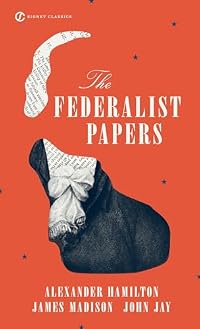
The Federalist Papers
by Alexander Hamilton  , John Jay, James Madison, Publius
On This Page
Description
Perhaps the most essential distillation of the Founders' vision of America, The Federalist Papers consist of a series of 85 essays in favor of the ratification of the U.S. Constitution. Attributed to Alexander Hamilton, John Jay, and James Madison, the essays tackle an array of topics that are just as relevant today as they were more than 200 years ago, including human rights, republican governance, the proper scope and jurisdiction of a federal government, and much more.Tags
Recommendations

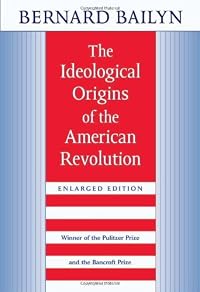

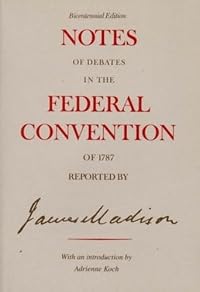
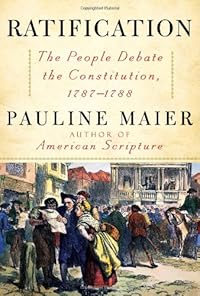
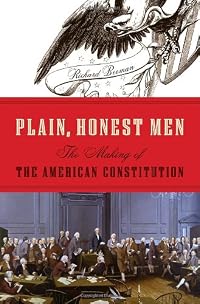

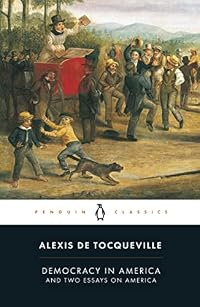
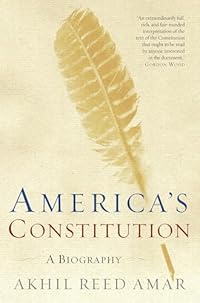
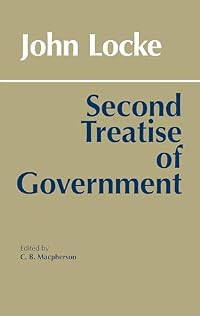
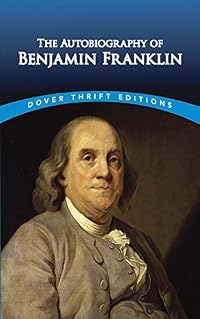



Member Reviews
As you might have heard in a certain musical, The Federalist Papers represented a series of essays published in New York newspapers in 1788 by “Publius” as an attempt to defend the structure and substance of the Constitution proposed for the creation of the government of the United States as we now know it. “Publius” was a consortium of John Jay, Alexander Hamilton, and James Madison; Jay only wrote two or three, Madison a few, especially about the legislature, and most of it comes from Hamilton.
The Federalist Papers has become part of the American hagiography, seen by far too many as the Wisdom from the Founders from On High, as if their understanding should thus inform how we interpret the Constitution to this day.
In reading show more The Federalist Papers two striking themes kept re-appearing and came to mind.
The first involves some of the effective basis of that hagiography: in many respects we today take for granted a lot of the ways in which the government of the United States is organized and run which were laid out in the Constitution and defended in The Federalist Papers, and we do not imagine how it could be otherwise. But many of these principles needed defending. There were alternate ways of imagining how the United States might organize itself, and many of those views were enshrined in the Articles of Confederarion and were being strongly supported by other factions. It would have been disastrous if the military functions or the ability to make treaties had devolved onto the states individually or in regional blocs. We don’t think twice about how we have become fifty states, but do we think how much power the original thirteen was willing to give up in order for that to become a reality?
The second theme, however, involves a recognition of the thin gruel which represented the bases on which the authors were setting forth their propositions. I have never heard more references to various Greek leagues of city-states than I have in The Federalist Papers, and I was a Classics major. It is a reminder of just how radical the idea of democratic-republican governance with a separation of powers within the federal government and between the federal and state governments really was. Sometimes appeals were made to British common law, but most appeals, if there were any basis in historical experience, would involve those Greek city-state leagues, the Roman Republic, or previous experience under the Articles of Confederation or the kinds of governments already in place in the various states.
Hamilton’s final points about the imperfections of the Constitution and the striving to form a more perfect union remain as apt as ever: the Constitution, and The Federalist Papers which defend it, are important historical documents. They well navigated and negotiated a lot of difficulties. The United States also enjoyed a lot of benefits, some natural, some policy related, and some by chance or good fortune. Yet even its authors recognized the importance of allowing the government to adapt based upon learned experience and socio-cultural changes. The Bill of Rights was good. The later amendments enshrining civil rights and the end of chattel slavery as previously practiced were good. Suffrage for women and non-propertied persons was good.
No doubt many of the changes which have been wrought in the past two hundred plus years would horrify Hamilton, Madison, et al, for even though they did not want to build a European-style aristocracy, they still maintained a lot of aristocratic airs. But I do have to wonder how they would feel in looking at the contrast between the changes and developments in Europe versus the stagnation in governance now prevalent in the United States of America. Yet it seems fairly certain none of them would have been interested in the level of hagiography which currently exists in relation to the forms of government they encouraged. They were the Founders, not the Finishers, of our system of governance.
(Technical concerns about the particular edition of The Federalist Papers linked above: a lot of OCR scanning errors; year numbers left as unknown characters; and especially in the Madison section, too many spacing issues. It’s $1 for a reason. A cleaner version would enhance reading.) show less
The Federalist Papers has become part of the American hagiography, seen by far too many as the Wisdom from the Founders from On High, as if their understanding should thus inform how we interpret the Constitution to this day.
In reading show more The Federalist Papers two striking themes kept re-appearing and came to mind.
The first involves some of the effective basis of that hagiography: in many respects we today take for granted a lot of the ways in which the government of the United States is organized and run which were laid out in the Constitution and defended in The Federalist Papers, and we do not imagine how it could be otherwise. But many of these principles needed defending. There were alternate ways of imagining how the United States might organize itself, and many of those views were enshrined in the Articles of Confederarion and were being strongly supported by other factions. It would have been disastrous if the military functions or the ability to make treaties had devolved onto the states individually or in regional blocs. We don’t think twice about how we have become fifty states, but do we think how much power the original thirteen was willing to give up in order for that to become a reality?
The second theme, however, involves a recognition of the thin gruel which represented the bases on which the authors were setting forth their propositions. I have never heard more references to various Greek leagues of city-states than I have in The Federalist Papers, and I was a Classics major. It is a reminder of just how radical the idea of democratic-republican governance with a separation of powers within the federal government and between the federal and state governments really was. Sometimes appeals were made to British common law, but most appeals, if there were any basis in historical experience, would involve those Greek city-state leagues, the Roman Republic, or previous experience under the Articles of Confederation or the kinds of governments already in place in the various states.
Hamilton’s final points about the imperfections of the Constitution and the striving to form a more perfect union remain as apt as ever: the Constitution, and The Federalist Papers which defend it, are important historical documents. They well navigated and negotiated a lot of difficulties. The United States also enjoyed a lot of benefits, some natural, some policy related, and some by chance or good fortune. Yet even its authors recognized the importance of allowing the government to adapt based upon learned experience and socio-cultural changes. The Bill of Rights was good. The later amendments enshrining civil rights and the end of chattel slavery as previously practiced were good. Suffrage for women and non-propertied persons was good.
No doubt many of the changes which have been wrought in the past two hundred plus years would horrify Hamilton, Madison, et al, for even though they did not want to build a European-style aristocracy, they still maintained a lot of aristocratic airs. But I do have to wonder how they would feel in looking at the contrast between the changes and developments in Europe versus the stagnation in governance now prevalent in the United States of America. Yet it seems fairly certain none of them would have been interested in the level of hagiography which currently exists in relation to the forms of government they encouraged. They were the Founders, not the Finishers, of our system of governance.
(Technical concerns about the particular edition of The Federalist Papers linked above: a lot of OCR scanning errors; year numbers left as unknown characters; and especially in the Madison section, too many spacing issues. It’s $1 for a reason. A cleaner version would enhance reading.) show less
While borrowing heavily from the French physiocrats and philosophes, including Montesquieu ("Esprit de Lois") who first divided government functions into three branches and a Fourth Estate (Free Press) as a means of balancing power, the authors of the collected essays in The Federalist Papers transform the politics of meanness and faction into equilibrium and responsible action.
The main problem is how to avoid the paralysis of chaos and the injustice of tyranny. Without resorting to mere tirade, Hamilton, Jay and Madison gently essay the experience of history into a rationale for the draft Constitution which was being debated State by State. By cutting away the pretty pretentions which so many authors were forced to present in show more countries ruled by aristocrats, and by addressing the expressed concerns of people, the authors drew a compelling argument for checks and balances in government by c'est moi.
Comparing these essays to any collection of work by the Founders of any other Government -- from the Lycurgus Code, the empire of Marcus Aurelius, the pretentions of the Niceneans, the decrees of tyrants, the betrayals of Marx-Engels, the Soviet Supremes, the Little Red Book, to the chickens in every Pol Pot coming home to roost -- the Federalist Papers simply stand without equal to this day.
The only concern which seems slightly dated is the recurrent effort to be certain that "titles" and nobility in general were not given purchase or opportunity in the United States. The only concern which seems to be missing is the failure to recognize that Slavery was inconsistent with civic responsibility, by definition and as practiced.
The Papers are, by the way, unfamiliar to the "Tea Party". The whole point, the entire argument, is to place a STRONG CENTRAL GOVERNMENT into being. The authors are shouting out AGAINST the plutocrats and feudal lords who decried the slightest concession against their own absolute powers in their respective fiefdoms -- bleeding muddy ignorant and shackled. The Founders proof against the tyranny of "government" is that THIS entity is OURS. WE OWN this one. show less
The main problem is how to avoid the paralysis of chaos and the injustice of tyranny. Without resorting to mere tirade, Hamilton, Jay and Madison gently essay the experience of history into a rationale for the draft Constitution which was being debated State by State. By cutting away the pretty pretentions which so many authors were forced to present in show more countries ruled by aristocrats, and by addressing the expressed concerns of people, the authors drew a compelling argument for checks and balances in government by c'est moi.
Comparing these essays to any collection of work by the Founders of any other Government -- from the Lycurgus Code, the empire of Marcus Aurelius, the pretentions of the Niceneans, the decrees of tyrants, the betrayals of Marx-Engels, the Soviet Supremes, the Little Red Book, to the chickens in every Pol Pot coming home to roost -- the Federalist Papers simply stand without equal to this day.
The only concern which seems slightly dated is the recurrent effort to be certain that "titles" and nobility in general were not given purchase or opportunity in the United States. The only concern which seems to be missing is the failure to recognize that Slavery was inconsistent with civic responsibility, by definition and as practiced.
The Papers are, by the way, unfamiliar to the "Tea Party". The whole point, the entire argument, is to place a STRONG CENTRAL GOVERNMENT into being. The authors are shouting out AGAINST the plutocrats and feudal lords who decried the slightest concession against their own absolute powers in their respective fiefdoms -- bleeding muddy ignorant and shackled. The Founders proof against the tyranny of "government" is that THIS entity is OURS. WE OWN this one. show less
I just finished this book after a long hiatus. It took me awhile to figure out a strategy for reading it, which for me turned out to be reading one chapter a day. Once I approached it that way, I found it to be fascinating, inspiring and eye-opening. Reading it now in the midst of so many debates about the proper role of each of the branches of government as they address domestic and international issues has been very interesting. The thoroughness of the analysis is very impressive. Madison, Jay and Hamilton had such a wealth of historical knowledge that they brought into their discussions, not just about the forms of various governments (ancient and contemporary), but how those forms played out in particular circumstances. One curious show more aspect of it though is a strange sort of naivete about the honesty and integrity of individuals who would be filling positions in government. Each of the authors goes to great lengths to describe the checks on less than admirable behavior, but at the same time argues that anyone called to any of these positions would have a certain nobility of character that would ensure acting in the best interests of all the people. Time has shown us over and over again that this is not the case. Even with that small contradictory element, I can't recommend this work more highly--I wish I had read it long ago, and would be interested in a reread of it with other folks. show less
I'm reading an earlier vital text on American democracy "The Federalist Papers" at a relaxed pace and I find I am drawn again and again to the ideals of the early US founders and this preposterous joke of a President supported by the Trumptards, breaking all the protocols. It’s quite a sad read, all these impassioned arguments and the basis for checks and balances in the face of a system that has been 25% violated by Donnie The Chump and his Republican enablers. Tocqueville's “Democracy in America” makes much of the wisdom and social equality of the Pilgrims and of the vast uncultivated wilderness being the founding conditions for the democratic success of the US (incidentally, I'm not quite satisfied with Tocqueville's show more distinction between the uncultivated northern part of the continent and the cultivated southern part upon the arrival of Europeans as an explanation for the different courses of freedom and tyranny in the two hemispheres; it's one of the rare cases where he doesn't really buttress an assertion.) Would you agree that these founding conditions nurtured certain expansive traits in the American character which fed democracy for 200 years but are now depleting it?
Tocqueville cites “The Federalist Papers” extensively in “Democracy in America”. The rationality and foresight that exudes from the quotes is deeply refreshing. In my analysis of what Tocqueville says about the laws of the US, I can't see that Trump has been able to exploit any weakness. The federal constitution, with its amendments, seems to be doing its job admirably well. Arguably the 2/3 majority requirement in the Senate for impeachment might be seen as an error, but that provision was presumably intended (perhaps others can confirm this?) as a bulwark against populist sways of opinion. As ever, the Founding Fathers could provide against many contingencies, but not against the Senate being filled with fruitcakes who can't tell a conspiracy from a fact, or a principle from a bucket of pigswill.
The reality, it seems to me, is almost diametrically opposite to this: the Constitutional balance of power between the legislative, executive, and judicial branches of the federal government, balanced in the course of each checking power accumulators in the other two, and each two, in the other one, depends absolutely on actual people doing the checking-and-balancing.
McConnell and Barr (and Roberts), for example, would have to provide checks against Trump cronies ignoring lawful subpoenas. (I use their names both literally and representatively (of their party, the Republicans).)
I'm not saying that Kremlin Don is exploiting the natural "weakness" of laws, a nation of laws, ultimately depending on people to attach those laws to real circumstances, real behavior. (He couldn't exploit three four-of-a-kinds in a row at a poker table; his living as though he were a 'winner' has nothing to do with even talents for public relations or crime, and everything to do with appearing at the right time to appeal to a catastrophically susceptible not-minority-enough — and, of course, to having had a successfully crooked father go senile and to having pretended to operate a laughably transparent money Laundromat for Russian gangsters.)
The weakness, in my view, is ineradicable among human societies and cultures: no political-economic, legal, and social geodesic has such great "tensegrity" as to survive corruption in—especially—it’s most load-bearing human components. (At the moment, the best illustration of that is McConnell—but there are many other instances.)
I don't think Trump has the skilz or, in fact, the spine, to take over; to me, a greater worry is someone capable of spotting a ruling vacuum and getting, eventually, a REAL majority behind him. show less
Tocqueville cites “The Federalist Papers” extensively in “Democracy in America”. The rationality and foresight that exudes from the quotes is deeply refreshing. In my analysis of what Tocqueville says about the laws of the US, I can't see that Trump has been able to exploit any weakness. The federal constitution, with its amendments, seems to be doing its job admirably well. Arguably the 2/3 majority requirement in the Senate for impeachment might be seen as an error, but that provision was presumably intended (perhaps others can confirm this?) as a bulwark against populist sways of opinion. As ever, the Founding Fathers could provide against many contingencies, but not against the Senate being filled with fruitcakes who can't tell a conspiracy from a fact, or a principle from a bucket of pigswill.
The reality, it seems to me, is almost diametrically opposite to this: the Constitutional balance of power between the legislative, executive, and judicial branches of the federal government, balanced in the course of each checking power accumulators in the other two, and each two, in the other one, depends absolutely on actual people doing the checking-and-balancing.
McConnell and Barr (and Roberts), for example, would have to provide checks against Trump cronies ignoring lawful subpoenas. (I use their names both literally and representatively (of their party, the Republicans).)
I'm not saying that Kremlin Don is exploiting the natural "weakness" of laws, a nation of laws, ultimately depending on people to attach those laws to real circumstances, real behavior. (He couldn't exploit three four-of-a-kinds in a row at a poker table; his living as though he were a 'winner' has nothing to do with even talents for public relations or crime, and everything to do with appearing at the right time to appeal to a catastrophically susceptible not-minority-enough — and, of course, to having had a successfully crooked father go senile and to having pretended to operate a laughably transparent money Laundromat for Russian gangsters.)
The weakness, in my view, is ineradicable among human societies and cultures: no political-economic, legal, and social geodesic has such great "tensegrity" as to survive corruption in—especially—it’s most load-bearing human components. (At the moment, the best illustration of that is McConnell—but there are many other instances.)
I don't think Trump has the skilz or, in fact, the spine, to take over; to me, a greater worry is someone capable of spotting a ruling vacuum and getting, eventually, a REAL majority behind him. show less
I had read excerpts and individual papers hitherto - this time I went cover to cover. Some of the papers got a bit windy (Madison, mostly) but overall there's a reason this is considered one of our founding documents. It's that thorough, that well reasoned and well written to justify it's place in history. I think what surprised me most was their prescience - the founders understood that regional differences would lead to civil war if not restrained, and did their level best to prevent it. And while they weren't successful in preventing it, their Constitution provided the framework for recovering from it. This is vital history in the raw.
The United States was in dire need of a form of government that worked better than the Articles of Confederation, in the summer of 1787 a convention in Philadelphia produced what would become the Constitution of the United States but its ratification wasn’t guaranteed especially by the most important states in the Union. The Federalist is a collection of 85 essays written by Alexander Hamilton, James Madison, and John Jay to convince the citizens of New York to support the ratification of the Constitution that also explained for the historical record what two of its framers believed how the government it created would work and why.
The essays making of The Federalist are a look into both political theory, as three men expound how the show more proposed government would work in practice and refute allegations against it, and also political history as with two of the Constitution’s Framers and another prominent Founding Father defending it we see how important in the time and day they believed this document was. This is the culmination of almost a quarter century of political writing since the start of the tax dispute with Britain in which the arguments of political thinkers Locke and Montesquieu were prominent as they were within the writings of Hamilton, Madison, and Jay. There are several famous essays known by their numbers (#10, 14, 39, 51, 70, and 78) that become the standards of American political thought to this day. While students of political history and readers of political theory read The Federalist to understand the arguments for the Constitution and to glimpse the thinking that lay behind the document, was it’s intended purpose successful? While New York ratified the Constitution, it was the last of the big four and the overall eleventh state to do so, the Constitution was operational, and the state convention was packed with opponents but being left out of the new government was too much to handle. It could be argued that the essays didn’t sway New York, political reality did, but why is this collection famous? Hamilton and Madison, two young men instrumental in getting the Constitutional Convention called, attended and debated, and then influenced the new government they created over the course of the next quarter century.
The Federalist is a collection of 85 essays planned out to show the need for and defend the Constitution sent to the 13 states to be ratified and create a new government. Written by three prominent Founding Fathers, these essays are in the words of history Richard B. Morris, “a classic in political science unsurpassed in both breadth and depth by the product of any later American writer.” show less
The essays making of The Federalist are a look into both political theory, as three men expound how the show more proposed government would work in practice and refute allegations against it, and also political history as with two of the Constitution’s Framers and another prominent Founding Father defending it we see how important in the time and day they believed this document was. This is the culmination of almost a quarter century of political writing since the start of the tax dispute with Britain in which the arguments of political thinkers Locke and Montesquieu were prominent as they were within the writings of Hamilton, Madison, and Jay. There are several famous essays known by their numbers (#10, 14, 39, 51, 70, and 78) that become the standards of American political thought to this day. While students of political history and readers of political theory read The Federalist to understand the arguments for the Constitution and to glimpse the thinking that lay behind the document, was it’s intended purpose successful? While New York ratified the Constitution, it was the last of the big four and the overall eleventh state to do so, the Constitution was operational, and the state convention was packed with opponents but being left out of the new government was too much to handle. It could be argued that the essays didn’t sway New York, political reality did, but why is this collection famous? Hamilton and Madison, two young men instrumental in getting the Constitutional Convention called, attended and debated, and then influenced the new government they created over the course of the next quarter century.
The Federalist is a collection of 85 essays planned out to show the need for and defend the Constitution sent to the 13 states to be ratified and create a new government. Written by three prominent Founding Fathers, these essays are in the words of history Richard B. Morris, “a classic in political science unsurpassed in both breadth and depth by the product of any later American writer.” show less
Yes, separation of powers, but why read all 85 papers? Several reasons. First, you get an excellent introduction to the U.S. Constitution as the authors explain and defend each of its provisions against the concerns raised by critics. Second, you learn about the goals and policies, as well as the assessment of human nature, that underlay the Constitution. Third, the papers put forth the political philosophy enshrined in the Constitution within the context of historical examples of other ancient and modern republics, democracies and confederations, the constitutional history of Great Britain and the experience of the Confederation and the individual thirteen States. They also quote influential political philosophers like Montesquieu and show more Hume (strangely, however, not a peep from Locke). Fourth, all of the above put one in a better position to evaluate our current political and legal struggles in the light of the Constitution, including comparing and contrasting the concerns raised in these papers about the proposed Constitution in 1787 to those we have in our own time concerning the operation of the Constitution.
Because each “paper” was published as an op-ed in a newspaper, most of them are fairly short, just four or five pages. Thus, they are relatively easy to digest; two or three at a setting works just fine. Their relative brevity generally ensures that the authors keep their rhetorical flourishes to a minimum and do not overdo the analysis of their subjects. The writing style of some of Alexander Hamilton’s initial papers seemed a little stilted to me, by contrast to the greater lucidity of the James Madison series (37-58). However, the remaining Hamilton papers then seemed to read much better.
The papers portray the Constitution as seeking a balance between security and stability on the one hand and liberty on the other. The initial series, Nos. 1-30 (mostly Hamilton and some Madison and Jay), focused on the necessity for a strong Union in light of the demonstrated weaknesses of the Confederation including the need for adequate powers at the national level for military security, regulation of commerce, and taxation. They also denied charges that the federal government would encroach too much on the states. Then in several papers, Nos. 37-58, Madison made his basic case for both the powers and the organizational structure of the national government (including separation of powers). Then Hamilton returns and discusses the three branches of government: legislative (Nos 59-66), executive (Nos. 67-77) and judicial (Nos. 78-83). There is no discussion of the Bill of Rights, other than the case made by Hamilton in No. 84 that no Bill of Rights is necessary.
One of the main concerns in the papers was that the Congress would encroach upon the executive and the judicial branches, and thus both Hamilton and Madison defended the limitations on the legislature intended to avoid this, such as its bicameral structure and the limited presidential veto. They seemed less concerned that the President would encroach upon the other branches, possibly because the President’s powers were less extensive than those of the King of Great Britain. (See No. 69.) (In this regard, Madison states that in a republic, the legislature is a greater threat to the other branches than is the executive. No. 46.) Interestingly, in the final paragraph of the concluding paper, No. 85, Hamilton notes among other dangers “the military despotism of a victorious demagogue.” And in No. 8, he stated that war leads to a stronger executive at the expense of the legislature. Madison notes that the House of Representatives has that ultimate check of legislatures over the executive: the power of the purse. Of course, the powers of the President become a focus of contemporary concern with the growth of the imperial presidency in the 20th century and may now be reaching a culmination with the present occupant of the White House.
In the Introduction, Clinton Rossiter notes that, like the convention, the papers are a compromise, between Hamilton’s support for nationalism and an energetic executive and Madison’s emphasis on the federal and limited nature of government. Madison defines “republic” as a government which derives all its powers directly or indirectly from the great body of the people, and is administered by persons holding their offices during pleasure for limited period, or during good behavior.” No. 39. Some of the contrast between Hamilton and Madison can be shown by their views of “good government.” In No. 68, Hamilton states that “the true test of a good government is its aptitude and tendency to produce a good administration.” Madison states that “[a] good government implies two things: first, fidelity to the object of government, which is the happiness of the people; secondly, a knowledge of the means by which that object can be best attained.” No. 62.
In No. 5, John Jay notes the “slaughter of innocent Indians” by the States, and in No. 24, in the discussion of the need for a strong national government, Hamilton notes the need for garrisons on the Western frontier and that “[s]avage tribes in our Western frontier ought to be regarded as our natural enemies, because they have most to fear from us” (and the most to hope from the support of Great Britain and Spain, the foes of America).
In No. 54, Madison addresses the compromise on slavery, using the voice of an anonymous southern speaker. The Constitution provides for the counting of “inhabitants” of each State for purposes of determining the allocation of representatives in Congress. Under the compromise, slaves count as 3/5 of a person. This compromise reflects the “mixed character” and “peculiar case” of the slaves: under the laws they partake of the qualities of property and personhood. To the extent they are treated as property, they are included in the calculation of property for taxation purposes. To the extent they are inhabitants of the States, they should also be included in the census. Although States do not include slaves in the calculation of representation in State legislatures, the Constitutional compromise permits them to be counted to a limited extent for representation in the House of Representatives. Thus, they are regarded “as inhabitants, but as debased by servitude below the equal level of free inhabitants, [the Constitution] regards the slave as divested of 2/5 of the man.”
The Constitution also prohibits the importation of slaves as of a date (1808) set 20 years after the ratification of the Constitution. It also provides that this provision may not be amended. Madison notes that this provision is an advance on the Confederation Constitution which had set no time limits on the importation of slaves. (No. 38).
In No. 10, Madison discusses the famous topic of factions. He concludes they cannot (and should not) be prohibited, but their negative effects can be controlled. Madison defines “faction” as “a number of citizens … who are united and actuated by some common impulse of passion, or of interest, adverse to the rights of other citizens, or to the permanent and aggregate interests of the community.” “The most common and durable source of factions has been the various and unequal distribution of property.“ He says the best protection against faction, including the tyranny of the majority over the minority, is to have a large republic with a large population and diverse groups and interests so that it is difficult to impose a single view.
Madison also makes the case for the separation of powers as the guarantee of liberty. In No.47, he declares the “accumulation of all powers, legislative, executive and judiciary, in the same hands, whether of one, or few or many, and whether hereditary, self-appointed, or elective, may justly be pronounced the very definition of tyranny.” Therefore, not only each branch of government must be separate, but each branch must have practical security against invasion by the others, i.e., the “balances and checks” that are referenced by Hamilton (No. 9) and the “checks” referenced by Madison (No. 50). Government must be structured so that its “several constituent parts may, by their mutual relations, be the means of keeping each other in their proper places.” (No. 51)
In No. 65, Hamilton discusses the judicial role of the Senate in the trial of impeachments. His commentary has a contemporary ring. Because impeachment is used for crimes of a political nature, e.g., violation of the public trust, the process divides a community into “parties” more or less friendly to the accused. “In many cases [the impeachment] will connect itself with the pre-existing factions, and will enlist all their animosities … on one side or the other…. In such cases there will always be the danger that the decision will be regulated more by the comparative strength of parties than by the real demonstrations of guilt or innocence.” But he then states that the Senate is the best choice for the trial of an impeachment: “What other body would be likely to feel confident enough in its own situation to preserve, unawed and influenced, the necessary impartiality between individuals accused and the representatives of the people [the House of Representatives], his accusers?“
In its original text, the Constitution provided that the President would be picked by electors selected by the States but did not provide for the people to vote directly for the President. In No. 68, Hamilton states that this process “affords a moral certainty that the office of President will seldom fall to the lot of any man who is not in an eminent degree endowed with the requisite qualifications.“
In one interesting aside demonstrating his knowledge of legal matters, Hamilton makes a reference to Japan, which was not to be “opened” to the world by Commodore Perry until 1853 (66 years in the future), in connection with a discussion of choice of law. In No. 82, he states that “[t}he judiciary power from every government looks beyond its own local or municipal laws … and in civil cases lays hold of all subjects of litigation between parties within its jurisdiction, though the causes of dispute are relative to the laws of the most distant part of the globe. Those of Japan, not less than of New York, may furnish the objects of legal discussion in our courts.”
Like other great works of political philosophy, the Federalist Papers justify and adumbrate a vision of the organization of political affairs growing out of the context of the specific issues and circumstances of the time. In this case, those circumstances involved the compromises that had to be made to bring together thirteen states in a unanimous compact addressing their varied interests but also assuring both union and liberty. show less
Because each “paper” was published as an op-ed in a newspaper, most of them are fairly short, just four or five pages. Thus, they are relatively easy to digest; two or three at a setting works just fine. Their relative brevity generally ensures that the authors keep their rhetorical flourishes to a minimum and do not overdo the analysis of their subjects. The writing style of some of Alexander Hamilton’s initial papers seemed a little stilted to me, by contrast to the greater lucidity of the James Madison series (37-58). However, the remaining Hamilton papers then seemed to read much better.
The papers portray the Constitution as seeking a balance between security and stability on the one hand and liberty on the other. The initial series, Nos. 1-30 (mostly Hamilton and some Madison and Jay), focused on the necessity for a strong Union in light of the demonstrated weaknesses of the Confederation including the need for adequate powers at the national level for military security, regulation of commerce, and taxation. They also denied charges that the federal government would encroach too much on the states. Then in several papers, Nos. 37-58, Madison made his basic case for both the powers and the organizational structure of the national government (including separation of powers). Then Hamilton returns and discusses the three branches of government: legislative (Nos 59-66), executive (Nos. 67-77) and judicial (Nos. 78-83). There is no discussion of the Bill of Rights, other than the case made by Hamilton in No. 84 that no Bill of Rights is necessary.
One of the main concerns in the papers was that the Congress would encroach upon the executive and the judicial branches, and thus both Hamilton and Madison defended the limitations on the legislature intended to avoid this, such as its bicameral structure and the limited presidential veto. They seemed less concerned that the President would encroach upon the other branches, possibly because the President’s powers were less extensive than those of the King of Great Britain. (See No. 69.) (In this regard, Madison states that in a republic, the legislature is a greater threat to the other branches than is the executive. No. 46.) Interestingly, in the final paragraph of the concluding paper, No. 85, Hamilton notes among other dangers “the military despotism of a victorious demagogue.” And in No. 8, he stated that war leads to a stronger executive at the expense of the legislature. Madison notes that the House of Representatives has that ultimate check of legislatures over the executive: the power of the purse. Of course, the powers of the President become a focus of contemporary concern with the growth of the imperial presidency in the 20th century and may now be reaching a culmination with the present occupant of the White House.
In the Introduction, Clinton Rossiter notes that, like the convention, the papers are a compromise, between Hamilton’s support for nationalism and an energetic executive and Madison’s emphasis on the federal and limited nature of government. Madison defines “republic” as a government which derives all its powers directly or indirectly from the great body of the people, and is administered by persons holding their offices during pleasure for limited period, or during good behavior.” No. 39. Some of the contrast between Hamilton and Madison can be shown by their views of “good government.” In No. 68, Hamilton states that “the true test of a good government is its aptitude and tendency to produce a good administration.” Madison states that “[a] good government implies two things: first, fidelity to the object of government, which is the happiness of the people; secondly, a knowledge of the means by which that object can be best attained.” No. 62.
In No. 5, John Jay notes the “slaughter of innocent Indians” by the States, and in No. 24, in the discussion of the need for a strong national government, Hamilton notes the need for garrisons on the Western frontier and that “[s]avage tribes in our Western frontier ought to be regarded as our natural enemies, because they have most to fear from us” (and the most to hope from the support of Great Britain and Spain, the foes of America).
In No. 54, Madison addresses the compromise on slavery, using the voice of an anonymous southern speaker. The Constitution provides for the counting of “inhabitants” of each State for purposes of determining the allocation of representatives in Congress. Under the compromise, slaves count as 3/5 of a person. This compromise reflects the “mixed character” and “peculiar case” of the slaves: under the laws they partake of the qualities of property and personhood. To the extent they are treated as property, they are included in the calculation of property for taxation purposes. To the extent they are inhabitants of the States, they should also be included in the census. Although States do not include slaves in the calculation of representation in State legislatures, the Constitutional compromise permits them to be counted to a limited extent for representation in the House of Representatives. Thus, they are regarded “as inhabitants, but as debased by servitude below the equal level of free inhabitants, [the Constitution] regards the slave as divested of 2/5 of the man.”
The Constitution also prohibits the importation of slaves as of a date (1808) set 20 years after the ratification of the Constitution. It also provides that this provision may not be amended. Madison notes that this provision is an advance on the Confederation Constitution which had set no time limits on the importation of slaves. (No. 38).
In No. 10, Madison discusses the famous topic of factions. He concludes they cannot (and should not) be prohibited, but their negative effects can be controlled. Madison defines “faction” as “a number of citizens … who are united and actuated by some common impulse of passion, or of interest, adverse to the rights of other citizens, or to the permanent and aggregate interests of the community.” “The most common and durable source of factions has been the various and unequal distribution of property.“ He says the best protection against faction, including the tyranny of the majority over the minority, is to have a large republic with a large population and diverse groups and interests so that it is difficult to impose a single view.
Madison also makes the case for the separation of powers as the guarantee of liberty. In No.47, he declares the “accumulation of all powers, legislative, executive and judiciary, in the same hands, whether of one, or few or many, and whether hereditary, self-appointed, or elective, may justly be pronounced the very definition of tyranny.” Therefore, not only each branch of government must be separate, but each branch must have practical security against invasion by the others, i.e., the “balances and checks” that are referenced by Hamilton (No. 9) and the “checks” referenced by Madison (No. 50). Government must be structured so that its “several constituent parts may, by their mutual relations, be the means of keeping each other in their proper places.” (No. 51)
In No. 65, Hamilton discusses the judicial role of the Senate in the trial of impeachments. His commentary has a contemporary ring. Because impeachment is used for crimes of a political nature, e.g., violation of the public trust, the process divides a community into “parties” more or less friendly to the accused. “In many cases [the impeachment] will connect itself with the pre-existing factions, and will enlist all their animosities … on one side or the other…. In such cases there will always be the danger that the decision will be regulated more by the comparative strength of parties than by the real demonstrations of guilt or innocence.” But he then states that the Senate is the best choice for the trial of an impeachment: “What other body would be likely to feel confident enough in its own situation to preserve, unawed and influenced, the necessary impartiality between individuals accused and the representatives of the people [the House of Representatives], his accusers?“
In its original text, the Constitution provided that the President would be picked by electors selected by the States but did not provide for the people to vote directly for the President. In No. 68, Hamilton states that this process “affords a moral certainty that the office of President will seldom fall to the lot of any man who is not in an eminent degree endowed with the requisite qualifications.“
In one interesting aside demonstrating his knowledge of legal matters, Hamilton makes a reference to Japan, which was not to be “opened” to the world by Commodore Perry until 1853 (66 years in the future), in connection with a discussion of choice of law. In No. 82, he states that “[t}he judiciary power from every government looks beyond its own local or municipal laws … and in civil cases lays hold of all subjects of litigation between parties within its jurisdiction, though the causes of dispute are relative to the laws of the most distant part of the globe. Those of Japan, not less than of New York, may furnish the objects of legal discussion in our courts.”
Like other great works of political philosophy, the Federalist Papers justify and adumbrate a vision of the organization of political affairs growing out of the context of the specific issues and circumstances of the time. In this case, those circumstances involved the compromises that had to be made to bring together thirteen states in a unanimous compact addressing their varied interests but also assuring both union and liberty. show less
Members
- Recently Added By
Lists

100 Books to Read in a Lifetime (That Are Older Than 200 Years)
415 works; 173 members

Books that changed the world
67 works; 63 members

Books recommended by Barack Obama
295 works; 28 members

Unread books
1,063 works; 84 members

Política - Clásicos
164 works; 2 members

Trinity College Booklist (1951): Class Two, Social and Psychological Scienc
60 works; 3 members

Obama Reads
181 works; 3 members

GreatBooks Worldview Academy Lists
133 works; 4 members

How to Read a Book's Recommended Reading List
309 works; 10 members

.
396 works; 1 member
Works Cited in The Life and Death of Democracy by John Keane
278 works; 1 member

Books Read in 2025
4,090 works; 97 members
New Lifetime Reading Plan by Fadiman and Major
225 works; 5 members

Greatest Books, allegedly
484 works; 9 members

Shaykh Hamza's Book Recommendations
439 works; 3 members

The Art of Manliness' 100+ Books Every Man Should Read
108 works; 2 members
Generation Joshua
115 works; 3 members
A Reading List
100 works; 3 members

French and Indian War through the War of 1812 (non-fiction)
31 works; 3 members

Blue Pyramid 1,276 Best Books of All Time
1,248 works; 32 members

Ten books that most shaped your view of history
91 works; 12 members

CCE 100 Great Books List
145 works; 8 members

In Our Time books
4,934 works; 2 members

Libertarian Books
102 works; 19 members
Author Information

113+ Works 13,682 Members
Alexander Hamilton was born on January 11, 1757 on the West Indian Island of Nevis. His mother died in 1769, around the same time his father went bankrupt. Hamilton joined a counting house in St. Croix where he excelled at accounting. From 1772 until 1774, he attended a grammar school in Elizabethtown, New Jersey, and went on to study at King's show more College. Hamilton entered the Revolutionary movement in 1774 at a public gathering in New York City with a speech urging the calling of a general meeting of the colonies. That same year, he anonymously wrote two pamphlets entitled, A Full Vindication of the Measures of Congress from the Calumnies of Their Enemies and The Farmer Refuted. When the Revolutionary War began, Hamilton joined the army and became a Captain of artillery, where he served with distinction in the battles of Long Island, White Plains, Trenton and Princeton. He was introduced to George Washington by General Nathaniel Greene with a recommendation for advancement. Washington made Hamilton his aide-de-camp and personal secretary. He resigned in 1781 after a dispute with the General, but remained in the army and commanded a New York regiment of light infantry in the Battle of Yorktown. Hamilton left the army at the end of the war, and began studying law in Albany, New York. He served in the Continental Congress in 1782-83, before returning to practice law, becoming one of the most prominent lawyers in New York City. In 1786, Hamilton participated in the Annapolis Convention and drafted the resolution that led to assembling the Constitutional Convention in 1787. He then helped to secure the ratification of the Constitution of New York with the help of John Jay and James Madison, who together wrote the collection of 85 essays which would become known as The Federalist. Hamilton wrote at least 51 of the essays. In 1789, Washington appointed him the first Secretary of the Treasury, a position at which he excelled at and gained a vast influence in domestic and foreign issues, having convinced Washington to adopt a neutral policy when war broke out in Europe in 1793. In 1794, Hamilton wrote the instructions for a diplomatic mission which would lead to the signing of Jay's Treaty. He returned to his law practice in 1795. President John Adams appointed Hamilton Inspector General of the Army at the urging of Washington. He was very much involved with the politics of the country though, and focused his attentions on the presidential race of 1800. Hamilton did not like Aaron Burr and went out of his way to make sure that he did not attain a nomination. Similarly, when Burr ran for mayor of New York, Hamilton set about to ruin his chances for that position as well. Burr provoked an argument with Hamilton to force him to duel. Hamilton accepted and the two met on July 11, 1804 at Weehawken, New Jersey. Hamilton was shot and mortally wounded and died on July 12, 1804. (Bowker Author Biography) show less
Alexander Hamilton has a Legacy Library. Legacy libraries are the personal libraries of famous readers, entered by LibraryThing members from the Legacy Libraries group.

18+ Works 12,137 Members

123+ Works 13,944 Members

17 Works 11,982 Members
Some Editions
Awards and Honors
Notable Lists
Series
Belongs to Publisher Series
Work Relationships
Is contained in
Has the adaptation
Is abridged in
The Penguin Guide to the United States Constitution: A Fully Annotated Declaration of Independence, U.S. Constitution and Amendments, and Selections from The Federalist Papers by Richard Beeman
The Pocket Federalist: A Selection of the Most Influential and Frequently Cited Federalist Papers by Alexander Hamilton
Inspired
Has as a reference guide/companion
Has as a study
Has as a supplement
Has as a commentary on the text
Has as a student's study guide
Common Knowledge
- Canonical title
- The Federalist Papers
- Original title
- Federalist
- Alternate titles
- The Federalist Papers; The Federalist, or, The new Constitution
- Original publication date
- 1787-10-27 – 1788-08-16
- People/Characters
- Publius; Alexander Hamilton; John Jay; James Madison
- Important places
- USA
- First words
- After an unequivocal experience of the inefficacy of the subsisting Federal Government, you are called upon to deliberate on a new Constitution for the United States of America.
- Quotations
- But what is government itself but the greatest of all reflections on human nature? If men were angels, no government would be necessary. If angels were to govern men, neither external nor internal controuls on government woul... (show all)d be necessary. In framing a government which is to be administered by men over men; the great difficult lies in this: You must first enable the government to controul the governed; and in the next place, oblige it to controul itself. (Madison: No. 51)
Had every Athenian citizen been a Socrates; every Athenian assembly would still have been a mob. (Madison: No. 55)
If this spirit shall ever be so far debased as to tolerate a law not obligatory on the Legislature as well as on the people, the people will be prepared to tolerate anything but liberty. (Madison: No. 57)
Safety from external danger is the most powerful director of national conduct. Even the ardent love of liberty will, after a time, give way to its dictates. (Hamilton: No. 8)
. . . there is in the nature of sovereign power an impatience of control that disposes those who are invested with the exercise of it to look with an evil eye upon all external attempts to restrain or direct its operations. (... (show all)Hamilton: No. 15)
. . . its [liberty of the press] security, whatever fine declarations may be inserted in any constitution respecting it, must altogether depend on public opinion, and on the general spirit of the people and of the government.... (show all) And here, after all, . . . must we seek for the only solid basis of all our rights. (Hamilton: No. 84) - Last words
- (Click to show. Warning: May contain spoilers.)I dread the more the consequences of new attempts, because I KNOW that POWERFUL INDIVIDUALS, in this and other states, are enemies to a general national government in every possible shape.
- Blurbers
- Burger, Warren
- Original language
- English
- Disambiguation notice
- This seems to be an audio book about the Federalist Papers, rather than an edition of the Federalist Papers themselves. Do not combine with the actual Federalist Papers.
Classifications
- Genres
- Politics and Government, History, General Nonfiction, Philosophy, Nonfiction
- DDC/MDS
- 342.73029 — Social sciences Law Constitutional and administrative law North America Constitutional law--United States Basic instruments of Government, the US constitution Constitutional history
- LCC
- KF4515 .F4 — Law Law of the United States Law of the United States (Federal) Constitutional law Sources
- BISAC
Statistics
- Members
- 11,654
- Popularity
- 762
- Reviews
- 76
- Rating
- (4.08)
- Languages
- 12 — Bulgarian, Chinese, Czech, English, French, German, Italian, Farsi/Persian, Portuguese, Russian, Spanish, Ukrainian
- Media
- Paper, Audiobook, Ebook
- ISBNs
- 307
- UPCs
- 4
- ASINs
- 211