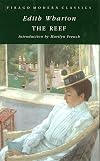
The Reef
by Edith Wharton
On This Page
Description
"I put most of myself into that opus," Edith Wharton said of "The Reef," possibly her most autobiographical novel. Published in 1912, it was, Bernard Berenson told Henry Adams, "better than any previous work excepting "Ethan Frome."" A challenge to the moral climate of the day, "The Reef" follows the fancies of George Darrow, a young diplomat en route from London to France, intent on proposing to the widowed Anna Leath. Unsettled by Anna's reticence, Darrow drifts into an affair with Sophy show more Viner, a charmingly naive and impecunious young woman whose relations with Darrow and Anna's family threaten his prospects for success. For its dramatic construction and acute insight into social mores and the multifaceted problem of sexuality, "The Reef" stands as one of Edith Wharton's most daring works of fiction. show lessTags
Recommendations







































Member Recommendations

Member Reviews
Wharton doing what she does so well, exploring the human condition and how the classes interact with one another when the artificial lines collapse. I loved this complex story that asked so many moving, and always pertinent, questions. A gentleman has a brief encounter with a girl who does not rise to his level, he is motivated by good intentions, but things become much more complicated than he expects. When she resurfaces in his life, will he have to pay too high a price for his mistake? Or, will she?
The depths to which Wharton can plumb the soul always amazes me. She seems to see beneath the skin and know that what goes on on the outside is sometimes a total disconnect from what is going on inside. I felt for every single character. show more Another theme that seemed to run through this story was whether it is ever better to lie or to hide something from your lover that you know will hurt or harm the relationship, particularly if the event in question lies in the past and is over and done. Can a man ever be absolved from a betrayal of trust? And is forgiveness impossible if you cannot put the event from your mind? There is not one of three main characters who is not struggling to understand how they find themselves in this situation or how they can be extracted from it. One thing, for sure, you cannot put the genie back in the bottle.
The one thing that did bother me about this story was the title. What does it mean? Signify? I cannot think of one single reason that would tie this title to this story. Did she pick it out of a hat? If anyone can enlighten me, I would be much obliged.
UPDATE:
Goodreads friends are the bomb! PirateSteve, who I proudly call one of mine, has answered my question regarding the title. His answer is too perfect not to be shared with the world, so here it is:
"But that title would not leave my thoughts. To reef the sails is to roll them up from the large end making the wind catching area smaller. When I go offshore fishing, I fish the reefs because that's where most of the fish are.
An offshore reef is a busy place. Fish are laying eggs, eggs are being fertilized, young fish are hatching. Small fish hide within the structure of the reef, large fish come to the reef in order to feed on the smaller fish. Yet when viewing from the waters surface, one never knows the reef is even there."
What a PERFECT explanation for why Wharton chose this title. If there were ever a story about what is going on beneath the surface, this is it. My thanks to Steve for putting this into perspective for me and with all this reflection...that 4-stars just became a 5. show less
The depths to which Wharton can plumb the soul always amazes me. She seems to see beneath the skin and know that what goes on on the outside is sometimes a total disconnect from what is going on inside. I felt for every single character. show more Another theme that seemed to run through this story was whether it is ever better to lie or to hide something from your lover that you know will hurt or harm the relationship, particularly if the event in question lies in the past and is over and done. Can a man ever be absolved from a betrayal of trust? And is forgiveness impossible if you cannot put the event from your mind? There is not one of three main characters who is not struggling to understand how they find themselves in this situation or how they can be extracted from it. One thing, for sure, you cannot put the genie back in the bottle.
The one thing that did bother me about this story was the title. What does it mean? Signify? I cannot think of one single reason that would tie this title to this story. Did she pick it out of a hat? If anyone can enlighten me, I would be much obliged.
UPDATE:
Goodreads friends are the bomb! PirateSteve, who I proudly call one of mine, has answered my question regarding the title. His answer is too perfect not to be shared with the world, so here it is:
"But that title would not leave my thoughts. To reef the sails is to roll them up from the large end making the wind catching area smaller. When I go offshore fishing, I fish the reefs because that's where most of the fish are.
An offshore reef is a busy place. Fish are laying eggs, eggs are being fertilized, young fish are hatching. Small fish hide within the structure of the reef, large fish come to the reef in order to feed on the smaller fish. Yet when viewing from the waters surface, one never knows the reef is even there."
What a PERFECT explanation for why Wharton chose this title. If there were ever a story about what is going on beneath the surface, this is it. My thanks to Steve for putting this into perspective for me and with all this reflection...that 4-stars just became a 5. show less
Anna Leath is an American living in France and recently widowed, with an adult stepson (Owen) and a young daughter (Effie). On a visit to London she meets up with George Darrow, rekindling a romance from many years before. George agrees to visit Anna at her country house Givré, but just as he is preparing to cross the Channel he receives a terse communication delaying the visit. He continues on to Paris anyway, befriending a young woman named Sophy and enjoying a couple of weeks in her company. When he finally visits Anna a few months later, he is surprised to find Sophy employed as Effie's governess. Having already professed his love and commitment to Anna, he decides to keep his dalliance with Sophy a secret.
The novel revolves around show more the fragile nature of trust and intimacy, and social norms that inhibit expression. It's clear that George adores Anna:
They dined late, and facing her across the table, with its low lights and flowers, he felt an extraordinary pleasure in seeing her again in evening dress, and in letting his eyes dwell on the proud shy set of her head, the way her dark hair clasped it, and the girlish thinness of her neck above the slight swell of her breast. His imagination was struck by the quality of reticence in her beauty. (p.127)
Meanwhile he gave himself up once more to the joy of Anna's presence. They had not been alone together for two long days, and he had the lover's sense that he had forgotten, or at least underestimated, the strength of the spell she cast. Once more her eyes and her smile seemed to bound his world. He felt that her light would always move with him as the sunset moves before a ship at sea. (p. 220)
Anna, too, is sure of her feelings, but completely unable to express them, expecting George to pick up on nonverbal cues and initiate all dialogue about their relationship. Even when Anna learns the truth about George and Sophy -- as the reader knows she will -- she is completely unable to work it out in an adult fashion. She wants to give George the benefit of the doubt and initially believes his explanations, but when they are apart, even for a few minutes, doubt sets in. Anna repeatedly shies away from confrontation, putting off the conversation that must take place for their relationship to continue.
The reader knows Anna is capable of deep feeling and expression: early in the novel, she shows tremendous excitement when Owen returns from an afternoon away. It's frustrating to watch her mis-handle the one relationship that will bring lifelong happiness. Fortunately, the scenery is idyllic. Edith Wharton brings France, her adopted country, to life, taking the reader up and down Paris streets, and on long walks through country chateau gardens. She breaks the emotional tension with well-placed humor. For example, consider this description of Adelaide Painter, a friend of Anna's mother-in-law:
After living, as he had, as they all had, for the last few days, in an atmosphere perpetually tremulous with echoes and implications, it was restful and fortifying merely to walk into the big blank area of Miss Painter's mind, so vacuous for all its accumulated items, so echoless for all its vacuity. (p. 212)
Reading The Reef, it was easy to get frustrated with Anna, waffling over her commitment to George. And I was fairly sympathetic to George: he was no saint, but his fling with Sophy occurred before he'd reunited with Anna, and at a point where he thought she had rejected him. And while I longed for Anna to be stronger and more assertive, her inhibitions were not unfamiliar to me. The Reef is an excellent period piece in its scenery, characterizations, and portrayal of relationships between men and women. show less
The novel revolves around show more the fragile nature of trust and intimacy, and social norms that inhibit expression. It's clear that George adores Anna:
They dined late, and facing her across the table, with its low lights and flowers, he felt an extraordinary pleasure in seeing her again in evening dress, and in letting his eyes dwell on the proud shy set of her head, the way her dark hair clasped it, and the girlish thinness of her neck above the slight swell of her breast. His imagination was struck by the quality of reticence in her beauty. (p.127)
Meanwhile he gave himself up once more to the joy of Anna's presence. They had not been alone together for two long days, and he had the lover's sense that he had forgotten, or at least underestimated, the strength of the spell she cast. Once more her eyes and her smile seemed to bound his world. He felt that her light would always move with him as the sunset moves before a ship at sea. (p. 220)
Anna, too, is sure of her feelings, but completely unable to express them, expecting George to pick up on nonverbal cues and initiate all dialogue about their relationship. Even when Anna learns the truth about George and Sophy -- as the reader knows she will -- she is completely unable to work it out in an adult fashion. She wants to give George the benefit of the doubt and initially believes his explanations, but when they are apart, even for a few minutes, doubt sets in. Anna repeatedly shies away from confrontation, putting off the conversation that must take place for their relationship to continue.
The reader knows Anna is capable of deep feeling and expression: early in the novel, she shows tremendous excitement when Owen returns from an afternoon away. It's frustrating to watch her mis-handle the one relationship that will bring lifelong happiness. Fortunately, the scenery is idyllic. Edith Wharton brings France, her adopted country, to life, taking the reader up and down Paris streets, and on long walks through country chateau gardens. She breaks the emotional tension with well-placed humor. For example, consider this description of Adelaide Painter, a friend of Anna's mother-in-law:
After living, as he had, as they all had, for the last few days, in an atmosphere perpetually tremulous with echoes and implications, it was restful and fortifying merely to walk into the big blank area of Miss Painter's mind, so vacuous for all its accumulated items, so echoless for all its vacuity. (p. 212)
Reading The Reef, it was easy to get frustrated with Anna, waffling over her commitment to George. And I was fairly sympathetic to George: he was no saint, but his fling with Sophy occurred before he'd reunited with Anna, and at a point where he thought she had rejected him. And while I longed for Anna to be stronger and more assertive, her inhibitions were not unfamiliar to me. The Reef is an excellent period piece in its scenery, characterizations, and portrayal of relationships between men and women. show less
I love Edith Wharton’s New York novels, and I teach Ethan Frome, so I was delighted to recently come across a book of hers I’d never heard of, The Reef. It is neither a New York novel nor a New England one, like Frome and its counterpart Summer, though one of The Reef’s main characters, Sophy Viner, reminds one of Summer’s heroine. After I finished the novel, I was nonplussed – what had just happened? -- so I did a little research. I found it is considered Wharton’s most “Jamesian” novel, and that it was Henry James’ favorite of her oeuvre. Its plot is minimal and frustrating, but as in a James novel, plot is secondary. This novel must be read on another level.
A quick summary: George Darrow and Anna Summers were show more childhood sweethearts, but Anna went on to marry Fraser Leath; she adopted his son by a former marriage, Owen, and had a child with Leath. Now Fraser Leath is dead. Anna and Darrow meet again by chance and renew their romance. The novel opens with Darrow on his way from London to Paris to meet Anna, who resides with her former mother-in-law on a provincial French estate. Darrow is deeply in love, so he is anguished to receive a telegram from Anna, pushing off their meeting for two weeks, citing an “unexpected obstacle.”
While Darrow is agonizing over the meaning of Anna’s deferral, he runs into Sophy Viner, a young woman who once acted as secretary in a home where he was a suitor. She is also going to France, alone and jobless, so he takes her under his wing and they travel together. Darrow waits in vain for an explanation from Anna, and by week’s end, he has a fling with young Sophy.
Months later, Darrow and Anna are reconciled. He goes to her country home to propose, and whom does he find there but Sophy – acting as governess to Anna’s young daughter. You might think this would be enough of a dramatic twist, but no -- Sophy is also engaged to Anna’s step-son, Owen. The irony is that the “unexpected obstacle” of Anna’s message to Darrow was literally Sophy: Anna delayed Darrow’s visit in order to find a governess, which turns out to be Sophy. However, Sophy is able to become an obstacle between Anna and Darrow precisely because of that delay. Indirectly and unwittingly, Anna brings her main conflict upon herself.
The ensuing psychological drama makes up the rest of the novel. Anna forces the truth out of Darrow. Sophy declares her love for Darrow and breaks with Owen. Owen suspects the real reason, but does he ever learn the truth? The novel ends with the news that Sophy has returned to her original employer and is bound for India, a conclusion that reminds me of the idealist St. John Rivers of Jane Eyre, who exiles himself to India after Jane’s rejection, never to love again.
Wharton tells us early on that this novel is not meant to be read for plot. When Darrow takes Sophy to the theater in Paris, he is disappointed to find she is focusing on “the story” and the acting craft, not on the internal “conflict of character producing” that plot (47). This can be taken as Wharton’s advice to us on how to the read the novel in our hands. Anna has also focused on the superficial aspects of life. This is symbolized by the name of her husband’s family’s home, Givré, which means frosted with ice, indicating the Leath family’s lethal lack of emotion and depth, as well as by her late husband’s trivial hobby of collecting enameled snuffboxes. Anna has yet to dive beneath the surfaces of experience to explore the reef, a phenomenon simultaneously alluring and threatening.
When Anna learns that Darrow has had an affair with Sophy, it is not the class discrepancy or even the adultery that bothers her. Of course, the usual tensions of class conflict and social expectations are present in this novel, as in all of Wharton’s other work. Before focusing on her imminent marriage to Darrow, Anna’s first priority is persuading her staid mother-in-law to approve of Owen’s engagement to the governess. Social mores are changing: Anna and Darrow are part of a transitional generation that thinks less rigidly about class, while Owen has flung all such prejudices aside. But by setting these American characters in France, rather than under the microscope of New York society, Wharton signals that she is paying less attention to the constant social control seen in the New York novels.
Rather, the obstacles for Anna are her knowledge -- and her imagined knowledge -- of Darrow’s past. She visualizes Sophy in Darrow’s arms, in restaurants where he now wants to take Anna. One irony that emerges from her suffering is that she is finally experiencing what Darrow may have felt for decades while she was married to Fraser Leath. One theme of the novel is to warn against this sort of naive hypocrisy: “…when she [Anna] had explored the intricacies and darknesses of her own heart her judgment of others would be less absolute” (307). Anna’s perspective has been broadened and deepened by learning of Sophy’s love for Darrow.
Wharton also includes a strangely Oedipal twist to the lesson Anna learns. Anna is almost too close to her step-son Owen. They bonded in the emotional frigidity of the Leath home, as she explains to Darrow: “Owen's like my own son--if you'd seen him when I first came here you'd know why. We were like two prisoners who talk to each other by tapping on the wall” (243). Owen calls her “dear,” and she treats him like her own, feeling that she owes him, as suggested by his name. Likewise, Darrow’s first impulses toward Sophy are fatherly and protective. Even when he questions her alliance with Owen, he seems to do so not out of a lover’s jealousy, but out of a paternal desire for her well-being. Like Anna, he feels that he owes the younger person his assistance, but in his case, it is because of their liaison. As other readers have pointed out, Anna’s jealousy is compounded by the possibility of having Sophy as a daughter-in-law, especially wed to her beloved Owen. The mother is willing to give up the son, but not when his fiancée is revealed as a rival.
Though Darrow may appear to be this novel’s protagonist at the beginning, he remains steadfast in his loyalty to both women. It is Anna who must change, when she realizes that others have pasts and feelings, and that if she wants to experience true passion, she must accept the abyss of potential heartbreak that is its counterpart. Anna’s vacillations -- hating and loving Darrow, resenting and respecting Sophy – are the frustrating outcome of these conflicts. Just as we think she has resigned herself to accepting Darrow and his past, she decides she must leave him and seeks to confront Sophy. Anna is irresistibly drawn to this girl who, in such a short time, and with such limited means, has lived a more honest and more passionate life than she herself ever dreamed of. Sophy is the reef. For Darrow, a man and therefore used to doing as he pleases, Sophy is a superficial fling, something just below the surface, not a true deep love. For Anna, Darrow and Sophy’s affair is her first glimpse under the waves at the possibilities of true love. And so they both flounder there, like ships run aground. show less
A quick summary: George Darrow and Anna Summers were show more childhood sweethearts, but Anna went on to marry Fraser Leath; she adopted his son by a former marriage, Owen, and had a child with Leath. Now Fraser Leath is dead. Anna and Darrow meet again by chance and renew their romance. The novel opens with Darrow on his way from London to Paris to meet Anna, who resides with her former mother-in-law on a provincial French estate. Darrow is deeply in love, so he is anguished to receive a telegram from Anna, pushing off their meeting for two weeks, citing an “unexpected obstacle.”
While Darrow is agonizing over the meaning of Anna’s deferral, he runs into Sophy Viner, a young woman who once acted as secretary in a home where he was a suitor. She is also going to France, alone and jobless, so he takes her under his wing and they travel together. Darrow waits in vain for an explanation from Anna, and by week’s end, he has a fling with young Sophy.
Months later, Darrow and Anna are reconciled. He goes to her country home to propose, and whom does he find there but Sophy – acting as governess to Anna’s young daughter. You might think this would be enough of a dramatic twist, but no -- Sophy is also engaged to Anna’s step-son, Owen. The irony is that the “unexpected obstacle” of Anna’s message to Darrow was literally Sophy: Anna delayed Darrow’s visit in order to find a governess, which turns out to be Sophy. However, Sophy is able to become an obstacle between Anna and Darrow precisely because of that delay. Indirectly and unwittingly, Anna brings her main conflict upon herself.
The ensuing psychological drama makes up the rest of the novel. Anna forces the truth out of Darrow. Sophy declares her love for Darrow and breaks with Owen. Owen suspects the real reason, but does he ever learn the truth? The novel ends with the news that Sophy has returned to her original employer and is bound for India, a conclusion that reminds me of the idealist St. John Rivers of Jane Eyre, who exiles himself to India after Jane’s rejection, never to love again.
Wharton tells us early on that this novel is not meant to be read for plot. When Darrow takes Sophy to the theater in Paris, he is disappointed to find she is focusing on “the story” and the acting craft, not on the internal “conflict of character producing” that plot (47). This can be taken as Wharton’s advice to us on how to the read the novel in our hands. Anna has also focused on the superficial aspects of life. This is symbolized by the name of her husband’s family’s home, Givré, which means frosted with ice, indicating the Leath family’s lethal lack of emotion and depth, as well as by her late husband’s trivial hobby of collecting enameled snuffboxes. Anna has yet to dive beneath the surfaces of experience to explore the reef, a phenomenon simultaneously alluring and threatening.
When Anna learns that Darrow has had an affair with Sophy, it is not the class discrepancy or even the adultery that bothers her. Of course, the usual tensions of class conflict and social expectations are present in this novel, as in all of Wharton’s other work. Before focusing on her imminent marriage to Darrow, Anna’s first priority is persuading her staid mother-in-law to approve of Owen’s engagement to the governess. Social mores are changing: Anna and Darrow are part of a transitional generation that thinks less rigidly about class, while Owen has flung all such prejudices aside. But by setting these American characters in France, rather than under the microscope of New York society, Wharton signals that she is paying less attention to the constant social control seen in the New York novels.
Rather, the obstacles for Anna are her knowledge -- and her imagined knowledge -- of Darrow’s past. She visualizes Sophy in Darrow’s arms, in restaurants where he now wants to take Anna. One irony that emerges from her suffering is that she is finally experiencing what Darrow may have felt for decades while she was married to Fraser Leath. One theme of the novel is to warn against this sort of naive hypocrisy: “…when she [Anna] had explored the intricacies and darknesses of her own heart her judgment of others would be less absolute” (307). Anna’s perspective has been broadened and deepened by learning of Sophy’s love for Darrow.
Wharton also includes a strangely Oedipal twist to the lesson Anna learns. Anna is almost too close to her step-son Owen. They bonded in the emotional frigidity of the Leath home, as she explains to Darrow: “Owen's like my own son--if you'd seen him when I first came here you'd know why. We were like two prisoners who talk to each other by tapping on the wall” (243). Owen calls her “dear,” and she treats him like her own, feeling that she owes him, as suggested by his name. Likewise, Darrow’s first impulses toward Sophy are fatherly and protective. Even when he questions her alliance with Owen, he seems to do so not out of a lover’s jealousy, but out of a paternal desire for her well-being. Like Anna, he feels that he owes the younger person his assistance, but in his case, it is because of their liaison. As other readers have pointed out, Anna’s jealousy is compounded by the possibility of having Sophy as a daughter-in-law, especially wed to her beloved Owen. The mother is willing to give up the son, but not when his fiancée is revealed as a rival.
Though Darrow may appear to be this novel’s protagonist at the beginning, he remains steadfast in his loyalty to both women. It is Anna who must change, when she realizes that others have pasts and feelings, and that if she wants to experience true passion, she must accept the abyss of potential heartbreak that is its counterpart. Anna’s vacillations -- hating and loving Darrow, resenting and respecting Sophy – are the frustrating outcome of these conflicts. Just as we think she has resigned herself to accepting Darrow and his past, she decides she must leave him and seeks to confront Sophy. Anna is irresistibly drawn to this girl who, in such a short time, and with such limited means, has lived a more honest and more passionate life than she herself ever dreamed of. Sophy is the reef. For Darrow, a man and therefore used to doing as he pleases, Sophy is a superficial fling, something just below the surface, not a true deep love. For Anna, Darrow and Sophy’s affair is her first glimpse under the waves at the possibilities of true love. And so they both flounder there, like ships run aground. show less
Gah! Really? That's it?! I thought surely BBC4 must be performing it's abridged audio of this in a series, and that they'll continue the story next month or next year or whenever. But on reading other reviews, it seems what I got is all there is. It ends mid story, unresolved, unexplained, and uninspired. What a slog! Whiny, high-strung, obsessive, and neurotic Anna wants to ruin everyone else's lives because she can't get it together. George seems competent, so why would he fall in love with the b*tch? Sophie is confused and weak; her character never came together for me at all. And Owen is a mere shadow.
This is a case of a novel resting on its laurels. Or, perhaps resting on its author's laurels. I'm sure it was considered scandalous show more and ground-breaking in its day, which no doubt carried it forward through successive generations, buoyed by Wharton's reputation as an accomplished author. (The House of Mirth came out 6 years earlier, Ethan Frome the year before, and The Age of Innocence 8 years later.) People also seem inclined to regard highly novels in which the characters suffer pitilessly, and/or stories that are not resolved. This one contains both. But it just drags on with much contemplation and little action. It relies on the standard theme of romantic classics: the observation of mere slivers of information by the female protagonist leads to gross assumptions and thereby enormous misunderstandings, which then lead the self-sacrificing heroine to throw herself on the proverbial pyre for the betterment of her fellow neophytes. (See Jane Austin: bibliography.) The only difference here was that Wharton didn't tidy it up with a neat ribbon; hence the raving popularity.
I'm not buying it. Like, literally not buying it. Not even borrowing it. It's always a huge risk for an author to leave a story somewhat unformed. When it works, it's spectacular, but when it fails, it falls with a dull thud. Not so much as an echo on this one.
P.S. Where does the reef come in? That the characters have all figuratively been thrown up on it, bloodied and battered? More likely that would be the readers. show less
This is a case of a novel resting on its laurels. Or, perhaps resting on its author's laurels. I'm sure it was considered scandalous show more and ground-breaking in its day, which no doubt carried it forward through successive generations, buoyed by Wharton's reputation as an accomplished author. (The House of Mirth came out 6 years earlier, Ethan Frome the year before, and The Age of Innocence 8 years later.) People also seem inclined to regard highly novels in which the characters suffer pitilessly, and/or stories that are not resolved. This one contains both. But it just drags on with much contemplation and little action. It relies on the standard theme of romantic classics: the observation of mere slivers of information by the female protagonist leads to gross assumptions and thereby enormous misunderstandings, which then lead the self-sacrificing heroine to throw herself on the proverbial pyre for the betterment of her fellow neophytes. (See Jane Austin: bibliography.) The only difference here was that Wharton didn't tidy it up with a neat ribbon; hence the raving popularity.
I'm not buying it. Like, literally not buying it. Not even borrowing it. It's always a huge risk for an author to leave a story somewhat unformed. When it works, it's spectacular, but when it fails, it falls with a dull thud. Not so much as an echo on this one.
P.S. Where does the reef come in? That the characters have all figuratively been thrown up on it, bloodied and battered? More likely that would be the readers. show less
The Reef is possibly one of Edith Wharton’s lesser known novels, but according to Anita Brookner in her introduction to my Penguin Twentieth Century Classics edition was written during her most brilliantly creative period. In 1910 Edith Wharton’s affair with journalist Morton Fullerton had ended, and it would appear that he is present here, in some respect at least, in the character of George Darrow. The Reef is apparently the novel of Wharton’s most admired by Henry James, and is said to be the most Jamesian of all her novels. I read a number of Henry James novels about twenty odd years ago, some I liked more than others, and I can certainly see echoes of James in this novel of Wharton’s – but I infinitely prefer Wharton’s show more writing to that of Henry James.
Sorry folks – there may be spoilers ahead.
George Darrow is a young diplomat seemingly in love with American widow Anna Leath, living in France with her young daughter and adult step-son. Having known one another years earlier, they have renewed their relationship after meeting in London. The marriage of Anna to her first love seems assured, once she has prepared her family for the change in her circumstances. On his way to Anna’s French chateau George receives a telegram from Anna asking him to delay his arrival by some weeks – with no explanation immediately following, George feeling angry and disappointed encounters Sophy Viner. Sophy is a very different kind of woman to Anna, having been working as a kind of dogsbody to a notoriously vulgar society woman in London; Sophy is travelling to France to pursue her dreams of becoming an actress. Sophy is a spontaneous vibrant young woman unable to hide her feelings; she has little of the reserved self-restraint that Anna Leath is possessed. Upon their arrival in Paris, George Darrow decides to treat Sophy to a kind of holiday while she awaits news of her friends, and decides what she will do next. Over the next few days they dine together, and they visit the theatre –where George bumps in to Owen Leath, Anna’s step son. Sophy manages to slip out of sight, unaware that Owen has caught a glimpse of the edge of her pink cloak as she slid away, and Darrow believes he is safe from any embarrassing explanations. They return to their hotel, their rooms next door to one another, George is very much aware of Sophy on the other side of the wall. There is a kiss, and the irrepressible Sophy is certainly relaxed enough in George to playfully put her hands over his eyes – a little tease if ever there was one – but just how far their relationship goes is never explicitly revealed, although one assumes they went a little further than the conventions of the time would think proper. However it is this brief relationship – if it can even be called that – that is the reef of the title – the reef on which George Darrow and Anna Leath’s future happiness may yet flounder.
“There was such love as she had dreamed, and she meant to go on believing in it and cherishing the thought that she was worthy of it.”
Some months later and George and Anna are finally together at Givre – the chateau that Anna shares with her mother-in-law, step son and daughter. Anna has employed a new governess for her daughter, and is almost ready to settle the matter of her marriage once and for all. The one thing Anna wants to get settled first is to ensure the happiness and security of her step-son Owen with whom she has always been very close. Owen, although only twenty-one has recently engaged himself to a girl who both he and his step-mother know his grandmother will highly disapprove. Anna has pledged to help him all she can to secure his grandmothers blessing; she tells George she wishes to settle this matter for Owen before she announces their plans to the family. George perfectly understands, happily pledging his own support. However, George is yet to find out who the girl to whom Owen has engaged himself is – Effie’s governess, Sophy Viner.
George Darrow spends the next few days desperately trying to ensure Sophy’s silence. This necessitates the two of them meeting for quite little chats away from the rest of the household, unobserved, or so Darrow believes. A jealous Owen, does notice – and wonders why two people who apparently only met once or twice years before in London while Sophy was working for the dreadful Mrs Murrett should have so much to say to one another. One evening Owen notices Sophy’s pink cloak, a cloak he seems to think he may have seen before. Wharton toys with her readers beautifully, as she gradually draws out the family drama, George lies without conscience, revealing his guilt as he tries to dig himself out of a difficult situation. Will the truth when revealed – mean an end to Anna and Geoge’s marriage plans? Will Sophy and Owen save their fragile young love, will Owen and Anna’s relationship become damaged in the storm? Can any relationship survive when lies have been found out? These are questions just as relevant today.
“That bliss, in the interval, had wound itself into every fold of her being. Passing, in the first days, from a high shy tenderness to the rush of a secret surrender, it had gradually widened and deepened, to flow on in redoubled beauty. She thought she now knew exactly how and why she loved Darrow, and she could see her whole sky reflected in the deep and tranquil current of her love.”
Of course all this drama over a little fling may seem a little dated now, but in the early 1900’s such things were huge. Anna seems haunted by the thought of them together, the knowledge that Sophy has “been there before” with George, that theatre, that restaurant in Paris, she now cannot bear to go with him.
Wharton’s writing is utterly sublime, the depth and subtlety of her characters emotions are brilliantly and deftly handled. There is a reckless carelessness about George Darrow that makes him rather unlikeable; in a sense both Anna and Sophy are victims of his unconcern. The ending is rather odd, with Anna visiting Sophy’s blowsy, ridiculous sister, as she reclines in bed a small dog yapping for attention and her latest lover in the next room. Against the memory of her awful sister, and Anna Leath’s indecision, Sophy almost appears the better woman. show less
Sorry folks – there may be spoilers ahead.
George Darrow is a young diplomat seemingly in love with American widow Anna Leath, living in France with her young daughter and adult step-son. Having known one another years earlier, they have renewed their relationship after meeting in London. The marriage of Anna to her first love seems assured, once she has prepared her family for the change in her circumstances. On his way to Anna’s French chateau George receives a telegram from Anna asking him to delay his arrival by some weeks – with no explanation immediately following, George feeling angry and disappointed encounters Sophy Viner. Sophy is a very different kind of woman to Anna, having been working as a kind of dogsbody to a notoriously vulgar society woman in London; Sophy is travelling to France to pursue her dreams of becoming an actress. Sophy is a spontaneous vibrant young woman unable to hide her feelings; she has little of the reserved self-restraint that Anna Leath is possessed. Upon their arrival in Paris, George Darrow decides to treat Sophy to a kind of holiday while she awaits news of her friends, and decides what she will do next. Over the next few days they dine together, and they visit the theatre –where George bumps in to Owen Leath, Anna’s step son. Sophy manages to slip out of sight, unaware that Owen has caught a glimpse of the edge of her pink cloak as she slid away, and Darrow believes he is safe from any embarrassing explanations. They return to their hotel, their rooms next door to one another, George is very much aware of Sophy on the other side of the wall. There is a kiss, and the irrepressible Sophy is certainly relaxed enough in George to playfully put her hands over his eyes – a little tease if ever there was one – but just how far their relationship goes is never explicitly revealed, although one assumes they went a little further than the conventions of the time would think proper. However it is this brief relationship – if it can even be called that – that is the reef of the title – the reef on which George Darrow and Anna Leath’s future happiness may yet flounder.
“There was such love as she had dreamed, and she meant to go on believing in it and cherishing the thought that she was worthy of it.”
Some months later and George and Anna are finally together at Givre – the chateau that Anna shares with her mother-in-law, step son and daughter. Anna has employed a new governess for her daughter, and is almost ready to settle the matter of her marriage once and for all. The one thing Anna wants to get settled first is to ensure the happiness and security of her step-son Owen with whom she has always been very close. Owen, although only twenty-one has recently engaged himself to a girl who both he and his step-mother know his grandmother will highly disapprove. Anna has pledged to help him all she can to secure his grandmothers blessing; she tells George she wishes to settle this matter for Owen before she announces their plans to the family. George perfectly understands, happily pledging his own support. However, George is yet to find out who the girl to whom Owen has engaged himself is – Effie’s governess, Sophy Viner.
George Darrow spends the next few days desperately trying to ensure Sophy’s silence. This necessitates the two of them meeting for quite little chats away from the rest of the household, unobserved, or so Darrow believes. A jealous Owen, does notice – and wonders why two people who apparently only met once or twice years before in London while Sophy was working for the dreadful Mrs Murrett should have so much to say to one another. One evening Owen notices Sophy’s pink cloak, a cloak he seems to think he may have seen before. Wharton toys with her readers beautifully, as she gradually draws out the family drama, George lies without conscience, revealing his guilt as he tries to dig himself out of a difficult situation. Will the truth when revealed – mean an end to Anna and Geoge’s marriage plans? Will Sophy and Owen save their fragile young love, will Owen and Anna’s relationship become damaged in the storm? Can any relationship survive when lies have been found out? These are questions just as relevant today.
“That bliss, in the interval, had wound itself into every fold of her being. Passing, in the first days, from a high shy tenderness to the rush of a secret surrender, it had gradually widened and deepened, to flow on in redoubled beauty. She thought she now knew exactly how and why she loved Darrow, and she could see her whole sky reflected in the deep and tranquil current of her love.”
Of course all this drama over a little fling may seem a little dated now, but in the early 1900’s such things were huge. Anna seems haunted by the thought of them together, the knowledge that Sophy has “been there before” with George, that theatre, that restaurant in Paris, she now cannot bear to go with him.
Wharton’s writing is utterly sublime, the depth and subtlety of her characters emotions are brilliantly and deftly handled. There is a reckless carelessness about George Darrow that makes him rather unlikeable; in a sense both Anna and Sophy are victims of his unconcern. The ending is rather odd, with Anna visiting Sophy’s blowsy, ridiculous sister, as she reclines in bed a small dog yapping for attention and her latest lover in the next room. Against the memory of her awful sister, and Anna Leath’s indecision, Sophy almost appears the better woman. show less
31. The Reef by Edith Wharton
published: 1912 (with an introduction from 1965 by Louis Auchincloss)
format: 362-page paperback
acquired: December read:May 22 – Jun 21 time reading: 11:14, 1.9 mpp
rating: 4½
genre/style: Early 20th-century American novel theme: Wharton
locations: France
about the author: about the author: 1862-1937. Born Edith Newbold Jones on West 23rd Street, New York City. Relocated permanently to France after 1911.
I'm working through Edith Wharton's novels with a group on Litsy. This is our 8th novel/novella by her. It was written in the shadow of her impending divorce, and a failed secret affair. This was also the time she moved from the mansion she designed for herself in Lenox, MA, The Mount, to Paris. She would live show more in France permanently from that time. Wharton was unhappy with the novel, and called it a “poor miserable lifeless lump”.
The meaning of the title is symbolic. It's a novel about relationships, touching on the themes of her real life, looking at fidelity and infidelity and maybe protective boundaries.
In the briefest summary, George Darrow has a fling in Paris with an immature young American, Sophie Viner, while waiting for the answer to a marriage proposal to a somewhat stately Anna Leath, a widowed mother living in a French chateau. Things don't turn out well. All the characters are Americans in France.
It's a difficult novel to capture. It starts out fun, with some well setup dramatic dark humor. Things bumble along, but the writing is terrific and the book propels itself. But then the novel turns inward. Anna and Darrow are doomed, but it does something to Anna. She faces a problem she can‘t solve, and her self-confidence is undermined. The book's propulsion comes to an introspective tortured halt. Anna leaves us very unsettled. (Both possible subjects in that sentence apply)
I'm a bit lost in the sense of how ending really washes out all the impression of the fun the novel I was reading halfway through. I liked both parts, and they link fine. But they have some kind of troubling relationship, or I have trouble accepting them as parts of the same novel.
Anyway, recommended only for completists, but I don't think it will disappoint. Wharton was master of her craft at this point.
2022
https://www.librarything.com/topic/342768#7884416 show less
published: 1912 (with an introduction from 1965 by Louis Auchincloss)
format: 362-page paperback
acquired: December read:May 22 – Jun 21 time reading: 11:14, 1.9 mpp
rating: 4½
genre/style: Early 20th-century American novel theme: Wharton
locations: France
about the author: about the author: 1862-1937. Born Edith Newbold Jones on West 23rd Street, New York City. Relocated permanently to France after 1911.
I'm working through Edith Wharton's novels with a group on Litsy. This is our 8th novel/novella by her. It was written in the shadow of her impending divorce, and a failed secret affair. This was also the time she moved from the mansion she designed for herself in Lenox, MA, The Mount, to Paris. She would live show more in France permanently from that time. Wharton was unhappy with the novel, and called it a “poor miserable lifeless lump”.
The meaning of the title is symbolic. It's a novel about relationships, touching on the themes of her real life, looking at fidelity and infidelity and maybe protective boundaries.
In the briefest summary, George Darrow has a fling in Paris with an immature young American, Sophie Viner, while waiting for the answer to a marriage proposal to a somewhat stately Anna Leath, a widowed mother living in a French chateau. Things don't turn out well. All the characters are Americans in France.
It's a difficult novel to capture. It starts out fun, with some well setup dramatic dark humor. Things bumble along, but the writing is terrific and the book propels itself. But then the novel turns inward. Anna and Darrow are doomed, but it does something to Anna. She faces a problem she can‘t solve, and her self-confidence is undermined. The book's propulsion comes to an introspective tortured halt. Anna leaves us very unsettled. (Both possible subjects in that sentence apply)
I'm a bit lost in the sense of how ending really washes out all the impression of the fun the novel I was reading halfway through. I liked both parts, and they link fine. But they have some kind of troubling relationship, or I have trouble accepting them as parts of the same novel.
Anyway, recommended only for completists, but I don't think it will disappoint. Wharton was master of her craft at this point.
2022
https://www.librarything.com/topic/342768#7884416 show less
1384 The Reef, by Edith Wharton (read 15 Apr 1976) This book was read during the time that I was reading a biography of Wharton. The Reef was published in 1912, and I was greatly surprised by how much caught up with the story I was. Laid mostly in Paris, the nuances are subtly enthralling, with few false notes. I felt the story, reminding one of Henry James, was better than James' stuff, because written in plainer English. The plot, with its adherence to a double standard, is plainly morally uninspiring, but the technique can't help but impress. I found the book one I read with unaccustomed eagerness, busy though I was at the time.
Members
- Recently Added By
Lists

20th Century Literature
1,161 works; 55 members

Books I've Read More Than Once
602 works; 49 members

Books Read in 2022
5,226 works; 115 members
Author Information

380+ Works 63,904 Members
Edith Wharton was a woman of extreme contrasts; brought up to be a leisured aristocrat, she was also dedicated to her career as a writer. She wrote novels of manners about the old New York society from which she came, but her attitude was consistently critical. Her irony and her satiric touches, as well as her insight into human character, show more continue to appeal to readers today. As a child, Wharton found refuge from the demands of her mother's social world in her father's library and in making up stories. Her marriage at age 23 to Edward ("Teddy") Wharton seemed to confirm her place in the conventional role of wealthy society woman, but she became increasingly dissatisfied with the "mundanities" of her marriage and turned to writing, which drew her into an intellectual community and strengthened her sense of self. After publishing two collections of short stories, The Greater Inclination (1899) and Crucial Instances (1901), she wrote her first novel, The Valley of Decision (1902), a long, historical romance set in eighteenth-century Italy. Her next work, the immensely popular The House of Mirth (1905), was a scathing criticism of her own "frivolous" New York society and its capacity to destroy her heroine, the beautiful Lily Bart. As Wharton became more established as a successful writer, Teddy's mental health declined and their marriage deteriorated. In 1907 she left America altogether and settled in Paris, where she wrote some of her most memorable stories of harsh New England rural life---Ethan Frome (1911) and Summer (1917)---as well as The Reef (1912), which is set in France. All describe characters forced to make moral choices in which the rights of individuals are pitted against their responsibilities to others. She also completed her most biting satire, The Custom of the Country (1913), the story of Undine Spragg's climb, marriage by marriage, from a midwestern town to New York to a French chateau. During World War I, Wharton dedicated herself to the war effort and was honored by the French government for her work with Belgian refugees. After the war, the world Wharton had known was gone. Even her Pulitzer Prize-winning novel, The Age of Innocence (1920), a story set in old New York, could not recapture the former time. Although the new age welcomed her---Wharton was both a critical and popular success, honored by Yale University and elected to The National Institute of Arts and Letters---her later novels show her struggling to come to terms with a new era. In The Writing of Fiction (1925), Wharton acknowledged her debt to her friend Henry James, whose writings share with hers the descriptions of fine distinctions within a social class and the individual's burdens of making proper moral decisions. R.W.B. Lewis's biography of Wharton, published in 1975, along with a wealth of new biographical material, inspired an extensive reevaluation of Wharton. Feminist readings and reactions to them have focused renewed attention on her as a woman and as an artist. Although many of her books have recently been reprinted, there is still no complete collected edition of her work. (Bowker Author Biography) show less
Some Editions
Series
Belongs to Publisher Series
Work Relationships
Common Knowledge
- Canonical title
- The Reef
- Original title
- The reef
- Original publication date
- 1912
- People/Characters
- Anna Leath; George Darrow; Givré; Sophie Viner
- Important places
- London, England, UK
- Related movies
- The Reef (1999 | IMDb)
- First words
- 'Unexpected obstacle. Please don't come till thirtieth. Anna'
- Last words
- (Click to show. Warning: May contain spoilers.)As she opened it she heard her hostess crying after her: "Jimmy! Do you hear me? Jimmy Brance!" and then, there being no response from the person summoned: "Do tell him he must go and call the lift for you!"
- Original language*
- englanti
*Some information comes from Common Knowledge in other languages. Click "Edit" for more information.
Classifications
Statistics
- Members
- 914
- Popularity
- 29,482
- Reviews
- 18
- Rating
- (3.84)
- Languages
- 8 — English, Finnish, French, German, Italian, Malay, Spanish, Swedish
- Media
- Paper, Audiobook, Ebook
- ISBNs
- 101
- ASINs
- 32