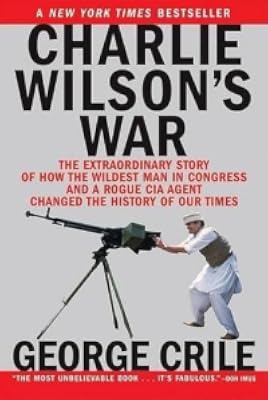
Charlie Wilson's War: The Extraordinary Story of How the Wildest Man in Congress and a Rogue CIA Agent Changed the History of Our Times
by George Crile
On This Page
Description
The bestselling true story of a Texas congressman's secret role in the Afghan defeat of Russian invaders is "a tour de force of reporting and writing" (Dan Rather).A New York Times, Washington Post, and Los Angeles Times bestseller.
Charlie Wilson's penchant for cocktails and beauty-contest winners was well known, but in the early 1980s, the dilettante congressman quietly conducted one of the most successful covert operations in US history. Using his seat on the House Appropriations show more Committee, Wilson channeled hundreds of millions of dollars to support a ragged band of Afghan "freedom fighters" in their resistance against Soviet invaders.
Weapons were secretly procured and distributed with the help of an outcast CIA operative named Gust Avrakotos, who stretched the agency's rules to the breaking point. Moving from the back rooms of Washington to secret chambers at Langley, and from arms-dealers' conventions to the Khyber Pass, Wilson and Avrakotos helped the mujahideen win an unlikely victory against the Russians.
Adapted into a film starring Tom Hanks, Julia Roberts, and Philip Seymour Hoffman, Charlie Wilson's War chronicles an overlooked chapter in the collapse of the Soviet Union—and the emergence of a brand-new foe in the form of radical Islam.
"Put the Tom Clancy clones back on the shelf; this covert-ops chronicle is practically impossible to put down. No thriller writer would dare invent Wilson." —Publishers Weekly
"An engaging, well-written, newsworthy study of practical politics and its sometimes unlikely players, and one with plenty of implications." —Kirkus Reviews. show less
Tags
Recommendations


Member Reviews
the movie was a fun romp, the book is darker and more ambivalent. philip seymour hoffman was great, but in the book gust avrakotos is more clearly a horrendous asshole. charlie wilson is still charming, but the backdoor porkbarrel deals and an egregious hit-and-run make him less sympathetic.
remember when the mujahideen were freedom fighters? remember rambo 3? several times the book talks about muj fighters raping, mutilating, and executing captured russian soldiers, to the extent that the idea of russians troops surrendering or defecting to mujahideen was considered ludicrous.
and of course over it all hangs the shadow of 9/11. I've often thought star trek needs to get past the prime directive, or have iain m. banks's culture series show more supplant it. explicit interventionism, horse trading, trolley problems, unintended consequences, imagine charlie wilson's war IN SPACE. show less
remember when the mujahideen were freedom fighters? remember rambo 3? several times the book talks about muj fighters raping, mutilating, and executing captured russian soldiers, to the extent that the idea of russians troops surrendering or defecting to mujahideen was considered ludicrous.
and of course over it all hangs the shadow of 9/11. I've often thought star trek needs to get past the prime directive, or have iain m. banks's culture series show more supplant it. explicit interventionism, horse trading, trolley problems, unintended consequences, imagine charlie wilson's war IN SPACE. show less
Why read fiction when you can read books like this one? You just can't make this stuff up.
But taking a few steps back. The British and the Americans have had interests in Middle East since the 1800s, often finding themselves in the middle of local/tribal conflicts. Someone took it upon themselves to draw some lines on a map to create countries. When oil was found, the interests ramped up. However, when locals wanted a fair share of the spoils, they found themselves with puppet and often corrupt and cruel governments. And the story continues to evolve. Take for example, Iran. Talks of nationalising by Mosaddegh the oil in the 1950s was met with the imposition of the Shah. With the Soviets on the outer, and the Cold War in full swing, show more they sought to exploit whatever they could. After the Shah was sent packing by a Khomeini, and eventually ended up in USA, the American influence in Iran all but disappeared, helped along by some students taking the American embassy hostage.
In the meantime, the Soviets moved into neighbouring Afghanistan. The Cold War had a new theatre of operations; but most of the world did not know. Covert CIA-led operations, using Pakistan as a proxy, provided every increasing support to a guerrilla war against the Soviets. This book tells that story. It's an unbelievable story of the dirty world of global politics.
When the Soviets finally moved out, they found the USSR falling to pieces as well, and for the most part the Cold War was over. The Afghans devolved into new, or rather old conflicts. This is where the book finishes.
However, we know that the story continued, and even though the US and their allies have now (in 2021) decided to withdraw after a further 20 years on the ground in Afghanistan I doubt anyone thinks that this is the end of the story.
P.S. I have not seen the film. I do not think I want to - there is no way to capture this incredible story in a short film. show less
But taking a few steps back. The British and the Americans have had interests in Middle East since the 1800s, often finding themselves in the middle of local/tribal conflicts. Someone took it upon themselves to draw some lines on a map to create countries. When oil was found, the interests ramped up. However, when locals wanted a fair share of the spoils, they found themselves with puppet and often corrupt and cruel governments. And the story continues to evolve. Take for example, Iran. Talks of nationalising by Mosaddegh the oil in the 1950s was met with the imposition of the Shah. With the Soviets on the outer, and the Cold War in full swing, show more they sought to exploit whatever they could. After the Shah was sent packing by a Khomeini, and eventually ended up in USA, the American influence in Iran all but disappeared, helped along by some students taking the American embassy hostage.
In the meantime, the Soviets moved into neighbouring Afghanistan. The Cold War had a new theatre of operations; but most of the world did not know. Covert CIA-led operations, using Pakistan as a proxy, provided every increasing support to a guerrilla war against the Soviets. This book tells that story. It's an unbelievable story of the dirty world of global politics.
When the Soviets finally moved out, they found the USSR falling to pieces as well, and for the most part the Cold War was over. The Afghans devolved into new, or rather old conflicts. This is where the book finishes.
However, we know that the story continued, and even though the US and their allies have now (in 2021) decided to withdraw after a further 20 years on the ground in Afghanistan I doubt anyone thinks that this is the end of the story.
P.S. I have not seen the film. I do not think I want to - there is no way to capture this incredible story in a short film. show less
Slow and steady, says the old adage, wins the race. Half the battle, others say, is showing up. Whatever cliché you choose, none will explain how Texas Representative Charlie Wilson, an unknown Democrat Congressman in a Democratic-controlled House of Representatives spear-headed the exponential increase in secret appropriations to support Afghan fighters against the Soviet Union in the 1980s.
Simply saying "truth is stranger than fiction" still does not adequately explain the bizarre true story told by veteran "60 Minutes" producer George Crile in "Charlie Wilson's War." Undergirded by years of research, including what certainly must have been extensive interviews with several of the principle actors in the story, Crile carefully show more unravels the story of the clandestine American involvement with the Afghans, with its secret operations, money laundering, arms trafficking, and unofficial foreign relations negotiations.
At the heart of this tale are the incorrigible Wilson and free-thinking CIA agent Gust Avrakotos. Each has a mixed reputation among his colleagues. Wilson is seen as an overt womanizer, who becomes a cocktail party joke when he becomes part of a public drug investigation. Avrakotos, who became disgruntled when passed over for a station chief assignment, is a loose cannon who speaks his mind.
Neither should be in a position to control any major operation. Their outsider status, however, allows them to work without much oversight; their experience in how to get things done in Congress and the CIA means they can use their relative freedom to pursue their own goals. Beyond that, though, they also negotiate with other foreign governments in order to facilitate their plans.
The story of their amazing success -- in that the Soviet Union retreated from Afghanistan in 1989 -- is an amazing tale. There is the sense, though, that the haphazard American involvement may have led to foreign policy problems in the years since the 9/11 terrorist attacks. So for the giddiness of the story -- which is frequently filled with humor -- there's also a nagging sense of loss by the books end.
In any event, Crile tells his fascinating story with a no-nonsense style, well aware of the irony and absurdity of many of the twists and turns. It is an enlightening, entertaining read. show less
Simply saying "truth is stranger than fiction" still does not adequately explain the bizarre true story told by veteran "60 Minutes" producer George Crile in "Charlie Wilson's War." Undergirded by years of research, including what certainly must have been extensive interviews with several of the principle actors in the story, Crile carefully show more unravels the story of the clandestine American involvement with the Afghans, with its secret operations, money laundering, arms trafficking, and unofficial foreign relations negotiations.
At the heart of this tale are the incorrigible Wilson and free-thinking CIA agent Gust Avrakotos. Each has a mixed reputation among his colleagues. Wilson is seen as an overt womanizer, who becomes a cocktail party joke when he becomes part of a public drug investigation. Avrakotos, who became disgruntled when passed over for a station chief assignment, is a loose cannon who speaks his mind.
Neither should be in a position to control any major operation. Their outsider status, however, allows them to work without much oversight; their experience in how to get things done in Congress and the CIA means they can use their relative freedom to pursue their own goals. Beyond that, though, they also negotiate with other foreign governments in order to facilitate their plans.
The story of their amazing success -- in that the Soviet Union retreated from Afghanistan in 1989 -- is an amazing tale. There is the sense, though, that the haphazard American involvement may have led to foreign policy problems in the years since the 9/11 terrorist attacks. So for the giddiness of the story -- which is frequently filled with humor -- there's also a nagging sense of loss by the books end.
In any event, Crile tells his fascinating story with a no-nonsense style, well aware of the irony and absurdity of many of the twists and turns. It is an enlightening, entertaining read. show less
The book opens a fascinating window on US involvement in the Soviet war in Afghanistan and how the Congress operates. Charlie Wilson is an American archetype - the boozing, loud-mouthed, brash Texan with the trophy woman on his arm. (The cocaine snorting maybe is not quite so much a part of the stereotype.) Wilson managed to stay barely a half step ahead of the law as he indulged his reckless self-destructive behavior.
At the same time, he took full advantage of the arcane rules of the US House of Representatives to wield an out-sized influence in the US Afghanistan policy supporting the Afhgani resistance and pushing to provide them with high-tech weaponry. An entertaining character! And if he had confined himself to pork barrel show more projects for his East Texas district, you could say 'no harm, no foul'. Unfortunately, he appears to have had a sizeable amount of influence over policy. The Soviets left, the US lost interest and control of Afghanistan fell to the Islamist fundamentalists who now had modern military equipment to sell on the black market. In the end the Taliban ended up in power with the attendant dire consequences. show less
At the same time, he took full advantage of the arcane rules of the US House of Representatives to wield an out-sized influence in the US Afghanistan policy supporting the Afhgani resistance and pushing to provide them with high-tech weaponry. An entertaining character! And if he had confined himself to pork barrel show more projects for his East Texas district, you could say 'no harm, no foul'. Unfortunately, he appears to have had a sizeable amount of influence over policy. The Soviets left, the US lost interest and control of Afghanistan fell to the Islamist fundamentalists who now had modern military equipment to sell on the black market. In the end the Taliban ended up in power with the attendant dire consequences. show less
Unbelievable but not.
Crile presents an insider's view of the behind the scenes machinations and maneuvers which allow our government to operate.
Obviously well-researched, Charlie Wilson's War is a fascinating tale of what's possible when rules are ignored and no isn't an option.
Charlie Wilson was a playboy Congressman who was rarely taken seriously. A Democrat from Texas who was also fervently anti-Communist, Wilson made it his life's work to drive the Soviets out of Afghanistan and in the course of doing so, set the stage for the collapse of the Soviet Union.
While the book deals with events which took place 25 or so years ago, there's an awful lot of it which echoes today. I had an eerie familiarity with many of the names and locations show more such as Abdul Haq, Bagram and Jalalabad.
Wilson and his cohorts were trying to make Afghanistan the Soviets' Vietnam but as I read, I just kept seeing disconcerting parallels between the Soviet experience in Afghanistan and our present day experiences in Iraq.
I had an a-ha moment when Crile states that "Israel's most dangerous enemy was Saddam Hussein's Iraq."
Crile's non-fiction book reads like a spy novel and provides an effortless education into an area of the world which continues to have a global impact. show less
Crile presents an insider's view of the behind the scenes machinations and maneuvers which allow our government to operate.
Obviously well-researched, Charlie Wilson's War is a fascinating tale of what's possible when rules are ignored and no isn't an option.
Charlie Wilson was a playboy Congressman who was rarely taken seriously. A Democrat from Texas who was also fervently anti-Communist, Wilson made it his life's work to drive the Soviets out of Afghanistan and in the course of doing so, set the stage for the collapse of the Soviet Union.
While the book deals with events which took place 25 or so years ago, there's an awful lot of it which echoes today. I had an eerie familiarity with many of the names and locations show more such as Abdul Haq, Bagram and Jalalabad.
Wilson and his cohorts were trying to make Afghanistan the Soviets' Vietnam but as I read, I just kept seeing disconcerting parallels between the Soviet experience in Afghanistan and our present day experiences in Iraq.
I had an a-ha moment when Crile states that "Israel's most dangerous enemy was Saddam Hussein's Iraq."
Crile's non-fiction book reads like a spy novel and provides an effortless education into an area of the world which continues to have a global impact. show less
Yes the book is overly long but the bigger problem is that I couldn’t help but being put off by this cheerful celebration of American short-sightedness.
This is book tells a story that is rarely expressed elsewhere. The characters are so flamboyant it is hard to believe they are real people, and this is nonfiction.
Late in the book Crile discusses the dilemma anyone writing about Charlie Wilson deals with. Wilson could easily be portrayed as a hero or a buffoon. This dichotomy dominates the narrative. Wilson the brilliant legislator, master of the smoke filled room, the true idealist is hampered by his drunken, womanizing, junket taking alter ego.
Though this book is a tribute to Wilson’s effort to arm the Mujadeen against the Soviets and their ultimate victory in that war, but the true revelation is how he did it. One man, Wilson pushed literally billions of dollars American money show more to arm Muslim extremists in a great jihad. That one congressman could so alter foreign policy, and the course of history is both amazing and frightening. The press and the rest of congress focused on the Contras and Charlie Wilson began a far bigger program virtually unnoticed. Even without the dangerous aftermath of the Taliban, of a young Osama Bin laden seeing a superpower fall, the fact billions of dollars can be spent by a handful of men with little oversight is chilling.
It is clear much of the information comes from interviews with Wilson and other protagonists like CIA man Gust Avrakotos and socialite Joanne Herron. Though Crile pays lip service to the dreadful aftermath of 911, and Islamic extremism he identifies too closely with his subjects. He mentions Texas Billionaire Herron steadfastly defended murderers and brutal dictators because of favorable impressions she gained from brief meetings. But he is generally gentle in his portrayal of this naïve manipulator. It is staggeringly sad such people have such influence on government policy entirely because of their wealth. It is not hard to imagine how the private discussions at few select social clubs decide the fate of nations. It seems all you need is a billion dollars, or to impress somebody who has a billion dollars to enter the conversation.
It is great story, an exciting story, but hardly a heroic one. show less
Late in the book Crile discusses the dilemma anyone writing about Charlie Wilson deals with. Wilson could easily be portrayed as a hero or a buffoon. This dichotomy dominates the narrative. Wilson the brilliant legislator, master of the smoke filled room, the true idealist is hampered by his drunken, womanizing, junket taking alter ego.
Though this book is a tribute to Wilson’s effort to arm the Mujadeen against the Soviets and their ultimate victory in that war, but the true revelation is how he did it. One man, Wilson pushed literally billions of dollars American money show more to arm Muslim extremists in a great jihad. That one congressman could so alter foreign policy, and the course of history is both amazing and frightening. The press and the rest of congress focused on the Contras and Charlie Wilson began a far bigger program virtually unnoticed. Even without the dangerous aftermath of the Taliban, of a young Osama Bin laden seeing a superpower fall, the fact billions of dollars can be spent by a handful of men with little oversight is chilling.
It is clear much of the information comes from interviews with Wilson and other protagonists like CIA man Gust Avrakotos and socialite Joanne Herron. Though Crile pays lip service to the dreadful aftermath of 911, and Islamic extremism he identifies too closely with his subjects. He mentions Texas Billionaire Herron steadfastly defended murderers and brutal dictators because of favorable impressions she gained from brief meetings. But he is generally gentle in his portrayal of this naïve manipulator. It is staggeringly sad such people have such influence on government policy entirely because of their wealth. It is not hard to imagine how the private discussions at few select social clubs decide the fate of nations. It seems all you need is a billion dollars, or to impress somebody who has a billion dollars to enter the conversation.
It is great story, an exciting story, but hardly a heroic one. show less
Members
- Recently Added By
Lists

Best Espionage (Non-Fiction)
32 works; 6 members

BEST BOOKS TO UNDERSTAND XX CENTURY'S HISTORY
63 works; 3 members

The Cold War
54 works; 2 members

LtGen James Mattis' Reading List
58 works; 2 members

Watched the Movie, Probably Won't Read the Book
185 works; 34 members

United States Foreign Policy & Foreign Relations
25 works; 2 members
Author Information

2 Works 1,822 Members
Awards and Honors
Work Relationships
Has the adaptation
Is abridged in
Common Knowledge
- Canonical title
- Charlie Wilson's War: The Extraordinary Story of How the Wildest Man in Congress and a Rogue CIA Agent Changed the History of Our Times
- Alternate titles
- Charlie Wilson's War: The Extraordinary Story of the Largest Covert Operation in History
- Original publication date
- 2003
- People/Characters
- Charlie Wilson; Gust Avrakotos; Chuck Cogan; Joanne Herring; Howard Hart; Muhammad Zia-ul-Haq (show all 9); Mike Vickers; Clair George; John McMahon
- Important places
- Afghanistan; Pakistan; Washington, D.C., USA; Trinity, Texas, USA
- Important events
- Cold War; Iran-Contra Affair; Operation Cyclone (1979 | 1989); Soviet occupation of Afghanistan
- Related movies
- Charlie Wilson's War (2007 | IMDb)
- Epigraph
- "Four things greater than all things are, – Women and Horses and Power and War." (Rudyard Kipling, The Ballad of the King's Jest)
- Dedication
- To Barbara Lyne, without whom this story would not have been told
- First words
- The entrance to CIA headquarters is just off the George Washington Memorial Parkway, about a ten-minute drive up the Potomac from the White House.
- Last words
- (Click to show. Warning: May contain spoilers.)Positioning himself on the terrace before the TV image of the retreating Red Army and the city he loved, the tall man raised his glass to Boris Gromov: "Here's to you, you motherfucker."
- Publisher's editor
- Morgan Entrekin
- Blurbers
- Rather, Dan; Auletta, Ken
Classifications
Statistics
- Members
- 1,788
- Popularity
- 12,233
- Reviews
- 33
- Rating
- (4.05)
- Languages
- 5 — Dutch, English, German, Italian, Spanish
- Media
- Paper, Audiobook, Ebook
- ISBNs
- 40
- UPCs
- 1
- ASINs
- 21