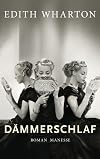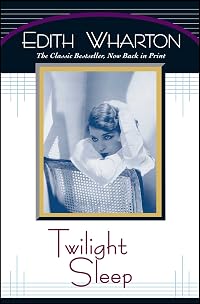
Twilight Sleep
by Edith Wharton
On This Page
Description
Out of print for several decades, here is Edith Wharton's superb satirical novel of the Jazz Age, a critically praised best-seller when it was first published in 1927. Sex, drugs, work, money, infatuation with the occult and spiritual healing -- these are the remarkably modern themes that animate Twilight Sleep. The extended family of Mrs. Manford is determined to escape the pain, boredom and emptiness of life through whatever form of "twilight sleep" they can devise or procure. And though show more the characters and their actions may seem more in keeping with today's society, this is still a classic Wharton tale of the upper crust and its undoing -- wittily, masterfully told. show lessTags
Recommendations





















Member Recommendations

JuliaMaria Satirische Romane über das Leben der höheren Schichten - immer mit der Angst vor dem sozialen Abstieg.
Member Reviews
18. Twilight Sleep by Edith Wharton
OPD: 1927
format: 407-page Kindle ebook
acquired: February read: Mar 16 – Apr 3 time reading: 10:12, 1.5 mpp
rating: 4
genre/style: Classic Novel theme: Wharton
locations: 1920’s New York City and some drivable countryside
about the author: 1862-1937. Born Edith Newbold Jones on West 23rd Street, New York City. Relocated permanently to France after 1911.
A later Wharton novel that brings some evolution in her writing. This one is considered modern because of the way she handled narrative and switching limited perspectives. The novel is looking at the failures of the 1920's leisure class, people finding various ways to blind themselves from hard realities, while praising progress and spiritual cures.
The show more novel looks at the efforts to save a bad marriage. Jim, the son of a very wealthy Pauline, married an orphan, Lita, who can't seem to get enough of anything. Jim is insufficient. She wants a divorce and wants to go on and become a movie star. Pauline, along with her own husband, her ex-husband, and her daughter, Nona, all find various ways to get involved, but each from their own limited perspective, and not necessarily in a helpful way. Wharton spends a lot of time on Pauline, who relies on her hired help, and fills her days engaging meaningless contradictory charities and getting healing from spiritual conmen. She is humorously blind to reality, throwing money at all problems. Meanwhile, her family is falling apart.
Twilight Sleep was a medical procedure that put a birthing mother in an amnesic state so they didn't remember the pain of childbirth. It was available only to the very wealthy. Here everyone is trying to not feel the problems of being human, the psychological pain. Pauline by filling her schedule, her current husband by being a workaholic. Lita by searching on for more admiration. Only Nona and Jim are left to actually feel something.
The novel finally comes across as a playful satire on 1920‘s NY moneyed culture. Wharton is having fun mocking supposed progress and 1920‘s shallowness, spiritual fads, bad parenting and human frailties. But there are also real weighty elements here. The youthful 1920‘s are represented in Lita and Nona. Clear-sighted Lita wants to be admired, with no concerns for consequences. Nona quietly sacrifices herself to manage her family‘s failures.
Recommended mainly for Wharton completists, but it's still Wharton. As long as readers are prepared for Wharton to have a little fun, you should be ok. It does reward reflection.
2024
https://www.librarything.com/topic/358760#8498520 show less
OPD: 1927
format: 407-page Kindle ebook
acquired: February read: Mar 16 – Apr 3 time reading: 10:12, 1.5 mpp
rating: 4
genre/style: Classic Novel theme: Wharton
locations: 1920’s New York City and some drivable countryside
about the author: 1862-1937. Born Edith Newbold Jones on West 23rd Street, New York City. Relocated permanently to France after 1911.
A later Wharton novel that brings some evolution in her writing. This one is considered modern because of the way she handled narrative and switching limited perspectives. The novel is looking at the failures of the 1920's leisure class, people finding various ways to blind themselves from hard realities, while praising progress and spiritual cures.
The show more novel looks at the efforts to save a bad marriage. Jim, the son of a very wealthy Pauline, married an orphan, Lita, who can't seem to get enough of anything. Jim is insufficient. She wants a divorce and wants to go on and become a movie star. Pauline, along with her own husband, her ex-husband, and her daughter, Nona, all find various ways to get involved, but each from their own limited perspective, and not necessarily in a helpful way. Wharton spends a lot of time on Pauline, who relies on her hired help, and fills her days engaging meaningless contradictory charities and getting healing from spiritual conmen. She is humorously blind to reality, throwing money at all problems. Meanwhile, her family is falling apart.
Twilight Sleep was a medical procedure that put a birthing mother in an amnesic state so they didn't remember the pain of childbirth. It was available only to the very wealthy. Here everyone is trying to not feel the problems of being human, the psychological pain. Pauline by filling her schedule, her current husband by being a workaholic. Lita by searching on for more admiration. Only Nona and Jim are left to actually feel something.
The novel finally comes across as a playful satire on 1920‘s NY moneyed culture. Wharton is having fun mocking supposed progress and 1920‘s shallowness, spiritual fads, bad parenting and human frailties. But there are also real weighty elements here. The youthful 1920‘s are represented in Lita and Nona. Clear-sighted Lita wants to be admired, with no concerns for consequences. Nona quietly sacrifices herself to manage her family‘s failures.
Recommended mainly for Wharton completists, but it's still Wharton. As long as readers are prepared for Wharton to have a little fun, you should be ok. It does reward reflection.
2024
https://www.librarything.com/topic/358760#8498520 show less
Pauline Manford is a superlative New York hostess and do-gooder, organizing her causes and her social events with equal efficiency and panache, while taking care of herself by going to a series of self-help gurus. Her daughter-in-law Lita is a child of the Jazz Age, though, and her boredom with her marriage affects all of Pauline's family, until everything might come crashing down on them.
Compared to Wharton's earlier, greater novels, this is overplotted and undercharacterized; I often felt as though the plot was driving the characterization, rather than developing out of it. It's still interesting to see her look at New York society, but she seems out of her depth a bit, lapsing into satire rather than the subtly scathing criticism I show more love about her best books. I did enjoy the lampooning of the self-help culture Pauline is addicted to, and the flashes of sly humor, but I wish the characters had been deeper and more sympathetic. show less
Compared to Wharton's earlier, greater novels, this is overplotted and undercharacterized; I often felt as though the plot was driving the characterization, rather than developing out of it. It's still interesting to see her look at New York society, but she seems out of her depth a bit, lapsing into satire rather than the subtly scathing criticism I show more love about her best books. I did enjoy the lampooning of the self-help culture Pauline is addicted to, and the flashes of sly humor, but I wish the characters had been deeper and more sympathetic. show less
Another brilliant novel by Edith Wharton; the New York social scene brilliantly skewered, particularly in the person of Pauline Manford. She is completely unable to see the storm brewing around her because she only sees what she wants to see. Lila and Jim, who are the main focal point, are not as well-drawn out as I would have liked but Pauline, Nona, and Dexter are incredible.
The Twilight sleep of the title of Edith Wharton’s 1927 Jazz age novel, is a form of anaesthesia used (and recommended by one of the characters in the novel) by women during childbirth. It further represents the ceaseless search for a cure for boredom that seemed to have been the daily occupation for the women of certain sections of New York society.
Edith Wharton wrote three ‘jazz age’ novels; Glimpses of the Moon, (1922) The Children (1928) and this one. I thought Glimpses of the Moon was readable but as a Wharton novel a bit frothy and insubstantial, but I really rather liked The Children. For me Twilight Sleep falls somewhere between the two, not just chronologically, it has far more substance than Glimpses of the Moon. It is a show more little slow to get going – but having settled into it I did enjoy it, although it is a long way away from the sheer unadulterated brilliance of some of her more famous novels, it still contains some superb writing. What Twilight Sleep does give us is a slightly satirical examination of the fatuous, empty lives of the young (and not so young) wealthy inhabitants of 1920s New York society. The characterisation is sharp and while I didn’t much like most of these characters (that never matters to me as reader though) I was fascinated by them.
“Lita was on the lounge, one long arm drooping, the other folded behind her in the immemorial attitude of sleeping beauty. Sleep lay on her lightly, as it does on those who summon it at will. It was her habitual escape from the boredom between thrills, and in such intervals of existence as she was now traversing she plunged back into it after every bout of outdoor activity.”
Mrs Manford and her extended family are at the heart of this novel. Married to Dexter Manford, her second husband, Pauline Manford’s days are timetabled with extraordinary exactitude and managed by her secretary Miss Bruss. Designed to limit the possibility of having nothing to do, Mrs Manford’s days are a round of Eurythmic exercises, correspondence, committees, facial massages, meditation and consultations with which ever faith healer is currently in fashion. Pauline and Dexter’s daughter Nona still unmarried is in love with an unhappily married man, she often helps her mother with the talks she gives to the Birth control committee and the Mother’s Day committee, on one occasion almost mixing up her diametrically opposed speeches.
“Yes; Nona did admire her mother’s altruistic energy; but she knew well enough that neither she nor her brother’s wife Lita would ever follow such an example–she no more than Lita. They belonged to another generation: to the bewildered disenchanted young people who had grown up since the Great War, whose energies were more spasmodic and less definitely directed, and who, above all, wanted a more personal outlet for them. “Bother earthquakes in Bolivia!” Lita had once whispered to Nona, when Mrs. Manford had convoked the bright elderly women to deal with a seismic disaster at the other end of the world, the repetition of which these ladies somehow felt could be avoided if they sent out a commission immediately to teach the Bolivians to do something they didn’t want to do–not to BELIEVE in earthquakes, for instance.”
Nona is devoted to her half-brother Jim, the son of Pauline and her first husband Arthur Wyant. Arthur and Pauline remain on surprisingly good terms, and as Pauline frequently schedules a visit to him in her diary with a capital A – he is nicknamed exhibit A by the younger generation. Jim has been married for around two years to the beautiful Lita, but now, despite having a child, Lita is starting to feel bored and looking around for other entertainments.
“Pauline leaned forward earnestly. “I won’t pretend not to know something of what’s been happening. I came here today to talk things over with you, quietly and affectionately–like an older sister. Try not to think of me as a mother-in-law!” Lita’s slim eyebrows went up ironically. “Oh, I’m not afraid of mothers-in-law; they’re not as permanent as they used to be.”
Everyone it seems starts to concern themselves in Jim and Lita’s marriage – and whether it will fail or not – even Dexter who begins to pay more and more visits to his step-son’s wife. Dexter, a lawyer, had been horrified by Lita’s photograph appearing in a magazine article – and seeks a way to lessen the possible scandal. Pauline is relieved by her husband’s timely interest in her son’s marriage, while Nona feels his sudden interest to be unaccountably odd. In a bid to apparently try and stop the rot, Dexter arranges for Lita to spend some time with him Nona and Pauline in the country, while Jim goes on a fishing break with his father. Lita is not really suited to the country, and requires other entertainments. Nona isn’t the
only one with her (unspoken) suspicions.
There is a lovely little bit of melodrama as everything comes to a head, and the family scuttle back to New York, and then abroad.
In this novel Wharton seems to be observing (from a distance as she was still living abroad) a society in which marriage was thrown over with a mere shrug while new fads and entertainments were forever being sought. As so often, Wharton exposes the excesses and foibles of the people she writes about and charts their eventual downfall.
Twilight Sleep was my first read for Librarything’s All Virago/All August – during which some of us read as many VMC and Persephone titles as we can. show less
Edith Wharton wrote three ‘jazz age’ novels; Glimpses of the Moon, (1922) The Children (1928) and this one. I thought Glimpses of the Moon was readable but as a Wharton novel a bit frothy and insubstantial, but I really rather liked The Children. For me Twilight Sleep falls somewhere between the two, not just chronologically, it has far more substance than Glimpses of the Moon. It is a show more little slow to get going – but having settled into it I did enjoy it, although it is a long way away from the sheer unadulterated brilliance of some of her more famous novels, it still contains some superb writing. What Twilight Sleep does give us is a slightly satirical examination of the fatuous, empty lives of the young (and not so young) wealthy inhabitants of 1920s New York society. The characterisation is sharp and while I didn’t much like most of these characters (that never matters to me as reader though) I was fascinated by them.
“Lita was on the lounge, one long arm drooping, the other folded behind her in the immemorial attitude of sleeping beauty. Sleep lay on her lightly, as it does on those who summon it at will. It was her habitual escape from the boredom between thrills, and in such intervals of existence as she was now traversing she plunged back into it after every bout of outdoor activity.”
Mrs Manford and her extended family are at the heart of this novel. Married to Dexter Manford, her second husband, Pauline Manford’s days are timetabled with extraordinary exactitude and managed by her secretary Miss Bruss. Designed to limit the possibility of having nothing to do, Mrs Manford’s days are a round of Eurythmic exercises, correspondence, committees, facial massages, meditation and consultations with which ever faith healer is currently in fashion. Pauline and Dexter’s daughter Nona still unmarried is in love with an unhappily married man, she often helps her mother with the talks she gives to the Birth control committee and the Mother’s Day committee, on one occasion almost mixing up her diametrically opposed speeches.
“Yes; Nona did admire her mother’s altruistic energy; but she knew well enough that neither she nor her brother’s wife Lita would ever follow such an example–she no more than Lita. They belonged to another generation: to the bewildered disenchanted young people who had grown up since the Great War, whose energies were more spasmodic and less definitely directed, and who, above all, wanted a more personal outlet for them. “Bother earthquakes in Bolivia!” Lita had once whispered to Nona, when Mrs. Manford had convoked the bright elderly women to deal with a seismic disaster at the other end of the world, the repetition of which these ladies somehow felt could be avoided if they sent out a commission immediately to teach the Bolivians to do something they didn’t want to do–not to BELIEVE in earthquakes, for instance.”
Nona is devoted to her half-brother Jim, the son of Pauline and her first husband Arthur Wyant. Arthur and Pauline remain on surprisingly good terms, and as Pauline frequently schedules a visit to him in her diary with a capital A – he is nicknamed exhibit A by the younger generation. Jim has been married for around two years to the beautiful Lita, but now, despite having a child, Lita is starting to feel bored and looking around for other entertainments.
“Pauline leaned forward earnestly. “I won’t pretend not to know something of what’s been happening. I came here today to talk things over with you, quietly and affectionately–like an older sister. Try not to think of me as a mother-in-law!” Lita’s slim eyebrows went up ironically. “Oh, I’m not afraid of mothers-in-law; they’re not as permanent as they used to be.”
Everyone it seems starts to concern themselves in Jim and Lita’s marriage – and whether it will fail or not – even Dexter who begins to pay more and more visits to his step-son’s wife. Dexter, a lawyer, had been horrified by Lita’s photograph appearing in a magazine article – and seeks a way to lessen the possible scandal. Pauline is relieved by her husband’s timely interest in her son’s marriage, while Nona feels his sudden interest to be unaccountably odd. In a bid to apparently try and stop the rot, Dexter arranges for Lita to spend some time with him Nona and Pauline in the country, while Jim goes on a fishing break with his father. Lita is not really suited to the country, and requires other entertainments. Nona isn’t the
only one with her (unspoken) suspicions.
There is a lovely little bit of melodrama as everything comes to a head, and the family scuttle back to New York, and then abroad.
In this novel Wharton seems to be observing (from a distance as she was still living abroad) a society in which marriage was thrown over with a mere shrug while new fads and entertainments were forever being sought. As so often, Wharton exposes the excesses and foibles of the people she writes about and charts their eventual downfall.
Twilight Sleep was my first read for Librarything’s All Virago/All August – during which some of us read as many VMC and Persephone titles as we can. show less
After reading the notes at the beginning of my copy of Twilight Sleep, I wasn't really expecting much from it - expert opinion seemed to be that this is one of Wharton's weaker novels, worth reading only for completeness sake. Happily, I found that it was actually quite enjoyable - in my opinion, better than The Buccaneers. If this is one of Wharton's weaker efforts, I'll definitely be looking out for other books by the same author.
Wharton's a dab hand with the Gilded Age, but this take on the Jazz Age comes off as a pale imitation of Evelyn Waugh.
This is one of Edith Wharton's later novels (1927, I believe). It's very polished and full of wonderful observations about the time period, class, locale. Her books seem to me to resonate with the time they were written, but also to be so astute about human nature that they speak to our time too.
Members
- Recently Added By
Lists

Books Read in 2015
3,299 works; 129 members

Publisher's Weekly Bestsellers Part I - 1895-1939
399 works; 8 members
Author Information

380+ Works 63,975 Members
Edith Wharton was a woman of extreme contrasts; brought up to be a leisured aristocrat, she was also dedicated to her career as a writer. She wrote novels of manners about the old New York society from which she came, but her attitude was consistently critical. Her irony and her satiric touches, as well as her insight into human character, show more continue to appeal to readers today. As a child, Wharton found refuge from the demands of her mother's social world in her father's library and in making up stories. Her marriage at age 23 to Edward ("Teddy") Wharton seemed to confirm her place in the conventional role of wealthy society woman, but she became increasingly dissatisfied with the "mundanities" of her marriage and turned to writing, which drew her into an intellectual community and strengthened her sense of self. After publishing two collections of short stories, The Greater Inclination (1899) and Crucial Instances (1901), she wrote her first novel, The Valley of Decision (1902), a long, historical romance set in eighteenth-century Italy. Her next work, the immensely popular The House of Mirth (1905), was a scathing criticism of her own "frivolous" New York society and its capacity to destroy her heroine, the beautiful Lily Bart. As Wharton became more established as a successful writer, Teddy's mental health declined and their marriage deteriorated. In 1907 she left America altogether and settled in Paris, where she wrote some of her most memorable stories of harsh New England rural life---Ethan Frome (1911) and Summer (1917)---as well as The Reef (1912), which is set in France. All describe characters forced to make moral choices in which the rights of individuals are pitted against their responsibilities to others. She also completed her most biting satire, The Custom of the Country (1913), the story of Undine Spragg's climb, marriage by marriage, from a midwestern town to New York to a French chateau. During World War I, Wharton dedicated herself to the war effort and was honored by the French government for her work with Belgian refugees. After the war, the world Wharton had known was gone. Even her Pulitzer Prize-winning novel, The Age of Innocence (1920), a story set in old New York, could not recapture the former time. Although the new age welcomed her---Wharton was both a critical and popular success, honored by Yale University and elected to The National Institute of Arts and Letters---her later novels show her struggling to come to terms with a new era. In The Writing of Fiction (1925), Wharton acknowledged her debt to her friend Henry James, whose writings share with hers the descriptions of fine distinctions within a social class and the individual's burdens of making proper moral decisions. R.W.B. Lewis's biography of Wharton, published in 1975, along with a wealth of new biographical material, inspired an extensive reevaluation of Wharton. Feminist readings and reactions to them have focused renewed attention on her as a woman and as an artist. Although many of her books have recently been reprinted, there is still no complete collected edition of her work. (Bowker Author Biography) show less
Some Editions
Awards and Honors
Distinctions
Series
Belongs to Publisher Series
Work Relationships
Common Knowledge
- Canonical title*
- Dämmerschlaf
- Original title
- Twilight Sleep
- Alternate titles*
- Die oberen Zehntausend
- Original publication date
- 1927
- People/Characters
- Pauline Manford; Dexter; Nona Manford; Jim Manford; Lita; Marchesa
- Important places
- New York, New York, USA
- First words
- Miss Bruss, the perfect secretary, received Nona Manford at the door of her mother's boudoir ("the office," Mrs. Manford's children called it) with a gesture of the kindliest denial.
- Last words
- (Click to show. Warning: May contain spoilers.)"Oh, but I mean a convent where nobody believes in anything," she said.
- Original language*
- Anglais
*Some information comes from Common Knowledge in other languages. Click "Edit" for more information.
Classifications
Statistics
- Members
- 462
- Popularity
- 66,372
- Reviews
- 10
- Rating
- (3.45)
- Languages
- 8 — Czech, English, French, German, Italian, Portuguese, Spanish, Swedish
- Media
- Paper, Audiobook, Ebook
- ISBNs
- 29
- ASINs
- 15