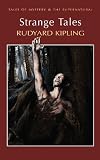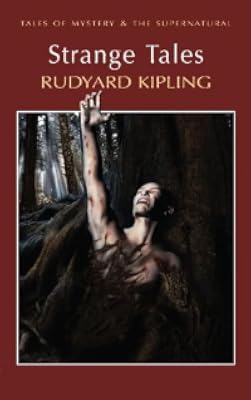
Strange Tales
by Rudyard Kipling 
On This Page
Description
Some six or seven feet above the port bulwarks, framed in fog, and as utterly unsupported as the full moon, hung a Face. It was not human, and it certainly was not animal, for it did not belong to this earth as known to man'Rudyard Kipling, celebrated author of The Jungle Book, the Just So Stories and other entertaining fictions, was also a master of the short story in which he was able to combine the strange and unnerving in order to draw the reader into the world of his own dark show more imaginings. This collection presents the best of these strange tales in which ghosts, monsters and inexplicable happenings abound. From the exotic and magical locale of India, to the leafy suburbs of England and then to the blood-soaked trenches of the First World War, Kipling provides us with a chilling array of experiences and images which will linger long in the memory. show lessTags
Recommendations














Member Reviews
Dwarfed by Rudyard Kipling’s more popular works, his Strange Tales, as collected in this uneven anthology in the Wordsworth Tales of Mystery & the Supernatural series, are often overlooked. Of the twenty stories, the handful that are set in colonial India quite effectively evoke an advancing sense of doom and dread through Kipling’s chillingly atmospheric writing style. These display an added sense of mystery and foreboding as ominous Indian spirits, customs, and superstition are laced within the tales. But beyond just the Indian customs, simply setting many of these stories in India adds a solid layer of intrigue and suspension of disbelief for the reader, and this must have been particularly true for readers at the time of show more original publication around the turn of the twentieth century; supernatural occurrences in a mysterious foreign land, rather than your familiar surroundings, somehow seem just a bit more plausible. Take, for example, the opening lines of “The Strange Ride of Morrowbie Jukes”:
There is, as the conjurers say, no deception about this tale. Jukes by accident stumbled upon a village that is well known to exist, though he is the only Englishman who has been there. A somewhat similar institution used to flourish on the outskirts of Calcutta, and there is a story that if you go into the heart of Bikanir, which is in the heart of the Great Indian Desert, you shall come across not a village but a town where the Dead who did not die but may not live have established their headquarters.
In general, the remaining stories, those set in England, are rather tepid and forgettable in comparison. It seems that Kipling drew far greater inspiration from the exotic lands than from his native land, although the couple of stories inspired by the horrors of World War I are clearly heartfelt and intriguing. show less
There is, as the conjurers say, no deception about this tale. Jukes by accident stumbled upon a village that is well known to exist, though he is the only Englishman who has been there. A somewhat similar institution used to flourish on the outskirts of Calcutta, and there is a story that if you go into the heart of Bikanir, which is in the heart of the Great Indian Desert, you shall come across not a village but a town where the Dead who did not die but may not live have established their headquarters.
In general, the remaining stories, those set in England, are rather tepid and forgettable in comparison. It seems that Kipling drew far greater inspiration from the exotic lands than from his native land, although the couple of stories inspired by the horrors of World War I are clearly heartfelt and intriguing. show less
This collection presents the best of Kipling's strange tales in which ghosts, monsters and inexplicable happenings abound. From the exotic and magical locale of India, to the leafy suburbs of England and then to the blood-soaked trenches of the First World War, Kipling provides us with a chilling array of experiences and images which will linger long in the memory.
Oct 6, 2021Spanish
Ratings
Members
- Recently Added By
Author Information

2,459+ Works 91,088 Members
Kipling, who as a novelist dramatized the ambivalence of the British colonial experience, was born of English parents in Bombay and as a child knew Hindustani better than English. He spent an unhappy period of exile from his parents (and the Indian heat) with a harsh aunt in England, followed by the public schooling that inspired his "Stalky" show more stories. He returned to India at 18 to work on the staff of the Lahore Civil and Military Gazette and rapidly became a prolific writer. His mildly satirical work won him a reputation in England, and he returned there in 1889. Shortly after, his first novel, The Light That Failed (1890) was published, but it was not altogether successful. In the early 1890s, Kipling met and married Caroline Balestier and moved with her to her family's estate in Brattleboro, Vermont. While there he wrote Many Inventions (1893), The Jungle Book (1894-95), and Captains Courageous (1897). He became dissatisfied with life in America, however, and moved back to England, returning to America only when his daughter died of pneumonia. Kipling never again returned to the United States, despite his great popularity there. Short stories form the greater portion of Kipling's work and are of several distinct types. Some of his best are stories of the supernatural, the eerie and unearthly, such as "The Phantom Rickshaw," "The Brushwood Boy," and "They." His tales of gruesome horror include "The Mark of the Beast" and "The Return of Imray." "William the Conqueror" and "The Head of the District" are among his political tales of English rule in India. The "Soldiers Three" group deals with Kipling's three musketeers: an Irishman, a Cockney, and a Yorkshireman. The Anglo-Indian Tales, of social life in Simla, make up the larger part of his first four books. Kipling wrote equally well for children and adults. His best-known children's books are Just So Stories (1902), The Jungle Books (1894-95), and Kim (1901). His short stories, although their understanding of the Indian is often moving, became minor hymns to the glory of Queen Victoria's empire and the civil servants and soldiers who staffed her outposts. Kim, an Irish boy in India who becomes the companion of a Tibetan lama, at length joins the British Secret Service, without, says Wilson, any sense of the betrayal of his friend this actually meant. Nevertheless, Kipling has left a vivid panorama of the India of his day. In 1907, Kipling became England's first Nobel Prize winner in literature and the only nineteenth-century English poet to win the Prize. He won not only on the basis of his short stories, which more closely mirror the ambiguities of the declining Edwardian world than has commonly been recognized, but also on the basis of his tremendous ability as a popular poet. His reputation was first made with Barrack Room Ballads (1892), and in "Recessional" he captured a side of Queen Victoria's final jubilee that no one else dared to address. (Bowker Author Biography) show less
Rudyard Kipling has a Legacy Library. Legacy libraries are the personal libraries of famous readers, entered by LibraryThing members from the Legacy Libraries group.
Some Editions
Series
Belongs to Publisher Series
Work Relationships
Common Knowledge
- Canonical title
- Strange Tales
- Original publication date
- 2006
- Disambiguation notice*
- Collection with the following 20 short stories:
- The Mark of the Beast
- The Return of Imray
- The Phantom Rickshaw
- The Strange Ride of Morrowbie Jukes
- 'They'
- In the Same Boat
- The Dog Hervey<... (show all)br>- The House Surgeon
- The Wish House
- A Matter of Fact
- 'Swept and Garnished'
- Mary Postgate
- A Madonna of the Trenches
- 'At the End of the Passage'
- The Bisara of Pooree
- The Lost Legion
- The Dream of Duncan Parrenness
- The Tomb of his Ancestors
- By Word of Mouth
- My Own True Ghost Story
*Some information comes from Common Knowledge in other languages. Click "Edit" for more information.
Classifications
Statistics
- Members
- 110
- Popularity
- 295,201
- Reviews
- 2
- Rating
- (3.38)
- Languages
- English, Polish
- Media
- Paper, Ebook
- ISBNs
- 4
- ASINs
- 2