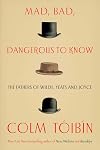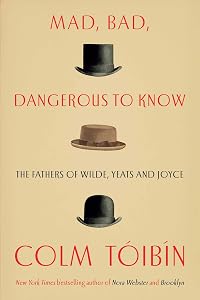
Mad, Bad, Dangerous to Know: The Fathers of Wilde, Yeats and Joyce
by Colm Tóibín
On This Page
Description
"Colm Tóibín begins his incisive, revelatory Mad, Bad, Dangerous to Know with a walk through the Dublin streets where he went to university--a wide-eyed boy from the country--and where three Irish literary giants also came of age: Wilde, Yeats, and Joyce. Elegant, profound, and riveting, Mad, Bad, Dangerous to Know illuminates not only the complex relationships between three of the greatest writers in the English language and their fathers, but also illustrates the surprising ways these show more men surface in their work. Through these stories of fathers and sons, Tóibín recounts the resistance to English cultural domination, the birth of modern Irish cultural identity, and the extraordinary contributions of these complex and masterful authors"-- show lessTags
Recommendations


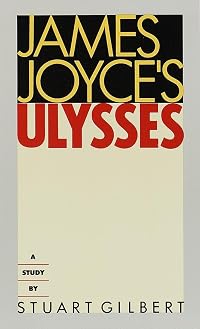







Member Reviews
Mad Bad and Dangerous to Know, the fathers of Wilde, Yeats and Joyce is, as you would expect from Colm Tóibín, beautifully written— but whether it’s a book for you might depend on how interested you are in Wilde, Yeats and Joyce.
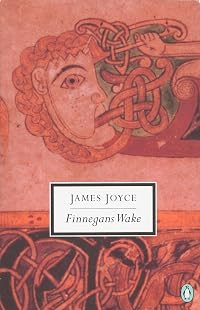
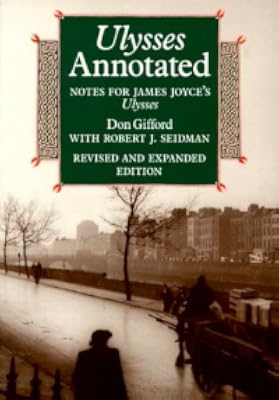
Now I am an unabashed enthusiast for everything Joyce has written and you can find plenty of evidence for that in the hours of my life that I have spent not only reading his books as a student, but also blogging my adventures with Ulysses, with Finnegans Wake, and a reprise of my love of Dubliners. So I loved reading about the father of James Joyce, and his various manifestations in Ulysses, especially since Joyce had a generous view of his father’s undoubted failings.
By contrast, Stanilaus Joyce, show more James’ brother, has nothing good to say of his father’s fecklessness and abusive behaviour in his books My Brother’s Keeper (1958) and The Complete Dublin Diary of Stanislaus Joyce (1971).
But James Joyce was magnanimous, partly but not entirely because he was at a distance in Trieste. He wrote to his benefactor Harriet Weaver:
The chapter about Joyce’s father, despite his manifest faults, is a pleasure to read because Tóibín considers at some length the ways in which Joyce pays homage in his fiction to this flawed father.
To read the rest of my review please visit https://anzlitlovers.com/2018/11/20/mad-bad-dangerous-to-know-the-fathers-of-wil... show less
Now I am an unabashed enthusiast for everything Joyce has written and you can find plenty of evidence for that in the hours of my life that I have spent not only reading his books as a student, but also blogging my adventures with Ulysses, with Finnegans Wake, and a reprise of my love of Dubliners. So I loved reading about the father of James Joyce, and his various manifestations in Ulysses, especially since Joyce had a generous view of his father’s undoubted failings.
By contrast, Stanilaus Joyce, show more James’ brother, has nothing good to say of his father’s fecklessness and abusive behaviour in his books My Brother’s Keeper (1958) and The Complete Dublin Diary of Stanislaus Joyce (1971).
My father was still in his early forties, a man who had received a university education and had never known a day’s illness. But though he had a large family of young children, he was quite unburdened by any sense of responsibility towards them. His pension, which could have taken in part the place of the property he had lost and been a substantial addition to an earned income, became his and our only means of subsistence. (p.166)
He is domineering and quarrelsome and has in an unusual degree that low, voluble abusiveness characteristic of Cork people when drunk… He is lying and hypocritical. He regards himself as the victim of circumstances and pays himself with words. His will is dissipated and his intellect besotted, and he has become a crazy drunkard. He is spiteful like all drunkards who are thwarted, and invents the most cowardly insults that a scandalous mind and a naturally derisive tongue can suggest. (p. 167)
But James Joyce was magnanimous, partly but not entirely because he was at a distance in Trieste. He wrote to his benefactor Harriet Weaver:
I was very fond of him always, being a sinner myself, and even liked his faults. Hundreds of pages and scores of characters in my books came from him… I got from him his portraits, a waistcoat, a good tenor voice, and an extravagant licentious disposition (out of which, however, the greater part of any talent I may have springs) but, apart from these, something else I cannot define. (p.173.)
The chapter about Joyce’s father, despite his manifest faults, is a pleasure to read because Tóibín considers at some length the ways in which Joyce pays homage in his fiction to this flawed father.
To read the rest of my review please visit https://anzlitlovers.com/2018/11/20/mad-bad-dangerous-to-know-the-fathers-of-wil... show less
Ireland in the late 19th century was politically sparking, socially heaving, and artistically fertile. It was also, in truth, a fairly small world, or at least Dublin was. Nearly everyone within a certain class knew each other either in passing or more intimately. So it’s maybe not surprising that the fathers of Oscar Wilde, W.B. Yeats, and James Joyce, at one time or another crossed paths. It’s also not so surprising that they shared similar traits be that fecklessness or fecundity. What Colm Tóibín explores, however, is how these fathers affected the works of their sons. And in each case, even those of extreme distancing as with Yeats and Joyce, the father's presence in the work of the sons is startling.
Tóibín’s research is show more comprehensive and his insights are always subtle and well-founded. To have such an in-depth knowledge of the literature and artistic history or one’s land might only be found in Ireland. I don’t know. It’s certainly gives one pause. Tóibín’s own fiction and poetry is clearly imbued with his reading of his nation’s history. But equally significant, though unexplored here, is the well-known fact of Tóibín’s own father’s influence on his writing. And that in the end may explain why Tóibín even pursues this research project so thoroughly. If so, so much the better. This is a beautifully written set of essays that will enlighten and entertain as well as renew your respect for what a thoughtful writer can achieve in his more academic mode.
Certainly recommended. show less
Tóibín’s research is show more comprehensive and his insights are always subtle and well-founded. To have such an in-depth knowledge of the literature and artistic history or one’s land might only be found in Ireland. I don’t know. It’s certainly gives one pause. Tóibín’s own fiction and poetry is clearly imbued with his reading of his nation’s history. But equally significant, though unexplored here, is the well-known fact of Tóibín’s own father’s influence on his writing. And that in the end may explain why Tóibín even pursues this research project so thoroughly. If so, so much the better. This is a beautifully written set of essays that will enlighten and entertain as well as renew your respect for what a thoughtful writer can achieve in his more academic mode.
Certainly recommended. show less
You might expect that three great Irish writers, growing up in Dublin in the same era, might have some commonalities, some insight into genius or at least talent. Colm Toibin looks at their fathers in Mad, Bad and Dangerous to Know to find that is as far from the truth as can be.
The writers are Oscar Wilde, William Butler Yeats and James Joyce. Their fathers were a knighted workaholic, an irresponsible, romantic dreamer and a horrific, spendthrift drunk, respectively.
Wilde’s father Will was precocious. By his mid-twenties he was not only a medical doctor, but an archaeologist, and a recognized statistician. His knighthood came from his reorganizing and managing the Irish census, way beyond requirements or expectations. He was always show more doing numerous things at once, and evenings were spent hosting the political, scientific and artistic glitterati of Europe at their home facing Merrion Park in Dublin.
Oscar Wilde, on the other hand, was better known as a clever guest at those kinds of soirées. His writing reflected none of the deep analysis and discipline his father routinely demonstrated. There appears to be little connection between them or their lives.
John Yeats was a lost soul. He wrote exceptionally good letters, but never published a shelf of books. He wanted to paint, and was so meticulous and demanding of himself that he never seemed to finish a canvas. He would scrape and repaint a landscape as the seasons changed. His self-portrait, his masterwork, took him seven years not to finish. An uninspired if not damaging father of four, he didn’t realize how blocked he was until he left Dublin for New York, late in life. He thought that the (horse) streetcars of New York were “the nearest thing to heaven on Earth he had ever known.” He believed himself “a formidable institution of higher learning in his own right”, and had little desire to expose his sons to competition. It was all about him.
William Butler Yeats was a much deeper thinker, and obviously, far more successful. Of his father he said: “Far more than any man I ever known he could live in the happiness of the passing moment. “
James Joyce’s father was such a negative inspiration, Toibin says, that Joyce would not have been blamed had he used the character of the abusive drunk in everything he ever wrote. But he didn’t. Instead, he says, Joyce inhabited the character and let him explore his life and universe, allowing him a much richer vibrant experience than the one he actually lived. James Joyce left quickly and managed to avoid returning to Dublin ever again, and never saw his father again. John Stanislaus Joyce inspired a lot of Ulysses in the character of Simon Dedalus (“The spittin’ image” of his father, Joyce declared).
Only Joyce employed his father in any involved sense. They all could be said to be relieved when their fathers were gone. Joyce, who had the hardest time with his father, wrote that he regretted their relationship after his son was born and his father had died. But his father provided a springboard to literary fame, along with that other wellspring of character, Dublin itself.
Toibin, no slouch in the interpretation of all things Irish himself, draws no hard conclusions. He did the research in original letters, leaving the reader to decide how the fathers affected the development of the sons. It’s a short book, but a neat and neatly executed concept.
David Wineberg show less
The writers are Oscar Wilde, William Butler Yeats and James Joyce. Their fathers were a knighted workaholic, an irresponsible, romantic dreamer and a horrific, spendthrift drunk, respectively.
Wilde’s father Will was precocious. By his mid-twenties he was not only a medical doctor, but an archaeologist, and a recognized statistician. His knighthood came from his reorganizing and managing the Irish census, way beyond requirements or expectations. He was always show more doing numerous things at once, and evenings were spent hosting the political, scientific and artistic glitterati of Europe at their home facing Merrion Park in Dublin.
Oscar Wilde, on the other hand, was better known as a clever guest at those kinds of soirées. His writing reflected none of the deep analysis and discipline his father routinely demonstrated. There appears to be little connection between them or their lives.
John Yeats was a lost soul. He wrote exceptionally good letters, but never published a shelf of books. He wanted to paint, and was so meticulous and demanding of himself that he never seemed to finish a canvas. He would scrape and repaint a landscape as the seasons changed. His self-portrait, his masterwork, took him seven years not to finish. An uninspired if not damaging father of four, he didn’t realize how blocked he was until he left Dublin for New York, late in life. He thought that the (horse) streetcars of New York were “the nearest thing to heaven on Earth he had ever known.” He believed himself “a formidable institution of higher learning in his own right”, and had little desire to expose his sons to competition. It was all about him.
William Butler Yeats was a much deeper thinker, and obviously, far more successful. Of his father he said: “Far more than any man I ever known he could live in the happiness of the passing moment. “
James Joyce’s father was such a negative inspiration, Toibin says, that Joyce would not have been blamed had he used the character of the abusive drunk in everything he ever wrote. But he didn’t. Instead, he says, Joyce inhabited the character and let him explore his life and universe, allowing him a much richer vibrant experience than the one he actually lived. James Joyce left quickly and managed to avoid returning to Dublin ever again, and never saw his father again. John Stanislaus Joyce inspired a lot of Ulysses in the character of Simon Dedalus (“The spittin’ image” of his father, Joyce declared).
Only Joyce employed his father in any involved sense. They all could be said to be relieved when their fathers were gone. Joyce, who had the hardest time with his father, wrote that he regretted their relationship after his son was born and his father had died. But his father provided a springboard to literary fame, along with that other wellspring of character, Dublin itself.
Toibin, no slouch in the interpretation of all things Irish himself, draws no hard conclusions. He did the research in original letters, leaving the reader to decide how the fathers affected the development of the sons. It’s a short book, but a neat and neatly executed concept.
David Wineberg show less
Mad, Bad, Dangerous To Know is a collection of lectures given by Colm Toibin on three famous Irish writers, W.B. Yeats, James Joyce, and Oscar Wilde. and the roles their fathers played in shaping their lives and careers. I chose to read this book because I have always loved Oscar Wilde and was interested in finding out more about him and his family life. The book is actually so much more than just a historical essay on the authors, though. It really encompasses Irish culture, their relationship with England, and the history of art and writing in that environment.
The introduction was extremely well written and featured an account of the wanderings of the author through the historically rich streets of Dublin. I found this section show more fascinating as it really set the stage for what was to come. Personal letters, both to and from the three writers and their fathers, and accounts left behind by contemporaries gave the sections dedicated to the individual writers an unexpected depth. Talking about a subject is one thing, but seeing their experiences through their own words was an added bonus. I really was able to feel Colm Toibin's love for the Irish country, people, and art through this book. In a few instances, the author made mention of a historical event or person, perhaps under the assumption that these would be well known outside of Ireland or literary circles, with little or no explanation of what they were. It left me to Google these points, which interrupted the flow of the book. These were easy to overlook, though, as the overall book was great.
Thank you to the publisher, Scribner, and NetGalley for the advanced copy of the book. It was provided in exchange for an honest review. show less
The introduction was extremely well written and featured an account of the wanderings of the author through the historically rich streets of Dublin. I found this section show more fascinating as it really set the stage for what was to come. Personal letters, both to and from the three writers and their fathers, and accounts left behind by contemporaries gave the sections dedicated to the individual writers an unexpected depth. Talking about a subject is one thing, but seeing their experiences through their own words was an added bonus. I really was able to feel Colm Toibin's love for the Irish country, people, and art through this book. In a few instances, the author made mention of a historical event or person, perhaps under the assumption that these would be well known outside of Ireland or literary circles, with little or no explanation of what they were. It left me to Google these points, which interrupted the flow of the book. These were easy to overlook, though, as the overall book was great.
Thank you to the publisher, Scribner, and NetGalley for the advanced copy of the book. It was provided in exchange for an honest review. show less
This is really a series of lectures and more is the pity that my knowledge of the subject was not broad, nor deep enough to appreciate Toibin’s writing. Set in Dublin there is an expectation that the reader will be familiar with streets, people and events. Unfortunately I lack the knowledge and after fumbling through while I could appreciate the wry humor Toibin’s insight was lost on me.
Thank you NetGalley and Scribner for a copy
Thank you NetGalley and Scribner for a copy
Ratings
Members
- Recently Added By
Lists

Writing
81 works; 1 member
Author Information

88+ Works 25,428 Members
Colm Tóibín was born in Enniscorthy, Ireland in 1955. He studied history and English at University College Dublin, earning his B.A. in 1975. After graduating he moved to Barcelona for three years and taught at the Dublin School of English. In 1978 he returned to Dublin and began working on an M.A. in Modern English and American Literature. He show more wrote for In Dublin, Hibernia, and The Sunday Tribune. He became the Features Editor of In Dublin in 1981, and then a year later accepted the position of Editor for the Irish current affairs magazine Magill. His first book, Walking Along the Border, was published in 1987 and his first novel, The South, was published in 1990. He wrote for The Sunday Independent as a drama or television critic and political commentator. He writes regularly for The London Review of Books. He has written several other novels including The Story of the Night, The Blackwater Lightship, Brooklyn, The Testament of Mary, and Nora Webster. The Heather Blazing received the 1993 Encore Award and The Master received the 2006 International IMPAC Dublin Literary Award, the Stonewall Book Award, and the Lambda Literary Award. In 2015 he made The New Zealand High Profile Titles List with All The Light We Cannot See. He was short listed for the 2015 Folio Prize for his title Nora Webster. (Bowker Author Biography) show less
Some Editions
Awards and Honors
Distinctions
Common Knowledge
- Original publication date
- 2018
- People/Characters
- Oscar Wilde
Classifications
- Genres
- Literature Studies and Criticism, Biography & Memoir, Fiction and Literature
- DDC/MDS
- 820.9 — Literature & rhetoric English & Old English literatures English and Old English (Anglo-Saxon) literatures History, description, critical appraisal of works in more than one form
- LCC
- PR8727 .T65 — Language and Literature English English Literature English literature: Provincial, local, etc.
- BISAC
Statistics
- Members
- 227
- Popularity
- 143,576
- Reviews
- 6
- Rating
- (3.63)
- Languages
- English
- Media
- Paper, Audiobook, Ebook
- ISBNs
- 12
- ASINs
- 3