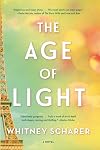
The Age of Light
by Whitney Scharer
On This Page
Description
One of the Best Books of the Year: Parade, Glamour, Real Simple, Refinery29, Yahoo! Lifestyle. "A startlingly modern love story and a mesmerizing portrait of a woman's self-transformation from muse to artist." —Celeste Ng, author of Little Fires Everywhere"I'd rather take a photograph than be one," Lee Miller declares after she arrives in Paris in 1929, where she soon catches the eye of the famous Surrealist Man Ray. Though he wants to use her only as a model, Lee convinces him to take show more her on as his assistant and teach her everything he knows. As they work together in the darkroom, their personal and professional lives become intimately entwined, changing the course of Lee's life forever.
Lee's journey of self-discovery takes took her from the cabarets of bohemian Paris to the battlefields of war-torn Europe during WWII, from inventing radical new photography techniques to documenting the liberation of the concentration camps as one of the first female war correspondents. Through it all, Lee must grapple with the question of whether it's possible to stay true to herself while also fulfilling her artistic ambition—and what she will have to sacrifice to do so. show less
Tags
Recommendations











































Member Reviews
I can't remember the last time I felt THIS uncomfortable reading a book. Or had SUCH trouble rating it. I finally settled on four stars, not so much because I enjoyed it. But because the novel brought up such strong feelings throughout.
At its heart, this is a story of the 4 year long romance between two artists --American visual artist Man Ray and Lee Miller, a model turned American photographer and photojournalist. Amid the budding Dada and Surrealist movements in 1920s Paris, Ray and Miller meet just as she is tiring of modeling and interested in pursuing photography. She grabs the opportunity to learn all she can in Ray's photography studio by signing on as his assistant.
(NOTE: There are multiple inserts throughout the novel show more relating Miller's experiences as a photojournalist during and after World War II. Though interesting, I felt they interrupted the flow of the book and I'm not sure why they were included.) Back to the artists.
Despite their 17 year age difference, love blossoms and the passionate couple soon embark on their pioneering work in developing the photographic technique called solarization. So far, this all sounds reasonable. But there is something about this relationship that begins to shift. Miller, herself haunted by childhood trauma, begins to find Ray overly controlling and demanding. Though, in typical female fashion, she dutifully placates him at first, he soon begins to restrict her activities, stifling her work, and obsessively photographing extreme close-ups of Miller's individual body parts, whether she wants him to or not.
What became increasingly uncomfortable for me was this power dynamic between the two. The older, famous, privileged white man simply believes he SHOULD be dominant and that all the couple's joint work belongs to him (since it happened in HIS studio). He is never able to see Miller as anything beyond HIS young and beautiful assistant, who just happens to show such great promise.
But Miller is changing. She is steadily developing her talent, embarking on her own experimentation, with her own sparks of creativity. Inevitably she begins to resent Ray's limitations and his failure to give her any public credit. So, of course, their relationship is headed for a showdown.
For me, the book simply turned into a pre-feminist era story of how men and women have all too often operated over the centuries. Entitled and arrogant, Ray assumes he is the one who matters most in the relationship and that it is his role to make decisions, even when they impact two parties. That is until he blunders beyond a boundary Miller will not tolerate. Like many, or perhaps most women, Miller will be taken advantage of and used up ONLY until the moment she is forced to impose a limit.
It's an old story. Younger, more talented women working diligently and silently behind the scenes while men in the spotlight take credit for their efforts. Men not willing or able to see beyond a woman's physical beauty. Beautiful women not taken seriously, despite continual evidence of competence.
I've seen it myself and if you're a woman, you probably have too. So, if you read this one, expect to feel uncomfortable. show less
At its heart, this is a story of the 4 year long romance between two artists --American visual artist Man Ray and Lee Miller, a model turned American photographer and photojournalist. Amid the budding Dada and Surrealist movements in 1920s Paris, Ray and Miller meet just as she is tiring of modeling and interested in pursuing photography. She grabs the opportunity to learn all she can in Ray's photography studio by signing on as his assistant.
(NOTE: There are multiple inserts throughout the novel show more relating Miller's experiences as a photojournalist during and after World War II. Though interesting, I felt they interrupted the flow of the book and I'm not sure why they were included.) Back to the artists.
Despite their 17 year age difference, love blossoms and the passionate couple soon embark on their pioneering work in developing the photographic technique called solarization. So far, this all sounds reasonable. But there is something about this relationship that begins to shift. Miller, herself haunted by childhood trauma, begins to find Ray overly controlling and demanding. Though, in typical female fashion, she dutifully placates him at first, he soon begins to restrict her activities, stifling her work, and obsessively photographing extreme close-ups of Miller's individual body parts, whether she wants him to or not.
What became increasingly uncomfortable for me was this power dynamic between the two. The older, famous, privileged white man simply believes he SHOULD be dominant and that all the couple's joint work belongs to him (since it happened in HIS studio). He is never able to see Miller as anything beyond HIS young and beautiful assistant, who just happens to show such great promise.
But Miller is changing. She is steadily developing her talent, embarking on her own experimentation, with her own sparks of creativity. Inevitably she begins to resent Ray's limitations and his failure to give her any public credit. So, of course, their relationship is headed for a showdown.
For me, the book simply turned into a pre-feminist era story of how men and women have all too often operated over the centuries. Entitled and arrogant, Ray assumes he is the one who matters most in the relationship and that it is his role to make decisions, even when they impact two parties. That is until he blunders beyond a boundary Miller will not tolerate. Like many, or perhaps most women, Miller will be taken advantage of and used up ONLY until the moment she is forced to impose a limit.
It's an old story. Younger, more talented women working diligently and silently behind the scenes while men in the spotlight take credit for their efforts. Men not willing or able to see beyond a woman's physical beauty. Beautiful women not taken seriously, despite continual evidence of competence.
I've seen it myself and if you're a woman, you probably have too. So, if you read this one, expect to feel uncomfortable. show less
I can't remember the last time I felt THIS uncomfortable reading a book. Or had SUCH trouble rating it. I finally settled on four stars, not so much because I enjoyed it. But because the novel brought up such strong feelings throughout.
At its heart, this is a story of the 4 year long romance between two artists --American visual artist Man Ray and Lee Miller, a model turned American photographer and photojournalist. Amid the budding Dada and Surrealist movements in 1920s Paris, Ray and Miller meet just as she is tiring of modeling and interested in pursuing photography. She grabs the opportunity to learn all she can in Ray's photography studio by signing on as his assistant.
(NOTE: There are multiple inserts throughout the novel show more relating Miller's experiences as a photojournalist during and after World War II. Though interesting, I felt they interrupted the flow of the book and I'm not sure why they were included.) Back to the artists.
Despite their 17 year age difference, love blossoms and the passionate couple soon embark on their pioneering work in developing the photographic technique called solarization. So far, this all sounds reasonable. But there is something about this relationship that begins to shift. Miller, herself haunted by childhood trauma, begins to find Ray overly controlling and demanding. Though, in typical female fashion, she dutifully placates him at first, he soon begins to restrict her activities, stifling her work, and obsessively photographing extreme close-ups of Miller's individual body parts, whether she wants him to or not.
What became increasingly uncomfortable for me was this power dynamic between the two. The older, famous, privileged white man simply believes he SHOULD be dominant and that all the couple's joint work belongs to him (since it happened in HIS studio). He is never able to see Miller as anything beyond HIS young and beautiful assistant, who just happens to show such great promise.
But Miller is changing. She is steadily developing her talent, embarking on her own experimentation, with her own sparks of creativity. Inevitably she begins to resent Ray's limitations and his failure to give her any public credit. So, of course, their relationship is headed for a showdown.
For me, the book simply turned into a pre-feminist era story of how men and women have all too often operated over the centuries. Entitled and arrogant, Ray assumes he is the one who matters most in the relationship and that it is his role to make decisions, even when they impact two parties. That is until he blunders beyond a boundary Miller will not tolerate. Like many, or perhaps most women, Miller will be taken advantage of and used up ONLY until the moment she is forced to impose a limit.
It's an old story. Younger, more talented women working diligently and silently behind the scenes while men in the spotlight take credit for their efforts. Men not willing or able to see beyond a woman's physical beauty. Beautiful women not taken seriously, despite continual evidence of competence.
I've seen it myself and if you're a woman, you probably have too. So, if you read this one, expect to feel uncomfortable. show less
At its heart, this is a story of the 4 year long romance between two artists --American visual artist Man Ray and Lee Miller, a model turned American photographer and photojournalist. Amid the budding Dada and Surrealist movements in 1920s Paris, Ray and Miller meet just as she is tiring of modeling and interested in pursuing photography. She grabs the opportunity to learn all she can in Ray's photography studio by signing on as his assistant.
(NOTE: There are multiple inserts throughout the novel show more relating Miller's experiences as a photojournalist during and after World War II. Though interesting, I felt they interrupted the flow of the book and I'm not sure why they were included.) Back to the artists.
Despite their 17 year age difference, love blossoms and the passionate couple soon embark on their pioneering work in developing the photographic technique called solarization. So far, this all sounds reasonable. But there is something about this relationship that begins to shift. Miller, herself haunted by childhood trauma, begins to find Ray overly controlling and demanding. Though, in typical female fashion, she dutifully placates him at first, he soon begins to restrict her activities, stifling her work, and obsessively photographing extreme close-ups of Miller's individual body parts, whether she wants him to or not.
What became increasingly uncomfortable for me was this power dynamic between the two. The older, famous, privileged white man simply believes he SHOULD be dominant and that all the couple's joint work belongs to him (since it happened in HIS studio). He is never able to see Miller as anything beyond HIS young and beautiful assistant, who just happens to show such great promise.
But Miller is changing. She is steadily developing her talent, embarking on her own experimentation, with her own sparks of creativity. Inevitably she begins to resent Ray's limitations and his failure to give her any public credit. So, of course, their relationship is headed for a showdown.
For me, the book simply turned into a pre-feminist era story of how men and women have all too often operated over the centuries. Entitled and arrogant, Ray assumes he is the one who matters most in the relationship and that it is his role to make decisions, even when they impact two parties. That is until he blunders beyond a boundary Miller will not tolerate. Like many, or perhaps most women, Miller will be taken advantage of and used up ONLY until the moment she is forced to impose a limit.
It's an old story. Younger, more talented women working diligently and silently behind the scenes while men in the spotlight take credit for their efforts. Men not willing or able to see beyond a woman's physical beauty. Beautiful women not taken seriously, despite continual evidence of competence.
I've seen it myself and if you're a woman, you probably have too. So, if you read this one, expect to feel uncomfortable. show less
Complex Life of Lee Miller
Historical novels are one thing. Historical biographies of a real person are all together another. In the typical historical novel, generally the facts run true to course and authors insert their fictional character to interact with the historical ones in the context of actual events. In the historical biographical novel, the person, in this case Lee Miller, is the central character. The author has to read a lot into the person, which it seems is what Whitney Scharer has done in The Age of Light. Has she done a good job? She’s done a better job than a number of recent biographical novels that come to mind, among them The Paris Wife and Z: A Novel of Zelda Fitzgerald.
Scharer focuses on a narrow but important show more slice of Lee Miller’s life, Miller’s formative years developing her photographic skills first as an assistant and then partner of Man Ray. She met Man, as he liked to be called, in 1929. She started as his assistant. She soaked up knowledge and got to exercise her creative aspirations, even taking over some of his fashion work, freeing him to work on his art. They also became lovers. At first, they were unbridled passion for each other. Then he was all passion for her, but also controlling. He betrayed her artistically, according to the novel. She reciprocated by betraying him sexually. Finally, she left Man in 1932, devastating him. (They did later in life becomes friends.)
Scharer portrays Miller as a complex woman. Miller understood her sexual powers and used them to her advantage. Commitment put her off, and yet she felt dependent on a men, probably because of the relationship she’d had with her father, a man who photographed in the nude as a child, even after a family acquaintance raped her at seven. Then, too, at the time, living as a fully independent woman was challenging, to put it mildly. Even within the avant-garde set in which she and Man lived, free love, for example, involved women but also excluded them as well when in a relationship.
Scharer intersperses fast forwards to Miller’s life as a war photographer and correspondent for Vogue, a magazine she had a long affiliation with as a model and photographer. Given to periods of depression when she was with Man, these bouts intensified during the war and after the war. As Scharer points out, Miller observed and recorded some horrifying things. For instance, you can find online her photo of Leipzig Deputy Mayor Ernst Kurt Lisso and his family after they committed suicide in his office. Imagine walking in on this scene of horror. As a matter of fact, looking up Miller’s and Man’s photos as you read along is one of the pleasures of the novel.
Scharer in her afterword states that her goal was to show Miller’s complexity, the complicated nature of her character, both creative and ambitious, but also fragile and flawed. Miller does come across as this, but not necessarily someone you might be comfortable with. And because this is a novelization of her life, you do wonder, was Lee Miller really like this? show less
Historical novels are one thing. Historical biographies of a real person are all together another. In the typical historical novel, generally the facts run true to course and authors insert their fictional character to interact with the historical ones in the context of actual events. In the historical biographical novel, the person, in this case Lee Miller, is the central character. The author has to read a lot into the person, which it seems is what Whitney Scharer has done in The Age of Light. Has she done a good job? She’s done a better job than a number of recent biographical novels that come to mind, among them The Paris Wife and Z: A Novel of Zelda Fitzgerald.
Scharer focuses on a narrow but important show more slice of Lee Miller’s life, Miller’s formative years developing her photographic skills first as an assistant and then partner of Man Ray. She met Man, as he liked to be called, in 1929. She started as his assistant. She soaked up knowledge and got to exercise her creative aspirations, even taking over some of his fashion work, freeing him to work on his art. They also became lovers. At first, they were unbridled passion for each other. Then he was all passion for her, but also controlling. He betrayed her artistically, according to the novel. She reciprocated by betraying him sexually. Finally, she left Man in 1932, devastating him. (They did later in life becomes friends.)
Scharer portrays Miller as a complex woman. Miller understood her sexual powers and used them to her advantage. Commitment put her off, and yet she felt dependent on a men, probably because of the relationship she’d had with her father, a man who photographed in the nude as a child, even after a family acquaintance raped her at seven. Then, too, at the time, living as a fully independent woman was challenging, to put it mildly. Even within the avant-garde set in which she and Man lived, free love, for example, involved women but also excluded them as well when in a relationship.
Scharer intersperses fast forwards to Miller’s life as a war photographer and correspondent for Vogue, a magazine she had a long affiliation with as a model and photographer. Given to periods of depression when she was with Man, these bouts intensified during the war and after the war. As Scharer points out, Miller observed and recorded some horrifying things. For instance, you can find online her photo of Leipzig Deputy Mayor Ernst Kurt Lisso and his family after they committed suicide in his office. Imagine walking in on this scene of horror. As a matter of fact, looking up Miller’s and Man’s photos as you read along is one of the pleasures of the novel.
Scharer in her afterword states that her goal was to show Miller’s complexity, the complicated nature of her character, both creative and ambitious, but also fragile and flawed. Miller does come across as this, but not necessarily someone you might be comfortable with. And because this is a novelization of her life, you do wonder, was Lee Miller really like this? show less
Complex Life of Lee Miller
Historical novels are one thing. Historical biographies of a real person are all together another. In the typical historical novel, generally the facts run true to course and authors insert their fictional character to interact with the historical ones in the context of actual events. In the historical biographical novel, the person, in this case Lee Miller, is the central character. The author has to read a lot into the person, which it seems is what Whitney Scharer has done in The Age of Light. Has she done a good job? She’s done a better job than a number of recent biographical novels that come to mind, among them The Paris Wife and Z: A Novel of Zelda Fitzgerald.
Scharer focuses on a narrow but important show more slice of Lee Miller’s life, Miller’s formative years developing her photographic skills first as an assistant and then partner of Man Ray. She met Man, as he liked to be called, in 1929. She started as his assistant. She soaked up knowledge and got to exercise her creative aspirations, even taking over some of his fashion work, freeing him to work on his art. They also became lovers. At first, they were unbridled passion for each other. Then he was all passion for her, but also controlling. He betrayed her artistically, according to the novel. She reciprocated by betraying him sexually. Finally, she left Man in 1932, devastating him. (They did later in life becomes friends.)
Scharer portrays Miller as a complex woman. Miller understood her sexual powers and used them to her advantage. Commitment put her off, and yet she felt dependent on a men, probably because of the relationship she’d had with her father, a man who photographed in the nude as a child, even after a family acquaintance raped her at seven. Then, too, at the time, living as a fully independent woman was challenging, to put it mildly. Even within the avant-garde set in which she and Man lived, free love, for example, involved women but also excluded them as well when in a relationship.
Scharer intersperses fast forwards to Miller’s life as a war photographer and correspondent for Vogue, a magazine she had a long affiliation with as a model and photographer. Given to periods of depression when she was with Man, these bouts intensified during the war and after the war. As Scharer points out, Miller observed and recorded some horrifying things. For instance, you can find online her photo of Leipzig Deputy Mayor Ernst Kurt Lisso and his family after they committed suicide in his office. Imagine walking in on this scene of horror. As a matter of fact, looking up Miller’s and Man’s photos as you read along is one of the pleasures of the novel.
Scharer in her afterword states that her goal was to show Miller’s complexity, the complicated nature of her character, both creative and ambitious, but also fragile and flawed. Miller does come across as this, but not necessarily someone you might be comfortable with. And because this is a novelization of her life, you do wonder, was Lee Miller really like this? show less
Historical novels are one thing. Historical biographies of a real person are all together another. In the typical historical novel, generally the facts run true to course and authors insert their fictional character to interact with the historical ones in the context of actual events. In the historical biographical novel, the person, in this case Lee Miller, is the central character. The author has to read a lot into the person, which it seems is what Whitney Scharer has done in The Age of Light. Has she done a good job? She’s done a better job than a number of recent biographical novels that come to mind, among them The Paris Wife and Z: A Novel of Zelda Fitzgerald.
Scharer focuses on a narrow but important show more slice of Lee Miller’s life, Miller’s formative years developing her photographic skills first as an assistant and then partner of Man Ray. She met Man, as he liked to be called, in 1929. She started as his assistant. She soaked up knowledge and got to exercise her creative aspirations, even taking over some of his fashion work, freeing him to work on his art. They also became lovers. At first, they were unbridled passion for each other. Then he was all passion for her, but also controlling. He betrayed her artistically, according to the novel. She reciprocated by betraying him sexually. Finally, she left Man in 1932, devastating him. (They did later in life becomes friends.)
Scharer portrays Miller as a complex woman. Miller understood her sexual powers and used them to her advantage. Commitment put her off, and yet she felt dependent on a men, probably because of the relationship she’d had with her father, a man who photographed in the nude as a child, even after a family acquaintance raped her at seven. Then, too, at the time, living as a fully independent woman was challenging, to put it mildly. Even within the avant-garde set in which she and Man lived, free love, for example, involved women but also excluded them as well when in a relationship.
Scharer intersperses fast forwards to Miller’s life as a war photographer and correspondent for Vogue, a magazine she had a long affiliation with as a model and photographer. Given to periods of depression when she was with Man, these bouts intensified during the war and after the war. As Scharer points out, Miller observed and recorded some horrifying things. For instance, you can find online her photo of Leipzig Deputy Mayor Ernst Kurt Lisso and his family after they committed suicide in his office. Imagine walking in on this scene of horror. As a matter of fact, looking up Miller’s and Man’s photos as you read along is one of the pleasures of the novel.
Scharer in her afterword states that her goal was to show Miller’s complexity, the complicated nature of her character, both creative and ambitious, but also fragile and flawed. Miller does come across as this, but not necessarily someone you might be comfortable with. And because this is a novelization of her life, you do wonder, was Lee Miller really like this? show less
In 1929, American Lee Miller moved to Paris to become a photographer. She was not stranger to cameras; she had a career as a model of Vogue, and her father used her as a model from toddlerhood on. But she doesn’t want to be a model anymore; she wants to be a creator of art, rather than someone to be gazed upon. These are the days of the Dada and Surrealist movements, of Picasso and Cocteau. She hasn’t been there long before she meets the much older Man Ray and they soon develop a relationship that is sexual, emotional, creative, and business. He teaches her the art and tricks of photography, while she takes care of the business of his studio. He nurtures her talent, but is very possessive, even, at one point, claiming a technique show more she developed as his own. She is possessive in some ways, too; she was obsessed with Kiki de Montparnasse, Ray’s ex who had posed nude many times.
Miller is not all about Ray, though. She was a war photographer during WW 2, going into dangerous areas; this is the part of her life she is most renowned for. She later became a 5 star chef and a food writer for Vogue- and also an alcoholic. This is an engrossing story of a woman trying to make it in the world on her own considerable talents, rather than as the wife or mistress of a man. Along with the standards of the time that dismissed women as trivial, she had to fight to overcome having had a pretty creepy father and a childhood rape. I loved the eccentric characters that she knew during the 30s, and the descriptions of the parties and dinners. Miller and Ray are extremely interesting characters, but frequently unlikable ones. The writing is lovely. Four stars. show less
Miller is not all about Ray, though. She was a war photographer during WW 2, going into dangerous areas; this is the part of her life she is most renowned for. She later became a 5 star chef and a food writer for Vogue- and also an alcoholic. This is an engrossing story of a woman trying to make it in the world on her own considerable talents, rather than as the wife or mistress of a man. Along with the standards of the time that dismissed women as trivial, she had to fight to overcome having had a pretty creepy father and a childhood rape. I loved the eccentric characters that she knew during the 30s, and the descriptions of the parties and dinners. Miller and Ray are extremely interesting characters, but frequently unlikable ones. The writing is lovely. Four stars. show less
This is a beautiful, profoundly moving account of the life of Lee Miller, model, photographer and war correspondent who is not as well known as she should be. The book opens in 1966 when, settled in a stale marriage in England, Miller's good friend and editor suggests that she write an article about her time with Man Ray in 1920s/1930s Paris. The book then moves back in time to tell the remarkable story of a city at the height of artistic creativity and style. This is a fictionalised historical biography, and Whitney Scharer proves to be a wonderful writer, capturing the spirit of the age and its characters.
Miller, having moved to Paris from America, meets the famous artist and Surrealist Man Ray and starts a passionate affair. Their show more life is a social whirl of parties and artistic creation; here we meet Salvador Dali, Jean Cocteau (in whose 1930 film ‘The Blood of a Poet’ Miller acts) and many others. There are many conversations about artistic manifestoes and techniques which never intrude in the development of the story, and which actually were really interesting. Both Miller and Ray are complicated characters, each with their own emotional baggage and, even without knowing the story, we know it is a doomed love affair from the start. What Scharer creates, however, is a beautifully poetic telling of a particular time and she draws her characters with such precision and skill that I felt myself really invested in the story.
The novel is written in the present-tense, which I felt entirely appropriate for a book with the artistic process at its heart. There is an immediacy to the events, a sense of creation in progress, and it is all done with great lyricism and skill. And the ending, when Miller and Ray meet after a long time gap, is a subtle and clever acknowledgment of the limits of the form of book Scharer has written. Some things we will never know (exactly what was said, how people really feel): ‘What passes between them will be just a memory. There are no pictures of it.’
Interspersed throughout the book are flashes forward from the main time-frame to Miller’s time as a war photographer, and her experiences in witnessing the horrors of war and, in particular, the liberation of some of the concentration camps. It helps to create a picture of a complex and emotionally battered artist, who thoroughly deserves being ‘celebrated’ in this book. It reminded me of the stories of Dora Carrington or Frida Kahlo and is a timely and important book.
Lyrical, honest and moving, this is a wonderful exploration of the artistic process, a particular period in time, and an unflinching look at characters who are all too human. This may well be one of my books of 2019.. show less
Miller, having moved to Paris from America, meets the famous artist and Surrealist Man Ray and starts a passionate affair. Their show more life is a social whirl of parties and artistic creation; here we meet Salvador Dali, Jean Cocteau (in whose 1930 film ‘The Blood of a Poet’ Miller acts) and many others. There are many conversations about artistic manifestoes and techniques which never intrude in the development of the story, and which actually were really interesting. Both Miller and Ray are complicated characters, each with their own emotional baggage and, even without knowing the story, we know it is a doomed love affair from the start. What Scharer creates, however, is a beautifully poetic telling of a particular time and she draws her characters with such precision and skill that I felt myself really invested in the story.
The novel is written in the present-tense, which I felt entirely appropriate for a book with the artistic process at its heart. There is an immediacy to the events, a sense of creation in progress, and it is all done with great lyricism and skill. And the ending, when Miller and Ray meet after a long time gap, is a subtle and clever acknowledgment of the limits of the form of book Scharer has written. Some things we will never know (exactly what was said, how people really feel): ‘What passes between them will be just a memory. There are no pictures of it.’
Interspersed throughout the book are flashes forward from the main time-frame to Miller’s time as a war photographer, and her experiences in witnessing the horrors of war and, in particular, the liberation of some of the concentration camps. It helps to create a picture of a complex and emotionally battered artist, who thoroughly deserves being ‘celebrated’ in this book. It reminded me of the stories of Dora Carrington or Frida Kahlo and is a timely and important book.
Lyrical, honest and moving, this is a wonderful exploration of the artistic process, a particular period in time, and an unflinching look at characters who are all too human. This may well be one of my books of 2019.. show less
Lee Miller was Man Ray's assistant and lover; together, they discovered the technique they called solarization. But Lee, like other women artists of the period, was shunted aside as the men took all the credit. She and Man each betray the other, in different ways, and they go their separate ways: Lee becomes a war photographer and journalist, then marries Roland and moves to the British countryside, where she struggles with depression and alcoholism until her editor commissions her to write about her time with Man Ray.
Quotes
...if you tell something enough times it becomes true, just the way a photograph can trick you into thinking it's a memory. (16)
Here in Paris, where she has come to start over, to make art instead of being made into show more it, no one pays much attention to Lee's beauty. (20)
...she finds she prefers the world boxed up, contained inside the camera's frame. (68)
"Light is our tool. Film is just a surface for capturing and holding light, but until the film has been developed, extra light becomes the enemy." (89)
Maybe she doesn't like how vulnerable the words [I love you] make her feel: how they show her to be a person who feels deeply and demands reciprocation of that feeling. (221)
Or she can leave. Lee has always been good at solving problems by leaving....If she leaves, maybe she can stave off the sadness that threatens to engulf her. (226)
And she thinks, with a feeling of wonder, that her life is like a giant turning crystal, each surface catching the light at a different time. (296)
"My art - it's about choosing when I release the shutter. It's not about setting up a scene and making a picture of it. It's about being somewhere at the exact right moment and deciding it's a moment when no one else might think it's anything." (315) show less
Quotes
...if you tell something enough times it becomes true, just the way a photograph can trick you into thinking it's a memory. (16)
Here in Paris, where she has come to start over, to make art instead of being made into show more it, no one pays much attention to Lee's beauty. (20)
...she finds she prefers the world boxed up, contained inside the camera's frame. (68)
"Light is our tool. Film is just a surface for capturing and holding light, but until the film has been developed, extra light becomes the enemy." (89)
Maybe she doesn't like how vulnerable the words [I love you] make her feel: how they show her to be a person who feels deeply and demands reciprocation of that feeling. (221)
Or she can leave. Lee has always been good at solving problems by leaving....If she leaves, maybe she can stave off the sadness that threatens to engulf her. (226)
And she thinks, with a feeling of wonder, that her life is like a giant turning crystal, each surface catching the light at a different time. (296)
"My art - it's about choosing when I release the shutter. It's not about setting up a scene and making a picture of it. It's about being somewhere at the exact right moment and deciding it's a moment when no one else might think it's anything." (315) show less
Members
- Recently Added By
Lists

Kirkus Starred Fiction Reviews of Books Published in 2019
411 works; 12 members

Books Read in 2018
4,360 works; 110 members

Left Bank Lit - Paris in the Interwar Decades
20 works; 2 members

Book of the Month Selections 2016 to Present
130 works; 5 members
Author Information

8 Works 688 Members
Some Editions
Awards and Honors
Common Knowledge
- Canonical title
- The Age of Light
- Original publication date
- 2019
- People/Characters
- Lee Miller; Man Ray
Classifications
Statistics
- Members
- 647
- Popularity
- 44,770
- Reviews
- 26
- Rating
- (3.60)
- Languages
- English, German
- Media
- Paper, Audiobook, Ebook
- ISBNs
- 23
- ASINs
- 4