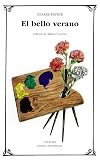
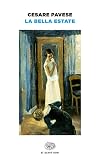
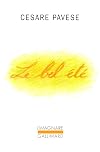
The Beautiful Summer
by Cesare Pavese
On This Page
Description
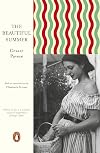
'Life was a perpetual holiday in those days . . . ' It's the height of summer in 1930s Italy, and sixteen-year-old Ginia is desperate for adventure. So begins a fateful friendship with Amelia, a stylish and sophisticated artist's model who envelops her in a dazzling new world of bohemian artists and intoxicating freedom. Under the spell of her new friends, Ginia soon falls in love with Guido, an enigmatic young painter. It's the start of a desperate love affair, charged with false hope and show more overwhelming passion - destined to last no longer than the course of a summer. The Beautiful Summer is a gorgeous coming-of-age tale of lost innocence and first love, by one of Italy's greatest writers. show lessTags
Recommendations


























Member Reviews
Pavese te engana. Ele parece simples, a princípio, e você começa a ler uma novela como essa sem grandes pretensões. E ele te maravilha mesmo sem que você tenha consciência completa disso imediatamente. Essa é uma linda novela sobre a melancolia da passagem para a vida adulta.
I don't read Italian so I can't say whether it's the fault of Pavese or the translator, but the choppy, dry style was terribly boring. Which is a pity, as the subject of a young girl's experience with a group of bohemians is sensitively handled. Read Pavese's novel Among Women Only instead, it's much better.
LA BELLA ESTATE
A quei tempi era sempre festa. Bastava uscire di casa e traversare la strada, per diventare come matte, e tutto era cosi' bello, specialmente di notte, che tornando stanche morte speravano ancora che qualcosa succedesse, che scoppiasse un incendio, che in casa nascesse un bambino, e magari venisse giorno all'improvviso e tutta la gente uscisse in strada e si potesse continuare a camminare camminare fino ai prati e fin dietro le colline. (p. 3)
IL DIAVOLO SULLE COLLINE
Non c'e' niente che sappia di morte - continuo' - piu' del sole d'estate, della gran luce, della natura esuberante. Tu fiuti l'aria e senti il bosco, e ti accorgi che piente e bestie se ne infischiano di te. Tutto vive e si macera in se stesso. La natura e' la show more morte... (p. 130)
Pensavo a quell'idea di Pieretto che la campagna arroventata sotto il sole d'agosto fa pensare alla morte. (p. 150)
TRA DONNE SOLE
Rosetta disse, sulla mia spalla: - Tutti i giovani sono sciocchi.
- E i vecchi, e le vecchie, e i defunti. Tutti sbagliati. Oh Clelia, insegnami il modo di guadagnare quattro soldi e fuggire in California. La' dicono che non si muore.
- Tu ci credi? - disse Rosetta. (p. 362) show less
A quei tempi era sempre festa. Bastava uscire di casa e traversare la strada, per diventare come matte, e tutto era cosi' bello, specialmente di notte, che tornando stanche morte speravano ancora che qualcosa succedesse, che scoppiasse un incendio, che in casa nascesse un bambino, e magari venisse giorno all'improvviso e tutta la gente uscisse in strada e si potesse continuare a camminare camminare fino ai prati e fin dietro le colline. (p. 3)
IL DIAVOLO SULLE COLLINE
Non c'e' niente che sappia di morte - continuo' - piu' del sole d'estate, della gran luce, della natura esuberante. Tu fiuti l'aria e senti il bosco, e ti accorgi che piente e bestie se ne infischiano di te. Tutto vive e si macera in se stesso. La natura e' la show more morte... (p. 130)
Pensavo a quell'idea di Pieretto che la campagna arroventata sotto il sole d'agosto fa pensare alla morte. (p. 150)
TRA DONNE SOLE
Rosetta disse, sulla mia spalla: - Tutti i giovani sono sciocchi.
- E i vecchi, e le vecchie, e i defunti. Tutti sbagliati. Oh Clelia, insegnami il modo di guadagnare quattro soldi e fuggire in California. La' dicono che non si muore.
- Tu ci credi? - disse Rosetta. (p. 362) show less
Another short novel by the epic Italian author. Two girls, in love, with whom? Themselves? Boyfriends? The other girl? Sensual but a rather thin story.
Pavese is such a renowned Italian author, that I was expecting so much more... Completely dull. I will still try "La luna e il falò" but, if it's the same style, then I will be through with Pavese for good.
Members
- Recently Added By
Lists

1940s
221 works; 25 members

Italian Literature
558 works; 42 members

Top Five Books of 2018
802 works; 265 members
Lista dei 100 migliori libri italiani degli ultimi 200 anni
100 works; 1 member
Author Information

314+ Works 8,082 Members
In Torino in his native Piedmont, Pavese studied English and American literature and wrote a dissertation on Walt Whitman. He read and translated Defoe, Dickens, Joyce , Dos Passos, Stein and Faulkner and his version of Melville's , Moby Dick is a classic. Except for his book of poems Lavorare stanca (Work Wearies) (1936), Pavese's chief works are show more the novels The Comrade (1948), La Casa in Collina (The House on the Hill) (1949), Prima che il gallo canti (Before the Cock Crows) (1949), La bella estate (The Beautiful Summer) (1949), and his last and best, The Moon and the Bonfire (1952). During World War II, he was head of the Rome office of the publishing house of Einaudi and, with Elio Vittorini, did much to encourage young writers. Although a member of the Communist Party, he had not joined the anti-Fascist resistance. Unhappy in love, unable to believe in Christ, and disappointed with things in postwar Italy, he finally made good on what he had often urged as the finest of "final solutions" for himself, committing suicide after winning the coveted Strega Prize, for La bella estate. (Bowker Author Biography) show less
Some Editions
Awards and Honors
Series
Belongs to Publisher Series
Il bosco [Mondadori] (47)
Work Relationships
Is contained in
Common Knowledge
- Canonical title
- The Beautiful Summer
- Original title
- La bella estate
- Original publication date
- 1940
- Important places*
- Torino, Piemonte, Italia; Piemonte, Italia; Italia
- First words
- Life was a perpetual holiday in those days.
- Last words
- (Click to show. Warning: May contain spoilers.)'We can go where you like,' said Ginia, 'you lead the way.'
- Original language
- Italian
- Disambiguation notice
- This work is the single novella La bella estate. Please do not combine with works that contain other stories.
*Some information comes from Common Knowledge in other languages. Click "Edit" for more information.
Classifications
- Genres
- General Fiction, Fiction and Literature
- DDC/MDS
- 853.914 — Literature & rhetoric Italian, Romanian & related literatures Italian fiction 1900- 20th Century 1945-1999
- LCC
- PQ4835 .A846 .B4 — Language and Literature French, Italian, Spanish and Portuguese literatures Italian literature Individual authors, 1900-1960
- BISAC
Statistics
- Members
- 705
- Popularity
- 40,476
- Reviews
- 16
- Rating
- (3.57)
- Languages
- 9 — Catalan, Dutch, English, French, German, Hebrew, Italian, Slovenian, Spanish
- Media
- Paper, Audiobook, Ebook
- ISBNs
- 39
- ASINs
- 31