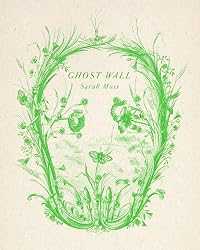
Ghost Wall
by Sarah Moss
On This Page
Description
A Southern Living Best New Book of Winter 2019; A Refinery29 Best Book of January 2019; A Most Anticipated Book of 2019 at The Week, Huffington Post, Nylon, and Lit Hub; An Indie Next Pick for January 2019 "Ghost Wall has subtlety, wit, and the force of a rock to the head: an instant classic." --Emma Donoghue, author of Room "A worthy match for 3 a.m. disquiet, a book that evoked existential dread, but contained it, beautifully, like a shipwreck in a bottle." --Margaret Talbot, The New show more Yorker A taut, gripping tale of a young woman and an Iron Age reenactment trip that unearths frightening behavior The light blinds you; there's a lot you miss by gathering at the fireside. In the north of England, far from the intrusions of cities but not far from civilization, Silvie and her family are living as if they are ancient Britons, surviving by the tools and knowledge of the Iron Age. For two weeks, the length of her father's vacation, they join an anthropology course set to reenact life in simpler times. They are surrounded by forests of birch and rowan; they make stew from foraged roots and hunted rabbit. The students are fulfilling their coursework; Silvie's father is fulfilling his lifelong obsession. He has raised her on stories of early man, taken her to witness rare artifacts, recounted time and again their rituals and beliefs--particularly their sacrifices to the bog. Mixing with the students, Silvie begins to see, hear, and imagine another kind of life, one that might include going to university, traveling beyond England, choosing her own clothes and food, speaking her mind. The ancient Britons built ghost walls to ward off enemy invaders, rude barricades of stakes topped with ancestral skulls. When the group builds one of their own, they find a spiritual connection to the past. What comes next but human sacrifice? A story at once mythic and strikingly timely, Sarah Moss's Ghost Wall urges us to wonder how far we have come from the "primitive minds" of our ancestors. show lessTags
Recommendations










Member Reviews
Silvie's father, a bus-driver by profession, is obsessed with Iron Age reenactments in Northumberland. Like all their summer holidays, mother, father and seventeen year-old Silvie live like ancient Britons, using knowledge of the era and foraging for food. This time they join an archaeology professor and three students who are on an "experimental archaeology" course. The tension mounts throughout the book as it becomes apparent that there will quite possibly be a human sacrifice. The story was made more interesting by the class difference, a working class northerner and family joined by educated southerners. The males bonded, drumming and chanting, with one finally proving to be just as obsessed and brutal as the other. I raced through show more this short book hardly able to wait for the ending. The writing is beautiful with appropriate references made throughout the story suggesting reasons men and women behave as they do. Disturbing but unforgettable. show less
Silvie and her parents join an archaeology professor and three of his students on a field trip to Northumberland. The trip is an experiment in "experiential archaeology" in the sense that its participants try to recreate and re-enact the living conditions of the Iron Age tribes which inhabited these remote areas. The professor's intentions are innocent enough, at least at the outset - a mixture of academic curiosity and a "Boys' Own" thirst for adventure which he seems to share with his students. Silvie's dad, on the other hand, has darker motives. We soon learn that he has supremacist fantasies about "Ancient Britons", whom he considers a pure, home-grown race, untainted by foreign influences. He idolises their way of life which, show more albeit nasty, brutish and short, is for him a test of manly mettle. And he has a morbid fascination with the Bog People, Iron Age victims of human sacrifice.
At first the group dynamics make the novel feel like an episode of "Celebrity Survivors" as we sense the increasing friction between the disparate characters. However, things decidedly take a turn for the sinister when the men decide to build a "ghost wall" - a wooden barricade topped by animal skulls which the ancients apparently used as a means of psychological warfare against invading hordes.
Ghost Wall is a slender novella which packs a punch. The narrative element is tautly controlled. There's a constant sense of dread, of violence simmering beneath the surface. These leads to a terrifying climax, in which the novel skirts the folk horror genre to chilling effect.
More importantly, however, the work is a timely indictment of patriarchal and racist prejudices which, though distinct, often fuel each other. It also seems to suggest that even monsters have redeeming features which endear them to their own victims, whilst seemingly innocent persons can commit grave acts when they give in to atavistic instincts. Perhaps what make this novel so disturbing is that these horrors are all too real. show less
At first the group dynamics make the novel feel like an episode of "Celebrity Survivors" as we sense the increasing friction between the disparate characters. However, things decidedly take a turn for the sinister when the men decide to build a "ghost wall" - a wooden barricade topped by animal skulls which the ancients apparently used as a means of psychological warfare against invading hordes.
Ghost Wall is a slender novella which packs a punch. The narrative element is tautly controlled. There's a constant sense of dread, of violence simmering beneath the surface. These leads to a terrifying climax, in which the novel skirts the folk horror genre to chilling effect.
More importantly, however, the work is a timely indictment of patriarchal and racist prejudices which, though distinct, often fuel each other. It also seems to suggest that even monsters have redeeming features which endear them to their own victims, whilst seemingly innocent persons can commit grave acts when they give in to atavistic instincts. Perhaps what make this novel so disturbing is that these horrors are all too real. show less
Imagine a re-enactment exercise gone off the rails and you have the essentials. Silvie's Dad Bill is obsessed with the time 'before', early Iron Age on back, the time, he believes, only the true tribal Britons, were in the British Isles. Given that he is also a control freak and has a 17 year old daughter you've got all you need for a train wreck. Bill though, is a bus driver, couldn't go to college, all his learning is self-directed, but he is enough of a recognized expert to be respected and he joins a professor and his students (three only, two young men and one young woman) who have signed up for a 'reality' experience up on the fells of Northumberland. He never lets his wife or daughter do anything independently, so they come along show more too. It's important to understand that Bill really does know his stuff and that he, like many abusive people, really loves his daughter, but that he is over the line, not able to recognize the difference between discipline and cruelty. His personality too is such that you could say he enchants them all, even Silvie, into following his will. There is so much here to take apart--the absurdity of the notion of reenactment perhaps foremost, the fact too that a good deal of harm comes when people allow imagination to run away them. There are the social divisions, the educated and the not. The privileged and the not--itself sometimes nothing more than a difference in accents. Moss takes the story to the edge of the precipice and no one emerges unchanged. Precise and brilliant. ***** show less
This is set on the wide open spaces of a Northern Moor and yet it manages to be incredibly claustrophobic throughout. Sylvie and her parents are part of a group taking part in an experimental archaeology project living like iron Age people. The book starts with the first person account of a young woman that is sacrificed by her people and placed in a bog. The rest of the books is narrated by Sylvie. We inhabit her head, rather than she tells us the story, it is very intimate. As the book progresses we become more aware that all is not necessarily well in Sylvie's life. She and Molly, one of the students, are often sent off to forage for food. In these outings Molly asks questions and we learn more about the threat of violence from her show more father that hangs over Sylvie's life. I think this is set in the 1980s, when the author & I were both in our late teens. I, too, remember that schools were allowed to use the cane or strap when I was small (not that I ever knew of it happening. Molly is a different character to Sylvie, daughter of a single mother she has quite a different perspective on life and it is Molly that bends and breaks the rules and takes the decisive action at the end that will surely change Sylvie's life.
This is very intimate and while set in wide open spaces, it is impossible to escape the feeling the Sylvie is so trapped in her situation that she and her mother are incapable of making any move to change how they live. It takes a really quite shocking proposal to trigger the final events. After which nothing will be the same again. Bizarrely, this is a hopeful ending. show less
This is very intimate and while set in wide open spaces, it is impossible to escape the feeling the Sylvie is so trapped in her situation that she and her mother are incapable of making any move to change how they live. It takes a really quite shocking proposal to trigger the final events. After which nothing will be the same again. Bizarrely, this is a hopeful ending. show less
wow. this is short and awesome. i didn't want it to end, and when it did, i wanted to go right back to the beginning and read it again. i never knew what to expect or where this little book was going to take me, but i appreciated it from the get-go. the writing is excellent and immediately grabbed me. the premise was kind of shocking and interesting and has driven me to look up the history of the bog people, which is something i'd never heard of.
the way that history emerges, along with the current time and the abuse silvie (and alison) suffers, and molly's slow understanding of it (and even perhaps silvie's slow understanding of her feelings for women/molly) is a beautiful interweaving. i love the way this is done and how so much is show more going on in so few pages. the community that women can create together, if we allow ourselves to be vulnerable to each other, can be powerful and healing. the community that the men create, on the other hand, is a ratcheting up of violence and obsession, and is dangerous as they can't resist being caught up in the whirlwind. i'm sure there's a lot to think about here on what history can teach us (and how) and what we should and shouldn't learn from the past. for such a slim volume, there is so much to think about here. i really wish i had time to just reread it immediately, but i expect it won't be long before i pick it up again.
"Behind me, Pete and Dan began to beat their drums, a rhythm slower than my heart but too fast for my feet."
ok, i reread this a few days later (6/14/21) because i feel like this is a book that is best read in 1 or 2 sittings, and circumstances required me to read it over 3 days the first time. i still didn't manage to read it as quickly as i'd like, but i did read it in one day. i found it even more profound this time. it probably also helped that i had a better idea in the early pages of what was going on. i love this book.
this is a masterwork. the depiction of abuse is so incredibly real and true and is mirrored so nicely by the history these people are chasing. in this reading i didn't feel like silvie is actually attracted (sexually) to molly, but that she wanted to be molly, to have her life. she was fascinated by her, and sure, by her body, as most 17 years olds would be with a slightly older girl's naked body and curves. there are so few characters here and she fits in so much. again, the community of women, how women can save each other. how (and maybe this is too much and she isn't trying to go this far) men are either violent or can't stop the violence, get too caught up in the excitement to see what is a step too far and to stop themselves, and so cannot be relied upon. how history informs but also cannot be replicated, so maybe we can't ever really know what a different people or time period was like. (the futility of living like people in the iron age when they don't have the same knowledge - which plants are poisonous, which are ok? where can you find grain and do you have the time to soften it? the farmland here is now actually farmed so there isn't the biodiversity or access that they would have had, so how do you live?) i need to think more about why she writes in the style that she does, which is a little unusual and slightly hard to follow at times (although i was exhausted both times i read this). multiple speakers in each paragraph, commas used instead of periods so very long sentences. i'm not sure what she was getting at there. i'm also wanting to think a little more on what silvie's dad's intention was at the end there.if he was actually going to sacrifice her to the bog or if he was going to stop at some point. if he preplanned killing her or if he was also caught up in it and let it get out of control. or if he was going to stop, and if so, when.
there are many gorgeous sentences that i didn't note because maybe they wouldn't make sense out of context, but the writing here is wonderful, on top of all the rest. i'll mark those passages next time, because there will be a next time. it's not perfect, but it's close, so 5 stars this time around. show less
the way that history emerges, along with the current time and the abuse silvie (and alison) suffers, and molly's slow understanding of it (and even perhaps silvie's slow understanding of her feelings for women/molly) is a beautiful interweaving. i love the way this is done and how so much is show more going on in so few pages. the community that women can create together, if we allow ourselves to be vulnerable to each other, can be powerful and healing. the community that the men create, on the other hand, is a ratcheting up of violence and obsession, and is dangerous as they can't resist being caught up in the whirlwind. i'm sure there's a lot to think about here on what history can teach us (and how) and what we should and shouldn't learn from the past. for such a slim volume, there is so much to think about here. i really wish i had time to just reread it immediately, but i expect it won't be long before i pick it up again.
"Behind me, Pete and Dan began to beat their drums, a rhythm slower than my heart but too fast for my feet."
ok, i reread this a few days later (6/14/21) because i feel like this is a book that is best read in 1 or 2 sittings, and circumstances required me to read it over 3 days the first time. i still didn't manage to read it as quickly as i'd like, but i did read it in one day. i found it even more profound this time. it probably also helped that i had a better idea in the early pages of what was going on. i love this book.
this is a masterwork. the depiction of abuse is so incredibly real and true and is mirrored so nicely by the history these people are chasing. in this reading i didn't feel like silvie is actually attracted (sexually) to molly, but that she wanted to be molly, to have her life. she was fascinated by her, and sure, by her body, as most 17 years olds would be with a slightly older girl's naked body and curves. there are so few characters here and she fits in so much. again, the community of women, how women can save each other. how (and maybe this is too much and she isn't trying to go this far) men are either violent or can't stop the violence, get too caught up in the excitement to see what is a step too far and to stop themselves, and so cannot be relied upon. how history informs but also cannot be replicated, so maybe we can't ever really know what a different people or time period was like. (the futility of living like people in the iron age when they don't have the same knowledge - which plants are poisonous, which are ok? where can you find grain and do you have the time to soften it? the farmland here is now actually farmed so there isn't the biodiversity or access that they would have had, so how do you live?) i need to think more about why she writes in the style that she does, which is a little unusual and slightly hard to follow at times (although i was exhausted both times i read this). multiple speakers in each paragraph, commas used instead of periods so very long sentences. i'm not sure what she was getting at there. i'm also wanting to think a little more on what silvie's dad's intention was at the end there.
there are many gorgeous sentences that i didn't note because maybe they wouldn't make sense out of context, but the writing here is wonderful, on top of all the rest. i'll mark those passages next time, because there will be a next time. it's not perfect, but it's close, so 5 stars this time around. show less
Set in 1991, protagonist Silvie is a seventeen-year-old whose father is obsessed with the history of Iron Age Britons. He takes his annual two-weeks off work to take their fam on an “experimental archeology” reenactment of the Iron Age lifestyle. The project is led by an archeology professor and located near the bogs of Northumberland. The family attends, along with the professor and his students. During the reenactment, the group lives in the manner of their Iron Age Celtic ancestors, foraging for food, wearing primitive clothing, and adhering to ancient rituals. As the days pass, the experiment becomes increasingly intense, bordering on dangerous. It becomes obvious that Silvie is afraid of her father. During the reenactment, the show more group comes across a “Ghost Wall,” a relic from the past that separated ancient Celts from their enemies. As the reenactment grows darker and more sinister, Silvie's struggle for autonomy and her yearning to escape her father's control intensify.
It is dark, atmospheric, and unsettling. There are many disturbing scenes (child abuse, butchering animals). The father is an abusive control freak. The book reminded me a bit of Lord of the Flies – if people are given “permission” to act in a primitive way, some will take advantage of it at the expense of others. Silvie's father's obsession with the Iron Age and his willingness to push the boundaries of safety and morality highlight the risks associated with fanaticism. It is an unusual story that examines the blurring of lines between historical interest and harmful obsession. The author has woven current issues into the story. For example, the wall is symbol of that which separates us. There are also embedded references to racism, patriarchy, and gender identity. It is not what I would call an “enjoyable” read but provides much food for thought. show less
It is dark, atmospheric, and unsettling. There are many disturbing scenes (child abuse, butchering animals). The father is an abusive control freak. The book reminded me a bit of Lord of the Flies – if people are given “permission” to act in a primitive way, some will take advantage of it at the expense of others. Silvie's father's obsession with the Iron Age and his willingness to push the boundaries of safety and morality highlight the risks associated with fanaticism. It is an unusual story that examines the blurring of lines between historical interest and harmful obsession. The author has woven current issues into the story. For example, the wall is symbol of that which separates us. There are also embedded references to racism, patriarchy, and gender identity. It is not what I would call an “enjoyable” read but provides much food for thought. show less
A beautiful, original, and, in some ways, deeply flawed short novel. The novel is set in the woods and on the moors of Northumbria, where a group of college students are attempting to live as Iron Age Britons did. Much of the prose here is terrific. Moss makes her novel's wild setting seem raw and shocking, and often filled with looming dread. Emotionally, "Ghost Wall" is no less charged: the book is suffused with Sylvie's fear of her father and his all-enveloping anger. As other reviewers have mentioned, the novel's overall mood is one of claustrophobia and fear, enhanced, no doubt, by the author's decision to forgo paragraph breaks and quotation marks. Beautiful though it is, I found "Ghost Wall" to be a tense and emotionally show more exhausting read, though ever once in a while I'd come across a sentence so gorgeous that they made me catch my breath.
I was also impressed by the way that Moss dealt with skin and touch in this little novel. In the same way that Patrick Suskind's "Perfume" is a meticulous exploration of our sense of smell, touch is the sense that dominates "Ghost Wall." Here, skin is something that gives pleasure and pain, bears witness, protects and -- in the case of the mummies preserved by the peat bogs -- is a barrier that is easily and often disastrously permeated. Sylvie is portrayed as a scared and repressed young woman of limited experience -- this woodland adventure is one of he first opportunities she is given to experience the world outside of her highly dysfunctional family. Moss, to her credit, is a skillful enough writer to capture the thrill of many of Sylvie's firsts as she is put into a whole set of novel situations. As dark as it is, you could read this one as a wonderfully vivid coming-of-age novel. "Ghost Wall" isn't your average read.
"Ghost Wall" is a forthrightly political novel in a number of ways, and sometimes the author handles these aspects of her story quite well. Sylvie and her family are working class and Northern, while the book's other characters are bourgeois Greater London types, and Sylvie feels the differences between them keenly. The students we meet are not acquainted with the way that Sylvie's life is constrained and treat their exercise in "experimental archeology" as a lark. Sylive, on the other hand, cannot articulate the feminist viewpoints that are espoused by the group's only other female member, but is intimately familiar with the oppression that she refers to in the abstract. While the students aren't averse to sneaking off to the pub or to the local minimarket and discuss European holidays, Sylvie's existence is, in various emotional and material ways, much more primitive. Along these same lines, Sylvie is comfortable in natural spaces in the way that her new friends aren't -- we see her orient herself and provide for herself in the way that posh Southerners simply couldn't. Sylvie is, admittedly, impatient and a bit of a know-it-all, but her skills and knowledge of the woods and the ancient Britons are real. Most fascinatingly, perhaps -- a lot of this knowledge comes directly from her tyrannical father. While Sylvie sometimes yearns to be free of him, she can't seem to escape the influence that he's had on both her perception of the world and her opinions of it. The lines here between victimizer and victim are blurry here, a complex idea that I thought that the author handled exceptionally well.
In some basic, structural ways, however, the political points the author makes detract from her work. While I don't think it's necessary to include a sympathetic or exculpatory picture of a character as nasty as Sylvie's father, and while I'm sure that men like him are easier to find than we'd like to imagine, a rather crude gender dichotomy runs through "Ghost Wall" that I found maddeningly simplistic. The author deserves credit for illustrating how single-minded ideas about the past can play into our worst modern political ideas -- Sylvie's father's opinions about foreigners, non-whites, and assertive women are about what you'd expect, and his interest in ancient Britain often seems like a refuge from a world where he has to deal with these groups on a daily basis. Even so, while she steers well clear of starry-eyed ideas about primitive matriarchal culture, Moss still codes everything feminine in "Ghost Wall" as unwavering benevolent, a surprisingly facile opposition in a novel which is, in many ways, wonderfully nuanced. In a book this short and intense, this might be termed a major flaw. This one is imperfect, but recommended for fans of experimental prose and modern horror writing. show less
I was also impressed by the way that Moss dealt with skin and touch in this little novel. In the same way that Patrick Suskind's "Perfume" is a meticulous exploration of our sense of smell, touch is the sense that dominates "Ghost Wall." Here, skin is something that gives pleasure and pain, bears witness, protects and -- in the case of the mummies preserved by the peat bogs -- is a barrier that is easily and often disastrously permeated. Sylvie is portrayed as a scared and repressed young woman of limited experience -- this woodland adventure is one of he first opportunities she is given to experience the world outside of her highly dysfunctional family. Moss, to her credit, is a skillful enough writer to capture the thrill of many of Sylvie's firsts as she is put into a whole set of novel situations. As dark as it is, you could read this one as a wonderfully vivid coming-of-age novel. "Ghost Wall" isn't your average read.
"Ghost Wall" is a forthrightly political novel in a number of ways, and sometimes the author handles these aspects of her story quite well. Sylvie and her family are working class and Northern, while the book's other characters are bourgeois Greater London types, and Sylvie feels the differences between them keenly. The students we meet are not acquainted with the way that Sylvie's life is constrained and treat their exercise in "experimental archeology" as a lark. Sylive, on the other hand, cannot articulate the feminist viewpoints that are espoused by the group's only other female member, but is intimately familiar with the oppression that she refers to in the abstract. While the students aren't averse to sneaking off to the pub or to the local minimarket and discuss European holidays, Sylvie's existence is, in various emotional and material ways, much more primitive. Along these same lines, Sylvie is comfortable in natural spaces in the way that her new friends aren't -- we see her orient herself and provide for herself in the way that posh Southerners simply couldn't. Sylvie is, admittedly, impatient and a bit of a know-it-all, but her skills and knowledge of the woods and the ancient Britons are real. Most fascinatingly, perhaps -- a lot of this knowledge comes directly from her tyrannical father. While Sylvie sometimes yearns to be free of him, she can't seem to escape the influence that he's had on both her perception of the world and her opinions of it. The lines here between victimizer and victim are blurry here, a complex idea that I thought that the author handled exceptionally well.
In some basic, structural ways, however, the political points the author makes detract from her work. While I don't think it's necessary to include a sympathetic or exculpatory picture of a character as nasty as Sylvie's father, and while I'm sure that men like him are easier to find than we'd like to imagine, a rather crude gender dichotomy runs through "Ghost Wall" that I found maddeningly simplistic. The author deserves credit for illustrating how single-minded ideas about the past can play into our worst modern political ideas -- Sylvie's father's opinions about foreigners, non-whites, and assertive women are about what you'd expect, and his interest in ancient Britain often seems like a refuge from a world where he has to deal with these groups on a daily basis. Even so, while she steers well clear of starry-eyed ideas about primitive matriarchal culture, Moss still codes everything feminine in "Ghost Wall" as unwavering benevolent, a surprisingly facile opposition in a novel which is, in many ways, wonderfully nuanced. In a book this short and intense, this might be termed a major flaw. This one is imperfect, but recommended for fans of experimental prose and modern horror writing. show less
Members
- Recently Added By
Published Reviews
ThingScore 100
Ghost Wall, Sarah Moss’s sixth novel, is further proof that she’s one of our very best contemporary novelists. How she hasn’t been nominated for the Man Booker Prize continues to mystify me – and this year is no exception. At a mere 160 pages, Ghost Wall may look unassuming, but it’s testament to Moss’s notable talents that within these she’s able to address the huge topics of show more misogynistic brutality and violence, gender inequality and class warfare, not to mention the lessons of history. But never at the expense of what’s a gripping narrative.....Ghost Wall is full of uncomfortable truths about the modern world. Domestic violence finds its roots in ancient ritual sacrifice, and contemporary misogyny and xenophobia is shown to be just as grimly powerful as Iron Age superstition. It’s an intoxicating concoction; inventive, intelligent, and like no other author’s work. show less
added by vancouverdeb
I was not familiar with Moss, who has written five previous novels and a memoir about Iceland, as well as scholarly books about polar exploration and the history of food. But I’m certainly intrigued by her now. I read “Ghost Wall” in one gulp in the middle of the night. It was a worthy match for 3 A.M. disquiet, a book that evoked existential dread but contained it, beautifully, like a show more shipwreck in a bottle. show less
added by vancouverdeb
Ghost Wall is such a weird and distinctive story: It could be labeled a supernatural tale, a coming-of-age chronicle, even a timely meditation on the various meanings of walls themselves. All this, packed into a beautifully written story of 130 pages. No wonder I read it twice within one week.
added by vancouverdeb
Lists

2019 Women's Prize for Fiction Longlist
16 works; 12 members

Five star books
1,767 works; 110 members

Fiction: Supernatural Horror
97 works; 1 member

Huxley's Reading Log 2018
37 works; 1 member

Books Read in 2019
4,052 works; 110 members

To Read
617 works; 7 members

Walls
24 works; 2 members

Books Read in 2021
5,361 works; 114 members

Novels without quotation marks
25 works; 1 member

Fiction: Thriller
78 works; 1 member

Take Four Books
130 works; 1 member
Author Information

16+ Works 4,240 Members
Some Editions
Awards and Honors
Awards
Distinctions
Notable Lists
Common Knowledge
- Canonical title
- Ghost Wall
- Original publication date
- 2018
- People/Characters
- Sylvie Hampton; Bill Hampton
- Important places
- Northumberland, England, UK
- First words
- They bring her out.
- Quotations
- Actually, said Molly, it's no harder for girls to pee than boys, the problem isn't biology, it's men's fear of women's bodies. If we were allowed to pull our knickers down and squat by a wall the way you're allowed to get you... (show all)r dick out and piss up the wall there wouldn't be a problem, it's just the way you all act as if a vagina will come and eat you if it's out without a muzzle.
- Last words
- (Click to show. Warning: May contain spoilers.)Lie down, she said, I'll be on the outside, you'll know I'm between you and everything else, and then she curled around me, her bare legs cradling mine, her fingers at rest on my belly, her breathing warm on my shoulder, and I lay watching the full moon and then the dawn through the ivy-framed window of Trudi's cottage the rest of that short summer night.
- Publisher's editor
- Porter, Max
- Blurbers
- Donoghue, Emma; Iversen, Kristin; Perry, Sarah; Corrigan, Maureen; Beer, Tom; Winik, Marion (show all 21); Rosenthal, Randy; Sacks, Sam; Talbot, Margaret; Fertel, Rien; Quinn, Annalisa; Hager, Emma; Doherty, Mike; Hansen, Dana; Cotter, Betty J.; Tobias, Suzanne; Jong, Casey; Schnelbach, Leah; Nicolaou, Elena; O'Farrell, Maggie; Burton, Jessie
- Original language
- English
- Canonical DDC/MDS
- 823.92
- Canonical LCC
- PR6113.O88
Classifications
Statistics
- Members
- 1,307
- Popularity
- 18,535
- Reviews
- 88
- Rating
- (3.86)
- Languages
- 6 — Dutch, English, French, German, Italian, Spanish
- Media
- Paper, Audiobook, Ebook
- ISBNs
- 26
- ASINs
- 9