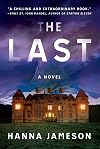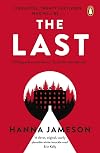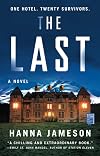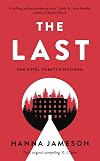
The Last
by Hanna Jameson
On This Page
Description
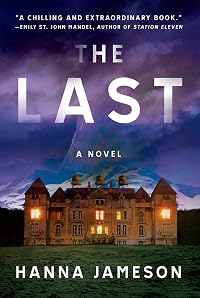
This propulsive post-apocalyptic thriller "in which Agatha Christie's And Then There Were None collides with Stephen King's The Shining" (NPR) follows a group of survivors stranded at a hotel as the world descends into nuclear war and the body of a young girl is discovered in one of the hotel's water tanks. Jon thought he had all the time in the world to respond to his wife's text message: I miss you so much. I feel bad about how we left it. Love you. But as he's waiting in the lobby of the show more L'Hotel Sixieme in Switzerland after an academic conference, still mulling over how to respond to his wife, he receives a string of horrifying push notifications. Washington, DC, has been hit with a nuclear bomb, then New York, then London, and finally Berlin. That's all he knows before news outlets and social media goes black--and before the clouds on the horizon turn orange. Two months later, there are twenty survivors holed up at the hotel, a place already tainted by its strange history of suicides and murders. Jon and the rest try to maintain some semblance of civilization. But when he goes up to the roof to investigate the hotel's worsening water quality, he is shocked to discover the body of a young girl floating in one of the tanks, and is faced with the terrifying possibility that there might be a killer among the group. As supplies dwindle and tensions rise, Jon becomes obsessed with discovering the truth behind the girl's death. In this "brilliantly executed...chilling and extraordinary" post-apocalyptic mystery, "the questions Jameson poses--who will be with you at the end of the world, and what kind of person will you be?--are as haunting as the plot itself." (Emily St. John Mandel, nationally bestselling author of Station Eleven). show lessTags
Recommendations

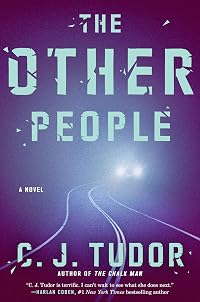
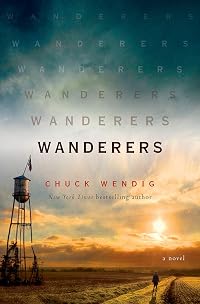
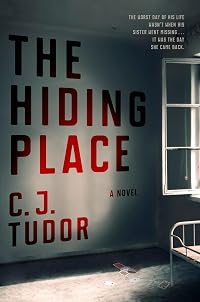
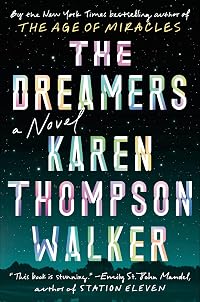




Member Recommendations
dmenon90 Clinical tone, post-apocalyptic setting with a last group of survivors who battle with not only the end of the world but with each other. Themes of distrust and doom.
Member Reviews
I pre-ordered this book, based on positive reviews of ARCs.
I was hooked by the idea of a murder mystery being investigated by an American academic stranded in a remote Swiss hotel when a nuclear war kicks off.
The book arrived in my audible library today and I dived right in.
I abandoned the book at 10%, with the body discovered but the murder investigation not yet underway, because nothing about the setting made any sense.
I think the problem is that I lived in Switzerland for sixteen years and I'm very familiar with its hotels, with its government and with its arrangements in the event of a nuclear war.
Hanna Jameson seems to be writing about an alternative Switzerland that I've never visited.
The real Switzerland is a densely populated show more and there are no hotels that are remote in the Amerian sense of the word. There are always villages and towns nearby, even in the mountains. Local government is strong in Switzerland. The local Commune would never leave people abandoned at a hotel. The Civil Defence organisation would manage allocating people to local nuclear bunkers. Every village would have a pharmacy, often two or three, so you'd never have to head out to a "superstore" to find medical supplies. The hotel would hold the passports of all guests so their occupations and personal details would be known whereas, in the book, we get a list of "occupation unknown" statements.
The hotel in the book has fourteen floors and almost a thousand rooms. This is very unlikely. Switzerland isn't Vegas. You don't get hotels this large except in the biggest cities and even then they're rare. A hotel that size would have hundreds of staff and strong ties to the local community. Hanna Jefferson seems to be writing about a big resort hotel in Maine à la "The Shining".
Then there's basic physics. The hotel manager decides to save (as in store up) electricity by cutting power to floors above a certain height. How does this save electricity? Hotels are not battery powered in Switzerland. This is like Tom Sawyer painting faster because he's running out of paint.
The only person who is actually described as Swiss in this book has a very American name. Then we have people described as Swiss-Russian. This doesn't exist. I can see Swiss French and Swiss German but there is no Swiss-Russian.
I should probably find these things less distracting than I do but if you decide to set a novel in a real place, some basic research would help. If I can't believe the setting, why should I believe anything else?
Perhaps I'd have stuck with this if the main character hadn't been such a zero-charisma wimp. An academic historian who seems to lack the ability to think things through. Perhaps he's just drifting along in shock but that doesn't make him a great choice as the POV to write the story from.
Maybe there's a fascinating murder mystery here, which, if it were reset on an abandoned space station or a hotel in Alaska, I'd find fascinating. I'll never know as I've already returned the book to Audible. show less
I was hooked by the idea of a murder mystery being investigated by an American academic stranded in a remote Swiss hotel when a nuclear war kicks off.
The book arrived in my audible library today and I dived right in.
I abandoned the book at 10%, with the body discovered but the murder investigation not yet underway, because nothing about the setting made any sense.
I think the problem is that I lived in Switzerland for sixteen years and I'm very familiar with its hotels, with its government and with its arrangements in the event of a nuclear war.
Hanna Jameson seems to be writing about an alternative Switzerland that I've never visited.
The real Switzerland is a densely populated show more and there are no hotels that are remote in the Amerian sense of the word. There are always villages and towns nearby, even in the mountains. Local government is strong in Switzerland. The local Commune would never leave people abandoned at a hotel. The Civil Defence organisation would manage allocating people to local nuclear bunkers. Every village would have a pharmacy, often two or three, so you'd never have to head out to a "superstore" to find medical supplies. The hotel would hold the passports of all guests so their occupations and personal details would be known whereas, in the book, we get a list of "occupation unknown" statements.
The hotel in the book has fourteen floors and almost a thousand rooms. This is very unlikely. Switzerland isn't Vegas. You don't get hotels this large except in the biggest cities and even then they're rare. A hotel that size would have hundreds of staff and strong ties to the local community. Hanna Jefferson seems to be writing about a big resort hotel in Maine à la "The Shining".
Then there's basic physics. The hotel manager decides to save (as in store up) electricity by cutting power to floors above a certain height. How does this save electricity? Hotels are not battery powered in Switzerland. This is like Tom Sawyer painting faster because he's running out of paint.
The only person who is actually described as Swiss in this book has a very American name. Then we have people described as Swiss-Russian. This doesn't exist. I can see Swiss French and Swiss German but there is no Swiss-Russian.
I should probably find these things less distracting than I do but if you decide to set a novel in a real place, some basic research would help. If I can't believe the setting, why should I believe anything else?
Perhaps I'd have stuck with this if the main character hadn't been such a zero-charisma wimp. An academic historian who seems to lack the ability to think things through. Perhaps he's just drifting along in shock but that doesn't make him a great choice as the POV to write the story from.
Maybe there's a fascinating murder mystery here, which, if it were reset on an abandoned space station or a hotel in Alaska, I'd find fascinating. I'll never know as I've already returned the book to Audible. show less
If I were to describe this as country-hotel murder mystery meets World War Three you'd think this book must be rubbish, but that's actually what it is. On the day that global thermonuclear war annihilates most of human civilisation, historian Jon Keller is attending a conference at a remote hotel in Switzerland. In the ensuing panic most people either leave the hotel, or commit suicide, leaving just 20 survivors holed up in a 1000 room building. Jon and his fellow survivors then find that a little girl has been murdered and Jon begins an investigation to find the truth and determine whether the killer is in their midst. As Jon becomes obsessed with finding justice for the little girl, his fellow survivors become frustrated. Does the show more girl matter when so many have died, and when they have a more immediate problem with replenishing their supplies and surviving the apocalypse? Is the killer still at large? Are there more people in the hotel than they know about.
I really enjoyed this book, which bridged the space that lies between murder mystery, suspense (this hotel has a murky history) and the post-apocalypse narrative. It is a contemporary story and although the former orange President of the USA was not mentioned by name it appears that the war broke out due to other nations losing patience with his foreign policy and America First approach. There are some interesting passages where the Americans in the hotel have to face the anger of the others due to the way they had voted. The author fleshed out all of the characters in the hotel to great effect and wove them all into a compelling narrative. The recounting of Jon's reaction to the news that Washington had been nuked was spectacularly realistic. The idea was actually very clever. As the action is set in a hotel, the cast of characters is mostly unknown to each other and have little in common, so as they learn about each other, the reader learns too. For several of the characters there is more to them than meets the eye. Secrets and lies abound, or is that just Jon's imagination? Global catastrophe is perhaps not the most heart-warming subject at any time, but right now is particularly difficult to embrace, but this was an enthralling read which also offered a happy(ish) ending to remove the sting.
I gather that Netflix has got some options on turning The Last into a film and I think it might do well in that format. Unless they stuff it up of course. It's not unknown for adaptations to be botched. I don't think I will ever get over my fury at Peter Jackson for his butchery of The Hobbit. I wait with bated breath to see whether Dune has suffered a similar fate (though am super-excited that in my new vaccinated state, going to the cinema should be a viable option). show less
I really enjoyed this book, which bridged the space that lies between murder mystery, suspense (this hotel has a murky history) and the post-apocalypse narrative. It is a contemporary story and although the former orange President of the USA was not mentioned by name it appears that the war broke out due to other nations losing patience with his foreign policy and America First approach. There are some interesting passages where the Americans in the hotel have to face the anger of the others due to the way they had voted. The author fleshed out all of the characters in the hotel to great effect and wove them all into a compelling narrative. The recounting of Jon's reaction to the news that Washington had been nuked was spectacularly realistic. The idea was actually very clever. As the action is set in a hotel, the cast of characters is mostly unknown to each other and have little in common, so as they learn about each other, the reader learns too. For several of the characters there is more to them than meets the eye. Secrets and lies abound, or is that just Jon's imagination? Global catastrophe is perhaps not the most heart-warming subject at any time, but right now is particularly difficult to embrace, but this was an enthralling read which also offered a happy(ish) ending to remove the sting.
I gather that Netflix has got some options on turning The Last into a film and I think it might do well in that format. Unless they stuff it up of course. It's not unknown for adaptations to be botched. I don't think I will ever get over my fury at Peter Jackson for his butchery of The Hobbit. I wait with bated breath to see whether Dune has suffered a similar fate (though am super-excited that in my new vaccinated state, going to the cinema should be a viable option). show less
American historian Jon Keller is stopping at a hotel in Switzerland for a work conference when the world descends into nuclear war. Jon is one of twenty people, both guests and staff, who decide to stay at the hotel and forge a new existence there. But then the body of a young girl is found and without a clear date of death, nobody is sure whether there is a murderer in the hotel and Jon becomes obsessed with finding out.
This book has been on my shelf for a few years – it came out in 2019 and was set at the same time. It’s post apocalyptic/dystopian fiction, which used to be one of my favorite genres until Covid-19 happened, and suddenly it felt a lot less like fiction, and something I didn’t want to read about (hey, I’ve only show more just watched 28 Days Later, despite having more viewing time than I could ever have anticipated during furlough)!
Anyway, I recently bought Hanna Jameson’s novel, Are You Happy Now? which is a story about a pandemic – there is a theme here – and derive synopsis, it cided I should read this first. And actually it’s bloody brilliant!!
Despite the synopsis, the book is equally focussed on how the people living at the hotel try to forge a new life and to some extent make a new community, as it is on the. murder of the young girl. As a historian, Jon decides to chronicle the new life that they are all living. One of the first things that they lose is access to the internet and therefore any news reports or communications from other people. There is suspicion amongst different factions of the group – primarily it seems between the English speakers and the non-English speakers – and concerns about what they will do when food stores run low. Is it safe to go outside and look for more food? Are there other survivors? And how do they deal with transgressions by members of their group?
I found the book hard to put down and scarily believable. In such a situation, how would you know who to trust? Who if anyone should lead the group? Everyone is fighting their own battle; Jon is particularly upset about how he failed to respond to his wife’s last text message, sent after he had left for Switzerland when their marriage was in trouble.
I was riveted from beginning to end, and although I found the resolution about the death of the young girl somewhat surprising and probably the weakest aspect of the whole story, I eagerly anticipate reading Are You Happy Now? Not quite yet though; I need something a bit more upbeat first. show less
This book has been on my shelf for a few years – it came out in 2019 and was set at the same time. It’s post apocalyptic/dystopian fiction, which used to be one of my favorite genres until Covid-19 happened, and suddenly it felt a lot less like fiction, and something I didn’t want to read about (hey, I’ve only show more just watched 28 Days Later, despite having more viewing time than I could ever have anticipated during furlough)!
Anyway, I recently bought Hanna Jameson’s novel, Are You Happy Now? which is a story about a pandemic – there is a theme here – and derive synopsis, it cided I should read this first. And actually it’s bloody brilliant!!
Despite the synopsis, the book is equally focussed on how the people living at the hotel try to forge a new life and to some extent make a new community, as it is on the. murder of the young girl. As a historian, Jon decides to chronicle the new life that they are all living. One of the first things that they lose is access to the internet and therefore any news reports or communications from other people. There is suspicion amongst different factions of the group – primarily it seems between the English speakers and the non-English speakers – and concerns about what they will do when food stores run low. Is it safe to go outside and look for more food? Are there other survivors? And how do they deal with transgressions by members of their group?
I found the book hard to put down and scarily believable. In such a situation, how would you know who to trust? Who if anyone should lead the group? Everyone is fighting their own battle; Jon is particularly upset about how he failed to respond to his wife’s last text message, sent after he had left for Switzerland when their marriage was in trouble.
I was riveted from beginning to end, and although I found the resolution about the death of the young girl somewhat surprising and probably the weakest aspect of the whole story, I eagerly anticipate reading Are You Happy Now? Not quite yet though; I need something a bit more upbeat first. show less
I was all set to close the book (cough) on 2018; I had finished up the Peter Grant series in a very satisfactory way, was finishing up a couple other books, and was hoping to actually complete reviews for the books read, all in the same year--I know, I know. Foolish. Then I saw Robert's review and the words 'apocalypse' and 'mystery' instantly jumped out. You could not have tempted me more with dark chocolate sea-salt caramels. And wouldn't you know it? Last was just as satisfying, a great mix of emotions and flavors.
It starts off quickly; no building of suspense, wondering when the end of the world will happen, letting our hapless characters wander around as we all get our bearings. It has happened; Jon, the narrator, begins the story show more three days after the news breaks. An American tucked away in Switzerland for a conference, and he and his colleagues have been routed to a somewhat isolated hotel. I hesitate to say much more; suffice to say that it unfolds quickly and seems very plausible. It combines the best of the apocalypse: a quick disaster, a prolonged sense of aftermath, the opportunity to explore self, meaning, and society, all done with solid writing.
"A lot of people confuse movement with progress,' Dylan said. 'I knew it was a bad idea but what were we gonna do, barricade them in? They weren't ready to face any kind of truth.' I leaned against the wall of the stairwell as Dylan got out his set of keys. The air in here was too thick, full of dust and last breaths. It stank. I hated the stairwell but of course the elevators weren't working anymore; hadn't worked for two months, not since that first day."
I can think of a handful of books that this would compare to, and it's no surprise that the publisher draws analogies to The Last Policeman and Station Eleven. I think that for many, however, this will be an improvement on both of those. Less bucolic and with a stronger narrative than Station Eleven, there is a definite atmosphere of fearfulness and psychological stress. Will these survivors break down? Like an inverse horror movie with the demons from within, how will they cope? Similar to The Last Policeman, the narrator is struggling with his own reactions and trauma response; though aware he is doing so, he's not exactly doing so with great success. But he reflects and engages, and it provides interesting food for thought.
"I figure I should keep writing things down. The clouds are a strange color, but I'm not sure if that's just me being in shock. They could be normal clouds."
I will agree with Robert, one of the reviews that lead me to this book; the ending did feel rushed. Of course, for me, endings often feel rushed with suspense novels, as I'm speed-reading, trying to discover the resolution and relieve the tension. I'll go so far as to say it's a little Tana-French-ish in that the story is more about the psychological journey of the characters and less about the mystery. It is an intriguing ending, but yes; it does try to do too much too quickly, given the pacing of the middle.
Last but random note: one of the few end-of-the-world novels that integrates more than then an average white American in it.
Still, it was a fabulous way to end my 2018 reads. Definitely left me with a book-hangover. Many thanks to NetGalley and Atria Books for the advance reader copy. The quotes, of course, are subject to change in the final writing, but I do think that Jameson's style is one of the aspects that sets this above your average mystery or end of the world, and should be appreciated.
Four and a half cloudy stars show less
It starts off quickly; no building of suspense, wondering when the end of the world will happen, letting our hapless characters wander around as we all get our bearings. It has happened; Jon, the narrator, begins the story show more three days after the news breaks. An American tucked away in Switzerland for a conference, and he and his colleagues have been routed to a somewhat isolated hotel. I hesitate to say much more; suffice to say that it unfolds quickly and seems very plausible. It combines the best of the apocalypse: a quick disaster, a prolonged sense of aftermath, the opportunity to explore self, meaning, and society, all done with solid writing.
"A lot of people confuse movement with progress,' Dylan said. 'I knew it was a bad idea but what were we gonna do, barricade them in? They weren't ready to face any kind of truth.' I leaned against the wall of the stairwell as Dylan got out his set of keys. The air in here was too thick, full of dust and last breaths. It stank. I hated the stairwell but of course the elevators weren't working anymore; hadn't worked for two months, not since that first day."
I can think of a handful of books that this would compare to, and it's no surprise that the publisher draws analogies to The Last Policeman and Station Eleven. I think that for many, however, this will be an improvement on both of those. Less bucolic and with a stronger narrative than Station Eleven, there is a definite atmosphere of fearfulness and psychological stress. Will these survivors break down? Like an inverse horror movie with the demons from within, how will they cope? Similar to The Last Policeman, the narrator is struggling with his own reactions and trauma response; though aware he is doing so, he's not exactly doing so with great success. But he reflects and engages, and it provides interesting food for thought.
"I figure I should keep writing things down. The clouds are a strange color, but I'm not sure if that's just me being in shock. They could be normal clouds."
I will agree with Robert, one of the reviews that lead me to this book; the ending did feel rushed. Of course, for me, endings often feel rushed with suspense novels, as I'm speed-reading, trying to discover the resolution and relieve the tension. I'll go so far as to say it's a little Tana-French-ish in that the story is more about the psychological journey of the characters and less about the mystery. It is an intriguing ending, but yes; it does try to do too much too quickly, given the pacing of the middle.
Last but random note: one of the few end-of-the-world novels that integrates more than then an average white American in it.
Still, it was a fabulous way to end my 2018 reads. Definitely left me with a book-hangover. Many thanks to NetGalley and Atria Books for the advance reader copy. The quotes, of course, are subject to change in the final writing, but I do think that Jameson's style is one of the aspects that sets this above your average mystery or end of the world, and should be appreciated.
Four and a half cloudy stars show less
Historian Jon Keller is on a business trip to Switzerland when the world ends. He finds himself in the remote L’Hotel Sixieme when nuclear bombs begin falling all around the world. Two months later, he and twenty-odd survivors who have stayed put are still living in the hotel when the body of a young girl is found in one of the hotel’s rooftop water tanks. Keller now faces the possibility that he may be trapped with a killer.
The Last by Hanna Jameson is a haunting and tension-filled novel about what it might be like to survive the end of the world. Trapped far from home with a group of strangers, not knowing if there is a way home or even a home for you to return to. Keller turns all his attention to solving the mystery of the show more murdered girl. Armed with a set of master keys, he searches throughout the large hotel for clues.
The mixture of guests and staff who have remained are an eclectic mix of nationalities, professions and political persuasions. Even in the midst of questions about basic survival, the remaining guests and staff nurse grievances, form alliances and bicker. The question of who murdered the girl is inconsequential to some but becomes an obsession for Keller. Keller most closely associates with Tomi, a young American woman who is in many ways his opposite, particularly in politics. He finds himself drawn to her and respects her adaptability to the world they find themselves in. “We’re playing catch-up, dealing with the new world that has been thrust upon us. Tomi has become it.”
The story is told through Keller’s journal entries. This contributes to the excellent pacing that propels the story forward. Filled with tension, the story asks important questions. Who are you when the normal rules of civilization can’t be counted on anymore? Is even what happened to a murdered girl important when much of the world is lost? The Last is a compelling novel that is difficult to put down once you start. Fans of thoughtful post-apocalyptic stories and drama will love this book. Highly recommended.
I was provided a copy of this book by the publisher. show less
The Last by Hanna Jameson is a haunting and tension-filled novel about what it might be like to survive the end of the world. Trapped far from home with a group of strangers, not knowing if there is a way home or even a home for you to return to. Keller turns all his attention to solving the mystery of the show more murdered girl. Armed with a set of master keys, he searches throughout the large hotel for clues.
The mixture of guests and staff who have remained are an eclectic mix of nationalities, professions and political persuasions. Even in the midst of questions about basic survival, the remaining guests and staff nurse grievances, form alliances and bicker. The question of who murdered the girl is inconsequential to some but becomes an obsession for Keller. Keller most closely associates with Tomi, a young American woman who is in many ways his opposite, particularly in politics. He finds himself drawn to her and respects her adaptability to the world they find themselves in. “We’re playing catch-up, dealing with the new world that has been thrust upon us. Tomi has become it.”
The story is told through Keller’s journal entries. This contributes to the excellent pacing that propels the story forward. Filled with tension, the story asks important questions. Who are you when the normal rules of civilization can’t be counted on anymore? Is even what happened to a murdered girl important when much of the world is lost? The Last is a compelling novel that is difficult to put down once you start. Fans of thoughtful post-apocalyptic stories and drama will love this book. Highly recommended.
I was provided a copy of this book by the publisher. show less
Real Rating: 3.75* of five, rounded down because the pace was way too slow
The Publisher Says: For fans of high-concept thrillers such as Annihilation and The Girl with All the Gifts, this breathtaking dystopian psychological thriller follows an American academic stranded at a Swiss hotel as the world descends into nuclear war—along with twenty other survivors—who becomes obsessed with identifying a murderer in their midst after the body of a young girl is discovered in one of the hotel’s water tanks.
Jon thought he had all the time in the world to respond to his wife’s text message: I miss you so much. I feel bad about how we left it. Love you. But as he’s waiting in the lobby of the L’Hotel Sixieme in Switzerland after an show more academic conference, still mulling over how to respond to his wife, he receives a string of horrifying push notifications. Washington, DC has been hit with a nuclear bomb, then New York, then London, and finally Berlin. That’s all he knows before news outlets and social media goes black—and before the clouds on the horizon turn orange.
Now, two months later, there are twenty survivors holed up at the hotel, a place already tainted by its strange history of suicides and murders. Those who can’t bear to stay commit suicide or wander off into the woods. Jon and the others try to maintain some semblance of civilization. But when the water pressure disappears, and Jon and a crew of survivors investigate the hotel’s water tanks, they are shocked to discover the body of a young girl.
As supplies dwindle and tensions rise, Jon becomes obsessed with investigating the death of the little girl as a way to cling to his own humanity. Yet the real question remains: can he afford to lose his mind in this hotel, or should he take his chances in the outside world?
I RECEIVED A DRC FROM THE PUBLISHER VIA NETGALLEY. THANK YOU.
My Review: First, read this:
There aren't a lot of things more important than kindness. There are a lot of things more important than busyness. And it is on those two poles that Author Jameson hangs her The Last Policeman-meets-Fire on the Island multi-suspect crime story, one taking place in a post-apocalyptic Switzerland largely insulated from the nuclear fallout all around.
Jon, our American PoV narrator, is making his way in the pre-apocalypse world by staying busy and making himself useful. This means he doesn't spend the time with his (possibly now-dead) family that he should...so busy securing their future that he fails to be present today. The apocalypse, in The Fall, is a good old-fashioned nuclear one. That feels dated in 2022 but it was 2018 when the book came out, different times indeed. In any case, the fancy conference Jon's at saves his life, and that of twenty others. But what does that win us? A murder. And Jon, the busyness addict, uses his clawing need to stay active, to make stuff happen, to fix it! (Spoiler: He can't fix the victim's lack of life, which is what should matter most to everyone.)
While I get totally the desire to ratchet up the stakes in a story, this one's got built-in stakes that are unbeatable. If one is going to use murder to make things more tense, the motive had best be surprising and compelling. This one fell short on both metrics. But the honest and searching moral inventories that Author Jameson puts the characters through makes up for a lot of that. The propulsive writing wasn't matched, though, by a solid pace because of that shortfall. Where I expected to be utterly and deeply involved, I was instead a very interested bystander. show less
The Publisher Says: For fans of high-concept thrillers such as Annihilation and The Girl with All the Gifts, this breathtaking dystopian psychological thriller follows an American academic stranded at a Swiss hotel as the world descends into nuclear war—along with twenty other survivors—who becomes obsessed with identifying a murderer in their midst after the body of a young girl is discovered in one of the hotel’s water tanks.
Jon thought he had all the time in the world to respond to his wife’s text message: I miss you so much. I feel bad about how we left it. Love you. But as he’s waiting in the lobby of the L’Hotel Sixieme in Switzerland after an show more academic conference, still mulling over how to respond to his wife, he receives a string of horrifying push notifications. Washington, DC has been hit with a nuclear bomb, then New York, then London, and finally Berlin. That’s all he knows before news outlets and social media goes black—and before the clouds on the horizon turn orange.
Now, two months later, there are twenty survivors holed up at the hotel, a place already tainted by its strange history of suicides and murders. Those who can’t bear to stay commit suicide or wander off into the woods. Jon and the others try to maintain some semblance of civilization. But when the water pressure disappears, and Jon and a crew of survivors investigate the hotel’s water tanks, they are shocked to discover the body of a young girl.
As supplies dwindle and tensions rise, Jon becomes obsessed with investigating the death of the little girl as a way to cling to his own humanity. Yet the real question remains: can he afford to lose his mind in this hotel, or should he take his chances in the outside world?
I RECEIVED A DRC FROM THE PUBLISHER VIA NETGALLEY. THANK YOU.
My Review: First, read this:
“A lot of people confuse movement with progress," Dylan said. "I knew it was a bad idea but what were we gonna do, barricade them in? They weren't ready to face any kind of truth."
I leaned against the wall of the stairwell as Dylan got out his set of keys. The air in here was too thick, full of dust and last breaths. It stank. I hated the stairwell but of course the elevators weren't working anymore; hadn't worked for two months, not since that first day.”
–and–
The only meaning we might have left as a species—indeed, the only thing left that might matter, that might keep us motivated to get up in the morning—is in the small acts of human kindness we show one another, and in my compulsion to be helpful, useful, to keep things moving forward, I've mostly forgotten to be kind.
There aren't a lot of things more important than kindness. There are a lot of things more important than busyness. And it is on those two poles that Author Jameson hangs her The Last Policeman-meets-Fire on the Island multi-suspect crime story, one taking place in a post-apocalyptic Switzerland largely insulated from the nuclear fallout all around.
Jon, our American PoV narrator, is making his way in the pre-apocalypse world by staying busy and making himself useful. This means he doesn't spend the time with his (possibly now-dead) family that he should...so busy securing their future that he fails to be present today. The apocalypse, in The Fall, is a good old-fashioned nuclear one. That feels dated in 2022 but it was 2018 when the book came out, different times indeed. In any case, the fancy conference Jon's at saves his life, and that of twenty others. But what does that win us? A murder. And Jon, the busyness addict, uses his clawing need to stay active, to make stuff happen, to fix it! (Spoiler: He can't fix the victim's lack of life, which is what should matter most to everyone.)
While I get totally the desire to ratchet up the stakes in a story, this one's got built-in stakes that are unbeatable. If one is going to use murder to make things more tense, the motive had best be surprising and compelling. This one fell short on both metrics. But the honest and searching moral inventories that Author Jameson puts the characters through makes up for a lot of that. The propulsive writing wasn't matched, though, by a solid pace because of that shortfall. Where I expected to be utterly and deeply involved, I was instead a very interested bystander. show less
Best for: Anyone who enjoyed Station Eleven, or who likes the post-apocalypse genre and is looking for one aimed at adults.
In a nutshell: Nuclear War has started. Two months later, 20 people remain at a hotel deep into a Swiss forest. A child is discovered dead. History professor Jon decides to document what has happened, and what happens next.
Worth quoting: “A lot of people confuse movement with progress.”
Why I chose it: Buy one get one half off sale. I’d chosen American Marriage, and was scanning for another. This had a recommendation by Emily St. John Mandel (Station Eleven), so I picked it up.
Review:
What happens when the world ends not from an outbreak of disease, but from a day of nuclear war? If you are nowhere near the show more blasts, how do you survive? Do you want to survive? What is your life like?
For the guests at this hotel in Switzerland, they have plenty of food, comfortable hotel beds, and water. No internet, and rationed electricity. What do they do? Should they explore beyond the hotel? Try to get to their homes? Do their homes exist anymore?
That’s enough to try to figure out but then a dead girl is found in one of the water towers. Millions - possibly billions - have already died. But this is a death close to home, and for Jon, it means something to try to find justice for her. While also grappling with the existential crisis of a completely different world than the one that existed before he arrived at this hotel for a conference.
The book appears to be suggesting that Trump is why the nuclear blasts happened. This leads to an interesting discussion about the responsibility of those who voted for him. In a nod to the 53% of white women who voted for him in 2016, the one US citizen at the hotel who voted for him is indeed a white women. The characters are complicated - no one is outright evil, everyone appears to be just doing their best in a shitty situation.
I think the only thing that I could take any issue with were a couple of word choices that the US folks in the story made that are very much British English terms: tannoy (megaphone) and mitigating circumstances (which is the specific term for seeking some allowance or delay in an exam or paper because of something beyond a student’s control). I’d never heard either of those terms used in that way until I moved the UK. But that’s really the only thing I could take issue with.
Oh! Sorry, one more thing, which is the publisher’s fault, not the author. The back jacket reads “You and nineteen other survivors hole up in an isolated Swiss hotel. You wait, you survive. Then you find the body. One of your number has blood on their hands. The race is on to find the killer … before the killer finds you.” That’s … not a great description of the book. Yes, there is a murder and yes, the protagonist spends a fair bit of time focused on that. But this isn’t a thriller about finding a murderer, per se. It’s a thriller, but the thriller isn’t just about that, if that makes sense. In fact, I’d argue that’s a side story. So if you’re looking for a straightforward thriller, this isn’t it. But hopefully you’ll still pick it up, because it’s really good.
Keep it / Pass to a Friend / Donate it / Toss it:
Pass to a Friend show less
In a nutshell: Nuclear War has started. Two months later, 20 people remain at a hotel deep into a Swiss forest. A child is discovered dead. History professor Jon decides to document what has happened, and what happens next.
Worth quoting: “A lot of people confuse movement with progress.”
Why I chose it: Buy one get one half off sale. I’d chosen American Marriage, and was scanning for another. This had a recommendation by Emily St. John Mandel (Station Eleven), so I picked it up.
Review:
What happens when the world ends not from an outbreak of disease, but from a day of nuclear war? If you are nowhere near the show more blasts, how do you survive? Do you want to survive? What is your life like?
For the guests at this hotel in Switzerland, they have plenty of food, comfortable hotel beds, and water. No internet, and rationed electricity. What do they do? Should they explore beyond the hotel? Try to get to their homes? Do their homes exist anymore?
That’s enough to try to figure out but then a dead girl is found in one of the water towers. Millions - possibly billions - have already died. But this is a death close to home, and for Jon, it means something to try to find justice for her. While also grappling with the existential crisis of a completely different world than the one that existed before he arrived at this hotel for a conference.
The book appears to be suggesting that Trump is why the nuclear blasts happened. This leads to an interesting discussion about the responsibility of those who voted for him. In a nod to the 53% of white women who voted for him in 2016, the one US citizen at the hotel who voted for him is indeed a white women. The characters are complicated - no one is outright evil, everyone appears to be just doing their best in a shitty situation.
I think the only thing that I could take any issue with were a couple of word choices that the US folks in the story made that are very much British English terms: tannoy (megaphone) and mitigating circumstances (which is the specific term for seeking some allowance or delay in an exam or paper because of something beyond a student’s control). I’d never heard either of those terms used in that way until I moved the UK. But that’s really the only thing I could take issue with.
Oh! Sorry, one more thing, which is the publisher’s fault, not the author. The back jacket reads “You and nineteen other survivors hole up in an isolated Swiss hotel. You wait, you survive. Then you find the body. One of your number has blood on their hands. The race is on to find the killer … before the killer finds you.” That’s … not a great description of the book. Yes, there is a murder and yes, the protagonist spends a fair bit of time focused on that. But this isn’t a thriller about finding a murderer, per se. It’s a thriller, but the thriller isn’t just about that, if that makes sense. In fact, I’d argue that’s a side story. So if you’re looking for a straightforward thriller, this isn’t it. But hopefully you’ll still pick it up, because it’s really good.
Keep it / Pass to a Friend / Donate it / Toss it:
Pass to a Friend show less
Members
- Recently Added By
Published Reviews
The Last raises the moral question of whether one isolated murder still matters, given what appears to be the erasure of most of the people on the planet.
added by Lemeritus
Even with a world in chaos, people still do what they do—form alliances, keep secrets, make love. They also go to lengths they never imagined they would. Jameson’s premise certainly resonates in our current political climate, and blame for the situation is leveled directly at Tomi because of whom she voted for in the last presidential election even as Jon ruminates that those who voted show more otherwise (like him) didn’t do enough to stop what happened. A thoughtful, page turning post-apocalyptic tale marred by a disjointed conclusion. show less
added by Lemeritus
Lists

Books Read in 2023
5,547 works; 145 members
Author Information

8+ Works 700 Members
Some Editions
Awards and Honors
Notable Lists
Common Knowledge
- Canonical title
- The Last
- Original publication date
- 2019
- People/Characters
- Jon Keller; Nathan Chapman-Adler; Tania Ikande; Nadia; Ruth; Marion (show all 21); Dylan Wycke; Patrick Bernardeaux; Adam; Rob; Tomisen Harkaway; Nicolas Van Schaik; Peter; Mia; Victor Roux; Harriet Luffman; Haru; Mr. Yobari; Lauren; Lex; Mrs. Yuka Yobari
- Important places
- L'Hotel Sixieme
- Epigraph
- New antagonists will forever rise and step into the arena, and piece after piece will crumble off our beautiful world, as though it were an ancient ruin through whose decaying walls the wind and rain whistle. Every day anothe... (show all)r piece will crumble off, until nothing but a heap of stones marks the place where it once stood, in better days. And we take part in the cruel game, under the illusion that we can bring it to a happy conclusion. It saddens me to think what the end will be. —Hans Keilson, The Death of the Adversary
- Dedication
- For Lee, in remembrance
- First words
- Nadia once told me that she was kept awake at night by the idea that she would read about the end of the world on a phone alert.
- Quotations
- “A lot of people confuse movement with progress,” Dylan said. “I knew it was a bad idea, but what were we gonna do, barricade them in? They weren’t ready to face any kind of truth.” -Page 23
Logically, there could not have been a nuclear attack on Washington, because it had never happened before. If there had been a nuclear attack, then this was the end, and the world we knew didn’t just end. It didn’t end be... (show all)cause that had never happened before. -Page 59
If there is a God, and He isn’t an interventionist, then I think He’d be feeling very disappointed by His failed experiment right about now. -Page 129
“We lost everything because of you. Stupid fucking—” She must have used a French curse word then, because I didn’t recognize it. “Fine. You got something to say as well?” Tomi folded her arms and raised her eyebro... (show all)ws at Van Schaik and Peter. With an expression of total contempt, Van Schaik spat on the floor. “It’s true.” “Oh, fuck you!” Tomi yelled, picking up her plate and striding out of the restaurant. “Where is the salt?” Van Schaik asked again. Lex sat down, her lip trembled, and a few moments later she got up and walked out. Lauren followed her. Everyone was watching us. Not wanting to sit alone with Van Schaik and Peter—who had said nothing and refused to look up from his food—I took my plate across the room to sit with Nathan and Tania, at my usual window table. Tania’s hair was in long braids, wrapped around her head. “Hate to say it,” she said, pushing some bean salad around her plate, “but she has a point.” I didn’t have the energy to argue with her. I wasn’t sure I even wanted to. -Page 135
I’ve also come to realize that the non-Americans are stockpiling resentment. They blame us, Tomi and me, for what happened. They look at us and see one person who voted for this to happen and another who hadn’t done enoug... (show all)h to stop it. -Page 137
“So everyone who voted my way wanted nuclear war and the end of the world? Right, that sounds plausible. You’re such a self-righteous asshole; that’s why no one wanted to vote with you.” “People did.” She went qui... (show all)et. -Page 153
“I can’t believe everyone is so fucking simple that they look at me and think I’m the reason we’re all here. The world didn’t go to shit because I voted for it. The world had long gone to shit; it took years. We all... (show all) watched it happen.” She wrenched up a handful of grass and let it scatter. “We were all cowards, none of us did what needed to be done, so I don’t know why you’re all lining up to blame it on me.” I said, “To play devil’s advocate—” “Fuck off.” “Everyone knew how stupid and dangerous it was to vote for that kind of man, and those religious zealots!” “It wasn’t us who launched the nukes, was it?” “No one knows who launched first! It’s not like we can set up a committee now.” -Page 154
We had always been propelled by this illusion of progress toward a utopian ideal, whether that ideal came from religion or democracy. But that was all gone now. The propellers themselves had blown. -Page 227
I think it was Stephen King who said that the sum of all human fear is just a door left slightly ajar. -Page 263
There had been another day of marches—in New York, San Francisco, DC, Austin, St. Louis; all over—but we hadn’t gone to this one because there were only so many marches you could go to. -Page 327
The end of the world is a fairly comforting concept, because - in theory - we wouldn't have to survive it. Maybe what's been f**king us up, more than anything, hasn't been finding a way to cope with the world ending but find... (show all)ing a way to cope with the fact that it didn't. - Last words
- (Click to show. Warning: May contain spoilers.)When they release the account back to me, I will attach it here, labeled Appendix A, for accuracy and completeness. -Tomisen Harkaway
- Blurbers
- Mandel, Emily St. John; Kelly, Erin; Vesta, Luca
- Original language
- English US
- Canonical DDC/MDS
- 823.92
- Canonical LCC
- PR6110.A495
Classifications
Statistics
- Members
- 613
- Popularity
- 47,607
- Reviews
- 44
- Rating
- (3.41)
- Languages
- English, French, Spanish
- Media
- Paper, Audiobook, Ebook
- ISBNs
- 16
- ASINs
- 4