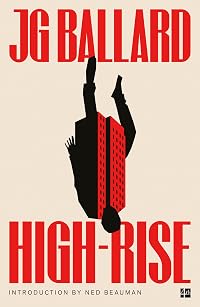
High-Rise: A Novel
by J. G. Ballard
On This Page
Description
"When a class war erupts inside a luxurious apartment block, modern elevators become violent battlegrounds and cocktail parties degenerate into marauding attacks on enemy floors. In this visionary tale, human society slips into violent reverse as once-peaceful residents, driven by primal urges, re-create a world ruled by the laws of the jungle."--Provided by publisher.Tags
Recommendations













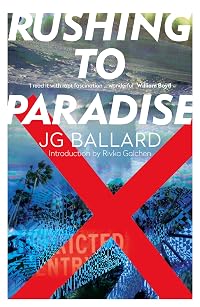
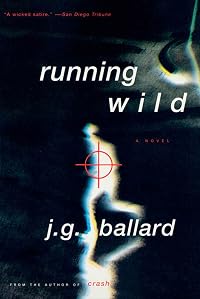

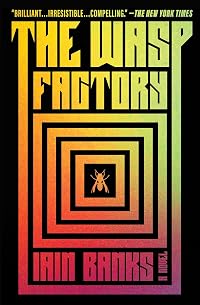
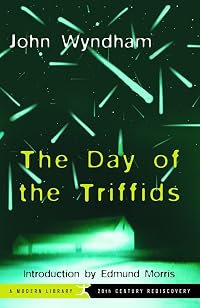






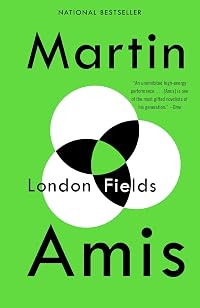
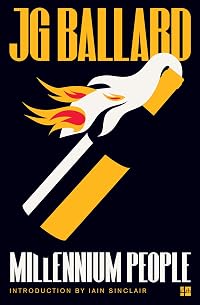
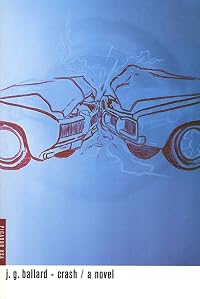
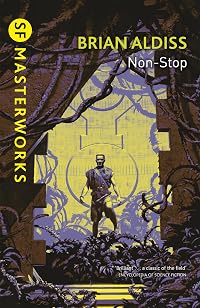










Member Recommendations
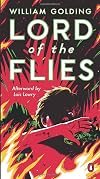
bertilak Two books about 'civilized' people becoming tribal and violent. However, Ballard is a disinterested diagnostician and Golding is a moralist.
90

dmenon90 Clinical tone, post-apocalyptic setting with a last group of survivors who battle with not only the end of the world but with each other. Themes of distrust and doom.

Member Reviews
This is a re-read, prompted by having watched the 1987 Doctor Who TV story Paradise Towers, which was a (not very well realised) pastiche of Ballard's novel. It is as creepy a piece of dystopian fiction as I remember it, and undoubtedly one of Ballard's best, but the sheer lack of realism struck me even more forcibly than on the first reading. The high-rise may be a closed community psychologically, but the residents could physically remove themselves from the situation at any time. This is, however, not the main point of the novel, which, like most other Ballard novels, is to take an ordinary environment and have ordinary people living in that environment do extraordinary and increasingly bizarre things, following the course of their show more collective bizarre behaviour to its logical conclusion. This gives the novel, and most of his other works, a feeling of otherworldiness about them, which is simultaneously appealing and repelling (heightened in this case by my having a bad cold when reading this!). show less
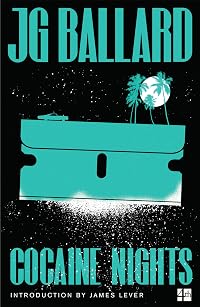
Yesterday, I read about an interesting study: books that are awarded prizes receive far more reviews on sites like GR and amazon, but their average rating goes down. Books that are *nominated* receive more reviews, but their average rating stays the same. The authors suggested three possible reasons, but I only remember two: first, readers approach the award winner with unrealistic expectations; second, readers who wouldn't usually read this kind of book are suckered into buying it by the shiny AWARD WINNER sticker, and are disappointed because there are no [insert whatever they're after, usually 'character development' or 'clear plot' or whatever]. I raise this not because High-Rise was an award winner, but because this edition, at show more least, was released to follow the coat-tails of, I believe, Cocaine Nights; and probably due to the films made of other Ballard novels. Something to keep in mind.
Anyway, this is not a novel; it is a symbol. The characters are flat, there's not much plot, the writing is bland, and it's utterly un'realistic' (quite why that matters in fiction I can no longer understand). But it's quite smart, and well-structured. Three characters each get three chapters, then two, then one, then we conclude, so the book picks up speed as you go, and it's very clear that the three characters are standing for something rather than being something. The three characters are:
i) Royal, the starchitect who has built and now lives in the eponymous high rise. He's the artist figure, the king of the building, the man trapped by what he has created, and the insufferable bourgeois among whom he chooses to live.
ii) Laing, the 'middle class' (i.e., in this context, middle-upper) professional, who is clearly meant to be even less interesting than his two counterparts.
iii) Wilder, the 'lower class' (i.e., lower-upper) professional artist ex rugby player, who's determined to a) document the insanity of the high rise building and b) get to the top of that building. The second task, unsurprisingly, takes over from the former.
I was worried that Ballard would fit too easily into the British shock-author category, but unlike (what little I've read of) M. Amis, Self or Welsh, he doesn't use grotesqueries to point at his own strong stomach and manly manly prose; he uses them to point at his readers' real-world stupidity. Like Wilder, we think of ourselves as performing social functions, when in fact we're just trying to get to the top etc... This sounds depressing, and I suppose it is, but High-Rise is still a solid symbol for contemporary Western society. No mean feat.
The Wilder chapters are entertaining, but this is still more fun to think about than it is to read. Dear friends, are there any other Ballard books I should read (keeping in mind that I can't tolerate this level of prose for very long)? Or have I read all I need to? show less
Anyway, this is not a novel; it is a symbol. The characters are flat, there's not much plot, the writing is bland, and it's utterly un'realistic' (quite why that matters in fiction I can no longer understand). But it's quite smart, and well-structured. Three characters each get three chapters, then two, then one, then we conclude, so the book picks up speed as you go, and it's very clear that the three characters are standing for something rather than being something. The three characters are:
i) Royal, the starchitect who has built and now lives in the eponymous high rise. He's the artist figure, the king of the building, the man trapped by what he has created, and the insufferable bourgeois among whom he chooses to live.
ii) Laing, the 'middle class' (i.e., in this context, middle-upper) professional, who is clearly meant to be even less interesting than his two counterparts.
iii) Wilder, the 'lower class' (i.e., lower-upper) professional artist ex rugby player, who's determined to a) document the insanity of the high rise building and b) get to the top of that building. The second task, unsurprisingly, takes over from the former.
I was worried that Ballard would fit too easily into the British shock-author category, but unlike (what little I've read of) M. Amis, Self or Welsh, he doesn't use grotesqueries to point at his own strong stomach and manly manly prose; he uses them to point at his readers' real-world stupidity. Like Wilder, we think of ourselves as performing social functions, when in fact we're just trying to get to the top etc... This sounds depressing, and I suppose it is, but High-Rise is still a solid symbol for contemporary Western society. No mean feat.
The Wilder chapters are entertaining, but this is still more fun to think about than it is to read. Dear friends, are there any other Ballard books I should read (keeping in mind that I can't tolerate this level of prose for very long)? Or have I read all I need to? show less
Given Ballard’s nightmarish childhood in a Japanese prison camp [which he details in Empire of the Sun] it’s no wonder his novels are often strange and unsettling – although always brilliant.
High Rise was written over 40 years ago but except the technology – no CD players or cell phones – it seems completely contemporary, focussing as it does on human nature; the book has been re-issued to coincide with the release of the film.
The story deals with a new luxury high-rise in London: recently divorced Dr Robert Laing has a studio apartment and feels no need to engage with his many neighbours but, as an observer, is an early witness to the social breakdown in the block as residence engage in a dystopian orgy of sex, destruction show more and murder within the sealed world of the block. Unsettling and horribly convincing. show less
High Rise was written over 40 years ago but except the technology – no CD players or cell phones – it seems completely contemporary, focussing as it does on human nature; the book has been re-issued to coincide with the release of the film.
The story deals with a new luxury high-rise in London: recently divorced Dr Robert Laing has a studio apartment and feels no need to engage with his many neighbours but, as an observer, is an early witness to the social breakdown in the block as residence engage in a dystopian orgy of sex, destruction show more and murder within the sealed world of the block. Unsettling and horribly convincing. show less
4.5/5
High-Rise is an analysis of complete social collapse within a self-contained and advanced luxury apartment complex. The strata of floors separate the tenets into three classes, yet all are wealthy enough to afford an apartment in the first place. The novel splits it's time between three different perspectives, one for each class. High-Rise begins with the last apartment being filled, as nearly everybody in the building is partying. Already there is friction between individuals, but it's minor, hardly something out of the ordinary in everyday life. The intensity of this friction ramps up over the chapters, as it seems to the characters that everybody is just waiting for an excuse, waiting for a mistake, to unleash their pent up show more id.
Ballard paints the scene of the tower so vividly; the slowly crumbling infrastructure and services that incite stress, and then the subsequent piles of refuse in the hallways, ubiquitous crass graffiti on the walls, makeshift furniture blockades in stairwells, entire floors completely devoid of electricity and running water. The tenets can leave the ever growing hellhole, but they begin to chose not to, choosing instead to wallow in their own filth and decay. I can picture it clearly because Ballard spends so much time detailing it. Yet I also think that he repeats the same examples a bit too frequently. I wish that he had been less reliant on the same motifs over and over again, even though those motifs are well drawn. It's also a disturbingly gruesome book that has scenes that left me revolted.
The tension and pacing is stunning. The escalation of violence is perfectly slow, to the point that you can't quite tell which event was the defining line between an outlier, and something that started the collapse. Ballard has excellent endings to chapters that are memorable moments looking back and were thrilling increases in tension that left me dying to read on. The prose is similarly strong, making for something that is both extremely readable without lacking style or depth.
The pacing is good in spite of Ballard's proclivity to lengthy bouts of metaphor and symbolism. Everything in High-Rise is seemingly a metaphor. Of course the book deals with social class and status, but it goes much deeper than that. The role of the structure that supports hierarchy in the oppression of lower classes, the ability to control our base instincts, tribalism, consumerism, and masochism to name a few. What Ballard really nailed was the quietly simmering violent tension that sometimes grows when there's an erosion of any sense of commons between people. That feeling of waiting for something to happen, something that you know will happen, and preparing yourself for it.
High-Rise is extremely memorable in a gnawing way that I see sticking in bits of my mind for a long time. One thing I can see is that it's certainly not for everyone. It's an acquired taste for sure, but I happen to like it a lot. show less
High-Rise is an analysis of complete social collapse within a self-contained and advanced luxury apartment complex. The strata of floors separate the tenets into three classes, yet all are wealthy enough to afford an apartment in the first place. The novel splits it's time between three different perspectives, one for each class. High-Rise begins with the last apartment being filled, as nearly everybody in the building is partying. Already there is friction between individuals, but it's minor, hardly something out of the ordinary in everyday life. The intensity of this friction ramps up over the chapters, as it seems to the characters that everybody is just waiting for an excuse, waiting for a mistake, to unleash their pent up show more id.
Ballard paints the scene of the tower so vividly; the slowly crumbling infrastructure and services that incite stress, and then the subsequent piles of refuse in the hallways, ubiquitous crass graffiti on the walls, makeshift furniture blockades in stairwells, entire floors completely devoid of electricity and running water. The tenets can leave the ever growing hellhole, but they begin to chose not to, choosing instead to wallow in their own filth and decay. I can picture it clearly because Ballard spends so much time detailing it. Yet I also think that he repeats the same examples a bit too frequently. I wish that he had been less reliant on the same motifs over and over again, even though those motifs are well drawn. It's also a disturbingly gruesome book that has scenes that left me revolted.
The tension and pacing is stunning. The escalation of violence is perfectly slow, to the point that you can't quite tell which event was the defining line between an outlier, and something that started the collapse. Ballard has excellent endings to chapters that are memorable moments looking back and were thrilling increases in tension that left me dying to read on. The prose is similarly strong, making for something that is both extremely readable without lacking style or depth.
The pacing is good in spite of Ballard's proclivity to lengthy bouts of metaphor and symbolism. Everything in High-Rise is seemingly a metaphor. Of course the book deals with social class and status, but it goes much deeper than that. The role of the structure that supports hierarchy in the oppression of lower classes, the ability to control our base instincts, tribalism, consumerism, and masochism to name a few. What Ballard really nailed was the quietly simmering violent tension that sometimes grows when there's an erosion of any sense of commons between people. That feeling of waiting for something to happen, something that you know will happen, and preparing yourself for it.
High-Rise is extremely memorable in a gnawing way that I see sticking in bits of my mind for a long time. One thing I can see is that it's certainly not for everyone. It's an acquired taste for sure, but I happen to like it a lot. show less
This was my first Ballard novel, but certainly won't be my last. I do like dystopian fiction and this depicts horrifically and initially quite realistically the decay of life in a tower block where residents have no sense of social responsibility or proper appreciation of the threads that bind together a community.
However as the decay progresses and the horrors mount, questions of lack of realism do arise. There are 2000 people in this high-rise, many of them with high powered and quite public jobs. Why do no employers and colleagues notice people not turning up to work? Why do none of the residents communicate with the outside world during the early stages and later fail to escape from the horrors going on? Surely many residents would show more shop and eat outside - the supermarket and restaurant cannot cater for so many people and seem to receive no deliveries. Where is the plague of rats and consequent disease that would result from such accumulations of rubbish?
These problems aside, this is a great and chilling piece of writing. I've already bought The Drought from eBay. show less
However as the decay progresses and the horrors mount, questions of lack of realism do arise. There are 2000 people in this high-rise, many of them with high powered and quite public jobs. Why do no employers and colleagues notice people not turning up to work? Why do none of the residents communicate with the outside world during the early stages and later fail to escape from the horrors going on? Surely many residents would show more shop and eat outside - the supermarket and restaurant cannot cater for so many people and seem to receive no deliveries. Where is the plague of rats and consequent disease that would result from such accumulations of rubbish?
These problems aside, this is a great and chilling piece of writing. I've already bought The Drought from eBay. show less
You know what, I just love JG Ballard beyond any rhyme or reason. In his spare sentences and stoic-psychotic characters, I see a tiny simulacra of our technological civilization, as it teeters on the brink of some awful revelation. High-Rise takes place in an immense self-contained apartment complex, where the minor inconviences of a a poorly designed infrastructure collide with the anomie of 20th century professional life, resulting in a total social collapse. It's a sharp, savage, dystopic satire, and an example of Ballard at the peak of his abilities.
Not sure how I feel about this one. Tempted to give it 3.5 stars, but I'll leave it at 3. Scan a few reviews or recall the superbly demented Cronenberg film of his novel "Crash", and you won't be surprised that it is brutal, grotesque, cynical, sexist... but also very honest about its heavy-handed allegorical fable. It doesn't try to fool you into its message. There's something kind of amazing about how Ballard just throws it right in your face, making it nearly impossible to justify or rationalize the plot. Suspend your disbelief or don't, he couldn't care less, because you're still a primitive animal. I couldn't put it down, but I wouldn't recommend it to everyone.
Members
- Recently Added By
Published Reviews
ThingScore 75
The first sentence of J. G. Ballard’s High-Rise ranks, in my estimation, among the most striking ever written.
added by Nickelini
Lists

1001 Books You Must Read Before You Die
1,448 works; 1,134 members

Read the book and saw the movie
1,170 works; 192 members

Top Five Books of 2016
795 works; 228 members

Stephen King's 'Danse Macabre' reading list
111 works; 25 members

2015 UpROOTed
28 works; 1 member

Books Read in 2016
4,666 works; 197 members

David Pringle's Science Fiction: The 100 Best Novels
101 works; 9 members

100 Best Thrillers of All Time
100 works; 6 members

Books With Our Favorite First Lines
168 works; 104 members

La Bibliothèque idéale de la SF (Éditions Albin Michel, 1988)
52 works; 1 member

Stephen King's Danse Macabre Full Appendix List
110 works; 2 members
Author Information

291+ Works 37,684 Members
J. G. Ballard was born to British parents in Shanghai, China on November 15, 1930. While a child during World War II, he spent four years in a Japanese POW camp. This experience was the basis for the emotionally moving novel Empire of the Sun, which he adapted into a successful movie, directed by Steven Spielberg. Before becoming a full-time show more writer, he studied medicine at Cambridge University and served as a pilot in the British Royal Air Force. Ballard is best known for his science fiction writings. His early works were heavily influenced by surrealism. Most of his novels deal with death and destruction of the human spirit. Novels such as Crash, Concrete Island, and High Rise portray a society that is devolving into barbaric chaos. Crash was made into a movie by David Cronenberg in 1996. The Drowned World describes an apocalyptic society, with a hero that ushers in the destruction of the world. His novel Empire of the Sun was shortlisted for the Booker Prize and awarded the Guardian Fiction Prize and James Tait Black Memorial Prize for fiction. Empire of the Sun was filmed by Steven Spielberg in 1987, starring a young Christian Bale as Jim (Ballard). Ballard moved away from science fiction, but he is still considered one of the leading authors of the genre. He died on April 19, 2009 at the age of 78. (Bowker Author Biography) show less
Some Editions
Awards and Honors
Series
Belongs to Publisher Series
Work Relationships
Is contained in
Has the adaptation
Common Knowledge
- Canonical title*
- Il condominio
- Original title
- High-Rise
- Alternate titles
- Condominium
- Original publication date
- 1975
- People/Characters
- Robert Laing
- Related movies
- High Rise (2015 | IMDb)
- First words
- Later, as he sat on his balcony eating the dog, Dr. Robert Laing reflected on the unusual events that had taken place within this huge apartment building during the previous three months.
- Last words
- (Click to show. Warning: May contain spoilers.)Laing watched them contentedly, ready to welcome them to their new world.
- Blurbers*
- Ballard's finest novel... a triumph - The Times
- Original language
- English
- Canonical DDC/MDS
- 823.914
- Canonical LCC
- PR6052.A46
*Some information comes from Common Knowledge in other languages. Click "Edit" for more information.
Classifications
Statistics
- Members
- 2,906
- Popularity
- 6,179
- Reviews
- 90
- Rating
- (3.68)
- Languages
- 13 — Danish, Dutch, English, Finnish, French, German, Italian, Japanese, Polish, Portuguese, Slovenian, Spanish, Turkish
- Media
- Paper, Audiobook, Ebook
- ISBNs
- 49
- UPCs
- 1
- ASINs
- 25