
The Lost Girls of Paris
by Pam Jenoff
On This Page
Description
From the author of the runaway bestseller The Orphan's Tale comes a remarkable story of friendship and courage centered around three women and a ring of female secret agents during World War II.1946, ManhattanOne morning while passing through Grand Central Terminal on her way to work, Grace Healey finds an abandoned suitcase tucked beneath a bench. Unable to resist her own curiosity, Grace opens the suitcase, where she discovers a dozen photographs--each of a different woman. In a moment of show more impulse, Grace takes the photographs and quickly leaves the station.Grace soon learns that the suitcase belonged to a woman named Eleanor Trigg, leader of a network of female secret agents who were deployed out of London during the war. Twelve of these women were sent to Occupied Europe as couriers and radio operators to aid the resistance, but they never returned home, their fates a mystery. Setting out to learn the truth behind the women in the photographs, Grace finds herself drawn to a young mother turned agent named Marie, whose daring mission overseas reveals a remarkable story of friendship, valor and betrayal.Vividly rendered and inspired by true events, New York Times bestselling author Pam Jenoff shines a light on the incredible heroics of the brave women of the war and weaves a mesmerizing tale of courage, sisterhood and the great strength of women to survive in the hardest of circumstances.-- show lessTags
Recommendations








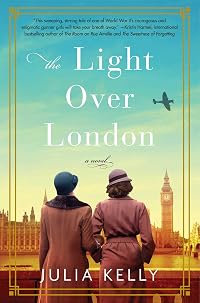
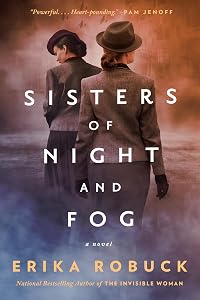

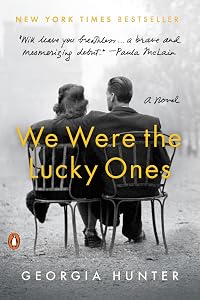
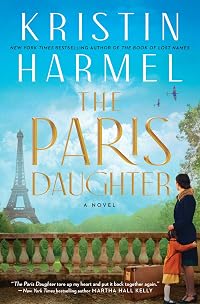










Member Recommendations
Member Reviews
It's New York City, 1946. Grace is late on her way to the office, made even later as she circumnavigates a fatal pedestrian-vehicle accident. She cuts through Grand Central station and notices an abandoned suitcase. She opens it and extracts 12 photographs of women, carefully wrapped in lace. She closes the suitcase and takes off with the photographs. Seriously?! Who does such a thing? Except that it's needed for the story-line to work.
In an alternating chapter, it's 1943, London. Eleanor, recently emigrated to London, while escaping Hitler, and is serving as a secretary in the SOE administration (British Covert Intelligence). She has convinced the Director that dropping female agents into France would be the better choice than sending show more young males in who stick out like sore thumbs as all able bodied Frenchmen are serving in uniform. But no, "The Geneva Convention expressly prohibits women combatants." informs Captain Michaels, one of the advisors at the table. What?! Women POWs are expressly covered under Article 3 of the Geneva Convention of 1929 (the Geneva Convention in place in 1943). Then Eleanor, presumably a very intelligent woman, goes along with the statement instead of refuting it and setting the record straight.
However, Eleanor's idea gets traction and she's put in charge of selecting the female agents who are to be grilled, drilled and prepared to be dropped into enemy territory. Yes, historically this did happen. There were female agents dropped in behind enemy lines and they blended in with local everyday women. But the rest is pure fiction.
I found it absurd that the following was referred to as a poem by Shakespeare when in fact it was a speech in Act IV, scene iii of Shakespeare's Henry V, wherein King Henry addresses his minimal troops before the Battle of Agincourt, (line 60-65):
"From this day to the ending of the world,
But we in it shall be remember'd—
We few, we happy few, we band of brothers;
For he today that sheds his blood with me
Shall be my brother; be he ne'er so vile,
This day shall gentle his condition;
And gentlemen in England now abed
Shall think themselves accursed they were not here,
And hold their manhoods cheap whiles any speaks
That fought with us upon Saint Crispin’s day.
Such cavalier handling of the historical record rubs this reader the wrong way when it is so easily verifiable and could be rectified. Having said that, if you are just looking for an entertaining book that is sort of historical fiction and details are not important, then this would probably be a most enjoyable read. Pam Jenoff writes very well and I found the story-line interesting as long as I treated it as pure fiction.
I am grateful to Park Row Books and Netgalley for having provided a free ebook copy of this book. Their generosity, however, did not influence this review - the words of which are mine alone. show less
In an alternating chapter, it's 1943, London. Eleanor, recently emigrated to London, while escaping Hitler, and is serving as a secretary in the SOE administration (British Covert Intelligence). She has convinced the Director that dropping female agents into France would be the better choice than sending show more young males in who stick out like sore thumbs as all able bodied Frenchmen are serving in uniform. But no, "The Geneva Convention expressly prohibits women combatants." informs Captain Michaels, one of the advisors at the table. What?! Women POWs are expressly covered under Article 3 of the Geneva Convention of 1929 (the Geneva Convention in place in 1943). Then Eleanor, presumably a very intelligent woman, goes along with the statement instead of refuting it and setting the record straight.
However, Eleanor's idea gets traction and she's put in charge of selecting the female agents who are to be grilled, drilled and prepared to be dropped into enemy territory. Yes, historically this did happen. There were female agents dropped in behind enemy lines and they blended in with local everyday women. But the rest is pure fiction.
I found it absurd that the following was referred to as a poem by Shakespeare when in fact it was a speech in Act IV, scene iii of Shakespeare's Henry V, wherein King Henry addresses his minimal troops before the Battle of Agincourt, (line 60-65):
"From this day to the ending of the world,
But we in it shall be remember'd—
We few, we happy few, we band of brothers;
For he today that sheds his blood with me
Shall be my brother; be he ne'er so vile,
This day shall gentle his condition;
And gentlemen in England now abed
Shall think themselves accursed they were not here,
And hold their manhoods cheap whiles any speaks
That fought with us upon Saint Crispin’s day.
Such cavalier handling of the historical record rubs this reader the wrong way when it is so easily verifiable and could be rectified. Having said that, if you are just looking for an entertaining book that is sort of historical fiction and details are not important, then this would probably be a most enjoyable read. Pam Jenoff writes very well and I found the story-line interesting as long as I treated it as pure fiction.
I am grateful to Park Row Books and Netgalley for having provided a free ebook copy of this book. Their generosity, however, did not influence this review - the words of which are mine alone. show less
The Lost Girls of Paris by Pam Jenoff is a fast paced narrative that about a network of female espionage operatives in the closing days of World War II. There are a number of time lines to follow as the book jumps to New York City after the war, to London for the development of this network and to France when the women are placed to work as radio operatives.
I really wanted to love this book but, for me, the story just didn’t mesh on many levels. While it is obvious that the author did extensive research, I didn’t find the story realistic. The love angle felt forced and it seemed to me that the author originally was going for a darker story when two characters died mysteriously in car accidents, but that plot line turned out to be a show more red herring. In actuality female agents were dropped into France and did heroic jobs there and many did not return, but in The Lost Girls of Paris, the tension never felt authentic. In the story that dealt with the betrayal of the agents, I was expecting more suspense but the final resolution seemed rather ho-hum and flat.
I have a number of this author’s books on my bookshelf and I have read and enjoyed her work in the past but this one just didn’t draw me in at all. Overall the concept of The Lost Girls of Paris was far more appealing than the actual read. show less
I really wanted to love this book but, for me, the story just didn’t mesh on many levels. While it is obvious that the author did extensive research, I didn’t find the story realistic. The love angle felt forced and it seemed to me that the author originally was going for a darker story when two characters died mysteriously in car accidents, but that plot line turned out to be a show more red herring. In actuality female agents were dropped into France and did heroic jobs there and many did not return, but in The Lost Girls of Paris, the tension never felt authentic. In the story that dealt with the betrayal of the agents, I was expecting more suspense but the final resolution seemed rather ho-hum and flat.
I have a number of this author’s books on my bookshelf and I have read and enjoyed her work in the past but this one just didn’t draw me in at all. Overall the concept of The Lost Girls of Paris was far more appealing than the actual read. show less
I seem to read a lot of books pertaining to the two World Wars and I almost passed on this one. That would have been not only a mistake but a loss. Pam Jenoff has woven a story about the women who became a part of the Special Operations Executive (SOE) and were dropped from England into France as radio operators between 1943 and 1944, just ahead of the allied invasion. That story, already told and put to bed, has been left to be discovered by Grace Healy in New York in 1946.
Running late for work and looking for a shortcut which might get her to her office sooner, Grace happens on a traffic accident and has to make a detour through Grand Central Station. She finds an abandoned suitcase, neatly packed containing among other things a pack show more of carefully wrapped photographs in a piece of lace inside an envelope. The photographs were of young women some dressed in military uniforms, others in smart street clothes. The photographs yield the secrets to be unfolded in this book.
The writing is engrossing and the movement between countries and years is seamless. I was totally involved in the story and regardless of the foregone conclusion dictated by the title I was foolishly hopeful. When the writing is that good that you not only become invested psychologically but emotionally you know the writer has more than achieved her goal.
Lost Girls is based on a real female operative, Vera Atkins, and the women who served under her leadership. Although the story has been fictionalized it is infuriating believable. When I finished this book I was reminded of an old TV commercial. Two older men climb a hill, take off their jackets and get into a slug fest. The import behind the fight is that they are world leaders and are going to do battle instead of sending millions of their citizens to kill one another. If only war was that easy to resolve.
Thanks you NetGalley and Harlequin for a copy. show less
Running late for work and looking for a shortcut which might get her to her office sooner, Grace happens on a traffic accident and has to make a detour through Grand Central Station. She finds an abandoned suitcase, neatly packed containing among other things a pack show more of carefully wrapped photographs in a piece of lace inside an envelope. The photographs were of young women some dressed in military uniforms, others in smart street clothes. The photographs yield the secrets to be unfolded in this book.
The writing is engrossing and the movement between countries and years is seamless. I was totally involved in the story and regardless of the foregone conclusion dictated by the title I was foolishly hopeful. When the writing is that good that you not only become invested psychologically but emotionally you know the writer has more than achieved her goal.
Lost Girls is based on a real female operative, Vera Atkins, and the women who served under her leadership. Although the story has been fictionalized it is infuriating believable. When I finished this book I was reminded of an old TV commercial. Two older men climb a hill, take off their jackets and get into a slug fest. The import behind the fight is that they are world leaders and are going to do battle instead of sending millions of their citizens to kill one another. If only war was that easy to resolve.
Thanks you NetGalley and Harlequin for a copy. show less
When Grace finds an abandoned suitcase in Grand Central Terminal, she can't help but open the suitcase and rifle through its contents. She finds a handful of photographs, each with depicting a woman in uniform. Later on, she realizes that the suitcase belonged to Eleanor Trigg, a woman who was killed in a car accident outside of Grand Central. Determined to return the photographs, Grace begins investigating Eleanor. She discovers that Eleanor was the leader of a group of female secret agents deployed in France during WWII. The book also follows Eleanor and Marie, one of the secret agents, point of view.
I instantly found Eleanor and Marie's point of view fascinating, I was much less interested at Grace. However, by the end, the author show more brought everything full circle, showing why Grace was essential to the story. I enjoyed the interplay among the stories, and found Marie to be not only a believable character, but intriguing. Overall, highly recommended. show less
I instantly found Eleanor and Marie's point of view fascinating, I was much less interested at Grace. However, by the end, the author show more brought everything full circle, showing why Grace was essential to the story. I enjoyed the interplay among the stories, and found Marie to be not only a believable character, but intriguing. Overall, highly recommended. show less
I typically really enjoy Pam Jenoff’s books but I do have to say that I believe this is HER BEST YET. It was so hard putting it down; I wanted to know what was going to happen next.
This is a story of WWII Resistance, courage, anguish and Sisterhood. Yes, Sisterhood. The story is told from the perspectives of Grace in New York in 1946, Eleanor in London in 1943, and Marie in France in 1944. So readers who have difficulty with alternation timelines should find this story much easier to follow.
One morning as Grace Healey is rushing to work she comes across what appears to be an abandoned suitcase in the Central Grand Terminal. Her curiosity gets the best of her and she opens the suitcase to try to determine the owner. Inside she finds a show more dozen photos of women, some in what appears to be uniforms. Running late for work, she impulsively takes the photos and continues on her way. Later she learns that the suitcase belonged to Eleanor Trigg, who was the leader of a group of female secret agents who were deployed to Occupied Europe. The photos Grace holds are of the agents who disappeared, their fates unknown.
Now let’s jump back three years to when Eleanor Trigg comes before a furious Director of Special Operations Executive (SOE). Close to 300 agents have been sent into Europe to disrupt munition factories and rail lines prior to the planned invasion. The majority of the agents were sent into France but more and more of them are being killed. Most of the French young men were away at the war so the young male agents deployed to France stood out. Eleanor presents a plan to recruit and train women to send into occupied France, mostly as radio operators. She believes the women would be better able to blend into the local population. Surprisingly her plan is approved.
Marie Roux speaks fluent French and is quickly recruited. Abandoned by her husband, she leaves behind her young daughter as she enters training and is deployed to France. It is through Marie that we learn of the dangers these brave young women faced. What happened to these young women? Who betrayed them?
I was completely captivated with the writing and easily shifted time and place with the story. The characters came to life for me. I was eager to learn their stories and felt so angry at their betrayal. Who could have done that to these brave people? show less
This is a story of WWII Resistance, courage, anguish and Sisterhood. Yes, Sisterhood. The story is told from the perspectives of Grace in New York in 1946, Eleanor in London in 1943, and Marie in France in 1944. So readers who have difficulty with alternation timelines should find this story much easier to follow.
One morning as Grace Healey is rushing to work she comes across what appears to be an abandoned suitcase in the Central Grand Terminal. Her curiosity gets the best of her and she opens the suitcase to try to determine the owner. Inside she finds a show more dozen photos of women, some in what appears to be uniforms. Running late for work, she impulsively takes the photos and continues on her way. Later she learns that the suitcase belonged to Eleanor Trigg, who was the leader of a group of female secret agents who were deployed to Occupied Europe. The photos Grace holds are of the agents who disappeared, their fates unknown.
Now let’s jump back three years to when Eleanor Trigg comes before a furious Director of Special Operations Executive (SOE). Close to 300 agents have been sent into Europe to disrupt munition factories and rail lines prior to the planned invasion. The majority of the agents were sent into France but more and more of them are being killed. Most of the French young men were away at the war so the young male agents deployed to France stood out. Eleanor presents a plan to recruit and train women to send into occupied France, mostly as radio operators. She believes the women would be better able to blend into the local population. Surprisingly her plan is approved.
Marie Roux speaks fluent French and is quickly recruited. Abandoned by her husband, she leaves behind her young daughter as she enters training and is deployed to France. It is through Marie that we learn of the dangers these brave young women faced. What happened to these young women? Who betrayed them?
I was completely captivated with the writing and easily shifted time and place with the story. The characters came to life for me. I was eager to learn their stories and felt so angry at their betrayal. Who could have done that to these brave people? show less
This novel is set during the final years of World War II and immediately after the war, and tells a story inspired by the true-life experiences of women serving as agent's in Britain's Special Operations Executive. The novel alternates perspectives among three different protagonists. Marie is a young woman recruited as an agent who is sent to work undercover in France not long before the D-Day invasions and has to overcome her inexperience and frequent changes of circumstance. Eleanor is the severe leader of the women's division in France, but her strictness is due to her desire to keep her agents safe both from the enemy and from the government leaders who have no faith in woman doing espionage.
The final protagonist is Grace, a young show more widowed American who finds a suitcase in Grand Central Terminal and impulsively takes a dozen photographs of women who prove to be SOE agents. Grace's growing obsession with trying to find out who the women are and return the photos where they belong doesn't make much sense and is a drag on the book. Marie's story is the most thrilling as she's actively working in France carrying out missions she wasn't trained for and hoping to avoid capture. But Eleanor's story turns out to be the most profound as it deals with betrayal and personal tragedy.
The book has a better premise than execution, but it was nevertheless an entertaining read. show less
The final protagonist is Grace, a young show more widowed American who finds a suitcase in Grand Central Terminal and impulsively takes a dozen photographs of women who prove to be SOE agents. Grace's growing obsession with trying to find out who the women are and return the photos where they belong doesn't make much sense and is a drag on the book. Marie's story is the most thrilling as she's actively working in France carrying out missions she wasn't trained for and hoping to avoid capture. But Eleanor's story turns out to be the most profound as it deals with betrayal and personal tragedy.
The book has a better premise than execution, but it was nevertheless an entertaining read. show less
I'm a sucker for stories of unsung women heroes, and I had high hopes for this book, where one of the characters was a fictionalized version of Vera Atkins. The Lost Girls of Paris has three timelines, following Grace who stumbles upon a suitcase in 1946 New York, Eleanor at SOE in 1943 London, and Marie in the field in 1944 Paris. I think it might have been a stronger story without the addition of Grace, focusing just on the tensions of SOE sending women into occupied France. Nevertheless, it was well researched and a compelling read.
Members
- Recently Added By
Lists

A High School Trip to France
57 works; 5 members

Books about World War II
241 works; 22 members

Fiction: Historical
288 works; 3 members

Books Set in France
13 works; 5 members

Historical fiction by women authors
15 works; 5 members

Western & Northern Europe
60 works; 1 member

Paris, City of Lights
103 works; 17 members

Books I have Recommended
207 works; 1 member

Books Read in 2021
5,361 works; 114 members

Books to Read
95 works; 2 members

Books With Girls in Titles
27 works; 2 members
Author Information

26+ Works 9,562 Members
Pam Jenoff was born in Maryland and raised outside Philadelphia. She attended George Washington University in Washington, D.C., and Cambridge University in England where she earned her master's degree in history. She then was appointed as Special Assistenat to the Secretary of the Army. She worked helping victim's families of Pan Am Flight 103 show more secure their memorial at Arlington National Cemetery and observing recovery efforts at the site of the Oklahoma City bombing. Following her work at the Pentagon, Pam moved to the State Department. In 1996 she was assigned to the U.S. Consulate in Krakow, Poland. It was during this time that Pam developed her expertise in Polish-Jewish relations and the Holocaust, working on matters such as preservation of Auschwitz and the restitution of Jewish property in Poland. Pam left the Foreign Service in 1998 for law school and graduated from the University of Pennsylvania. She worked for several years as a labor and employment attorney and now teaches law school at Rutgers. Pam is the author of The Kommandant's Girl, which was an international bestseller and nominated for a Quill award, as well as The Winter Guest, The Diplomat's Wife, The Ambassador¿s Daughter, Almost Home, A Hidden Affair and The Things We Cherished. (Bowker Author Biography) show less
Some Editions
Awards and Honors
Common Knowledge
- Canonical title
- The Lost Girls of Paris
- Original publication date
- 2019-01-29
- People/Characters
- Grace Flemming Healey; Eleanor Trigg; Marie Roux; Tess Roux; Frankie; Mark Dorff (show all 18); Josie Watkins; Hans Kriegler; Will Rourke; Albert; Julian Brookhouse (Vesper); Annie Rider; Lisette; Thomas Healey; Mrs. Flemming; Colonel Gregory Winslow (the Director); Henri Duquet; Mick Willis
- Important places
- New York, New York, USA; London, England, UK; Scotland, UK; Northern France; Paris, France; Washington, D.C., USA (show all 8); Germany; Zurich, Switzerland
- Important events
- World War II
- Epigraph
- "In wartime, truth is so precious that she should always be attended by a bodyguard of lies."
---Winston Churchill - Dedication
- For my family
- First words
- If not for the second-worst mistake of Grace Healey's life, she never would have found the suitcase.
- Last words
- (Click to show. Warning: May contain spoilers.)She crossed the avenue toward Grand Central, unencumbered and unafraid, and started through the doors of the station, headed for the life that awaited her.
- Blurbers
- Quinn, Kate; Wingate, Lisa; Shattuck, Jessica; Kelly, Martha Hall
Classifications
Statistics
- Members
- 2,422
- Popularity
- 8,080
- Reviews
- 113
- Rating
- (3.74)
- Languages
- 7 — Dutch, English, Hungarian, Italian, Spanish, Swedish, Portuguese (Portugal)
- Media
- Paper, Audiobook, Ebook
- ISBNs
- 38
- ASINs
- 9