
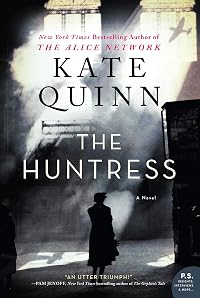
The Huntress
by Kate Quinn
On This Page
Description
From the author of the New York Times and USA Today bestselling novel, THE ALICE NETWORK, comes another fascinating historical novel about a battle-haunted English journalist and a Russian female bomber pilot who join forces to track the Huntress, a Nazi war criminal gone to ground in America.In the aftermath of war, the hunter becomes the hunted...
Bold and fearless, Nina Markova always dreamed of flying. When the Nazis attack the Soviet Union, she risks everything to join the legendary show more Night Witches, an all-female night bomber regiment wreaking havoc on the invading Germans. When she is stranded behind enemy lines, Nina becomes the prey of a lethal Nazi murderess known as the Huntress, and only Nina's bravery and cunning will keep her alive.
Transformed by the horrors he witnessed from Omaha Beach to the Nuremberg Trials, British war correspondent Ian Graham has become a Nazi hunter. Yet one target eludes him: a vicious predator known as the Huntress. To find her, the fierce, disciplined investigator joins forces with the only witness to escape the Huntress alive: the brazen, cocksure Nina. But a shared secret could derail their mission unless Ian and Nina force themselves to confront it.
Growing up in post-war Boston, seventeen-year-old Jordan McBride is determined to become a photographer. When her long-widowed father unexpectedly comes homes with a new fiancée, Jordan is thrilled. But there is something disconcerting about the soft-spoken German widow. Certain that danger is lurking, Jordan begins to delve into her new stepmother's past—only to discover that there are mysteries buried deep in her family . . . secrets that may threaten all Jordan holds dear.
In this immersive, heart-wrenching story, Kate Quinn illuminates the consequences of war on individual lives, and the price we pay to seek justice and truth.
This audiobook includes an episode of the Book Club Girl Podcast, featuring an interview with Kate Quinn about The Huntress.
. show less
Tags
Recommendations
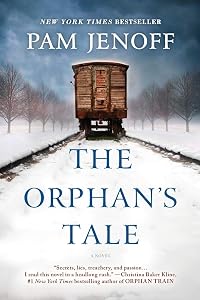
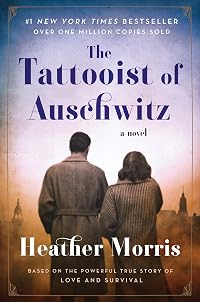
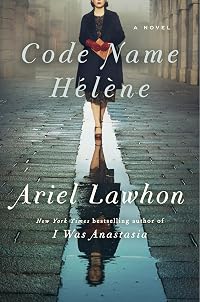
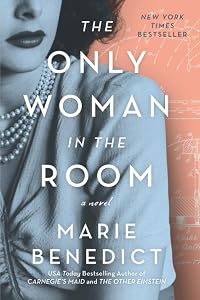



Member Reviews
During WWII, Russian women played a much larger role in combat than women in Western Europe, the British Commonwealth, or the U.S. Piqued my interest from reading Svetlana Alexievich’s The Unwomanly Face of War – recommended, a terrific oral history. Quinn’s Russian historical fiction sections are engrossing and vivid. The POV is a navigator, later pilot, of Russian U2 bombers, Nina Markova. The camaraderie of the sestra and their dedication in the Great Patriotic War is well conveyed. Markova has a chance encounter near Lake Rusalka in Poland with an escaped prisoner of war Sebastian Graham, brother of Ian Graham, ex-war correspondent and post-war hunter of Nazi war criminals, later Markova’s husband, and “The Huntress,” show more Lorelei Vogt, mistress of a high-ranking Nazi and an amoral killer in her own right. Ian’s is the second POV narrative. The third POV is a coming of age story in 1950’s Boston and the focus is Jordan McBride, whose widower father Dan marries an Austrian refugee, Annelise Weber. You can probably guess who the Austrian refugee turns out to be, and, for that matter, how the rest of the novel will turn out. The Jordan POV has a Young Adult feel to it and seems out of synch emotionally with the Russian historical background. On the positive side, the YA approach probably has a role in making the Nazi character more subtle rather than the Embodiment of All Evil Mastermind cliché one might expect from a thriller -- though at the expense of having her more nefarious deeds happen offstage. Some echoes of Hitchcock’s Shadow of a Doubt, maybe?
Other characters: Yelena Vetsina, Markova’s pilot, best friend, and lover -- Boris, Nina Markova’s Stalin-hating Daddy who, when in his cups, thinks his daughter is a rusalka, a Russian water-witch from Lake Baikal who at one point tries to return her to the waters from whence she came -- Ruth, Mrs. Weber’s adorable, music loving daughter -- Garrett Byrne, Jordan’s fiancé, a commercial pilot and part owner of an airfield -- Tony Rodomovsky, on Ian’s Nazi hunter team, multilingual, multiethnic (and part Jewish) American; he and Jordan indulge in some tepid Yankees-Red Sox banter – Taro, Jordan’s dog. Since Ruth and Taro figure in the YA narrative, neither gets to be poisoned.
Some actual historical figures have cameos: Josef Stalin, Fritz Bauer (an Austrian Nazi hunter), Marina Raskova (persuaded Stalin to OK 3 female aerial combat regiments, including Nina Markova’s “Night Witches,” the 588th Night Bomber Regiment), idolized by Nina, and Yevdokia Bershanskaya, commander of the 588th.
PS: Liked Quinn’s shoutout to Georgette Heyer’s historical romances; wonder which one of the novel’s two is modeled on Heyer? show less
Other characters: Yelena Vetsina, Markova’s pilot, best friend, and lover -- Boris, Nina Markova’s Stalin-hating Daddy who, when in his cups, thinks his daughter is a rusalka, a Russian water-witch from Lake Baikal who at one point tries to return her to the waters from whence she came -- Ruth, Mrs. Weber’s adorable, music loving daughter -- Garrett Byrne, Jordan’s fiancé, a commercial pilot and part owner of an airfield -- Tony Rodomovsky, on Ian’s Nazi hunter team, multilingual, multiethnic (and part Jewish) American; he and Jordan indulge in some tepid Yankees-Red Sox banter – Taro, Jordan’s dog. Since Ruth and Taro figure in the YA narrative, neither gets to be poisoned.
Some actual historical figures have cameos: Josef Stalin, Fritz Bauer (an Austrian Nazi hunter), Marina Raskova (persuaded Stalin to OK 3 female aerial combat regiments, including Nina Markova’s “Night Witches,” the 588th Night Bomber Regiment), idolized by Nina, and Yevdokia Bershanskaya, commander of the 588th.
PS: Liked Quinn’s shoutout to Georgette Heyer’s historical romances; wonder which one of the novel’s two is modeled on Heyer? show less
Outstanding tale of the hunt for a Nazi assassin, carried out by a trio of dedicated amateurs, including a Russian veteran of the Night Witches. Fine, twisty plotting and excellent character work.
Quinn does a nice job of juxtaposing the character of Lorelie Vogt, former mistress of a high-ranking Nazi and a cold-blooded killer, with that of Nina Markova, a nearly-feral girl who became a bomber pilot with the Russian Air Force. Both in their way, are huntresses. Both are capable of being quite deadly. And they move through the intricately-plotted, time-shifting tale like the silent, deadly hunters they are.
Quinn does a nice job of juxtaposing the character of Lorelie Vogt, former mistress of a high-ranking Nazi and a cold-blooded killer, with that of Nina Markova, a nearly-feral girl who became a bomber pilot with the Russian Air Force. Both in their way, are huntresses. Both are capable of being quite deadly. And they move through the intricately-plotted, time-shifting tale like the silent, deadly hunters they are.
A long, complex three-stranded story about what happens to war criminals when war is over. In Boston in 1946, Jordan McBride, a teenager with a passion for photography, has suspicions about her new stepmother. In Germany in 1950, former war correspondent Ian Graham tracks down war criminals, but the one he most wants to find is die Jägerin, the huntress. And in Siberia before the war, Nina Markova seeks answers to three questions -- What is the opposite of a lake? What is the opposite of drowning? What lies all the way west? -- and decides to become a pilot.
From the beginning, this was interesting, with tense scenes and some characters I liked. But I wasn’t strongly invested. And I had questions about aspects of the narrative show more structure. Why give equal weight to the experiences of a teenager in post-war America when Nina is becoming a Night Witch and that’s much more exciting? Why take so long to show what happens to Nina at the end of the war when the bare bones of what happens is one of the first thing we learn about her?
But as the book went on, I discovered that those questions had answers -- and that I was becoming very attached to these characters. Surprisingly so.
The three strands of this story fit together, and not just because they eventually reach the same place and point in time. There are two women who could be called “the huntress”: one is die Jagerin and the other is Nina Markova. The portrayal of each of them is so much richer, so much more nuanced, for showing them through multiple perspectives. And for leaving one or two things unanswered, unresolved.
This doesn’t have the same intensity as The Alice Network, but is, in its own way, very successful, very powerful story about war and its aftermath.
“You—in war you hunt stories, in peace you hunt men like him.” Pointing at herself, then at Kolb’s door. “Me—in war I hunt Nazis to bomb, in peace I hunt Nazis to make pay. [...] We don’t hunt the helpless, luchik. We hunt the killers. Is like villagers going after a wolf gone mad. Only when the wolf is dead, villagers go home and we find the next mad wolf. Because we can keep on. Others, they try keeping on, they just—” She mimed an explosion. “Is too much for them; they come to pieces. Not us. Hunters, they are different. We can’t stop, not for bad sleep or parachute dreams or people who say we should want peace and babies instead. Is a world full of mad wolves, and we hunt them till we die.” show less
From the beginning, this was interesting, with tense scenes and some characters I liked. But I wasn’t strongly invested. And I had questions about aspects of the narrative show more structure. Why give equal weight to the experiences of a teenager in post-war America when Nina is becoming a Night Witch and that’s much more exciting? Why take so long to show what happens to Nina at the end of the war when the bare bones of what happens is one of the first thing we learn about her?
But as the book went on, I discovered that those questions had answers -- and that I was becoming very attached to these characters. Surprisingly so.
The three strands of this story fit together, and not just because they eventually reach the same place and point in time. There are two women who could be called “the huntress”: one is die Jagerin and the other is Nina Markova. The portrayal of each of them is so much richer, so much more nuanced, for showing them through multiple perspectives. And for leaving one or two things unanswered, unresolved.
This doesn’t have the same intensity as The Alice Network, but is, in its own way, very successful, very powerful story about war and its aftermath.
“You—in war you hunt stories, in peace you hunt men like him.” Pointing at herself, then at Kolb’s door. “Me—in war I hunt Nazis to bomb, in peace I hunt Nazis to make pay. [...] We don’t hunt the helpless, luchik. We hunt the killers. Is like villagers going after a wolf gone mad. Only when the wolf is dead, villagers go home and we find the next mad wolf. Because we can keep on. Others, they try keeping on, they just—” She mimed an explosion. “Is too much for them; they come to pieces. Not us. Hunters, they are different. We can’t stop, not for bad sleep or parachute dreams or people who say we should want peace and babies instead. Is a world full of mad wolves, and we hunt them till we die.” show less
I absolutely loved The Alice Network written by the incomparable Kate Quinn, so I had to read this her newest book. Although this book is not quite The Alice Network, it is very good indeed. A story about Nazi criminal hunters and their prey is intriguing for sure, but one little Russian bomber pilot stole the whole show. This book begins and ends with Nina Markova. We first see her as a sixteen year-old girl who lives beside a huge lake called the Old Man in Siberia with her disreputable and scary father. From her horrendous childhood we see her make her way away from all the horror by following her dream of becoming a pilot. She eventually becomes one of the legendary Night Witches - a Russian all-female flying team who is bombing the show more hell out of the Fritzes on the Russian front. Nina is afraid of nothing except her uncontrollable fear of drowning. She is smart, funny, determined and completely unscrupulous. After her horrific war experiences, she meets up with Ian Graham and Tony as they are on the hunt in Europe for the notorious Nazi Huntress. Nina wants her too. Their search takes them all the way to Boston where they meet up with a young woman photographer who is inextricably linked to The Huntress. Their exploits trying to track down their prey are relentless and very dangerous. The Huntress has no conscience and will do anything to maintain her cover and to keep her chilling secrets buried. Again we come back to Nina and her skills as a pilot, and how those skills help this team capture their prey. Terrific story this, and one that I won't be forgetting any time soon. And certainly I won't forget fearless little Nina and her switchblade razor that goes everywhere with her. show less
The only reason I didn’t like this as much as The Alice Network is because I read that book first. And maybe because I personally found Charlie more of a relatable heroine than Jordan. That aside, it’s a very satisfying and comfortable historical read, hitting a lot of the same themes as TAN (heroic women, forgotten history, the trauma of war, a quest for justice), and pulling off the same balancing act of not pulling punches re: historical truths while not becoming gritty or hard to read, one or two scenes notwithstanding.
I feel like Quinn’s taken things up a notch with this book, though. She’s done more research, written more point-of-view characters, jumped more between time periods, brought more of history to life. Everyone show more and everything feels believable, from the characters to the settings to the history itself, and I enjoyed all three POVs, learned a fair bit, and got some good food for thought out of it. I especially enjoyed the sections from Nina, the Soviet pilot, because Quinn’s recreation of Soviet air force life and Nina herself were so interesting, and I admire Quinn’s ability to make the Nazi at the heart of the plot so insidious and disturbing.
Of course, there are a few things that lessened my enjoyment or that could be problems for some people, even though I know they’re there for a reason. There’s a scene with Nina early on that’s pretty brutal on the abuse front, which spawns a trauma that lasts the book, but which I’m not sure we needed to see so graphically. A lot of Jordan’s character, especially at the beginning, is concerned with obeying one’s elders and being a good girl, which means she comes across as a bit of a doormat instead of fighting for herself. (That’s her arc, though.) There’s a string of lake spirit symbolism throughout that I felt was a bit too neat. After a certain point, I called the endings of some subplots.
The things I liked definitely outweighed all that, though. Quinn’s included several queer characters, including Nina, and does so fairly respectfully in my mind, though a gay man’s death does serve as a motivating force. Ian’s assistant is part Jewish and is very aware that some people find that off-putting even when they’re “good guys”. There’s a lot of stuff about taking charge of your own life, doing what you believe is right, and not letting trauma and PTSD break you or make you think you’re broken.
All in all, this was a good if not great read, enjoyable without quite having the captivating power of The Alice Network for me, and is definitely a book I’ll be casually recommending without, I think, pushing on people. ‘Twas a good one to cart around airports and close out the year with, and I think it should be a hit with book clubs.
Warnings: Nazis, including mention of all the expected war crimes and also white supremacist and antisemitic attitudes, voiced on the page. PTSD, plane crashes, drowning, kidnapping, gaslighting, physical parental abuse. The need to be a good Soviet or be denounced and disappeared. Lots of outdated racial slurs and terminology, including for Jews, African-Americans, and various Mediterranean Europeans, but interestingly enough, not Romani. Gay death as motivator. Paternalist sexism.
7/10 show less
I feel like Quinn’s taken things up a notch with this book, though. She’s done more research, written more point-of-view characters, jumped more between time periods, brought more of history to life. Everyone show more and everything feels believable, from the characters to the settings to the history itself, and I enjoyed all three POVs, learned a fair bit, and got some good food for thought out of it. I especially enjoyed the sections from Nina, the Soviet pilot, because Quinn’s recreation of Soviet air force life and Nina herself were so interesting, and I admire Quinn’s ability to make the Nazi at the heart of the plot so insidious and disturbing.
Of course, there are a few things that lessened my enjoyment or that could be problems for some people, even though I know they’re there for a reason. There’s a scene with Nina early on that’s pretty brutal on the abuse front, which spawns a trauma that lasts the book, but which I’m not sure we needed to see so graphically. A lot of Jordan’s character, especially at the beginning, is concerned with obeying one’s elders and being a good girl, which means she comes across as a bit of a doormat instead of fighting for herself. (That’s her arc, though.) There’s a string of lake spirit symbolism throughout that I felt was a bit too neat. After a certain point, I called the endings of some subplots.
The things I liked definitely outweighed all that, though. Quinn’s included several queer characters, including Nina, and does so fairly respectfully in my mind, though a gay man’s death does serve as a motivating force. Ian’s assistant is part Jewish and is very aware that some people find that off-putting even when they’re “good guys”. There’s a lot of stuff about taking charge of your own life, doing what you believe is right, and not letting trauma and PTSD break you or make you think you’re broken.
All in all, this was a good if not great read, enjoyable without quite having the captivating power of The Alice Network for me, and is definitely a book I’ll be casually recommending without, I think, pushing on people. ‘Twas a good one to cart around airports and close out the year with, and I think it should be a hit with book clubs.
Warnings: Nazis, including mention of all the expected war crimes and also white supremacist and antisemitic attitudes, voiced on the page. PTSD, plane crashes, drowning, kidnapping, gaslighting, physical parental abuse. The need to be a good Soviet or be denounced and disappeared. Lots of outdated racial slurs and terminology, including for Jews, African-Americans, and various Mediterranean Europeans, but interestingly enough, not Romani. Gay death as motivator. Paternalist sexism.
7/10 show less
This was a nailbiter! I fell in love with Kate Quinn’s writing back with “The Alice Network” and was so eager to read this one. Told in dual timelines, we are treated to the perspectives of Nina, one of the Night Witches, a group of elite Soviet air force pilots—I actually had no idea women got to fly during WW2, Jordan, a teenage girl living in the US who loves photography and has concerns when her father remarries to a German woman who doesn’t seem to be entirely trustworthy, and Ian and Tony, who track down war criminals.
It’s a game of cat and mouse as we see Nina, Ian and Tony try to track down “The Huntress” in the years after the war. Nina is the only person who can recognize her on sight, and her crimes are show more brutal. You have a sense even from the first pages of who the players are and what will eventually happen, and still the fun is in watching the tension build, seeing the clues unfold, as well as the relationships in this work of historical fiction. Loved the way this worked in historical detail and period accuracy while keeping the plot moving and not letting things get bogged down. And, ack, that ending!!!
Please excuse typos/name misspellings. Entered on screen reader. show less
It’s a game of cat and mouse as we see Nina, Ian and Tony try to track down “The Huntress” in the years after the war. Nina is the only person who can recognize her on sight, and her crimes are show more brutal. You have a sense even from the first pages of who the players are and what will eventually happen, and still the fun is in watching the tension build, seeing the clues unfold, as well as the relationships in this work of historical fiction. Loved the way this worked in historical detail and period accuracy while keeping the plot moving and not letting things get bogged down. And, ack, that ending!!!
Please excuse typos/name misspellings. Entered on screen reader. show less
Kate Quinn is amazing and I was super excited to read her newest novel. It seems that the Night Witches have been discovered by modern authors, and I'm glad the author has turned her talented pen to them. I think Nina is an amazing character and I think she would be an excellent star of her own novel. I enjoyed her parts of the narrative the most. She also steals the spotlight of every scene she's in.
I did feel that Jordan's sections were the least interesting, but she certainly improved towards the end. The ending did seem just a little bit rushed. I didn't feel like I got to know Ian too well, but I really enjoyed his interactions with Nina.
I liked the little cameo by Eve from the Alice Network. I also caught that mention of Ruby show more Sutton from Jennifer Robson's novels. :-)
Overall this is another awesome novel by Kate Quinn, and I would recommend this to Historical Fiction fans, and would also encourage them to read all of her works.
Favorite Quote: "Stop collectivizing the laundry." show less
I did feel that Jordan's sections were the least interesting, but she certainly improved towards the end. The ending did seem just a little bit rushed. I didn't feel like I got to know Ian too well, but I really enjoyed his interactions with Nina.
Overall this is another awesome novel by Kate Quinn, and I would recommend this to Historical Fiction fans, and would also encourage them to read all of her works.
Favorite Quote: "Stop collectivizing the laundry." show less
 This review was written for LibraryThing Early Reviewers.
Members
- Recently Added By
Published Reviews
ThingScore 100
Kate Quinn follows her word-of-mouth bestseller, “The Alice Network,” with another compulsively readable historical novel about courageous women who dare to break the mold of what’s expected of them. At the heart of “The Huntress” is a woman accused of committing unspeakable war crimes against children in Poland during World War II. The novel begins with this unnamed woman on the show more run, afraid that her past has finally caught up with her....From there, the novel breaks into three story lines, told by three narrators, in alternating timelines. Quinn effectively uses this structure to deliberately reveal the past in an increasingly suspenseful story about characters who will risk their lives to track down Lorelei Vogt, known as the Huntress.....Quinn braids these story lines and characters together in a seamless narrative that builds toward a dramatic showdown....“The Huntress” is sure to be a hit with fans of commercial World War II fiction. Nina’s and Jordan’s narratives truly sing in this powerful novel about unusual women facing sometimes insurmountable odds with grace, grit, love and tenacity. show less
added by vancouverdeb
Lists

Best Historical Fiction
620 works; 261 members

Historical Fiction
889 works; 91 members

Books Read in 2023
5,547 works; 145 members

Books about World War II
241 works; 22 members

SHOULD Read Books!
354 works; 9 members

Books Read in 2020
4,379 works; 123 members

Fiction: Historical
288 works; 3 members

Books Read in 2024
4,623 works; 126 members
Author Information

25+ Works 19,167 Members
Kate Quinn was born and raised in southern California. She attended Boston University, where she earned a Bachelor¿s and later a Master¿s degree in Classical Voice. She has always been a lifelong history buff. She put that love of history to work when she wrote four novels in the Empress of Rome Saga, and two books in the Italian Renaissance. show more She then moved on to the 20th century with "The Alice Network". (Bowker Author Biography) show less
Some Editions
Awards and Honors
Work Relationships
Is contained in
Common Knowledge
- Canonical title
- The Huntress
- Original title
- The Huntress
- Original publication date
- 2019-02-26
- People/Characters
- Nina Markova; Ian Graham; Tony Rodomovsky; Jordan McBride; Anneliese Weber; Ruth Weber (show all 8); Garrett Byrne; Daniel Sean McBride
- Important places
- Boston, Massachusetts, USA; Vienna, Austria; Salzburg, Austria; Siberia, Russia; Moscow, Russia
- Dedication
- For my father--
How I miss you! - First words
- She was not used to being hunted.
- Last words
- (Click to show. Warning: May contain spoilers.)Let us remember.
- Blurbers
- Dray, Stephanie; Jenoff, Pam; Meissner, Susan; Robson, Jennifer
Classifications
Statistics
- Members
- 2,668
- Popularity
- 6,963
- Reviews
- 131
- Rating
- (4.05)
- Languages
- 12 — Danish, Dutch, English, Finnish, French, German, Hungarian, Italian, Polish, Portuguese, Spanish, Swedish
- Media
- Paper, Audiobook, Ebook
- ISBNs
- 35
- ASINs
- 11
