
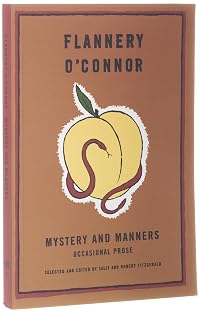
Flannery O'Connor: Mystery and Manners
by Sally Fitzgerald (Editor), Robert Fitzgerald (Editor), Flannery O'Connor (Author)
On This Page
Description
The essays and articles in this volume are concerned mainly with the art of fiction--its quality, in regional writing; its nature and its aims; and its relation to the writer's religion.Tags
Recommendations

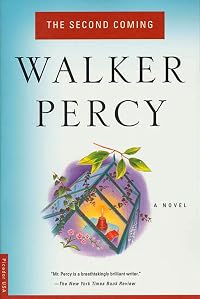
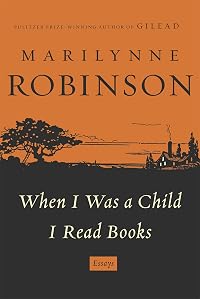
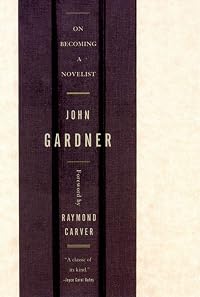
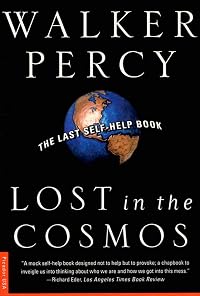
Member Reviews
A reading friend encouraged me to continue reading O'Connor after I expressed the miserable experience with [Wise Blood], and I'm glad he did. [A Good man is Hard to Find] deserves to be in the canon of best short fiction ever written. These essays, posthumously collected, deserve the same treatment in the canon of writing about writing. This may be one of the best books I've ever read on the writing process, the aspects of fiction, and the value of storytelling. You can find many of the pieces in the collected works of O'Connor, but they serve as a nice self-contained collection all on their own. O'Connor may have thought on her place in literature, and her work's connection to faith and spirituality, more than any other author I've show more come across. Her sense of place, as a Southern writer or religiously-influenced writer, is really a broader comment on her own practice of faith more than anything else. These works should be mandatory reading in any Master of Fine Arts Creative Writing program - we'd see an elevation of the work if they were.
5 bones!!!!!
Highly recommended show less
5 bones!!!!!
Highly recommended show less
This is a great collection of, as the subtitle states clearly, the occasional essays penned by O'Connor. While no theme ties the material together, it yet offers a genuine insight into her thinking on matters as idiosyncratic as raising peacocks, and as steeped and penetrating as her views on writing short stories. If you're already a fan of her work - and I am - then you'll be delighted with this text. It almost feels like the kind of conversation one might have had with her in a coffee shop or at the front of a room after a conference presentation, and yet her writing contains the kind of edge and humour that can only come from craft.
I'm always leery of posthumous collections of writing, especially when they're described as "uncollected occasional prose." This particular book contains a mish-mash of speeches, student workshop presentations, odd ruminations on Catholic fiction writers and their readers, and the standout essay at the beginning, "The King of the Birds." I would've been happy if I'd stopped after that one. But instead I plodded on, skipping over quite a bit, hoping for another winner that never came. O'Connor does make a few interesting observations about writing but a lot of it comes out sounding dated, given how much has changed in the literary sphere since she was writing. I'm skeptical that O'Connor would've approved of this collection, as she seems show more like she would've been the type to have very good reasons for publishing or not publishing a particular piece of writing. Certainly posthumous publication should be considered on a case-by-case basis, but in this case, I don't think leaving the majority of these pieces unpublished would've been considered a disservice to her readership. show less
I always liked O'Connor's stories but when I read this collection of essays I felt I was in the same room with her and that she was talking directly to me. Much of the time she sounds like she's thinking out loud, trying out ideas and sharing idle thoughts that she's still shaping. But all her ideas are carefully formed and presented.
This is an excellent book about fiction, why (in one practitioner's opinion) to write it, read it, and value it. Flannery O'Connor has a matter-of-fact approach to big topics like the philosophy of art, and suffers neither fools nor mediocrity. This collection of her lectures and essays is so pithy that I was often moved to jot down quotes for later use. Some of these follow my review.
The last part of the volume, which concerns being a Catholic writer, writing the Catholic novel, et cetera, is of less use to a non-Catholic or non-Christian writer. However, some of the sections in the first part of the work where the author discusses how her religion supplies the Mystery for her art are useful to anyone, as it's worthwhile for any writer show more to consider whether and where he or she approaches a transcendent Mystery and how that should inform and enrich his or her work.
Quotes:
"Fiction begins where human knowledge begins -- with the senses -- and every fiction writer is bound by this fundamental aspect of his medium."
"Art is a word that immediately scares people off, as being a little too grand. But all I mean by art is writing something that is valuable in itself and that works in itself."
"It's always necessary to remember that the fiction writer is much less immediately concerned with grand ideas and bristling emotions than he is with putting list slippers on clerks." [example of the clerk from Mme. Bovary]
"There is no excuse for anyone to write fiction for public consumption unless he has been called to do so by the presence of a gift. It is the nature of fiction not to be good for much unless it is good in itself." show less
The last part of the volume, which concerns being a Catholic writer, writing the Catholic novel, et cetera, is of less use to a non-Catholic or non-Christian writer. However, some of the sections in the first part of the work where the author discusses how her religion supplies the Mystery for her art are useful to anyone, as it's worthwhile for any writer show more to consider whether and where he or she approaches a transcendent Mystery and how that should inform and enrich his or her work.
Quotes:
"Fiction begins where human knowledge begins -- with the senses -- and every fiction writer is bound by this fundamental aspect of his medium."
"Art is a word that immediately scares people off, as being a little too grand. But all I mean by art is writing something that is valuable in itself and that works in itself."
"It's always necessary to remember that the fiction writer is much less immediately concerned with grand ideas and bristling emotions than he is with putting list slippers on clerks." [example of the clerk from Mme. Bovary]
"There is no excuse for anyone to write fiction for public consumption unless he has been called to do so by the presence of a gift. It is the nature of fiction not to be good for much unless it is good in itself." show less
A bit uneven, as many posthumous anthologies can be, but with many, many diamonds amidst a wee bit of dust. Perhaps the best book for inspiring the aspiring writers of fiction that I've yet seen.
If no other thing, read "The King of the Birds," her famous account of raising peacocks at her home in Milledgeville, Georgia. For the writing, for the humor, for the brilliancy.
Members
- Recently Added By
Lists

Art of Reading
188 works; 5 members

N.T. McQueen's Inspiration List
23 works; 1 member
Author Information


Flannery O'Connor was born in Savannah, Georgia. She had a quiet, bookish life as a child before attending Georgia State College for Women and going on tot he Writers Workshop at the State University of Iowa, where she earned a Master of Fine Arts degree. Her 1949 dissertation consisted of six short stories, one of which she developed into her show more first novel, Wise Blood (1952). Wise Blood is the story of a fanatical, wandering preacher who sets out to found a "church of truth without Jesus Christ crucified." The book introduces some of the religious themes that run throughout O'Connor's later work. Her second novel, The Violent Bear It Away (1960), is the story of murder involving a Tennessee backwoods preacher and a small boy. Once again, O'Connor explores unusual manifestation of religion and human eccentricities. Although O'Connor produced only a small body of work during her relatively brief lifetime, she has received much critical attention. O'Connor suffered from lupus, an inherited disease, which crippled her and cut short her life, and so her creative work was largely compressed within a decade of the 1950's. Her father also dies of Lupus when she was 15 years old. O'Connor is frequently praised as being the most creative and distinctive writer of this period. The two most notable aspects of her fiction are its religious themes and its commentary on the oppressive traditions of the mid-twentieth-century Deep South. (Bowker Author Biography) show less

Flannery O'Connor has a Legacy Library. Legacy libraries are the personal libraries of famous readers, entered by LibraryThing members from the Legacy Libraries group.
Awards and Honors
Notable Lists
Series
Belongs to Publisher Series
Work Relationships
Is contained in
Common Knowledge
- Canonical title
- Flannery O'Connor: Mystery and Manners
- Original publication date
- 1969
- People/Characters
- Flannery O'Connor
- Quotations
- Of course, I have found that anything that comes out of the South is going to be called grotesque by the Northern reader, unless it is grotesque, in which case it is going to be called realistic.
The writer operates at a peculiar crossroads where time and place and eternity somehow meet. His problem is to find that location.
The first and most obvious characteristic of fiction is that it deals with reality through what can be seen, heard, smelt, tasted and touched.
There are two qualities that make fiction. One is the sense of mystery and the other is the sense of manners.
Classifications
- Genres
- Nonfiction, Literature Studies and Criticism
- DDC/MDS
- 818.5408 — Literature & rhetoric American literature in English American miscellaneous writings in English 20th Century 1945-1999 Prose
- LCC
- PS3565 .C57 .A6 — Language and Literature American literature American literature Individual authors 1961-
- BISAC
Statistics
- Members
- 1,450
- Popularity
- 16,141
- Reviews
- 17
- Rating
- (4.37)
- Languages
- English, French, Spanish
- Media
- Paper, Ebook
- ISBNs
- 8
- ASINs
- 14
