
Flannery O'Connor (1925–1964)
Author of Complete Stories
About the Author
Flannery O'Connor was born in Savannah, Georgia. She had a quiet, bookish life as a child before attending Georgia State College for Women and going on tot he Writers Workshop at the State University of Iowa, where she earned a Master of Fine Arts degree. Her 1949 dissertation consisted of six show more short stories, one of which she developed into her first novel, Wise Blood (1952). Wise Blood is the story of a fanatical, wandering preacher who sets out to found a "church of truth without Jesus Christ crucified." The book introduces some of the religious themes that run throughout O'Connor's later work. Her second novel, The Violent Bear It Away (1960), is the story of murder involving a Tennessee backwoods preacher and a small boy. Once again, O'Connor explores unusual manifestation of religion and human eccentricities. Although O'Connor produced only a small body of work during her relatively brief lifetime, she has received much critical attention. O'Connor suffered from lupus, an inherited disease, which crippled her and cut short her life, and so her creative work was largely compressed within a decade of the 1950's. Her father also dies of Lupus when she was 15 years old. O'Connor is frequently praised as being the most creative and distinctive writer of this period. The two most notable aspects of her fiction are its religious themes and its commentary on the oppressive traditions of the mid-twentieth-century Deep South. (Bowker Author Biography) show less
Disambiguation Notice:
There are two different versions of the book Three (or 3). They both contain Wise Blood and The Violent Will Bear It Away, and some contain A Good Man Is Hard to Find while others contain Everything That Rises Must Converge. Please be conscious of this difference when adding or combining works. If you own an edition of Three, please make sure it is combined with the correct work, and please do not combine the two separate works entitled Three (or 3).
Works by Flannery O'Connor
The Violent Bear It Away / Everything That Rises Must Converge / Wise Blood (1964) 1,548 copies, 13 reviews
Good Things Out of Nazareth: The Uncollected Letters of Flannery O'Connor and Friends (2019) 95 copies, 3 reviews
Flannery O'Connor's Why Do the Heathen Rage?: A Behind-the-Scenes Look at a Work in Progress (2024) 51 copies, 8 reviews
Il giorno del giudizio e altri racconti 18 copies
The Geranium and Other Stories 6 copies
The Displaced Person 4 copies
The River 3 copies
Parker's Back 3 copies
No title 2 copies
The Comforts of Home 2 copies
Holiday: September, 1961 2 copies
The Province of Joy 2 copies
The Artificial Nigger {story} 2 copies
אדם טוב קשה למצוא 1 copy
Las Dulzuras Del Hogar 1 copy
Minden összefut 1 copy
Flannery O'Connor. La Sagesse dans le sang : EWise bloode, traduit de l'anglais... par M. E. Coindreau, roman [Paperback] [Jan 01, 1979] (1979) 1 copy, 1 review
Racconti 1 copy
O'Conner, Flannery Archive 1 copy
ORMANIN TAM İÇİNDEN 1 copy
La Sagesse Dans Le Sang 1 copy
The complete stories 1 copy
Os violentos o arrebatam 1 copy
“Writing Short Stories” 1 copy
Wise Blood 1 copy
Judgement Day 1 copy
“Revelation” 1 copy
Stories and occasional prose 1 copy
Un ragionevole uso dell'irragionevole. Saggi sulla scrittura e lettere sulla creatività (2019) 1 copy
O mundo e dos violentos 1 copy
İyi İnsan Olmak Zor 1 copy
Contos de Crime 1 copy
3 1 copy
Associated Works
The Norton Anthology of Literature by Women: The Tradition in English (1985) — Contributor — 937 copies, 2 reviews
Perrine's Literature: Structure, Sound, and Sense (1970) — Contributor, some editions — 895 copies, 4 reviews
The World of the Short Story: A 20th Century Collection (1986) — Contributor — 512 copies, 4 reviews
You've Got to Read This: Contemporary American Writers Introduce Stories that Held Them in Awe (1994) — Contributor — 414 copies, 3 reviews
The Art of the Tale: An International Anthology of Short Stories (1986) — Contributor — 381 copies, 3 reviews
Wise Women: Over Two Thousand Years of Spiritual Writing by Women (1996) — Contributor — 230 copies, 1 review
The Workshop: Seven Decades of the Iowa Writers Workshop - 43 Stories, Recollections, & Essays on Iowa's Place in Twentieth-Century American Literature (1999) — Contributor — 197 copies, 1 review
First Fiction: An Anthology of the First Published Stories by Famous Writers (1994) — Contributor — 196 copies, 1 review
Growing Up in the South: An Anthology of Modern Southern Literature (1991) — Contributor — 165 copies, 1 review
The Graphic Canon, Vol. 3: From Heart of Darkness to Hemingway to Infinite Jest (2013) — Contributor — 162 copies, 1 review
The Norton Anthology of American Literature, Volume 2: 1865 to Present (1979) — Contributor, some editions — 136 copies
The Heath Anthology of American Literature, Concise Edition (2003) — Contributor — 73 copies, 1 review
On Moral Medicine: Theological Perspectives in Medical Ethics (2012) — Contributor, some editions — 22 copies, 1 review
Fifty Years of the American Short Story from the O. Henry Awards 1919-1970 (1970) — Contributor — 17 copies, 1 review
Georgia Stories: Major Georgia Short Fiction of the Nineteenth and Twentieth Centuries (1992) — Contributor — 12 copies, 1 review
New World Writing: Eighth Mentor Selection - A New Adventure in Modern Reading (1955) — Contributor — 8 copies
Fifty Years of the American Short Story from the O. Henry Awards 1919-1970, Volume 2 (1970) — Contributor — 5 copies
Moderne Amerikaanse verhalen — Contributor — 3 copies
Tagged
Common Knowledge
- Canonical name
- O'Connor, Flannery
- Legal name
- O'Connor, Mary Flannery
- Birthdate
- 1925-03-25
- Date of death
- 1964-08-03
- Gender
- female
- Education
- University of Iowa (MFA|1947)
Georgia State College for Women (BA|1945)
Peabody Laboratory School - Occupations
- novelist
essayist
reviewer - Organizations
- Yaddo
Iowa Writers' Workshop - Awards and honors
- Georgia Women of Achievement (1992)
American Academy of Arts and Letters Academy Award (Literature ∙ 1957)
Georgia Writers Hall of Fame
National Book Award for Fiction (1972) - Relationships
- Lytle, Andrew (teacher)
Fitzgerald, Robert (friend) - Cause of death
- complications of lupus
- Nationality
- USA
- Birthplace
- Savannah, Georgia, USA
- Places of residence
- Savannah, Georgia, USA
Milledgeville, Georgia, USA
Redding, Connecticut, USA
Iowa City, Iowa, USA - Place of death
- Milledgeville, Georgia, USA
- Burial location
- Memory Hill Cemetery, Milledgeville, Georgia, USA
- Disambiguation notice
- There are two different versions of the book Three (or 3). They both contain Wise Blood and The Violent Will Bear It Away, and some contain A Good Man Is Hard to Find while others contain Everything That Rises Must Converge. Please be conscious of this difference when adding or combining works. If you own an edition of Three, please make sure it is combined with the correct work, and please do not combine the two separate works entitled Three (or 3).
- Associated Place (for map)
- Georgia, USA
Members
Discussions
Flannery O'Connor in Legacy Libraries (June 2022)
August 2021: Flannery O'Connor in Monthly Author Reads (September 2021)
Group Read, June 2018: The Violent Bear it Away in 1001 Books to read before you die (August 2018)
Reviews
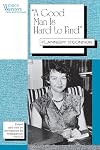
"A Good Man is Hard to Find": Flannery O'Connor (Women Writers: Texts and Contexts) by Frederick Asals
YEESH, what a gut punch!
I hadn't read anything by Flannery O'Connor in a couple years, and remembering how much I liked Wise Blood, I figured it was time to get back into her. What I'd forgotten is just how brutal her writing can become out of absolutely nowhere, like it does in A Good Man Is Hard to Find as a family travels to Florida for the weekend. I guess her writing reflects how life works; when you get hit by a bus in the real world, you aren't given three or four pages of buildup.
I show more don't know whether I really like O'Connor because she's great or just because she's basically the only Southern Gothic writer I've read, but for a lady with lupus, she really packs a punch. show less
I hadn't read anything by Flannery O'Connor in a couple years, and remembering how much I liked Wise Blood, I figured it was time to get back into her. What I'd forgotten is just how brutal her writing can become out of absolutely nowhere, like it does in A Good Man Is Hard to Find as a family travels to Florida for the weekend. I guess her writing reflects how life works; when you get hit by a bus in the real world, you aren't given three or four pages of buildup.
I show more don't know whether I really like O'Connor because she's great or just because she's basically the only Southern Gothic writer I've read, but for a lady with lupus, she really packs a punch. show less

The Church Without Christ
SECOND READ December 18 2024 review
Still absolutely five stars.
I rarely re-read, but Wise Blood was one of those books--short as it is--that haunts you, taunts you.
The first time, the overriding impression I took away was of its pathos and violence. I felt a swath of pity, not just for Hazel, but for everyone we meet, all those unhinged, wandering, lost souls.
This second reading, I enjoyed the humor more, indeed found more humor to enjoy. It is a galloping messy show more tale! I gave up trying to put it under my contemporary psychological light, accepted humanity as baffling. (Humanity is baffling) when I was pointed by another fine GR reader and now friend, Dave Marsland to that excellent O'Connor essay, "Some Aspects of the Grotesque in Southern Fiction."
Aha! It was a brighter light. I then resolved to enter the world that O'Connor intended, as an observation of large mysteries of the human experience that sometimes require a literary short cut, so to speak. Thus, her so-called grotesques who not only leap from the pages but leap over overwrought reason and logic into the heart of perhaps the most baffling ancient mystery.
Here's what O'Connor herself says in my copy.
"AUTHOR'S NOTE TO THE SECOND EDITION (1962)
Wise Blood has reached the age of ten and is still alive. My critical powers are just sufficient to determine this, and I am gratified to be able to say it. The book was written with zest, and if possible, it should be read that way. It is a comic novel about a Christian malgre lui, and as such, very serious, for all comic novels that are any good must be about matters of life and death. Wise Blood was written by an author congenitally innocent of theory, but one with certain preoccupations. That belief in Christ is to some a matter of life and death has been a stumbling block for readers who would prefer to think it a matter of no great consequence. For them Hazel Motes' integrity lies in his trying with such vigor to get rid of the ragged figure who moves from tree to tree in the back of his mind. For the author Hazel's integrity lies in his not being able to. Does one's integrity ever lie in what he is not able to do? I think that usually it does, for free will does not mean one will, but many wills conflicting in one man. Freedom cannot be conceived simply. It is a mystery and one which a novel, even a comic novel, can only be asked to deepen."
I think I read it this second time with more suggested zest
FIRST READ October 22 2024 review
This slim novel is driven by the religious logic of almost everyone we meet--the down and outs who have gotten their personalized ideas from what might be called their "blood," their defeated southern history, their evangelical upbringing, and their racism, resulting in an inheritance of overwhelming inner turmoil.
The protagonist, Hazel Motes, is not much over 20, and has been recently released and returned home to Tennessee after suffering an injury in WW II. That home, though, has been abandoned and cleaned out by thieves. We first meet him on a train now headed to the city, where he says, "I'm going to do some things I never have done before."
And he does, because he has released himself from his traditional faith. Only he isn't released. He is fighting his faith every second of his life, becoming a street corner preacher, preaching about his new church, the Church Without Christ, where there is no sin and everyone is clean with no need for redemption. It's the new truth as he sees it: that there is no truth. But Motes' revelation doesn't make him happy and free.
He is angry.
"His black hat sat on his head with a careful, placed expression and his face had a fragile look as if it might have been broken and stuck together again, or like a gun no one knows is loaded.”
What has broken this young man? What has made him a gun no one knows is loaded? We can only guess it is his experiences in WW II, things that opened his eyes, so to speak.
Along with Motes, we meet the people he meets, and learn how faith is distorted in their lives as well. They too contend with the shortcomings of their beliefs against their experiences, leaving them unfulfilled, lonely, or just morally and unlovingly hollow.
I can't help compare O'Connor's 1952 Wise Blood to Erskine Caldwell's 1953 Tobacco Road that I very recently read and heartily disliked. Caldwell created a novel of repugnant, ignorant, hapless characters, and made them ridiculous--butts of his dark humor. O'Connor also has created repugnant, ignorant, hapless characters but she treats them with deadly seriousness, even while including moments of dark humor, and dark horror too. For each of her characters there is a twisted, ever unresolved searching for peace, for grace, for comfort. O'Connor's writing is sublime genius. While neither are pleasant reads, one is a single-note gag, and the other is the complicated, tragic need for grace and redemption by various slices of suffering humanity.
O'Connor, as always, packs a mighty wallop.
I could have underlined the whole book. show less
SECOND READ December 18 2024 review
Still absolutely five stars.
I rarely re-read, but Wise Blood was one of those books--short as it is--that haunts you, taunts you.
The first time, the overriding impression I took away was of its pathos and violence. I felt a swath of pity, not just for Hazel, but for everyone we meet, all those unhinged, wandering, lost souls.
This second reading, I enjoyed the humor more, indeed found more humor to enjoy. It is a galloping messy show more tale! I gave up trying to put it under my contemporary psychological light, accepted humanity as baffling. (Humanity is baffling) when I was pointed by another fine GR reader and now friend, Dave Marsland to that excellent O'Connor essay, "Some Aspects of the Grotesque in Southern Fiction."
Aha! It was a brighter light. I then resolved to enter the world that O'Connor intended, as an observation of large mysteries of the human experience that sometimes require a literary short cut, so to speak. Thus, her so-called grotesques who not only leap from the pages but leap over overwrought reason and logic into the heart of perhaps the most baffling ancient mystery.
Here's what O'Connor herself says in my copy.
"AUTHOR'S NOTE TO THE SECOND EDITION (1962)
Wise Blood has reached the age of ten and is still alive. My critical powers are just sufficient to determine this, and I am gratified to be able to say it. The book was written with zest, and if possible, it should be read that way. It is a comic novel about a Christian malgre lui, and as such, very serious, for all comic novels that are any good must be about matters of life and death. Wise Blood was written by an author congenitally innocent of theory, but one with certain preoccupations. That belief in Christ is to some a matter of life and death has been a stumbling block for readers who would prefer to think it a matter of no great consequence. For them Hazel Motes' integrity lies in his trying with such vigor to get rid of the ragged figure who moves from tree to tree in the back of his mind. For the author Hazel's integrity lies in his not being able to. Does one's integrity ever lie in what he is not able to do? I think that usually it does, for free will does not mean one will, but many wills conflicting in one man. Freedom cannot be conceived simply. It is a mystery and one which a novel, even a comic novel, can only be asked to deepen."
I think I read it this second time with more suggested zest
FIRST READ October 22 2024 review
This slim novel is driven by the religious logic of almost everyone we meet--the down and outs who have gotten their personalized ideas from what might be called their "blood," their defeated southern history, their evangelical upbringing, and their racism, resulting in an inheritance of overwhelming inner turmoil.
The protagonist, Hazel Motes, is not much over 20, and has been recently released and returned home to Tennessee after suffering an injury in WW II. That home, though, has been abandoned and cleaned out by thieves. We first meet him on a train now headed to the city, where he says, "I'm going to do some things I never have done before."
And he does, because he has released himself from his traditional faith. Only he isn't released. He is fighting his faith every second of his life, becoming a street corner preacher, preaching about his new church, the Church Without Christ, where there is no sin and everyone is clean with no need for redemption. It's the new truth as he sees it: that there is no truth. But Motes' revelation doesn't make him happy and free.
He is angry.
"His black hat sat on his head with a careful, placed expression and his face had a fragile look as if it might have been broken and stuck together again, or like a gun no one knows is loaded.”
What has broken this young man? What has made him a gun no one knows is loaded? We can only guess it is his experiences in WW II, things that opened his eyes, so to speak.
Along with Motes, we meet the people he meets, and learn how faith is distorted in their lives as well. They too contend with the shortcomings of their beliefs against their experiences, leaving them unfulfilled, lonely, or just morally and unlovingly hollow.
I can't help compare O'Connor's 1952 Wise Blood to Erskine Caldwell's 1953 Tobacco Road that I very recently read and heartily disliked. Caldwell created a novel of repugnant, ignorant, hapless characters, and made them ridiculous--butts of his dark humor. O'Connor also has created repugnant, ignorant, hapless characters but she treats them with deadly seriousness, even while including moments of dark humor, and dark horror too. For each of her characters there is a twisted, ever unresolved searching for peace, for grace, for comfort. O'Connor's writing is sublime genius. While neither are pleasant reads, one is a single-note gag, and the other is the complicated, tragic need for grace and redemption by various slices of suffering humanity.
O'Connor, as always, packs a mighty wallop.
I could have underlined the whole book. show less

Flannery O'Connor's final short story collection was compiled and published after her death. All except for one story, Parker's Back, were published previously and the final story in the collection, Judgement Day, is a reworked version of her first published story. It does help to know that O'Connor did not choose the stories or place them in the order they appear in the book.
The titular story starts things off and it's O'Connor at her biting best. A woman has her son accompany her on a bus show more trip in Atlanta, feeling she needs protection now that the buses are integrated. The son is resentful, both of this small task and of his mother, who raised him on her own and continues to support him. As he stews and sulks, she becomes increasingly outgoing and everything becomes more and more uncomfortable. And then it all ends very badly. It's both brilliant and immediately recognizable as being written by O'Connor.
The following stories continue in this vein, pitting hard-working yet silly mothers against idle sons who resent them. And then things always end very badly. In lesser hands, this would result in stories that feel too similar, but O'Connor's returning to the same ground results in a feeling of cohesion. And then there are the variations -- a man both resents his wife and longs to win her admiration in Parker's Back, a widower takes in a homeless young man with a club foot and soon prefers him over his own son, a lonely ten-year-old who misses his mother. But don't confuse heart-rending circumstances for authorial empathy; O'Connor eviscerates her characters, leaving them not a shred of dignity as she explores their darkest weaknesses.
My one quibble with this collection lays with the final story, Judgement Day. Even in descriptions of her given by admirers, her racism is evident. Yet her stories aren't racist -- she's equally willing to lay bare all the dirty hate and hypocrisy of a well-heeled racist in a new hat as she is to call out someone setting themselves in opposition to racism, but benefitting from it. But this final story, of an elderly man living in his daughter's New York apartment and longing for home, is the exception. Not only does the n-word appear numerous times in each paragraph, the Black characters all conform to a Southern racist's stereo-types. All the justifications, all the she-was-a-product-of-her-time excuses can't cover up what is going on in this story. Other than that, and it's a pretty big other-than-that, this collection is brilliant. Approach with caution. show less
The titular story starts things off and it's O'Connor at her biting best. A woman has her son accompany her on a bus show more trip in Atlanta, feeling she needs protection now that the buses are integrated. The son is resentful, both of this small task and of his mother, who raised him on her own and continues to support him. As he stews and sulks, she becomes increasingly outgoing and everything becomes more and more uncomfortable. And then it all ends very badly. It's both brilliant and immediately recognizable as being written by O'Connor.
The following stories continue in this vein, pitting hard-working yet silly mothers against idle sons who resent them. And then things always end very badly. In lesser hands, this would result in stories that feel too similar, but O'Connor's returning to the same ground results in a feeling of cohesion. And then there are the variations -- a man both resents his wife and longs to win her admiration in Parker's Back, a widower takes in a homeless young man with a club foot and soon prefers him over his own son, a lonely ten-year-old who misses his mother. But don't confuse heart-rending circumstances for authorial empathy; O'Connor eviscerates her characters, leaving them not a shred of dignity as she explores their darkest weaknesses.
My one quibble with this collection lays with the final story, Judgement Day. Even in descriptions of her given by admirers, her racism is evident. Yet her stories aren't racist -- she's equally willing to lay bare all the dirty hate and hypocrisy of a well-heeled racist in a new hat as she is to call out someone setting themselves in opposition to racism, but benefitting from it. But this final story, of an elderly man living in his daughter's New York apartment and longing for home, is the exception. Not only does the n-word appear numerous times in each paragraph, the Black characters all conform to a Southern racist's stereo-types. All the justifications, all the she-was-a-product-of-her-time excuses can't cover up what is going on in this story. Other than that, and it's a pretty big other-than-that, this collection is brilliant. Approach with caution. show less
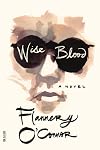
This is pretty weird: while I wasn't reading it, I was fully aware that the whole idea is clunky, heavy, and obvious. While I was reading it, I was mesmerized. If she'd been a nineteenth century, or even pre-War writer, someone would have put together a book titled 'The Wisdom of Flannery O'Connor,' picking the best lines from her writing, I'm sure (someone did it to Conrad, for instance). It's like reading Pope or similar poets, who aim for a zinger every now and then, rather than show more 'Romantic' attempts to provide sustained emotion.
It's also like reading the best modern novels- you know, the ones where you don't like any characters, and nobody's sympathetic? The ones people still complain about? I know they do, because my wife does (on the other hand, she reads Yates.)
So if you think everything in the world is just dandy, and that we should all just get along; or if you genuinely hate books with horrible characters to whom you're still somehow drawn; or if you think worrying about right and wrong is out of date, skip this. If you prefer your bile with a side dish of vinegar, and have definite sympathies for those religious orders which involve self-flagellation on a large scale, preferably with glass-shard-studded rope whips, dive right in. show less
It's also like reading the best modern novels- you know, the ones where you don't like any characters, and nobody's sympathetic? The ones people still complain about? I know they do, because my wife does (on the other hand, she reads Yates.)
So if you think everything in the world is just dandy, and that we should all just get along; or if you genuinely hate books with horrible characters to whom you're still somehow drawn; or if you think worrying about right and wrong is out of date, skip this. If you prefer your bile with a side dish of vinegar, and have definite sympathies for those religious orders which involve self-flagellation on a large scale, preferably with glass-shard-studded rope whips, dive right in. show less
Lists
First Novels (1)
Nifty Fifties (1)
Best First Lines (1)
USA Road Trip (1)
Overdue Podcast (1)
1970s (1)
Female Author (1)
AP Lit (1)
Read This Next (1)
Unread books (1)
Library List 4.5 (1)
Read These Too (1)
1950s (2)
Literary Witches (2)
Five star books (2)
. (3)
Southern Fiction (4)
Greatest Books (1)
On the pile (1)
Books (1)
bound (1)
E's Reader (1)
Art of Reading (1)
Favourite Books (2)
Awards


You May Also Like


Associated Authors
Statistics
- Works
- 168
- Also by
- 93
- Members
- 29,892
- Popularity
- #671
- Rating
- 4.1
- Reviews
- 512
- ISBNs
- 316
- Languages
- 20
- Favorited
- 336


