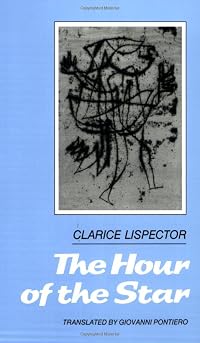
The Hour of the Star
by Clarice Lispector
On This Page
Description
Narrated by the cosmopolitan Rodrigo S.M., this brief, strange, and haunting tale is the story of Macabéa, one of life's unfortunates. Living in the slums of Rio and eking out a poor living as a typist, Macabéa loves movies, Coca-Colas, and her rat of a boyfriend; she would like to be like Marilyn Monroe, but she is ugly, underfed, sickly and unloved. Rodrigo recoils from her wretchedness, and yet he cannot avoid the realization that for all her outward misery, Macabéa is inwardly show more free/She doesn't seem to know how unhappy she should be. Lispector employs her pathetic heroine against her urbane, empty narrator--edge of despair to edge of despair--and, working them like a pair of scissors, she cuts away the reader's preconceived notions about poverty, identity, love and the art of fiction. In her last book she takes readers close to the true mystery of life and leave us deep in Lispector territory indeed. show lessTags
Recommendations
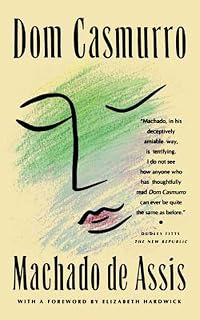
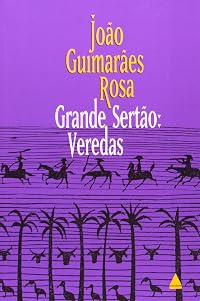


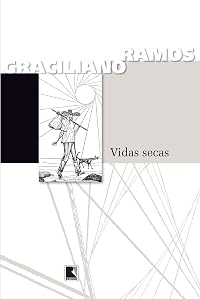
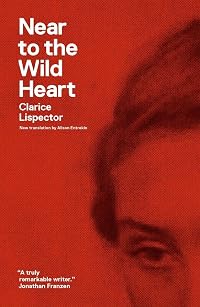












Member Recommendations

Member Reviews
Benjamin Moser, the translator of the edition I read, relays an anecdote in which Lispector responds to a French translation of her prose, Moser quoting from her letter to an editor. "I admit, if you like, that the sentences do not reflect the usual manner of speaking, but I assure you that it is the same in Portuguese. The punctuation I employ in the book is not accidental and does not result from an ignorance of the rules of grammar." Moser finishes: "Because no matter how odd Clarice Lispector's prose sounds in translation, it sounds just as unusual in the original." [79]
Following multiple call-outs to her distinctive narrative voice, call-outs like that one, and accumulating probably over years, I reached a point at which I wanted show more to read it myself. I knew about this novella specifically, and when it was urged into my hands, the decision was made: start with "The Hour Of The Star". So from the opening pages, my thoughts were pointed: who is this author, publishing decades ago yet until recently wholly unfamiliar? What is distinct or challenging about her style or preoccupations? What makes her sound "odd"?
These prompts meant this first reading was a little too purposeful, too self-aware, proceeding as though a detective seeking clues to a puzzle. I didn't reach a solution so much as I appreciated the narrator evaded any simple answers. Various motifs used to good effect ("explosion", references to music & instruments, composers). The narrator dissembles and prevaricates, seemingly to avoid starting his story; a (male) narrator immediately suspect for writing about a northeastern (rural?) girl, facts commingled with ideas, literature. "The facts are sonorous but between the facts there's whispering. It's the whispering that astounds me." [16] There are hints at self-reflection, meta sprinkled in just enough to cause a feeding frenzy among readers with antenna up for such things (me) -- food in a fish bowl, is the narrator taunting the reader? And knowing this was her last published piece, after years of writing, I can't but help think: she would be able to anticipate the typical reader would come in much the same way as I did. She would anticipate, and she would respond accordingly.
Now my initial exposure is done, I need to revisit and indeed, read more than just this short piece.
For at the hour of death a person becomes a shining movie star, it's everyone's moment of glory and it's when as in choral chanting you hear the whooshing shrieks. [20] show less
Following multiple call-outs to her distinctive narrative voice, call-outs like that one, and accumulating probably over years, I reached a point at which I wanted show more to read it myself. I knew about this novella specifically, and when it was urged into my hands, the decision was made: start with "The Hour Of The Star". So from the opening pages, my thoughts were pointed: who is this author, publishing decades ago yet until recently wholly unfamiliar? What is distinct or challenging about her style or preoccupations? What makes her sound "odd"?
These prompts meant this first reading was a little too purposeful, too self-aware, proceeding as though a detective seeking clues to a puzzle. I didn't reach a solution so much as I appreciated the narrator evaded any simple answers. Various motifs used to good effect ("explosion", references to music & instruments, composers). The narrator dissembles and prevaricates, seemingly to avoid starting his story; a (male) narrator immediately suspect for writing about a northeastern (rural?) girl, facts commingled with ideas, literature. "The facts are sonorous but between the facts there's whispering. It's the whispering that astounds me." [16] There are hints at self-reflection, meta sprinkled in just enough to cause a feeding frenzy among readers with antenna up for such things (me) -- food in a fish bowl, is the narrator taunting the reader? And knowing this was her last published piece, after years of writing, I can't but help think: she would be able to anticipate the typical reader would come in much the same way as I did. She would anticipate, and she would respond accordingly.
Now my initial exposure is done, I need to revisit and indeed, read more than just this short piece.
For at the hour of death a person becomes a shining movie star, it's everyone's moment of glory and it's when as in choral chanting you hear the whooshing shrieks. [20] show less
I’ve tried to write this review several times but none were satisfactory. I’ve decided there are too many interesting facets of Lispector’s story to include and do justice to in a short review; that it is better to keep it simple and instead urge people to read it for themselves. This is the first novel I’ve read by Clarice Lispector but I am eager to read many more; she has a powerful and unique voice.
.
The Hour of the Star is a tale of a girl called Macabéa who has every reason to be unhappy, but isn’t. At the hands of a cruel fate, she ploughs on, oblivious to how sad her life is, listening to the radio clock and drinking coca-cola. We are touched by both her innocence and ignorance; through her pitiful existence we show more contemplate our own humility and gratefulness for what we have, as well as how we treat others who have less than ourselves. For such a short book, it encapsulates a lot of life and the human condition. This is a book and a character that will leave an impression - highly recommended! show less
.
The Hour of the Star is a tale of a girl called Macabéa who has every reason to be unhappy, but isn’t. At the hands of a cruel fate, she ploughs on, oblivious to how sad her life is, listening to the radio clock and drinking coca-cola. We are touched by both her innocence and ignorance; through her pitiful existence we show more contemplate our own humility and gratefulness for what we have, as well as how we treat others who have less than ourselves. For such a short book, it encapsulates a lot of life and the human condition. This is a book and a character that will leave an impression - highly recommended! show less
In his Introduction to a later edition of The Hour of the Star, acclaimed Brazilian writer Clarice Lispector’s last novel, Colm Tóibín comes up with a great analogy to summarize what it is like to read that book: Imagine you find yourself backstage to watch a play, but as you try to focus on the actors and the performance, you are interrupted by a backstage staff member intent on describing for you the mechanics of how the production came to be, what went into deciding on the wardrobe, when the scene changes will occur, and so on. Despite these distractions, you find the on-stage presentation to be compelling, if not totally satisfying for what you might have missed. Only afterwards on your way out of the theater do you realize that show more those backstage distractions were as much a part of the event as the play itself!
The Hour of the Star tells the story of Macabéa, a poor, sickly worker from a rural part of the country who is now living on the fringes of Rio de Janeiro. The tale is told by Rodrigo S.M., a narrator whose voice becomes as important to the book as Macabéa herself. She drifts through life with a kind of tragic innocence, surviving on little food, little joy, and virtually no self-awareness. Her only romantic entanglement ends in pain and humiliation, while her one moment of seeming hope—consulting a fortune teller who predicts great wealth and love in her future—is shattered almost instantly. The brief narrative moves restlessly between Macabéa’s threadbare existence and Rodrigo’s anguished commentary, at times completely collapsing the line between character and commentator.
Lispector uses this deceptively simple plot to probe existential questions of identity, poverty, and the act of writing itself. (The narrator Rodrigo S.M. appears to be the real author’s alter ego, although the book does not come off as being autobiographical.) In fact, the real impact of the novel comes less from its content than its fractured style: a mixture of plainspoken observation, lyrical meditation, and philosophical asides that resists conventional storytelling even as it insists on Macabéa’s inherent dignity. I found this to be a surprisingly demanding book to read—despite being less than 100 pages in length, it took a while to get through—but ultimately one that rewarded the time and effort. It is also a one final plea from the author to bring social justice to the marginalized citizens of Brazil, a cause for which Lispector fought for much of her life. show less
The Hour of the Star tells the story of Macabéa, a poor, sickly worker from a rural part of the country who is now living on the fringes of Rio de Janeiro. The tale is told by Rodrigo S.M., a narrator whose voice becomes as important to the book as Macabéa herself. She drifts through life with a kind of tragic innocence, surviving on little food, little joy, and virtually no self-awareness. Her only romantic entanglement ends in pain and humiliation, while her one moment of seeming hope—consulting a fortune teller who predicts great wealth and love in her future—is shattered almost instantly. The brief narrative moves restlessly between Macabéa’s threadbare existence and Rodrigo’s anguished commentary, at times completely collapsing the line between character and commentator.
Lispector uses this deceptively simple plot to probe existential questions of identity, poverty, and the act of writing itself. (The narrator Rodrigo S.M. appears to be the real author’s alter ego, although the book does not come off as being autobiographical.) In fact, the real impact of the novel comes less from its content than its fractured style: a mixture of plainspoken observation, lyrical meditation, and philosophical asides that resists conventional storytelling even as it insists on Macabéa’s inherent dignity. I found this to be a surprisingly demanding book to read—despite being less than 100 pages in length, it took a while to get through—but ultimately one that rewarded the time and effort. It is also a one final plea from the author to bring social justice to the marginalized citizens of Brazil, a cause for which Lispector fought for much of her life. show less
This book is fucked but brilliant. One of the most brilliant things I have ever read, really. I have been inadvertently diving into stream of consciousness writing over the last two months, from Pynchon to Plath to Henry Miller to this, and I feel very seen by it. It is how I think and how I write, and it has been a long time coming since the days of Ulysses.
I think its depressing when you think about the plot too hard, but there is a serious satirical and comedic element to this whole thing, especially through the narration. It feels like Lispector is highlighting the meaninglessness of suffering, but also of storytelling. The narrator both seems to care deeply about this girl but also openly admits throughout the book that he is show more going to make seemingly random decisions about how her life is going to turn out. He feels bad for it and does it anyways. At the same time he is such a third person in the story as a whole. A lot of this is sad. Perpetual cycles of toxic masculinity that lead to abuse, horrific circumstances that don't even seem fully comprehended. She has no concept of hope, and it feels like she is better off as a result of it.
I like how they talk about God in this book too, the randomness of it but also not the direct devotion. Each mention of prayer is immediately followed up with a line describing the indescribability of the God and nondenominational descriptions of him. Will probably read again. show less
I think its depressing when you think about the plot too hard, but there is a serious satirical and comedic element to this whole thing, especially through the narration. It feels like Lispector is highlighting the meaninglessness of suffering, but also of storytelling. The narrator both seems to care deeply about this girl but also openly admits throughout the book that he is show more going to make seemingly random decisions about how her life is going to turn out. He feels bad for it and does it anyways. At the same time he is such a third person in the story as a whole. A lot of this is sad. Perpetual cycles of toxic masculinity that lead to abuse, horrific circumstances that don't even seem fully comprehended. She has no concept of hope, and it feels like she is better off as a result of it.
I like how they talk about God in this book too, the randomness of it but also not the direct devotion. Each mention of prayer is immediately followed up with a line describing the indescribability of the God and nondenominational descriptions of him. Will probably read again. show less
This is the story of an unperson. I don't often use quotes in reviews, but here they are needed; my words aren't as accurate.
"He: --What's the matter? Aren't you someone? People talk about people.
She: --Sorry but I don't think I'm really people.
He: --But everyone's people, my God!" p. 39
Macabea is not a heroine, and this story isn't really about her. It was written in that post-modern anti-sentence form, more like a piece of abstract art than a narrative.
"But then all of a sudden I feel my last grimace of revolt and howl: the slaughter of doves!!! Living is luxury.
Okay, it's over." p. 76
The narrator had almost the same visceral rejection of his own story that I felt while reading it. Any meaning was probably unnecessary extrapolation, show more the over-analyzation that my Mama claims is the pursuit of all college students.
A final piece of extraordinary advice:
"Don't forget that for now it's strawberry season." p. 77 show less
"He: --What's the matter? Aren't you someone? People talk about people.
She: --Sorry but I don't think I'm really people.
He: --But everyone's people, my God!" p. 39
Macabea is not a heroine, and this story isn't really about her. It was written in that post-modern anti-sentence form, more like a piece of abstract art than a narrative.
"But then all of a sudden I feel my last grimace of revolt and howl: the slaughter of doves!!! Living is luxury.
Okay, it's over." p. 76
The narrator had almost the same visceral rejection of his own story that I felt while reading it. Any meaning was probably unnecessary extrapolation, show more the over-analyzation that my Mama claims is the pursuit of all college students.
A final piece of extraordinary advice:
"Don't forget that for now it's strawberry season." p. 77 show less
Not an easy book to sum up, either—it's metafiction, writing about a writer writing about writing, and Lispector's language is purposefully dense and sticky (and, as I was reading in English, in translation as well). She wants you to slow down and think about what her narrator is saying, and for a book of fewer than 100 pages it was not a quick read. I will say it made for a good and lively book club discussion. My take on it is that it's a meditation on the perils of writing, and how a character can take on a life of their own that subsumes the writer's plan for them... and, perhaps, the writer too. The character that the writer-narrator has created, a drab and loveless menial office worker named Macabéa, slowly emerges from his show more literary brooding as this very insistent force of nature, and there's a very subtle grappling for her fate that pushes all the way up to the end. If that sounds really ambiguous... well, it's an ambiguous book. But beautifully written, and I feel like it's one of those that you could take away something very different at different times. Definitely worth a reread in a couple/few years. show less
This book is a demanding read, both in its unconventional style and its stark subject matter. Lispector's prose is a disorienting stream-of-consciousness, fragmented and philosophical, forcing readers to actively grapple with meaning. The narrative, told by the self-aware Rodrigo S.M., constantly shifts, making for a challenging, non-linear experience.
Compounding this is the grim portrayal of Macabéa, an impoverished and unremarkable typist whose life is devoid of apparent joy or significance. Her story is bleak, pushing readers to confront the uncomfortable realities of neglect and quiet desperation.
The Hour of the Star demands perseverance, but offers immense rewards. It's a powerful meditation on life, language, and human existence, show more leaving a lasting impact that justifies every challenging page. It is, unequivocally, a great book worth the effort.
[These are my thoughts but I'm not very good at writing reviews so I asked Gemini to help me articulate them.] show less
Compounding this is the grim portrayal of Macabéa, an impoverished and unremarkable typist whose life is devoid of apparent joy or significance. Her story is bleak, pushing readers to confront the uncomfortable realities of neglect and quiet desperation.
The Hour of the Star demands perseverance, but offers immense rewards. It's a powerful meditation on life, language, and human existence, show more leaving a lasting impact that justifies every challenging page. It is, unequivocally, a great book worth the effort.
[These are my thoughts but I'm not very good at writing reviews so I asked Gemini to help me articulate them.] show less
Members
- Recently Added By
Lists

1001 Books You Must Read Before You Die
1,448 works; 1,134 members

Unreliable Narrators
170 works; 43 members

500 Great Books by Women
507 works; 60 members
1,001 BYMRBYD Concensus
723 works; 27 members

Latin American Literature
50 works; 11 members

Books Read in 2017
4,249 works; 130 members

Books Read in 2015
3,299 works; 129 members

Books Read in 2022
5,168 works; 114 members
Books Read in 2016
4,666 works; 199 members
Overdue Podcast
806 works; 9 members

Books Read in 2019
4,052 works; 110 members

Books Read in 2021
5,361 works; 114 members

Great Short Books: A Year of Reading-Briefly
59 works; 4 members

current
52 works; 1 member

psychological
14 works; 1 member
Talk Discussions
Past Discussions
Being Clarice Lispector in Le Salon Littéraire du Peuple pour le Peuple (November 2009)
Author Information

Clarice Lispector was born in the Ukraine and was taken to Brazil as a young child. She was a law student, editor, translator, and newswriter, who traveled widely, spending eight years in the United States. "Family Ties" (1960) is a collection of short stories revealing Lispector's existentialist view of life and demonstrating that even family show more ties and social relationships are temporary. Although tied to each other and to the outside world, the characters are finally totally alone and separate. Lispector received praise from American critics for "The Apple in the Dark" (1967), a novel about a guilt-ridden man's search for the ultimate knowledge (Eve's apple), which he believes will bring him hope. Lispector's books are being translated into various languages in Europe, especially in France, where the critic Helene Cixous is one of her great admirers and a promoter of her works. (Bowker Author Biography) show less
Some Editions
Awards and Honors
Awards
Notable Lists
Series
Belongs to Publisher Series
Work Relationships
Is contained in
Common Knowledge
- Canonical title
- The Hour of the Star
- Original title
- A Hora da Estrela
- Original publication date
- 1977
- People/Characters
- Rodrigo S.M.; Macabéa; Olímpico de Jesus [Moreira Chaves]; Glória; Madame Carlota; Maria de Penha (show all 9); Maria Aparecida; Maria José; Maria
- Important places
- Rio de Janeiro, Rio de Janeiro, Brasil; Paraíba, Brasil; Maceió, Brasil
- Related movies*
- A Hora da Estrela (1985 | IMDb)
- Epigraph
- Clarice stirs in the greater depths, where the world finds its true meaning, portraying mankind.
('Vision of Clarice Lispector')
Carlos Drummond de Andrade - Dedication
- For Olga Borelli
So i dedicate this thing here to old Schumann and his sweet Clara who today alas are bones. I dedicate it to the very crimson color scarlet like my blood of a man in his prime and so I dedicate it to my blood. I dedicate it a... (show all)bove all to the gnomes, dwarfs, sylphs, and nymphs who inhabit my life. I dedicate it to the memory of my former poverty, when everything was more sober and dignified and I had never eaten lobster. I dedicate it to the tempest of Beethoven. To the vibrations of the neutral colors of Bach. To Chopin who makes me swoon. To Stravinsky who frightened me and with whom I soared with fire. To Death and Transfiguration in which Richard Strauss reveals to me a destiny? Most of all I dedicate it to the yesterdays of today and to today, to the transparent veil of Debussy, to Malos Nobre, to Prokofiev, to Carl Orff and Schoenberg, to the twelve-tone composers, to the strident cries of the electronic generation - to all those who reached the most alarmingly unsuspected regions within me, all those prophets of the present and who have foretold me to myself until in that instant I exploded into: I. This I that is all of you. -Dedication by the Author (actually Clarice Lispector) - First words
- In January 1963, Elizabeth Bishop wrote to Robert Lowell from Rio de Janeiro about the stories of Clarice Lispector "I have translated five to Clarice's stories," she wrote, "all the short ones & one longer one. The New Yo... (show all)rker is interested - I think she needs money, so that would be good, the $ being what it is ... But at the moment - just when I was ready to send off the batch except for one, she has vanished on me - completely - and for about six weeks! ... I am mystified ... It is 'temperament,' maybe, or more likely just the usual 'massive inertia' that one runs into at every turn ... in the stories she has awfully good things and they do sound pretty good in English, and I was quite pleased with them." -Introduction, A Passion for the Void, Colm Toibin
All the world began with a yes. One molecule said yes to another molecule and life was born. But before prehistory there was prehistory of prehistory and there was the never and there was the yes. It was ever so. I don't know... (show all) why, but I do know that the universe never began. - Quotations
- Who has not asked himself at some time or other: am I a monster or is this what it means to be a person?
To probe oneself is to recognize that one is incomplete.
Things were somehow so good that they were close to becoming very bad because what is fully mature is very close to rotting. - Last words
- (Click to show. Warning: May contain spoilers.)Don't forget that for now it's strawberry season.
Yes. - Publisher's editor
- Pontiero, Giovanni
- Original language
- Portuguese
- Canonical DDC/MDS
- 869.3
- Canonical LCC
- PQ9697.L585 H6713
*Some information comes from Common Knowledge in other languages. Click "Edit" for more information.
Classifications
- Genres
- Fiction and Literature, General Fiction, Romance
- DDC/MDS
- 869.3 — Literature & rhetoric Spanish Literature Literatures of Portuguese and Galician languages Portuguese fiction
- LCC
- PQ9697 .L585 .H6713 — Language and Literature French, Italian, Spanish and Portuguese literatures Portuguese literature Provincial, local, colonial, etc. Brazil
- BISAC
Statistics
- Members
- 2,818
- Popularity
- 6,453
- Reviews
- 90
- Rating
- (3.87)
- Languages
- 16 — Catalan, Danish, Dutch, English, Estonian, Finnish, French, German, Hungarian, Italian, Norwegian (Bokmål), Russian, Spanish, Swedish, Turkish, Portuguese (Brazil)
- Media
- Paper, Audiobook, Ebook
- ISBNs
- 64
- ASINs
- 19