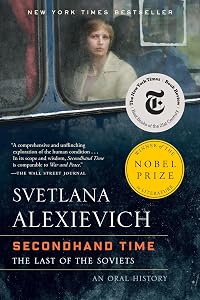
Secondhand Time: The Last of the Soviets
by Svetlana Alexievich
On This Page
Description
NEW YORK TIMES BESTSELLER • A symphonic oral history about the disintegration of the Soviet Union and the emergence of a new Russia, from Svetlana Alexievich, winner of the Nobel Prize in LiteratureNAMED ONE OF THE TEN BEST BOOKS OF THE YEAR BY THE WASHINGTON POST AND PUBLISHERS WEEKLY • LOS ANGELES TIMES BOOK PRIZE WINNER
NAMED ONE OF THE BEST BOOKS OF THE YEAR BY
The New York Times • The Washington Post • The Boston Globe • The Wall Street Journal • NPR • Financial show more Times • Kirkus Reviews
When the Swedish Academy awarded Svetlana Alexievich the Nobel Prize, it cited her for inventing “a new kind of literary genre,” describing her work as “a history of emotions—a history of the soul.” Alexievich’s distinctive documentary style, combining extended individual monologues with a collage of voices, records the stories of ordinary women and men who are rarely given the opportunity to speak, whose experiences are often lost in the official histories of the nation.
In Secondhand Time, Alexievich chronicles the demise of communism. Everyday Russian citizens recount the past thirty years, showing us what life was like during the fall of the Soviet Union and what it’s like to live in the new Russia left in its wake. Through interviews spanning 1991 to 2012, Alexievich takes us behind the propaganda and contrived media accounts, giving us a panoramic portrait of contemporary Russia and Russians who still carry memories of oppression, terror, famine, massacres—but also of pride in their country, hope for the future, and a belief that everyone was working and fighting together to bring about a utopia. Here is an account of life in the aftermath of an idea so powerful it once dominated a third of the world.
A magnificent tapestry of the sorrows and triumphs of the human spirit woven by a master, Secondhand Time tells the stories that together make up the true history of a nation. “Through the voices of those who confided in her,” The Nation writes, “Alexievich tells us about human nature, about our dreams, our choices, about good and evil—in a word, about ourselves.”
Praise for Svetlana Alexievich and Secondhand Time
“The nonfiction volume that has done the most to deepen the emotional understanding of Russia during and after the collapse of the Soviet Union of late is Svetlana Alexievich’s oral history Secondhand Time.”—David Remnick, The New Yorker. show less
Tags
Recommendations


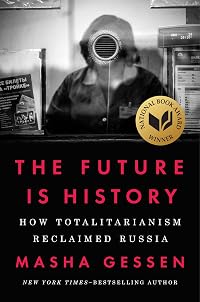


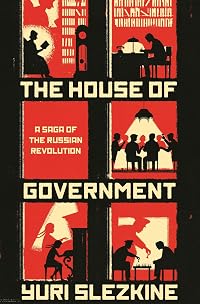
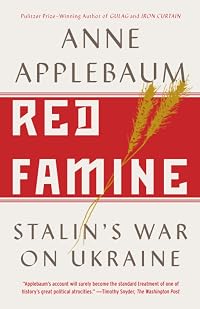
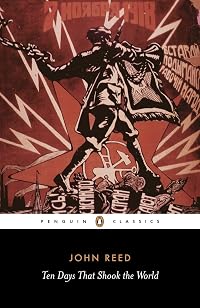




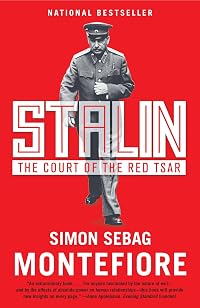











Member Recommendations
Member Reviews
Because I generally hate fun, I spent April Fool’s Day avoiding the internet and reading about the downfall of the Soviet Union instead. Svetlana Alexievich’s books are always intense and devastating, it seems, although this one is longer and more thematically diffuse than [b:War's Unwomanly Face|4025275|War's Unwomanly Face|Svetlana Alexievich|https://i.gr-assets.com/images/S/compressed.photo.goodreads.com/books/1338204032l/4025275._SX50_.jpg|15615499] and [b:Chernobyl Prayer: A Chronicle of the Future|29675406|Chernobyl Prayer A Chronicle of the Future|Svetlana Alexievich|https://i.gr-assets.com/images/S/compressed.photo.goodreads.com/books/1459250416l/29675406._SY75_.jpg|1103107]. It seems appropriate to be reading about show more Russia’s recent history at the moment, to try and understand what the heck is going on. ‘Second-Hand Time’ reads well with [b:The Future Is History: How Totalitarianism Reclaimed Russia|34713325|The Future Is History How Totalitarianism Reclaimed Russia|Masha Gessen|https://i.gr-assets.com/images/S/compressed.photo.goodreads.com/books/1498868759l/34713325._SY75_.jpg|55893997] and [b:Nothing Is True and Everything Is Possible: The Surreal Heart of the New Russia|21413849|Nothing Is True and Everything Is Possible The Surreal Heart of the New Russia|Peter Pomerantsev|https://i.gr-assets.com/images/S/compressed.photo.goodreads.com/books/1407196452l/21413849._SY75_.jpg|40714614], both of which employ similar approaches. Nonetheless, it seems to me that ‘Second-Hand Time’ achieves much deeper insight. Alexievich weaves together personal testimonies from before and after the emergence of Russia from the USSR, combining horrifying suffering that makes Greek tragedy look mild with details of daily life’s texture. Of the latter, one that stood out was this joke from the seventies:
That joke has been recycled as the current FBI agent meme. The self-consciousness of being continually monitored by the authorities is now part of Western culture too.
'Second-Hand Time' gave me a better understanding of [b:The End of History and the Last Man|57981|The End of History and the Last Man|Francis Fukuyama|https://i.gr-assets.com/images/S/compressed.photo.goodreads.com/books/1566832175l/57981._SX50_.jpg|56476] triumphalism than anything else I've read, including Fukuyama's actual book. What emerges from the voices here is a sense that the USSR slide abruptly from authoritarian communism to authoritarian capitalism thanks to a collapse from the top. The people who took to the streets in 1991 and 1993 wanted a democracy and better-run socialism; they got another dictatorship and chaotic capitalism. The disorientating suddenness of this must have made capitalism seems inevitable, while the initial hopes for democracy suggested that the two go together. The nineties seem to have been a time of great deprivation yet idealism, while the 21st century saw economic stabilisation and a growing sense of fatalism. One idea that I found useful was that the USSR was a war state that could not function without violent conflict. The economy was set up to produce weapons, the culture to produce soldiers. Russia seems to have been sliding back in that direction in recent years, as Putin reignites old conflicts made new.
Inter-generational differences are a major theme. The wartime generation, the post-Stalin generation, and the post-Perestroika generation cannot understand or even trust each other. While generation gaps exist everywhere, they seem exceptionally wide and painful in Russia. A woman who was born in a gulag just before WWII:
Compare this with her son’s perspective:
The sprawling legacy of the USSR includes genocidal ethnic conflicts in Tajikistan and other former Soviet states, an epidemic of suicides, and widespread trauma. In the 1990s, there was hope that past wrongs could be confronted and some justice found; that hope is long gone now. An overwhelming sense of disillusionment pervades the whole book:
And this from a documentary-maker, which has a pathos that reminds me of Victor Hugo:
I advise the reader to take a break in the middle of ‘Second-Hand Time’, as it is very long and the intensity is difficult to handle for extended periods. I alternated it with some lighter reading. Alexievich’s books are uniquely extraordinary, I haven’t come across such a powerful, personal history anywhere else. For many of her interviewees, Alexievich seems to be a confessor, possibly also a therapist. Russia seems especially in need of this collective confession to deal with the many buried traumas of the past. show less
We talked non-stop, afraid that they were listening in, thinking they must be listening. There'd always be someone who'd halt mid-conversation and point to the ceiling light or the power outlet with a little grin, "Did you hear that, Comrade Lieutenant?" It felt a bit dangerous, a bit like a game.
That joke has been recycled as the current FBI agent meme. The self-consciousness of being continually monitored by the authorities is now part of Western culture too.
'Second-Hand Time' gave me a better understanding of [b:The End of History and the Last Man|57981|The End of History and the Last Man|Francis Fukuyama|https://i.gr-assets.com/images/S/compressed.photo.goodreads.com/books/1566832175l/57981._SX50_.jpg|56476] triumphalism than anything else I've read, including Fukuyama's actual book. What emerges from the voices here is a sense that the USSR slide abruptly from authoritarian communism to authoritarian capitalism thanks to a collapse from the top. The people who took to the streets in 1991 and 1993 wanted a democracy and better-run socialism; they got another dictatorship and chaotic capitalism. The disorientating suddenness of this must have made capitalism seems inevitable, while the initial hopes for democracy suggested that the two go together. The nineties seem to have been a time of great deprivation yet idealism, while the 21st century saw economic stabilisation and a growing sense of fatalism. One idea that I found useful was that the USSR was a war state that could not function without violent conflict. The economy was set up to produce weapons, the culture to produce soldiers. Russia seems to have been sliding back in that direction in recent years, as Putin reignites old conflicts made new.
Inter-generational differences are a major theme. The wartime generation, the post-Stalin generation, and the post-Perestroika generation cannot understand or even trust each other. While generation gaps exist everywhere, they seem exceptionally wide and painful in Russia. A woman who was born in a gulag just before WWII:
Does anyone care about any of this anymore? Show me - who? It hasn’t been useful or interesting to anyone for a long time. Our country doesn’t exist any more and it never will, but here we are… old and disgusting… with our terrifying memories and poisoned eyes. We’re right here! But what’s left of our past? Only the story that Stalin drenched the soil in blood, Khrushchev planted corn in it, and everybody laughed at Brezhnev. But what about our heroes?
Compare this with her son’s perspective:
That’s what we’re like… Imagine a victim and an executioner from Auschwitz sitting side by side in the same office, getting their wages out of the same window down in accounting. With identical war decorations. And now, the same pensions… [...] ...I’m very sad about our elderly, of course… They collect bottles in the stadiums, sell cigarettes in the metro at night. Pick through rubbish dumps. But our elderly are no innocents… That’s a terrifying thought! Seditious. I’m scared just thinking about it.
The sprawling legacy of the USSR includes genocidal ethnic conflicts in Tajikistan and other former Soviet states, an epidemic of suicides, and widespread trauma. In the 1990s, there was hope that past wrongs could be confronted and some justice found; that hope is long gone now. An overwhelming sense of disillusionment pervades the whole book:
I even put up flyers. We talked and read and read and talked. What did we want? Our parents wanted to say and read whatever they wanted. They dreamt of humane socialism… with a human face. And young people? We… we also dreamt of freedom. But what is it? Our idea of freedom was purely theoretical… We wanted to live like they do in the West. Listen to their music, dress like them, travel the world. “We want change… change…” sung Viktor Tsoi. We had no clue what we were hurtling towards. We just kept on dreaming...
And this from a documentary-maker, which has a pathos that reminds me of Victor Hugo:
When Gorbachev came to power, we ran around mad with glee. We lived in our dreams, our illusions. We wanted a new Russia… Twenty years down the line, it finally dawned on us: where was this new Russia supposed to come from? It never existed, and it still doesn’t today. Someone put it very accurately: in five years, everything can change in Russia, but in two hundred - nothing.
I advise the reader to take a break in the middle of ‘Second-Hand Time’, as it is very long and the intensity is difficult to handle for extended periods. I alternated it with some lighter reading. Alexievich’s books are uniquely extraordinary, I haven’t come across such a powerful, personal history anywhere else. For many of her interviewees, Alexievich seems to be a confessor, possibly also a therapist. Russia seems especially in need of this collective confession to deal with the many buried traumas of the past. show less
E un giorno l'impero crollò. L'enorme Unione delle Repubbliche Socialiste Sovietiche, potente e temuta, si è disintegrata in un tempo ridicolo, collassata, come dicono molti degli intervistati in questo libro, sotto il peso del salame e dei reggiseni. Perché l'ideale sovietico che doveva far grande la nazione ne aveva indirizzato tutte le capacità produttive verso i carri armati, dimenticando le esigenze di base della gente. Eppure il collasso di questo impero del male pare aver lasciato un male più grande, lo sgretolamento delle repubbliche ha scatenato faide disastrose e tutti i topi sono usciti dalle fogne. L'autrice ha intervistato con imparzialità ex cittadini sovietici e nuovi russi, eppure si ha come l'impressione che abbia show more fatto fatica a trovare, tra la gente comune, qualcuno che non fosse, in un modo o nell'altro nostalgico nei confronti dell'ex regime. show less
I wasn't sure how much I would value this book, but it turns out: I value it immensely. Alexievich achieved at least two things here. First, she has written a tremendously sensitive book about otherwise despised human beings. Reading this should make it impossible for anyone to take seriously the indiscriminate demonisation of those who supported the Soviet regime, which has replaced the infantile praise of them, among the liberal intelligentsia in this country, at least. Second, she has more or less shown that journalism can be great literature. The form is at least as important as the historical material here; this is a perfect way to write about abstractions. Fiction writers are always told not to write about abstractions, but to get show more to them through the individual; Alexievich gets to the abstraction through countless individuals, and that approach works far better than the deep psychological dive.
All that said, I can't imagine many have the intelligence, character, or work ethic to reproduce the method. God knows I wouldn't. show less
All that said, I can't imagine many have the intelligence, character, or work ethic to reproduce the method. God knows I wouldn't. show less
I can't recall the last time I learned so much from a book. It is no secret that Putin wants to recreate the Soviet Union, but I now more fully understand that promising the return of the great Soviet state is one of the ways he stays in power. We are taught to look at increased freedom as unambiguously positive, but I can see now that there is still a large portion of the population that has suffered in the years since Perestroika. So many people gave up so much willingly for the communist dream, only for everything to change overnight. People were now told that making money was the way to greatness, the polar opposite of all the messaging they had ever received. Actions that would have been illegal at all times since 1917 were now the show more most highly prized. The patriots, the loyal Bolsheviks were left in the dirt. And in many of the former Soviet bloc nations people who had lived together as neighbors when everyone was Soviet were now torturing and murdering one another as they reclaimed their pre-soviet nationalities and remembered they hated one another.
A lot of these stories are very hard to read. I could not simply flip through the pages and pages of savage acts recounted here, each one more stomach churning and heartbreaking than the last. It was hard to read about the breakdown of families, the rampant alcoholism and its impact. the abuse of women and of people with darker skin (the Azerbaijanis, Armenians, Tajiks and others are referred to by the Russians as darkies.) Hardest for me was the recounting of the brutal murders of the "kikes" (that term is used frequently) the one group all the groups have decided to blame and to hate. When my grandmother was a teenager she was forced to watch with her mother and her other siblings and in-laws as her father and three eldest brothers were forced by Lenin's soldiers, along with other men in the village, to dig a hole, into which they were all shot in a barrage of gunfire. Some babies were snatched from mothers and thrown into the hole just for extra fun, and then more rounds were shot into the hole just in case anyone had survived. Those not shot were made to fill in the hole with dirt. She and her two younger siblings were eventually smuggled out and sailed to America, but she was never whole, never not terrified. It was very personal for me to read those stories, and the stories of the cruel murders of people found trying to help Jews. One Russian woman who took in an 8 and 10 year old whose family had been slaughtered was lashed to the back of a motorcycle and forced to run "until her heart exploded." The children she had cared for were hacked into pulp, there was nothing left to bury.
I read about all this, and I realized Putin is not a one-off monster crazily bombing children's hospitals and shelters -- his actions are completely in keeping with nearly every Russian leader who preceded him. Within the official archives released during Perestroika there is a record of an official coming to tell Trotsky that people in Moscow were starving, and Trotsky told him to shut up and to let him know when the food shortages were so bad that mothers were killing and eating their babies. Putin learned from the masters.
One thing that is clear from all the stories is that if you tell people they can stop thinking, that you will provide them with the only "facts" and all they need to do is come to rallies to show their admiration for the leaders to be safe many of those people will love you. That is all many people want, certainty and something to display religious zeal for. Welcome to America in the 21st century -- Putin was not the only person who learned from the masters.
I had been reading this in print, but decided to grab the audio and listen to this while I switched out my winter clothes (I acknowledge I have a shopping problem and that for most people this would not be 8 hours of work. The good news is that I have a 4 foot high pile of things to give away, and I finished the book.) The book was extraordinary in both formats, but I really did enjoy this oral history as an oral history and wish I had listened to rather than read the first 2/3. show less
A lot of these stories are very hard to read. I could not simply flip through the pages and pages of savage acts recounted here, each one more stomach churning and heartbreaking than the last. It was hard to read about the breakdown of families, the rampant alcoholism and its impact. the abuse of women and of people with darker skin (the Azerbaijanis, Armenians, Tajiks and others are referred to by the Russians as darkies.) Hardest for me was the recounting of the brutal murders of the "kikes" (that term is used frequently) the one group all the groups have decided to blame and to hate. When my grandmother was a teenager she was forced to watch with her mother and her other siblings and in-laws as her father and three eldest brothers were forced by Lenin's soldiers, along with other men in the village, to dig a hole, into which they were all shot in a barrage of gunfire. Some babies were snatched from mothers and thrown into the hole just for extra fun, and then more rounds were shot into the hole just in case anyone had survived. Those not shot were made to fill in the hole with dirt. She and her two younger siblings were eventually smuggled out and sailed to America, but she was never whole, never not terrified. It was very personal for me to read those stories, and the stories of the cruel murders of people found trying to help Jews. One Russian woman who took in an 8 and 10 year old whose family had been slaughtered was lashed to the back of a motorcycle and forced to run "until her heart exploded." The children she had cared for were hacked into pulp, there was nothing left to bury.
I read about all this, and I realized Putin is not a one-off monster crazily bombing children's hospitals and shelters -- his actions are completely in keeping with nearly every Russian leader who preceded him. Within the official archives released during Perestroika there is a record of an official coming to tell Trotsky that people in Moscow were starving, and Trotsky told him to shut up and to let him know when the food shortages were so bad that mothers were killing and eating their babies. Putin learned from the masters.
One thing that is clear from all the stories is that if you tell people they can stop thinking, that you will provide them with the only "facts" and all they need to do is come to rallies to show their admiration for the leaders to be safe many of those people will love you. That is all many people want, certainty and something to display religious zeal for. Welcome to America in the 21st century -- Putin was not the only person who learned from the masters.
I had been reading this in print, but decided to grab the audio and listen to this while I switched out my winter clothes (I acknowledge I have a shopping problem and that for most people this would not be 8 hours of work. The good news is that I have a 4 foot high pile of things to give away, and I finished the book.) The book was extraordinary in both formats, but I really did enjoy this oral history as an oral history and wish I had listened to rather than read the first 2/3. show less
“Today, people just want to live their lives, they don’t need some great Idea. This is entirely new for Russia; it’s unprecedented in Russian literature. At heart, we’re built for war. We were always either fighting or preparing to fight. We’ve never known anything else—hence our wartime psychology. Even in civilian life, everything was always militarized. The drums were beating, the banners flying, our hearts leaping out of our chests. People didn’t recognize their own slavery—they even liked being slaves.”
“Our people need freedom like a monkey needs glasses. No one would know what to do with it.”
"The liberals are working off their piece of the pie. They want us to think of our history as a black hole. I hate show more them all: gorbachev, shevardnadze, yakovlev - don't capitalize their names, that's how much I hate them all. I don't want to live in America, I want to live in the USSR...”
“They were fooled by the shiny wrappers. Now our stores are filled with all sorts of stuff. An abundance. But heaps of salami have nothing to do with happiness. Or glory. We used to be a great nation! Now we’re nothing but peddlers and looters… Grain merchants and managers…”
^This an oral history of the collapse of the Soviet Union and the rise of a new Russia. The author interviewed dozens of people over twenty years. This is a stellar achievement on so many levels. Hearing these distinct voices, gives the reader more perspective and understanding than a stack of nonfiction, devoted to this period. Some are heart-warming and patriotic but most will rip your guts out. The pain and hardship most of these people go through is heart-breaking and devastating.
My biggest take away from this monumental work, is how much better I now understand communism and capitalism and how our propaganda machines, working furiously, on both sides, have completely distorted both.
I would also like to give a shout-out to Bela Shayevich for an outstanding translation. show less
“Our people need freedom like a monkey needs glasses. No one would know what to do with it.”
"The liberals are working off their piece of the pie. They want us to think of our history as a black hole. I hate show more them all: gorbachev, shevardnadze, yakovlev - don't capitalize their names, that's how much I hate them all. I don't want to live in America, I want to live in the USSR...”
“They were fooled by the shiny wrappers. Now our stores are filled with all sorts of stuff. An abundance. But heaps of salami have nothing to do with happiness. Or glory. We used to be a great nation! Now we’re nothing but peddlers and looters… Grain merchants and managers…”
^This an oral history of the collapse of the Soviet Union and the rise of a new Russia. The author interviewed dozens of people over twenty years. This is a stellar achievement on so many levels. Hearing these distinct voices, gives the reader more perspective and understanding than a stack of nonfiction, devoted to this period. Some are heart-warming and patriotic but most will rip your guts out. The pain and hardship most of these people go through is heart-breaking and devastating.
My biggest take away from this monumental work, is how much better I now understand communism and capitalism and how our propaganda machines, working furiously, on both sides, have completely distorted both.
I would also like to give a shout-out to Bela Shayevich for an outstanding translation. show less
Aside from a brief introduction, Alexievich presents this oral history of the end of the Soviet Union with no authorial commentary. She lets her interviewees speak for themselves, and they are all impressively eloquent. They tell their life stories, about love and family, joy and pain, war and protest, with a focus on what it was like to live in the Soviet Union, what they did and did not like about the USSR, and what it was like to live through the end of the USSR, the adoption of democracy and capitalism, and the current slide back into authoritarianism.
There are several themes that resonate throughout these stories: Russians felt betrayed by the false promises of democracy and capitalism. Many of them spoke wistfully about the years show more when they did not have material abundance, but they had spiritual and intellectual riches of feeling like they were a part of a major milestone of human society. Many people speak of how books, poetry, and intellectual conversations provided more joy and sustenance than the material goods brought by capitalism. The end of communism came with a promise of freedom, but the interviewees found that capitalism took away their freedom: they became slaves to money.
By letting people from all walks of life speak for themselves, Alexievich has created a rich portrait of humanity: her subjects are complex, flawed, and ultimately sympathetic. show less
There are several themes that resonate throughout these stories: Russians felt betrayed by the false promises of democracy and capitalism. Many of them spoke wistfully about the years show more when they did not have material abundance, but they had spiritual and intellectual riches of feeling like they were a part of a major milestone of human society. Many people speak of how books, poetry, and intellectual conversations provided more joy and sustenance than the material goods brought by capitalism. The end of communism came with a promise of freedom, but the interviewees found that capitalism took away their freedom: they became slaves to money.
By letting people from all walks of life speak for themselves, Alexievich has created a rich portrait of humanity: her subjects are complex, flawed, and ultimately sympathetic. show less
Svetlana Alexijevitsj interviews people in post-Soviet Russia. If you're ever feeling ebullient, so full of joy that you could just float away, this is the book that will bring you back to earth. People LOVED Stalin in spite of the oppression which is detailed to a nauseating degree. The misogyny is beyond belief. Frequently people say how much Russians need life to be bad, to experience pain so that their souls can be free. So misogyny, severe gender roles, a strict class system, racism, evil for the sake of being evil, evil as just part of a day's work, betrayal by everyone from one's family to the state - the book does not make the reader long for a trip to Russia or inspire great faith in Putin. It seems that the only way to control show more the people during Stalin's brand of communism was to instill in them extreme romance and idealism. Poetry and Russian literature were honored, people sat around their kitchen tables discussing philosophy. Money and private ownership were denigrated. The Soviet people were told how great they were to have defeated Germany during the second world war and how much this was due to Stalin's leadership. The problem was that Stalin then took the most romantic and idealistic and crushed them. Those who weren't crushed, and even those who managed to survive the crushing clung to the idea of their great communist Motherland. Now with the advent of capitalism, even their ideals are crushed as the state continues to oppress the new Russian people in the name of greed. The whole book is unrelenting misery. It'll be a while before I read another of her books. show less
Members
- Recently Added By
Lists

The Guardian's 100 best books of the 21st century
100 works; 21 members

Recommend the 20 best books you've read in the last five years
2,168 works; 608 members

Non-Fiction Worth Reading
1,025 works; 257 members

Top Five Books of 2017
757 works; 231 members

Top Five Books of 2016
795 works; 229 members

Het laatste woord
27 works; 1 member

Entender el mundo
46 works; 1 member

Powell's 50 Books for 50 Years
50 works; 4 members

All Things Russia
459 works; 11 members

Club Read's Recommended Nonfiction Written by Women
618 works; 30 members

.
184 works; 1 member

Books Read in 2025
4,128 works; 98 members

Favorite Books in Translation
320 works; 133 members

NYT 100 best books of 21st C
100 works; 31 members

Best of 2014
8 works; 1 member

Nobel Price Winners
222 works; 19 members

Blackwell's Five Foot Bookshelf
72 works; 4 members

Books Read in 2016
4,666 works; 199 members

Five star books
1,767 works; 110 members

Books Read in 2017
4,249 works; 130 members

Top Five Books of 2025
954 works; 304 members
Author Information

32+ Works 8,405 Members
Svetlana Alexievich was born in Stanislav, Ukraine, Soviet Union on May 31, 1948. She became a journalist and wrote narratives from interviews with witnesses to events such as World War II, the Soviet-Afghan war, the fall of the Soviet Union, and the Chernobyl disaster. Her books include Zinky Boys: Soviet Voices from the Afghanistan War and War's show more Unwomanly Face. She won the National Book Critics Circle Award in 2005 for Voices from Chernobyl: The Oral History of a Nuclear Disaster and the 2015 Nobel Prize in Literature. (Bowker Author Biography) show less
Some Editions
Awards and Honors
Awards
Distinctions
Notable Lists
Series
Belongs to Publisher Series
Common Knowledge
- Canonical title
- Secondhand Time: The Last of the Soviets
- Original title
- Время сэконд хэнд: Конец красного человека; Время секонд хэнд; Vremia second hand (konets krasnovo tcheloveka) (konets krasnovo tcheloveka)
- Alternate titles
- Second-hand Time
- Original publication date
- 2013 (1e édition originale russe) (1e édition originale russe); 2014 (1e traduction et édition française, Lettres russes, Actes Sud) (1e traduction et édition française, Lettres russes, Actes Sud); 2016-07-09 (Réédition française, Babel, Actes Sud) (Réédition française, Babel, Actes Sud)
- People/Characters
- Γελένα Γιούργεβνα Σ.; Άννα Ιλίνιτσνα; Αλεξάντρ Πορφίριεβιτς Σαρπίλο; Μαρίνα Τχόνοβα Τσαίτσικ; Μαργκαρίτα Πογκρεμπίτσκαγια; Σεργκέι Φιοντόροβιτς Αχρομέγεφ (show all 17); Ίγκορ Πογκλαζόφ; Βασίλι Πετρόβιτς Ν.; Τιμεριάν Ζινάτοφ; Όλγα Καρίμοβα; Μαρία Βοϊτέσονοκ; Όλγα β.; Ραβσάν; Γκαβχάρ Ντουράεβα; Ταμάρα Σουχόβαγια; Ολέσια Νικολάεβα; Γιλένα Ραζντούεβα
- Important places
- USSR; Russia
- Epigraph
- Victim and executioner are equally ignoble; the lesson of the camps is brotherhood in abjection.
David Rousset, The Days of Our Death
In any event, we must remember that it's not the blinded wrongdoers who are primarily responsible for the triumph of evil in the world, but the spiritually sighted servants of the good.
Fyodor Stepun, Foregone and G... (show all)one Forever - Dedication*
- /
- First words
- We're paying our respects to the Soviet Era. (Remarks From an Accomplice)
-What have I learned?
What's there to remember? (Notes From an Everywoman) - Last words
- (Click to show. Warning: May contain spoilers.)Do they know what communism is? (Remarks From an Accomplice)
(Click to show. Warning: May contain spoilers.)"...We're coming..."
(Click to show. Warning: May contain spoilers.)Here, let me cut you a bouquet. (Notes From an Everywoman) - Publisher's editor
- Parfenov, Michel
- Blurbers
- Coetzee, J. M.; Remnick, David; Barnes, Julian; Gourevitch, Philip; Gessen, Keith
- Original language
- Russian
- Canonical DDC/MDS
- 947.086092
- Canonical LCC
- DK510.76
- Disambiguation notice*
- Problem CK :
Date de première publication
- 2013 (1e édition originale russe)
- 2013-09-04 (1e traduction et édition française, Lettres russes, Actes Sud)
- 2016-07-09 (Rééditio... (show all)n française, Babel, Actes Sud)
Original title : Vremia second hand (konets krasnovo tcheloveka)
*Some information comes from Common Knowledge in other languages. Click "Edit" for more information.
Classifications
- Genres
- History, General Nonfiction, Nonfiction
- DDC/MDS
- 947.086092 — History & geography History of Europe Eastern European Counties and Russia Russian & Slavic History by Period 1855- 1991-
- LCC
- DK510.76 — History of Europe, Asia, Africa and Oceania Russia. Soviet Union. Former Soviet Republics – Poland History of Russia. Soviet Union. Former Soviet Republics Local history and description Russia (Federation). Russian S.F.S.R.
- BISAC
Statistics
- Members
- 2,174
- Popularity
- 9,401
- Reviews
- 81
- Rating
- (4.38)
- Languages
- 19 — Catalan, Chinese, Danish, Dutch, English, Estonian, Finnish, French, German, Greek, Hungarian, Italian, Norwegian (Bokmål), Polish, Portuguese, Russian, Spanish, Swedish, Turkish
- Media
- Paper, Audiobook, Ebook
- ISBNs
- 64
- ASINs
- 13