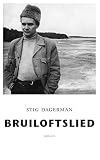
Bröllopsbesvär
by Stig Dagerman
On This Page
Description
"Considered by many to be Stig Dagerman's magnum opus, Wedding Worries spans the twenty-four hours of Hildur Palm's wedding day and night, beginning with an ominous knock on her door before sunrise and ending after a fitful night with an uncertain look into her future with her new husband, the village butcher. Characterized by its stream of consciousness style and perspective shifts between a colorful variety of characters, this novel oscillates between chaotic burlesque and sharp show more meditation, tackling themes of loneliness, suffering, and the human capacity to make do with unalterable circumstances, set against the backdrop of rural Sweden." -- show lessTags
Recommendations

















Member Reviews
Stig Dagerman was a leading writer in the post-WWII Swedish movement Fyrtiotalism, which was concerned with existentialist themes and influenced by Dostoevsky, Kafka, and others. He killed himself at 31 years old. In Wedding Worries, a group of people in a small village gather over one twenty four hour period and in alternately absurdist, melancholic, transcendent, satirical, and burlesque tones they struggle and exist with the despair.
“She turned off the light and wakened the boy. How do you say in German “Am I a bad person?” He answered and fell back asleep.
Since then she always uses this. Bin ich ein schlechter Mensch? Saying it this way has its advantages. It sounds as if it concerns someone else, the foreign tongue serving as show more a buffer between the scream and silence. It turns the whole thing into a conundrum, and she often ends up thinking: Good Lord, I’m really an intellectual, you know. Fortunately she doesn’t know enough German to ever be able to answer her own question.”
“But Westlund doesn’t like seeing Siri’s heart cut out like a piece of cake.
“What have you done to the girl?” he shouts again, and now they all come and crowd together under then pendant lamp.
“We’ve just opened her little heart,” Mary explains, “There’s nothing more wonderful than opening small, small hearts.”
“When did you get this?” Irma asks in a scathing voice, and she points to a deep wound with festering edges.
“As long as I can remember,” Siri whispers, “I’ve always had it.””
“At the end, everyone falls asleep - all except one. Everyone always falls asleep at the end - all except the blessed. But before everyone falls asleep, a chase has taken place. Where to find the friend I seek? Each of them, before they fell asleep, had been searching. In the mornings, we find them sleeping everywhere, many in the strangest positions. In the mornings, the seekers are sleeping. Some sleep in the forest on black stones, stretched out across the stones, their nails torn. Some come floating along the current, their hair flowing in the opposite direction. Many are lying in meadows; in the mornings some meadows look like battlefields, but battlefields without blood. Some lie in hollows. This small, black hollow - could it be my home? But no one asks, all the seekers fall asleep wherever they have found something; and if they haven’t found anything, they fall asleep where they are. In the morning, we find many on glaciers, their arms melting, and some are hanging in the trees, vertically as if they were standing on air.
Yes, in the mornings we find them in all places, those who have been searching for their friend.” show less
“She turned off the light and wakened the boy. How do you say in German “Am I a bad person?” He answered and fell back asleep.
Since then she always uses this. Bin ich ein schlechter Mensch? Saying it this way has its advantages. It sounds as if it concerns someone else, the foreign tongue serving as show more a buffer between the scream and silence. It turns the whole thing into a conundrum, and she often ends up thinking: Good Lord, I’m really an intellectual, you know. Fortunately she doesn’t know enough German to ever be able to answer her own question.”
“But Westlund doesn’t like seeing Siri’s heart cut out like a piece of cake.
“What have you done to the girl?” he shouts again, and now they all come and crowd together under then pendant lamp.
“We’ve just opened her little heart,” Mary explains, “There’s nothing more wonderful than opening small, small hearts.”
“When did you get this?” Irma asks in a scathing voice, and she points to a deep wound with festering edges.
“As long as I can remember,” Siri whispers, “I’ve always had it.””
“At the end, everyone falls asleep - all except one. Everyone always falls asleep at the end - all except the blessed. But before everyone falls asleep, a chase has taken place. Where to find the friend I seek? Each of them, before they fell asleep, had been searching. In the mornings, we find them sleeping everywhere, many in the strangest positions. In the mornings, the seekers are sleeping. Some sleep in the forest on black stones, stretched out across the stones, their nails torn. Some come floating along the current, their hair flowing in the opposite direction. Many are lying in meadows; in the mornings some meadows look like battlefields, but battlefields without blood. Some lie in hollows. This small, black hollow - could it be my home? But no one asks, all the seekers fall asleep wherever they have found something; and if they haven’t found anything, they fall asleep where they are. In the morning, we find many on glaciers, their arms melting, and some are hanging in the trees, vertically as if they were standing on air.
Yes, in the mornings we find them in all places, those who have been searching for their friend.” show less
Snelle perspectiefwisselingen en een unieke, haast onnavolgbare beeldspraak gunnen de lezer geen moment rust. Een donker, bij momenten uitzichtloos boek, op het helse ritme van een dronkemansnacht. Verrassend ontroerend, bijwijlen geniaal.
May 3, 2016Dutch
It took me a while to get into this book, not least because it was written partly in dialect, but in the end it was an enjoyable read!
Jul 25, 2025 (Edited)English (UK)
Nej det här var inget som passade mig. Bitvis kändes det som att nu kommer boken att bli bra men sedan tog det stopp igen och hela historien var totalt ointressant (för mig), den var jäkligt seg mestadels
Aug 30, 2012Swedish
Ratings
Members
- Recently Added By
Author Information

61+ Works 1,809 Members
Stig Dagerman (1923-1954) was the literary wunderkind of his generation in Sweden. Surpassed in Swedish literature perhaps only by August Strindberg in terms of his work's compressed intensity, Dagerman's remarkable literary output came to an abrupt end when he committed suicide at the age of thirty-one. Gri Somnen(Sleep Walking) By Karin Mamma show more Anderson, 1986. The Artist is Represented by Galleri Magnus Karlsson, Stockholm and the David Zwirner Gallery, New York Photo by Buknowskis Auctions Author Photograph Courtesy of Norstedts Agency. show less
Some Editions
Awards and Honors
Awards
Series
Belongs to Publisher Series
Work Relationships
Is contained in
Common Knowledge
- Canonical title*
- Schwedische Hochzeitsnacht
- Original title
- Bröllopsbesvär
- Original publication date
- 1949
- People/Characters*
- Martin Eng
*Some information comes from Common Knowledge in other languages. Click "Edit" for more information.
Classifications
- Genres
- Fiction and Literature, General Fiction
- DDC/MDS
- 839.73 — Literature & rhetoric German & related literatures Other Germanic literatures Swedish literature Swedish fiction
- LCC
- PT9875 .D12 — Language and Literature German, Dutch and Scandinavian literatures Swedish literature Individual authors or works 1900-1960
- BISAC
Statistics
- Members
- 128
- Popularity
- 254,885
- Reviews
- 4
- Rating
- (3.86)
- Languages
- 6 — Dutch, English, French, German, Portuguese, Swedish
- Media
- Paper
- ISBNs
- 15