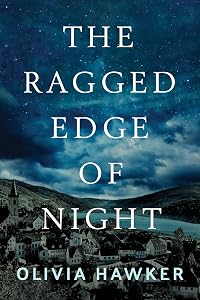
The Ragged Edge of Night
by Olivia Hawker
On This Page
Description
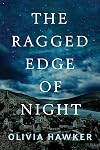
"Germany, 1942. Franciscan friar Anton Starzmann is stripped of his place in the world when his school is seized by the Nazis. He relocates to a small German hamlet to wed Elisabeth Herter, a widow who seeks a marriage--in name only--to a man who can help raise her three children. Anton seeks something too--atonement for failing to protect his young students from the wrath of the Nazis. But neither he nor Elisabeth expects their lives to be shaken once again by the inescapable rumble of war. show more As Anton struggles to adapt to the roles of husband and father, he learns of the Red Orchestra, an underground network of resisters plotting to assassinate Hitler. Despite Elisabeth's reservations, Anton joins this army of shadows. But when the SS discovers his schemes, Anton will embark on a final act of defiance that may cost him his life--even if it means saying goodbye to the family he has come to love more than he ever believed possible." -- show lessTags
Recommendations


















Member Reviews
Beautiful story set in WWII about the power of resistance and love in the midst of evil and totalitarianism. Yet another angle on the war - I'm always impressed when authors come up with a fresh story - and this one is based on a real person and true family lore and experience. Joseph Anton Starzmann was a Catholic friar until the Nazis disbanded his order and shipped off the special-needs children he had been teaching and caring for. He is then drafted into the Wehrmacht where he paratroops into Latvia to "liberate" Riga. After being wounded in this maneuver, he tries to adapt to civilian life, but seeks God's purpose and answers an ad in a Catholic newspaper from a desperate widow seeking a father for her 3 children in the small show more country town of Unterboihingen. This charming village has been largely untouched by the war except for the rations and food shortages, but the people look out for each other, have set up a barter system and are mainly loyal to their German heritage, not the Fuhrer's distortion of it. Here Anton becomes husband to Elisabeth, a courageous and devout woman, and father to Albert, Paul, and Maria. He also begins to teach music to local children, befriends the parish priest, Fr. Emil, and quietly finds ways to subvert the Nazis. It is 1943 and resistance is growing - even in Germany, which was so heartening to read about. The Red Orchestra has devised and network and a plan to try to bring down Hitler from within. The White Rose, a teen version of resistance is also spreading. Anton's first love is God, then his new family, then his country and his actions align with his beliefs at every turn. Though the town mostly shares the same views of goodness and right - they vote to take in refugees at one point - there are still dissenters (party loyalists) and even a gauleiter (Herr Franke/Mobelbauer) who watches and reports back to the SS. Anton is haunted by his inability to save his former students and is determined to make a difference any way he can. "Day after day it rises. Like a tide, it swells. Every outrage, every death, each new act of inhumanity wrings from us another drop of resolve, even when we think our spirits dust dry and deadened. We flow together; we merge; ...we are a river eroding its banks. We will no longer be contained. There is a greater force. Its name is Widerstand, resist." Though the author was aware of her grandfather-in-law's (the real Anton Starzmann's) subtle defiance for many years, she chose to write about it in 2016, seeing parallels of rising hatred and abuse of power in our own country. Thus this is a call to action, but also a song of hope. Don't miss it. show less
“Why this relentless, this secret optimism - this resolve, hard and hot at the base of my spine, and buried none too deep in my breast? The cancer that gnaws at us is too hungry to be sated. And I am but one man - one man. Christ Jesus, I always believed You were merciful, but this is a monstrous cruelty, to make me dream of a time when evil may fall… I cannot help but know it. Against all sense, I believe. Somewhere, beyond the ragged edge of night, light bleeds into this world.”
This is the fictionalized telling of the real Anton Starzmann, a friar, who finds himself in a marriage of convenience with a widow once his brotherhood is dissolved by the Nazis. As the war inches closer and closer to their village, Anton remains focused show more on his faith - doing what he can to lead, provide for and to protect his new family and his new home. His own acts of resistance small at first, but not unnoticed. And when the darkest night comes to Anton, all he can do is endure and cling to the dawn.
Although I enjoy WWII books in general, I really liked this one. Anton is a person like any other, struggling with a world gone mad, struggling with his faith, continuing to move ever forward - the only way he knows how. People like Anton are what we look for when we read the WWII genre, the ones that restore our hope in humanity, our hope in goodness, in light. show less
This is the fictionalized telling of the real Anton Starzmann, a friar, who finds himself in a marriage of convenience with a widow once his brotherhood is dissolved by the Nazis. As the war inches closer and closer to their village, Anton remains focused show more on his faith - doing what he can to lead, provide for and to protect his new family and his new home. His own acts of resistance small at first, but not unnoticed. And when the darkest night comes to Anton, all he can do is endure and cling to the dawn.
Although I enjoy WWII books in general, I really liked this one. Anton is a person like any other, struggling with a world gone mad, struggling with his faith, continuing to move ever forward - the only way he knows how. People like Anton are what we look for when we read the WWII genre, the ones that restore our hope in humanity, our hope in goodness, in light. show less
Historical fiction about a former friar, a widow, and her family living in a small rural German town during WWII. Protagonist Anton Starzmann had been a teacher in a Franciscan order before it was disbanded by Hitler’s regime. He suffers enormous guilt for not having done more to protect his students from being taken by the Nazis. After a brief stint in the Wehrmacht Anton decides to answer a widow’s advertisement seeking a husband to help her provide for her three children.
This book offers an original premise for a WWII-related story. It shows what life was like in the country, where threats exist but bombs are at a distance. The war does not impact them physically as much as emotionally and psychologically. Many Germans in the show more town want to resist but need to find ways that do not endanger their families. This moral dilemma is central to the story. The author’s writing is lyrical. Many of Anton’s thoughts are, as would be expected from a former friar, filtered through a religious lens, and I found this particularly effective in setting a tone of spiritual reflection.
The book is character-driven and focused on relationships, which are built slowly. Based on the lives of real people, it is a touching story of courage in the face of evil. It shows the importance of small acts of defiance, even if results are not immediate or obvious. It contains an element of hope in a damaged world. I found it both poignant and thought-provoking. show less
This book offers an original premise for a WWII-related story. It shows what life was like in the country, where threats exist but bombs are at a distance. The war does not impact them physically as much as emotionally and psychologically. Many Germans in the show more town want to resist but need to find ways that do not endanger their families. This moral dilemma is central to the story. The author’s writing is lyrical. Many of Anton’s thoughts are, as would be expected from a former friar, filtered through a religious lens, and I found this particularly effective in setting a tone of spiritual reflection.
The book is character-driven and focused on relationships, which are built slowly. Based on the lives of real people, it is a touching story of courage in the face of evil. It shows the importance of small acts of defiance, even if results are not immediate or obvious. It contains an element of hope in a damaged world. I found it both poignant and thought-provoking. show less
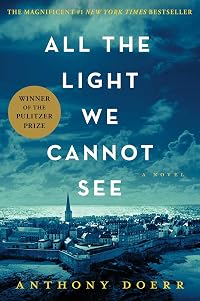
My understanding was that this was historical fiction in the style of All the Light We Cannot See. What I discovered in the Afterword, however, is that this story is based on the lives of real characters, and in particular, the grandfather of the author’s husband, born in 1904 in Stuttgart to a devout Catholic family.
Anton Starzmann, 38, previously served as a friar who taught music to developmentally and/or physically challenged children at the St. Josefsheim school. The Nazis came, disbanded the order, took the children away, and put the men into the army as soldiers. [We later are reminded that Hitler initiated the T4 Program in 1939, a campaign to “rid the Fatherland” of such “drains” upon the economy as the disabled.] show more
Anton thus joined the Army, but what he had to do haunted him. Then, while jumping from a plane when the army went into Riga, Anton sustained a back injury, or so he claimed, in order to avoid further service in the Wehrmacht. It was his first act of resistance.
As we begin the story, almost a year has passed since Anton’s days as a friar, and he is traveling to Unterboihingen, a small village near Stuttgart. [Today, the Württemberg town of Unterboihingen has been absorbed into Wendlingen.] He had come to Unterboihingen for the surprising reason that he answered an ad by Elisabeth Hansjosten Herter, a young widow. She said she was seeking “a humble, patient man” for a husband who was willing to be a father to her three children. [You may think this a bit too contrived and predictable for a plot line, but as indicated above, it is based on actual fact.]
It is clear each is reluctant to take on such a role with a stranger, but Anton is looking for redemption, and Elisabeth is looking for help. She admits she is “only seeking a husband for his money.” Elisabeth has three children: Albert, 11, Paul, 9, and Maria, 6. It is hard for her to feed and clothe them in this time of war.
Elisabeth was clearly nervous, however, and Anton tried to reassure her. He told her about his back injury to imply he would not be able to be a husband in every sense, so she could relax on that score.
They each took two weeks for “prayer and reflection,” and then got married.
In the meantime, Anton became friends with the local priest, Father Emil. Anton went to him in anguish: he didn't know how to be a husband or a father. Emil reminded him he also has never been either:
“But I think it can’t be so different from being a man of the cloth. You must be guided by integrity, mercy, and justice. You must let love carry all your decisions, all your words. . . . That is all the Lord asks - that we live by Christ’s example.”
Anton agreed to play the organ for Father Emil at his church St. Kolumban on Sundays, and Father Emil helped Anton get work teaching music in order to support Elisabeth and the children. Few families could afford lessons, however, and it did not generate enough money to take care of growing children. Then Father Emil got Anton a more lucrative position, taking messages to other members of the resistance in nearby towns.
Anton didn't tell Elisabeth at first because he knew it is dangerous. Even in remote Unterboihingen there was a town Gauleiter - a district leader who served as the Reich’s eyes and ears, working to promote the Nazi agenda, and threatening to report anyone who seemed the least bit disloyal. But as Anton whispered to his stepson Albert, “Herr Möbelbauer,” as the boys called the Gauleiter because of his profession as a furniture maker, “answers to his ambition, but I answer only to God.”
When the Gauleiter insisted that Anton be in charge of a Hitler Youth group for the town, Anton was desperate to come up with a plan to avoid this task. Playing to the Gauleiter’s ambition, he proposed forming a town band for the boys instead, that putatively would bring even more glory to Unterboihingen and therefore to the Gauleiter himself.
Anton still had the instruments he brought with him from St. Josefsheim. He believed that “music eases every pain we don’t know we carry.” It was, he declared, a balm for our hearts. Moreover, music was a common language anyone could speak together: “it’s the greatest miracle God ever wrought, for it shows us that we are one.” [Many of the Nazis loved music, including Hitler, but it was a nice theory in any event.]
Time went by, and Anton developed strong feelings for Elisabeth, but “[t]wenty years of celibacy . . . left him unprepared to confront his own heart.” Yet he came to understand that he loved his wife, even though he did not think she returned his feelings.
At the same time, they experienced increasing adversity and danger, much of it on account of the tyrannical power wielded by the Gauleiter. Before long they received information that the Gauleiter suspected Anton, so Anton agreed to “lie low.” But then word came that the SS were going to every small town to take away the church bells to melt down for the brass. Anton, with his love of music and his hatred of Hitler, was determined not to let that happen.
Anton and Elisabeth had to confront their feelings about one another and the family they had forged together, as well as to weigh the risk of taking ethical action and possibly losing their lives, versus the psychological and spiritual cost of going along with the Nazis and losing their souls.
Discussion: The author says in her Afterword that she kept notes on this family story for years, but never felt a compulsion to complete it until the election of 2016 showed her that history can repeat itself. She admonishes, “We are fools to think the past remains in the past.” She writes:
“As I watched the U.S. I thought I knew devolve, seemingly overnight, into an unrecognizable landscape - a place where political pundits threw up Nazi salutes in front of news cameras, unafraid - a place where swastikas bloomed like fetid flowers on the walls of synagogues and mosques - I knew the time had come.”
She inserts into her story many developments about the growth of Nazi political power that are not only historically accurate, but sound alarmingly like what is happening again now.
She notes, for example, about the Nazi era:
“We could have stopped them long ago, but we didn’t. We hid our faces behind our hands. We told ourselves, ‘This won’t continue. It won’t be allowed. Someone will stop them; someone must.’”
But the Party quickly became thoroughly entrenched, and as for the people:
“They are all too willing to shut their eyes, to pretend nothing evil has happened. . . . They are ready to believe, now, that mankind was always meant to hate his neighbor, to kill the weak and the outcast, since God first dreamed us into being.”
And yet, because of what the author has seen with her husband’s family, she believes that “darkness cannot last forever. And beyond night’s edge, there is light.”
Evaluation: This ironically timely book is all the more moving because so much of it really took place. The focus is mostly on Anton’s interior landscape, who, because he was a man of God for so many years, is confused and distraught that such evil has come to inhabit the world.
Highly recommended. show less
Anton Starzmann, 38, previously served as a friar who taught music to developmentally and/or physically challenged children at the St. Josefsheim school. The Nazis came, disbanded the order, took the children away, and put the men into the army as soldiers. [We later are reminded that Hitler initiated the T4 Program in 1939, a campaign to “rid the Fatherland” of such “drains” upon the economy as the disabled.] show more
Anton thus joined the Army, but what he had to do haunted him. Then, while jumping from a plane when the army went into Riga, Anton sustained a back injury, or so he claimed, in order to avoid further service in the Wehrmacht. It was his first act of resistance.
As we begin the story, almost a year has passed since Anton’s days as a friar, and he is traveling to Unterboihingen, a small village near Stuttgart. [Today, the Württemberg town of Unterboihingen has been absorbed into Wendlingen.] He had come to Unterboihingen for the surprising reason that he answered an ad by Elisabeth Hansjosten Herter, a young widow. She said she was seeking “a humble, patient man” for a husband who was willing to be a father to her three children. [You may think this a bit too contrived and predictable for a plot line, but as indicated above, it is based on actual fact.]
It is clear each is reluctant to take on such a role with a stranger, but Anton is looking for redemption, and Elisabeth is looking for help. She admits she is “only seeking a husband for his money.” Elisabeth has three children: Albert, 11, Paul, 9, and Maria, 6. It is hard for her to feed and clothe them in this time of war.
Elisabeth was clearly nervous, however, and Anton tried to reassure her. He told her about his back injury to imply he would not be able to be a husband in every sense, so she could relax on that score.
They each took two weeks for “prayer and reflection,” and then got married.
In the meantime, Anton became friends with the local priest, Father Emil. Anton went to him in anguish: he didn't know how to be a husband or a father. Emil reminded him he also has never been either:
“But I think it can’t be so different from being a man of the cloth. You must be guided by integrity, mercy, and justice. You must let love carry all your decisions, all your words. . . . That is all the Lord asks - that we live by Christ’s example.”
Anton agreed to play the organ for Father Emil at his church St. Kolumban on Sundays, and Father Emil helped Anton get work teaching music in order to support Elisabeth and the children. Few families could afford lessons, however, and it did not generate enough money to take care of growing children. Then Father Emil got Anton a more lucrative position, taking messages to other members of the resistance in nearby towns.
Anton didn't tell Elisabeth at first because he knew it is dangerous. Even in remote Unterboihingen there was a town Gauleiter - a district leader who served as the Reich’s eyes and ears, working to promote the Nazi agenda, and threatening to report anyone who seemed the least bit disloyal. But as Anton whispered to his stepson Albert, “Herr Möbelbauer,” as the boys called the Gauleiter because of his profession as a furniture maker, “answers to his ambition, but I answer only to God.”
When the Gauleiter insisted that Anton be in charge of a Hitler Youth group for the town, Anton was desperate to come up with a plan to avoid this task. Playing to the Gauleiter’s ambition, he proposed forming a town band for the boys instead, that putatively would bring even more glory to Unterboihingen and therefore to the Gauleiter himself.
Anton still had the instruments he brought with him from St. Josefsheim. He believed that “music eases every pain we don’t know we carry.” It was, he declared, a balm for our hearts. Moreover, music was a common language anyone could speak together: “it’s the greatest miracle God ever wrought, for it shows us that we are one.” [Many of the Nazis loved music, including Hitler, but it was a nice theory in any event.]
Time went by, and Anton developed strong feelings for Elisabeth, but “[t]wenty years of celibacy . . . left him unprepared to confront his own heart.” Yet he came to understand that he loved his wife, even though he did not think she returned his feelings.
At the same time, they experienced increasing adversity and danger, much of it on account of the tyrannical power wielded by the Gauleiter. Before long they received information that the Gauleiter suspected Anton, so Anton agreed to “lie low.” But then word came that the SS were going to every small town to take away the church bells to melt down for the brass. Anton, with his love of music and his hatred of Hitler, was determined not to let that happen.
Anton and Elisabeth had to confront their feelings about one another and the family they had forged together, as well as to weigh the risk of taking ethical action and possibly losing their lives, versus the psychological and spiritual cost of going along with the Nazis and losing their souls.
Discussion: The author says in her Afterword that she kept notes on this family story for years, but never felt a compulsion to complete it until the election of 2016 showed her that history can repeat itself. She admonishes, “We are fools to think the past remains in the past.” She writes:
“As I watched the U.S. I thought I knew devolve, seemingly overnight, into an unrecognizable landscape - a place where political pundits threw up Nazi salutes in front of news cameras, unafraid - a place where swastikas bloomed like fetid flowers on the walls of synagogues and mosques - I knew the time had come.”
She inserts into her story many developments about the growth of Nazi political power that are not only historically accurate, but sound alarmingly like what is happening again now.
She notes, for example, about the Nazi era:
“We could have stopped them long ago, but we didn’t. We hid our faces behind our hands. We told ourselves, ‘This won’t continue. It won’t be allowed. Someone will stop them; someone must.’”
But the Party quickly became thoroughly entrenched, and as for the people:
“They are all too willing to shut their eyes, to pretend nothing evil has happened. . . . They are ready to believe, now, that mankind was always meant to hate his neighbor, to kill the weak and the outcast, since God first dreamed us into being.”
And yet, because of what the author has seen with her husband’s family, she believes that “darkness cannot last forever. And beyond night’s edge, there is light.”
Evaluation: This ironically timely book is all the more moving because so much of it really took place. The focus is mostly on Anton’s interior landscape, who, because he was a man of God for so many years, is confused and distraught that such evil has come to inhabit the world.
Highly recommended. show less
The Ragged Edge of Night is a wonderful historical-fiction novel that ties together a slow smoldering romance with a suspenseful tall of intrigue, heroism, bravery and courage. It tells a side of WW II not often explored in so many books, the story of those within Germany who saw Hitler for the evil despot he was and dared to resist.
While popular fiction uses a broad brush to depict Germany during the war, wiser heads realize that not everyone was taken in by the Nazis and that many stood up to resist. Resisting Hitler was dangerous but necessary, just as it is when any country loses its way and becomes ruled by madmen.
The Ragged Edge of Night, based on a real story, follows the meeting and marriage of two very unlikely spouses who try show more to scratch out a living and protect their children in a time of desperation and danger. The story engrossed readers, reading far more like a suspense thriller than a fictionalized retelling of actual events. It is a tribute to people who respond to the morality of their hearts rather than to the fears or temptations of those around them.
The writing never waivers from excellence, articulately describing events, settings and characters, making readers feel as if they are part of the action.
I am glad I found this book and hope many, many others do, too. show less
While popular fiction uses a broad brush to depict Germany during the war, wiser heads realize that not everyone was taken in by the Nazis and that many stood up to resist. Resisting Hitler was dangerous but necessary, just as it is when any country loses its way and becomes ruled by madmen.
The Ragged Edge of Night, based on a real story, follows the meeting and marriage of two very unlikely spouses who try show more to scratch out a living and protect their children in a time of desperation and danger. The story engrossed readers, reading far more like a suspense thriller than a fictionalized retelling of actual events. It is a tribute to people who respond to the morality of their hearts rather than to the fears or temptations of those around them.
The writing never waivers from excellence, articulately describing events, settings and characters, making readers feel as if they are part of the action.
I am glad I found this book and hope many, many others do, too. show less
The Ragged Edge of Night is a wonderful historical-fiction novel that ties together a slow smoldering romance with a suspenseful tall of intrigue, heroism, bravery and courage. It tells a side of WW II not often explored in so many books, the story of those within Germany who saw Hitler for the evil despot he was and dared to resist.
While popular fiction uses a broad brush to depict Germany during the war, wiser heads realize that not everyone was taken in by the Nazis and that many stood up to resist. Resisting Hitler was dangerous but necessary, just as it is when any country loses its way and becomes ruled by madmen.
The Ragged Edge of Night, based on a real story, follows the meeting and marriage of two very unlikely spouses who try show more to scratch out a living and protect their children in a time of desperation and danger. The story engrossed readers, reading far more like a suspense thriller than a fictionalized retelling of actual events. It is a tribute to people who respond to the morality of their hearts rather than to the fears or temptations of those around them.
The writing never waivers from excellence, articulately describing events, settings and characters, making readers feel as if they are part of the action.
I am glad I found this book and hope many, many others do, too. show less
While popular fiction uses a broad brush to depict Germany during the war, wiser heads realize that not everyone was taken in by the Nazis and that many stood up to resist. Resisting Hitler was dangerous but necessary, just as it is when any country loses its way and becomes ruled by madmen.
The Ragged Edge of Night, based on a real story, follows the meeting and marriage of two very unlikely spouses who try show more to scratch out a living and protect their children in a time of desperation and danger. The story engrossed readers, reading far more like a suspense thriller than a fictionalized retelling of actual events. It is a tribute to people who respond to the morality of their hearts rather than to the fears or temptations of those around them.
The writing never waivers from excellence, articulately describing events, settings and characters, making readers feel as if they are part of the action.
I am glad I found this book and hope many, many others do, too. show less
The Ragged Edge of Night is a wonderful historical-fiction novel that ties together a slow smoldering romance with a suspenseful tall of intrigue, heroism, bravery and courage. It tells a side of WW II not often explored in so many books, the story of those within Germany who saw Hitler for the evil despot he was and dared to resist.
While popular fiction uses a broad brush to depict Germany during the war, wiser heads realize that not everyone was taken in by the Nazis and that many stood up to resist. Resisting Hitler was dangerous but necessary, just as it is when any country loses its way and becomes ruled by madmen.
The Ragged Edge of Night, based on a real story, follows the meeting and marriage of two very unlikely spouses who try show more to scratch out a living and protect their children in a time of desperation and danger. The story engrossed readers, reading far more like a suspense thriller than a fictionalized retelling of actual events. It is a tribute to people who respond to the morality of their hearts rather than to the fears or temptations of those around them.
The writing never waivers from excellence, articulately describing events, settings and characters, making readers feel as if they are part of the action.
I am glad I found this book and hope many, many others do, too. show less
While popular fiction uses a broad brush to depict Germany during the war, wiser heads realize that not everyone was taken in by the Nazis and that many stood up to resist. Resisting Hitler was dangerous but necessary, just as it is when any country loses its way and becomes ruled by madmen.
The Ragged Edge of Night, based on a real story, follows the meeting and marriage of two very unlikely spouses who try show more to scratch out a living and protect their children in a time of desperation and danger. The story engrossed readers, reading far more like a suspense thriller than a fictionalized retelling of actual events. It is a tribute to people who respond to the morality of their hearts rather than to the fears or temptations of those around them.
The writing never waivers from excellence, articulately describing events, settings and characters, making readers feel as if they are part of the action.
I am glad I found this book and hope many, many others do, too. show less
Members
- Recently Added By
Lists

Books Read in 2018
4,360 works; 110 members
Author Information

34+ Works 2,356 Members
Some Editions
Common Knowledge
- People/Characters
- Anton Starzmann; Elisabeth Hansjosten Herter
- Important places
- Germany
- Important events
- World War II
Classifications
Statistics
- Members
- 544
- Popularity
- 54,607
- Reviews
- 22
- Rating
- (4.01)
- Languages
- English
- Media
- Paper, Audiobook, Ebook
- ISBNs
- 7
- ASINs
- 2