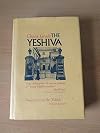
The Yeshiva
by Chaim Grade
On This Page
Description
The Yeshiva: Masters and Disciples is the second and concluding volume of Chaim Grade's masterwork. Continuing the moving story of Tsemakh Atlas, head of the Yeshiva, Grade re-creates the rich world of his native city Vilna in pre-World War II Lithuania. The now-vanished Eastern European Jewish community was inhabited by the pious and the heretical, the righteous and the sinful, the wise and the foolish. Religion was as crucial to living, and as much a part of Grade's people, as their daily show more bread. How they reacted to it - and, through it, to one another - formed the core of day-to-day life. Each problem, each experience was felt through the teachings of Tsemakh Atlas. Chaim Grade has brought his striking characters to full life, revealing them in all their glory and pain. The Yeshiva is a brilliant work that mourns, and finally locks into memory, a culture sadly lost in reality but eternal in spirit. show lessTags
Recommendations



















Member Reviews
When IB Singer got the Nobel Prize, Yiddishists were torn. This novel is the primary reason that many, myself included, thought that Chaim Grade deserved it instead. Grade's humanist realism recreates 19th century Jewish life, and the tale is universal in its detailing of the conflict between the high demands of fanatic fundamentalism and the weakness of being human. A friend who read this book recently adds that Grade's women are unusually well-drawn and real. I'd say that Grade's people are well-drawn and real. If "Rabbis and Wives" (3 short novellas) whets your appetite, this is the full meal. If only more Grade were translated....
The Yeshiva draws on some of Chaim Grade's own experiences growing up in Lithuania and Poland between the wars in a story that crosses religious torment with vingettes of everyday life. The main character is Tsemakh Atlas, a scholar who fanatically follows the teachings of the Mussar movement (a Jewish ethical movement that focuses on removing all traces of sin from your thoughts and actions, rejecting comfort and pleasure, and [apparently] telling the truth to everyone even if they don't want to hear it). The problem, however, is that Tsemakh secretly doubts the existence of God and openly belittles close studying of the Torah, which is what pretty much everyone else thinks a good scholar should work on.
Grade paints a realistic and show more engrossing picture of Jewish life between the wars in the period where freethinking and secular movements were threatening the traditional way of life. In Tsemakh we have a man with horribly ordinary passions and doubts who takes pleasure in tormenting himself and generally alienates those around him. He is balanced by a whole host of scholars, villagers, families, and shopkeepers who spend their time just living their lives.
[full review of Volume 1 here: http://spacebeer.blogspot.com/2009/12/yeshiva-volume-1-by-chaim-grade-1967.html ]
[full review of Volume 2 here: http://spacebeer.blogspot.com/2010/01/yeshiva-volume-ii-masters-and-disciples.ht... ] show less
Grade paints a realistic and show more engrossing picture of Jewish life between the wars in the period where freethinking and secular movements were threatening the traditional way of life. In Tsemakh we have a man with horribly ordinary passions and doubts who takes pleasure in tormenting himself and generally alienates those around him. He is balanced by a whole host of scholars, villagers, families, and shopkeepers who spend their time just living their lives.
[full review of Volume 1 here: http://spacebeer.blogspot.com/2009/12/yeshiva-volume-1-by-chaim-grade-1967.html ]
[full review of Volume 2 here: http://spacebeer.blogspot.com/2010/01/yeshiva-volume-ii-masters-and-disciples.ht... ] show less
Ratings
Members
- Recently Added By
Lists

Tablet Magazine's List of 101 Great Jewish Books
103 works; 9 members

Harold Bloom - The Western Canon: D. The Chaotic Age
833 works; 24 members
Author Information

23+ Works 688 Members
Grade was born in Vilna, Poland, where he received a thorough education in the talmudic academies of the region. He began writing poetry in 1932 and soon won literary recognition. He escaped the Nazi onslaught as a refugee in the Soviet Union, only to return to Poland after the war to find his mother and wife killed and his hometown destroyed. His show more later work, both poetry and prose, reflect the tragic Holocaust theme and is dedicated to the re-creation of a world that is no more. His characters are deeply rooted in Jewish tradition and the lore of his native land; his poetry is forceful and dramatic, with the pathos of national and personal tragedy. (Bowker Author Biography) show less
Some Editions
Awards and Honors
Awards
Common Knowledge
- Original title
- Tsemaḥ Aṭlas
- Original publication date
- 1967
- People/Characters
- Tsemakh Atlas
- First words
- Tsemakh Atlas was a young Torah student in Lomzhe when he heard that in the Musar yeshiva in Navaredok, the yetzer ha-ra -- the evil tempter in man -- has already been slain.
Classifications
- Genres
- Fiction and Literature, General Fiction
- DDC/MDS
- 839.09 — Literature & rhetoric German & related literatures Other Germanic literatures - Yiddish
- LCC
- PJ5129 .G68 .Y — Language and Literature Oriental languages and literatures Oriental philology and literature Hebrew Other languages used by Jews Yiddish
Statistics
- Members
- 77
- Popularity
- 411,031
- Reviews
- 2
- Rating
- (4.17)
- Languages
- English
- Media
- Paper
- ISBNs
- 2
- ASINs
- 4