On This Page
Description
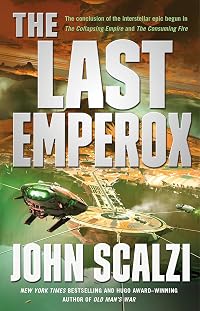
"The Last Emperox is the thrilling conclusion to the award-winning, New York Times and USA Today bestselling Interdependency series, an epic space opera adventure from Hugo Award-winning author John Scalzi. The collapse of The Flow, the interstellar pathway between the planets of the Interdependency, has accelerated. Entire star systems--and billions of people--are becoming cut off from the rest of human civilization. This collapse was foretold through scientific prediction . . . and yet, show more even as the evidence is obvious and insurmountable, many still try to rationalize, delay and profit from, these final days of one of the greatest empires humanity has ever known. Emperox Grayland II has finally wrested control of her empire from those who oppose her and who deny the reality of this collapse. But "control" is a slippery thing, and even as Grayland strives to save as many of her people form impoverished isolation, the forces opposing her rule will make a final, desperate push to topple her from her throne and power, by any means necessary. Grayland and her thinning list of allies must use every tool at their disposal to save themselves, and all of humanity. And yet it may not be enough. Will Grayland become the savior of her civilization . . . or the last emperox to wear the crown?"--Jacket flap. show lessTags
Recommendations








Member Reviews
For 2.8 volumes of this trilogy, it was a fun series that didn't take itself too seriously. You don't get deep character dives. You don't look too closely at the science-fictiony science. You don't think too much about the deus ex machina of an AI that can ferret out anything. You laugh at co-conspirators who'll trust the villain despite her 100% track record of screwing them over. You just enjoy the romp ... sort of a summer reading type of thing.
Unfortunately, the ending doesn't jibe with those previous 2.8 volumes. It's not a bad ending, per se. It's simply completely inconsistent with the tone and characterizations that went before. And that spoiled it for me. So, rather than this being a series I'd recommend to fans of show more lighthearted science fiction, I doubt I'll remember this much after some time has passed.
The ending fails on two different levels. At the 30,000-foot level, this series set itself up as a fun, happy adventure where the good guys win after a few travails, and the bad guys lose big time. The bad guys do lose. But it's a Pyrrhic victory for the good guys. And that doesn't work. Expectations weren't set that way, and this series isn't deep enough to carry off that kind of twist.
On a more detailed level, it was inconsistent with Cardenia's character as presented to us. Yes, it's entirely believable that she would sacrifice her life to save the Interdependency. But it is NOT entirely believable that she would commit suicide to do so when there were other, perfectly viable alternatives. One of the main thrusts of the books was how much people had misjudged her ability to come out ahead and triumph over the obstacles they put in her way.
She knew the murder attempt was coming, including the details of time, place, and method. She knew she had the technology to fake a death right down to DNA samples—I mean, come on, that plot device was used more than once in the story. She knew she had a ship that was impervious to spying and could take her off on an adventure in a direction that no one would suspect. It's obvious: let the Countess blow herself up, fake your own death, let your AI clone do what it did. Go live the rest of your life as Cardenia instead of Grayland (which is what you wanted anyway), marry the love of your life, and visit Earth content in the knowledge that you've accomplished exactly what the ending-as-written accomplished while still staying true to character and tone.
Artificially injecting pathos into a story doesn't make it deeper.
Oh, and while we're at it: does anyone really think Marce would jet off to find Earth, no matter how heartbroken he is, when he's the best hope for saving civilization? I don't. That's not the character we met for 2.8 volumes.
Unfortunately, the ending doesn't jibe with those previous 2.8 volumes. It's not a bad ending, per se. It's simply completely inconsistent with the tone and characterizations that went before. And that spoiled it for me. So, rather than this being a series I'd recommend to fans of show more lighthearted science fiction, I doubt I'll remember this much after some time has passed.
The ending fails on two different levels. At the 30,000-foot level, this series set itself up as a fun, happy adventure where the good guys win after a few travails, and the bad guys lose big time. The bad guys do lose. But it's a Pyrrhic victory for the good guys. And that doesn't work. Expectations weren't set that way, and this series isn't deep enough to carry off that kind of twist.
On a more detailed level, it was inconsistent with Cardenia's character as presented to us. Yes, it's entirely believable that she would sacrifice her life to save the Interdependency. But it is NOT entirely believable that she would commit suicide to do so when there were other, perfectly viable alternatives. One of the main thrusts of the books was how much people had misjudged her ability to come out ahead and triumph over the obstacles they put in her way.
She knew the murder attempt was coming, including the details of time, place, and method. She knew she had the technology to fake a death right down to DNA samples—I mean, come on, that plot device was used more than once in the story. She knew she had a ship that was impervious to spying and could take her off on an adventure in a direction that no one would suspect. It's obvious: let the Countess blow herself up, fake your own death, let your AI clone do what it did. Go live the rest of your life as Cardenia instead of Grayland (which is what you wanted anyway), marry the love of your life, and visit Earth content in the knowledge that you've accomplished exactly what the ending-as-written accomplished while still staying true to character and tone.
Artificially injecting pathos into a story doesn't make it deeper.
Oh, and while we're at it: does anyone really think Marce would jet off to find Earth, no matter how heartbroken he is, when he's the best hope for saving civilization? I don't. That's not the character we met for 2.8 volumes.
Scalzi, John. The Last Emperox. The Interdependency No. 3. Tor, 2020.
I read it in one day. This is not something I usually do. Usually, I am reading three or four books at once in bits and snatches, but Scalzi kept me pumping all the way through and I grumped when I finished it because I wanted more. Emperox has the kind of depth of character and thoughtful social-economic detail I can usually only find in C. J. Cherryh and the dramatic action and humor that I usually have to reread the Vorkosigan saga to satisfy. Cardenia and Marce are a lovely couple, and Kiva still kicks ass and cusses like a sailor on leave. The flow is still collapsing, and the plotters are plotting. So, well done, John. Now, since you very carefully left some show more threads still spooling, get on with the next trilogy. show less
I read it in one day. This is not something I usually do. Usually, I am reading three or four books at once in bits and snatches, but Scalzi kept me pumping all the way through and I grumped when I finished it because I wanted more. Emperox has the kind of depth of character and thoughtful social-economic detail I can usually only find in C. J. Cherryh and the dramatic action and humor that I usually have to reread the Vorkosigan saga to satisfy. Cardenia and Marce are a lovely couple, and Kiva still kicks ass and cusses like a sailor on leave. The flow is still collapsing, and the plotters are plotting. So, well done, John. Now, since you very carefully left some show more threads still spooling, get on with the next trilogy. show less
Science fiction is at its best when it examines issues in the context of future events. In this case, Scalzi uses the question of who do you save when you have limited resources? Do you try to keep everyone alive? Do you try to keep a select few? The problem examined in the context of the technologically advanced semi-feudal system of government. You know from the outset which answers Scalzi favors, yet he gives the other side a rational voice.
I loved this book, and it was a third great act to a three-act series. I found myself caring for the characters. The politics that lay at the heart of the story are understandable. The clarity is unusual for most novels that are focused more on politics than action. There is a clear villain in show more this novel. Yet her motives from her perspective are rational, given the known limits of the technology—the impending doom facing the society.
The elements of the resolution of the problem Scalzi proposes are scattered through the series. Scalzi presents science with a lack of technobabble. Yet and still, I found the ending of the series somewhat rushed. Scalzi admits he wrote the conclusion in the shadow of a deadline. I wish the finish had been longer. show less
I loved this book, and it was a third great act to a three-act series. I found myself caring for the characters. The politics that lay at the heart of the story are understandable. The clarity is unusual for most novels that are focused more on politics than action. There is a clear villain in show more this novel. Yet her motives from her perspective are rational, given the known limits of the technology—the impending doom facing the society.
The elements of the resolution of the problem Scalzi proposes are scattered through the series. Scalzi presents science with a lack of technobabble. Yet and still, I found the ending of the series somewhat rushed. Scalzi admits he wrote the conclusion in the shadow of a deadline. I wish the finish had been longer. show less
Even though I know I will reread this numerous times throughout the rest of my life, I specifically bought the Kindle version because I wanted it right away and I have the first two on Kindle. Part of me wants to throw everything else aside and start immediately, part of me worries that trying to read something new, even with a very high probability of loving it, is just not a good idea these days for me.
***
Well that was absolutely and utterly satisfying. Not the least for showing that I can read something new, as long as it is exciting and fast-paced and full of surprises, and so fucking full of expletives.
And also I really appreciate seeing a portrayal of a government that is not a kleptocracy. Although I have numerous examples of show more altruism before me every day, it's lovely to see it writ large.
Personal copy show less
***
Well that was absolutely and utterly satisfying. Not the least for showing that I can read something new, as long as it is exciting and fast-paced and full of surprises, and so fucking full of expletives.
And also I really appreciate seeing a portrayal of a government that is not a kleptocracy. Although I have numerous examples of show more altruism before me every day, it's lovely to see it writ large.
Personal copy show less
Definitely one of the best series I read this year. (Review is of the whole series because I read them so quickly I can't remember what parts happened in which volume)
In the far future, humanity is set up on a series of planets and systems that are connected by some pretty neat worm holes. They don't really know where they came from or how they work, which is a problem because it appears that they're closing. The new Emperox is concerned with trying to hold civilization together and rescue folks from worlds that aren't sustainable without the Interdependency because she's a benevolent ruler, but the power- and money-hungry factions of her quasi-government don't really care about that and so they're engaged in all kinds of machinations show more to thwart her in the pursuit of the aforementioned power and money.
Another main character is Lady Kiva Lagos who is probably the most delightfully profane person I've ever come across and I love her deeply. She will (and frequently does) sleep with anybody and doesn't give a F*** about anything but her family and getting laid, until she's in the middle of this whole cluster and seems to just enjoy f-ing up the lives of people who are a-holes.
Lastly, we have Marce Claremont, who grew up on the farthest planet out because his father was exiled there to try to figure out the whole tunnel disappearance thing (one had disappeared a some years prior), and his dad wants him to get back to inform the Emperox what he found out. He's a sweet, nerdy dude with a big brain and an even bigger heart. I love him, too.
In fact, I loved all these characters and also hated everyone trying to get in their way, and if you're a reader of Science Fiction, you know that usually they're more about ideas and plot (or blasting up space aliens) than characters. The great thing about Scalzi is that he writes amazing characters *in addition* to great plots and his stories engage both your mind and your heart. Well done. Highly recommend. show less
In the far future, humanity is set up on a series of planets and systems that are connected by some pretty neat worm holes. They don't really know where they came from or how they work, which is a problem because it appears that they're closing. The new Emperox is concerned with trying to hold civilization together and rescue folks from worlds that aren't sustainable without the Interdependency because she's a benevolent ruler, but the power- and money-hungry factions of her quasi-government don't really care about that and so they're engaged in all kinds of machinations show more to thwart her in the pursuit of the aforementioned power and money.
Another main character is Lady Kiva Lagos who is probably the most delightfully profane person I've ever come across and I love her deeply. She will (and frequently does) sleep with anybody and doesn't give a F*** about anything but her family and getting laid, until she's in the middle of this whole cluster and seems to just enjoy f-ing up the lives of people who are a-holes.
Lastly, we have Marce Claremont, who grew up on the farthest planet out because his father was exiled there to try to figure out the whole tunnel disappearance thing (one had disappeared a some years prior), and his dad wants him to get back to inform the Emperox what he found out. He's a sweet, nerdy dude with a big brain and an even bigger heart. I love him, too.
In fact, I loved all these characters and also hated everyone trying to get in their way, and if you're a reader of Science Fiction, you know that usually they're more about ideas and plot (or blasting up space aliens) than characters. The great thing about Scalzi is that he writes amazing characters *in addition* to great plots and his stories engage both your mind and your heart. Well done. Highly recommend. show less
Damn you Scalzi! You did it again. You wrote a book that managed to break my heart while being humorous and thrilling all at the same time. How dare you?
The desperate logistics of planning for the end reach their climax in the conclusion to a space opera trilogy that began with The Collapsing Empire (2017) and The Consuming Fire (2018) in The Last Emperox. Without giving too much away, Time is running out for Cardenia Wu-Patrick, aka Grayland II, emperox of the planet-spanning Interdependency. We follow Cardenia as she struggles with a plan to save the billions who will suffer and starve in the wake of the collapse of the Flow, the extradimensional network connecting the planets of her far-flung empire, while her nemesis, Lady Nadashe show more Nohamapetan, continues to scheme against her. Meanwhile our favorite foul mouth lady Kiva Lagos is also still getting herself entangled with the affairs of various houses. How does this play out for her you ask? Read the book to find out for yourself.
I will say, how things eventually play out for Cardenia is shocking. The Last Emperox is full of twists and turns that were certainly a surprise. The way the story resolves itself to give almost everyone in The Interdependency a chance to survive the eventual collapse of the Flow readers will certainly find painful yet engrossing. With the end, there is hope of a new beginning.
The Last Emperox while being a bit bitter sweet—is fast-paced and fun, and will leave space opera fans thoroughly entertained. The book is tIerily timely as well, an exploration of how mercantile self-interest can drive some to view the death of millions as an acceptable loss (cough cough - reminds me of a certain current administration of country that should remain nameless - cough). Scalzi pulls off the perfect ending and conclusion to a beloved trilogy, with room left to still explore the universe of the Inter dependency. Kuddos!
For fans of: Game of Thrones, Space Opera, Iain Banks, Dune, Badass Women. show less
The desperate logistics of planning for the end reach their climax in the conclusion to a space opera trilogy that began with The Collapsing Empire (2017) and The Consuming Fire (2018) in The Last Emperox. Without giving too much away, Time is running out for Cardenia Wu-Patrick, aka Grayland II, emperox of the planet-spanning Interdependency. We follow Cardenia as she struggles with a plan to save the billions who will suffer and starve in the wake of the collapse of the Flow, the extradimensional network connecting the planets of her far-flung empire, while her nemesis, Lady Nadashe show more Nohamapetan, continues to scheme against her. Meanwhile our favorite foul mouth lady Kiva Lagos is also still getting herself entangled with the affairs of various houses. How does this play out for her you ask? Read the book to find out for yourself.
I will say, how things eventually play out for Cardenia is shocking. The Last Emperox is full of twists and turns that were certainly a surprise. The way the story resolves itself to give almost everyone in The Interdependency a chance to survive the eventual collapse of the Flow readers will certainly find painful yet engrossing. With the end, there is hope of a new beginning.
The Last Emperox while being a bit bitter sweet—is fast-paced and fun, and will leave space opera fans thoroughly entertained. The book is tIerily timely as well, an exploration of how mercantile self-interest can drive some to view the death of millions as an acceptable loss (cough cough - reminds me of a certain current administration of country that should remain nameless - cough). Scalzi pulls off the perfect ending and conclusion to a beloved trilogy, with room left to still explore the universe of the Inter dependency. Kuddos!
For fans of: Game of Thrones, Space Opera, Iain Banks, Dune, Badass Women. show less
Well now!
This was a delight to read. So much tongue-in-cheek science snark, world-wise politics, and a tale that welcomes, or at least braces-for, the end of the empire. Yes, all these colonies and habitats rely on each other to survive. Yes, the space network is dying, and soon they'll all be cut off from each other. Yes, it's now the time to scrabble and cash out and wait for the inevitable, horrible collapse.
Wait... are we talking about Space-Opera, or just ourselves?
Damn, I love this snark. The tale still manages to be light, somewhat hopeful, full of main-character-is-science, and a cute love story that I could get behind. And the end? Sheesh!
Scalzi is slamming it down for us, showing us his cards. I had so much fun!
This was a delight to read. So much tongue-in-cheek science snark, world-wise politics, and a tale that welcomes, or at least braces-for, the end of the empire. Yes, all these colonies and habitats rely on each other to survive. Yes, the space network is dying, and soon they'll all be cut off from each other. Yes, it's now the time to scrabble and cash out and wait for the inevitable, horrible collapse.
Wait... are we talking about Space-Opera, or just ourselves?
Damn, I love this snark. The tale still manages to be light, somewhat hopeful, full of main-character-is-science, and a cute love story that I could get behind. And the end? Sheesh!
Scalzi is slamming it down for us, showing us his cards. I had so much fun!
Members
- Recently Added By
Published Reviews
ThingScore 100
Punchy, plausible, and bittersweet; studded with zingers until the very last line.
added by rretzler
Hugo Award–winner Scalzi knocks it out of the park with the tightly plotted, deeply satisfying conclusion to his Interdependency Sequence space opera trilogy (after The Consuming Fire).
added by rretzler
Lists

2021 Hugo Eligible Novels
37 works; 14 members

Books Read in 2020
4,379 works; 124 members

Books Read in 2022
5,166 works; 114 members
Author Information

137+ Works 67,610 Members
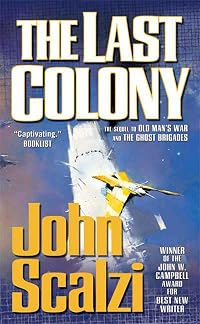
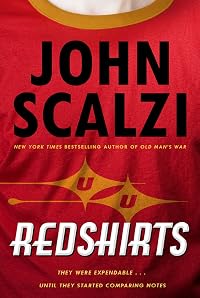
John Michael Scalzi was born May 10, 1969 in California. He attended the University of Chicago. During his 1989 -1990 school year he was the editor-in-chief of The Chicago Maroon. After graduating in 1991, Scalzi took a job as the film critic for the Fresno Bee newspaper, eventually also becoming a humor columnist. In 1996 he was hired as the show more in-house writer and editor at America Online. When he was laid off in 1998, he decided to become a full-time freelance writer and author. His first published novel was Old Man's War. His other works include Agent to the Stars, The Ghosts Brigades, The Androids Team, The Sagan Diary, The Last Colony, and Redshirts: A Novel with Three Codas. In 2014 his title, Locked In, made The New York Times Best Seller List. (Bowker Author Biography) show less
Some Editions
Awards and Honors
Awards
Distinctions
Series

Belongs to Publisher Series
Common Knowledge
- Canonical title
- The Last Emperox
- Original title
- The Last Emperox
- Original publication date
- 2020-04-14
- People/Characters
- Cardenia Wu-Patrick (Emperox Grayland II); Lady Kiva Lagos; Lord Marce Claremont; Nadashe Nohamapetan
- Important places
- End; Xi’an; Hub
- Dedication
- To the women who are done with other people’s shit
- First words
- The funny thing was, Ghreni Nohamapetan, the acting Duke of End, actually saw the surface-to-air missile that slammed into his aircar a second before it hit.
- Last words
- (Click to show. Warning: May contain spoilers.)“Okay, seriously now,” he said to his sister. “What the fuck happened to this perfect plan of yours? Hmmm?”
- Publisher's editor
- Nielsen Hayden, Patrick
- Original language
- English
Classifications
Statistics
- Members
- 1,426
- Popularity
- 16,521
- Reviews
- 67
- Rating
- (3.91)
- Languages
- 6 — English, French, German, Italian, Polish, Spanish
- Media
- Paper, Audiobook, Ebook
- ISBNs
- 16
- ASINs
- 9