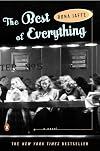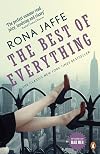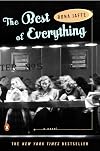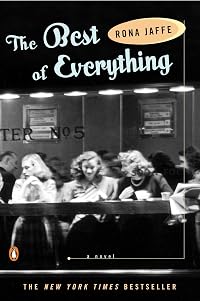
The Best of Everything
by Rona Jaffe
On This Page
Description
"Rona Jaffe's beloved novel of mid-century NYC women in the workplace that paved the way for the #MeToo movement and iconic cultural touchstones like Mad Men, now for the first time in Penguin Classics, in a 65th anniversary edition with an introduction by New Yorker staff writer Rachel Syme A Penguin Classic When Rona Jaffe's superb page-turner was first published in 1958, it changed contemporary fiction forever. Some readers were shocked, but millions more were electrified when they saw show more themselves reflected in its story of five young employees of a New York publishing company. Sixty-five years later, The Best of Everything remains touchingly-and sometimes hilariously-true to the personal and professional struggles women face in the city. There's Ivy League Caroline, who dreams of graduating from the typing pool to an editor's office; naïve country girl April, who within months of hitting town reinvents herself as the woman every man wants on his arm; and Gregg, the free-spirited actress with a secret yearning for domesticity. Jaffe follows their adventures with intelligence, sympathy, and prose as sharp as a paper cut"-- show lessTags
Recommendations


















Member Recommendations
Member Reviews
The first thing the contemporary reader needs to accept about this 1950s classic is that it’s set in a world as remote from today as that of Jane Austen. Jaffe is looking at coming-of-age stories of three major (and several minor) female characters trying to establish their careers in New York City. In all cases, Finding Mr. Right is one major goal. And in doing so, they stumble from one disastrous relationship to another with predictable results.
Most of the men in the book are lecherous, cheating, abusive, and utterly oblivious to the emotional needs of the young women they wine and dine and bed (if at all possible), and the women, unfortunately, seem to have the collective savvy one might expect of a reasonably bright 16-year-old show more today.
Characterization, of the women at least, is rich and detailed, and Jaffe creates a picture of the energy, the possibilities, and the power of the city her characters have set out to conquer. There’s an awful lot of boozing here, and all the characters smoke constantly – again, a reflection of the times and the social milieu of the setting. The outrageous sexual discrimination and harassment of the workplace is presented as perfectly normal and something one simply must learn to manage in order to survive. Still, for all the depth and quality of the writing itself, many of the situations are now sad clichés – the dissolute playboy, the philandering husband, the unwanted pregnancy, the emotionally abusive artiste. Contemporary reader may be forgiven for occasionally thinking (or even saying) “Oh, for godsake, girl, dump this loser and get on with your life.”
For all that, the book is worth a read, if only as a measure of how far the feminist movement has come, and – given the immediate recognizability of many of the situations – of how far it still has to go. show less
Most of the men in the book are lecherous, cheating, abusive, and utterly oblivious to the emotional needs of the young women they wine and dine and bed (if at all possible), and the women, unfortunately, seem to have the collective savvy one might expect of a reasonably bright 16-year-old show more today.
Characterization, of the women at least, is rich and detailed, and Jaffe creates a picture of the energy, the possibilities, and the power of the city her characters have set out to conquer. There’s an awful lot of boozing here, and all the characters smoke constantly – again, a reflection of the times and the social milieu of the setting. The outrageous sexual discrimination and harassment of the workplace is presented as perfectly normal and something one simply must learn to manage in order to survive. Still, for all the depth and quality of the writing itself, many of the situations are now sad clichés – the dissolute playboy, the philandering husband, the unwanted pregnancy, the emotionally abusive artiste. Contemporary reader may be forgiven for occasionally thinking (or even saying) “Oh, for godsake, girl, dump this loser and get on with your life.”
For all that, the book is worth a read, if only as a measure of how far the feminist movement has come, and – given the immediate recognizability of many of the situations – of how far it still has to go. show less
The tale of a group of young women whose lives intersect in the typing pool of a 1950 New York publishing house works as both an entertaining exercise in chick lit and a socio-economic investigation of gender and sexual inequality in midcentury America - which is actually intentional, Jaffe confides in the foreward that appeared in my version of the novel.
The girls represent a variety of socio-emotional archetypes: a brainy, ambitious college graduate (Christina), a naive small town girl eager to make her way in the big city (April), the single mother (Barbara), the aspiring actress (Gregg), the shallow, gossipy office manager (Mary Anne). As the story progresses, their lives intertwine with the lives of various men, also representing show more common archetypes, to include a buffoonish office predator (Mr. Shalimar), a self-loathing alcoholic (Moss), a privileged, arrogant socialite (Dexter), a prep school good guy (Paul), a small town sweetheart (Eddie), a bohemian (likely bisexual) theater producer.
Intentionally or otherwise, what all the subplots have in common is that they provide a lens for examining the uncomfortable relationships that form in a society that offers few alternatives for women other than marriage. In almost every case, the women are forced to tolerate unequal relationships - preyed on by their bosses, forced into sex (and abortions) by demanding boyfriends, courted by married men, led to believe that it is their obligation to flatter the uninteresting men and fix the broken ones. One reads on, hoping our protagonists will eventually find their power (or at least their self-esteem), but the end of the novel is, at best, ambiguous - perhaps reflecting that, at the time this was written, we were still struggling as a culture to identify what constitutes affirmative female sexual agency. (Lest it sound like I'm being too hard on the men in this book, I'm not: in the real world, it may be that many men found these relationships as oppressive as the women did, but that's not something Jaffe explores here.)
If the idea of learning more about the publishing industry intrigues you, just a heads up that you won't find what you're looking for here, the publishing house setting being mostly a pretense for entangling the various storylines. The storytelling is respectable if repetitive - every chapter starts out with a bit about New York street life and/or the weather - and there are lots of those "hi, how are you?" conversations that take up page space without contributing to the plot. But the midcentury ambiance - smokey lounges with names like "The Red Room," boozy cocktail parties, girls in smart sheath dresses and lads lining up for jobs in their fathers' firms - is enjoyably authentic, and the relationships feel distressingly convincing.
Found this to be an interesting bit of time travel - a reminder that while we may have convinced ourselves in the 1950s that we had achieved the height of modernity, our ideas about gender equality had a long way to go, leading to so much unnecessary exploitation and pain. show less
The girls represent a variety of socio-emotional archetypes: a brainy, ambitious college graduate (Christina), a naive small town girl eager to make her way in the big city (April), the single mother (Barbara), the aspiring actress (Gregg), the shallow, gossipy office manager (Mary Anne). As the story progresses, their lives intertwine with the lives of various men, also representing show more common archetypes, to include a buffoonish office predator (Mr. Shalimar), a self-loathing alcoholic (Moss), a privileged, arrogant socialite (Dexter), a prep school good guy (Paul), a small town sweetheart (Eddie), a bohemian (likely bisexual) theater producer.
Intentionally or otherwise, what all the subplots have in common is that they provide a lens for examining the uncomfortable relationships that form in a society that offers few alternatives for women other than marriage. In almost every case, the women are forced to tolerate unequal relationships - preyed on by their bosses, forced into sex (and abortions) by demanding boyfriends, courted by married men, led to believe that it is their obligation to flatter the uninteresting men and fix the broken ones. One reads on, hoping our protagonists will eventually find their power (or at least their self-esteem), but the end of the novel is, at best, ambiguous - perhaps reflecting that, at the time this was written, we were still struggling as a culture to identify what constitutes affirmative female sexual agency. (Lest it sound like I'm being too hard on the men in this book, I'm not: in the real world, it may be that many men found these relationships as oppressive as the women did, but that's not something Jaffe explores here.)
If the idea of learning more about the publishing industry intrigues you, just a heads up that you won't find what you're looking for here, the publishing house setting being mostly a pretense for entangling the various storylines. The storytelling is respectable if repetitive - every chapter starts out with a bit about New York street life and/or the weather - and there are lots of those "hi, how are you?" conversations that take up page space without contributing to the plot. But the midcentury ambiance - smokey lounges with names like "The Red Room," boozy cocktail parties, girls in smart sheath dresses and lads lining up for jobs in their fathers' firms - is enjoyably authentic, and the relationships feel distressingly convincing.
Found this to be an interesting bit of time travel - a reminder that while we may have convinced ourselves in the 1950s that we had achieved the height of modernity, our ideas about gender equality had a long way to go, leading to so much unnecessary exploitation and pain. show less
It is impossible not to think of Mad Men when reading this novel set in 1952 in New York City. It features four young women in their early twenties from different backgrounds who find work at Fabian Publishing Company as secretaries and typists. Among them are those whose only goal is to find lasting love and marriage in a male-dominated world where genders are clearly defined. Drinking to excess is common, as is the thwarting of unwanted advances from senior executive without endangering their jobs. It is interesting to compare today's culture with that of 70 years ago. The book has a soap opera quality that some will find engaging, while others will abandon it as simply lacking any meaningful depth.
Everyone else probably read this novel in its flush of Mad-Men inspired publicity a few years ago, but I've just got round to it. I wasn't expecting something quite this dark and shrewd. Following four young women at a publishing house in 1950s New York, it looks at their struggles to form careers, find love and fend off unwelcome attention. Some aspects of their lives feel very familiar even today. Jaffe writes simply but with a great sensitivity to the changing moods of New York, and her characters are engaging and somehow very real, with plausible follies, strengths and flaws. A moving, very readable and still relevant novel about the life of single career girls in the big city.
For a full review please read my blog:
show more target="_top">https://theidlewoman.net/2015/11/24/the-best-of-everything-rona-jaffe/ show less
For a full review please read my blog:
show more target="_top">https://theidlewoman.net/2015/11/24/the-best-of-everything-rona-jaffe/ show less
"Fiction places people where they belong in society. There is no such thing he said as a dated novel. The novel set in a particular time gives a picture of that time with all the details of life as it was lived then." (Elizabeth Jolley)
The Best of Everything is the story of four young women living and working in New York City - their jobs, their living conditions and their love lives. It was first published in 1958, and its subject matter and form have both been used in many popular novels aimed at a female audience since then. Can Rona Jaffe be described as the mother of modern chicklit? Yes, I think she can. Is this book worth a read? I thought so, both because it is quite enjoyable and for its depiction of the time when it was show more written and set.
Caroline, April, Gregg and Barbara are all in their early 20s, working as secretaries for Fabian, publisher of commercial fiction and magazines. Caroline has a degree, Barbara's education has been interrupted by early marriage, motherhood and divorce, and the other two have theatrical aspirations.
Jaffe dissects the ins and outs of office life with detailed observations about how things work, an interest in how her characters interact and flashes of sharp wit. There is a dragon boss, a woman who will do nothing to help other women in the workplace, and a lecherous creep who recognises Caroline's ability and promotes her to a role as reader and later a junior editor even though she rejects his sexual advances in no uncertain terms.
I found the lives of the characters outside work a lot less satisfying. This was an era when women were judged by their success in getting married (and preferably hanging on to the husband). I thought the way in which Gregg and April totally demeaned themselves in front of the men they had relationships with was probably realistic but found it all incredibly irritating. Caroline and Barbara were less pathetic, but at this time women who weren't married by the age of 25 would have been seen as failures, no matter what they were doing at work. Jaffe writes openly about women having sex outside of marriage including extra-marital affairs - her characters are not presented as immoral although sometimes they are obviously deluded. At work and in their love lives, these women's stories showed the need for the women's liberation movement of the 1960s, and the effect that wave of feminism has had on women's lives even for women who don't consider themselves feminist.
My favourite of the 4 characters was Caroline, who is bright and opinionated, and although she wants love as much as any of her colleagues and friends, is not prepared to settle for any old unsatisfactory compromise.
This Penguin edition of the novel includes an introduction written by the author for a US reprint in 2005 (she died a few months later) in which she described how she came to write the book. She worked in publishing and a man talked about a 1940 bestseller by a man about women, and wanting to write something as good, or at least, as successful. Jaffe read the book mentioned and felt that it was not at all a realistic portrait of women's lives, and that she could do better. She confidently proclaimed that she could write a novel herself, and started to do so. Interestingly, she interviewed lots of women about their lives and views on things and drew on this in her novel - how many modern chicklit authors can claim they do so much research into what makes their heroines tick? The inclusion of this introduction was a great touch in the presentation of the novel.
I found this an engaging and memorable read and a valuable period piece, and have found myself looking for some of Rona Jaffe's 15 other novels. Recommended.
I received a free copy of this book through the Amazon Vine program. show less
The Best of Everything is the story of four young women living and working in New York City - their jobs, their living conditions and their love lives. It was first published in 1958, and its subject matter and form have both been used in many popular novels aimed at a female audience since then. Can Rona Jaffe be described as the mother of modern chicklit? Yes, I think she can. Is this book worth a read? I thought so, both because it is quite enjoyable and for its depiction of the time when it was show more written and set.
Caroline, April, Gregg and Barbara are all in their early 20s, working as secretaries for Fabian, publisher of commercial fiction and magazines. Caroline has a degree, Barbara's education has been interrupted by early marriage, motherhood and divorce, and the other two have theatrical aspirations.
Jaffe dissects the ins and outs of office life with detailed observations about how things work, an interest in how her characters interact and flashes of sharp wit. There is a dragon boss, a woman who will do nothing to help other women in the workplace, and a lecherous creep who recognises Caroline's ability and promotes her to a role as reader and later a junior editor even though she rejects his sexual advances in no uncertain terms.
I found the lives of the characters outside work a lot less satisfying. This was an era when women were judged by their success in getting married (and preferably hanging on to the husband). I thought the way in which Gregg and April totally demeaned themselves in front of the men they had relationships with was probably realistic but found it all incredibly irritating. Caroline and Barbara were less pathetic, but at this time women who weren't married by the age of 25 would have been seen as failures, no matter what they were doing at work. Jaffe writes openly about women having sex outside of marriage including extra-marital affairs - her characters are not presented as immoral although sometimes they are obviously deluded. At work and in their love lives, these women's stories showed the need for the women's liberation movement of the 1960s, and the effect that wave of feminism has had on women's lives even for women who don't consider themselves feminist.
My favourite of the 4 characters was Caroline, who is bright and opinionated, and although she wants love as much as any of her colleagues and friends, is not prepared to settle for any old unsatisfactory compromise.
This Penguin edition of the novel includes an introduction written by the author for a US reprint in 2005 (she died a few months later) in which she described how she came to write the book. She worked in publishing and a man talked about a 1940 bestseller by a man about women, and wanting to write something as good, or at least, as successful. Jaffe read the book mentioned and felt that it was not at all a realistic portrait of women's lives, and that she could do better. She confidently proclaimed that she could write a novel herself, and started to do so. Interestingly, she interviewed lots of women about their lives and views on things and drew on this in her novel - how many modern chicklit authors can claim they do so much research into what makes their heroines tick? The inclusion of this introduction was a great touch in the presentation of the novel.
I found this an engaging and memorable read and a valuable period piece, and have found myself looking for some of Rona Jaffe's 15 other novels. Recommended.
I received a free copy of this book through the Amazon Vine program. show less
This novel about several young women working in publishing in New York City in the early 1950s was an immediate best seller when it was first published in 1959. It was also at the time, shocking in its realistic portrayal of the workplace environment and a sexual double standard, one for the women, and a vastly different one for the men.
Over six decades later in 2020 writer, editor, and audio producer Michele Moses stated in"The New Yorker Recommends" that “The Best of Everything is still one of our sharpest portraits of female desire.” It seems that the sensational and shocking best seller has by now become part of the literary canon. And what is that these young women desire? As the author described it in on the page immediately show more following the title pages of the first English edition:
YOU DESERVE
THE BEST OF EVERYTHING
The best job, the best surroundings.
The best pay, the best contacts
—From an ad in THE NEW YORK TIMES
Twenty years later this would be rephrased as “Having It All,” that is a good job, equal pay, a happy marriage and family, and love that is both emotionally and physically satisfying.
Alas, this is not the tale told in the novel. Instead, the reality is low pay, sexual harassment from male bosses, rivalry with other women, and a cast of bad boyfriends who enjoy taking advantage of you but won’t marry you because either you are not the only one, or you’re from the wrong class, or I would, but I can’t leave my wife and children. Or there are boyfriends from back home. They’re OK, but not necessarily exciting and they want you back home in Colorado or in the Bronx, not working in Manhattan.
This works out for the office gossip, who is already engaged and happy to quit work and move back to the Bronx where she grew up. In the end it may work, but for others the happy marriage only works out when you move back to where you came from after having been seduced and abandoned by the upper class cad who got you pregnant and forced you to have an illegal abortion. Otherwise, you might get married to the man you’ve fallen desperately in love with, but only years later after his wife has divorced him. Worst of all you might become obsessed with some unemotional man and end up dead. Or you could just decide to give up on the love and marriage part and decide to work hard and become an editor.
The author based the novel on her own experience working for a publisher in Manhattan and numerous other women who worked in the business. Unfortunately, the book remains just as relevant now as when it was written. show less
Over six decades later in 2020 writer, editor, and audio producer Michele Moses stated in"The New Yorker Recommends" that “The Best of Everything is still one of our sharpest portraits of female desire.” It seems that the sensational and shocking best seller has by now become part of the literary canon. And what is that these young women desire? As the author described it in on the page immediately show more following the title pages of the first English edition:
YOU DESERVE
THE BEST OF EVERYTHING
The best job, the best surroundings.
The best pay, the best contacts
—From an ad in THE NEW YORK TIMES
Twenty years later this would be rephrased as “Having It All,” that is a good job, equal pay, a happy marriage and family, and love that is both emotionally and physically satisfying.
Alas, this is not the tale told in the novel. Instead, the reality is low pay, sexual harassment from male bosses, rivalry with other women, and a cast of bad boyfriends who enjoy taking advantage of you but won’t marry you because either you are not the only one, or you’re from the wrong class, or I would, but I can’t leave my wife and children. Or there are boyfriends from back home. They’re OK, but not necessarily exciting and they want you back home in Colorado or in the Bronx, not working in Manhattan.
This works out for the office gossip, who is already engaged and happy to quit work and move back to the Bronx where she grew up. In the end it may work, but for others the happy marriage only works out when you move back to where you came from after having been seduced and abandoned by the upper class cad who got you pregnant and forced you to have an illegal abortion. Otherwise, you might get married to the man you’ve fallen desperately in love with, but only years later after his wife has divorced him. Worst of all you might become obsessed with some unemotional man and end up dead. Or you could just decide to give up on the love and marriage part and decide to work hard and become an editor.
The author based the novel on her own experience working for a publisher in Manhattan and numerous other women who worked in the business. Unfortunately, the book remains just as relevant now as when it was written. show less
The blurb on the back of this book promotes it as a proto-Sex and the City, in the days when living and working solely to meet a man - THE man - was not anachronistic and rather pathetic, but expected of young 'girls'. Four women meet at the publishing house where they pass the time until they can get married and have babies, and become good friends whilst utterly degrading themselves over the first pair of trousers to pay them any attention. Behaving like twelve year olds dressing up in their mother's high heels and handbags, they each try to adjust to life in the big city, rooming in glorified closets and drinking cocktails, and dating 'boys' (these are women in their early twenties) on that eternal quest for an engagement ring.
I'm show more not a feminist, but this could turn me; I know life and priorities were different in the 1950s, but there is no balance of personality or lifestyle in this story, only desperate girls and smug men. Caroline Bender (unfortunate last name), presumably Rona Jaffe's alter ego, is the strongest character, fighting male chauvanism and office politics to realise her ambition as an editor, but even she is reduced to a simpering romantic by the final chapters. Hick April, used and broken by a shallow playboy, verges on becoming a stalker when her dream is shattered, whilst actress Gregg falls right over the edge; only one girl gets a second chance and receives her fabled HEA. Divorcee and single mother Barbara maintains her dignity, and strikes gold after risking all on a married man, and the good girls all dump their independence for the delights of matrimony and motherhood. There is nothing wrong with a family life, but it is not the only option, even in the 1950s - the career women are portrayed as bitter spinsters, and no-one dares to forge a different path. Caroline comes close, but then plummets harder and faster into the depths of moping, lovesick weakness - over the fiance who threw her over, by letter, after meeting a better match whilst on a gap year in Europe! When he, too, lets her down, Caroline goes off the rails. Any man is better than none seems to be the message, if there is one; if not this is just a depressing take on 1950s American womanhood, and propaganda for the worst kind of fanatical, man-hating feminism. show less
I'm show more not a feminist, but this could turn me; I know life and priorities were different in the 1950s, but there is no balance of personality or lifestyle in this story, only desperate girls and smug men. Caroline Bender (unfortunate last name), presumably Rona Jaffe's alter ego, is the strongest character, fighting male chauvanism and office politics to realise her ambition as an editor, but even she is reduced to a simpering romantic by the final chapters. Hick April, used and broken by a shallow playboy, verges on becoming a stalker when her dream is shattered, whilst actress Gregg falls right over the edge; only one girl gets a second chance and receives her fabled HEA. Divorcee and single mother Barbara maintains her dignity, and strikes gold after risking all on a married man, and the good girls all dump their independence for the delights of matrimony and motherhood. There is nothing wrong with a family life, but it is not the only option, even in the 1950s - the career women are portrayed as bitter spinsters, and no-one dares to forge a different path. Caroline comes close, but then plummets harder and faster into the depths of moping, lovesick weakness - over the fiance who threw her over, by letter, after meeting a better match whilst on a gap year in Europe! When he, too, lets her down, Caroline goes off the rails. Any man is better than none seems to be the message, if there is one; if not this is just a depressing take on 1950s American womanhood, and propaganda for the worst kind of fanatical, man-hating feminism. show less
Members
- Recently Added By
Published Reviews
Written in 1958 but reissued this year, let’s count it as both an old and a new book. Set in the 50s, the novel revolves around four young women as they leave college and enter that rarified, glamorous, ridiculous field: book publishing. The novel is a wonderful lengthy tome to sink into, perfect for the subway, the beach, the couch, wherever.... Mainly it’s a treat to exist in the 1950s show more with them for a spell, witness the way life was different, what we’ve lost and gained in the years since, and the way life has so clearly remained the same. show less
added by Lemeritus
Lists

Mad Men Reading List
25 works; 5 members

A Novel Cure
742 works; 23 members

Penguin Random House
458 works; 4 members
My Mad Men Reading List
47 works; 1 member
Author Information

27+ Works 2,062 Members
Rona Jaffe was born in Brooklyn, New York on June 12, 1931. She graduated from Radcliffe College in 1951 and began her writing career as an assistant editor at Fawcett Gold Medal Books in 1952. Her first novel, The Best of Everything, was published in 1958 and was later adapted into a film starring Joan Crawford. Her works include Class Reunion, show more The Room-Mating Season, The Last Chance, Family Secrets, The Cousins, Five Women, and Mazes and Monsters. During the late 1960s, she was hired to write cultural pieces for Cosmopolitan. She founded The Rona Jaffe Foundation, which presents annual awards to promising women writers of literary fiction, poetry, and creative nonfiction including the Rona Jaffe Prizes in Creative Writing at Radcliffe and the Rona Jaffe Foundation Writers' Awards. She died from cancer on December 30, 2005 at the age of 74. (Bowker Author Biography) show less
Awards and Honors
Distinctions
Work Relationships
Has the adaptation
Common Knowledge
- Canonical title
- The Best of Everything
- Original publication date
- 1958
- Related movies
- The Best of Everything (1959 | IMDb)
- Epigraph
- YOU DESERVE
THE BEST OF EVERYTHING
the best job, the best surroundings,
the best pay, the best contacts.
From an ad in The New York Times - Dedication
- For Phyllis, Bob, Jay, Jerry and Jack
- First words
- You see them every morning at a quarter to nine, rushing out of the maw of the subway tunnel, filing out of Grand Central Station, crossing Lexington and Park and Madison and Fifth avenues, the hundreds and hundreds of girls.
- Last words
- (Click to show. Warning: May contain spoilers.)Sometimes life is simple - sometimes, just when you think it never will be simple again.
- Canonical DDC/MDS
- 813.54
- Canonical LCC
- PS3519.A453
Classifications
Statistics
- Members
- 740
- Popularity
- 38,282
- Reviews
- 38
- Rating
- (3.67)
- Languages
- 9 — Catalan, Danish, Dutch, English, French, German, Italian, Spanish, Swedish
- Media
- Paper, Ebook
- ISBNs
- 26
- ASINs
- 13