
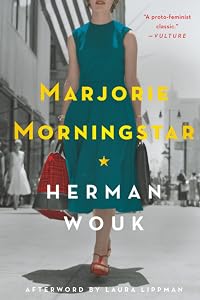
Marjorie Morningstar
by Herman Wouk
On This Page
Description
A starry-eyed young beauty, Marjorie Morgenstern is nineteen years old when she leaves New York to accept the job of her dreams-working in a summer-stock company for Noel Airman, its talented and intensely charismatic director. Released from the social constraints of her traditional Jewish family, and thrown into the glorious, colorful world of theater, Marjorie finds herself entangled in a powerful affair with the man destined to become the greatest-and the most destructive-love of her show more life. Rich with humor and poignancy, Marjorie Morningstar is a classic love story, one that spans two continents and two decades in the life of its heroine. This unforgettable paean to youthful love and the bittersweet sorrow of a first heartbreak endures as one of Herman Wouk's most beloved creations. show lessTags
Recommendations




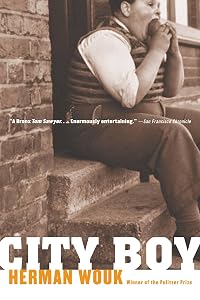
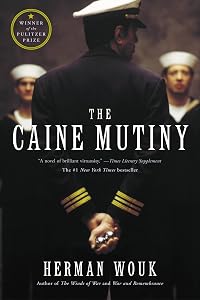


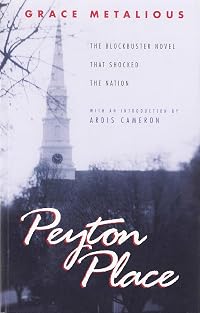
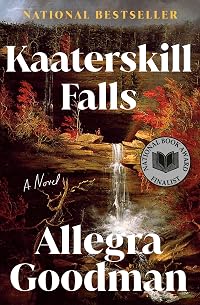
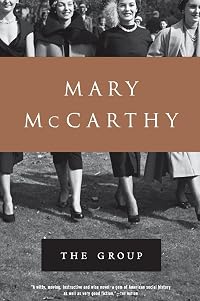
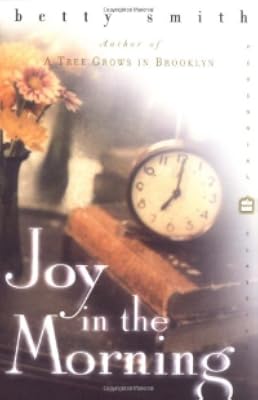


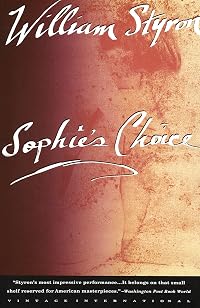



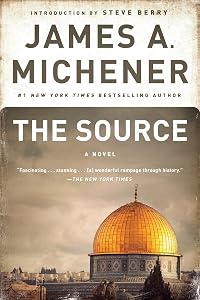
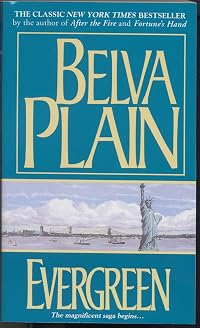

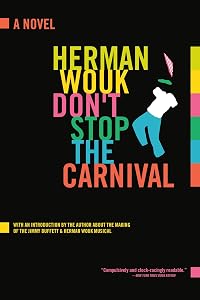
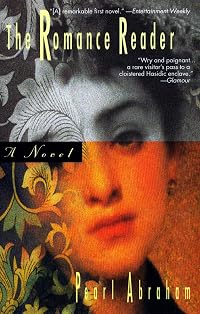
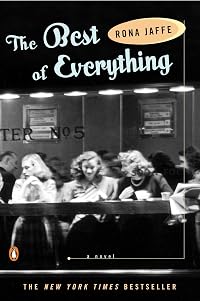

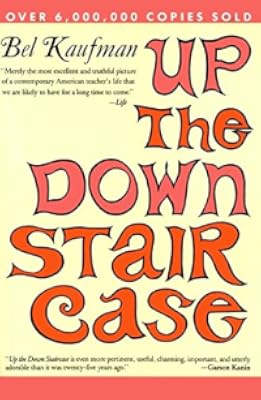

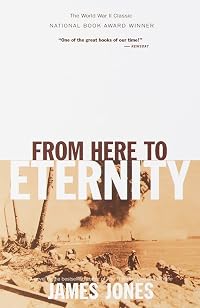
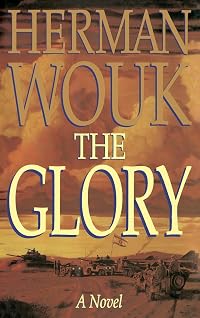
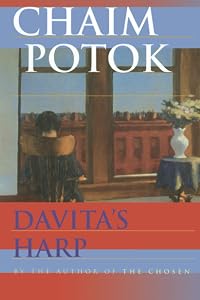


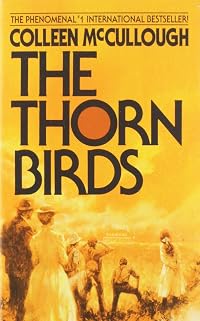


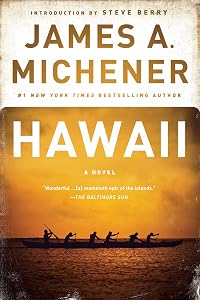
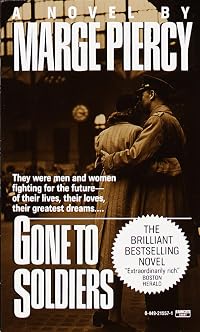
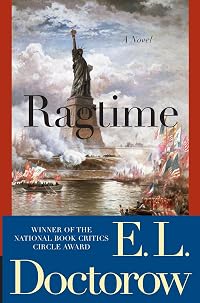






Member Recommendations

Limelite What? Did these two books parasitize each other? Set in the 30s, wannabe actresses, girl grows up. Oh! One of them's Jewish -- that makes a difference.
Member Reviews
This was disappointing in the end. I really enjoyed it, more than I expected, up until Marjorie decides to have an affair with Noel and subsequently gives up on a dramatic career. Her (and Wally's) conclusion, that she didn't have "it" and her passion for theater was just the meaningless enthusiasm of a talentless girl, seems unnecessarily dismissive. She could come to a much deeper conclusion about youthful dreams and adult values and priorities - Mike is even thrown in as a screaming opportunity to do so - but doesn't. Mike, maybe the most interesting person in the whole book, only ends up serving to knock the scales from Marjorie's eyes re: Noel, not redirect her purpose in a world that is becoming increasingly dangerous for people, show more especially like her. The last chapter, written from Wally's perspective, is particularly disappointing; Marjorie isn't given her own voice in looking back at fifteen years of her life. show less
It seldom happens that I abandon a book and a challenge, but that is precisely what Marjorie Morningstar meant for me today. I found this book terribly dated and totally uninteresting. Perhaps if I forced myself past the 100 pages I generally consider my decision point I would find something redeeming in the novel, and finishing the novel would mean putting “done” to my Old and New Challenge instead of making it unfinishable.
Perhaps Marjorie’s life becomes more interesting when she gets out of her teenage/college days, but I will never know. I refuse to push myself to read 500 pages of this when I have so many books I am itching to get to. So, with apologies to all my friends who loved this book, it just wasn’t for me at all. show more What I found the most frustrating was that I kept comparing it to [b:Alice Adams|525818|Alice Adams|Booth Tarkington|https://i.gr-assets.com/images/S/compressed.photo.goodreads.com/books/1259541358l/525818._SY75_.jpg|2197474], another teenager with huge ambitions, and with every point of comparison finding it wanting. show less
Perhaps Marjorie’s life becomes more interesting when she gets out of her teenage/college days, but I will never know. I refuse to push myself to read 500 pages of this when I have so many books I am itching to get to. So, with apologies to all my friends who loved this book, it just wasn’t for me at all. show more What I found the most frustrating was that I kept comparing it to [b:Alice Adams|525818|Alice Adams|Booth Tarkington|https://i.gr-assets.com/images/S/compressed.photo.goodreads.com/books/1259541358l/525818._SY75_.jpg|2197474], another teenager with huge ambitions, and with every point of comparison finding it wanting. show less
Herman Wouk is quite a good writer and "Marjorie Morningstar" is a really good novel. Reading this book was a perfect way to end the long hot lazy summer. A vintage coming of age and quintessential love story - but not the fantasy kind - it is poignant and intense, abrupt, bold, and realistic. You know the old cliche, “love is blind”... well, this is a perfect example.
Marjorie Morgenstern (her proper name) is a seventeen year old, upper-middle class, Jewish girl from New York. She’s lived the good life with her conservative family in a swank apartment in Manhattan and is now attending an all-girls local college. It’s 1932 and though all her classmates are looking for a husband… Marjorie has but one goal in life and it’s to show more be an actress. She starred in all the school plays and she’s got talent, beauty, and a tenacious attitude. But will that be enough?
This is Marjorie’s story. It is all about the struggle and hardship young starlets experience and the extreme conditions they will endure get a role in the theater. Struggling with the moral code of that time for young girls to remain a virgin until they married, Marjorie declares her independence and takes a job at an up-state summer camp theater doing technical work backstage with a few small walk-on parts in the weekly performances. She soon becomes captivated by theater director Noel Airman... charming, charismatic, witty, and a notorious egotistical womanizer. He’s what would later be called a beatnik or even more recently, a hippie. Thus, the drama begins.
Herman Wouk is great at character development, writes marvelous dialogue, and captures the mood of New York prior to World War II. There are some laugh-out-loud moments and many memorable scenes. Granted, the characters are not all likable, but with all their faults and weaknesses, they definitely resemble real people.
"Marjorie Morningstar" was made into a movie in the 1950s starring Natalie Wood and Gene Kelly. I didn’t see the movie, but understand the story was altered to occur in the 50s and took on a more light-hearted romantic theme with a totally different ending. If you want a more realistic story with intense depth and substance, please read the book. show less
Marjorie Morgenstern (her proper name) is a seventeen year old, upper-middle class, Jewish girl from New York. She’s lived the good life with her conservative family in a swank apartment in Manhattan and is now attending an all-girls local college. It’s 1932 and though all her classmates are looking for a husband… Marjorie has but one goal in life and it’s to show more be an actress. She starred in all the school plays and she’s got talent, beauty, and a tenacious attitude. But will that be enough?
This is Marjorie’s story. It is all about the struggle and hardship young starlets experience and the extreme conditions they will endure get a role in the theater. Struggling with the moral code of that time for young girls to remain a virgin until they married, Marjorie declares her independence and takes a job at an up-state summer camp theater doing technical work backstage with a few small walk-on parts in the weekly performances. She soon becomes captivated by theater director Noel Airman... charming, charismatic, witty, and a notorious egotistical womanizer. He’s what would later be called a beatnik or even more recently, a hippie. Thus, the drama begins.
Herman Wouk is great at character development, writes marvelous dialogue, and captures the mood of New York prior to World War II. There are some laugh-out-loud moments and many memorable scenes. Granted, the characters are not all likable, but with all their faults and weaknesses, they definitely resemble real people.
"Marjorie Morningstar" was made into a movie in the 1950s starring Natalie Wood and Gene Kelly. I didn’t see the movie, but understand the story was altered to occur in the 50s and took on a more light-hearted romantic theme with a totally different ending. If you want a more realistic story with intense depth and substance, please read the book. show less
I must confess to having read this novel shortly after Youngblood Hawke. As a result, roughly 1,000 pages of 1930-40s New York City dialect and social mores tends to grate after awhile. The result was, that about halfway through the book, I found myself not only failing to care about the "heroine", but actually beginning to dislike her quite a bit. Once that point was reached, I simply began to look forward to the end of the book.
Perhaps if I'd read it first, it would have created a more favorable impression. As it was, I thought if I read the expletive "Gad" one more time, I'd vomit.
In a nutshell, the novel follows the adolecent and early adult years of a Jewish American princess in 1930s New York City. Mildly entertaining at first, show more for me the book dragged and fell into a vicious cycle of relationship and career events that became repetitive at best. I've read most of Wouk's work and for me, this was the weakest. show less
Perhaps if I'd read it first, it would have created a more favorable impression. As it was, I thought if I read the expletive "Gad" one more time, I'd vomit.
In a nutshell, the novel follows the adolecent and early adult years of a Jewish American princess in 1930s New York City. Mildly entertaining at first, show more for me the book dragged and fell into a vicious cycle of relationship and career events that became repetitive at best. I've read most of Wouk's work and for me, this was the weakest. show less
I liked this book, and hated it at the same time. I liked it for a good read, but here we have this "the man and the girl," again, or as I'd rather have it: "the boy and the woman." Disgusting double standard going on throughout the book.
Marjorie was a middle-class, Jewish, seventeen year old who wanted to be an actress. We see her struggle for many years before finally giving up on that dream. The focus of the story is her first love, which was very destructive. It was difficult to like Marjorie as she was so naive, but doubly difficult to like anybody else in the novel.
This was an OK book in spite of Noel and his diatribes that not only were excessively boring but also just didn't make sense most of the time.
I enjoyed watching Marjorie as she "grew up" and while I agreed with her assessment of her life there in the end, it was interesting to read the last chapter and find that she really hadn't grown up all that much after all. She still believed that she and only she knew all the answers and how dare you insinuate that she did not.
A little editing would have made this book brilliant.
I enjoyed watching Marjorie as she "grew up" and while I agreed with her assessment of her life there in the end, it was interesting to read the last chapter and find that she really hadn't grown up all that much after all. She still believed that she and only she knew all the answers and how dare you insinuate that she did not.
A little editing would have made this book brilliant.
Members
- Recently Added By
Lists

Read the book and saw the movie
1,170 works; 195 members

Jewish Books
367 works; 24 members

Book Riot's 100 must-read works of Jewish Fiction
100 works; 8 members

Publisher's Weekly Bestsellers - Part II - 1940 - 1979
355 works; 5 members

Bibliography for How to be a Heroine
148 works; 12 members
Tablet Magazine's List of 101 Great Jewish Books
103 works; 9 members

Blue Pyramid 1,276 Best Books of All Time
1,248 works; 32 members

Page Turners
185 works; 11 members

Hachette Book Group
152 works; 6 members
National Book Award Finalists - Fiction
377 works; 12 members

End of Your Life Book Club
134 works; 4 members

My Mad Men Reading List
47 works; 1 member
Author Information

83+ Works 19,216 Members
Herman Wouk was born in the Bronx, New York on May 27, 1915. He received a bachelor's degree in comparative literature and philosophy from Columbia University. In 1936, he became a staff writer for the radio comedian Fred Allen. He enlisted in the Navy immediately after Pearl Harbor and was posted as a radio officer in the South Pacific. His debut show more novel, Aurora Dawn, was published in 1947. His other novels included The City Boy, Marjorie Morningstar, Youngblood Hawke, Don't Stop the Carnival, The Winds of War, War and Remembrance, The Hope, The Gift, A Hole in Texas, and The Lawgiver. He received the Pulitzer Prize for fiction in 1952 for The Caine Mutiny. He received the first Library of Congress Lifetime Achievement Award for the Writing of Fiction in 2008. His nonfiction books included This Is My God, The Language God Talks, and Sailor and Fiddler: Reflections of a 100-Year-Old Author. Several of his books were adapted into movies including The Caine Mutiny and Marjorie Morningstar. He adapted the courtroom sections of The Caine Mutiny into the Broadway play The Caine Mutiny Court-Martial. His other Broadway shows included The Traitor and Nature's Way. He died on May 17, 2019 at the age of 103. (Bowker Author Biography) show less
Awards and Honors
Awards
Distinctions
Notable Lists
Work Relationships
Has the adaptation
Is abridged in
Common Knowledge
- Canonical title
- Marjorie Morningstar
- Original title
- Marjorie Morningstar
- Original publication date
- 1955
- People/Characters
- Marjorie Morningstar
- Important places
- New York, New York, USA; Larchmont, New York, USA
- Related movies
- Marjorie Morningstar (1958 | IMDb)
- Dedication
- To the memory of my father
Abraham Isaac Wouk
1889-1941 - First words
- Customs of courtship vary greatly in different times andplaces, but the way the thing happens to be done here and now always seems the only natural way to do it.
- Last words
- (Click to show. Warning: May contain spoilers.)I will never have that second kiss from Marjorie under the lilacs.
Classifications
- Genres
- Fiction and Literature, General Fiction, Romance
- DDC/MDS
- 813.54 — Literature & rhetoric American literature in English American fiction in English 1900-1999 1945-1999
- LCC
- PZ3 .W923 — Language and Literature Fiction and juvenile belles lettres Fiction and juvenile belles lettres Fiction in English
- BISAC
Statistics
- Members
- 1,414
- Popularity
- 16,670
- Reviews
- 31
- Rating
- (3.79)
- Languages
- 8 — Dutch, English, Finnish, German, Hungarian, Italian, Russian, Swedish
- Media
- Paper, Audiobook, Ebook
- ISBNs
- 39
- UPCs
- 1
- ASINs
- 35