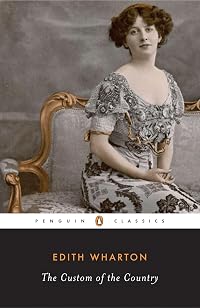
The Custom of the Country
by Edith Wharton
On This Page
Description
Can't get enough of the Gilded Age fast talkers, débutantes, and social climbers who populate Edith Wharton's exquisitely wrought novels? Fans of The House of Mirth and The Age of Innocence will love The Custom of the Country, which details country girl Undine Spragg's attempt to take a bite out of Big Apple high society..
Tags
Recommendations
















Member Recommendations
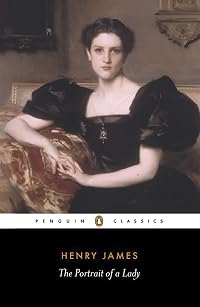
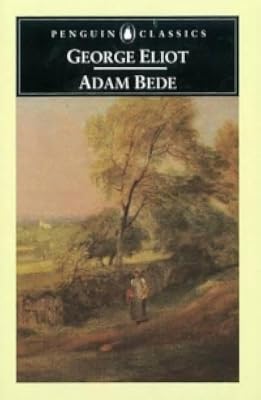
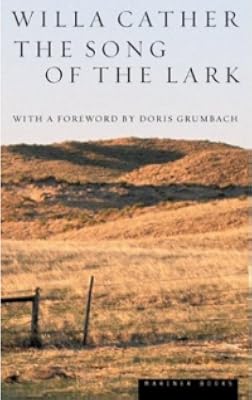
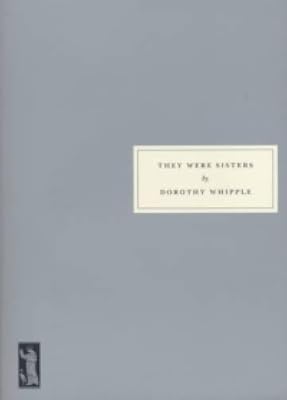
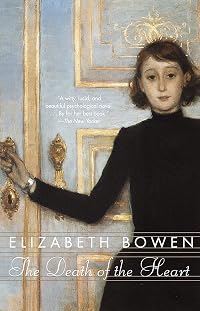
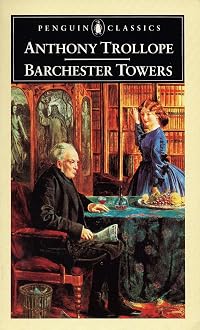
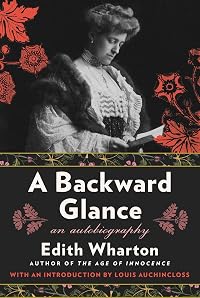
davidcla Wharton's 1913 novel is excellent, and very interesting to read as a companion to George Eliot's Daniel Deronda. Wharton's Undine casts Eliot's Gwendolen in a new light. And vice versa.
40
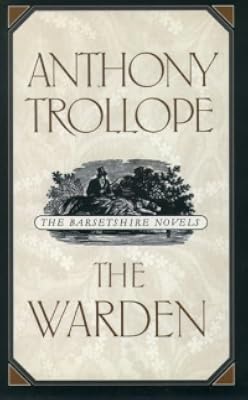
jennybhatt While the heroine of this novel is also a social climber, she's a more sympathetic portrait that contrasts well.
40
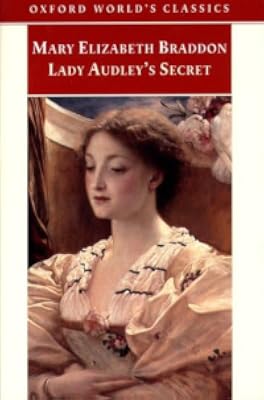
Limelite This social climbing, greedy, French counterpart of Undine doesn't get the same ending. Her story does, however, benefit from Flaubert's trenchant satire of the bourgoisie.
30

jennybhatt As social climbers go, Scarlett O'Hara ranks among the top ones. The similarities (marrying or attaching to various men as a way to get ahead) and evolutionary differences (the self-determination to make it solo if needed and feasible) between Undine Spragg and Scarlett O'Hara provide interesting juxtaposition.
20
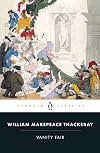

espertus A lighter account of the marriage of a selfish social climber to an upstanding man
Member Reviews
The Custom of the Country by Edith Wharton should be subtitled “The Social Climbing Adventures of Undine Spragg”. (Yup, that is the name of the main character; her parents’ pet name for her is, I kid you not, “Undie".) Her birthplace is the small Midwestern city of Apex where her businessman father is doing fairly well. Somewhat mysterious circumstances involving Undine bring the family to New York City. They live in a semi-upscale hotel and this provides a sufficient launching pad for Undine to propel herself into the upper echelons of New York Society, and beyond. She is aided in this endeavor by her stunning good looks and the advice of Mrs. Heeney, a masseuse/manicurist who services the Spragg women, and who acts as a kind show more of Gilded Age social media watcher. Naturally, Undine intends to reach her goals via marriage, and off she goes. Unlike other literary social climbers, e.g. Becky Sharpe or Lucy Steele, Undine possesses no sympathetic qualities whatsoever. Having been spoiled rotten by her parents, she is a bottomless pit of selfishness, egomania, and greed. Much of the psychological profile Wharton paints of her is shocking, and the tolerance for and indulgence of her monstrous behavior borders on the unbelievable. She also causes (and cares not one bit about) a lot of pain and suffering to others. On the other hand, look at the era we live in today. She would probably get elected to public office. This novel is a masterful character study and critique of American values. show less
The Custom of the Country by Edith Wharton tells the story of Undine Spragg, a Midwestern girl who attempts to scale the heights of New York City society. Undine is one of the most unique characters I have come across. Beautiful, selfish, and ignorant. She is terribly spoiled and seems incapable of understanding the consequences of her actions. She has no empathy and leaves a wake of damaged lives behind her. She repulsed me with her nastiness, yet I had to read on and find out what she was going to do next.
As we follow Undine through first one husband and then another, I kept waiting for her to learn a life lesson or two, but instead she always seems to think that her wishes must come first, that money should always be available to show more her and that her beauty entitled her to anything she wanted. Undine always seems to get what she wanted, but she also was quickly dissatisfied. Motherhood did nothing to mature her and I felt very sorry for her son, Paul. Wharton never wavered in keeping Undine true to her vision, even at the end of the book, the reader is given a glimpse of Undine that allows us to know that she will never be satisfied with the status quo.
Wharton delivers her story beautifully and uses her wit and insight to give us a sharp look at upper crust society as the nouveau riche come up against the old guard. I enjoyed this book immensely and will keep Undine Spragg on the memory shelf alongside of Scarlett O’Hara and Becky Sharp. show less
As we follow Undine through first one husband and then another, I kept waiting for her to learn a life lesson or two, but instead she always seems to think that her wishes must come first, that money should always be available to show more her and that her beauty entitled her to anything she wanted. Undine always seems to get what she wanted, but she also was quickly dissatisfied. Motherhood did nothing to mature her and I felt very sorry for her son, Paul. Wharton never wavered in keeping Undine true to her vision, even at the end of the book, the reader is given a glimpse of Undine that allows us to know that she will never be satisfied with the status quo.
Wharton delivers her story beautifully and uses her wit and insight to give us a sharp look at upper crust society as the nouveau riche come up against the old guard. I enjoyed this book immensely and will keep Undine Spragg on the memory shelf alongside of Scarlett O’Hara and Becky Sharp. show less
41. The Custom of the Country by Edith Wharton
editor: Linda Wagner-Martin (introduction and notes, 2006)
published: 1913
format: 384-page Penguin Classic
acquired: July read: Aug 1-30 time reading: 15:29, 2.4 mpp
rating: 4
genre/style: Classic novel theme: Wharton
locations: New York, Paris, and elsewhere in France
about the author: 1862-1937. Born Edith Newbold Jones on West 23rd Street, New York City. Relocated permanently to France after 1911.
One of Wharton's better-known novels is a quite fun and disturbing look at the New York City leisure class she was famous for attacking. She is playing with social Darwinism, and looking at the interaction between the those who came to New York and struck it rich on Wall Street and the old moneyed show more families of New York, often with Dutch sounding names, who are very protective of their turf. (There are a few striking parallels to [The Great Gatsby], a later novel. But this one would be from Daisy's point of view.) The nouveau riche are presented like an invasive species in the more ancient other's habitat. One old-family character is described as having "bratracian" (frog-like) features. His last name is Van Degen. Your smartphone, being a good literary critic, may try to autocorrect that to "degenerate". Another, uselessly poetic, is describe as "a survival", a doomed species.
Wharton centers her book on a magnificent villain. Undine Spragg is a stunningly beautiful young woman who cannot be satisfied. The daughter of Wall Street new-comers, she strives for what she cannot get, access to the old rich families. But she is relentless in pursuit of whatever it is she thinks she wants. And, it‘s never enough; and nothing, nor anyone, is sacred. She is like an insatiable predator. But she hides this in a meek outwards appearance, like a shiny fishhook, snagging the interest of single and married men. But what is it she ultimately wants and why? And why doesn‘t there seem to be anything underneath?
I think I was horrified by Undine, especially as I watched other characters stumble into her storm, unaware. But I also I think with Undine, Wharton has created a masterpiece. She is, in a way, an allegory of practical cutthroat Wall Street then and now, the perfect goddess of soulless economy.
The novel isn‘t perfect IMO, but Undine maybe is. Recommended to anyone interested in Wharton.
2022
https://www.librarything.com/topic/342768#7923228 show less
editor: Linda Wagner-Martin (introduction and notes, 2006)
published: 1913
format: 384-page Penguin Classic
acquired: July read: Aug 1-30 time reading: 15:29, 2.4 mpp
rating: 4
genre/style: Classic novel theme: Wharton
locations: New York, Paris, and elsewhere in France
about the author: 1862-1937. Born Edith Newbold Jones on West 23rd Street, New York City. Relocated permanently to France after 1911.
One of Wharton's better-known novels is a quite fun and disturbing look at the New York City leisure class she was famous for attacking. She is playing with social Darwinism, and looking at the interaction between the those who came to New York and struck it rich on Wall Street and the old moneyed show more families of New York, often with Dutch sounding names, who are very protective of their turf. (There are a few striking parallels to [The Great Gatsby], a later novel. But this one would be from Daisy's point of view.) The nouveau riche are presented like an invasive species in the more ancient other's habitat. One old-family character is described as having "bratracian" (frog-like) features. His last name is Van Degen. Your smartphone, being a good literary critic, may try to autocorrect that to "degenerate". Another, uselessly poetic, is describe as "a survival", a doomed species.
Wharton centers her book on a magnificent villain. Undine Spragg is a stunningly beautiful young woman who cannot be satisfied. The daughter of Wall Street new-comers, she strives for what she cannot get, access to the old rich families. But she is relentless in pursuit of whatever it is she thinks she wants. And, it‘s never enough; and nothing, nor anyone, is sacred. She is like an insatiable predator. But she hides this in a meek outwards appearance, like a shiny fishhook, snagging the interest of single and married men. But what is it she ultimately wants and why? And why doesn‘t there seem to be anything underneath?
I think I was horrified by Undine, especially as I watched other characters stumble into her storm, unaware. But I also I think with Undine, Wharton has created a masterpiece. She is, in a way, an allegory of practical cutthroat Wall Street then and now, the perfect goddess of soulless economy.
The novel isn‘t perfect IMO, but Undine maybe is. Recommended to anyone interested in Wharton.
2022
https://www.librarything.com/topic/342768#7923228 show less
Firstly: how can you fail to love a novel whose main character is UNDINE SPAGG? This story of manners and morals in Gilded Age Manhattan and Paris centers on a shallow woman whose beauty entraps the men who strive to install her in their trophy cases. Out of all her suitors, only the point of view of her first husband, Ralph, is heard. In his mundane upper class life, he seeks in Undine a purpose and a direction for himself, realizing too late, and tragically, that she sees nothing beyond improving her social standing and acquiring clothing and jewels. As she continues on her upward trajectory, Undine leaves behind the parents who funded her voyage and her young son. Obstacles in the form of her own transparency and the unforgiving show more social strictures trip her up, but never for long. The author sees her and the hypocrisy that surrounds her, especially in regards to the place of women of that time, all-powerful at evening soirees but with nothing to do but depend upon the business success of their husbands. A cruel world for sure, but most others are starving in unheated tenements, so it's hard to muster up much sympathy for Undine and her cohort. show less
It was difficult to really enjoy this because the main character, Undine, is so utterly unlikable. She is beautiful and shallow but completely ruthless in getting whatever she thinks she deserves, which is often that next thing beyond her reach. If there was any shred of humanity about her, you might almost feel sorry for her but there isn't and you don't. I only felt deep pity for the anguish she put everyone around her through. The writing is wonderful and the final sentence is just brilliant.
This was a tough one. Wharton is such a skilled writer with a keen observant eye for her social milieu, but I really think she missed her mark with Custom. I've had an ongoing argument with my partner about whether this could be considered a feminist work; I think it is one of her few novels that is pointedly anti-feminist, and more socially conservative. By creating the monstrous character of Undine Spragg, who is horrible in such an over-the-top way, Wharton seems to be satirizing the social climbers who are willing to trample on relations and customs in order to achieve material success. The older more established New York families seem to be the only ones who see Undine for what she is, and Ralph Marvell is the only truly good show more person, a tragic hero whose old ideas of marriage are not able to cope with Undine's need for riches and glory.
Some critics have called the novel a satire on marriage and divorce. Undine is a satirical character in that she is a pure consumption machine who has no character arc - she represents the voracious capitalism of the era that corrupts everyone who touches it. Elmer Moffat is the male counterpart, the crude business genius who confidently knows what he wants, which is more stuff. Everyone else resists Undine's corruption, although it is hinted that her neglected son Paul will eventually succumb to the amoral pursuits of his putative parents. show less
Some critics have called the novel a satire on marriage and divorce. Undine is a satirical character in that she is a pure consumption machine who has no character arc - she represents the voracious capitalism of the era that corrupts everyone who touches it. Elmer Moffat is the male counterpart, the crude business genius who confidently knows what he wants, which is more stuff. Everyone else resists Undine's corruption, although it is hinted that her neglected son Paul will eventually succumb to the amoral pursuits of his putative parents. show less
Even now, however, she was not always happy. She had everything she wanted, but she still felt, at times, that there were other things she might want if she knew about them.
As soon as I saw that the heroine's name was Undine Spragg I could tell that this book would be fun, and I was right. It is a satire about a social climbing golddigger from the mid-West and her attempts to marry into high society via several different husbands.
Undine is a nightmare and I started off pitying her poor parents, but then decided that they had brought it on themselves by spoiling her so badly. However, the story makes the serious point that if men keep their wives in the dark about their careers and everything else that is important to them, it is not show more surprising that their wives are empty-headed and vain as they have nothing but socialising to occupy themselves with. Undine is manipulative but stupid and would be no match for Becky Sharp, although she ends the book in a far better position in life than Becky did in Vanity Fair.
If you have the Oxford World Classics edition, leave the introduction until last as it is full of spoilers. show less
As soon as I saw that the heroine's name was Undine Spragg I could tell that this book would be fun, and I was right. It is a satire about a social climbing golddigger from the mid-West and her attempts to marry into high society via several different husbands.
Undine is a nightmare and I started off pitying her poor parents, but then decided that they had brought it on themselves by spoiling her so badly. However, the story makes the serious point that if men keep their wives in the dark about their careers and everything else that is important to them, it is not show more surprising that their wives are empty-headed and vain as they have nothing but socialising to occupy themselves with. Undine is manipulative but stupid and would be no match for Becky Sharp, although she ends the book in a far better position in life than Becky did in Vanity Fair.
If you have the Oxford World Classics edition, leave the introduction until last as it is full of spoilers. show less
Members
- Recently Added By
Published Reviews
ThingScore 100
The first time I read Edith Wharton’s novel “The Custom of the Country,” which was published in 1913, I felt at once that I had always known its protagonist and also that I had never before met anyone like her. The values of Undine Spragg—who, in the course of the novel, makes a circuitous and sinister journey from Midwestern rube to ruby-drenched new-money empress—are repulsive, and show more her attempts to manipulate public attention are mesmerizing. For my money, no literary antiheroine can best Undine—a dazzling monster with rose-gold hair, creamy skin, and a gaping spiritual maw that could swallow New York City. People like her have been abundant in American culture for some time, but I never feel invested in their success; more often, I idly hope for their failure. With Undine, however—thanks to the alchemical mix of sympathy and disdain that animates Wharton’s language in the novel and allows her to match Undine’s savagery with plenty of her own—I find myself wanting her to get everything she desires. show less
added by danielx
Edith Wharton's "The Custom of the Country" turned 100 this year, and the adventures of its heroine, Undine Spragg, remain as brazen today as when she first advanced upon the American scene.
added by tim.taylor — edited by danielx
Lists

Favourite Virago Modern Classics
183 works; 38 members

1910s
90 works; 16 members

Novels from The Guardian's Great American Novelist Tournament
148 works; 24 members

20th Century Literature
1,161 works; 55 members

Female Author
1,234 works; 67 members

Books I've Read More Than Once
602 works; 49 members

Best Love Stories
107 works; 14 members

Favourite Books
1,819 works; 316 members

50 Books by Women Authors
50 works; 10 members
Books Set in New York City
127 works; 21 members
Harold Bloom - The Western Canon: D. The Chaotic Age
833 works; 24 members

Anti-heroines in fiction
59 works; 9 members
The American Experience
173 works; 18 members

Books Read in 2023
5,547 works; 145 members
Five star books
1,767 works; 110 members

SHOULD Read Books!
354 works; 9 members

Books Read in 2021
5,361 works; 114 members

New Lifetime Reading Plan by Fadiman and Major
225 works; 5 members

KayStJ's to-read list
1,616 works; 11 members

Books Read in 2024
4,623 works; 126 members

Reading LIst
648 works; 1 member

In Our Time books
4,934 works; 2 members
Talk Discussions
Past Discussions
1913: Wharton - The Custom of the Country in Literary Centennials (February 2014)
Author Information

378+ Works 63,682 Members
Edith Wharton was a woman of extreme contrasts; brought up to be a leisured aristocrat, she was also dedicated to her career as a writer. She wrote novels of manners about the old New York society from which she came, but her attitude was consistently critical. Her irony and her satiric touches, as well as her insight into human character, show more continue to appeal to readers today. As a child, Wharton found refuge from the demands of her mother's social world in her father's library and in making up stories. Her marriage at age 23 to Edward ("Teddy") Wharton seemed to confirm her place in the conventional role of wealthy society woman, but she became increasingly dissatisfied with the "mundanities" of her marriage and turned to writing, which drew her into an intellectual community and strengthened her sense of self. After publishing two collections of short stories, The Greater Inclination (1899) and Crucial Instances (1901), she wrote her first novel, The Valley of Decision (1902), a long, historical romance set in eighteenth-century Italy. Her next work, the immensely popular The House of Mirth (1905), was a scathing criticism of her own "frivolous" New York society and its capacity to destroy her heroine, the beautiful Lily Bart. As Wharton became more established as a successful writer, Teddy's mental health declined and their marriage deteriorated. In 1907 she left America altogether and settled in Paris, where she wrote some of her most memorable stories of harsh New England rural life---Ethan Frome (1911) and Summer (1917)---as well as The Reef (1912), which is set in France. All describe characters forced to make moral choices in which the rights of individuals are pitted against their responsibilities to others. She also completed her most biting satire, The Custom of the Country (1913), the story of Undine Spragg's climb, marriage by marriage, from a midwestern town to New York to a French chateau. During World War I, Wharton dedicated herself to the war effort and was honored by the French government for her work with Belgian refugees. After the war, the world Wharton had known was gone. Even her Pulitzer Prize-winning novel, The Age of Innocence (1920), a story set in old New York, could not recapture the former time. Although the new age welcomed her---Wharton was both a critical and popular success, honored by Yale University and elected to The National Institute of Arts and Letters---her later novels show her struggling to come to terms with a new era. In The Writing of Fiction (1925), Wharton acknowledged her debt to her friend Henry James, whose writings share with hers the descriptions of fine distinctions within a social class and the individual's burdens of making proper moral decisions. R.W.B. Lewis's biography of Wharton, published in 1975, along with a wealth of new biographical material, inspired an extensive reevaluation of Wharton. Feminist readings and reactions to them have focused renewed attention on her as a woman and as an artist. Although many of her books have recently been reprinted, there is still no complete collected edition of her work. (Bowker Author Biography) show less
Some Editions
Awards and Honors
Notable Lists
Series
Belongs to Publisher Series
Work Relationships
Is contained in
Has the adaptation
Is abridged in
Is expanded in
Common Knowledge
- Canonical title
- The Custom of the Country
- Original title
- The Custom of the Country
- Original publication date
- 1913
- People/Characters
- Undine Spragg; Ralph Marvell; Elmer Moffatt; Raymond de Chelles; Mabel Lipscomb; Indiana Frusk (show all 10); Miss Wincher; Laura Fairford; Millard Binch; Claud Washington Popple
- Important places
- New York, New York, USA; Paris, Île-de-France, France
- First words
- "Undine Spragg – how can you?’ her mother wailed, raising a prematurely-wrinkled hand heavy with rings to defend the note which a languid ‘bell-boy’ had just brought in.
Edith Wharton's The Custom of the Country (1913), takes its title from a Jacobean play by Fletcher and Massinger about the buying and selling of women's bodies, but the country whose customs she mercilessly satirizes i... (show all)n the novel is her native America. (Introduction) - Quotations
- "Just so; she'd even feel aggrieved. But why? Because
it's against the custom of the country. And whose fault
is that? The man's again—I don't mean Ralph I mean
the genus he belongs to: homo sapiens, Americanus.
in our work? Simply because we don't take enough
interest in THEM." - Last words
- (Click to show. Warning: May contain spoilers.)She could never be an Ambassador's wife; and as she advanced to welcome her first guests she said to herself that it was the one part she was really made for.
(Click to show. Warning: May contain spoilers.)By this time in her life, she had come to terms with writing as a serious profession, and had made a business of words; and in the dazzling and uncompromising words of The Custom of the Country, she inscribes her kinship with the country and countrymen she had left behind. (Introduction) - Blurbers
- Brookner, Anita; Wilson, Edmund
- Original language
- English
Classifications
Statistics
- Members
- 2,738
- Popularity
- 6,733
- Reviews
- 69
- Rating
- (4.04)
- Languages
- 7 — Catalan, English, French, German, Italian, Slovenian, Spanish
- Media
- Paper, Audiobook, Ebook
- ISBNs
- 156
- UPCs
- 1
- ASINs
- 42