On This Page
Description
"Hotbox reveals the real-life drama behind cavernous event spaces and soaring white tents, where cooking conditions have more in common with a mobile army hospital than a restaurant. Known for their modern take on Southern cooking, the Lee brothers steeped themselves in the catering business for four years, learning the culture from the inside-out. It's a realm where you find eccentric characters, working in extreme conditions, who must produce magical events and instantly adapt when, for show more instance, the host's toast runs a half-hour too long, a hail storm erupts, or a rolling rack of hundreds of ice cream desserts goes wheels-up. Whether they're dashing through black-tie fundraisers, celebrity-spotting at a Hamptons cookout, or following a silverware crew at 3:00 a.m. in a warehouse in New Jersey, the Lee brothers guide you on a romp from the inner circle--the elite team of chefs using little more than their wits and Sterno to turn out lamb shanks for eight hundred--to the outer reaches of the industries that facilitate the most dazzling galas. You'll never attend a party--or entertain on your own--in the same way after reading this book."--Page [2] of cover. show lessTags
Recommendations


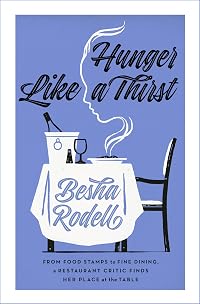

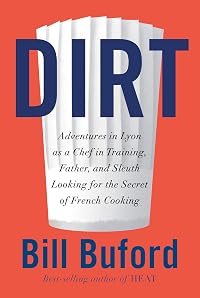
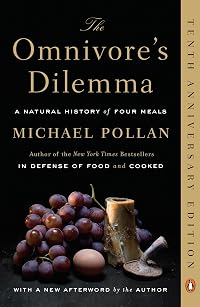
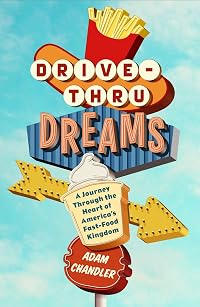















Member Recommendations
Member Reviews
This was fascinating to read! I had hesitated about it because of the negativity and snark typical of “insider” exposes. But while it *is* a first-hand, years-long inside look, it is less a memoir and more an experiential-journalistic recounting -- where chapters about the history of the $12-billion high-end catering industry (primarily in the New York City market, where $1,000 per plate, and up, is typical) alternate with Matt and Ted Lee’s work experiences there.
The Lee brothers put me in the kitchens with them ... except that’s the thing that makes this work amazing: there are no kitchens on the catering site. The brilliance of high-end caterers is their development of methods to prep and partially cook the food off-site in show more their catering kitchens, but then finish and serve multi-course epicurean meals to black-tie guests at venues nowhere near a kitchen (think museums, or remote outdoors). The king of these methods involves the ubiquitous Hotbox of the book’s title, where trays full of Sterno are strategically placed to transform the tall metal box into a portable oven, capable of fabulous results. Most of the food is over-the-top in ingredients or presentation or playful creativity.
The book is a lively, fascinating read that entertained and informed me. Rather than an expose, it’s almost an homage, and it filled me with admiration for the workers. show less
The Lee brothers put me in the kitchens with them ... except that’s the thing that makes this work amazing: there are no kitchens on the catering site. The brilliance of high-end caterers is their development of methods to prep and partially cook the food off-site in show more their catering kitchens, but then finish and serve multi-course epicurean meals to black-tie guests at venues nowhere near a kitchen (think museums, or remote outdoors). The king of these methods involves the ubiquitous Hotbox of the book’s title, where trays full of Sterno are strategically placed to transform the tall metal box into a portable oven, capable of fabulous results. Most of the food is over-the-top in ingredients or presentation or playful creativity.
The book is a lively, fascinating read that entertained and informed me. Rather than an expose, it’s almost an homage, and it filled me with admiration for the workers. show less
 This review was written for LibraryThing Early Reviewers.
Even better than I expected. I've read my share of books where the author, who's promised a look behind the scenes of a mysterious subculture (be it wine geeks or Esperanto speakers), but ends up spending as much time investigating his/her own psyche and neuroses. "Hotbox," on the other hand, puts the focus squarely on the caterers: the juggling act of stocking and organizing a kitchen churning out prep for several events a night; the workarounds that happen at event venues without enough space to plate or a stove to cook with; the push and pull between the desire for delicious, creative food that stands out and the need for food that can be delivered on time, at the right temperature, for the right cost. (Thankfully, there is no angst show more and every little gossip in any of this.) The Lee brothers also interviewed people whose businesses intersect with catering (the section about the company renting tables, chairs, etc. was especially interesting), and include a history of the industry's rise. I only wish the book had been longer, and had devoted even more time to Matt and Ted's hands-on experience. show less
This review was written for LibraryThing Early Reviewers.Catering to Excess
The world of catering has evolved from basically nothing to over 15 billion dollars in just my lifetime. And that’s just in the northeast. It has become a fiercely regimented profession, demanding timing, skill and perseverance worthy of a space launch. Failure is around every corner, and failure is fatal, as the hosts and guests will never forget who screwed up and how much it cost them to be humiliated among their peers. This is the world that Matt and Ted Lee immersed themselves in for four years. They tell the remarkable story in the fast paced and excellent Hotbox.
Catering used to be delivering boring finished plates to an event in a reception hall. Today, caterers daily set up their own temporary kitchens in show more entryways, closets and behind black curtains in warehouses, museums, farms and estates as needed. The new objective is to make catering food at least as fine as restaurant food. Because it is always only about the food. That requires platoons of specialized workers, from Kitchen Associates (prep) to sanits to servers, drivers and managers. They promise the world and deliver, every night, all year long.
They adapt to absurd conditions, insane schedules and fearsome pressure. It’s a brutal living of fast-paced hard work without breaks, without a guaranteed schedule, but with low pay. And camaraderie. Team members advise each other, help each, and cover for each other. They share techniques to speed up difficult tasks, and devise workarounds out of trays, foil and plastic wrap. Failure would reflect on all of them. No one can be allowed to slow down the delivery of the event.
Events are no longer a tray of sandwiches and some juice bottles. These events tend to cost more than $500 per person. The event planner at the Metropolitan Museum says she spends more on an event than the cost of her house, and tears it down in 12 hours. Time after time, all year long, year after year.
Along with the caterers, there is an industry in equipment rentals. A $150 million dollar business for one company alone, serving Washington to Boston. The scale of their operation is breathtaking. The two industries are symbiotic and couldn’t exist without each other.
My favorite character in the book is not one of the legendary caterers like Martha Stewart or Danny Meyer, but a totally unknown heroine by the name of Pamela Naraine. She was running a food truck when a young caterer hired her to manage prep at his new venture. She knows every recipe, the amount of every ingredient necessary for it, and how to prepare every part of it for shipment to the venue. She has the patience of a saint, helping the constant flow of new hires to acclimate and grow. She knows how to recover from their mistakes, get the best deals on ingredients, and save the company a fortune every year. And all with a warm smile, an encouraging laugh, and a guiding hand. If there is one person in this star-studded book I would like to meet, it would be Pam.
The Lee brothers, Matt and Ted, are best known for their cookbooks. Here they have written a fast-paced, excruciatingly detailed narrative through every part of the catering process, from the tasting session for the client, through prep, delivery, setup, production, service and teardown. Followed by exhaustion, a meal, a drink, some sleep and the same again the next day.
Oddly perhaps, the Lees only regret is not knowing the customer. The entire crew goes through this daily grind without any appreciation of who is paying or why. What reward they get is when servers come back to the kitchen with an empty tray and a spring in their step because the guests love the food.
It’s a brutal living, and many of the people they worked side by side with have already left the industry. They open restaurants, with fixed menus, set hours, and careful attention to each meal.
The source of this entire industry is of course overflowing budgets and piles of festering money. From ridiculous weddings to extravagant board meetings to no-reason parties, clients think nothing of ordering the best, the most expensive, the most difficult and the most involved. All they demand in return for their dropping a million is perfection. Under difficult, if not impossible circumstances. No pressure.
The economics of at least some it makes sense. Dropping a thousand dollars per guest on a three thousand dollar per person event could work. So does dropping a thousand dollars on a rich patron who will later be convinced to donate a million.
The same dynamics work for the caterers. Dropping a thousand dollar gift on an event planner or other potential client pays off in a million dollar contract. Quite possibly annually. Bottles of red wine to doormen get access and favors under difficult conditions. It’s all just business.
At the center of the caterers’ success is the hotbox, a tall aluminum closet on wheels, into which trays slide. They can be used to cool or keep things cool, or to cook or keep things warm. Even at the same time. They use sterno cans by the dozen, to cook that salmon to perfection after it has been seared that morning back at the prep kitchen. Knowing how to regulate a hotbox is the most precious of skills, as the Lees found out the hard way when they rented one to see if they could master it. They couldn’t.
Hotbox is very much a first person (plural) real-life experience of the industry, with interviews of the pioneers, and stories so ridiculous they could only be true. On top of which it is breezily well written.
David Wineberg show less
The world of catering has evolved from basically nothing to over 15 billion dollars in just my lifetime. And that’s just in the northeast. It has become a fiercely regimented profession, demanding timing, skill and perseverance worthy of a space launch. Failure is around every corner, and failure is fatal, as the hosts and guests will never forget who screwed up and how much it cost them to be humiliated among their peers. This is the world that Matt and Ted Lee immersed themselves in for four years. They tell the remarkable story in the fast paced and excellent Hotbox.
Catering used to be delivering boring finished plates to an event in a reception hall. Today, caterers daily set up their own temporary kitchens in show more entryways, closets and behind black curtains in warehouses, museums, farms and estates as needed. The new objective is to make catering food at least as fine as restaurant food. Because it is always only about the food. That requires platoons of specialized workers, from Kitchen Associates (prep) to sanits to servers, drivers and managers. They promise the world and deliver, every night, all year long.
They adapt to absurd conditions, insane schedules and fearsome pressure. It’s a brutal living of fast-paced hard work without breaks, without a guaranteed schedule, but with low pay. And camaraderie. Team members advise each other, help each, and cover for each other. They share techniques to speed up difficult tasks, and devise workarounds out of trays, foil and plastic wrap. Failure would reflect on all of them. No one can be allowed to slow down the delivery of the event.
Events are no longer a tray of sandwiches and some juice bottles. These events tend to cost more than $500 per person. The event planner at the Metropolitan Museum says she spends more on an event than the cost of her house, and tears it down in 12 hours. Time after time, all year long, year after year.
Along with the caterers, there is an industry in equipment rentals. A $150 million dollar business for one company alone, serving Washington to Boston. The scale of their operation is breathtaking. The two industries are symbiotic and couldn’t exist without each other.
My favorite character in the book is not one of the legendary caterers like Martha Stewart or Danny Meyer, but a totally unknown heroine by the name of Pamela Naraine. She was running a food truck when a young caterer hired her to manage prep at his new venture. She knows every recipe, the amount of every ingredient necessary for it, and how to prepare every part of it for shipment to the venue. She has the patience of a saint, helping the constant flow of new hires to acclimate and grow. She knows how to recover from their mistakes, get the best deals on ingredients, and save the company a fortune every year. And all with a warm smile, an encouraging laugh, and a guiding hand. If there is one person in this star-studded book I would like to meet, it would be Pam.
The Lee brothers, Matt and Ted, are best known for their cookbooks. Here they have written a fast-paced, excruciatingly detailed narrative through every part of the catering process, from the tasting session for the client, through prep, delivery, setup, production, service and teardown. Followed by exhaustion, a meal, a drink, some sleep and the same again the next day.
Oddly perhaps, the Lees only regret is not knowing the customer. The entire crew goes through this daily grind without any appreciation of who is paying or why. What reward they get is when servers come back to the kitchen with an empty tray and a spring in their step because the guests love the food.
It’s a brutal living, and many of the people they worked side by side with have already left the industry. They open restaurants, with fixed menus, set hours, and careful attention to each meal.
The source of this entire industry is of course overflowing budgets and piles of festering money. From ridiculous weddings to extravagant board meetings to no-reason parties, clients think nothing of ordering the best, the most expensive, the most difficult and the most involved. All they demand in return for their dropping a million is perfection. Under difficult, if not impossible circumstances. No pressure.
The economics of at least some it makes sense. Dropping a thousand dollars per guest on a three thousand dollar per person event could work. So does dropping a thousand dollars on a rich patron who will later be convinced to donate a million.
The same dynamics work for the caterers. Dropping a thousand dollar gift on an event planner or other potential client pays off in a million dollar contract. Quite possibly annually. Bottles of red wine to doormen get access and favors under difficult conditions. It’s all just business.
At the center of the caterers’ success is the hotbox, a tall aluminum closet on wheels, into which trays slide. They can be used to cool or keep things cool, or to cook or keep things warm. Even at the same time. They use sterno cans by the dozen, to cook that salmon to perfection after it has been seared that morning back at the prep kitchen. Knowing how to regulate a hotbox is the most precious of skills, as the Lees found out the hard way when they rented one to see if they could master it. They couldn’t.
Hotbox is very much a first person (plural) real-life experience of the industry, with interviews of the pioneers, and stories so ridiculous they could only be true. On top of which it is breezily well written.
David Wineberg show less
This review was written for LibraryThing Early Reviewers.A small part of me wishes I was a chef in the food service industry. I love food and am an excellent home cook, BUT I'm also the world's slowest cook and (according to family members) curse like a sailor when things go wrong. Still, I sometimes think "I could one day have a small catering business." HA!
This behind the pipe and curtain look at catering is a real eye-opener. Forget cramped catering kitchens at event locations, think hallways and loading docks covered in craft paper with folding tables and milk crates making up the kitchen, And forget such basic equipment like, say, an oven, catered food is cooked with Sterno in a hotbox. Your filet mignon was likely "seared" for a few minutes in a deep fryer in a prep kitchen, chilled show more overnight, then finished with the aforementioned Sterno. It is apparently also possible that your pasta salad was mixed in a bathtub.
I have to say I really enjoyed this book. The Lee brother's didn't just interview luminaries in the catering and party planning industry, they spent two years working in the field. show less
This behind the pipe and curtain look at catering is a real eye-opener. Forget cramped catering kitchens at event locations, think hallways and loading docks covered in craft paper with folding tables and milk crates making up the kitchen, And forget such basic equipment like, say, an oven, catered food is cooked with Sterno in a hotbox. Your filet mignon was likely "seared" for a few minutes in a deep fryer in a prep kitchen, chilled show more overnight, then finished with the aforementioned Sterno. It is apparently also possible that your pasta salad was mixed in a bathtub.
I have to say I really enjoyed this book. The Lee brother's didn't just interview luminaries in the catering and party planning industry, they spent two years working in the field. show less
This review was written for LibraryThing Early Reviewers.I was expecting a deep world of interesting people and amazing stories and anecdotes from the world of catering. Instead we are given a long long litany of jargon, places, situations and overly detailed descriptions of things only restaurant and catering geeks are interested in.
The first few chapters are already a giveaway on the inability to make the catering world interesting, where the authors ensure that the catering world isn't that boring and that they will show that it isn't. If you're confident in your content you don't need to announce that. In a similar way the authors attempt to persuade the authors already early on that the catering business is more than pre-cooked meat and pre-prepped dishes and that catered meals can be show more high quality. The rest of the book only works against that and we don't come away with a stronger appetite.
What to me is the biggest problem with the book isn't it's superficiality or the way the catering industry is portrayed, is the overly obvious way the authors try to draw attention to themselves and how hard they worked and how much of a good job they did.
If you want to know all the details, slang and logistics of the catering business then this book is for you, if you want a whirling tour of an unseen world of hard working interesting people, then move on to something else. show less
The first few chapters are already a giveaway on the inability to make the catering world interesting, where the authors ensure that the catering world isn't that boring and that they will show that it isn't. If you're confident in your content you don't need to announce that. In a similar way the authors attempt to persuade the authors already early on that the catering business is more than pre-cooked meat and pre-prepped dishes and that catered meals can be show more high quality. The rest of the book only works against that and we don't come away with a stronger appetite.
What to me is the biggest problem with the book isn't it's superficiality or the way the catering industry is portrayed, is the overly obvious way the authors try to draw attention to themselves and how hard they worked and how much of a good job they did.
If you want to know all the details, slang and logistics of the catering business then this book is for you, if you want a whirling tour of an unseen world of hard working interesting people, then move on to something else. show less
Just received this title (thanks to the LibraryThing Early Reviewers scheme), and I've read only the introduction so far. I'm looking forward to the rest of the book, but I'm confused: the co-authors have previously written a number of cookbooks (I have at least one of them) and have made the circuits as (I presume) "authorities" on food and foodways, yet, in at least two places in the introduction, the authors write of themselves as if they lack knowledge of food preparation or the food industry. In one case, it's about the lingo of the prep kitchen: "Their clipped dialogue was inscrutable to us, the vocabulary unfamiliar." (Surely the context would have made at least some of the conversation understandable to an observer familiar with show more the workings of a professional kitchen?) Later, the co-authors perhaps explain, describing the "strange world of food-crafting-in-the-field" as "unlike anything we'd ever seen go down in a home or restaurant" kitchen. Still, I kept thinking flipping back to the authors' blurb on the back cover or thinking another pair had written the introduction. The co-authors position themselves, at the outset, just as journalists, not as participant observers. Maybe they're just overdoing the humility a bit so as to emphasize the special skills of the professionals who work in catering? (Well, a braggadocio introduction would certainly turn me away--but I am used to at least some sort of presentation of credentials so I can commit to what follows, believing that the presenter approached the subject knowing more than I do, at least.) Anyway, I'm looking forward to continuing the read and will revise my review later; I just wanted to report on the initial head-scratching experience.
UPON COMPLETION of the book, I found it quite enjoyable: I just forgot that I knew anything about the authors, imagined they were journalists looking for an interesting story, and all was well. And it is an interesting story! Other reviewers have pointed out what they liked best; I appreciated learning about Party Rentals Ltd.--the company with the trucks with the big pink hippos on them (that I see a lot of where I live [in New Jersey]). The whole concept of bringing the party to the people--wherever they happen to want it, and whatever they happen to want--is fascinating. The message: With enough money, anything is possible! show less
UPON COMPLETION of the book, I found it quite enjoyable: I just forgot that I knew anything about the authors, imagined they were journalists looking for an interesting story, and all was well. And it is an interesting story! Other reviewers have pointed out what they liked best; I appreciated learning about Party Rentals Ltd.--the company with the trucks with the big pink hippos on them (that I see a lot of where I live [in New Jersey]). The whole concept of bringing the party to the people--wherever they happen to want it, and whatever they happen to want--is fascinating. The message: With enough money, anything is possible! show less
This review was written for LibraryThing Early Reviewers.Hotbox originally interested me because my husband has been a restaurant chef for decades, but in the midst of reading the book he moved into a new position where he has additional banquet/catering responsibilities. So much of what the Lee brothers encounter in their journey through off-site catering rings true to his experiences. I was so interested in how the real masters of catering are the on-site staff who are masters of the proofers, working to make all the off-the-wall requests made by the party planners come off flawlessly. I don't know if this book would be quite as appealing to a reader less in tune with the industry, or one less familiar with the New York City settings (the neighborhoods, cultural landmarks, and surrounding show more bucolic escapes of the Hamptons and the Hudson Valley are all vibrant characters in this story) but I certainly enjoyed it. This advanced reader addition lacked much of the artwork and I'd be interested to check out those illustrations in the final edition. show less
This review was written for LibraryThing Early Reviewers.Members
- Recently Added By
Author Information
Some Editions
Classifications
- Genres
- Nonfiction, Food & Cooking, Business, General Nonfiction
- DDC/MDS
- 642.4 — Applied science & technology Home economics & family management Meals and table service Meals for social and public occasions
- LCC
- TX921 .L44 — Technology Home economics Home economics Hospitality industry. Hotels, clubs,
- BISAC
Statistics
- Members
- 118
- Popularity
- 276,222
- Reviews
- 17
- Rating
- (3.77)
- Languages
- English
- Media
- Paper, Audiobook, Ebook
- ISBNs
- 4
- ASINs
- 2