
Lord Arthur Savile's Crime and Other Stories
by Oscar Wilde 
On This Page
Description
"Lord Arthur Savile's Crime" is a masterpiece of polished cynicism in which poison, explosive clocks, and finally murder forerun married bliss. Also included are: "The Canterville Ghost," "The Model Millionaire," "The Young King," "The Fisherman and His Soul," "The Happy Prince," "The Devoted Friend," and "The Portrait of Mr. W. H." These eight stories were produced in the heyday of Wilde's career.Tags
Recommendations









Member Reviews
I do truly love Oscar Wilde. This lovely little story, made me cringe and laugh, almost in the same moment. It has that Wilde wit scattered all through it, and the idea of self-fulling prophecy, which is probably the most common kind.
Were we no better than chessmen, moved by an unseen power, vessels the potter fashions at his fancy, for honour or for shame? His reason revolted against it, and yet he felt that some tragedy was hanging over him, and that he had been suddenly called upon to bear an intolerable burden. Actors are so fortunate. They can choose whether they will appear in tragedy or in comedy, whether they will suffer or make merry, laugh or shed tears. But in real life it is different. Most men and women are forced to show more perform parts for which they have no qualifications. Our Guildensterns play Hamlet for us, and our Hamlets have to jest like Prince Hal. The world is a stage, but the play is badly cast.
Ah, but so often in life it is we, ourselves, who cast us in the wrong part. show less
Were we no better than chessmen, moved by an unseen power, vessels the potter fashions at his fancy, for honour or for shame? His reason revolted against it, and yet he felt that some tragedy was hanging over him, and that he had been suddenly called upon to bear an intolerable burden. Actors are so fortunate. They can choose whether they will appear in tragedy or in comedy, whether they will suffer or make merry, laugh or shed tears. But in real life it is different. Most men and women are forced to show more perform parts for which they have no qualifications. Our Guildensterns play Hamlet for us, and our Hamlets have to jest like Prince Hal. The world is a stage, but the play is badly cast.
Ah, but so often in life it is we, ourselves, who cast us in the wrong part. show less
Delicious fun! This is along the lines of “The Importance of Being Earnest” or “An Ideal Husband,” only in short story format rather than a play. Ridiculous, witty, and charming, this story adds a dire prediction and murder to the mix in the courtship of our frivolous and affectionate young couple. Oddly, it kept reminding me of that old Alec Guinness movie, “Kind Hearts and Coronets,” although that story ends rather differently. This is Number 59 in Penguin's Little Black Classics series, and is certainly one of my favorites in that collection!
A typically Wildean mix of sharp, even cynical, observations about humanity, and sentimental moralising.
Early in life she had discovered the important truth that nothing looks so like innocence as an indiscretion; and by a series of reckless escapades, half of them quite harmless, she had acquired all the privileges of a personality. She had more than once changed her husband; indeed, Debrett credits her with three marriages; but as she had never changed her lover, the world had long ago ceased to talk scandal about her.
This book contains five short stories from the late 1880s. I read it a long time ago,and recently downloaded it from Project Gutenberg to re-read.
My favourite is Lord Arthur Savile's Crime, whose protagonist is unbelievably gullible when he has his fortune read at a society party.
The Canterville Ghost is the story of a show more mediaeval English ghost's encounter with a modern American family who torment him and do not respect him at all. It's fun, but seems more like a children's story than the other stories in the book.
The Sphinx Without a Secret was my least favourite, being both dull and and forgettable.
The Model Millionaire was enjoyable, but is another story that I had completely forgotten from the previous time I read it.
In The Portrait of Mr. W. H., the characters discuss the evidence for Shakespeare's sonnets being dedicated to a young actor called Willie Hughes, and keep changing their minds about whether the theory is true or not. I found it amusing how their minds were swayed, as if it were impossible for more than one of them to believe in the Willie Hughes theory at any one time. show less
This book contains five short stories from the late 1880s. I read it a long time ago,and recently downloaded it from Project Gutenberg to re-read.
My favourite is Lord Arthur Savile's Crime, whose protagonist is unbelievably gullible when he has his fortune read at a society party.
The Canterville Ghost is the story of a show more mediaeval English ghost's encounter with a modern American family who torment him and do not respect him at all. It's fun, but seems more like a children's story than the other stories in the book.
The Sphinx Without a Secret was my least favourite, being both dull and and forgettable.
The Model Millionaire was enjoyable, but is another story that I had completely forgotten from the previous time I read it.
In The Portrait of Mr. W. H., the characters discuss the evidence for Shakespeare's sonnets being dedicated to a young actor called Willie Hughes, and keep changing their minds about whether the theory is true or not. I found it amusing how their minds were swayed, as if it were impossible for more than one of them to believe in the Willie Hughes theory at any one time. show less
It seems to me that some here are not taking into account the potential for wider echoes, for deeper metaphors, contained within some of these stories, beyond the cute and clever word-play and emotional moral parables. There is, it seems to me for example, a rather blatant hint towards the end of “The Portrait of Mr W.H.” that, as wonderful as the plot's fabrication is, it is itself a particular shadow on a certain cave wall...
But perhaps its just my cataracts...
But perhaps its just my cataracts...
I found this collection a mixed bag. Probably the best story is the only one I have read before: The Canterville Ghost (and my Project Gutenberg edition has illustrations!). I liked the title story, The Sphinx Without a Secret and A Model Millionaire all right but found the last story, The Portrait of Mr. W.H. dull and too long.
I started listening to the Librivox recording (and did listen to it for The Sphinx Without a Secret) but discovered I had access to a recording narrated by Sir Derek Jacobi via Hoopla. I love Jacobi & he is a marvelous narrator but the Blackstone Audio edition has different contents! It had all of the stories in this Kindle edition except The Sphinx Without a Secret but also 5 additional stories.
I started listening to the Librivox recording (and did listen to it for The Sphinx Without a Secret) but discovered I had access to a recording narrated by Sir Derek Jacobi via Hoopla. I love Jacobi & he is a marvelous narrator but the Blackstone Audio edition has different contents! It had all of the stories in this Kindle edition except The Sphinx Without a Secret but also 5 additional stories.
The wry distanced tone in which these stories are composed and the consistent observations on the characters are mostly at odds with other tonal elements in these stories and the last is largely a frame around shards of Shakespeare's sonnets supporting the argument that they were addressed to a young actor who left Shakespeare's troupe but later returned. This is not rewarding for someone seeking a consistent mood from Oscar Wilde.
Members
- Recently Added By
Lists

One Book, Many Authors
441 works; 40 members
Author Information

1,793+ Works 121,640 Members
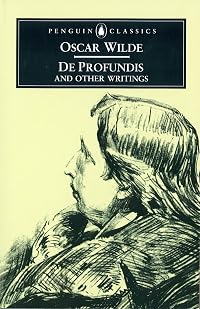
Flamboyant man-about-town, Oscar Wilde had a reputation that preceded him, especially in his early career. He was born to a middle-class Irish family (his father was a surgeon) and was trained as a scholarship boy at Trinity College, Dublin. He subsequently won a scholarship to Magdalen College, Oxford, where he was heavily influenced by John show more Ruskin and Walter Pater, whose aestheticism was taken to its radical extreme in Wilde's work. By 1879 he was already known as a wit and a dandy; soon after, in fact, he was satirized in Gilbert and Sullivan's Patience. Largely on the strength of his public persona, Wilde undertook a lecture tour to the United States in 1882, where he saw his play Vera open---unsuccessfully---in New York. His first published volume, Poems, which met with some degree of approbation, appeared at this time. In 1884 he married Constance Lloyd, the daughter of an Irish lawyer, and within two years they had two sons. During this period he wrote, among others, The Picture of Dorian Gray (1891), his only novel, which scandalized many readers and was widely denounced as immoral. Wilde simultaneously dismissed and encouraged such criticism with his statement in the preface, "There is no such thing as a moral or an immoral book. Books are well written or badly written. That is all." In 1891 Wilde published A House of Pomegranates, a collection of fantasy tales, and in 1892 gained commercial and critical success with his play, Lady Windermere's Fan He followed this comedy with A Woman of No Importance (1893), An Ideal Husband (1895), and his most famous play, The Importance of Being Earnest (1895). During this period he also wrote Salome, in French, but was unable to obtain a license for it in England. Performed in Paris in 1896, the play was translated and published in England in 1894 by Lord Alfred Douglas and was illustrated by Aubrey Beardsley. Lord Alfred was the son of the Marquess of Queensbury, who objected to his son's spending so much time with Wilde because of Wilde's flamboyant behavior and homosexual relationships. In 1895, after being publicly insulted by the marquess, Wilde brought an unsuccessful slander suit against the peer. The result of his inability to prove slander was his own trial on charges of sodomy, of which he was found guilty and sentenced to two years of hard labor. During his time in prison, he wrote a scathing rebuke to Lord Alfred, published in 1905 as De Profundis. In it he argues that his conduct was a result of his standing "in symbolic relations to the art and culture" of his time. After his release, Wilde left England for Paris, where he wrote what may be his most famous poem, The Ballad of Reading Gaol (1898), drawn from his prison experiences. Among his other notable writing is The Soul of Man under Socialism (1891), which argues for individualism and freedom of artistic expression. There has been a revived interest in Wilde's work; among the best recent volumes are Richard Ellmann's, Oscar Wilde and Regenia Gagnier's Idylls of the Marketplace , two works that vary widely in their critical assumptions and approach to Wilde but that offer rich insights into his complex character. (Bowker Author Biography) show less
Oscar Wilde has a Legacy Library. Legacy libraries are the personal libraries of famous readers, entered by LibraryThing members from the Legacy Libraries group.
Some Editions
Series
Belongs to Publisher Series
Work Relationships
Is contained in
Contains
Has the adaptation
Has as a student's study guide
Common Knowledge
- Canonical title
- Lord Arthur Savile's Crime and Other Stories
- Original title
- The Model Millionaire; The Sphinx Without a Secret; Lord Arthur Savile's Crime
- Original publication date
- 1891; 1887
- Original language*
- English
- Disambiguation notice
- The version of "Lord Arthur Savile's Criime and Other Stories" available for download from Project Gutenberg does not include the story "The Happy Prince" and should not be combined with versions that do.
*Some information comes from Common Knowledge in other languages. Click "Edit" for more information.
Classifications
Statistics
- Members
- 1,411
- Popularity
- 16,828
- Reviews
- 25
- Rating
- (3.71)
- Languages
- 10 — Catalan, English, French, German, Hungarian, Italian, Portuguese, Serbian, Spanish, Swedish
- Media
- Paper, Audiobook, Ebook
- ISBNs
- 185
- ASINs
- 53