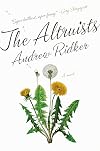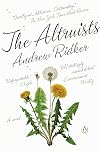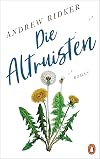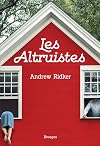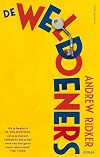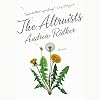
The Altruists
by Andrew Ridker
On This Page
Description
A vibrant and perceptive novel about a father's plot to win back his children's inheritance. Arthur Alter is in trouble. A middling professor at a Midwestern college, he can't afford his mortgage, he's exasperated his much-younger girlfriend, and his kids won't speak to him. And then there's the money--the small fortune his late wife Francine kept secret, which she bequeathed directly to his children. Those children are Ethan, an anxious recluse living off his mother's money on a choice plot show more of Brooklyn real estate; and Maggie, a would-be do-gooder trying to fashion herself a noble life of self-imposed poverty. On the verge of losing the family home, Arthur invites his children back to St. Louis under the guise of a reconciliation. But in doing so, he unwittingly unleashes a Pandora's box of age-old resentments and long-buried memories--memories that orbit Francine, the matriarch whose life may hold the key to keeping them together. Spanning New York, Paris, Boston, St. Louis, and a small desert outpost in Zimbabwe, The Altruists is a darkly funny (and ultimately tender) family saga in the tradition of Jonathan Franzen and Jeffrey Eugenides, with shades of Philip Roth and Zadie Smith. It's a novel about money, privilege, politics, campus culture, dating, talk therapy, rural sanitation, infidelity, kink, the American beer industry, and what it means to be a "good person." show lessTags
Recommendations






Member Reviews
Arthur Alter is in a tight spot. He took the visiting professor job at Danforth College, convinced he'd quickly be hired full-time and be given tenure. Despite moving his family across the country and derailing his wife's more successful career, he never moves into a permanent posting, instead being given fewer classes to teach over the years, so that now he's down to one. His children live far away and don't speak to him. And his wife may have had money when she died, but she left it all to the children. Maybe because Arthur coincidentally started an affair the same day Francine received her diagnosis? Arthur prefers not to think about that. He's got a bigger problem. When they first moved to St. Louis, they bought a house in keeping show more with Arthur's aspirations, and not his circumstances, which are that he's making a little less each year. And his girlfriend is thinking of taking a better paying job elsewhere. But Arthur can fix it all if he can get his son and daughter to come and visit. He'll convince them to give him the money they inherited from their mother. And once he has the money to pay off the mortgage, he's sure he can convince his girlfriend to turn down the new job and move in with him.
The only problem with this plan is that Arthur has once again over-estimated his powers of persuasion, his girlfriend's willingness to do what he wants and his job prospects, while under-estimating the sheer animosity his children hold for him.
Yes, this is another WMFuN*, that perennial staple of American literature. But this has some redeeming features. It's set in St. Louis and not New York City. Arthur may be the classic WMFuN protagonist, being both self-involved and oblivious to the harm he causes, but Andrew Ridker isn't asking the reader to side with Arthur, in fact he goes out of the way to clearly show the harm Arthur does. And it's well written, with a relaxed solidity to the writing that is surprising in a debut novel. No, I never warmed completely to Arthur and his equally self-involved off-spring, but no matter how I tried, I was never able to not care about what happened to them.
* White Male Fuck-up Novel show less
The only problem with this plan is that Arthur has once again over-estimated his powers of persuasion, his girlfriend's willingness to do what he wants and his job prospects, while under-estimating the sheer animosity his children hold for him.
Yes, this is another WMFuN*, that perennial staple of American literature. But this has some redeeming features. It's set in St. Louis and not New York City. Arthur may be the classic WMFuN protagonist, being both self-involved and oblivious to the harm he causes, but Andrew Ridker isn't asking the reader to side with Arthur, in fact he goes out of the way to clearly show the harm Arthur does. And it's well written, with a relaxed solidity to the writing that is surprising in a debut novel. No, I never warmed completely to Arthur and his equally self-involved off-spring, but no matter how I tried, I was never able to not care about what happened to them.
I do not envy comic novelists. Besides the challenges facing any novel writer, they have to elicit a smile, chuckle or smirk from their readers at regular intervals. Then - if and when they get it right - they face the risk of seeing their work dismissed as ‘(s)light’ fare. A case in point, in my opinion, was Andrew Sean Greer’s Less, which I greatly enjoyed and which I think really did deserve the Pulitzer, but which was slated in some quarters, including by friends and reviewers whose opinion I greatly respect.
It is therefore great news that a fresh talent has now joined the ranks of comic novelists. Andrew Ridker was born in 1991 (which makes me feel terribly old), and his debut novel The Altruists is published later this year. show more Admittedly, on the cynicism/bleakness scale, this novel is closer to Richard Ford than to Andrew Sean Greer, which might make it more palatable to the literati. Indeed, it’s already attracting glowing advance reviews. As for me, I admired most of it, although I find it harder to actually like it.
The protagonists of The Altruists are the Alters, a Jewish middle-class family from St Louis. The mother, Francine, haunts the novel, despite being dead for most of it. Indeed, it is her inheritance which serves as the catalyst of the plot. Incensed at the fact that her sixty-something professor husband Arthur has taken up a much younger lover whilst she is dying of cancer, Francine bequeaths a secret fortune to her two children, Ethan and Maggie. Faced with the prospect of losing his girlfriend and also his heavily mortgaged house, Arthur invites his children back to St Louis for a reconciliatory weekend, hoping to convince them to bail him out.
But Ethan and Maggie have their own problems. Ethan (whose homosexuality Arthur has never quite accepted) is out of a job, and is now living off his mother’s money in Brooklyn, whilst trying to sort out his messy love life. On her part, Maggie is a hard-headed would-be altruist, whose obsession with causes and ideals often leads her to actually overlook the needs of the people who surround her. Although Arthur’s plans seem to be failing miserably (but quite entertainingly for us readers), they do lead the Alters to come to term with their history and to understand that they are possible more like each other than they like to think.
To be honest, I found it hard to symphatize with any of the characters, who are complexly drawn but seem to have few, if any, redeeming features. If likable rogues exist, Arthur Alter is certainly not one of them. And his children are, frankly, chips off the old block. This ultimately detracted from my enjoyment of the novel. At the same time, however, there is much that is brilliant about The Altruists – it is an undeniably insightful work, it has some crisply humorous dialogue, and memorable set pieces. I particularly enjoyed the final showdown between the Alters and Arthur’s young lover, and the Zimbabwe episode feels like something out of Evelyn Waugh. If this debut is anything to go by, Ridker is certainly an author to look out for. show less
It is therefore great news that a fresh talent has now joined the ranks of comic novelists. Andrew Ridker was born in 1991 (which makes me feel terribly old), and his debut novel The Altruists is published later this year. show more Admittedly, on the cynicism/bleakness scale, this novel is closer to Richard Ford than to Andrew Sean Greer, which might make it more palatable to the literati. Indeed, it’s already attracting glowing advance reviews. As for me, I admired most of it, although I find it harder to actually like it.
The protagonists of The Altruists are the Alters, a Jewish middle-class family from St Louis. The mother, Francine, haunts the novel, despite being dead for most of it. Indeed, it is her inheritance which serves as the catalyst of the plot. Incensed at the fact that her sixty-something professor husband Arthur has taken up a much younger lover whilst she is dying of cancer, Francine bequeaths a secret fortune to her two children, Ethan and Maggie. Faced with the prospect of losing his girlfriend and also his heavily mortgaged house, Arthur invites his children back to St Louis for a reconciliatory weekend, hoping to convince them to bail him out.
But Ethan and Maggie have their own problems. Ethan (whose homosexuality Arthur has never quite accepted) is out of a job, and is now living off his mother’s money in Brooklyn, whilst trying to sort out his messy love life. On her part, Maggie is a hard-headed would-be altruist, whose obsession with causes and ideals often leads her to actually overlook the needs of the people who surround her. Although Arthur’s plans seem to be failing miserably (but quite entertainingly for us readers), they do lead the Alters to come to term with their history and to understand that they are possible more like each other than they like to think.
To be honest, I found it hard to symphatize with any of the characters, who are complexly drawn but seem to have few, if any, redeeming features. If likable rogues exist, Arthur Alter is certainly not one of them. And his children are, frankly, chips off the old block. This ultimately detracted from my enjoyment of the novel. At the same time, however, there is much that is brilliant about The Altruists – it is an undeniably insightful work, it has some crisply humorous dialogue, and memorable set pieces. I particularly enjoyed the final showdown between the Alters and Arthur’s young lover, and the Zimbabwe episode feels like something out of Evelyn Waugh. If this debut is anything to go by, Ridker is certainly an author to look out for. show less
This is the sort of novel destined to divide readers into camps. Ridker’s social satire is of the overt type, resulting in characters that are too ridiculous to like and situations that are too silly to generate sympathy or empathy. If you enjoy your satire spread thick, then you’ll enjoy this. If, however, you prefer your social commentary on the subtle side, or if you were hoping for a thoughtful exploration of dysfunctional familihood, then you’ll want to look elsewhere. Those blurbs promising a tale that is “big hearted” or “moving” are stretching it - fundamentally, this is a social parody in which egoism, obtuseness, privilege, passivity, neurosis, and profound hypocrisy play featured roles.
The altruists in the show more novel are, of course, nothing of the sort: they are, instead, absurdly self-absorbed. The pater familias, Arthur Alter, is a failed professor whose one shining accomplishment was traveling to Zimbabwe as an idealistic youth to install sanitation infrastructure – an endeavor that, predictably, goes horribly awry. Since then he’s become the opposite of an altruist: a whiny parasite of a man living off of the pity and passivity of others. The daughter, Maggie, having convinced herself that self-deprivation is the ultimate measure of character, imagines she is living a life of enlightened virtue even as she engages in increasingly outrageous acts of borishness, narcissism, and theft. The son, Ethan, is obsessed with the quioxitic fixation that his gay childhood crush is just waiting for him (Ethan) to help him accept his true sexuality. And the mater familias, Francine, is the enabler who makes it all possible – so much so that, when she dies, the whole family immediately implodes, the event that ostensibly sets the events of this novel in motion.
Don’t get me wrong: Ridkin can bring the funny. Understated passages like “The university had recently consolidated the College of Fine Arts, the Center for Media Studies, and their entrepreneurship MBA into the centralized Institute for Business Arts” made me laugh aloud. But the more exaggerated elements of the novel – Arthur’s selfishness and parsimony, Maggie’s hypocrisy, the author’s constant sniping at “political correctness” - were just a bit too crude for my tastes. Moreover, I couldn’t help wondering whether Ridkin’s purpose here was less about entertaining readers than trying to impress the hipster peers at the New Yorker or the Iowa Writer’s Workshop with his wit. show less
The altruists in the show more novel are, of course, nothing of the sort: they are, instead, absurdly self-absorbed. The pater familias, Arthur Alter, is a failed professor whose one shining accomplishment was traveling to Zimbabwe as an idealistic youth to install sanitation infrastructure – an endeavor that, predictably, goes horribly awry. Since then he’s become the opposite of an altruist: a whiny parasite of a man living off of the pity and passivity of others. The daughter, Maggie, having convinced herself that self-deprivation is the ultimate measure of character, imagines she is living a life of enlightened virtue even as she engages in increasingly outrageous acts of borishness, narcissism, and theft. The son, Ethan, is obsessed with the quioxitic fixation that his gay childhood crush is just waiting for him (Ethan) to help him accept his true sexuality. And the mater familias, Francine, is the enabler who makes it all possible – so much so that, when she dies, the whole family immediately implodes, the event that ostensibly sets the events of this novel in motion.
Don’t get me wrong: Ridkin can bring the funny. Understated passages like “The university had recently consolidated the College of Fine Arts, the Center for Media Studies, and their entrepreneurship MBA into the centralized Institute for Business Arts” made me laugh aloud. But the more exaggerated elements of the novel – Arthur’s selfishness and parsimony, Maggie’s hypocrisy, the author’s constant sniping at “political correctness” - were just a bit too crude for my tastes. Moreover, I couldn’t help wondering whether Ridkin’s purpose here was less about entertaining readers than trying to impress the hipster peers at the New Yorker or the Iowa Writer’s Workshop with his wit. show less
‘His kids were gone. His house was verging on foreclosure. His career was in a coffin, ignored by even the thirstiest of academic vampires.’
Meet the Alters; the father, Arthur, a failing non-tenured academic at a US college, teaching engineering rather than actually doing it; son Ethan, massively in debt and struggling to cope with life, and daughter Maggie, with no proper job, an eating disorder and a passive-aggressive personality; and Francine, their mother who died from cancer two years earlier but still remains a massive presence in everyone’s lives. This is not a happy family.
Still reeling from the fact that Francine had left all of her money, a small fortune having amassed in an investment portfolio, to his two children show more rather than to him (for reasons that soon become apparent) and facing the prospect of losing the family home, Arthur invites his two children to visit him so that he can ask them for help. The book moves back and forward through time, as we see Arthur and Francine’s relationship develop both before and after their marriage. This used to be a close-knit Jewish family, and there are moments of comedy throughout the book playing on stereotypes of Jewish relatives and the importance of family. Ethan and Maggie now live in New York, miles away from St Louis where Arthur had dragged the family for his job, St Louis coming to seem like a prison for everyone else. The trip back for the two becomes an opportunity for closure; Ethan tracks down Charlie, the boy with whom he had a brief fling at college but whose rejection of him has meant that he has been unable to trust anyone else since; and Maggie comes to visit the botanic garden where she had scattered her mother’s ashes after the funeral. As the book weaves its narratives, the characters become fleshed out and we learn that, actually, none of them are very likeable, but all of them are very damaged. The humour is sometimes farcical, often satirical, and the reality behind the image of the intellectual, middle-class family with two kids explodes the American dream.
There are several comic moments: Arthur’s failed attempt to help sanitary conditions in Zimbabwe ends in an outbreak of sleeping sickness; Arthur taking Ethan to a baseball game for his 10th birthday; the dating app which pairs you up by matching people with similar life traumas…. But the tone is not severe, and the satire is not biting enough to make you not care about the characters, however much you don’t actually really like them. I found myself pitying them, wanting them to find something, some closure, some peace from the family angst. Without any spoilers, whilst things don’t work out for Arthur as he would like there is, ultimately, some prospect of a light at the end of the tunnel for them all.
An enjoyable, sometimes laugh-out-loud satire of modern life in America which I did really enjoy. Andrew Ridker can write snappy prose and has a good eye for detail, and I look forward to his next book. An excellent debut from a promising writer. 4 stars.
(With thanks to the publisher and NetGalley for an ARC of the book.) show less
Meet the Alters; the father, Arthur, a failing non-tenured academic at a US college, teaching engineering rather than actually doing it; son Ethan, massively in debt and struggling to cope with life, and daughter Maggie, with no proper job, an eating disorder and a passive-aggressive personality; and Francine, their mother who died from cancer two years earlier but still remains a massive presence in everyone’s lives. This is not a happy family.
Still reeling from the fact that Francine had left all of her money, a small fortune having amassed in an investment portfolio, to his two children show more rather than to him (for reasons that soon become apparent) and facing the prospect of losing the family home, Arthur invites his two children to visit him so that he can ask them for help. The book moves back and forward through time, as we see Arthur and Francine’s relationship develop both before and after their marriage. This used to be a close-knit Jewish family, and there are moments of comedy throughout the book playing on stereotypes of Jewish relatives and the importance of family. Ethan and Maggie now live in New York, miles away from St Louis where Arthur had dragged the family for his job, St Louis coming to seem like a prison for everyone else. The trip back for the two becomes an opportunity for closure; Ethan tracks down Charlie, the boy with whom he had a brief fling at college but whose rejection of him has meant that he has been unable to trust anyone else since; and Maggie comes to visit the botanic garden where she had scattered her mother’s ashes after the funeral. As the book weaves its narratives, the characters become fleshed out and we learn that, actually, none of them are very likeable, but all of them are very damaged. The humour is sometimes farcical, often satirical, and the reality behind the image of the intellectual, middle-class family with two kids explodes the American dream.
There are several comic moments: Arthur’s failed attempt to help sanitary conditions in Zimbabwe ends in an outbreak of sleeping sickness; Arthur taking Ethan to a baseball game for his 10th birthday; the dating app which pairs you up by matching people with similar life traumas…. But the tone is not severe, and the satire is not biting enough to make you not care about the characters, however much you don’t actually really like them. I found myself pitying them, wanting them to find something, some closure, some peace from the family angst. Without any spoilers, whilst things don’t work out for Arthur as he would like there is, ultimately, some prospect of a light at the end of the tunnel for them all.
An enjoyable, sometimes laugh-out-loud satire of modern life in America which I did really enjoy. Andrew Ridker can write snappy prose and has a good eye for detail, and I look forward to his next book. An excellent debut from a promising writer. 4 stars.
(With thanks to the publisher and NetGalley for an ARC of the book.) show less
The Altruists by Andrew Ridker is a very highly recommended debut novel about a dysfunctional family struggling after the death of their wife and mother.
Arthur Alter relocated his family, wife Francine and children Ethan and Maggie, from Boston to St. Louis after accepting the non-tenured position of engineering professor at Danforth University in St. Louis. While he was sure he would eventually become a tenured professor, it never happened. Francine is the person who keeps the family together and it is her income, as a family and couples therapist, that helps supports the family and pay for the mortgage on the large house Arthur wanted.
Francine died from cancer two years earlier and left her children a large inheritance - money Arthur show more knew nothing about. Ethan and Maggie are still reeling from the death of their mother and haven't seen their father since. Arthur started an affair with a much younger professor while Francine was dying, an affair Francine, Ethan, and Maggie all knew about. Now Ethan and Maggie are both currently living in New York City. Maggie is a recent college graduate. She is striving to do good things for her neighbors and lives a life of self-imposed poverty, to the point of starving herself. Ethan, 31, left his consulting job, is a recluse and was living off his inheritance, but is now deep in debt. His father never understood him.
Now, after not talking to his children for two years, Arthur, 65, has a scheme he needs to put into action that involves the help of his children. Arthur is going to lose the house to foreclosure because he can't afford the mortgage, but if he can get his children to use their inheritance to pay off the mortgage, then he and his girlfriend can move into the house. To put his plan into action, he writes to Ethan and Maggie, inviting them to come home for a visit, but his ploy doesn't go exactly as he planned.
These are all memorable characters and readers will become well-acquainted with Francine, Arthur, Ethan, and Maggie. Francine is clearly the glue that holds this novel (and family) together. Without her, everyone is self-involved and clueless. There are moments where their actions or Arthur's obvious schemes to play on sentiments are so off-the-mark or awkward, that it is both humorous and yet poignant. Ridker succeeds in presenting the narrative with wit, compassion, insight, and depth, making these flawed characters human.
The Altruists is an exceptionally well-written family saga. This outstanding, complex, and compelling novel is a page-turner that will hold your attention throughout. Both the quality of the writing and the character development are excellent, resulting in a intricate, dynamic, insightful, and perceptive debut novel. Chapters presents everyone's point-of-view, including Francine's, and include flashbacks and the backstory of the four family members.This novel is a pleasure to read and makes Ridker a novelist to watch.
Disclosure: My review copy was courtesy of Penguin Random House.
http://www.shetreadssoftly.com/2019/02/the-altruists.html show less
Arthur Alter relocated his family, wife Francine and children Ethan and Maggie, from Boston to St. Louis after accepting the non-tenured position of engineering professor at Danforth University in St. Louis. While he was sure he would eventually become a tenured professor, it never happened. Francine is the person who keeps the family together and it is her income, as a family and couples therapist, that helps supports the family and pay for the mortgage on the large house Arthur wanted.
Francine died from cancer two years earlier and left her children a large inheritance - money Arthur show more knew nothing about. Ethan and Maggie are still reeling from the death of their mother and haven't seen their father since. Arthur started an affair with a much younger professor while Francine was dying, an affair Francine, Ethan, and Maggie all knew about. Now Ethan and Maggie are both currently living in New York City. Maggie is a recent college graduate. She is striving to do good things for her neighbors and lives a life of self-imposed poverty, to the point of starving herself. Ethan, 31, left his consulting job, is a recluse and was living off his inheritance, but is now deep in debt. His father never understood him.
Now, after not talking to his children for two years, Arthur, 65, has a scheme he needs to put into action that involves the help of his children. Arthur is going to lose the house to foreclosure because he can't afford the mortgage, but if he can get his children to use their inheritance to pay off the mortgage, then he and his girlfriend can move into the house. To put his plan into action, he writes to Ethan and Maggie, inviting them to come home for a visit, but his ploy doesn't go exactly as he planned.
These are all memorable characters and readers will become well-acquainted with Francine, Arthur, Ethan, and Maggie. Francine is clearly the glue that holds this novel (and family) together. Without her, everyone is self-involved and clueless. There are moments where their actions or Arthur's obvious schemes to play on sentiments are so off-the-mark or awkward, that it is both humorous and yet poignant. Ridker succeeds in presenting the narrative with wit, compassion, insight, and depth, making these flawed characters human.
The Altruists is an exceptionally well-written family saga. This outstanding, complex, and compelling novel is a page-turner that will hold your attention throughout. Both the quality of the writing and the character development are excellent, resulting in a intricate, dynamic, insightful, and perceptive debut novel. Chapters presents everyone's point-of-view, including Francine's, and include flashbacks and the backstory of the four family members.This novel is a pleasure to read and makes Ridker a novelist to watch.
Disclosure: My review copy was courtesy of Penguin Random House.
http://www.shetreadssoftly.com/2019/02/the-altruists.html show less
The Alters are a very special kind of family. As their telling name suggests, they want to be there for the others, alter in Latin, what leaves them in a complete mess. After mother Francine’s death, Arthur runs deeply in debt and is not realising that his career is over and that it is only a question of time until his Midwestern college sets him free. His son Ethan had started a big career after college, but found his work dull und useless and finally just quit. Daughter Maggie had higher ambitions from the start, but troubles financing her work at non-profit organisations leaves her almost famished. When Arthur calls for a family reunion to save the family home, Maggie and Ethan are not sure if they want to come. And from their show more past, this reunion can only end in a catastrophe.
Andrew Ridker’s debut is a tour de force through a family history narrated in a hilarious tone that reminds me strongly of the classic Jewish wit and humour. The characters suffer their shortcomings, but are never humiliated. He treats them with a generous smile, knowing that they can’t actually change the way they are. He integrates stereotypes carefully so that it is a great fun to deconstruct them, starting with the family name and ending with the fact that it is money that drives the story.
The author created some quite interesting characters, even though they try to lead a meaningful life, selfless and to the benefit of others, all three of them withdraw from the world and social contacts and in the end, find themselves only circling around themselves. For me, this seems to be the most central question of the novel: how can you lead a meaningful life, that has a purpose and a lasting impact on the world. Careers do not seem to be the solution, but the absence of careers also isn’t the answer. Just as the Alters, the reader will have to figure out for himself what makes you happy and gives a meaning to your time on earth. show less
Andrew Ridker’s debut is a tour de force through a family history narrated in a hilarious tone that reminds me strongly of the classic Jewish wit and humour. The characters suffer their shortcomings, but are never humiliated. He treats them with a generous smile, knowing that they can’t actually change the way they are. He integrates stereotypes carefully so that it is a great fun to deconstruct them, starting with the family name and ending with the fact that it is money that drives the story.
The author created some quite interesting characters, even though they try to lead a meaningful life, selfless and to the benefit of others, all three of them withdraw from the world and social contacts and in the end, find themselves only circling around themselves. For me, this seems to be the most central question of the novel: how can you lead a meaningful life, that has a purpose and a lasting impact on the world. Careers do not seem to be the solution, but the absence of careers also isn’t the answer. Just as the Alters, the reader will have to figure out for himself what makes you happy and gives a meaning to your time on earth. show less
I really enjoyed this story of the Alter family. The writing was sharp and sarcastically funny. I didn’t think Ridker could land this puppy, but he did to a surprisingly satisfying conclusion.
Members
- Recently Added By
Lists

Kirkus Starred Fiction Reviews of Books Published in 2019
411 works; 12 members
Author Information

3 Works 330 Members
Awards and Honors
Common Knowledge
- Canonical title
- The Altruists
- Original title
- The Altruists
- Original publication date
- 2019-05-09
- People/Characters
- Arthur Alter; Francine Alter; Ethan Alter; Maggie Alter
- Important places
- St. Louis, Missouri, USA; New York, New York, USA
- Blurbers
- Nathan Hill; Atticus Lish
- Original language
- English US
Classifications
Statistics
- Members
- 212
- Popularity
- 154,713
- Reviews
- 11
- Rating
- (3.27)
- Languages
- 7 — Czech, Dutch, English, French, German, Italian, Swedish
- Media
- Paper, Audiobook, Ebook
- ISBNs
- 19
- ASINs
- 4