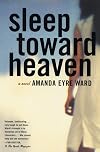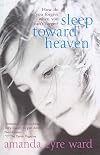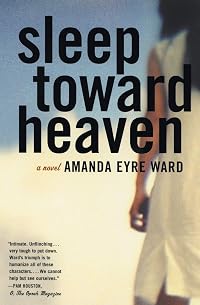
Sleep Toward Heaven
by Amanda Eyre Ward
On This Page
Description
Sleep Toward Heaven is a luminous story of murder and desire, solitude and grace, set in Manhattan and small-town Texas. In Gatestown, twenty-nine-year old Karen awaits her execution on Death Row. In New York, Franny, a doctor the same age, plans her wedding and tries to resist her urge to run. In Austin, Celia, a brassy young librarian, mourns her lost husband. Over the course of one summer, the three women's disparate lives intertwine. Karen, Franny, and Celia all struggle to find their show more place in a world where nothing is sure, as they move toward one night that will change them all forever. With razor-sharp prose and humor that ignites the page, Amanda Eyre Ward's debut novel will keep you reading all night and give you something to talk about in the morning. Sleep Toward Heaven is a novel to celebrate and to savor.About the author: Amanda Eyre Ward was born in New York City, and graduated from Williams College and the University of Montana. Her short stories have been published in various literary reviews and magazines. She lives in Austin, Texas, with her husband, the geologist Tip Meckel. She is a regular contributor to the Austin Chronicle. This is her first novel.
. show less
Tags
Recommendations
















Member Reviews
A very postmodern book, if only in its undertones. This was a surprisingly quick read which I devoured in a single afternoon. This engrossing plot features a triangle between three women: a prisoner on Death Row, a doctor, and a librarian. At first, the three narratives seem to be randomly thrown together, but their connection is revealed soon enough. You won't be able to put it down after that.
As a native Texan, I enjoyed the well-researched bits about Huntsville, the prisons, and the death sentence. Texas executes more people than any other state, and middle schools statewide make the field trip / pilgrimage to the Huntsville museum where Old Sparky is retired. From an early age, we learn about the lethal injection and the gruesome show more details of how exactly an execution-via-electric chair works. I recently went to the museum as an adult and was horrified to see a gift shop t-shirt featuring Old Sparky, with the slogan "Riding Thunder." That is fucked.
Ward is obviously not from Texas, but this fact, obviously, does not take away from the quality of her writing, which is well-researched and written in lovely prose. However, her opinions on the death penalty go against everything most Texans believe. Her characters do not reflect the average Texan. Here, the death penalty is not just a policy, but a part of religion. Just like gun rights.
Ward devalues the death penalty. As in, what good would this woman's death do? What good could come from killing this woman? We look at this woman's life before prison and sympathize with her plight, but Ward seems to be advocating that justice is relative. Her character is a murderer, but she had such a tragic life, surely we can judge the murder in a different life?
The death penalty is not a cruel and unusual punishment... There are many arguments made about its cruelty, but as for unusual, it's definitely not, because we do it! A lot. Especially in Texas. This is a common punishment. Common! If you tip the scales of justice, they must be righted again. Ward questions this sentiment with grace. show less
As a native Texan, I enjoyed the well-researched bits about Huntsville, the prisons, and the death sentence. Texas executes more people than any other state, and middle schools statewide make the field trip / pilgrimage to the Huntsville museum where Old Sparky is retired. From an early age, we learn about the lethal injection and the gruesome show more details of how exactly an execution-via-electric chair works. I recently went to the museum as an adult and was horrified to see a gift shop t-shirt featuring Old Sparky, with the slogan "Riding Thunder." That is fucked.
Ward is obviously not from Texas, but this fact, obviously, does not take away from the quality of her writing, which is well-researched and written in lovely prose. However, her opinions on the death penalty go against everything most Texans believe. Her characters do not reflect the average Texan. Here, the death penalty is not just a policy, but a part of religion. Just like gun rights.
Ward devalues the death penalty. As in, what good would this woman's death do? What good could come from killing this woman? We look at this woman's life before prison and sympathize with her plight, but Ward seems to be advocating that justice is relative. Her character is a murderer, but she had such a tragic life, surely we can judge the murder in a different life?
The death penalty is not a cruel and unusual punishment... There are many arguments made about its cruelty, but as for unusual, it's definitely not, because we do it! A lot. Especially in Texas. This is a common punishment. Common! If you tip the scales of justice, they must be righted again. Ward questions this sentiment with grace. show less
3.5***
Three very different women are connected by an impending execution at the Huntsville Prison in Texas. Karen – “the Highway Honey” – is on death row for the series of murders she committed in an effort to keep her young lover supplied with heroin. Celia is a lost and emotionally drained librarian and widow, whose husband was murdered. Franny left the small Texas town years ago for boarding school, making her life in New York as a doctor. Reeling from the recent death of one of her pediatric patients, she leaves her fiancé behind to return to Texas when her last relative, Uncle Jack, dies suddenly, and winds up taking over his job as prison physician. All three are emotionally disconnected and fragile. The novel spans one show more hot Texas summer and is told in alternating chapters by each of the three women.
Karen’s background story is obviously based on that of Aileen Wuornos (who was executed in Florida for the robbery/murders she committed there), with very little effort to change the circumstances. She might have been any murderer, why borrow such a recognizable back story? The novel is set in the fictional Gatestown, which is obviously a stand-in for the real Gatesville in which the Mountain View Unit for female Death Row prisoners is actually located. Why bother to change the name if it’s going to be so similar? The book mentions that this is about a 5-hour drive to Hunstville, where the executions actually take place, yet hordes of people show up “for the execution.” This confused me … wouldn’t they go to Huntsville? But enough quibbling over small details; they were distractions, yes, but not major flaws.
This book surprised me. Despite the emotional distance of the three central characters, there was an immediacy to the writing and I found myself completely drawn into their combined story. Their tale of grief, loneliness, longing and forgiveness has a universality about it despite the unique circumstances of each. Karen and her fellow inmates on Death Row try to create some sort of “family” out of their shared experience as they wait for their respective execution dates. Celia stumbles through her days trying to find a way back to life, afraid to hold anyone close again after losing Henry in such a violent and sudden way. She insists she is “fine” and proves it by buying a new bikini (“Isn’t that what normal women do?”), but her therapist feels that she has not really faced her rage yet. Franny is perhaps the most closed-off character and I had a very hard time with her. Of the three, she seems to be the one most damaged, going through the motions and sedating herself with alcohol. Her actions make little sense to me, but I was glad that she was finally able to acknowledge some love and personal connection.
The ending was emotionally charged for the characters, but I felt a little manipulated. The women didn’t seem to understand their own motives and, frankly, neither did I. And I thought the “resolution” was contrived and convenient. Still, this was a pretty good debut effort and I will certainly read more of this author’s works. show less
Three very different women are connected by an impending execution at the Huntsville Prison in Texas. Karen – “the Highway Honey” – is on death row for the series of murders she committed in an effort to keep her young lover supplied with heroin. Celia is a lost and emotionally drained librarian and widow, whose husband was murdered. Franny left the small Texas town years ago for boarding school, making her life in New York as a doctor. Reeling from the recent death of one of her pediatric patients, she leaves her fiancé behind to return to Texas when her last relative, Uncle Jack, dies suddenly, and winds up taking over his job as prison physician. All three are emotionally disconnected and fragile. The novel spans one show more hot Texas summer and is told in alternating chapters by each of the three women.
Karen’s background story is obviously based on that of Aileen Wuornos (who was executed in Florida for the robbery/murders she committed there), with very little effort to change the circumstances. She might have been any murderer, why borrow such a recognizable back story? The novel is set in the fictional Gatestown, which is obviously a stand-in for the real Gatesville in which the Mountain View Unit for female Death Row prisoners is actually located. Why bother to change the name if it’s going to be so similar? The book mentions that this is about a 5-hour drive to Hunstville, where the executions actually take place, yet hordes of people show up “for the execution.” This confused me … wouldn’t they go to Huntsville? But enough quibbling over small details; they were distractions, yes, but not major flaws.
This book surprised me. Despite the emotional distance of the three central characters, there was an immediacy to the writing and I found myself completely drawn into their combined story. Their tale of grief, loneliness, longing and forgiveness has a universality about it despite the unique circumstances of each. Karen and her fellow inmates on Death Row try to create some sort of “family” out of their shared experience as they wait for their respective execution dates. Celia stumbles through her days trying to find a way back to life, afraid to hold anyone close again after losing Henry in such a violent and sudden way. She insists she is “fine” and proves it by buying a new bikini (“Isn’t that what normal women do?”), but her therapist feels that she has not really faced her rage yet. Franny is perhaps the most closed-off character and I had a very hard time with her. Of the three, she seems to be the one most damaged, going through the motions and sedating herself with alcohol. Her actions make little sense to me, but I was glad that she was finally able to acknowledge some love and personal connection.
The ending was emotionally charged for the characters, but I felt a little manipulated. The women didn’t seem to understand their own motives and, frankly, neither did I. And I thought the “resolution” was contrived and convenient. Still, this was a pretty good debut effort and I will certainly read more of this author’s works. show less
Ward's debut novel explores the lives of three struggling Texas women while at the same time probing the death penalty issue in a way that is neither overbearing nor preachy. Karen Lowens, after suffering a very unfortunate childhood, comes to know the only love in her life with Ellen, her junkie girlfriend. Karen's love and desperation for Ellen's love in return drive her to unspeakable acts that finally land Karen on death row as penalty for several counts of murder. Franny Wren, a workaholic doctor recently burned by getting too close to a dying patient, returns to Texas upon the death of her beloved uncle, a part-time prison doctor. In doing so, she flees a life and a fiance in New York City that no longer satisfy her to temporarily show more replace her uncle as doctor in the prison. Celia Mills, young librarian and widow of Karen's final victim, struggles through life without her husband Henry. She attempts to fill the void by writing a letter to Karen on death row in an attempt to make her husband's killer understand just what has been taken from her and then having an affair with a boy-author she meets when she goes to mail the letter.
Added to the main characters are the women Karen lives with on death row. These women, while we never quite understand what drove them to their crimes, are convincing characters each dealing with their incarceration and impending deaths in their own way. Somehow Ward manages to make these characters and their interactions in their small prison both appalling and strikingly ordinary.
Ward's characters are damaged and real. Karen, Franny, and Celia's stories suspensefully intertwine as Karen's August execution date approaches. Ward graces Sleep Toward Heaven with a deeply satisfying ending successfully doing justice to the rest of the story and the characters that readers will come to care about.
Having read two books by Ward, it's obvious to me that Ward's greatest strength, which is very well demonstrated in Sleep Toward Heaven, is her great sense of timing. While developing her characters' current situations, she gives us a steady trickle of their histories that we find ourselves longing for as we become acquainted with them in the present. Her ability to perfectly time the "doses" of this information combined with her skill in knowing when to cut away from one character's story to another's make this novel quite literally unputdownable. show less
Added to the main characters are the women Karen lives with on death row. These women, while we never quite understand what drove them to their crimes, are convincing characters each dealing with their incarceration and impending deaths in their own way. Somehow Ward manages to make these characters and their interactions in their small prison both appalling and strikingly ordinary.
Ward's characters are damaged and real. Karen, Franny, and Celia's stories suspensefully intertwine as Karen's August execution date approaches. Ward graces Sleep Toward Heaven with a deeply satisfying ending successfully doing justice to the rest of the story and the characters that readers will come to care about.
Having read two books by Ward, it's obvious to me that Ward's greatest strength, which is very well demonstrated in Sleep Toward Heaven, is her great sense of timing. While developing her characters' current situations, she gives us a steady trickle of their histories that we find ourselves longing for as we become acquainted with them in the present. Her ability to perfectly time the "doses" of this information combined with her skill in knowing when to cut away from one character's story to another's make this novel quite literally unputdownable. show less
Writing a novel about Death Row is a tricky thing, like walking tightrope on barbed wire.
Pop cult depictions of prisoners awaiting execution often have a hard time balancing pompous pulpit-pounding (as with movies like Dead Man Walking or The Life of David Gale) with the unglossed nitty-gritty (as in HBO's Oz or Norman Mailer's The Executioner's Song). We're either awash in pathos or grime. And what about humor? Isn't there a place for a couple of laughs on Death Row?
Amanda Eyre Ward rises to these challenges in her debut novel, Sleep Toward Heaven. Aside from a couple of minor stumbles, the story races from page one to page last at knuckle-whitening speed. She manages to walk the barbed wire without losing balance (wobbling, yes; but show more never falling). There's even a healthy injection of humor in the book's veins.
Sleep Toward Heaven, which takes its title from a poem by William Stafford, follows three women whose lives eventually converge: Karen, a 29-year-old who's been on Texas' Death Row for five years for a string of murders; Celia, the widow of Karen's last victim; and Franny, a doctor who escapes to Texas from New York, leaving behind her fiancé, an insufferable chauvinist pig. All three women are haunted and riddled with anxiety, fretting over matters large and small as Karen's execution date draws near.
For Franny, it's the decision to dump her shallow, soulless boyfriend and head down to her hometown in Texas where her uncle once volunteered as a prison doctor. For Celia, it's wondering why she's sleeping with a boy half her age whom she met in the post office while mailing a letter to her husband's killer. For that killer, Karen, of course, it's reconciling her dark past with her equally dark future ("The worst part is that everybody is going to watch me go"). We're also introduced to several other women on Death Row, each of them with distinct personalities which avoid falling into the high camp of chicks-behind-bars B movies.
Ward immediately puts us inside the lives of her characters with a rapid-fire voice that keeps the action crackling along, yet is lyric enough to slow down and savor the details -- like these thoughts running through Karen's head:
Things were not always like this for Karen. Her earliest memory is her happiest one. She hopes that death will bring her back to that night, with the smell of her mother's breast: a powdery, caramel smell. The warmth of her mother's hair, ironed on the kitchen table. A car horn honking, a bright moon sky. Her mother whispering a lullaby, soft vowels, papery voice.
Ward also captures the sounds and smells of prison life, including details like how guards remove the sticks from corn dogs before serving them for lunch. She builds credibility at every turn of the page.
And it's not just prison -- there's also authenticity in her scenes of small-town Texas life, like this description of a local café:
On every wall, there were deer heads, and most of them had baseball hats stuck on their antlers. In between the deer heads were sawblades with nature scenes painted on them and large wagon wheels. Also, photographs of men in sunglasses kneeling next to dead deer. In the rare spots where it was visible, the wallpaper was striped.
Ward is less successful in handling some of her minor characters, especially Franny's fiancé. The superficiality of Nat's character, and the clumsy clichés the author puts in his mouth, stand out like a sore thumb in an otherwise well-developed cast of characters. Fortunately, Nat soon exits the book, stage left, and we're allowed to concentrate fully on the lives of the Death Row women, the widow, and the doctor.
One more thing: let me send up my own personal thanks to heaven that Ward didn't feel compelled to include a clock-ticking finale where everyone stands around waiting for a phone call from the governor. Her climax is suspenseful, but it goes in a different (and more satisfying) direction than the ones we're used to seeing in the movies.
Ward works with a film editor's pace, snipping and cutting quickly between the three women as they each try to piece together lives shattered by violence and disappointment. The result is a novel that reads like lightning, but has the lasting roll of thunder. show less
Pop cult depictions of prisoners awaiting execution often have a hard time balancing pompous pulpit-pounding (as with movies like Dead Man Walking or The Life of David Gale) with the unglossed nitty-gritty (as in HBO's Oz or Norman Mailer's The Executioner's Song). We're either awash in pathos or grime. And what about humor? Isn't there a place for a couple of laughs on Death Row?
Amanda Eyre Ward rises to these challenges in her debut novel, Sleep Toward Heaven. Aside from a couple of minor stumbles, the story races from page one to page last at knuckle-whitening speed. She manages to walk the barbed wire without losing balance (wobbling, yes; but show more never falling). There's even a healthy injection of humor in the book's veins.
Sleep Toward Heaven, which takes its title from a poem by William Stafford, follows three women whose lives eventually converge: Karen, a 29-year-old who's been on Texas' Death Row for five years for a string of murders; Celia, the widow of Karen's last victim; and Franny, a doctor who escapes to Texas from New York, leaving behind her fiancé, an insufferable chauvinist pig. All three women are haunted and riddled with anxiety, fretting over matters large and small as Karen's execution date draws near.
For Franny, it's the decision to dump her shallow, soulless boyfriend and head down to her hometown in Texas where her uncle once volunteered as a prison doctor. For Celia, it's wondering why she's sleeping with a boy half her age whom she met in the post office while mailing a letter to her husband's killer. For that killer, Karen, of course, it's reconciling her dark past with her equally dark future ("The worst part is that everybody is going to watch me go"). We're also introduced to several other women on Death Row, each of them with distinct personalities which avoid falling into the high camp of chicks-behind-bars B movies.
Ward immediately puts us inside the lives of her characters with a rapid-fire voice that keeps the action crackling along, yet is lyric enough to slow down and savor the details -- like these thoughts running through Karen's head:
Things were not always like this for Karen. Her earliest memory is her happiest one. She hopes that death will bring her back to that night, with the smell of her mother's breast: a powdery, caramel smell. The warmth of her mother's hair, ironed on the kitchen table. A car horn honking, a bright moon sky. Her mother whispering a lullaby, soft vowels, papery voice.
Ward also captures the sounds and smells of prison life, including details like how guards remove the sticks from corn dogs before serving them for lunch. She builds credibility at every turn of the page.
And it's not just prison -- there's also authenticity in her scenes of small-town Texas life, like this description of a local café:
On every wall, there were deer heads, and most of them had baseball hats stuck on their antlers. In between the deer heads were sawblades with nature scenes painted on them and large wagon wheels. Also, photographs of men in sunglasses kneeling next to dead deer. In the rare spots where it was visible, the wallpaper was striped.
Ward is less successful in handling some of her minor characters, especially Franny's fiancé. The superficiality of Nat's character, and the clumsy clichés the author puts in his mouth, stand out like a sore thumb in an otherwise well-developed cast of characters. Fortunately, Nat soon exits the book, stage left, and we're allowed to concentrate fully on the lives of the Death Row women, the widow, and the doctor.
One more thing: let me send up my own personal thanks to heaven that Ward didn't feel compelled to include a clock-ticking finale where everyone stands around waiting for a phone call from the governor. Her climax is suspenseful, but it goes in a different (and more satisfying) direction than the ones we're used to seeing in the movies.
Ward works with a film editor's pace, snipping and cutting quickly between the three women as they each try to piece together lives shattered by violence and disappointment. The result is a novel that reads like lightning, but has the lasting roll of thunder. show less
Can a person truly forgive someone who has stolen the most precious thing in her life, someone who has killed the person around whom her entire future was structured? Celia Mills certainly does not believe that she will ever forgive the woman who shot and killed her husband as he ran an errand for her one hot Texas afternoon.
Sleep Toward Heaven, Amanda Eyre Ward’s debut novel is the story of three very different women who find their lives intersecting under tragically unpredictable circumstances. One of the women, Karen, is a Texas death row inmate who has been convicted of killing several of the men who paid to have sex with her along the Texas highways she worked to support her junkie female lover. Another is Franny Wren, a young show more New York City doctor who has been so affected by the death of her young cancer patient that she is having second thoughts about her career and her marriage plans. The third is Celia, widow of Karen’s last victim, the only man she killed who was not one of her customers, a man who happened to cross paths with her at precisely the wrong moment.
The state of Texas has a long tradition of executing its murderers, something that longtime residents of the state usually take for granted. It is just a fact of life in Texas that many convicted murderers end up in Huntsville where they pay the ultimate price for their crimes. Ward uses Karen, Franny and Celia to put a human face on that experience by alternating segments in which each of the women draws closer and closer to the date that Karen has with her executioner.
Franny Wren never expected to return to a life in small town Texas, and certainly never expected to become a prison doctor working with the female prisoners on death row. But here she was. Karen finds herself looking forward to the relief that death offers. Her life on death row among the handful of female prisoners awaiting their own executions has become miserable and it is only a question of whether she will be executed before she dies from AIDS. Celia, the only character whose story is told in first person narrative, is working hard to convince her mother and friends that she is putting her life back together despite the fact that she is beginning to question her own sanity.
As the clock ticks down and these three women come together one hot Texas August, they touch each other’s lives in ways that will change them forever. Sleep Toward Heaven never becomes preachy or overly sentimental, even to its unexpected ending. Rather, Amanda Eyre Ward allows each reader to decide about the rightness or wrongness of the death penalty for himself. Personally, I am pro-death penalty and I expected Ward to work harder to change my mind than she did. I found instead that the strength of her work is the way that she made me think about all the issues surrounding the death penalty without beating me over the head with them.
Rated at: 3.5 show less
Sleep Toward Heaven, Amanda Eyre Ward’s debut novel is the story of three very different women who find their lives intersecting under tragically unpredictable circumstances. One of the women, Karen, is a Texas death row inmate who has been convicted of killing several of the men who paid to have sex with her along the Texas highways she worked to support her junkie female lover. Another is Franny Wren, a young show more New York City doctor who has been so affected by the death of her young cancer patient that she is having second thoughts about her career and her marriage plans. The third is Celia, widow of Karen’s last victim, the only man she killed who was not one of her customers, a man who happened to cross paths with her at precisely the wrong moment.
The state of Texas has a long tradition of executing its murderers, something that longtime residents of the state usually take for granted. It is just a fact of life in Texas that many convicted murderers end up in Huntsville where they pay the ultimate price for their crimes. Ward uses Karen, Franny and Celia to put a human face on that experience by alternating segments in which each of the women draws closer and closer to the date that Karen has with her executioner.
Franny Wren never expected to return to a life in small town Texas, and certainly never expected to become a prison doctor working with the female prisoners on death row. But here she was. Karen finds herself looking forward to the relief that death offers. Her life on death row among the handful of female prisoners awaiting their own executions has become miserable and it is only a question of whether she will be executed before she dies from AIDS. Celia, the only character whose story is told in first person narrative, is working hard to convince her mother and friends that she is putting her life back together despite the fact that she is beginning to question her own sanity.
As the clock ticks down and these three women come together one hot Texas August, they touch each other’s lives in ways that will change them forever. Sleep Toward Heaven never becomes preachy or overly sentimental, even to its unexpected ending. Rather, Amanda Eyre Ward allows each reader to decide about the rightness or wrongness of the death penalty for himself. Personally, I am pro-death penalty and I expected Ward to work harder to change my mind than she did. I found instead that the strength of her work is the way that she made me think about all the issues surrounding the death penalty without beating me over the head with them.
Rated at: 3.5 show less
Throw away your preconceptions about reading about death row inmates and pick up this book! Sleep Toward heaven is a funny and touching novel in which inmates with nicknames like "Satan Killer" and "The Hairdresser of Death" become real women with real names: Sharleen, Veronica, Samantha, Karen. The intersection of the lives and sorrows of the three main characters-- inmate Karen; Celia, the widowed wife of one of Karen's victims; and Dr. Franny, the prison doctor--will make you laugh and will make you cry.
This book starts with a group of women on death row. The author then introduces us to two seemingly random women outside of the prison. As the story moves on, we learn how the lives of all of these women intertwine.
Amanda Eyre Ward does a superb job of bringing her readers into the emotional world of those who are touched by and those who experience the death penalty. She offers no opinions but instead simply sits back and lets us experience it all through her characters' viewpoints and emotions. No matter which side of the fence you're on with the death penalty, Sleep Toward Heaven is well written, captivating, and insightful.
Amanda Eyre Ward does a superb job of bringing her readers into the emotional world of those who are touched by and those who experience the death penalty. She offers no opinions but instead simply sits back and lets us experience it all through her characters' viewpoints and emotions. No matter which side of the fence you're on with the death penalty, Sleep Toward Heaven is well written, captivating, and insightful.
Members
- Recently Added By
Lists

Fiction Set Primarily in a Prison
52 works; 24 members

Five star books
1,767 works; 110 members

Books Read in 2017
4,249 works; 129 members

First Novels
373 works; 17 members
Author Information

15+ Works 3,486 Members
Some Editions
Awards and Honors
Awards
Series
Belongs to Publisher Series
btb (73487)
Common Knowledge
- Canonical title
- Sleep Toward Heaven
- Original title
- Sleep Toward Heaven
- Original publication date
- 2003
- People/Characters
- Karen Lowens; Franny Wren; Celia Mills; Jackie; Tiffany; Rick Underwood (show all 9); Marc; Nat; Jack Wren
- Important places
- Gatestown, Texas; Austin, Texas, USA; New York, New York, USA; Huntsville, Texas, USA; Waco, Texas, USA
- Dedication
- For Tip, my love.
- Blurbers
- Ellroy, James; Earling, Debra Magpie; Nissen, Thisbe; Stolt, Karen; Jennifer Weiner
Classifications
Statistics
- Members
- 412
- Popularity
- 75,420
- Reviews
- 20
- Rating
- (3.85)
- Languages
- English, French, German, Italian
- Media
- Paper, Audiobook, Ebook
- ISBNs
- 15
- ASINs
- 7