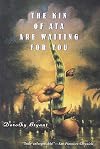
The Kin of Ata Are Waiting for You
by Dorothy Bryant
On This Page
Description
A major backlist sleeper! 130,000 sold-to-date! A feminist sci-fi novel. The kin of Ata live only for "the dream". Into their midst comes a desperate man who is first subdued and then led on a spiritual journey that, sooner or later, all of us make.Tags
Recommendations



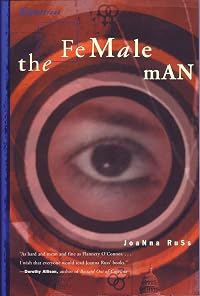



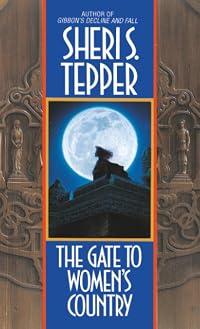
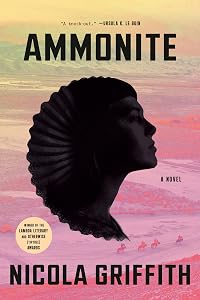



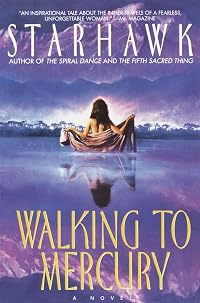





















Member Recommendations
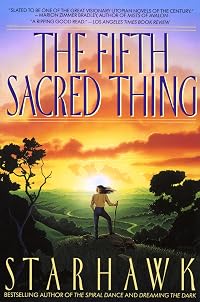
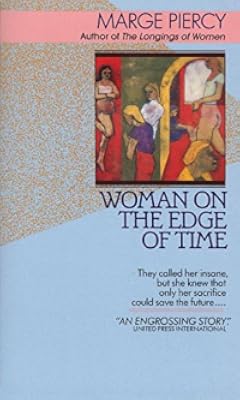
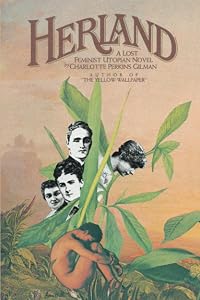
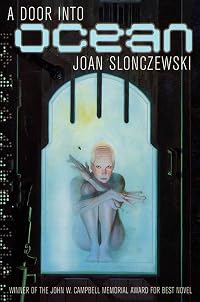
sturlington Alternate realities accessed through dreams.
Member Reviews
The original title of this 1971 countercultural fantasy (published as "feminist science fiction") was The Comforter, and its epigraph is a truncated and unattributed quotation of John 14:26, where the functions of the Paraclete are given as instruction and recollection.
I suspect this text of having been composed under two clear influences. One was Theodore Sturgeon's novel Venus Plus X, in which the 1950s protagonist finds himself in a utopian future society with radically different gender mores. The other, more obvious source for many of the ideas in this story is in the writings of psychologist Kilton Stewart regarding the Malaysian Senoi people, which first came to wide notice through the 1969 Charles Tart anthology Altered States show more of Consciousness. Stewart, relying on research with the anthropologist Pat Noone, described the Senoi as a profoundly well-adjusted and resilient society with a refined culture that emphasized recalling and learning from sleeping dreams. (The picture painted by Noone and Stewart has resisted scientific and historical validation.)
Another important literary forebear of this novel is James Hilton's Lost Horizon, the 1933 tale that invented the secluded Asian paradise Shangri-La. The utopia of The Kin is Ata, an island rather than a mountain fastness. Where Hilton's protagonist is a man of action whom the reader is--I think--expected to admire, Bryant instead provides a first-person narrator who is profoundly unsympathetic: a violent, arrogant, and misogynistic author of fiction. I found the ending of Bryant's book far more satisfying than the one Hilton supplied. She manages to craft an outcome leveraging the documentary conceit of her nameless novelist in a way that evoked for me some of the choicest endings of Lovecraft's weird stories. In particular I am thinking of "The Shadow over Innsmouth" and "The Shadow Out of Time," both of which were written in the early 1930s around the time of Lost Horizon.
An even earlier example of the form of this novel is Franz Hartmann's With the Adepts (1887), which gave an account of a sojourn among Rosicrucians in their secluded Alpine retreat. While I don't think it is very likely that Bryant had read Hartmann, her "Life Tree" in Ata resonates with Hartmann's Edenic rhetoric "where the Tree of Life could unfold without becoming encumbered by the weeds of credulity and error; where the soul could breathe the pure spiritual air, unadulterated by the odour of the poison-tree of ignorance, unmixed with the effluvia of decaying superstitions." What's more, she presents a mechanism whereby some chosen from among the kin of Ata serve as secret chiefs, infiltrating the world at large and providing hidden corrections to avert humanity's ruin, in the hope of our eventual redemption. show less
I suspect this text of having been composed under two clear influences. One was Theodore Sturgeon's novel Venus Plus X, in which the 1950s protagonist finds himself in a utopian future society with radically different gender mores. The other, more obvious source for many of the ideas in this story is in the writings of psychologist Kilton Stewart regarding the Malaysian Senoi people, which first came to wide notice through the 1969 Charles Tart anthology Altered States show more of Consciousness. Stewart, relying on research with the anthropologist Pat Noone, described the Senoi as a profoundly well-adjusted and resilient society with a refined culture that emphasized recalling and learning from sleeping dreams. (The picture painted by Noone and Stewart has resisted scientific and historical validation.)
Another important literary forebear of this novel is James Hilton's Lost Horizon, the 1933 tale that invented the secluded Asian paradise Shangri-La. The utopia of The Kin is Ata, an island rather than a mountain fastness. Where Hilton's protagonist is a man of action whom the reader is--I think--expected to admire, Bryant instead provides a first-person narrator who is profoundly unsympathetic: a violent, arrogant, and misogynistic author of fiction. I found the ending of Bryant's book far more satisfying than the one Hilton supplied. She manages to craft an outcome leveraging the documentary conceit of her nameless novelist in a way that evoked for me some of the choicest endings of Lovecraft's weird stories. In particular I am thinking of "The Shadow over Innsmouth" and "The Shadow Out of Time," both of which were written in the early 1930s around the time of Lost Horizon.
An even earlier example of the form of this novel is Franz Hartmann's With the Adepts (1887), which gave an account of a sojourn among Rosicrucians in their secluded Alpine retreat. While I don't think it is very likely that Bryant had read Hartmann, her "Life Tree" in Ata resonates with Hartmann's Edenic rhetoric "where the Tree of Life could unfold without becoming encumbered by the weeds of credulity and error; where the soul could breathe the pure spiritual air, unadulterated by the odour of the poison-tree of ignorance, unmixed with the effluvia of decaying superstitions." What's more, she presents a mechanism whereby some chosen from among the kin of Ata serve as secret chiefs, infiltrating the world at large and providing hidden corrections to avert humanity's ruin, in the hope of our eventual redemption. show less
This is the book I’ve been longing to find: A gem of a story that’s been waiting for rediscovery as new age fiction. Dorothy Bryant’s 1971 novel, originally promoted as science fiction, is described as “part love story, part science fiction, and at once Jungian myth and utopian allegory.” But by today’s standards, it’s a straightforward exploration of connecting to the highest and best parts of ourselves and living according to that guidance.Story: The kin of Ata live only for the dream. Their work, their art, their love are designed in and by their dreams, and their only aim is to dream higher dreams. Into the world of Ata comes a desparate man, who is first subdued and then led on the spiritual journey that, sooner or show more later, all of us must make (back cover).Spiritual/metaphysical content: Very high. Berkley Monthly called the novel “a beautiful, symbolic journey of the soul,” but there’s very little about it that’s symbolic when read as new age fiction. Here’s my description of the story: When a famous writer hits bottom, he wakes up in what appears to be a simple commune from the Sixties that practices all the fundamental truths of most religious, spiritual, and self-help philosophies: Life in the moment. Connect with your higher self/guide/God for guidance. You cannot judge good or bad, right or wrong, true or false; truth is relative. You cannot heal the mind without also addressing the body and spirit, and much more. In addition, the book is compatible with Christian beliefs (at least the more modern interpretations of the Bible). As the man learns more about the kin of Ata, he realizes what a complex, spiritually advanced group they are despite–or perhaps because of–their seeming simplicity. The people of Ata live in a way that is free of sin, guilt, exclusion, worry, and pain, and yet is joyful, productive, and satisfying both in body and spirit.My take: This is a well-written, lyrical novel that exemplifies new age fiction at perhaps its finest. Although the book is quite short, the plot is strong and compelling, and we come to love the characters and yearn for their success. Although clearly utopian, the story proposes an integrated vision of a future that is both functional and inspirational.I loved this book. Part of its allure is its depth; it can be read at multiple levels: as an intriguing trifle of sci-fi/fantasy, an introduction to broader spiritual principles, or an insightful analysis of some of modern society’s ills and how new age/metaphysical thought can not only ease the many sufferings of our world but also provide a model of sustainable growth and development. Please don’t get me wrong–at heart, this is a relatively simple book, but it contains profound insights for spiritual growth. And best of all, it’s an easy, entertaining read. Entertain and educate–the perfect combination for new age fiction.The title confounds me a bit because it sheds very little light on what the book is actually about; the back cover description suffers from this shortcoming as well. I suspect that it was a marketing decision in 1971 to promote a book that so clearly had literary value but fell into no recognizable genre (again, a case for the genre for new age fiction). In today’s market, the title does the reader a disservice by not indicating the spiritual depth of the novel. As with Zen and the Art of Motorcycle Maintenance, that may have been the price for getting published nearly forty years ago. Interestingly, the book was originally published in 1971 under the title The Comforter, which again seems unrelated to what the book is actually about. I am researching Dorothy Bryant’s other novels for similar themes; Confessions of Madame Psyche looks interesting. Can anyone recommend her other works?For more reviews of new age novels, see Fiction For A New Age. show less
I first read "The Kin of Ata Are Waiting for You" in the late 1970s or early 1980s, and have probably re-read it four or five times since then. Not sure why I felt the need to read it again just now, but I did. The story involves a nameless man who kills his lover in a fit of rage, then flees in a panic. His car goes off the road, he is badly injured and when he wakes up, he is on a strange island where a seemingly very primitive group of people are living completely without technology or contact with the outside world. These people live for their dreams, and their activities are directed by those dreams; only on very rare occasions does someone from the outside world find their way to the island, as our protagonist does. Essentially, show more the man learns how to be a responsible human being through his interactions with these people, and when he is ready, he returns to the “real” world to carry the message of the island to the rest of humanity…. This book was considered visionary and spiritually enlightening back in the day; it still holds considerable power to move the reader, but doesn’t feel as strong to me in 2018 as it did in 1980. Odd. show less
Well, much like the last two reviews, I can ignore a lot of the unfortunateness in this New-Age hippie explosion, even though in this case many of them are linguistic which gets on my nerves even more, like when he's like "Why don't you write it down?" and the dude doesn't understand because there is no word in their language for "write," but like, the first guy was SPEAKING their language! I can ıgnore ıt because she dares to imagine something lovely and put it out there with a touching, and I don't mean that to be patronizing, unconcern for whether it's "art" or whatever. The book just goes ahead and says love, and listen to your dreams, and be well, and a couple of the subsidiary lessons are good ones too. I mean shit, as allegory, show more it's a better concept than "Erewhon." show less
I find this book very hard to explain to anyone. I read it, liked it but didn't get it. I read it again, loved it and understood it in a mind-blowing, profound way it, but now have totally forgotten what it was I understood. I fully intend to read it again, though I suspect this is one of those right-place-right-time reads that will never affect you in the same way twice. A risk of a read with a potentially life-changing reward.
The concept was really incredible. I think that sometimes the prose just wasn't up to the task of carrying such a great concept. As with so many utopian/dystopian novels, the characterization suffered for the idea. The place where the novel really did shine, though, was whenever the protagonist was describing his difficulties with language. The way Bryant understands the disconnect between sign and signifier was powerful to me.
I picked this book up because I thought it was science fiction. While it does depict a utopian society, I would consider it more fantasy than sci fi, since its premise depends so much on supernatural elements that are never adequately explained. It is also fantasy in its expressed wish for a simpler, happier society doing its best to bring the rest of the human race back to that ideal. But it is an endearing fantasy nonetheless.
Members
- Recently Added By
Lists

Favorite Science Fiction by Women Authors
737 works; 196 members

Best Feminist Science Fiction
188 works; 35 members

Best Feminist Literature
188 works; 26 members

1970s
657 works; 23 members
Recommended Speculative Fiction by Women and People of Color
298 works; 45 members

Books Read in 2009
464 works; 11 members

Books With Complete Sentence Titles
374 works; 15 members

Utopia
7 works; 2 members

Hidden Sanctuaries
6 works; 1 member
Author Information

15+ Works 887 Members
Common Knowledge
- Original title
- The Comforter
- Original publication date
- 1971
- Epigraph
- ...and the Comforter shall teach you all things and bring all things to your remembrance.
- First words
- Bastard. You son of a bitch.
- Last words
- (Click to show. Warning: May contain spoilers.)Nagdeo.
Classifications
- Genres
- Fiction and Literature, Science Fiction, General Fiction, Fantasy
- DDC/MDS
- 813.54 — Literature & rhetoric American literature in English American fiction in English 1900-1999 1945-1999
- LCC
- PZ4 .B91477 — Language and Literature Fiction and juvenile belles lettres Fiction and juvenile belles lettres Fiction in English
- BISAC
Statistics
- Members
- 538
- Popularity
- 55,194
- Reviews
- 18
- Rating
- (3.75)
- Languages
- English, German
- Media
- Paper, Ebook
- ISBNs
- 7
- ASINs
- 6