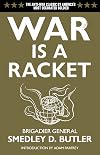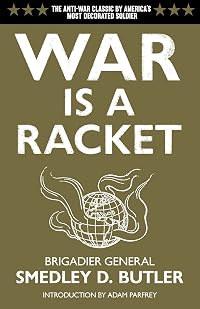
War Is a Racket
by Smedley D. Butler
On This Page
Description
General Smedley Butler's frank book shows how American war efforts were animated by big-business interests. This extraordinary argument against war by an unexpected proponent is relevant now more than ever. Originally printed in 1935, War Is a Racket is General Smedley Butler's frank speech describing his role as a soldier as nothing more than serving as a puppet for big-business interests. In addition to photos from the notorious 1932 anti-war book The Horror of It by Frederick A. Barber, show more this book includes two never-before-published anti-interventionist essays by General Butler. The introduction discusses why General Butler went against the corporate war machine and how he exposed a fascist coup d'etat plot against President Franklin Roosevelt. Widely appreciated and referenced by left- and right-wingers alike, this is an extraordinary argument against war - more relevant now than ever. show lessTags
Recommendations
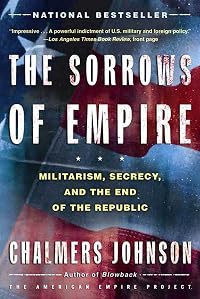
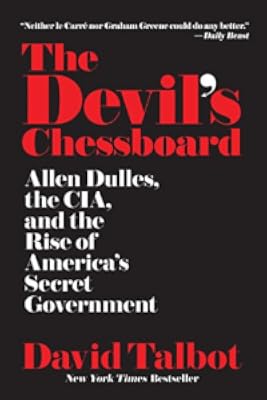
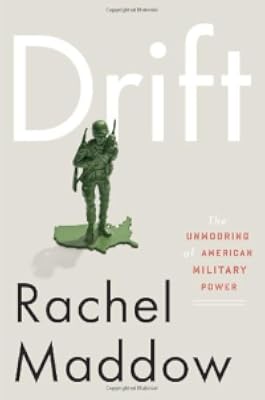
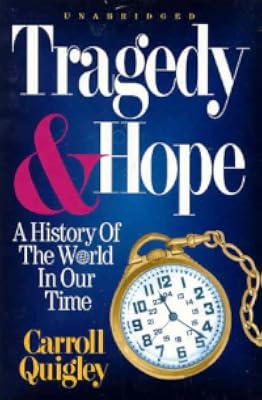
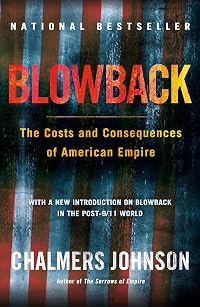
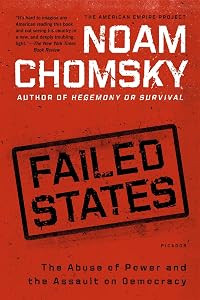
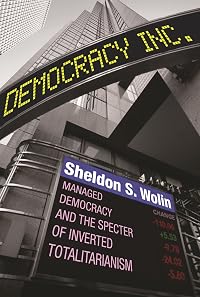
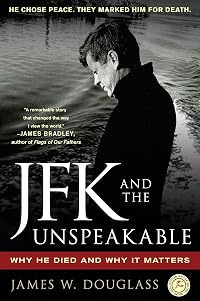


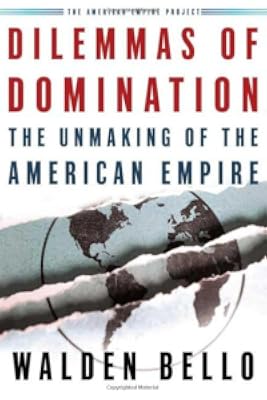
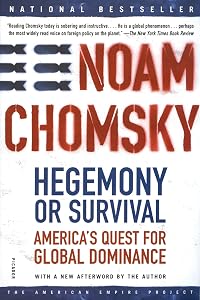

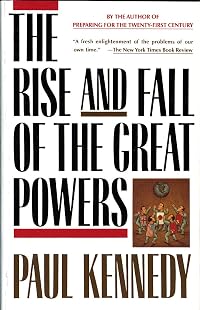
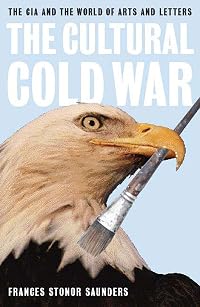


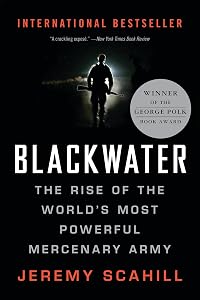
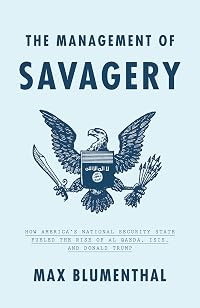
Member Recommendations

Member Reviews
Maybe a short read but one that proves that universal truths of human society are exactly that - universal truths. Of course old saying that history repeats itself also gets proven together with another observation - history repeats itself because people do not want to learn or read.
When called to take part in something under the boom of loud patriotism, take a step down and do wonder what is going on and who actually is doing the work, for whom and why.
Highly recommended.
When called to take part in something under the boom of loud patriotism, take a step down and do wonder what is going on and who actually is doing the work, for whom and why.
Highly recommended.
This was so depressing. Originally published in 1935, it drives home the fact that not a single thing has changed. In fact, it has only gotten more entrenched. Worse by magnitudes. Instead of hiding behind platitudes and patriotism, our ruling class barely hides their greed and lack of motivation for waging war beyond greed and avarice now. The press are still their cheerleaders and worse, they aid in spreading the propaganda to enrich themselves.
Reading it felt like an exercise in helplessness. It's cliche to say that you are anti-war, but as long as there are still so many who cheer for war there will be a need for anti-war activists.
Mark Twain's posthumous The War Prayer was also part of this volume. I read this some time ago. It's a show more wonderful piece that I return to for a reminder that I have not run out of empathy for my fellow human beings. show less
Reading it felt like an exercise in helplessness. It's cliche to say that you are anti-war, but as long as there are still so many who cheer for war there will be a need for anti-war activists.
Mark Twain's posthumous The War Prayer was also part of this volume. I read this some time ago. It's a show more wonderful piece that I return to for a reminder that I have not run out of empathy for my fellow human beings. show less
We never learn. Over and over they fabricate emergencies and threats to stampede us into allowing the robber barons to profit astronomically from our idiotic inability to know the truth, How many times are we going to fall for the contrived attacks on our ships and soldiers. Tens of thousands of young men dead and maimed, but we just herd forward prodded by propaganda and the illusion of danger. All the while they profit and they profit big from the war and then, even more cynically, from the aftermath. For chrissakes wake the hell up. Resist. Organize.
A scathing, hard hitting, nearly ageless indictment of War Inc. and its best customer, Uncle Sam. Spend the time and read this or listen - you’re done in an hour or less. Remember when you read or listen that Gen. Butler was at the time of his death in 1940 the most decorated Marine ever. He received the Congressional Medal of Honor - twice ! He saw combat in several wars before WW1 and spent 34 years in the Corps. Not a POG or REMF or Fobbit. Listen to him. Have your kids listen to him. And then let’s try to do more than wring our hands in sorrow or endlessly pay the war bill with blood, death, disfigurement, loss, grief, wasted opportunities, and yes, money.
If I wrote a book saying that I think all people, in their hearts, are basically good.... (yawn)... who would care? When Anne Frank wrote the very same thing while she was living in a secret compartment of her neighbor's home, hiding from jackboots who would work her to death in a concentration camp... well, Goddamn, that's quite a statement! ...one that leaves everybody is quite appropriately blown away.
This book isn't quite on Anne Frank's level, but it has a lot of added importance because of who wrote it.
At the time of publication, Smedley Butler, despite having the decidedly non-badass name of "Smedley", was a real-life tough guy, and America's most highly decorated Marine Corps General. It would have been the easiest thing in the show more world for him to scribble off some banal, testosterone-laden memoir about about what a rockstar warfighter he was. (he was!*) Posers love shit like that, to maintain their faux roughneck image, but General Butler was the real deal, so he had no need for embarrassing self-promotion.
FAKE BADASS
REAL-LIFE BADASS
Instead, he wrote something far more interesting and valuable: an insider's synthesis of how military force was actually used over his career. Far from the popular conception of being a force for common defense, Butler identifies a long litany of examples where the military merely acted as muscle to enable American industry in exploitive enterprises abroad. In the book's most cited passage, he states eloquantly:
"I spent 33 years and four months in active military service and during that period I spent most of my time as a high class muscle man for Big Business, for Wall Street and the bankers. In short, I was a racketeer, a gangster for capitalism. I helped make Mexico and especially Tampico safe for American oil interests in 1914. I helped make Haiti and Cuba a decent place for the National City Bank boys to collect revenues in. I helped in the raping of half a dozen Central American republics for the benefit of Wall Street. I helped purify Nicaragua for the International Banking House of Brown Brothers in 1902-1912. I brought light to the Dominican Republic for the American sugar interests in 1916. I helped make Honduras right for the American fruit companies in 1903. In China in 1927 I helped see to it that Standard Oil went on its way unmolested. Looking back on it, I might have given Al Capone a few hints. The best he could do was to operate his racket in three districts. I operated on three continents."
That's more potent than any angry peacenick shaking his ineffectual fist at "the Man".
Turning to the business of war itself, Butler took note of the corrupt military-industrial establishment, and how it propegates unneccessary conflict. After a career spent planning and fighting military engagements, Butler came to recognize the enormous dividends these conflicts pay out to a very few, powerful Heads of Industry. Through commissions on the sale of privately-issued war bonds, and grossly overcharging the Department of Defense for privately-manufactured munitions, men like J.P. Morgan literally made tens of millions of dollars by sending their fellow countrymen to die of sepsis, dyssentary and chemical burns in the trenches of Europe.
Sending?
(... did he say "sending"??)
Yes, with appalling frequency, Robber barons wield political influence to create conflict and avoid peaceful resolution to disagreement. The propaganda ramp-up to World War I was a coordinated PR blitz linking war with patriotism, and turning severely on dissenters. Does anybody know of a specific vital American interest the Great War was fought to protect? Did any thinking person in 1917 believe the Germans would really pose a threat to American sovereignty if they won the war in Europe?
The consistent result of such tactics has been expanding wealth for our essentially stateless, agnostic businessmen; and bloodshed and morbidity for everybody else (i.e. the naive commoners manipulated into believing they were fighting for God and Country). This is a tell-all book on a level way beyond "Mommy Dearest". Butler isn't biting the hand that fed him, he's cutting it off! In most circumstances, this would be interpreted as ingratitude, but it is clear that Butler is acting out of principle, calling the nation's attention to a malignant force within the gates. Far from being ungrateful, he is driven by fidelity to his Officer's Oath to defend and protect the United States Constitution from all enemies, foreign OR DOMESTIC. If ever there were domestic enemies in our midst, it is the monied men who emperil the nation in needless wars, robbing its public coffers, and destroying its citizens' inalienable rights to life and liberty. (I'm thinking PATRIOT ACT here)
From the calm, dissecting tone of the narration, I kind of get the idea that the contents of this book weighed heavily on the good General for a long time before he wrote them down. There is nothing naive in these pages. Nobody reading this is likely to break out spontaneously, singing
♫ Come on people now, ♥ ♥Clearly the good General belived that just wars exist, and that good men are obligated to fight them. The thrust of this book is that the modern American (now global) configuration of highly-centralized private capital, easily-purchased political influence, and an insufficiently informed/politically inactive populace predisposes the nation to unjust wars. The events of the past eighty years, and especially the past ten years, seem to unfailingly confirm all of Gen.Butler's worst suspicions. In truth, War is a Racket may not tell you anything you hadn't guessed already, but the way it is told, and the voice that is telling it make it a worthwhile experience to read.
♥ Smile on your Brother, ♫
Everybody get together, ♫
♫ Try to love one another right now. ♥ ♫
Did you find this interesting? You might also be interested in how things changed in our defense establishment during the Cold War, in Alex Abella's Soldiers of Reason!
Good Luck!
--------------------------------------------
* SIXTEEN medals for combat heroism, including not one but TWO Congressional Medals of Honor (a distinction only nineteen people have ever achieved!) show less
A classic exposé of war profiteering written by the most decorated Marine of his time, Major General Smedley Butler. The author, through a highly qualified argument supported by facts, thoroughly discounts the moral and ideological justification for war and concentrates on the geopolitical factors that actually motivate the cause for war. He was one of the first Americans to really bring the economic implications of war to the forefront of the public conscience. In War is a Racket Butler “names names” and lays out in wonderfully blunt detail how the American “military machine” was used to the benefit of wealthy American industrialists. He noted how proponents of war typically call on God as a supporter of the cause and how they show more embellish the mission as one of liberation and the spreading of freedom, but that these people tend to shy away from discussing the economic details of military ventures.
In short, this book, though small, is an inspirational foundation for all anti-war arguments in our current times, a firsthand account of a story that tragically keeps repeating itself. show less
In short, this book, though small, is an inspirational foundation for all anti-war arguments in our current times, a firsthand account of a story that tragically keeps repeating itself. show less
Closer to a pamphlet than a book, clocking in at just over 40 pages, War is a Racket is a condemnation of the military machine by a man who was at the time the most decorated war veteran in America with 19 medals - including 2 medals of honor.
While some of the numbers were eye-opening and I'd imagine very surprising to the public in 1935, I wonder if his stance would have changed at all if he lived to write it after the atrocities and aggression of WWII. He did provide a good amount of numbers showing price gouging from American companies to the government in times of war and showed the double-sacrifice the common person had to make while the rich got richer. I appreciated that. I don't know if I can get behind his idea of American show more isolationism though...it's a smaller world than ever before. show less
While some of the numbers were eye-opening and I'd imagine very surprising to the public in 1935, I wonder if his stance would have changed at all if he lived to write it after the atrocities and aggression of WWII. He did provide a good amount of numbers showing price gouging from American companies to the government in times of war and showed the double-sacrifice the common person had to make while the rich got richer. I appreciated that. I don't know if I can get behind his idea of American show more isolationism though...it's a smaller world than ever before. show less
Members
- Recently Added By
Author Information

3 Works 946 Members
Some Editions
Common Knowledge
- Canonical title
- War Is a Racket
- Original publication date
- 1935
- People/Characters
- Smedley D. Butler
Classifications
Statistics
- Members
- 939
- Popularity
- 28,476
- Reviews
- 20
- Rating
- (4.12)
- Languages
- English, Spanish
- Media
- Paper, Audiobook, Ebook
- ISBNs
- 37
- UPCs
- 1
- ASINs
- 20