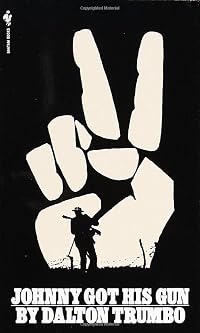
Johnny Got His Gun
by Dalton Trumbo
On This Page
Description
This was no ordinary war. This was a war to make the world safe for democracy. And if democracy was made safe, then nothing else mattered - not the millions of dead bodies, nor the thousands of ruined lives…. This is no ordinary novel. This is a novel that never takes the easy way out: it is shocking, violent, terrifying, horrible, uncompromising, brutal, remorseless, and gruesome...but so is war.Johnny Got His Gun holds a place as one of the classic antiwar novels. First published in show more 1939, Dalton Trumbo’s story of a young American soldier terribly maimed in World War I - he “survives” armless, legless, and faceless, but with his mind intact - was an immediate bestseller. This fiercely moving novel was a rallying point for many Americans who came of age during World War II, and it became perhaps the most popular novel of protest during the Vietnam era.
. show less
Tags
Recommendations

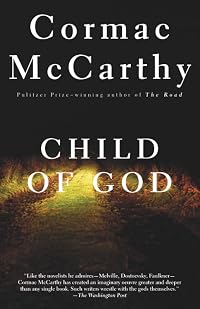
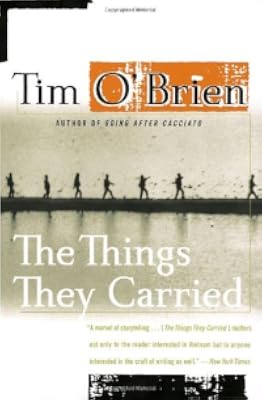

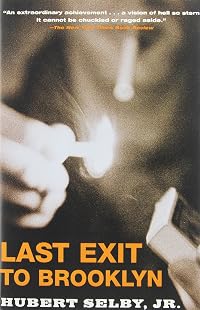
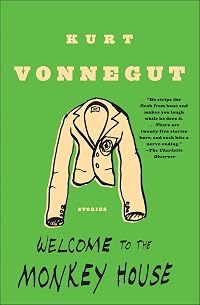



Member Recommendations

Member Reviews
This is a re-read -- after a number of decades -- because I wanted to see how it stacked up, in the end, against Sebastian Barry's A Long Long Way. Trumbo's novel had been the exemplar for all anti-war novels, in my mind, until I read Barry's work a few weeks ago and he redefined my perception of excellence in this genre.
Joe Bonham is what Willie Dunne might have become, it struck me, as I was re-reading Johnny if he had not succumbed fatally to that final shell impact. There's the same strong rhythm of agony and torment driven by the complexity of damnation and hope in the face of eventual, and assured, death. The layers of complexity are so intricately layered, that you move from anguish to relief simultaneously in the same paragraph, show more sometimes in the same thought. It really is possible, in the end, to hold two thoughts in your mind, at the same time, with equal intensity, and not become completely mad: that is the the anguish of war. To want to fight, and defend, and stand true to one's principles; and equally, to want to run like hell and find a rabbit hole, and never come out. Both Trumbo and Barry achieve this complicated equilibrium and never let up.
Trumbo's anguish is more punchy and didactic, much like the assured rhythm of a machine gun, delivering bursts of energy and fatal information all in one. Barry on the other hand, is more operatic where the orchestra sometimes slows, but never stops completely, and then moves on to new crescendoes.
Both are dazzling works of invention that dance so close to the truth it is indistinguishable from it; both deliver the same message, that war is hell and why do we do it; both are vital and indispensable works against the Great War Machine. show less
Joe Bonham is what Willie Dunne might have become, it struck me, as I was re-reading Johnny if he had not succumbed fatally to that final shell impact. There's the same strong rhythm of agony and torment driven by the complexity of damnation and hope in the face of eventual, and assured, death. The layers of complexity are so intricately layered, that you move from anguish to relief simultaneously in the same paragraph, show more sometimes in the same thought. It really is possible, in the end, to hold two thoughts in your mind, at the same time, with equal intensity, and not become completely mad: that is the the anguish of war. To want to fight, and defend, and stand true to one's principles; and equally, to want to run like hell and find a rabbit hole, and never come out. Both Trumbo and Barry achieve this complicated equilibrium and never let up.
Trumbo's anguish is more punchy and didactic, much like the assured rhythm of a machine gun, delivering bursts of energy and fatal information all in one. Barry on the other hand, is more operatic where the orchestra sometimes slows, but never stops completely, and then moves on to new crescendoes.
Both are dazzling works of invention that dance so close to the truth it is indistinguishable from it; both deliver the same message, that war is hell and why do we do it; both are vital and indispensable works against the Great War Machine. show less
I hope you read the copy of Johnny Got His Gun with the foreword by a mother, Cindy Sheehan, who lost her son to war. Her anger is palpable in every sentence she wrote. Her foreword throbs with an abundance of seething words. She ends with the largest question in the human lexicon - why?
Joe. What a brilliant name for a character. Just your average Joe. Joe is every man. Joe is the average man. Joe is your son. Your brother. Your father or uncle. Your husband or boyfriend. Joe could be your world. Told in flashbacks of better days, Joe was your typical teenager before World War I; he grew up with a good friend, he liked to go fishing, he had good parents, he had a best girl. Then everything changed when adulthood set in. Joe lost his show more best girl to his best friend. Later he left behind a perfect girl when he shipped off to fight the good fight in World War I. Did want to fight? Maybe. Did he want to become a "piece of meat" with no arms, legs, eyes, ears, or tongue? Unable to move anything but his head, unable to see, hear, or speak? Most definitely not. Joe's incremental realization of the loss of his limbs, sight, hearing, sense of smell was terrible. Even when he wants someone to end his life he cannot get relief. As an audio book it was even more devastatingly painful to hear. I do not think I would have been able to finish it if I had to read it only in print. show less
Joe. What a brilliant name for a character. Just your average Joe. Joe is every man. Joe is the average man. Joe is your son. Your brother. Your father or uncle. Your husband or boyfriend. Joe could be your world. Told in flashbacks of better days, Joe was your typical teenager before World War I; he grew up with a good friend, he liked to go fishing, he had good parents, he had a best girl. Then everything changed when adulthood set in. Joe lost his show more best girl to his best friend. Later he left behind a perfect girl when he shipped off to fight the good fight in World War I. Did want to fight? Maybe. Did he want to become a "piece of meat" with no arms, legs, eyes, ears, or tongue? Unable to move anything but his head, unable to see, hear, or speak? Most definitely not. Joe's incremental realization of the loss of his limbs, sight, hearing, sense of smell was terrible. Even when he wants someone to end his life he cannot get relief. As an audio book it was even more devastatingly painful to hear. I do not think I would have been able to finish it if I had to read it only in print. show less
5/5
Truly remarkable and unlike anything I have ever read before. This is stream of consciousness style (devoid of a single comma) perspective of a World War I veteran who awakens in a hospital after he is hit with a mortar shell to find that he is both a quadruple amputee and missing all of his major sense except for touch. Joe's brain is fully functional, but he is locked into body that can merely roll around on the table, fully reliant on others for all of his needs. It's a terrifying prospect, and Joe is prone to bouts of psychosis, suicidal ideation, and raw animalistic panic as he comes to terms with his new reality. Between periods of lucid exploration of the present, Joe reminisces about the life that he had before his injury and show more the war that caused it. We get to know how he ended up as a doughboy in the trenches, what he left behind and what his dreams were. Though this is categorized as fiction, Joe is based on a real life veteran of the war who experienced much the same thing.
It is both riveting and horrific. I had a hard time putting it down and finished it in the course of twenty four hours, simultaneous repelled by the graphic representation of misery yet unable to stop myself from reading more. Sort of in the same vein as a car crash, there is a level of voyeuristic interest that propels the novel forward. There's hardly a plot to speak of really, just Joe discovering his limits, regaining a sense of time and his surrounding over time through the smallest indicators, like the subtle change in temperature on his skin.
Johnny Got His Gun is a purely pacifistic novel. Trumbo doesn't waste time by going into the minutia of the war, instead he rejects the notion of war wholesale as unconscionable. Anything is better than death. Nothing can possibly justify war, nothing is worth losing your life over. Especially when what you're fighting for is abstract ideas like democracy, freedom, or other moral values. Especially when who you're fighting for is the politicians that have made decisions for you, who tell you that your death is worthwhile. No idea, no government, no ideology is worth dying for, because death is the worst thing that can possibly happen to you.
Ironically, Johnny Got His Gun was picked up by the American right-wing, pro-nazi isolationists as a text through which they forwarded their movement to stop America from getting involved in World War II. This is especially funny considering that Trumbo was member of the American-communist party, and was blacklisted from Hollywood in the 1940's and 50's, though apparently was also an isolationist that supported the Nazi-Soviet Pact. Johnny Got His Gun has some similarities to works like Nineteen Eighty-Four, where parties across the political spectrum claim ownership of the text and use it as a support to their values. show less
Truly remarkable and unlike anything I have ever read before. This is stream of consciousness style (devoid of a single comma) perspective of a World War I veteran who awakens in a hospital after he is hit with a mortar shell to find that he is both a quadruple amputee and missing all of his major sense except for touch. Joe's brain is fully functional, but he is locked into body that can merely roll around on the table, fully reliant on others for all of his needs. It's a terrifying prospect, and Joe is prone to bouts of psychosis, suicidal ideation, and raw animalistic panic as he comes to terms with his new reality. Between periods of lucid exploration of the present, Joe reminisces about the life that he had before his injury and show more the war that caused it. We get to know how he ended up as a doughboy in the trenches, what he left behind and what his dreams were. Though this is categorized as fiction, Joe is based on a real life veteran of the war who experienced much the same thing.
It is both riveting and horrific. I had a hard time putting it down and finished it in the course of twenty four hours, simultaneous repelled by the graphic representation of misery yet unable to stop myself from reading more. Sort of in the same vein as a car crash, there is a level of voyeuristic interest that propels the novel forward. There's hardly a plot to speak of really, just Joe discovering his limits, regaining a sense of time and his surrounding over time through the smallest indicators, like the subtle change in temperature on his skin.
Johnny Got His Gun is a purely pacifistic novel. Trumbo doesn't waste time by going into the minutia of the war, instead he rejects the notion of war wholesale as unconscionable. Anything is better than death. Nothing can possibly justify war, nothing is worth losing your life over. Especially when what you're fighting for is abstract ideas like democracy, freedom, or other moral values. Especially when who you're fighting for is the politicians that have made decisions for you, who tell you that your death is worthwhile. No idea, no government, no ideology is worth dying for, because death is the worst thing that can possibly happen to you.
Ironically, Johnny Got His Gun was picked up by the American right-wing, pro-nazi isolationists as a text through which they forwarded their movement to stop America from getting involved in World War II. This is especially funny considering that Trumbo was member of the American-communist party, and was blacklisted from Hollywood in the 1940's and 50's, though apparently was also an isolationist that supported the Nazi-Soviet Pact. Johnny Got His Gun has some similarities to works like Nineteen Eighty-Four, where parties across the political spectrum claim ownership of the text and use it as a support to their values. show less
Joe Bonham is a young man, with his whole life ahead of him. But then the war happens, and when the USA joins the Allies - Joe's entire future is changed. After an enemy grenade explodes near him on the battlefield, everything goes black.
When he wakes up, he realises he is trapped, a prisoner. Not of the enemy, but in his own body. The shell took his legs, his arms and left his face only a gaping wound. He is the dead man who is still alive, the living man who belongs with the dead.
I've always been aware of the book, and its film adaption, since I was too young to even realise it was nothing but a cool beat. Of course, Metallica's classic hit 'One' was the reason for that - and the strong antiwar theme definitely stuck with me and was a show more root in my world view as I grew up.
If possible, the book was even better than the song it inspired. It is absolute in its powerfulness, and paints such a rich and colourful and realistic picture as Joe recounts his childhood and few years as a young adult in the early decades of the 1900s America. It was hard to read for its take on loneliness and agony but also its nostalgia and lifejoy that all never fail to be spot on.
It is also absolutely too relevant and true to our current world climate and politics - especially considering the warfare and its reality today is largely unchanged compared to those during WWI. I understand why it is a classic - but I certainly do not understand why it does not occupy a spot in the classic majority often referenced. show less
When he wakes up, he realises he is trapped, a prisoner. Not of the enemy, but in his own body. The shell took his legs, his arms and left his face only a gaping wound. He is the dead man who is still alive, the living man who belongs with the dead.
I've always been aware of the book, and its film adaption, since I was too young to even realise it was nothing but a cool beat. Of course, Metallica's classic hit 'One' was the reason for that - and the strong antiwar theme definitely stuck with me and was a show more root in my world view as I grew up.
If possible, the book was even better than the song it inspired. It is absolute in its powerfulness, and paints such a rich and colourful and realistic picture as Joe recounts his childhood and few years as a young adult in the early decades of the 1900s America. It was hard to read for its take on loneliness and agony but also its nostalgia and lifejoy that all never fail to be spot on.
It is also absolutely too relevant and true to our current world climate and politics - especially considering the warfare and its reality today is largely unchanged compared to those during WWI. I understand why it is a classic - but I certainly do not understand why it does not occupy a spot in the classic majority often referenced. show less
I'm torn with this book, I enjoyed it very much, it made me feel so bad, not the kind that makes you cry but the kind that you feel in your body, that makes you feel sick, and that's not small praise for a book, at the same time the ending was too preachy, I do not believe the logic of the preaching was very sound neither, of course we all have our opinions but I believe the author's view was getting across nicely and there was no need for that much rhetoric.
I'm giving it four stars.
And I hope I won't ever hear of this book again because I seriously want to take the image of Joe out of my mind, gosh, such a cruel destiny, why didn't they just let him die? How can you be so heartless of not letting the man at least go out to the yard? show more The ending fucked me up, such hopelessness, after all that time, and no way out of that torture, I'm gonna stop because really I don't want to think about it anymore.
(Still enjoyed the book, though it makes me want to vomit) show less
I'm giving it four stars.
And I hope I won't ever hear of this book again because I seriously want to take the image of Joe out of my mind, gosh, such a cruel destiny, why didn't they just let him die? How can you be so heartless of not letting the man at least go out to the yard? show more The ending fucked me up, such hopelessness, after all that time, and no way out of that torture, I'm gonna stop because really I don't want to think about it anymore.
(Still enjoyed the book, though it makes me want to vomit) show less
Johnny Got His Gun is an uneven novel perennially redeemed by its great central concept. Taking his title from the patriotic war lyric "Johnny get your gun", meant to encourage young American men to join the army and fight in World War One, author Dalton Trumbo tells the story of a young man who did get his gun and go. But there's a "difference between a war that's in newspaper headlines and liberty loan drives and a war that is fought out lonesomely in the mud somewhere a war between a man and a high explosive shell" (pg. 224). Trumbo's main character Joe Bonham has lost all of his limbs, his jaw, his hearing and his eyes due to a shell burst, but has survived. This is the endpoint of war, once the drums and bugles have died away.
As show more you can imagine, there's no room for subtlety in Trumbo's story, but for the most part it works. It works particularly well as an anti-war tract; so potent is the appalling image of Joe, alive but unable to interact or communicate, that at its best moments Johnny Got His Gun makes you swear off not only support for any form of war, but off any sort of harm to others. It is a tragic, wretched, depressing story of the young man trapped in this body, all but dead, and his attempts to establish communication, like a man buried underground screaming that he's alive (pg. 212). The message is diluted somewhat by Trumbo's willingness to use it as a political football (a lifelong Communist, Trumbo railed against the book's ban when pacifism was all the rage among the left-wing, but suppressed it himself when the Soviet Union was invaded in 1941, and right-wing isolationists found common cause with it), but even these knocks can't diminish it to any considerable degree.
Where Johnny Got His Gun struggles is as a novel. The writing is often good – in that naked lucidity that righteous rage often generates – but there's a bit too much chaff in this literary wheat-field, and it's fatiguing to follow some of Trumbo's digressions. The monologue of Joe Bonham as he lies mute, blind and crippled in his hospital bed is fine – you accept this isn't going to be a nippy, plot-driven story right from the start – but Joe's lengthy reminiscences of his happy past are, frankly, dull. There are bland, drawn-out memories of working in a bakery, living on a farm, courting girls, and even a long retelling of the Mary and Joseph story from the Bible. It's all tolerable, I guess, but it's filler.
The sometimes-artless content is particularly frustrating as some promising literary avenues aren't followed. For example, the start of chapter 3 talks about Joe's exhaustion within his prison body, but doesn't tie the feeling ("A man can't fight always" (pg. 25)) to the obvious wider theme of pacifism. There are good moments, such as when Joe imagines himself talking to dead soldiers in a sort of purgatory, only for them to agree that Joe has it worse, which makes it frustrating when some of the other dots weren't joined up. The supporting characters don't have much presence, and the tender relationship with the nurse who finally establishes communication with Joe has less depth than it has in the film adaptation (also by Trumbo). But, as I said at the start of this review, Johnny Got His Gun, in its flaws, is always redeemed by that horrifying, uncomfortable central concept. It's not always a strong story, but it is always a worthy one. show less
As show more you can imagine, there's no room for subtlety in Trumbo's story, but for the most part it works. It works particularly well as an anti-war tract; so potent is the appalling image of Joe, alive but unable to interact or communicate, that at its best moments Johnny Got His Gun makes you swear off not only support for any form of war, but off any sort of harm to others. It is a tragic, wretched, depressing story of the young man trapped in this body, all but dead, and his attempts to establish communication, like a man buried underground screaming that he's alive (pg. 212). The message is diluted somewhat by Trumbo's willingness to use it as a political football (a lifelong Communist, Trumbo railed against the book's ban when pacifism was all the rage among the left-wing, but suppressed it himself when the Soviet Union was invaded in 1941, and right-wing isolationists found common cause with it), but even these knocks can't diminish it to any considerable degree.
Where Johnny Got His Gun struggles is as a novel. The writing is often good – in that naked lucidity that righteous rage often generates – but there's a bit too much chaff in this literary wheat-field, and it's fatiguing to follow some of Trumbo's digressions. The monologue of Joe Bonham as he lies mute, blind and crippled in his hospital bed is fine – you accept this isn't going to be a nippy, plot-driven story right from the start – but Joe's lengthy reminiscences of his happy past are, frankly, dull. There are bland, drawn-out memories of working in a bakery, living on a farm, courting girls, and even a long retelling of the Mary and Joseph story from the Bible. It's all tolerable, I guess, but it's filler.
The sometimes-artless content is particularly frustrating as some promising literary avenues aren't followed. For example, the start of chapter 3 talks about Joe's exhaustion within his prison body, but doesn't tie the feeling ("A man can't fight always" (pg. 25)) to the obvious wider theme of pacifism. There are good moments, such as when Joe imagines himself talking to dead soldiers in a sort of purgatory, only for them to agree that Joe has it worse, which makes it frustrating when some of the other dots weren't joined up. The supporting characters don't have much presence, and the tender relationship with the nurse who finally establishes communication with Joe has less depth than it has in the film adaptation (also by Trumbo). But, as I said at the start of this review, Johnny Got His Gun, in its flaws, is always redeemed by that horrifying, uncomfortable central concept. It's not always a strong story, but it is always a worthy one. show less
This is _the_ anti-war novel. A stream of consciousness tale that is ultimately beyond horrifying, leaving you numb and almost unable to process exactly what it was you just read. You will think about Johnny long after the last words are read and wonder just why is it anyone ever agrees to go to war.
Members
- Recently Added By
Published Reviews
ThingScore 75
"There can be no question of the effectiveness of this book." "Mr. Trumbo sets this story down almost without pause or punctuation and without a fury amounting eloquence."
added by jimcripps
Lists

Recommend the 20 best books you've read in the last five years
2,168 works; 608 members

Best Psychological Fiction
81 works; 16 members

Best Horror Books
281 works; 85 members

20th Century Literature
1,161 works; 54 members

Best War Stories
87 works; 16 members
Stream of Consciousness
87 works; 8 members

50 Tough Books for Extreme Readers
71 works; 39 members

In or About the 1930s
198 works; 27 members

Dark Books for Winter Reading
71 works; 11 members
Didactic Fiction
29 works; 3 members

Most Disturbing Books
124 works; 27 members

Fictional Characters With Disabilities
43 works; 9 members

Ten Books That Have Stayed With Me
160 works; 30 members

Stories of War and Revolution
146 works; 55 members
Most difficult novels
68 works; 27 members
World War I Fiction
94 works; 15 members

War Literature
101 works; 19 members

Troublesome bodies
110 works; 7 members

Best of American Literature
146 works; 9 members

Blue Pyramid 1,276 Best Books of All Time
1,248 works; 32 members

A Novel Cure
742 works; 23 members

Most Depressing Books
69 works; 16 members

Read This Twice's Best Horror Books
94 works; 2 members

1930s
262 works; 5 members
World War I - fiction & non-fiction
19 works; 4 members
Best Horror Mega-List
342 works; 6 members
Overdue Podcast
808 works; 9 members

Literature which inspired Pop songs
85 works; 9 members
American Lit for Eng 11 Research Project
368 works; 6 members

Books We Couldn't Put Down
443 works; 197 members
AP Lit
363 works; 6 members
NPR Books You Love: Books That Shaped You in High School
26 works; 1 member

Yet another list
69 works; 1 member

Jones and Newman's Horror: The 100 Best Books
100 works; 4 members

Boy Protagonists
65 works; 1 member

Alphabetical Books
211 works; 3 members

Fiction with Men's Given Names in the Title
302 works; 10 members

Books With Complete Sentence Titles
501 works; 17 members
Best War Fiction Books
41 works; 4 members

Books about World War I
80 works; 14 members

Classics
31 works; 1 member
Author Information

24+ Works 5,662 Members
Some Editions
Awards and Honors
Series
Belongs to Publisher Series
Work Relationships
Has the adaptation
Has as a student's study guide
Common Knowledge
- Canonical title
- Johnny Got His Gun
- Original title
- Johnny Got His Gun
- Original publication date
- 1939
- People/Characters
- Joe Bonham; Bill Bonham; Regular Day Nurse; Macia Bonham; Kareen; Diane (show all 8); Bill Harper; Howie
- Important places
- Colorado, USA
- Important events
- World War I (1914 | 1918)
- Related movies
- Johnny Got His Gun (1971 | IMDb); Johnny Got His Gun (2008 | IMDb)
- First words
- He wished the phone would stop ringing.
- Last words
- (Click to show. Warning: May contain spoilers.)You plan the wars you masters of men plan the wars and point the way and we will point the gun.
- Disambiguation notice
- This is a novel, not the film based thereon, nor the screenplay for the film.
Classifications
Statistics
- Members
- 4,171
- Popularity
- 3,698
- Reviews
- 79
- Rating
- (4.17)
- Languages
- 14 — Dutch, English, Finnish, French, German, Greek, Hungarian, Italian, Norwegian (Bokmål), Polish, Portuguese, Spanish, Swedish, Turkish
- Media
- Paper, Audiobook, Ebook
- ISBNs
- 73
- ASINs
- 43