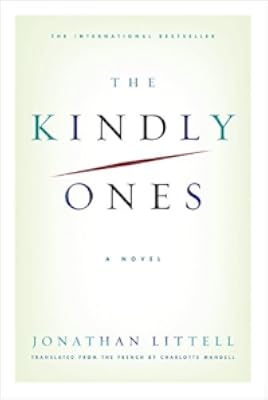
The Kindly Ones
by Jonathan Littell
On This Page
Description
"Simply astounding. . . . The Kindly Ones is unmistakably the work of a profoundly gifted writer." - Time A literary prize-winner that has been an explosive bestseller all over the world, Jonathan Littell's The Kindly Ones has been called "a brilliant Holocaust novel. . . a world-class masterpiece of astonishing brutality, originality, and force," (Michael Korda, The Daily Beast). Destined to join the pantheon of classic epics of war such as Tolstoy's War and Peace and Vasily Grossman's Life show more and Fate, The Kindly Ones offers a profound and gripping experience of the horrors of World War II and the Holocaust. A former Nazi officer, Dr. Maximilien Aue has reinvented himself, many years after the war, as a middle-class family man and factory owner in France. An intellectual steeped in philosophy, literature, and classical music, he is also a cold-blooded assassin and the consummate bureaucrat. Through the eyes of this cultivated yet monstrous man we experience in disturbingly precise detail the horrors of the Second World War and the Nazi genocide of the Jews. Eichmann, Himmler, Göring, Speer, Heydrich, Höss-even Hitler himself-play a role in Max's story. An intense and hallucinatory historical epic, The Kindly Ones is also a morally challenging read. It holds a mirror up to humanity-and the reader cannot look away. show lessTags
Recommendations





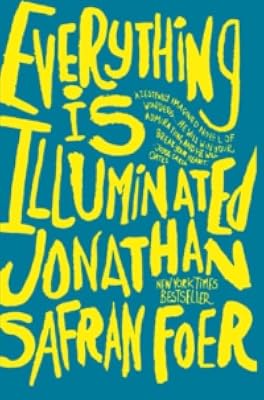

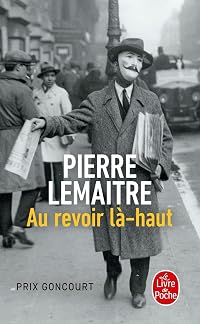

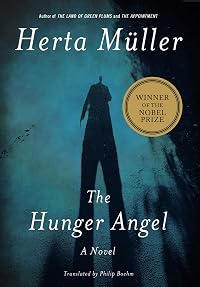
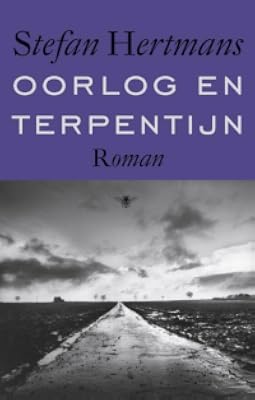




Member Recommendations

zwelbast non-fiction
Auto_Da_Fe Covers some of the same ground from a different angle.
Also recommended by Mr.Durick
21
by gust

Hitler's Last Plot: The 139 VIP Hostages Selected for Death in the Final Days of World War II by Ian Sayer
applemcg The Kindly Ones is a fictional account of the Eastern Front. Not related in any direct way to Hitler's Last Plot, other than to point out the horrors in that theater were an order of magnitude more terrible.

Member Reviews
Littell’s meticulously researched memoir of an SS officer is a book that no one who reads it can ever forget, and that’s exactly how it should be. It’s absolutely horrific, chilling from the introduction. Here, you get your first glimpse of the incisive analysis the protagonist Maximilien Aue brings to his involvement in the Final Solution when he says
"There was a lot of talk, after the war, in trying to explain what happened, about inhumanity. But I am sorry, there is no such thing as inhumanity. There is only humanity and more humanity."
The introduction is a masterpiece in itself. It begins and ends as follows:
"Oh my human brothers, let me tell you how it happened. I am not your brother, you’ll retort, and I don’t want to show more know…
… I am a man like other men, I am a man like you. I tell you I am just like you!"
And you know what? He’s right:
If you were born in a country or at a time not only when nobody comes to kill your wife and your children, but also nobody comes to ask you to kill the wives and children of others, then render thanks to God and go in peace. But always keep this thought in mind: you might be luckier than I, but you’re not a better person.
You don’t come lightly to any book that spans nearly 1,000 pages has relatively few paragraphs and absolutely no speech punctuation. Neither should you come to any that deal with the sharp end of Nazi atrocities lightly either. The Kindly Ones is a book to be taken very, very seriously.
What we find here is what happens to a victim of circumstance, privilege (if you can call it that) and place. The descent into the abyss is so subtle at first that you hardly notice the gradient. Any desire of Max to climb back to the safety of morality comes far too vertiginously late. There is no way out.
The most profound impact the book made on me was the casting of the Final Solution as a completely bureacratic exercise, not a working out of an ideology. Being presented as simply an administrative task to complete does not mean that moral and ethical dilemmas aren’t present. They dog Max throughout.
As he struggles for breath in his moral vacuum, there are increasingly frequent episodes of the bizzare. Rather than accept these as factual, I took them to be a product of Max’s strengthening delusions. As things get more desperate, his narration becomes less and less reliable.
Having blurred the lines between moral absolutes, the boundary between the real and the imagined starts to splinter culminating in an outlandish denouement. This, our narrator complains, no historian has ever noted. His addled mind cannot comprehend it as fantasy.
The book isn’t perfect. But it is a classic example of how the novel can force you to confront very, very big questions you’d rather ignore and bring you face to face with what we are all really like. It’s uncomfortable to read and it’s entirely necessary that we do so. show less
"There was a lot of talk, after the war, in trying to explain what happened, about inhumanity. But I am sorry, there is no such thing as inhumanity. There is only humanity and more humanity."
The introduction is a masterpiece in itself. It begins and ends as follows:
"Oh my human brothers, let me tell you how it happened. I am not your brother, you’ll retort, and I don’t want to show more know…
… I am a man like other men, I am a man like you. I tell you I am just like you!"
And you know what? He’s right:
If you were born in a country or at a time not only when nobody comes to kill your wife and your children, but also nobody comes to ask you to kill the wives and children of others, then render thanks to God and go in peace. But always keep this thought in mind: you might be luckier than I, but you’re not a better person.
You don’t come lightly to any book that spans nearly 1,000 pages has relatively few paragraphs and absolutely no speech punctuation. Neither should you come to any that deal with the sharp end of Nazi atrocities lightly either. The Kindly Ones is a book to be taken very, very seriously.
What we find here is what happens to a victim of circumstance, privilege (if you can call it that) and place. The descent into the abyss is so subtle at first that you hardly notice the gradient. Any desire of Max to climb back to the safety of morality comes far too vertiginously late. There is no way out.
The most profound impact the book made on me was the casting of the Final Solution as a completely bureacratic exercise, not a working out of an ideology. Being presented as simply an administrative task to complete does not mean that moral and ethical dilemmas aren’t present. They dog Max throughout.
As he struggles for breath in his moral vacuum, there are increasingly frequent episodes of the bizzare. Rather than accept these as factual, I took them to be a product of Max’s strengthening delusions. As things get more desperate, his narration becomes less and less reliable.
Having blurred the lines between moral absolutes, the boundary between the real and the imagined starts to splinter culminating in an outlandish denouement. This, our narrator complains, no historian has ever noted. His addled mind cannot comprehend it as fantasy.
The book isn’t perfect. But it is a classic example of how the novel can force you to confront very, very big questions you’d rather ignore and bring you face to face with what we are all really like. It’s uncomfortable to read and it’s entirely necessary that we do so. show less
Madness. Despicably disgustingly amazingly crafted madness. The ability of authors to write out these scenarios, diving into and drowning in the minds of the most horrific human beings imaginable, without completely losing their minds astounds me sometimes.
Maximilian Aue is just a byproduct of this whole history, if you can believe it. He starts out with horrific tendencies, to be sure: incest from an extremely young age, coprophilia, murderous inclinations . And then comes the war and its horrible mesh of insane procedures combined with genocide in the name of a logic that only exists in minds blinded by 'the bigger picture'. The motto of the war? It's someone else's responsibility. Every bit of it.
And the sheer idiocy of it: setting show more out to wipe out entire races while simultaneously saving them for an efficient work force? The entire war effort of the Germans degenerated into a paradox along these lines; at the end it became nothing more than an atrocious mess of confusion and futile attempts at maintaining order, and above all rampant killing. You look at Dr. Aue, and you look at a microcosm that contains a good deal of the horrors. The thing is, even he wasn't enough of a monster to fully appreciate them; the war machine around him combined with extreme physical trauma tormented his conscience into complete insanity . One of the more completely fucked up characters of literature.
You have to appreciate the detail of the book; it's so easy to sink into the world described from every aspect of cultural/political/societal context. Of course the sick taste of madness never fully leaves the pages; the aim of the book is not to leave you comfortable. Yes, quite a bit of this book will turn your stomach. But if you condemn it solely because of that, you're missing the entire point that Germany in WWII was not a nice place. It would sicken you then, so there's no point if it doesn't sicken you now.
In a more accredited person's words:
Maximilian Aue is just a byproduct of this whole history, if you can believe it. He starts out with horrific tendencies, to be sure
And the sheer idiocy of it: setting show more out to wipe out entire races while simultaneously saving them for an efficient work force? The entire war effort of the Germans degenerated into a paradox along these lines; at the end it became nothing more than an atrocious mess of confusion and futile attempts at maintaining order, and above all rampant killing. You look at Dr. Aue, and you look at a microcosm that contains a good deal of the horrors. The thing is, even he wasn't enough of a monster to fully appreciate them
You have to appreciate the detail of the book; it's so easy to sink into the world described from every aspect of cultural/political/societal context. Of course the sick taste of madness never fully leaves the pages; the aim of the book is not to leave you comfortable. Yes, quite a bit of this book will turn your stomach. But if you condemn it solely because of that, you're missing the entire point that Germany in WWII was not a nice place. It would sicken you then, so there's no point if it doesn't sicken you now.
In a more accredited person's words:
As long as war is regarded as wicked, it will always have its fascination. When it is looked upon as vulgar, it will cease to be popular.-Oscar Wildeshow less
Perhaps one of the most compelling WWII books dealing with Nazism. Possibly the best contemporary book I read. And I read a lot!
As others, I purchased this book after seeing many 5 stars flanked by ones. This is a book of controversy, thus a book that people love or love to hate. I read many "1-starred reviews" and am confident that most of these Reviewers have not finished the first chapter of this sinister, scary, wonderful book. A reader complains that the book is "scary" and "disgusting". Well, Nazism was both.
There are several parallel stories here, some are personal, some universal; other parts of the book are pure non-fiction, historical writing at its best. There is scatology, yes, but we all go to the bathroom, don't we? There show more is incest, as in the Old Testament. And homophobia, yes the Nazis were very similar in moral values to our current conservatives. The main character is gay, in a very asexual way, more gynophobic than homosexual, sex is just another bodily function. Max Aue does not love, does not hate, stops feeling early during the Russian campaign. Max is gay, and a Nazi. Does this make him a "kindly one"? Well, you be the judge.
How did Littell come up with this Dantesque encyclopedia of horrors remains a mystery. If you can understand the complexity of this character, Aue I mean, you will experience WWII as it happened. You will be in Stalingrad, but also in Piatigorski, at the line of scrimmage, but also a few miles away sipping cognac. This is how it was, this is how my parents told me it was, they never spend so much time and never used so much detail, knowledge. Aue /Littell is more than a witness, he is an interpreter of history.
This book should be mandatory reading for those who want to understand what happened to men and women in Germany before WWII. You will also understand Bosnia, hate, xenophobia. And also race, how volatile racial definitions are. One of the most compelling parts refers to the issue of Mountain Jews, Bergjuden. Are these real Jews, and as such to be killed? Or are they descendants of Persian tribes? Or are they Greeks? Well, the debate goes on in Crimea, while Stalingrad (look at the map, not very distant!) is falling. The Nazis even call an expert from Berlin to direct a full investigation. The cultural background of these criminals is unbelievable, their knowledge broad and profound. And also totally skewed to fit National Socialism. Again, today's news shows come to mind "no matter what really happened, I am right and you are not a patriot if you don't agree". The debate on Bergjuden goes on and on, we never really learn what the final decision was. It does not matter, the Final Solution was already in the books.
The end is predictable to a point. The parallel story of love and incest is magnificently depicted, without taking away from the inhumane background. The description of Aue's family life is also very well merged with the war and pre- (and post! Aue survives and as many other Nazis lives a normal life!) war furor.
The need for such a book in today's society is sad. We have learned little and reluctantly. We are still permeated by racism, the objects are not Jews anymore but the problem remains. We are aware of horrors occurring next door (Africa is not another planet!) but turn to more mundane problems. We have a lot of homophobia to deal with and sometime find Aue's tracks. Whenever a crypto gay preacher gets caught, think about Aue. History repeats itself if and when ignored. The Kindly ones sets the record straight and does it so well that you will not be able to forget (anymore). show less
As others, I purchased this book after seeing many 5 stars flanked by ones. This is a book of controversy, thus a book that people love or love to hate. I read many "1-starred reviews" and am confident that most of these Reviewers have not finished the first chapter of this sinister, scary, wonderful book. A reader complains that the book is "scary" and "disgusting". Well, Nazism was both.
There are several parallel stories here, some are personal, some universal; other parts of the book are pure non-fiction, historical writing at its best. There is scatology, yes, but we all go to the bathroom, don't we? There show more is incest, as in the Old Testament. And homophobia, yes the Nazis were very similar in moral values to our current conservatives. The main character is gay, in a very asexual way, more gynophobic than homosexual, sex is just another bodily function. Max Aue does not love, does not hate, stops feeling early during the Russian campaign. Max is gay, and a Nazi. Does this make him a "kindly one"? Well, you be the judge.
How did Littell come up with this Dantesque encyclopedia of horrors remains a mystery. If you can understand the complexity of this character, Aue I mean, you will experience WWII as it happened. You will be in Stalingrad, but also in Piatigorski, at the line of scrimmage, but also a few miles away sipping cognac. This is how it was, this is how my parents told me it was, they never spend so much time and never used so much detail, knowledge. Aue /Littell is more than a witness, he is an interpreter of history.
This book should be mandatory reading for those who want to understand what happened to men and women in Germany before WWII. You will also understand Bosnia, hate, xenophobia. And also race, how volatile racial definitions are. One of the most compelling parts refers to the issue of Mountain Jews, Bergjuden. Are these real Jews, and as such to be killed? Or are they descendants of Persian tribes? Or are they Greeks? Well, the debate goes on in Crimea, while Stalingrad (look at the map, not very distant!) is falling. The Nazis even call an expert from Berlin to direct a full investigation. The cultural background of these criminals is unbelievable, their knowledge broad and profound. And also totally skewed to fit National Socialism. Again, today's news shows come to mind "no matter what really happened, I am right and you are not a patriot if you don't agree". The debate on Bergjuden goes on and on, we never really learn what the final decision was. It does not matter, the Final Solution was already in the books.
The end is predictable to a point. The parallel story of love and incest is magnificently depicted, without taking away from the inhumane background. The description of Aue's family life is also very well merged with the war and pre- (and post! Aue survives and as many other Nazis lives a normal life!) war furor.
The need for such a book in today's society is sad. We have learned little and reluctantly. We are still permeated by racism, the objects are not Jews anymore but the problem remains. We are aware of horrors occurring next door (Africa is not another planet!) but turn to more mundane problems. We have a lot of homophobia to deal with and sometime find Aue's tracks. Whenever a crypto gay preacher gets caught, think about Aue. History repeats itself if and when ignored. The Kindly ones sets the record straight and does it so well that you will not be able to forget (anymore). show less
I read this in 2011 and wrote a lengthy review at the time, so may as well post it here.
* * *
Reading this book was a very intense experience, which I'm now going to ramble about. 'The Kindly Ones' is an account of the second world war told in the first person by an SS officer, so be warned that it is not what you would call pleasant. I suppose there may also be spoilers, although I will avoid any details that would in my view affect the experience of reading it yourself.
I hardly know where to start. This novel is as dense, intense, and horrifying as any I've ever read. It has been translated from French and includes quite a lot of German terms (all relating to the SS and its activities). The sentences are long, the paragraphs show more interminable and abrupt-ending. All this adds to the sense that you are in the head of the narrator, Dr. Max Aue. The book is his memoir and revolves so closely around him as to feel claustrophobic. No character he encounters has any real depth, nor clear motives. The reader experiences the second world war through Aue's eyes and other senses. By the end, I felt as if I knew him, much better than I wanted to and too well to be able to make any unequivocal judgement about him.
At the start of the novel, Dr. Aue is at pains to point out to the reader that he is just like us, an ordinary man who did horrible things due to circumstance. He is articulate and persuasive, presenting the point that in war men not only lose their right to live, but also their right not to kill. However even at the very start, when we know nothing of his life, there is a deeply unsettling undercurrent to this. For one thing, we know he was in the SS. For another, he drops hints and describes physical ailments which seem like manifestations of deep psychological disturbance. I initially read this introductory chapter then put aside the book for a few weeks to read five others. None of them were bad, but when I came back to this it was as if I was drinking black coffee after nothing but glasses of water. I finished the remaining 800 pages in just over a week.
As the novel unfolds, you follow Aue across Europe as he is sent to undertake various bureaucratic tasks. Because, essentially, he is a bureaucrat. In point of fact, this novel is enough to give you a phobia of bureaucracy. Aue is not a soldier, he is an intellectual who claims that in another life he would have been happy writing literature and playing the piano. His tasks as an SS officer largely involve writing reports, the macabre horror of which lies in their implications. Whilst in the Ukraine, he is tasked with determining whether a race of so-called 'mountain Jews' are Jews according to the Nazi definition. This involves quite a bit of data-gathering, the consultation of experts, and ultimately a conference. The implication remains unspoken - if his report decides that this group are in fact sufficiently Jewish to meet the definition, they will all be killed. To Aue, this is a purely academic matter, and it irritates him that different groups within the occupying German force try to sully his endeavour with political machinations. He has no interest in the fate of the Mountain Jews after he makes his report; that is someone else's job.
That is horrifying enough. Later in the book, he is given a much more shocking task - to inspect the concentration camps and determine how to make their inmates more productive as workers. By this point, the Nazis are starting to lose the war and a contradiction is emerging; slave labour can only be used to help the war effort as long as the slaves are kept alive. Different government ministries have different aims (production, destruction) with overlapping jurisdictions. But ultimately the whole infrastructure has been put in place primarily to ensure that the Jews, criminals, gypsies, Poles, and political dissidents die as quickly as possible. Aue writes many reports on how greater productivity could be wrung from the concentration camps, but is constantly frustrated by the inability of his superiors to implement his ideas. By this point, he tells us, it is too late and events have their own momentum. A more stark illustration of the principles of political economy would be hard to find. The depictions of the concentration camps are horrific, as you might expect, yet it is still more unsettling to hear them framed as administrative complaints, with the constants deaths a mere inefficiency. One character who stuck in my mind was a judge determined to bring a number of concentration camp administrators to justice for corruption; they stole money, clothes, etc from the camp's victims. He is presented as a principled man, outraged that the perpetrators are stealing German state property. The fact that these items were stolen from Jews and other camp inmates, who were then killed, he doesn't even think to address. Again, someone else's job.
It is the contrasts, I think, that make The Kindly Ones so disturbing. The banality of meetings with functionaries and report-preparation, when compared with their genocidal subject matter. In addition, the contrast of methodical bureaucratic procedure with chaotic madness, which constantly hovers at the edge of events and at times completely subsumes them. Aue is an unreliable narrator, apparently oblivious to or uncaring of his mental instability. There are periods when illness or memory tips him into utter insanity and melodramatic perversion. Not for nothing did this novel win a Bad Sex award. In another setting, his hallucinations and obsessions could seem laughable, perhaps pathetic. In context, they add to the terrible atmosphere of a society that has gone horribly wrong and is trying to repress the fact. Moreover, they make the narrative strikingly tense and unpredictable; the reader already knows with the benefit of hindsight that Germany is going to lose the war.
The sequences in which Aue encounters front-line fighting are characterised by mayhem and insanity, which fits with the non-fiction accounts that I've read. On the other hand, such first-hand accounts ('With the Old Breed', 'Band of Brothers', etc) always emphasise the close bonds of soldiers, that sustain them in terrible conditions. There is none of that in Aue's world. His relationships are probably best described as complicated; too much detail might spoil the plot. Comradeship seems alien to him, he loves only one person and likes very few. Those he does form connections with frequently leave or even perish. This isn't surprising given his job and the war, but also seems to reinforce his underlying madness. He avoids people, pushes them away, damages them. Has the war and the SS warped him, or was he already damaged and thus ended up where he did? The disjunct between personal and professional is a matter to ponder. In his job, Aue is controlled and precise, whereas his personal life is very much the opposite. Nevertheless, a certain callousness pervade both.
In the latter half of the book, I toyed with thoughts of Aue as a metaphor for all Nazi Germany. This is a comparison he makes himself at one point, but it's not a simple one. He knows himself to be responsible for murdering many people, both with his own hands and tacitly through report-writing, but refuses to regret or feel guilt. The institutional edifice in which he found himself made it unthinkable to do other than as he did, or to believe other than that it was necessary for Germany. As the war is lost, he saves himself and starts afresh. This brings us to the title. The Kindly Ones are the Furies of Greek myth; you might remember them from the Sandman series. Also known as the Erinyes, they personify vengeance for horrible crimes, specifically the murder of family members. In the novel, two detectives are clear personifications of the Furies, pursuing Aue through the increasing chaos and violence of war until he finally escapes them at the end. I was shocked by own ambivalence about this; the writing is such that you feel Aue's desperation at the pursuit of the avenging detectives. They are surely right to pursue him, as he has committed terrible crimes, some of which he won't even admit to himself. Yet you feel Aue's claustrophobic sense of needing to escape, from his pursuers, from the chaos of war, from his past. The reader is invited to understand him, I wouldn't go so far as to say sympathise, and to despise his Furies.
There's so much more I could say, but I'm out of practise at literary analysis and 975 pages of complex prose could provoke an endless stream of thoughts. To conclude, what is truly amazing about this novel, to me, is that it feels honest. It may be fiction, but Dr. Max Aue is a convincing character and the big events that he describes happened. If a particularly articulate mid-ranking SS officer were to write his memoirs, who can say that they wouldn't have this tone?
Why did I read this novel? Because a couple of years ago I came across a review of it, in the London Review of Books I think, which stuck with me until I saw it in the library. Like many, I find the horrifying parts of recent history fascinating, and I feel a hunger to try and understand why terrible things happened. There's truth in the old saw that those who cannot remember the past are doomed to repeat it, in my view. Surely this is why the rise of Hitler and the Nazis is taught so intensively in GCSE and A-level history? The Holocaust happened within living memory, when my grandparents were my age. Other crimes against humanity have happened before and since, but this one holds particular sway over the British psyche, I think. Perhaps because it happened so nearby? I'm not a historian and shouldn't speculate.
'The Kindly Ones' has no easy answers. I could unequivocally condemn Max Aue as a criminal, a murderer, and a monster, but what would that achieve? How did he come to commit such crimes? Were his actions any worse than those of his peers? How did norms of behaviour become so extreme and horrifying at that time? Can we blame the abstraction of war, as Aue seems to? How much can political leaders take the blame for individual action? Pondering this reminds me that so much current fiction, TV, and films, unwittingly or otherwise trivialises violence and death. For a novel entirely suffused with both, 'The Kindly Ones' most definitely does not.
It takes great writing to confront you with so many fundamental questions. 'The Kindly Ones' is relentless, horrifying, and stunning; I will carry on thinking about it for a long time.
* * *
'The Kindly Ones' has indeed stayed in my mind. I'll re-read it one of these days. show less
* * *
Reading this book was a very intense experience, which I'm now going to ramble about. 'The Kindly Ones' is an account of the second world war told in the first person by an SS officer, so be warned that it is not what you would call pleasant. I suppose there may also be spoilers, although I will avoid any details that would in my view affect the experience of reading it yourself.
I hardly know where to start. This novel is as dense, intense, and horrifying as any I've ever read. It has been translated from French and includes quite a lot of German terms (all relating to the SS and its activities). The sentences are long, the paragraphs show more interminable and abrupt-ending. All this adds to the sense that you are in the head of the narrator, Dr. Max Aue. The book is his memoir and revolves so closely around him as to feel claustrophobic. No character he encounters has any real depth, nor clear motives. The reader experiences the second world war through Aue's eyes and other senses. By the end, I felt as if I knew him, much better than I wanted to and too well to be able to make any unequivocal judgement about him.
At the start of the novel, Dr. Aue is at pains to point out to the reader that he is just like us, an ordinary man who did horrible things due to circumstance. He is articulate and persuasive, presenting the point that in war men not only lose their right to live, but also their right not to kill. However even at the very start, when we know nothing of his life, there is a deeply unsettling undercurrent to this. For one thing, we know he was in the SS. For another, he drops hints and describes physical ailments which seem like manifestations of deep psychological disturbance. I initially read this introductory chapter then put aside the book for a few weeks to read five others. None of them were bad, but when I came back to this it was as if I was drinking black coffee after nothing but glasses of water. I finished the remaining 800 pages in just over a week.
As the novel unfolds, you follow Aue across Europe as he is sent to undertake various bureaucratic tasks. Because, essentially, he is a bureaucrat. In point of fact, this novel is enough to give you a phobia of bureaucracy. Aue is not a soldier, he is an intellectual who claims that in another life he would have been happy writing literature and playing the piano. His tasks as an SS officer largely involve writing reports, the macabre horror of which lies in their implications. Whilst in the Ukraine, he is tasked with determining whether a race of so-called 'mountain Jews' are Jews according to the Nazi definition. This involves quite a bit of data-gathering, the consultation of experts, and ultimately a conference. The implication remains unspoken - if his report decides that this group are in fact sufficiently Jewish to meet the definition, they will all be killed. To Aue, this is a purely academic matter, and it irritates him that different groups within the occupying German force try to sully his endeavour with political machinations. He has no interest in the fate of the Mountain Jews after he makes his report; that is someone else's job.
That is horrifying enough. Later in the book, he is given a much more shocking task - to inspect the concentration camps and determine how to make their inmates more productive as workers. By this point, the Nazis are starting to lose the war and a contradiction is emerging; slave labour can only be used to help the war effort as long as the slaves are kept alive. Different government ministries have different aims (production, destruction) with overlapping jurisdictions. But ultimately the whole infrastructure has been put in place primarily to ensure that the Jews, criminals, gypsies, Poles, and political dissidents die as quickly as possible. Aue writes many reports on how greater productivity could be wrung from the concentration camps, but is constantly frustrated by the inability of his superiors to implement his ideas. By this point, he tells us, it is too late and events have their own momentum. A more stark illustration of the principles of political economy would be hard to find. The depictions of the concentration camps are horrific, as you might expect, yet it is still more unsettling to hear them framed as administrative complaints, with the constants deaths a mere inefficiency. One character who stuck in my mind was a judge determined to bring a number of concentration camp administrators to justice for corruption; they stole money, clothes, etc from the camp's victims. He is presented as a principled man, outraged that the perpetrators are stealing German state property. The fact that these items were stolen from Jews and other camp inmates, who were then killed, he doesn't even think to address. Again, someone else's job.
It is the contrasts, I think, that make The Kindly Ones so disturbing. The banality of meetings with functionaries and report-preparation, when compared with their genocidal subject matter. In addition, the contrast of methodical bureaucratic procedure with chaotic madness, which constantly hovers at the edge of events and at times completely subsumes them. Aue is an unreliable narrator, apparently oblivious to or uncaring of his mental instability. There are periods when illness or memory tips him into utter insanity and melodramatic perversion. Not for nothing did this novel win a Bad Sex award. In another setting, his hallucinations and obsessions could seem laughable, perhaps pathetic. In context, they add to the terrible atmosphere of a society that has gone horribly wrong and is trying to repress the fact. Moreover, they make the narrative strikingly tense and unpredictable; the reader already knows with the benefit of hindsight that Germany is going to lose the war.
The sequences in which Aue encounters front-line fighting are characterised by mayhem and insanity, which fits with the non-fiction accounts that I've read. On the other hand, such first-hand accounts ('With the Old Breed', 'Band of Brothers', etc) always emphasise the close bonds of soldiers, that sustain them in terrible conditions. There is none of that in Aue's world. His relationships are probably best described as complicated; too much detail might spoil the plot. Comradeship seems alien to him, he loves only one person and likes very few. Those he does form connections with frequently leave or even perish. This isn't surprising given his job and the war, but also seems to reinforce his underlying madness. He avoids people, pushes them away, damages them. Has the war and the SS warped him, or was he already damaged and thus ended up where he did? The disjunct between personal and professional is a matter to ponder. In his job, Aue is controlled and precise, whereas his personal life is very much the opposite. Nevertheless, a certain callousness pervade both.
In the latter half of the book, I toyed with thoughts of Aue as a metaphor for all Nazi Germany. This is a comparison he makes himself at one point, but it's not a simple one. He knows himself to be responsible for murdering many people, both with his own hands and tacitly through report-writing, but refuses to regret or feel guilt. The institutional edifice in which he found himself made it unthinkable to do other than as he did, or to believe other than that it was necessary for Germany. As the war is lost, he saves himself and starts afresh. This brings us to the title. The Kindly Ones are the Furies of Greek myth; you might remember them from the Sandman series. Also known as the Erinyes, they personify vengeance for horrible crimes, specifically the murder of family members. In the novel, two detectives are clear personifications of the Furies, pursuing Aue through the increasing chaos and violence of war until he finally escapes them at the end. I was shocked by own ambivalence about this; the writing is such that you feel Aue's desperation at the pursuit of the avenging detectives. They are surely right to pursue him, as he has committed terrible crimes, some of which he won't even admit to himself. Yet you feel Aue's claustrophobic sense of needing to escape, from his pursuers, from the chaos of war, from his past. The reader is invited to understand him, I wouldn't go so far as to say sympathise, and to despise his Furies.
There's so much more I could say, but I'm out of practise at literary analysis and 975 pages of complex prose could provoke an endless stream of thoughts. To conclude, what is truly amazing about this novel, to me, is that it feels honest. It may be fiction, but Dr. Max Aue is a convincing character and the big events that he describes happened. If a particularly articulate mid-ranking SS officer were to write his memoirs, who can say that they wouldn't have this tone?
Why did I read this novel? Because a couple of years ago I came across a review of it, in the London Review of Books I think, which stuck with me until I saw it in the library. Like many, I find the horrifying parts of recent history fascinating, and I feel a hunger to try and understand why terrible things happened. There's truth in the old saw that those who cannot remember the past are doomed to repeat it, in my view. Surely this is why the rise of Hitler and the Nazis is taught so intensively in GCSE and A-level history? The Holocaust happened within living memory, when my grandparents were my age. Other crimes against humanity have happened before and since, but this one holds particular sway over the British psyche, I think. Perhaps because it happened so nearby? I'm not a historian and shouldn't speculate.
'The Kindly Ones' has no easy answers. I could unequivocally condemn Max Aue as a criminal, a murderer, and a monster, but what would that achieve? How did he come to commit such crimes? Were his actions any worse than those of his peers? How did norms of behaviour become so extreme and horrifying at that time? Can we blame the abstraction of war, as Aue seems to? How much can political leaders take the blame for individual action? Pondering this reminds me that so much current fiction, TV, and films, unwittingly or otherwise trivialises violence and death. For a novel entirely suffused with both, 'The Kindly Ones' most definitely does not.
It takes great writing to confront you with so many fundamental questions. 'The Kindly Ones' is relentless, horrifying, and stunning; I will carry on thinking about it for a long time.
* * *
'The Kindly Ones' has indeed stayed in my mind. I'll re-read it one of these days. show less
The Kindly Ones is a densely-packed, minutely-detailed look into the eastern front of Hitler’s battle for world supremacy. Mr. Littell leaves no character actionless and no detail indistinct in this tome. Rather, he feels that a reader must have all of the details in order to best assess the psychological impact of the war and the Nazi doctrine on party members, collaborators, and unwilling participants alike, and he truly means all of the details. Dialogue is excruciating as every major and minor soldier has a line, no matter how trivial it may be. The unfamiliar German military ranks only serve as added weight to an already endless narrative, as does the pre-Cold War geography. The narrative and dialogue occur as if a reader is show more there next to Aue, watching the scene unfold firsthand and with the appropriate level of historical context to be able to understand the major players and meaning behind their actions. For readers without the historical knowledge, this makes the entire novel slow, ponderous, and more than a little confusing.
There is no doubt The Kindly Ones is controversial. In fact, it rivals American Psycho for its descriptions of the sick and perverted things one human can enact against another. The matter-of-factness with which Dr. Aue’s contemporaries and fellow soldiers execute the Jews and the gypsies and anyone else on the official “no friend to the Nazis” list, including inmates and hospital patients is terrifying. Similarly, the imagery is stark and gruesome. While Mr. Littell acknowledges that most soldiers struggled with the mass murders, this admission in no ways lessens the impact of such scenes. However, it is not these scenes with which readers will take the most offense. The controversy lies in Aue’s fantasies. As the war progresses, his hallucinations become more ghastly and more extreme, fueled by the strain of hiding his sexuality from the outside world and the compounded trauma associated with the war and the damage incurred by his highly inappropriate relationship with his sister. The last chapter is the culmination of this toxic stew and will simultaneously turn readers’ stomachs as well as render them breathless with Aue’s pain and suffering.
In spite of all of The Kindly Ones’ faults, Dr. Aue is a fascinating character by whom to study the psychology of peer pressure and justification of actions. Early on in the novel, Aue has this to say about guilt:
“What I did, I did with my eyes open, believing that it was my duty and that it had to be done, disagreeable or unpleasant as it may have been. For that is what total war means: there is no such thing as a civilian, and the only difference between the Jewish child gassed or shot and the German child burned alive in an air raid is one of method; both deaths were equally vain, neither of them shortened the war by so much as a second; but in both cases, the man or men who killed them believed it was just and necessary; and if they were wrong, who’s to blame?…I think I am allowed to conclude, as a fact established by modern history, that everyone, or nearly everyone, in a given set of circumstances, does what he is told to do; and, pardon me, but there’s not much chance that you’re the exception, any more than I was.” (p. 18-20)
It is with this in mind that a reader enters the first chaotic scene of the Germans following the Soviets into Poland and Czechoslovakia and beyond. These few statements not only provide keen insight into Aue’s frame of mind as he writes his memoirs, the fruit of which becomes the novel, but also a curious sense of remoteness as the reader ponders whether Aue is correct in his conclusions – something that leaves quickly upon a reader’s increasing emotional involvement within the story. It definitely raises one’s awareness about the idea of complicity, something that has plagued Germans since the end of the war.
The Kindly Ones is meant for readers with tough stomachs and even tougher psyches. Any scene involving the Jews is achingly brutal in the unflinching details. It is one thing to know of their fate; it is quite another to have their fate described down to the last blood drop or twitch. The nonchalant attitudes of the Germans are equally difficult to accept, as is their sometimes bizarre justifications for their actions. Still, it does no one any good to forget such things, and Jonathan Littell’s The Kindly Ones makes it impossible to forget. show less
There is no doubt The Kindly Ones is controversial. In fact, it rivals American Psycho for its descriptions of the sick and perverted things one human can enact against another. The matter-of-factness with which Dr. Aue’s contemporaries and fellow soldiers execute the Jews and the gypsies and anyone else on the official “no friend to the Nazis” list, including inmates and hospital patients is terrifying. Similarly, the imagery is stark and gruesome. While Mr. Littell acknowledges that most soldiers struggled with the mass murders, this admission in no ways lessens the impact of such scenes. However, it is not these scenes with which readers will take the most offense. The controversy lies in Aue’s fantasies. As the war progresses, his hallucinations become more ghastly and more extreme, fueled by the strain of hiding his sexuality from the outside world and the compounded trauma associated with the war and the damage incurred by his highly inappropriate relationship with his sister. The last chapter is the culmination of this toxic stew and will simultaneously turn readers’ stomachs as well as render them breathless with Aue’s pain and suffering.
In spite of all of The Kindly Ones’ faults, Dr. Aue is a fascinating character by whom to study the psychology of peer pressure and justification of actions. Early on in the novel, Aue has this to say about guilt:
“What I did, I did with my eyes open, believing that it was my duty and that it had to be done, disagreeable or unpleasant as it may have been. For that is what total war means: there is no such thing as a civilian, and the only difference between the Jewish child gassed or shot and the German child burned alive in an air raid is one of method; both deaths were equally vain, neither of them shortened the war by so much as a second; but in both cases, the man or men who killed them believed it was just and necessary; and if they were wrong, who’s to blame?…I think I am allowed to conclude, as a fact established by modern history, that everyone, or nearly everyone, in a given set of circumstances, does what he is told to do; and, pardon me, but there’s not much chance that you’re the exception, any more than I was.” (p. 18-20)
It is with this in mind that a reader enters the first chaotic scene of the Germans following the Soviets into Poland and Czechoslovakia and beyond. These few statements not only provide keen insight into Aue’s frame of mind as he writes his memoirs, the fruit of which becomes the novel, but also a curious sense of remoteness as the reader ponders whether Aue is correct in his conclusions – something that leaves quickly upon a reader’s increasing emotional involvement within the story. It definitely raises one’s awareness about the idea of complicity, something that has plagued Germans since the end of the war.
The Kindly Ones is meant for readers with tough stomachs and even tougher psyches. Any scene involving the Jews is achingly brutal in the unflinching details. It is one thing to know of their fate; it is quite another to have their fate described down to the last blood drop or twitch. The nonchalant attitudes of the Germans are equally difficult to accept, as is their sometimes bizarre justifications for their actions. Still, it does no one any good to forget such things, and Jonathan Littell’s The Kindly Ones makes it impossible to forget. show less
Le Benevole è una lettura lunga e difficoltosa, per la mole del libro, per il linguaggio che non fa sconti, per la storia terribile e tesa, per gli avvenimenti che racconta, per la contorta psicologia dei personaggi. Le Benevole è una lettura lunga e difficoltosa, eppure va affrontata e di tanto in tanto riaffrontata, perché è di belve che parla, della belva che è dentro ciascuno di noi, magari ben nascosta sotto l'aspetto per bene e quasi pietoso, e che, nel momento in cui il carico di male che ci circonda diventa insostenibile, invece di sparire in favore della nostra umanità, esce allo scoperto, ruggente e sbavante.
Written in the form of the memoir of an SS officer, I would characterise this not only as a narrative of the gritty horror of war, but also an attempt to explain (and I think it "explain" rather than "justify") how ordinary people can get caught up in perpetrating something as horrific as the holocaust.
It does not dwell on "only obeying orders", but rather on someone who, as a committed Nazi, believes that unpleasant actions, even things which he may disagree with personally and believe to be wasteful and misguided, may be necessary during a time of total war. It is compounded by the aura of the Fuhrer and his claim to represent the Volk. It is made worse by the inhumanity of war. At a time when life is so cheap, particularly on the show more Eastern Front, soldiers routinely commit such acts of brutality and inhumanity that performing a few more (or a few million more) hardly seems to matter.
The narrative deals with more than the killing of Jews. Quite early on many categories of Germans were killed (mentally ill, elderly, etc) to get rid of useless mouths to feed. Behind the lines in eastern Europe people were killed because they might become, or support, partisans and saboteurs. The narrator recognises that not all, in fact not even a majority, pose a threat, but in the fog of war who has the time to really investigate? Easier to kill them all. At times he questions the issue, but not on what might be considered moral grounds. Wouldn't some of the overrun populations be more use to their conquerors if they were assimiliated rather than exterminated? What a waste that so many healthy concentration camp inmates were killed or died due to poor conditions and ill-treatment when Germany was desperate for slave labourers in its armaments factories. No such sympathy for the useless women, children and elderly, though.
It's a long book (over 900 pages of small print) and at times it is hard going, not only because of the horror of the subject but also because the writing is a bit turgid in places. There are also long philosophical discussions, some of which are interesting but others not so, and rambling dream sequences when he is wounded, sick or unstable. I'm not really sure what their relevance is, nor that of his relationship with parents and sister, unless it is to emphasise how mad people become in that sort of war situation.
It ends as Berlin falls to the Soviet army, with an unexpected twist right on the last page. All in all excellent, albeit not light, reading. show less
It does not dwell on "only obeying orders", but rather on someone who, as a committed Nazi, believes that unpleasant actions, even things which he may disagree with personally and believe to be wasteful and misguided, may be necessary during a time of total war. It is compounded by the aura of the Fuhrer and his claim to represent the Volk. It is made worse by the inhumanity of war. At a time when life is so cheap, particularly on the show more Eastern Front, soldiers routinely commit such acts of brutality and inhumanity that performing a few more (or a few million more) hardly seems to matter.
The narrative deals with more than the killing of Jews. Quite early on many categories of Germans were killed (mentally ill, elderly, etc) to get rid of useless mouths to feed. Behind the lines in eastern Europe people were killed because they might become, or support, partisans and saboteurs. The narrator recognises that not all, in fact not even a majority, pose a threat, but in the fog of war who has the time to really investigate? Easier to kill them all. At times he questions the issue, but not on what might be considered moral grounds. Wouldn't some of the overrun populations be more use to their conquerors if they were assimiliated rather than exterminated? What a waste that so many healthy concentration camp inmates were killed or died due to poor conditions and ill-treatment when Germany was desperate for slave labourers in its armaments factories. No such sympathy for the useless women, children and elderly, though.
It's a long book (over 900 pages of small print) and at times it is hard going, not only because of the horror of the subject but also because the writing is a bit turgid in places. There are also long philosophical discussions, some of which are interesting but others not so, and rambling dream sequences when he is wounded, sick or unstable. I'm not really sure what their relevance is, nor that of his relationship with parents and sister, unless it is to emphasise how mad people become in that sort of war situation.
It ends as Berlin falls to the Soviet army, with an unexpected twist right on the last page. All in all excellent, albeit not light, reading. show less
Members
- Recently Added By
Published Reviews
ThingScore 70
Some of these ambitions are brilliantly realized; others much less so. But all of them make Littell’s book a serious one, deserving of serious treatment.
While some will denounce Littell’s cool-eyed authorial sympathy for Aue as “obscene”—and by “sympathy” I mean simply his attempt to comprehend the character—his project seems infinitely more valuable than the reflexive gesture show more of writing off all those millions of killers as “monsters” or “inhuman,” which allows us too easily to draw a solid line between “them” and “us.” [...] Aue is a human brother with whom we can sympathize (by which I mean, accept that he is not simply “inhuman”), or he is a sex-crazed, incestuous, homosexual, matricidal coprophage; but you can’t have your Schwarzwälder Kirschtorte and eat it, too. show less
While some will denounce Littell’s cool-eyed authorial sympathy for Aue as “obscene”—and by “sympathy” I mean simply his attempt to comprehend the character—his project seems infinitely more valuable than the reflexive gesture show more of writing off all those millions of killers as “monsters” or “inhuman,” which allows us too easily to draw a solid line between “them” and “us.” [...] Aue is a human brother with whom we can sympathize (by which I mean, accept that he is not simply “inhuman”), or he is a sex-crazed, incestuous, homosexual, matricidal coprophage; but you can’t have your Schwarzwälder Kirschtorte and eat it, too. show less
added by Widsith
The novel’s gushing fans [...] seem to have mistaken perversity for daring, pretension for ambition, an odious stunt for contrarian cleverness. Willfully sensationalistic and deliberately repellent, “The Kindly Ones” [...] is an overstuffed suitcase of a book, consisting of an endless succession of scenes in which Jews are tortured, mutilated, shot, gassed or stuffed in ovens, intercut show more with an equally endless succession of scenes chronicling the narrator’s incestuous and sadomasochistic fantasies.
The novel [...] reads like a pointless compilation of atrocities and anti-Semitic remarks, pointlessly combined with a gross collection of sexual fantasies. show less
The novel [...] reads like a pointless compilation of atrocities and anti-Semitic remarks, pointlessly combined with a gross collection of sexual fantasies. show less
added by Widsith
Notwithstanding the controversial subject matter, this is an extraordinarily powerful novel that leads the stunned reader through extremes of both realism and surrealism on an exhausting journey through some of the darkest recesses of European history.
The Kindly Ones reveals something that is desperate and depressing but profoundly important, now as ever. Max Aue, the SS executioner, states show more the truth with typically brutal clarity: "I am a man like other men, I am a man like you." show less
The Kindly Ones reveals something that is desperate and depressing but profoundly important, now as ever. Max Aue, the SS executioner, states show more the truth with typically brutal clarity: "I am a man like other men, I am a man like you." show less
added by Widsith
Lists

1001 Books You Must Read Before You Die
1,448 works; 1,132 members

Unread books
1,063 works; 87 members

EU Fiction: 1950-2022
223 works; 68 members

Llibres que he llegit el 2008
33 works; 1 member

Translingualism
191 works; 4 members

The Luca Guadagnino Universe
62 works; 1 member

Deranged Lit
12 works; 1 member

Best of World Literature
432 works; 51 members
Author Information

21 Works 3,767 Members
Some Editions
Awards and Honors
Awards
Series
Belongs to Publisher Series
Work Relationships
Is contained in
Has as a reference guide/companion
Common Knowledge
- Canonical title
- The Kindly Ones
- Original title
- Les Bienveillantes
- Original publication date
- 2006; 2009 (English) (English)
- People/Characters
- Maximilien Aue; Reinhard Heydrich
- Important places
- Stalingrad, USSR; Berlin, Germany; Crimea; Paris, Île-de-France, France; USSR
- Important events
- World War II (1939 | 1945); Holocaust; World War II, Eastern Front (1941-06-22 | 1945-05-05); Operation Barbarossa (1941-06-22 | 1941-12-05)
- Dedication*
- Für die Toten
- First words
- Oh my human brothers, let me tell you how it happened.
- Last words*
- (Click to show. Warning: May contain spoilers.)Die Wohlgesinnten hatten meine Spur wieder aufgenommen.
- Original language
- French
- Canonical DDC/MDS
- 843.92
- Canonical LCC
- PQ3939.L58
*Some information comes from Common Knowledge in other languages. Click "Edit" for more information.
Classifications
Statistics
- Members
- 3,272
- Popularity
- 5,206
- Reviews
- 105
- Rating
- (3.93)
- Languages
- 20 — Catalan, Czech, Danish, Dutch, English, Estonian, Finnish, French, German, Greek, Hungarian, Italian, Norwegian (Bokmål), Norwegian, Polish, Portuguese, Romanian, Russian, Spanish, Swedish
- Media
- Paper, Audiobook, Ebook
- ISBNs
- 83
- ASINs
- 24