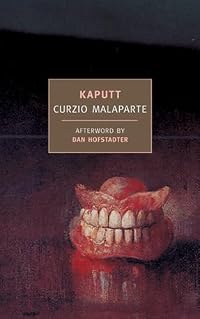
Kaputt
by Curzio Malaparte
On This Page
Description
"Curzio Malaparte was a disaffected supporter of Mussolini with a taste for danger and high living. Sent by an Italian paper during World War II to cover the fighting on the Eastern Front, Malaparte secretly wrote this terrifying report from the abyss, which became an international bestseller when it was published after the war. Telling of the siege of Leningrad, of glittering dinner parties with Nazi leaders, and of trains disgorging bodies in war-devastated Romania, Malaparte paints a show more picture of humanity at its most depraved."--Jacket. show lessTags
Recommendations

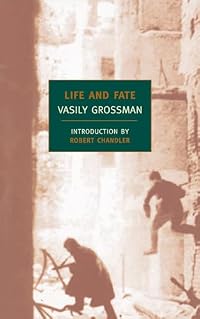
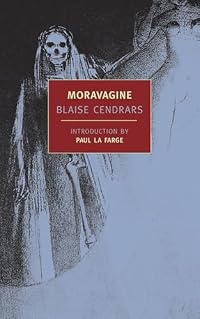
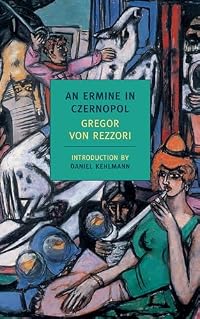


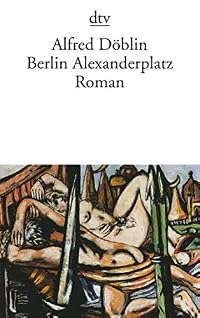








Member Recommendations

Member Reviews
When I read Malaparte's novel Kaputt, I felt like I had never come across a writer so compelled to explain the dark side of the human spirit to us. Primo Levi’s account of his time in Auschwitz "Se Questo è un Uomo" (If this is a Man) is a masterpiece, but he was a victim: he could dismiss the Germans as merely evil. In Kaputt, Malaparte, although a lifelong anti-German, is compromised by being an officer in the Italian army and a former enthusiast of fascism. He knows what it’s like to be on the wrong side of history. He visits the Jewish ghettos of Warsaw, Krakow and other Polish cities – wishing to go alone, but always trailed by a Gestapo officer. He sees ragged and starving bodies lying on the streets, waiting to be loaded show more onto carts and be taken away. But there are not enough carts. He dines with the German Governor General of Poland, Hans Frank, the very man who is in charge of these ghettos. Malaparte wants to see inside Frank’s soul – to explain the evil to us:
"I knew enough of him to detest him, but I felt honor bound not to stop there. … I hoped to catch a gesture, a word, an involuntary action that might reveal to me Frank’s real face, his inner face, that would suddenly break away from the dark, deep region of his mind where, I instinctively felt, the roots of his cruel intelligence and fine musical sensitiveness were anchored in a morbid and, in a certain sense, criminal subsoil of character."
Malaparte brings us beautiful tragic images - such as horses that jump into Lake Ladoga in Finland to escape a forest fire created by an aerial bombardment. Tragically the lake suddenly freezes and the horses with it. They create macabre statues, the terror can be seen in their eyes - we wouldn't want to be there for the thawing. Malaparte loves giving life to corpses, the corpse of Mussolini speaks to him in his novel "The Skin" as does a dead Russian soldier in "The Volga Rises in Europe". The horse story is undoubtedly untrue - this is a book where bending and changing the truth leads to a work of art that reflects the follies of war even better than a well-written blow by blow account such as "All Quiet on the Western Front".
Malaparte has a baroque style which in other writers would be pretentious but he pulls it off, he references a lot of high European culture - as in the following landscape sketch in which he references a Swedish painter:
“Daylight was beginning to lose its youth after the ghostlike endlessness of a pellucid summer day, without dawn or sunset. Already the face of the day was growing wrinkled, and little by little the evening was darkening the first, still-luminous shadows. Trees, rocks, houses and clouds sweeter and more intense in their foreboding of the coming night were slowly melting into the mellow autumnal landscape, as in those landscapes of Elias Martin.”
Scenes of natural beauty like this one contrast bitterly with the horrors Malaparte witnesses on the Eastern Front. He is distraught, maybe not for the loss of those close to him - but for the willful destruction of a great civilization by those, like Hans Frank, who make a great show of being sophisticated and educated. Malaparte is also adept at using surrealism and Christian imagery. I would be tempted to give this 6 stars. show less
"I knew enough of him to detest him, but I felt honor bound not to stop there. … I hoped to catch a gesture, a word, an involuntary action that might reveal to me Frank’s real face, his inner face, that would suddenly break away from the dark, deep region of his mind where, I instinctively felt, the roots of his cruel intelligence and fine musical sensitiveness were anchored in a morbid and, in a certain sense, criminal subsoil of character."
Malaparte brings us beautiful tragic images - such as horses that jump into Lake Ladoga in Finland to escape a forest fire created by an aerial bombardment. Tragically the lake suddenly freezes and the horses with it. They create macabre statues, the terror can be seen in their eyes - we wouldn't want to be there for the thawing. Malaparte loves giving life to corpses, the corpse of Mussolini speaks to him in his novel "The Skin" as does a dead Russian soldier in "The Volga Rises in Europe". The horse story is undoubtedly untrue - this is a book where bending and changing the truth leads to a work of art that reflects the follies of war even better than a well-written blow by blow account such as "All Quiet on the Western Front".
Malaparte has a baroque style which in other writers would be pretentious but he pulls it off, he references a lot of high European culture - as in the following landscape sketch in which he references a Swedish painter:
“Daylight was beginning to lose its youth after the ghostlike endlessness of a pellucid summer day, without dawn or sunset. Already the face of the day was growing wrinkled, and little by little the evening was darkening the first, still-luminous shadows. Trees, rocks, houses and clouds sweeter and more intense in their foreboding of the coming night were slowly melting into the mellow autumnal landscape, as in those landscapes of Elias Martin.”
Scenes of natural beauty like this one contrast bitterly with the horrors Malaparte witnesses on the Eastern Front. He is distraught, maybe not for the loss of those close to him - but for the willful destruction of a great civilization by those, like Hans Frank, who make a great show of being sophisticated and educated. Malaparte is also adept at using surrealism and Christian imagery. I would be tempted to give this 6 stars. show less
Now here’s a thing. If you want to learn about the events that led to the murder of 14 million civilians at the hands of both Josef Stalin and Adolf Hitler in the 1930/40’s, then read Timothy Snyder’s magnificent Bloodlands: Europe Between Hitler and Stalin. 14 million civilians, just take a moment to think about that.
If you want to understand the madness, then read Kaputt. Curzio Malaparte’s wartime dispatches are partially based on true events. A book of contrasts, it consists of several conversations the author has with the elite of Europe. It’s their savage indifference to the atrocities that makes Kaputt so bewitching.
One of Malaparte’s theories is that the Germans acted out of fear -
“That which drives the Germans show more to cruelty, to deeds most coldly, methodically and scientifically cruel, is fear. Fear of the oppressed, the defenseless, the weak, the sick; fear of women and of children, fear of the Jews”
Part fiction, part fact, it’s an eye-witness account of WW2. The chapters about the pogrom in Jassy, the frozen horses in Lake Ladoga, and the forced prostitution of Jewish girls in Soroca are savage, barbaric and unforgettable. What makes Kaputt so utterly brilliant is the writing. I gave up underlining quotes about a third of the way in. The writing is beautiful. For instance, talking to Prince Eugene of Sweden:
“We went into the park. It was getting cold. The eastern sky looked like filmed silver. The slow death of the light, the return of darkness after the endless summer day, gave me a feeling of peace and calm”
Kaputt is both mesmorising and hypnotic. In the hands of a less skilled writer it could be considered pretentious. It’s not the sort of book I’d normally read, so a big thanks to my friend Helen for alerting me to it.
Curzio Malaparte was a fascinating character, but not necessarily a likeable one. He was egotistical, vainglorious, capricious and elitist. But he could write. Reading Kaputt is like being taken through the darkest days of Europe by a ballerina with the voice of a deathless angel. show less
If you want to understand the madness, then read Kaputt. Curzio Malaparte’s wartime dispatches are partially based on true events. A book of contrasts, it consists of several conversations the author has with the elite of Europe. It’s their savage indifference to the atrocities that makes Kaputt so bewitching.
One of Malaparte’s theories is that the Germans acted out of fear -
“That which drives the Germans show more to cruelty, to deeds most coldly, methodically and scientifically cruel, is fear. Fear of the oppressed, the defenseless, the weak, the sick; fear of women and of children, fear of the Jews”
Part fiction, part fact, it’s an eye-witness account of WW2. The chapters about the pogrom in Jassy, the frozen horses in Lake Ladoga, and the forced prostitution of Jewish girls in Soroca are savage, barbaric and unforgettable. What makes Kaputt so utterly brilliant is the writing. I gave up underlining quotes about a third of the way in. The writing is beautiful. For instance, talking to Prince Eugene of Sweden:
“We went into the park. It was getting cold. The eastern sky looked like filmed silver. The slow death of the light, the return of darkness after the endless summer day, gave me a feeling of peace and calm”
Kaputt is both mesmorising and hypnotic. In the hands of a less skilled writer it could be considered pretentious. It’s not the sort of book I’d normally read, so a big thanks to my friend Helen for alerting me to it.
Curzio Malaparte was a fascinating character, but not necessarily a likeable one. He was egotistical, vainglorious, capricious and elitist. But he could write. Reading Kaputt is like being taken through the darkest days of Europe by a ballerina with the voice of a deathless angel. show less
Kaputt is an intriguing, disturbing, interesting book, and I am indebted to "irley" on librarything.com for having introduced me to it, and to Curzio Malaparte. According the wikipedia bio, Malaparte (1898-1957) was born in Tuscany as Kurt Erich Suckert. His mother was a Lombard, and his father German; he used the name Malaparte from 1925; it means "he of the bad place" and is a pun on "Bonaparte". This indicates a certain irreverence and ironical touch, both of which are abundantly in evidence in Kaputt. Malaparte originally supported Mussolini, but later turned against both him, and Hitler, and for that he spent several years in jail, at various times. Malaparte had a remarkable knowledge of Europe and of the arts: architecture, show more literature, painting all of which shines through in his book. He also served in the Italian diplomatic service and as a correspondent from which he established friendships and connections with a wide range of senior, aristocratic, and influential people across Europe.
Kaputt is described as a "novelistic" account of Malaparte's experiences as a wartime correspondent, primarily on the eastern front, in Finland, Poland, Germany, other countries on the eastern border. He writes in an often lyrical style with considerable, detailed attention to the architecture and organization of places, to the play of light in nature and inside rooms, almost sensual descriptions of food and drink harmonized with the moods of people and of nature for good or ill, tactile descriptions of odours and sights both beautiful and horrific, and sharp observations on the characteristics of different nationalities. There is almost a touch of surrealism in some of his stories and this is appropriate trying to convey the extremes of emotions and situations that he experienced. He recounts a couple of remarkable dinners with Frank, the German Governor General of Poland, and other Germans, that are shot through with irony, which goes completely over the heads of the Germans when he talks, for instance, about conditions in the Warsaw ghetto and the high "culture" of the German nation; the exchanges are practically hallucinatory in their divorce from any human reality or empathy. He highlights, in his description of Frank, the complexity of character that puts lie to the assumption of some that these people were all one-dimensional madmen. He describes Frank as a "particular mixture of cruel intelligence, refinement, vulgarity, brutal cynicism and polished sensitiveness" but with a, "deep zone of darkness within him."
A description of a pogrom in Jassy, Romania is horrific in its inevitability, its detail, its inhumanity and degradation and the futility that Malaparte felt in witnessing it, but being able to do very little to mitigate it. He recounts a brilliant and horrific story of the "dead fighting with the living" when corpses burst from a cattle car and bury a friend; his humanity, his rage, and his sense of impotence come through in the descriptions and the writing.
Malaparte had no illusions about who would win the war on the eastern front, and his frank dispatches got him into considerable trouble. He is also exacting in his analysis of the Germans and their reactions:
"The winning war was over, the losing war had begun. I saw the white stain of fear growing in the dull eyes of German officers and soldiers. I saw it spreading little by little, gnawing at the pupils, singeing the roots of the eyelashes and making the eyelashes drop one by one, like the long yellow eyelashes of the sunflowers. When Germans become afraid, when that mysterious German fear begins to creep into their bones, they always arouse a special horror and pity. Their appearance is miserable, their cruelty sad, their courage silent and hopeless. This is when the Germans become wicked."
Malaparte clearly sees the war as an end of a time or an era in Europe, but he remains hopeful that from the ashes and the destruction something good can emerge with the removal of the evil of fascism in both its German and Italian variations. His moving description, at the end, of the horrors of war-shattered Naples which has been left to the poor and the homeless because all the aristocrats and wealthy people have fled, is an empathetic counterpoint to the world of privilege and wealth, tinged with not a little hypocrisy and falsehood, that Malaparte knew and moved in, and observed throughout his life and career.
I enjoyed this book. Its mixed kaleidoscope of people, relations, emotions, horror, brutality and sensitivity, reflect the complexities of the times and the extremes produced by war. show less
Kaputt is described as a "novelistic" account of Malaparte's experiences as a wartime correspondent, primarily on the eastern front, in Finland, Poland, Germany, other countries on the eastern border. He writes in an often lyrical style with considerable, detailed attention to the architecture and organization of places, to the play of light in nature and inside rooms, almost sensual descriptions of food and drink harmonized with the moods of people and of nature for good or ill, tactile descriptions of odours and sights both beautiful and horrific, and sharp observations on the characteristics of different nationalities. There is almost a touch of surrealism in some of his stories and this is appropriate trying to convey the extremes of emotions and situations that he experienced. He recounts a couple of remarkable dinners with Frank, the German Governor General of Poland, and other Germans, that are shot through with irony, which goes completely over the heads of the Germans when he talks, for instance, about conditions in the Warsaw ghetto and the high "culture" of the German nation; the exchanges are practically hallucinatory in their divorce from any human reality or empathy. He highlights, in his description of Frank, the complexity of character that puts lie to the assumption of some that these people were all one-dimensional madmen. He describes Frank as a "particular mixture of cruel intelligence, refinement, vulgarity, brutal cynicism and polished sensitiveness" but with a, "deep zone of darkness within him."
A description of a pogrom in Jassy, Romania is horrific in its inevitability, its detail, its inhumanity and degradation and the futility that Malaparte felt in witnessing it, but being able to do very little to mitigate it. He recounts a brilliant and horrific story of the "dead fighting with the living" when corpses burst from a cattle car and bury a friend; his humanity, his rage, and his sense of impotence come through in the descriptions and the writing.
Malaparte had no illusions about who would win the war on the eastern front, and his frank dispatches got him into considerable trouble. He is also exacting in his analysis of the Germans and their reactions:
"The winning war was over, the losing war had begun. I saw the white stain of fear growing in the dull eyes of German officers and soldiers. I saw it spreading little by little, gnawing at the pupils, singeing the roots of the eyelashes and making the eyelashes drop one by one, like the long yellow eyelashes of the sunflowers. When Germans become afraid, when that mysterious German fear begins to creep into their bones, they always arouse a special horror and pity. Their appearance is miserable, their cruelty sad, their courage silent and hopeless. This is when the Germans become wicked."
Malaparte clearly sees the war as an end of a time or an era in Europe, but he remains hopeful that from the ashes and the destruction something good can emerge with the removal of the evil of fascism in both its German and Italian variations. His moving description, at the end, of the horrors of war-shattered Naples which has been left to the poor and the homeless because all the aristocrats and wealthy people have fled, is an empathetic counterpoint to the world of privilege and wealth, tinged with not a little hypocrisy and falsehood, that Malaparte knew and moved in, and observed throughout his life and career.
I enjoyed this book. Its mixed kaleidoscope of people, relations, emotions, horror, brutality and sensitivity, reflect the complexities of the times and the extremes produced by war. show less
Fantastisch boek. Al op de eerste pagina's ervoer ik Malapartes soevereine, autonome stijl en benadering, en die ervaring is de hele tijd intact gebleven. Het boek is zo mooi geschreven dat ik bij momenten Malaparte het verwijt wou maken dat hij de oorlog esthetiseert, wat hij absoluut niet doet. De vraag of alle verhalen, bijvoorbeeld het hallucinante paardenverhaal, waargebeurd zijn is irrelevant, dit is een onnavolgbare evocatie van Europa (min of meer met uitzondering van West-Europa) tijdens de Tweede Wereldoorlog.
Dan Hofstadter is a well-reviewed memoirist on Naples, which presumably explains why he was chosen to add the Afterword to the NYRB-Classics edition. But he is no Malaparte fan. It was disconcerting to finish a book I quite enjoyed and then read his largely negative comments. Yes, Malaparte's politics are suspect, he is a compulsive name-dropper, his blend of Proustian social observation and accounts of atrocities on the Eastern front is in questionable taste. But we are here to judge the book, not the author, and I found Kaputt a compelling read, full of unforgetable visual descriptions. I was not too certain about the quality of the translation. I thought it was normal to translate into one's first language. Early on, there is a show more reference to Shakespeare's Cleopatra as "the snake of the old Nile." No, just no. show less
Reads like a journalistic Gravity's Rainbow. Dark and mad Italian war correspondence, compelling at times because (not despite) the moral repugnance of its author.
Although the opening chapter 'De cote de guarmantes' has too many adjectives, and the penultimate 'Golf Handicaps' too much name-dropping, each chapter in between is full of images harrowing and beautiful enough to stick in the mind forever.
Although the opening chapter 'De cote de guarmantes' has too many adjectives, and the penultimate 'Golf Handicaps' too much name-dropping, each chapter in between is full of images harrowing and beautiful enough to stick in the mind forever.
Okumaya başlarken istekliydim ama doğrusu ön söz beni biraz yordu ve bundan dolayı sıkıntılı bir başlangıç yaptım. Ancak daha ilk sayfalarda kritik bir sorunun cevabını, kısmen de olsa, bulabileceğim bir metinle karşı karşıya olduğumu hissettim. Kafaları çok uzun zamandır kurcalayan, cevabı hep bulundu sanılıp bir süre sonra yok bu değilmiş denilen bir soru. Sadece Türk’lerin değil, Ruslar’ın, Araplar’ın, muhakkak Kürtler’in ve hatta bir çok Doğu Avrupa’lının zihnini zorlayan bir soru. Avrupa ne demektir?
Kaputt bence, kendi anlattığı hikayenin dışında ve üstünde, Avrupa’yı anlatan daha doğrusu Avrupa imgesini kavramayı sağlayan, en azından bir kenarından hissettirebilen show more bir kitap. Aydınlanmanın, “Renaissance” ın olduğu kadar bunlar karşısında yükselen o güçlü tepkinin de Avrupa’nın ta kendisi olduğunu bence çok ama çok güzel anlatıyor. Bu bağlamda sürekli olarak Nietzsche’den alıntı yapan sevgili dostlarıma Kaputt’u özellikle tavsiye ederim. Öte yandan çok tartıştığımız ve hatta artık bir anlamı kalmadığının çok iddialı bir şekilde söylendiğini duyduğumuz Avrupa Birliği’nin neyi ifade ettiğini sorgulayanlarada Kaputt’u tavsiye ederim. Son olarak anti semitizme gösterilen tepkileri kavramakta zorluk çekenlere, bu konuda ki hassasiyeti siyasi olarak batıcılık olarak tanımlayanlara da Kaputt’u iki kere okumlarını tavsiye derim. show less
Kaputt bence, kendi anlattığı hikayenin dışında ve üstünde, Avrupa’yı anlatan daha doğrusu Avrupa imgesini kavramayı sağlayan, en azından bir kenarından hissettirebilen show more bir kitap. Aydınlanmanın, “Renaissance” ın olduğu kadar bunlar karşısında yükselen o güçlü tepkinin de Avrupa’nın ta kendisi olduğunu bence çok ama çok güzel anlatıyor. Bu bağlamda sürekli olarak Nietzsche’den alıntı yapan sevgili dostlarıma Kaputt’u özellikle tavsiye ederim. Öte yandan çok tartıştığımız ve hatta artık bir anlamı kalmadığının çok iddialı bir şekilde söylendiğini duyduğumuz Avrupa Birliği’nin neyi ifade ettiğini sorgulayanlarada Kaputt’u tavsiye ederim. Son olarak anti semitizme gösterilen tepkileri kavramakta zorluk çekenlere, bu konuda ki hassasiyeti siyasi olarak batıcılık olarak tanımlayanlara da Kaputt’u iki kere okumlarını tavsiye derim. show less
Members
- Recently Added By
Lists

Italian Literature
556 works; 41 members

Top Five Books of 2017
757 works; 230 members

Recommend the 20 best books you've read in the last five years
2,168 works; 602 members

Five star books
1,755 works; 108 members

1940s
221 works; 25 members

Mustich's 1000 Books to Read Before You Die: A Life Changing List
1,001 works; 18 members

Personal 2024 reads
5 works; 1 member

Canon de la narrativa universal del s. XX (cicutadry)
499 works; 3 members
Lista dei 100 migliori libri italiani degli ultimi 200 anni
100 works; 1 member
Author Information

Some Editions
Awards and Honors
Series
Belongs to Publisher Series
Work Relationships
Is contained in
Contains
Common Knowledge
- Canonical title
- Kaputt
- Original title
- Kaputt
- Original publication date
- 1944
- Important places*
- Italië
- Important events*
- Tweede Wereldoorlog
- Epigraph*
- Kaputt (von hebraischen Koppâroth,
Opfer, oder französisch Capot, matsch)
zu Grunde gerichtet, entzwei.
Meyer, Conversation Lexicon. - First words
- Prince Eugene of Sweden stopped in the middle of the room.
- Last words
- (Click to show. Warning: May contain spoilers.)"The flies have won!"
- Original language*
- Italiaans
*Some information comes from Common Knowledge in other languages. Click "Edit" for more information.
Classifications
- Genre
- Fiction and Literature
- DDC/MDS
- 940.54217092 — History & geography History of Europe History of Europe 1918- Military history of World War II Campaigns and battles by theatre European theatre Soviet Union
- LCC
- D811 .M28413 — History of Europe, Asia, Africa and Oceania History (General) World War II (1939-1945)
- BISAC
Statistics
- Members
- 1,180
- Popularity
- 21,081
- Reviews
- 31
- Rating
- (4.19)
- Languages
- 18 — Albanian, Czech, Danish, Dutch, English, Estonian, French, German, Greek, Hungarian, Italian, Polish, Portuguese, Romanian, Serbian, Spanish, Swedish, Turkish
- Media
- Paper, Ebook
- ISBNs
- 47
- ASINs
- 25