On This Page
Description
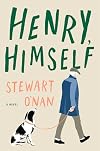
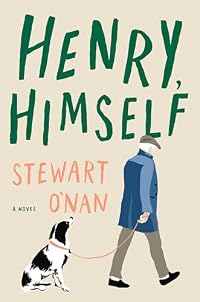
Soldier, son, lover, husband, breadwinner, churchgoer, Henry Maxwell has spent his whole life trying to live with honor. A native Pittsburgher and engineer, he's always believed in logic, sacrifice, and hard work. Now, seventy-five and retired, he feels the world has passed him by. It's 1998, the American century is ending, and nothing is simple anymore. His children are distant, their unhappiness a mystery. Only his wife Emily and dog Rufus stand by him. Once so confident, as Henry's show more strength and memory desert him, he weighs his dreams against his regrets and is left with questions he can't answer: Is he a good man? Has he done right by the people he loves? And with time running out, what, realistically, can he hope for? Like Emily, Alone, Henry, Himself is a wry, warmhearted portrait of an American original who believes he's reached a dead end only to discover life is full of surprises. show lessTags
Recommendations



Member Reviews
"There was a mysterious continuity to life that was reassuring, if the true significance of it escaped him."
Henry Maxwell is 75 years old, 10 years retired, and living a quiet life in Pittsburgh with his wife, Emily. Much like Emily's story in Emily, Alone, not much happens here. It's a character study of a man very much of his generation - straight-laced, not given to overt displays of emotion, but deeply aware of his responsibilities to his family and his community. Over the course of a year, we see Henry contemplate his own mortality while also losing himself in memories of his past, including his time as a soldier in Europe during World War II. Despite the challenges of his life - an alcoholic daughter, a sometimes difficult wife, show more etc. - we understand Henry to be aware of the grace and good fortune he's been the recipient of, even if he doesn't always understand it. The writing is typical O'Nan - seeded with small details that illuminate a whole and informed by an understanding of how very complex a simple life can be. show less
Henry Maxwell is 75 years old, 10 years retired, and living a quiet life in Pittsburgh with his wife, Emily. Much like Emily's story in Emily, Alone, not much happens here. It's a character study of a man very much of his generation - straight-laced, not given to overt displays of emotion, but deeply aware of his responsibilities to his family and his community. Over the course of a year, we see Henry contemplate his own mortality while also losing himself in memories of his past, including his time as a soldier in Europe during World War II. Despite the challenges of his life - an alcoholic daughter, a sometimes difficult wife, show more etc. - we understand Henry to be aware of the grace and good fortune he's been the recipient of, even if he doesn't always understand it. The writing is typical O'Nan - seeded with small details that illuminate a whole and informed by an understanding of how very complex a simple life can be. show less
It took me a few chapters to ease into the slow pace of this novel, but once I had I delighted in Henry's every day adventures as I walked with him the streets of Pittsburgh and the cottage in Chautauqua. The details and intimacy felt like an invitation to walk into Henry's shoes: his likes, dislikes, foibles and fears. I definitely felt like I knew him despite a certain distance. The world's dramas, including his family's, seem to circle him as he refuses to be drawn into them: perspective gained from old age or fear of emotion? Henry is definitely old school where the home and feelings are women's work.
The ending is beautifully done, gentle and restful with a tint of regret. This book is definitely a reminder to be present to every show more moment. show less
The ending is beautifully done, gentle and restful with a tint of regret. This book is definitely a reminder to be present to every show more moment. show less
Okay, full transparency. I am 75. HENRY, HIMSELF is also 75. So sure, I can relate to Henry Maxwell. True, the time is different. Henry turned 75 in 1998, or maybe it was '99, I'm not sure. And I just turned 75 this year, 2019. But what the hell. I've got to tell ya that as I kept reading Henry's story, nearly every page I kept thinking, "I am Henry." So if Henry Maxwell is not Everyman, he certainly seems to be THIS man, i.e. me (or should it be 'I'?). True, Henry's story is set in Pittsburgh - which is so descriptively integrated into the narrative that it is nearly a character itself - while mine would be in many places, from small town to army life overseas, to college, teaching, and working for Uncle Sam in the Baltimore-Washington show more area. But that seems to make very little difference. Henry, a retired engineer and WWII veteran, is still very much like me. Different generations, sure, but it's like we went to different schools together.
I can open this book to almost any page and find something that's not just about Henry. It's about me too. For example (and I just opened to a random page), in "The Borrowers" chapter, Henry is battling mice in his house, setting traps. When he finally catches one, he feels less than victorious, seeing -
"... the mouse on its side, pinned by the neck, a dribble of blood from its nose staining the wood. Felled, it was small and harmless-looking, its mouth open, its pink feet curled like hands."
So, a kind of success, but when his wife, Emily (protagonist of O'Nan's earlier book, EMILY, ALONE), asks him about it, Henry responds, "It's not a pleasant job." And he's right, of course. I've been through the same process, and remember my mixed feelings as I disposed of my small victim-intruder.
In another chapter, "Thin-Skinned," after noticing a bleeding knuckle, Henry remembers his late father - "At the end, his skin was thin as paper." And now Henry is at, or nearing, that same stage - of too-easy nicks, cuts and scrapes, scabs and bleeding. (Me too, as i often marvel at the crepe-like texture of my aging skin.) Other chapters - and they are all short, anecdotal chapters, illustrative of a long life, a long marriage, and growing old together - cover numb, tingling or swollen joints and extremities, arthritis pains, the numerous prescription and OTC drugs taken every day, worries over adult children and grandchildren, the comforts and inconveniences of dogs (their beloved dog, Rufus, is an important player, and yeah, I get it, having loved and lost several dogs in my lifetime), and more. Worries about money - "There was money, but he would always worry about money." Reading that line took me back to my own working years, when money was indeed always a worry, so much so that I worked way too much, and in doing so, missed much of my children's childhood. My father was that way too, and now i see it in my adult sons. Money - the root of all worries.
Some of the best chapters also include Henry's memories of childhood, of parents and grandparents, of his years in the war and buddies who didn't make it home, and immediately after, a torrid affair with an upper-crust girl who married someone else. And there is his courtship of Emily, showing how early lust can gradually become a real and lasting love (they quietly celebrate 49 years together).
And there is a summer place in western New York on Lake Chautauqua, handed down from a previous generation, where the family gathers every summer. These chapters brought back my own childhood summers, spent at a lakeside cabin on a small lake in west Michigan. More memories. Me too, Henry.
My god, this is a beautiful book! Okay, time for complete transparency. I love Stewart O'Nan's work. In fact I've never met an O'Nan book I didn't like, and I think HENRY, HIMSELF is my ninth O'Nan. I've already read EMILY, ALONE, but I know that there are three Maxwell family books, so I've got to read that first one, WISH YOU WERE HERE. Making a note of it right now. This book? Well, I hope it's obvious. I loved it. Thank you, Stewart, for giving us the Maxwell family, especially, HENRY, HIMSELF. My highest recommendation.
- Tim Bazzett, author of the memoir, BOOKLOVER show less
I can open this book to almost any page and find something that's not just about Henry. It's about me too. For example (and I just opened to a random page), in "The Borrowers" chapter, Henry is battling mice in his house, setting traps. When he finally catches one, he feels less than victorious, seeing -
"... the mouse on its side, pinned by the neck, a dribble of blood from its nose staining the wood. Felled, it was small and harmless-looking, its mouth open, its pink feet curled like hands."
So, a kind of success, but when his wife, Emily (protagonist of O'Nan's earlier book, EMILY, ALONE), asks him about it, Henry responds, "It's not a pleasant job." And he's right, of course. I've been through the same process, and remember my mixed feelings as I disposed of my small victim-intruder.
In another chapter, "Thin-Skinned," after noticing a bleeding knuckle, Henry remembers his late father - "At the end, his skin was thin as paper." And now Henry is at, or nearing, that same stage - of too-easy nicks, cuts and scrapes, scabs and bleeding. (Me too, as i often marvel at the crepe-like texture of my aging skin.) Other chapters - and they are all short, anecdotal chapters, illustrative of a long life, a long marriage, and growing old together - cover numb, tingling or swollen joints and extremities, arthritis pains, the numerous prescription and OTC drugs taken every day, worries over adult children and grandchildren, the comforts and inconveniences of dogs (their beloved dog, Rufus, is an important player, and yeah, I get it, having loved and lost several dogs in my lifetime), and more. Worries about money - "There was money, but he would always worry about money." Reading that line took me back to my own working years, when money was indeed always a worry, so much so that I worked way too much, and in doing so, missed much of my children's childhood. My father was that way too, and now i see it in my adult sons. Money - the root of all worries.
Some of the best chapters also include Henry's memories of childhood, of parents and grandparents, of his years in the war and buddies who didn't make it home, and immediately after, a torrid affair with an upper-crust girl who married someone else. And there is his courtship of Emily, showing how early lust can gradually become a real and lasting love (they quietly celebrate 49 years together).
And there is a summer place in western New York on Lake Chautauqua, handed down from a previous generation, where the family gathers every summer. These chapters brought back my own childhood summers, spent at a lakeside cabin on a small lake in west Michigan. More memories. Me too, Henry.
My god, this is a beautiful book! Okay, time for complete transparency. I love Stewart O'Nan's work. In fact I've never met an O'Nan book I didn't like, and I think HENRY, HIMSELF is my ninth O'Nan. I've already read EMILY, ALONE, but I know that there are three Maxwell family books, so I've got to read that first one, WISH YOU WERE HERE. Making a note of it right now. This book? Well, I hope it's obvious. I loved it. Thank you, Stewart, for giving us the Maxwell family, especially, HENRY, HIMSELF. My highest recommendation.
- Tim Bazzett, author of the memoir, BOOKLOVER show less
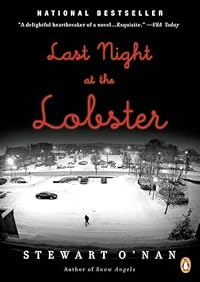
I discovered O'Nan with his harrowing The Circus Fire, a nonfiction account of a horrific 1944 fire that trapped 8000 people inside a big top tent that had been waterproofed with kerosene. It was unputdownable. A subsequent novel, Last Night at the Red Lobster was a sweet, sad story about the intertwined lives of the people who work at a franchise restaurant where we have probably all eaten, or at some version of it. Henry is a "prequel" to O'Nan's two other Maxwell family novels, Emily, Alone and Wish You Were Here - both intimate observations of the travails and relations of Henry, his wife Emily, their children and grandchildren.
Henry is seventy five, a WWII veteran, retired engineer, patient and skillful handyman, patient and show more devoted husband. He makes lists. He putters. He fusses over the yard. He fixes things. He remembers - and doesn't remember - things. He exerts himself to please his often curt, deeply pragmatic wife, and puzzles over how he did as a father. He is steady, kind, reliable. We all know a Henry. We may have been a Henry. O'Nan does better what Karl Ove Knausgaard took multiple volumes to do: engage us in the ordinary activities and daily ruminations of an ordinary man. O'Nan chooses, sculpts, arranges, and lights the days, weeks, and months with grace, flashes of poignancy, and affection.
That's it. O'Nan is very good with the details - maybe a little too good. Readers will smile with recognition at the 2x4s in the garage to help stop the car in the right place, the bickering over what to send to the rummage sale, keeping track of medications, handling a spouse's uncertain (or certain) moods, the loss of friends and health, and the approach of death. But sometimes there can simply be too many details. If you have read Emily or Wish You Were Here, you will probably know more than you need to about the family summers at the cottage, golfing, and fraught holiday gatherings. Still, the gems of insights and observations are true and touching.
Towards the end, Henry is left to host a full-on Thanksgiving dinner with his son's family when Emily is called away to tend to their troubled daughter in the hospital. He is overwhelmed by the lists, the instructions, the traditions... and yet, they have a lovely day. They gather, cook, eat, drink, laugh, talk, help and enjoy each other... even the prickly daughter-in-law (a somewhat thinly drawn character who maybe needs a book of her own). It is a sweet success... with Emily absent. And yet... he misses her so.
Houses are frequently "buttoned up," Rufus the dog is generally "sacked out," Emily very often tells Henry to "Go away." This is not for those who like an action-driven plot. Skimming the golf games is advised. But Henry is a good man. It is good that there are writers who pay attention to such things. show less
Henry is seventy five, a WWII veteran, retired engineer, patient and skillful handyman, patient and show more devoted husband. He makes lists. He putters. He fusses over the yard. He fixes things. He remembers - and doesn't remember - things. He exerts himself to please his often curt, deeply pragmatic wife, and puzzles over how he did as a father. He is steady, kind, reliable. We all know a Henry. We may have been a Henry. O'Nan does better what Karl Ove Knausgaard took multiple volumes to do: engage us in the ordinary activities and daily ruminations of an ordinary man. O'Nan chooses, sculpts, arranges, and lights the days, weeks, and months with grace, flashes of poignancy, and affection.
That's it. O'Nan is very good with the details - maybe a little too good. Readers will smile with recognition at the 2x4s in the garage to help stop the car in the right place, the bickering over what to send to the rummage sale, keeping track of medications, handling a spouse's uncertain (or certain) moods, the loss of friends and health, and the approach of death. But sometimes there can simply be too many details. If you have read Emily or Wish You Were Here, you will probably know more than you need to about the family summers at the cottage, golfing, and fraught holiday gatherings. Still, the gems of insights and observations are true and touching.
Towards the end, Henry is left to host a full-on Thanksgiving dinner with his son's family when Emily is called away to tend to their troubled daughter in the hospital. He is overwhelmed by the lists, the instructions, the traditions... and yet, they have a lovely day. They gather, cook, eat, drink, laugh, talk, help and enjoy each other... even the prickly daughter-in-law (a somewhat thinly drawn character who maybe needs a book of her own). It is a sweet success... with Emily absent. And yet... he misses her so.
Houses are frequently "buttoned up," Rufus the dog is generally "sacked out," Emily very often tells Henry to "Go away." This is not for those who like an action-driven plot. Skimming the golf games is advised. But Henry is a good man. It is good that there are writers who pay attention to such things. show less
I loved the first two in this series about the Maxwell family, and this "prequel" did not let me down. The reader is invited into the mind of Henry (whose absence is felt in the other two novels) and O'Nan retains his beautifully precise descriptions of everyday thoughts, traveling from regrets about the past to worry about the future and back to the task at hand, while somehow also injecting (don't know how he does it) the genuine, if understated, spectrum of emotion that runs through it all and the love that pulses just beneath the surface of the matter of fact. Don't know if there are any Maxwell family stories left, but I will most likely read whatever O'Nan comes up with next.
I fell in love with Henry... he reminded me so much of my dad. Precise, thoughtful, orderly, intentional. The description of how he fixed the kitchen drawer and the tidiness of his basement workbench had me in tears of memory for my dad. The pacing of the book was maddeningly slow, something I usually cannot tolerate, but I was able to float along with it because he was so charming and the situations so real. Reminded me of a long, slow Elizabeth Berg book.
“Now he was a stranger, the old guy with the dog, relegated to a bit part, his only lines throwaways.” — Steward O'Nan, “Henry, Himself”
Stewart O'Nan has written a series of fine novels about the Maxwells, an upper-middle-class Pittsburgh family. Emily got her turn in “Emily, Alone.” The author steps back in time to focus on her husband Henry in “Henry, Himself” (2019).
The novel covers the year in which Henry turns 75, and the end of the book suggests it could be his last birthday. Henry played his part well throughout his life. As a successful engineer, he provided comfortably for his family — a son and a daughter — and did everything a good husband and father is expected to do. Now well into retirement, he finds show more himself the man described in the line quoted above — an old guy relegated to a bit part with throwaway lines. (As an old man myself, I can tell you that this is how many old men feel.)
Henry's purpose in life now seems mostly just to do whatever Emily tells him to do. Oh, he plays golf with three friends and watches the Pirates play on television every night, but even these pleasures have become dull routines. Often he lives in memories, especially his sweet secret memory of a society girl named Sloan he knew before Emily.
O'Nan writes in brief chapters, some just a paragraph or two long. Each is something of a short story, each advancing the story yet each a story in itself. We find Henry tending his yard, interacting with grandchildren, running errands, paying bills and doing other ordinary things. This may sound a bit dull, and perhaps it would be to many readers who are not also old guys now relegated to bit parts. show less
Stewart O'Nan has written a series of fine novels about the Maxwells, an upper-middle-class Pittsburgh family. Emily got her turn in “Emily, Alone.” The author steps back in time to focus on her husband Henry in “Henry, Himself” (2019).
The novel covers the year in which Henry turns 75, and the end of the book suggests it could be his last birthday. Henry played his part well throughout his life. As a successful engineer, he provided comfortably for his family — a son and a daughter — and did everything a good husband and father is expected to do. Now well into retirement, he finds show more himself the man described in the line quoted above — an old guy relegated to a bit part with throwaway lines. (As an old man myself, I can tell you that this is how many old men feel.)
Henry's purpose in life now seems mostly just to do whatever Emily tells him to do. Oh, he plays golf with three friends and watches the Pirates play on television every night, but even these pleasures have become dull routines. Often he lives in memories, especially his sweet secret memory of a society girl named Sloan he knew before Emily.
O'Nan writes in brief chapters, some just a paragraph or two long. Each is something of a short story, each advancing the story yet each a story in itself. We find Henry tending his yard, interacting with grandchildren, running errands, paying bills and doing other ordinary things. This may sound a bit dull, and perhaps it would be to many readers who are not also old guys now relegated to bit parts. show less
Members
- Recently Added By
Lists

Top Five Books of 2019
387 works; 108 members

Five star books
1,755 works; 108 members

Kirkus Starred Fiction Reviews of Books Published in 2019
411 works; 12 members

Books Read in 2019
4,052 works; 108 members

Books Read in 2026
1,795 works; 63 members
Author Information

39+ Works 10,572 Members
Stewart O'Nan was born in Pittsburgh, Pennsylvania on February 4, 1961. He received a B. S. from Boston University in 1983 and received a M. F. A. in fiction from Cornell University in 1992. Before becoming a writer, he worked as a test engineer for Grumman Aerospace from 1984 to 1988. He has written several novels including The Speed Queen, A show more Prayer for the Dying, Last Night at the Lobster, The Circus Fire, and Faithful: Two Diehard Boston Red Sox Fans Chronicle the Historic 2004 Season. In the Walled City won the 1993 Due Heinz Literature Prize; Snow Angels won the 1993 Pirates Alley William Faulkner Prize; and The Names of the Dead won the 1996 Oklahoma Book Award. Snow Angels was made into a feature film in 2007. In 1996, he was listed as one of Granta's best young American novelists. (Bowker Author Biography) show less
Awards and Honors
Distinctions
Series

Common Knowledge
- Canonical title
- Henry, Himself
- Original publication date
- 2019
- Epigraph
- The autumn wind on its way sets a scarecrow dancing - Buson
- Dedication
- For my father and his father before him
- First words
- His mother named him Henry, after her older brother, a chaplain killed in the Great War, as if he might take his place.
Classifications
Statistics
- Members
- 238
- Popularity
- 136,160
- Reviews
- 19
- Rating
- (3.87)
- Languages
- English, German
- Media
- Paper, Audiobook, Ebook
- ISBNs
- 13
- ASINs
- 4