On This Page
Description
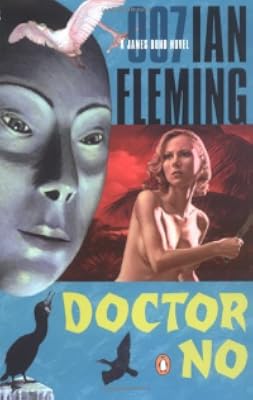
JAMES BOND IS PUT TO THE TEST AGAINS AN EGOTISTICAL SCIENTIST WITH NEFARIOUS AIMS Dispatched by M to investigate the mysterious disappearance of MI6's Jamaica station chief, Bond was expecting a holiday in the sun. But when he discovers a deadly centipede placed in his hotel room, the vacation is over. On this island, all suspicious activity leads inexorably to Dr. Julius No, a reclusive megalomaniac with steel pincers for hands. To find out what the good doctor is hiding, 007 must enlist show more the aid of local fisherman Quarrel and alluring beachcomber Honeychile Rider. Together they will combat a local legend the natives call "the Dragon," before Bond alone must face the most punishing test of all: an obstacle course?designed by the sadistic Dr. No himself?that measures the limits of the human body's capacity for agony. show lessTags
Recommendations


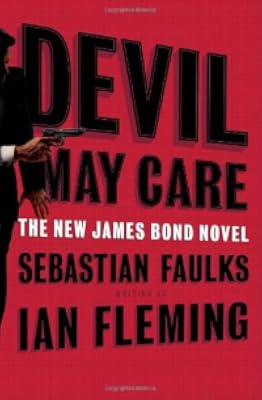


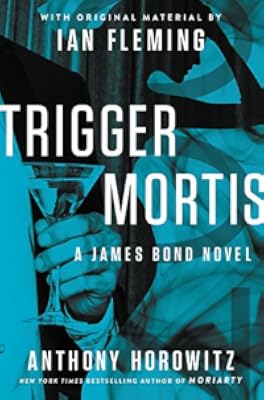


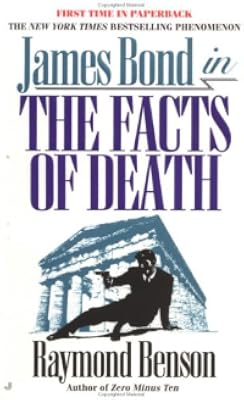
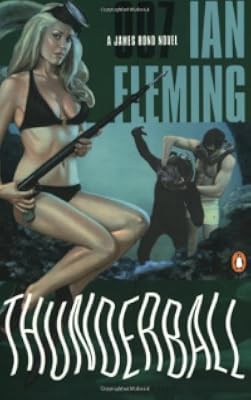












Member Recommendations
Member Reviews
I doubt that your sternest English teacher would call "Dr. No" a good book -- and, honestly, I wouldn't either -- but that doesn't mean it wasn't at least some fun to read, especially now that we're in summer. Where to start? Bond himself is stylish and self-assured, though he drinks more -- and more frequently -- than I expected him to. As other reviewers have mentioned, he's not invincible -- he's on the mend from his last assignment, and Fleming's not shy about describing the pain that he experiences during his assault on Dr. No's mysterious island. Also, as others have mentioned, this book's mostly build-up: the denouement -- if we can call it that -- doesn't amount to very much. But that's formula writing for you, even when it's show more done well.
Being set in late-fifties Jamaica, I expected this one to be bursting with racist and sexist stereotypes, and, from a certain perspective, it certainly is. But, at the same time, it could have been worse: these retrograde opinions are not shared universally, and Bond's Jamaican partner is shown as both intelligent and able: a hired member of staff, perhaps, but never a houseboy. We can call the fact that he doesn't make it to the end of the story and that the inimitable Honeychile Rider -- the young woman who will inevitably catch Bond's roving eye -- turns out to be a fully caucasian daughter of Jamaica to be unfortunate and persistent tropes.
She, speaking of your English teacher, presents us with an interesting case: a beautiful nature girl and Amazon, innocent -- Bond supposes -- in the ways of the larger world, but not so innocent that she won't get male readers' motors running. She is, in a way, an interesting counterpoint to Dr No himself, whose complex backstory and unlikely history of self-transformation make him something of a cyborg figure. There is some backstory in "Dr. No" about the Cold War, which one can very much understand, given the book's time-frame, but so much of "Dr. No" seemed to me to want to be something else: a very British imaginary universe, even at a time when the Empire was very much in decline.
And Fleming's Jamaica is very British: we don't meet any confirmed Americans anywhere in this -- admittedly brief -- adventure: they're reduced to a theory, or sometimes just a trace of an accent. "Dr. No", despite all of its dangers, describes a place where a man like James Bond could feel pretty comfortable. That might strike some as pleasantly nostalgic, I suppose, but I was also surprised at how thin and ridiculous it seems a lot of the time. I don't suppose that I was expecting "Madame Bovary" when I opened "Dr. No," but I'm still sort of surprised that much of a fictional genre and a film series that has grossed untold billions was based on something that often comes off as pretty flimsy. Mick Herron's "Slow Horses" -- which was, admittedly, the first spy novel I'd ever read -- seems to be made of much sturdier stuff. Adieu, Mr. Bond. I'm off to try Le Carre. show less
Being set in late-fifties Jamaica, I expected this one to be bursting with racist and sexist stereotypes, and, from a certain perspective, it certainly is. But, at the same time, it could have been worse: these retrograde opinions are not shared universally, and Bond's Jamaican partner is shown as both intelligent and able: a hired member of staff, perhaps, but never a houseboy. We can call the fact that he doesn't make it to the end of the story and that the inimitable Honeychile Rider -- the young woman who will inevitably catch Bond's roving eye -- turns out to be a fully caucasian daughter of Jamaica to be unfortunate and persistent tropes.
She, speaking of your English teacher, presents us with an interesting case: a beautiful nature girl and Amazon, innocent -- Bond supposes -- in the ways of the larger world, but not so innocent that she won't get male readers' motors running. She is, in a way, an interesting counterpoint to Dr No himself, whose complex backstory and unlikely history of self-transformation make him something of a cyborg figure. There is some backstory in "Dr. No" about the Cold War, which one can very much understand, given the book's time-frame, but so much of "Dr. No" seemed to me to want to be something else: a very British imaginary universe, even at a time when the Empire was very much in decline.
And Fleming's Jamaica is very British: we don't meet any confirmed Americans anywhere in this -- admittedly brief -- adventure: they're reduced to a theory, or sometimes just a trace of an accent. "Dr. No", despite all of its dangers, describes a place where a man like James Bond could feel pretty comfortable. That might strike some as pleasantly nostalgic, I suppose, but I was also surprised at how thin and ridiculous it seems a lot of the time. I don't suppose that I was expecting "Madame Bovary" when I opened "Dr. No," but I'm still sort of surprised that much of a fictional genre and a film series that has grossed untold billions was based on something that often comes off as pretty flimsy. Mick Herron's "Slow Horses" -- which was, admittedly, the first spy novel I'd ever read -- seems to be made of much sturdier stuff. Adieu, Mr. Bond. I'm off to try Le Carre. show less
I'm often impressed by how much Ian Fleming does with how little. The Bond films are often globetrotting epics with multiple high-stakes fights. Dr No shows that you can get a lot out of a man trying to sit still while a centipede crawls over his face-- somehow one of the most intense scenes in these novels thus far! Bond doesn't do a whole lot here, but Fleming's Bond is human, and thus he struggles for every little thing he does do. When Bond, Quarrel, and Honey Rider have to hide from Dr No's forces on Crab Key, it's riveting; Fleming's attention to detail always serves him well in scenes like this. Honey herself is probably one of the most fascinating female characters in this series yet, and Dr No a strangely Gothic villain. show more Unfortunately, Dr No works better as an offstage premise; I enjoyed the bits where Bond and Rider and trapped in his weird hotel, but once he's revealed as contrivedly part of the Cold War and Bond turns the tables on him, the book deflates somewhat, as Fleming hasn't come up with a plan that matches sufficiently to the uniqueness of the character he's created. Still, one of the more enjoyable of these books-- Fleming's love of Jamaica always serves him well. show less
The best one yet! After months of therapy, Bond is back from the disastrous near-death cliffhanger that closed out the previous book. Sent by M on what should be a milk run to his old haunting grounds Jamaica, he predictably finds himself in dire straits, surviving by instinct and grit. Dr. No is the quintessential Bond Villian, dangerously twisted and brilliant with grandiose ambitions and nefarious plots. And Honeychile Rider is the stereotypical Bond girl, young and gorgeous, capable yet naïve.
As with the previous books, Bond's body is subjected to horrific tortures, his carelessness gets his sidekick killed, and the whole thing is knee-deep in racism and sexism, but by now it's just part of the ambiance, like rain in London, fast show more cars, small guns (Bond is forced to part with his beloved Baretta and take up the PPK made famous in the films) and shaken martinis.
It's easy to see why they chose this one to be the first movie, it takes the formula of Live and Let Die and cranks it up to 11. The plot is fairly straightforward (especially compared to the overly complicated nonsense in From Russia With Love) but retains enough mystery to keep it interesting, the characters are wonderful, and there's plenty of action. show less
As with the previous books, Bond's body is subjected to horrific tortures, his carelessness gets his sidekick killed, and the whole thing is knee-deep in racism and sexism, but by now it's just part of the ambiance, like rain in London, fast show more cars, small guns (Bond is forced to part with his beloved Baretta and take up the PPK made famous in the films) and shaken martinis.
It's easy to see why they chose this one to be the first movie, it takes the formula of Live and Let Die and cranks it up to 11. The plot is fairly straightforward (especially compared to the overly complicated nonsense in From Russia With Love) but retains enough mystery to keep it interesting, the characters are wonderful, and there's plenty of action. show less
Doctor No, the sixth of Ian Fleming's James Bond novels, served as the basis for the first film with Sean Connery. Fleming's writing is indicative of many adventure novels from the 1920s through 1950s, though this 1958 book features a rampantly imperialist perspective, with Bond, a British spy, viewing the locals of Jamaica, a current colony that would not gain independence for four more years, as little more than backward children. As though that were not bad enough, Fleming's portrayal of the Chinese betrays an antiquated Westerner's racial distrust of the "exotic" East. For a story about a spy, Bond spends surprisingly little time concerned about global politics and the ramifications of Doctor No's plans, with the story instead show more featuring a certain wistfulness for Britain's former supremacy in the days of a waning empire.
The 1962 film does a better job setting up Doctor No's motivations and establishing him as a threat, while Fleming only brings up No's ability to alter the course of missiles as a bit of throwaway dialogue toward the end. Similarly, while the Bond of the movies always appears in control of a situation, the one in this novel is a character to whom things happen, provoking a response, rather than one who drives the action. In this way, Fleming's writing resembles that of Edgar Rice Burroughs, who's John Carter was characterized in much the same manner.
Fleming's Doctor No certainly holds significance in the annals of popular culture and deserves a read from those interested in the history of pop culture or of Cold War-era fiction. With that in mind, the novel is very much a product of its time, reflecting all of the attitudes about race and gender that existed then. The story, though interesting, is quite dated and does not hold up to the passage of time in the same manner as the film, which has its own problems. show less
The 1962 film does a better job setting up Doctor No's motivations and establishing him as a threat, while Fleming only brings up No's ability to alter the course of missiles as a bit of throwaway dialogue toward the end. Similarly, while the Bond of the movies always appears in control of a situation, the one in this novel is a character to whom things happen, provoking a response, rather than one who drives the action. In this way, Fleming's writing resembles that of Edgar Rice Burroughs, who's John Carter was characterized in much the same manner.
Fleming's Doctor No certainly holds significance in the annals of popular culture and deserves a read from those interested in the history of pop culture or of Cold War-era fiction. With that in mind, the novel is very much a product of its time, reflecting all of the attitudes about race and gender that existed then. The story, though interesting, is quite dated and does not hold up to the passage of time in the same manner as the film, which has its own problems. show less
I've never seen the film adaptation and so I felt I was coming to the book fresh, without any baggage. I was amazed at how this story took me in - what a ride! It was so visceral in places and beautifully lyrical in others. I was not prepared for that at all. I started to mark a passage to quote and had to stop because I had accumulated too many places! And I absolutely adored Dr. Julius No. Every passage of his dialogue was satisfying, he was just the perfect adversary. I think that's probably because many of the villians I was exposed to at a young age were somewhat dirivative of Dr. No (Dr. Claw from Inspector Gadget, was the first to come to mind). I felt the portrayal of Bond was balanced, he's not the glib, uber-capable agent he show more became during some of the early movie portrayals. He's vulnerable and taxed to his limits, so you're able to sympathize with him. It's very satisfying when he succeeds. The girl, Honeychile, was weak, emotionally, yet was capable of her own self-defense. I liked the dynamic between her and Bond and I enjoyed the traits she brought out in him. I was disappointed in Fleming for naming her as he did, that annoyed me to no end. I still can't get over how much I enjoyed this book. I look forward to reading the rest of the series. show less
It has been a while since I read a Fleming novel; it is not very good. His prose--particularly his dialogue--is simplistic and stilted. Although Fleming was involved in intelligence in Word War II, his writing comes off as 10-year-old boy's conception of how adults and spies act. Even without the racism--with which this novel drips--it would still be pretty dreadful. Reading this just made me want to watch the film. The hero is boring; despite Fleming genuflecting towards a tragic backstory for his villain, the titular Dr No is pretty boring as well. Sean Connery and Joseph Wiseman breathed life into stale, dull characters. Towards the end, the novel just degenerates into a morass as we get excruciating logistical details about Bond show more escaping Crab Key island. show less
If I had to sum up this book in one sentence it would probably be: "Wait... what...?"
Not only does the plot seem to be made up of scraps of paper picked from the Big Hat Of Ideas Too Fantastical To Be Permissible In Non-Fantasy Literature, but the way they are tied together seems so incredibly contrived that I find it hard to believe it's unintentional.
I know that this is a Bond book, and my expectations of these books are... well, what anyone would expect. Still... this seems like a parody of the series rather than a part of it.
This could all be fine though! Give me an exciting, fast-paced, thriller with gadgets and excitement and suspense and drama, and I'll forgive just about anything. This book doesn't even have that. The first show more chapter is good, there's a few good pages featuring a scorpion, and there is a chapter towards the end which is at least somewhat exciting. Otherwise Doctor No manages to be formulaic and boring while also being unbelievably far-fetched.
I will, of course, be reading the rest of the Bond-books in spite of this one. I did really enjoy Casino Royale, and I'm still holding out hope of finding at least one more Bond book I enjoy as much. show less
Not only does the plot seem to be made up of scraps of paper picked from the Big Hat Of Ideas Too Fantastical To Be Permissible In Non-Fantasy Literature, but the way they are tied together seems so incredibly contrived that I find it hard to believe it's unintentional.
I know that this is a Bond book, and my expectations of these books are... well, what anyone would expect. Still... this seems like a parody of the series rather than a part of it.
This could all be fine though! Give me an exciting, fast-paced, thriller with gadgets and excitement and suspense and drama, and I'll forgive just about anything. This book doesn't even have that. The first show more chapter is good, there's a few good pages featuring a scorpion, and there is a chapter towards the end which is at least somewhat exciting. Otherwise Doctor No manages to be formulaic and boring while also being unbelievably far-fetched.
I will, of course, be reading the rest of the Bond-books in spite of this one. I did really enjoy Casino Royale, and I'm still holding out hope of finding at least one more Bond book I enjoy as much. show less
Members
- Recently Added By
Lists

Read the book and saw the movie
1,170 works; 195 members

Watched the Movie, Probably Won't Read the Book
185 works; 34 members

Works Referenced in The League of Extraordinary Gentlemen
122 works; 6 members
The League of Extraordinary Gentlemen
87 works; 4 members

Books I need to read
20 works; 1 member

Read in 2015
50 works; 1 member

Elevenses
316 works; 88 members

1950s
340 works; 22 members

Books Read in 2022
5,168 works; 114 members

Classics
31 works; 1 member
Author Information

253+ Works 56,041 Members
Ian Lancaster Fleming was born on May 28, 1908, in London, England. He attended Eton College and then the Royal Military College at Sandhurst. He left there after a year to go study languages in Munich and Geneva. Fleming served as the Moscow correspondent for the Reuters News Agency from 1929 till 1933. he then became a banker and a stockholder show more in London until the beginning of World War II. When the war began, Fleming became the personal assistant to the Director of British Naval Intelligence, where he learned most of his espionage terms. When the war was over, he worked as the foreign manager of The Sunday Times in London. Fleming wrote twelve James Bond novels, nearly all of which were made into Motion Pictures. His works included: Casino Royale, Live and Let Die, Moonraker, Diamonds Are Forever, Dr. No, Goldfinger, Thunderball, Chitty-Chitty-Bang-Bang, and For Your eyes Only. He of died of a heart attack on August 12, 1964. (Bowker Author Biography) show less

Ian Fleming has a Legacy Library. Legacy libraries are the personal libraries of famous readers, entered by LibraryThing members from the Legacy Libraries group.
Some Editions
Awards and Honors
Notable Lists
Series


Belongs to Publisher Series
Work Relationships
Is contained in
Casino Royale / Live and Let Die / Diamonds Are Forever / From Russia with Love / Dr. No / Goldfinger by Ian Fleming
Ian Fleming's James Bond: Dr. No / Moonraker / Thunderball / From Russia with Love / On Her Majesty's Secret Service / Goldfinger by Ian Fleming
Casino Royale / Live and Let Die / Moonraker / Diamonds Are Forever / From Russia with Love / Dr. No / Goldfinger / For Your Eyes Only / Thunderball / The Spy Who Loved Me / On Her Majesty's Secret Service / You Only Live Twice / The Man with the Golden Gun / Octopussy and The Living Daylights by Ian Fleming
Has the adaptation
Common Knowledge
- Canonical title
- Doctor No
- Original title
- Doctor No
- Alternate titles*
- Licenza di uccidere; Il Dottor No
- Original publication date
- 1958-03-31
- People/Characters
- James Bond; Julius No; Dr No; Quarrel; Honeychile Rider; M (show all 9); Major Boothroyd; John Strangways; Felix Leiter
- Important places
- Caribbean Region; Crab Key; Kingston, Jamaica; Jamaica
- Related movies
- Dr. No (1962 | IMDb)
- First words
- Punctually at six o'clock the sun set with a last yellow flash behind the Blue Mountains, a wave of violet shadow poured down Richmond Road, and the crickets and tree frogs in the fine gardens began to zing and tinkle.
- Last words
- (Click to show. Warning: May contain spoilers.)'Do as you're told.'
- Original language*
- englanti
*Some information comes from Common Knowledge in other languages. Click "Edit" for more information.
Classifications
Statistics
- Members
- 3,843
- Popularity
- 4,119
- Reviews
- 75
- Rating
- (3.60)
- Languages
- 18 — Catalan, Czech, Danish, Dutch, English, Finnish, French, German, Hungarian, Italian, Lithuanian, Norwegian (Bokmål), Polish, Portuguese, Russian, Spanish, Swedish, Ukrainian
- Media
- Paper, Audiobook, Ebook
- ISBNs
- 131
- UPCs
- 1
- ASINs
- 115