
Simon Winder
Author of Germania: In Wayward Pursuit of the Germans and Their History
About the Author
Works by Simon Winder
Germania: In Wayward Pursuit of the Germans and Their History (2010) — Author — 780 copies, 23 reviews
The Man Who Saved Britain: A Personal Journey into the Disturbing World of James Bond (2006) 154 copies, 9 reviews
Associated Works
Tagged
Common Knowledge
- Canonical name
- Winder, Simon
- Birthdate
- 1963
- Gender
- male
- Occupations
- lecturer
author
publishing director - Organizations
- Penguin Press
- Nationality
- UK
- Birthplace
- London, England, UK
- Places of residence
- London, England, UK
- Associated Place (for map)
- London, England, UK
Members
Reviews

All those Philips and Ferdinands and Franzes.
Winder’s idiosyncratic account of the rise and fall of the Habsburg Dynasty is great good fun, wry, informal, erudite. By a combination of accident, luck and ruthlessness, the Habsburgs held sway in Central Europe from the Middle Ages to WWI. They were at center stage for the creation of a Spanish empire in the Americas, the Italian wars that ended the Renaissance, the Protestant Reformation, the expansion of the Ottoman Empire under Suleiman show more the Magnificent that was finally checked at the Battle of Lepanto, the Thirty Years War, Napoleon’s destruction of the Holy Roman Empire, the Revolutions of 1848 and the Balkan Wars. All these events look and feel different when considered from the Habsburg (and Winder’s) perspective.
Winder doesn’t really spend a lot of time on the battles and high politics that a more conventional history might emphasize; he is more interested in the eccentric, odd and peculiar bits that enliven our view of the past. Through a tour of castles, chapels, crypts, fortresses, hunting lodges, armories and provincial museums in obscure villages we encounter mummies, bear moats, devil-dolls, bezoars and glyptics. The Habsburgs put great stock in the cultic power of imperial heirlooms (a unicorn horn, the Holy Grail) and regalia (red samite gloves, gold scabbards, an imperial mantle decorated in Arabic script) and ceremony. We hear of the dodo acquired by Rudolph II from the Fuggers’ warehouse of exotic beasts in Antwerp; the ‘demented enthusiasms’ of Athanasius Kircher (a tower built to reach the moon would require 374,731,250,000,000 bricks); the supernova witnessed by Tycho Brahe in Prague in 1604; Ludwig Viktor, the transvestite uncle of Franz Ferdinand who outlived the Dynasty. The Habsburgs were patrons of great painters and composers—Titian, Bosch, Rubens, Arcimboldo; Mozart, Haydn and Beethoven—and some ‘engagingly semi-competent’ ones as well. Maximilian I’s advantage over all subsequent Holy Roman Emperors, according to Winder, was that his portrait was painted by Dürer.
Winder uses the ‘teetering plausibility’ of a basilisk preserved in a glass jar at the Vienna Museum of Natural History (actually a ray from some far-away port, cut, folded and sewn to form legs, wings and horns) to make a keen point about how difficult it is for humans of the present to really make sense of humans from the past. Not for Winder the pop-historian fallacy that they were just like us! The scientific and magical preoccupations of medieval and early modern Europe were ‘drawn from intellectual streams so rich, various and contradictory,’ writes Winder, that we can read and study and ponder but never fully grasp the assumptions and motivations that shaped their mental worlds. Winder is constantly making us aware that the history of Central Europe and the Habsburgs means something different to us than it did to the people who lived through it.
At the end of WWI, patches of the Austrian Tyrol were handed over to Italy. Outside the town of Bolzano, in a region dominated by German-speakers, Winder comes across a castle—
In Italian it is called Castel Roncolo, which implies maidens in gauzy outfits skipping about to tambourines and lutes with weedy youths in coloured tights looking on. In German it is called Schloß Runkelstein, which implies a brandy-deranged old soldier-baron with a purple face and leg-iron lurching around darkened dank corridors, beating a servant to death with his crutch. Seeing the two names everywhere side by side is deeply confusing, like having one eye always out of focus. show less
Winder’s idiosyncratic account of the rise and fall of the Habsburg Dynasty is great good fun, wry, informal, erudite. By a combination of accident, luck and ruthlessness, the Habsburgs held sway in Central Europe from the Middle Ages to WWI. They were at center stage for the creation of a Spanish empire in the Americas, the Italian wars that ended the Renaissance, the Protestant Reformation, the expansion of the Ottoman Empire under Suleiman show more the Magnificent that was finally checked at the Battle of Lepanto, the Thirty Years War, Napoleon’s destruction of the Holy Roman Empire, the Revolutions of 1848 and the Balkan Wars. All these events look and feel different when considered from the Habsburg (and Winder’s) perspective.
Winder doesn’t really spend a lot of time on the battles and high politics that a more conventional history might emphasize; he is more interested in the eccentric, odd and peculiar bits that enliven our view of the past. Through a tour of castles, chapels, crypts, fortresses, hunting lodges, armories and provincial museums in obscure villages we encounter mummies, bear moats, devil-dolls, bezoars and glyptics. The Habsburgs put great stock in the cultic power of imperial heirlooms (a unicorn horn, the Holy Grail) and regalia (red samite gloves, gold scabbards, an imperial mantle decorated in Arabic script) and ceremony. We hear of the dodo acquired by Rudolph II from the Fuggers’ warehouse of exotic beasts in Antwerp; the ‘demented enthusiasms’ of Athanasius Kircher (a tower built to reach the moon would require 374,731,250,000,000 bricks); the supernova witnessed by Tycho Brahe in Prague in 1604; Ludwig Viktor, the transvestite uncle of Franz Ferdinand who outlived the Dynasty. The Habsburgs were patrons of great painters and composers—Titian, Bosch, Rubens, Arcimboldo; Mozart, Haydn and Beethoven—and some ‘engagingly semi-competent’ ones as well. Maximilian I’s advantage over all subsequent Holy Roman Emperors, according to Winder, was that his portrait was painted by Dürer.
Winder uses the ‘teetering plausibility’ of a basilisk preserved in a glass jar at the Vienna Museum of Natural History (actually a ray from some far-away port, cut, folded and sewn to form legs, wings and horns) to make a keen point about how difficult it is for humans of the present to really make sense of humans from the past. Not for Winder the pop-historian fallacy that they were just like us! The scientific and magical preoccupations of medieval and early modern Europe were ‘drawn from intellectual streams so rich, various and contradictory,’ writes Winder, that we can read and study and ponder but never fully grasp the assumptions and motivations that shaped their mental worlds. Winder is constantly making us aware that the history of Central Europe and the Habsburgs means something different to us than it did to the people who lived through it.
At the end of WWI, patches of the Austrian Tyrol were handed over to Italy. Outside the town of Bolzano, in a region dominated by German-speakers, Winder comes across a castle—
In Italian it is called Castel Roncolo, which implies maidens in gauzy outfits skipping about to tambourines and lutes with weedy youths in coloured tights looking on. In German it is called Schloß Runkelstein, which implies a brandy-deranged old soldier-baron with a purple face and leg-iron lurching around darkened dank corridors, beating a servant to death with his crutch. Seeing the two names everywhere side by side is deeply confusing, like having one eye always out of focus. show less

After Charlemagne's empire was split between his three grandsons by the Treaty of Verdun in 843, East Francia and West Francia went on to a fairly well-defined existence as recognisable, long-term geopolitical entities: The Holy Roman Empire and France, respectively. But the middle bit, which went to Lothar, had a much more complicated story.
The wide stripe of northern Europe running roughly along the Rhine from Switzerland to the Low Countries has been fought over, bartered, seized, show more inherited, passed on by marriage, and just plain mislaid so many times and in so many different and ingenious combinations over the intervening 1100 years that poor old Lothar is now remembered only in the traditional name of a region of north-east France around Metz and Nancy that isn't even a formal administrative region any more (it has been swallowed up in something called Grand Est). And of course, that makes it a historian's dream, to the extent that Simon Winder has to keep on apologising for all the marvellous and improbable anecdotes he has had to miss out of this packed but enjoyably random and subjective account of its history from "earliest times" to 1945.
Although Winder has an impressive bibliography and is conscientious about getting things right, this isn't the first book you would go to for serious history of the region: it unashamedly misses out all the boring detail of wars and genealogies and political negotiations and focusses instead on the good stories (there's a lot more on Neutral Moresnet and Mömpelgard than on the Thirty Years War). He spends much more time than a scholar would allow on his own subjective experiences of wandering around the places where these things all happened, too, and that often produces good, if irrelevant, anecdotes. All that does make it rather fun to read, as long as you are fairly tolerant of a certain kind of schoolmasterly English flippancy (Winder isn't a schoolmaster, he's a publisher, but he's obviously spent too much time around schoolmasters at some point in his life, as most of us have...). I enjoyed it, but I'm sure some people would find it maddening. show less
The wide stripe of northern Europe running roughly along the Rhine from Switzerland to the Low Countries has been fought over, bartered, seized, show more inherited, passed on by marriage, and just plain mislaid so many times and in so many different and ingenious combinations over the intervening 1100 years that poor old Lothar is now remembered only in the traditional name of a region of north-east France around Metz and Nancy that isn't even a formal administrative region any more (it has been swallowed up in something called Grand Est). And of course, that makes it a historian's dream, to the extent that Simon Winder has to keep on apologising for all the marvellous and improbable anecdotes he has had to miss out of this packed but enjoyably random and subjective account of its history from "earliest times" to 1945.
Although Winder has an impressive bibliography and is conscientious about getting things right, this isn't the first book you would go to for serious history of the region: it unashamedly misses out all the boring detail of wars and genealogies and political negotiations and focusses instead on the good stories (there's a lot more on Neutral Moresnet and Mömpelgard than on the Thirty Years War). He spends much more time than a scholar would allow on his own subjective experiences of wandering around the places where these things all happened, too, and that often produces good, if irrelevant, anecdotes. All that does make it rather fun to read, as long as you are fairly tolerant of a certain kind of schoolmasterly English flippancy (Winder isn't a schoolmaster, he's a publisher, but he's obviously spent too much time around schoolmasters at some point in his life, as most of us have...). I enjoyed it, but I'm sure some people would find it maddening. show less
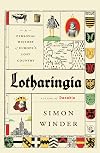
Another trip round a peculiar portion of Europe with so much history and culture it's like wading through a swamp just to get to the introduction. Like the Bermuda Triangle you can draw any arbitrary, random shape of any size on a map of Europe with similar results, but the question is who's going to guide you through the swamp? Here we get Winder's trademark acerbic, humane, knowledgable take on things arising from his relatably complicated relationship with, well, all of history and show more culture and Europe. It's informative, entertaining, and, like any history of Europe, tinged with the brooding anticipatory darkness of what's to come in the 20th Century. show less
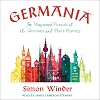
Pungent, witty, sometimes hilarious, deftly satirical, but written from a place of deep love and affection if also exasperation and, as you might well imagine when the twentieth century comes around, borderline despair. Personalities, politics, instiutions, geography, borders, customs and endless little museums, displays, historical folk-park nonsense, often appalling monuments and frescos, meander through this exploration of place and history and, not incidentally, the mindset of the writer show more for whom it is all a sort of resigned obsession. show less
Lists
Awards


You May Also Like


Associated Authors
Statistics
- Works
- 8
- Also by
- 2
- Members
- 2,051
- Popularity
- #12,539
- Rating
- 3.6
- Reviews
- 57
- ISBNs
- 66
- Languages
- 4
- Favorited
- 2


