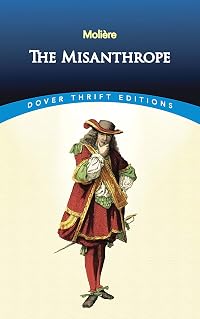
The Misanthrope
by Molière
On This Page
Description
This timeless comedy of manners is considered one of Molière's most probing and mature works. While it's still an exemplar of 16th century farce, Molière went beyond his usual comic inventiveness to create a world of rich, complex characters, especially in the cynical title character Alceste, played here by the Tony Award-winning actor Brian Bedford. Lead funding for this production is provided by the Sidney E. Frank Foundation. This recording also includes an interview with Larry F. show more Norman author of The Public Mirror: Molière and the Social Commerce of Depiction.An L.A. Theatre Works full-cast performance featuring: Brian Bedford as Alceste, JD Cullum as Clitandre, Sarah Drew as Eliante, Martin Jarvis as Philinte, Darren Richardson as Basque, Du Bois, Susan Sullivan as Arsinoe, Nick Toren as Oronte, Matt Wolf as Acaste, Guard, Bellamy Young as Celimene. Directed by Rosalind Ayres. Translated by Richard Wilbur.
. show less
Tags
Recommendations




















Member Reviews
"... Everywhere I find nothing but base flattery, injustice, self-interest, deceit, roguery. I cannot bear it any longer; I am furious; and my intention is to break with all mankind.” – Alceste, Act 1, Scene 1
I started reading the book before election results; after the elections, these words take on a whole new meaning.
Alceste is the protagonist and the official “misanthrope” of the story. A straight-shooter and brutally candid, he criticizes the love verses of a fellow nobleman, Oronte, who takes him to court over such an insult. Meanwhile, the reader learns Alceste, Oronte, Acaste, and Clitandre all favor one twenty-year-old socialite – Célimène, who is charismatically vocal and a flirt. Meanwhile, Célimène’s jealous show more older friend, Arsinoé, pines for Alceste and adds salt to every wound she can find. Two characters, Philinte (friend of Alceste) and Éliante (cousin of Célimène) were the only two honest and faithful’s, who were rewarded with each other’s love.
Molière’s 1666 ‘The Misanthrope’ play is more focused on character development than plot progression. Having had two previous plays (‘Tartuffe’ and ‘Dom Juan’) banned by the French government, this one is typically viewed as one of Molière’s more restrained tales even though once again, the nobility is ridiculed (who then complains to the government). Officially a comedy, I must admit that I did not laugh once; I even winced. Reading this, I have visions of Kirsten Dunst in ‘Marie Antoninette’ in the role of Célimène. Surrounded by her admirers, Célimène criticizes various acquaintances as they all laugh at her verbal abuses for entertainment. To their surprise, dun-dun-dun, Célimène has a few choice words about them too, and they all abandon her. Despite Alceste with his misanthropic tendencies being the supposed humor of this comedy, I found some of his words as well as those of Philinte’s to be thought-provoking. When the world is going haywire, does it make sense to retreat and do a ‘Captain Fantastic’? As for Célimène, not an angel herself, she took the blunt of the hate, even though everyone had encouraged and endorsed her behavior. All in all, except for the last scene, this play had saddened me.
Some quotes:
On love:
Éliante: “…in the beloved all things become lovable. They think their faults perfections, and invent sweet terms to call them by. The pale one vies with the jessamine in fairness; another, dark enough to frighten people, become an adorable brunette; the lean one has a good shape and is lithe; the stout one has a portly and majestic bearing; the slattern, who has few charms, passes under the name of a careless beauty; the giantess seems a very goddess in their sight; the dwarf is an epitome of all the wonders of Heaven; the proud one has a soul worthy of a diadem; the artful brims with wit; the silly one is very good-natured; the chatterbox is good-tempered; and the silent one modest and reticent. Thus a passionate swain loves even the very faults of those of whom he is enamored.”
On virtue:
Philinte: “All human failings give us, in life, the means of exercising our philosophy. It is the best employment for virtue; and if probity reigned everywhere, if all hearts were candid, just, and tractable, most of our virtues would be useless to us, inasmuch as their functions are to bear, without annoyance, the injustice of others in our good cause; and just in the same way as a heart full of virtue.” show less
I started reading the book before election results; after the elections, these words take on a whole new meaning.
Alceste is the protagonist and the official “misanthrope” of the story. A straight-shooter and brutally candid, he criticizes the love verses of a fellow nobleman, Oronte, who takes him to court over such an insult. Meanwhile, the reader learns Alceste, Oronte, Acaste, and Clitandre all favor one twenty-year-old socialite – Célimène, who is charismatically vocal and a flirt. Meanwhile, Célimène’s jealous show more older friend, Arsinoé, pines for Alceste and adds salt to every wound she can find. Two characters, Philinte (friend of Alceste) and Éliante (cousin of Célimène) were the only two honest and faithful’s, who were rewarded with each other’s love.
Molière’s 1666 ‘The Misanthrope’ play is more focused on character development than plot progression. Having had two previous plays (‘Tartuffe’ and ‘Dom Juan’) banned by the French government, this one is typically viewed as one of Molière’s more restrained tales even though once again, the nobility is ridiculed (who then complains to the government). Officially a comedy, I must admit that I did not laugh once; I even winced. Reading this, I have visions of Kirsten Dunst in ‘Marie Antoninette’ in the role of Célimène. Surrounded by her admirers, Célimène criticizes various acquaintances as they all laugh at her verbal abuses for entertainment. To their surprise, dun-dun-dun, Célimène has a few choice words about them too, and they all abandon her. Despite Alceste with his misanthropic tendencies being the supposed humor of this comedy, I found some of his words as well as those of Philinte’s to be thought-provoking. When the world is going haywire, does it make sense to retreat and do a ‘Captain Fantastic’? As for Célimène, not an angel herself, she took the blunt of the hate, even though everyone had encouraged and endorsed her behavior. All in all, except for the last scene, this play had saddened me.
Some quotes:
On love:
Éliante: “…in the beloved all things become lovable. They think their faults perfections, and invent sweet terms to call them by. The pale one vies with the jessamine in fairness; another, dark enough to frighten people, become an adorable brunette; the lean one has a good shape and is lithe; the stout one has a portly and majestic bearing; the slattern, who has few charms, passes under the name of a careless beauty; the giantess seems a very goddess in their sight; the dwarf is an epitome of all the wonders of Heaven; the proud one has a soul worthy of a diadem; the artful brims with wit; the silly one is very good-natured; the chatterbox is good-tempered; and the silent one modest and reticent. Thus a passionate swain loves even the very faults of those of whom he is enamored.”
On virtue:
Philinte: “All human failings give us, in life, the means of exercising our philosophy. It is the best employment for virtue; and if probity reigned everywhere, if all hearts were candid, just, and tractable, most of our virtues would be useless to us, inasmuch as their functions are to bear, without annoyance, the injustice of others in our good cause; and just in the same way as a heart full of virtue.” show less
De louco e de misantropo todo mundo tem um pouco.
Em primeiro lugar quero elogiar a tradução da Barbara Heliodora que é absolutamente magnânima, em segundo o humor sutil de Molière em que todos podemos nos identificar, digo isso porque todo tipo de gente está exemplificado nesses poucos personagens e talvez o modo que os lerá dependerá se você fica ofendido ou vai rir da própria condição.
Em primeiro lugar quero elogiar a tradução da Barbara Heliodora que é absolutamente magnânima, em segundo o humor sutil de Molière em que todos podemos nos identificar, digo isso porque todo tipo de gente está exemplificado nesses poucos personagens e talvez o modo que os lerá dependerá se você fica ofendido ou vai rir da própria condição.
That was fun! I do like Molière's wit and how dastardly his characters and their insults, so much of this was practically a roasting session
There are some very impressive passages in here and fun fact - I learned from this that apparently there used to be chairs on the theatre stages that the aristocrats used to sit in
I am also now starting the anti-Célimène hate club (although Alceste is not particularly great either...)
I'll definitely check out some more of Molière's work and there's also an Ingmar Bergman film of this play that I'll have to watch.!
There are some very impressive passages in here and fun fact - I learned from this that apparently there used to be chairs on the theatre stages that the aristocrats used to sit in
I am also now starting the anti-Célimène hate club (although Alceste is not particularly great either...)
I'll definitely check out some more of Molière's work and there's also an Ingmar Bergman film of this play that I'll have to watch.!
I feel like Molière would be a lot of fun in the social media era. Alceste refuses to play nice in the societal sandbox, as he refuses to soften his harsh opinions in a world that seems much more suited to flattery and phoniness. There is something weirdly entertaining about combining mocking subject matter with sing-songy rhymed couplets… but still, I would like to give this a try in the original French someday!
This a review of four audio live performances: Caedmon 1969 (Richard Easton); BBC 1998 (David Schofield); BBC 2013 (Neil Caple); LATW 2014 (Brian Bedford). According to Wikipedia it is "Molière's best known work today". According to Rousseau it was Molière's best work. I love it, language gymnastics, Cirque du Soleil of the rhyme. The themes are timeless and the wit has lost nothing with time. Célimène's acid take-downs are awesome. Of the four recording there is no question Richard Easton takes the show with energy and verve. In second place is David Schofield who is slower. The other two are lacking conviction. This is the kind of play you can listen to repeatedly , no wonder it's a classic, but which performance makes a difference.
Almost alone at the office between christmas and New Year's, I find the time to read this classic. This is one of the few major Moliére plays I've never seen a performance of, and it's been ages since I read it too. Moliére is never as fun to read as to - sometimes - see staged. The comedy is rarely in the lines themselves, but rather in the situations, the potential of the text. Therefore, I find his plays are best read fairly slowly.
Which I, this time, didn't do.
Still, I enjoyed revisiting the story of Alceste, choking on the gossip and fakeness of high society and demanding full honesty from everybody, and his reluctant love for the sharp-tongued gossip Céliméne. There are some good situations derived from the premise, the show more funniest one probably being when he's asked to comment on a horrible piece of poetry. Moliére is also good at looking at things from two sides - Alceste is honest and upstanding, but because of this also more than a little annoying. The middle road of his friends Philinte and Éliante - trying to be honest but not being rude or stupid about it - is presented as a more sensible approach.
The strangely open ending is not quite satisfactory. But on the other hand it has a rather true ring to it. Not everything can end in a happy landing - sometimes people are just too far apart. show less
Which I, this time, didn't do.
Still, I enjoyed revisiting the story of Alceste, choking on the gossip and fakeness of high society and demanding full honesty from everybody, and his reluctant love for the sharp-tongued gossip Céliméne. There are some good situations derived from the premise, the show more funniest one probably being when he's asked to comment on a horrible piece of poetry. Moliére is also good at looking at things from two sides - Alceste is honest and upstanding, but because of this also more than a little annoying. The middle road of his friends Philinte and Éliante - trying to be honest but not being rude or stupid about it - is presented as a more sensible approach.
The strangely open ending is not quite satisfactory. But on the other hand it has a rather true ring to it. Not everything can end in a happy landing - sometimes people are just too far apart. show less
Moliere has long been on my to-read list because his comedies were on a list of "100 Significant Books" I was determined to read through. The introduction in one of the books of his plays says that of his "thirty-two comedies... a good third are among the comic masterpieces of world literature." The plays are surprisingly accessible and amusing, even if by and large they strike me as frothy and light compared to comedies by Aristophanes, Shakespeare, Wilde, Shaw and Rostand. But I may be at a disadvantage. I'm a native New Yorker, and looking back it's amazing how many classic plays I've seen on stage, plenty I've seen in filmed adaptation and many I've studied in school. Yet I've never encountered Moliere before this. Several show more productions of Shakespeare live and filmed are definitely responsible for me love of his plays. Reading a play is really no substitute for seeing it--the text is only scaffolding. So that might be why I don't rate these plays higher. I admit I also found Wilbur's much recommended translation off-putting at first. The format of rhyming couplets seemed sing-song and trite, as if I was reading the lyrics to a musical rather than a play. As I read more I did get used to that form, but I do suspect these are the kinds of works that play much better on stage than on the page.
Misanthrope was the first Moliere play I ever read, and arguably the most famous of all his plays. The introduction in what might seem an oxymoron calls it a comic King Lear, and I can see that side of it. As comic as this might read, it is basically a tragedy about the young man Alceste, the "misanthrope" of the play, who makes such a fetish of always being honest he alienates everyone around him. The character I enjoyed the most was definitely the malicious Arsinoe who plays the prude. The catty scenes between her and Alceste's love Celimene is particularly hilarious. show less
Misanthrope was the first Moliere play I ever read, and arguably the most famous of all his plays. The introduction in what might seem an oxymoron calls it a comic King Lear, and I can see that side of it. As comic as this might read, it is basically a tragedy about the young man Alceste, the "misanthrope" of the play, who makes such a fetish of always being honest he alienates everyone around him. The character I enjoyed the most was definitely the malicious Arsinoe who plays the prude. The catty scenes between her and Alceste's love Celimene is particularly hilarious. show less
Members
- Recently Added By
Lists

Best of French Literature
138 works; 27 members

r/acting on Reddit - Essential Plays
44 works; 2 members

Next Plays / 2025
352 works; 1 member

Recommended Reading : 600 Classics Reviewed, Editors of Salem Press, 2015
634 works; 6 members
Essential/Recognized Stage Plays
115 works; 4 members

AP Lit
363 works; 6 members

Greatest Books, allegedly
484 works; 9 members
1:28 p.m.'s 350 Stage Plays Challenge
94 works; 3 members

How to Read a Book's Recommended Reading List
309 works; 10 members
Stage Plays/Screenplays/Dialogues/Anything Dialogue-Storytelling Related
81 works; 2 members

1001 Books You Must Read Before You Die
1,448 works; 1,137 members

100 Books to Read in a Lifetime (That Are Older Than 200 Years)
415 works; 176 members

Books Read in 2018
4,360 works; 110 members

Favourite Books
1,820 works; 316 members

Europe
205 works; 6 members

Amanda's Guaranteed Books
110 works; 5 members

100 Most Recommended Works
100 works; 11 members
Overdue Podcast
808 works; 9 members

bound
100 works; 1 member
Author Information

1,113+ Works 22,758 Members
The French dramatist Moliere was born Jean-Baptiste Poquelin on January 15, 1622, in Paris. The son of a wealthy tapestry merchant, he had a penchant for the theater from childhood. In 1636, he was sent off to school at the Jesuit College of Claremont and in 1643, he embarked upon a 13-year career touring in provincial theater as a troupe member show more of Illustre Theatre, a group established by the family Bejarts. He married a daughter of the troupe, Armande Bejart, in 1662 and changed his name to Moliere. The French King Louis XIV, becoming entranced with the troupe after seeing a performance of The Would-Be Gentleman, lent his support and charged Moliere with the production of comedy ballets in which he often used real-life human qualities as backdrops rather than settings from church or state. Soon, Moliere secured a position at the Palais-Royal and committed himself to the comic theater as a dramatist, actor, producer, and director. Moliere is considered to be one of the preeminent French dramatists and writers of comedies; his work continues to delight audiences today. With L'Ecole des Femmes (The School for Wives) Moliere broke with the farce tradition, and the play, about the role played by women in society and their preparation for it, is regarded by many as the first great seriocomic work of French literature. In Tartuffe (1664), Moliere invented one of his famous comic types, that of a religious hypocrite, a character so realistic that the king forbade public performance of the play for five years. Moliere gave psychological depth to his characters, engaging them in facial antics and slapstick comedy, but with an underlying pathos. Jean Baptiste Moliere died in 1673. (Bowker Author Biography) show less
Some Editions
Awards and Honors
Notable Lists
Series
Belongs to Publisher Series
Classiques Larousse (18053)
Wereldbibliotheek (132)
Work Relationships
Is contained in
Classic Comedies (Signet classics) Lysistrata, The comedy of Errors, The Inspector General, The Misanthrope,Candida by Maurice Charney
Bourgeois Gentleman / Imaginary Invalid / Misanthrope / Miser / School for Husbands / School for Wives / Tartuffe by Molière
Bourgeois Gentleman / Dom Juan / Imaginary Invalid / Learned Ladies / Misanthrope / Miser / Tartuffe by Molière
Bourgeois Gentleman / Imaginary Invalid / Learned Ladies / Misanthrope / Miser / Scapin / School for Wives / Tartuffe by Molière
Amphitryon / Bourgeois Gentleman / Dom Juan / Imaginary Invalid / Misanthrope / Miser / Tartuffe by Molière
The Misanthrope and Other French Classics (Eric Bentley's Dramatic Repertoire ; V. 3) by Eric Bentley
Theatre Complet de Moliere, Tome III (Le Misanthrope, Le Medecin malgre lui, Melicerte, Pastorale comique, Le Sicilien, Amphitryon, Georges Dandin, L'Avare, Monsieur de Pourceaugnac, Les Amants magnifiques) by Molière
A Treasury of the Theatre; an Anthology of Great Plays From Aeschylus to Hebbel by Philo M. Jr. Buck
The Affected Misses / Don Juan / Tartuffe / The Misanthrope / the Doctor by Compulsion / The Miser / The Tradesman Turned Gentleman / The Learned Ladies by Molière
Plays of Moliere: The School for Wives, Tartuffe, The Misanthrope, The Miser, The Physician In Spite of Himself (Art Type Edition) by Molière
Dom Juan (notices de Paul Arbelet) - L'ecole des femmes (notices de G. Sablayrolles) - Le Misanthrope (notices de Felix Guirand) by Molière
The slave of truth (Le misanthrope) Tartuffe. The imaginary invalid. New English versions by Molière
Is retold in
Inspired
Has as a student's study guide
Common Knowledge
- Canonical title
- The Misanthrope
- Original title
- Le Misanthrope ou l'Atrabilaire amoureux
- Alternate titles*
- De misanthroop
- Original publication date
- 1667
- Important places
- Paris, France
- First words*
- Was haben Sie? Was gibt's? (übersetzt von Arthur Luther)
- Last words*
- (Click to show. Warning: May contain spoilers.)Es muss doch gelingen, von seinem tollen Plan den Schwärmer abzubringen. (übersetzt von Arthur Luther)
- Original language*
- Französisch
*Some information comes from Common Knowledge in other languages. Click "Edit" for more information.
Classifications
Statistics
- Members
- 1,815
- Popularity
- 12,050
- Reviews
- 27
- Rating
- (3.69)
- Languages
- 18 — Catalan, Czech, Danish, Dutch, English, Estonian, Finnish, French, German, Greek, Italian, Japanese, Norwegian (Nynorsk), Polish, Portuguese, Spanish, Swedish, Turkish
- Media
- Paper, Audiobook, Ebook
- ISBNs
- 154
- UPCs
- 3
- ASINs
- 41