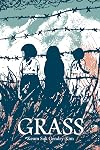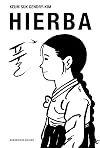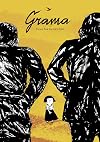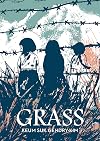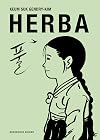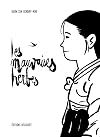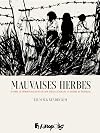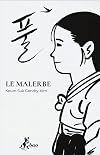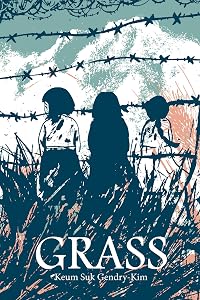
Grass
by Keum Suk Gendry-Kim
On This Page
Description
"Grass is a powerful anti-war graphic novel, offering up firsthand the life story of a Korean girl named Okseon Lee who was forced into sexual slavery for the Japanese Imperial Army during the second World War - a disputed chapter in 20th century Asian history. Beginning in Lee's childhood, Grass shows the leadup to World War II from a child's vulnerable perspective, detailing how one person experienced the Japanese occupation and the widespread suffering it entailed for ordinary Korean show more folk. Keum Suk Gendry-Kim emphasizes Lee's strength in overcoming the many forms of adversity she experienced. Grass is painted in a black ink that flows with lavish details of the beautiful fields and farmland of Korea and uses heavy brushwork on the somber interiors of Lee's memories."-- show lessTags
Recommendations










Member Recommendations

Member Reviews
The author searched out a retirement home for former Japanese comfort women, hoping to find a woman whose story she could tell. There she met Lee Ok-Sun.
Ok-Sun had longed to attend school as a little girl. However, it was a time of hunger, so she was required to stay home and help her mother. But when food became even more scarce, her family sold her as a servant, believing she was being adopted and would have an opportunity to attend school.
She did not. Nor did the placement work out, so she changed masters several times, until, at age 15 she was kidnapped by the Japanese army to become a comfort woman (sex worker) for Japanese troops in China. There, along with many other young women, she was starved, brutalized and made to service up show more to 30-40 soldiers a day.
On liberation, she found that comfort girls were regarded as ruined women and ostracized by Chinese, Koreans and Japanese alike. Due to her treatment, she would never be able to have children.
And yet this is not just a ‘misery memoir’. Ok-Sun made a place for herself in the world, and even with betrayals, made herself a family and became an activist for Japanese reparations – or at least an apology - for the multitudes of girls whose childhoods were stolen.
I think the art is stunning. From a blurb on the back of the book:
“Recurring images of nature, at once delicate and strong, help you to breathe while you choke up from the brutality. Repetition of sky, trees, birds, grass, youth, hunger, old age and friendship …” show less
Ok-Sun had longed to attend school as a little girl. However, it was a time of hunger, so she was required to stay home and help her mother. But when food became even more scarce, her family sold her as a servant, believing she was being adopted and would have an opportunity to attend school.
She did not. Nor did the placement work out, so she changed masters several times, until, at age 15 she was kidnapped by the Japanese army to become a comfort woman (sex worker) for Japanese troops in China. There, along with many other young women, she was starved, brutalized and made to service up show more to 30-40 soldiers a day.
On liberation, she found that comfort girls were regarded as ruined women and ostracized by Chinese, Koreans and Japanese alike. Due to her treatment, she would never be able to have children.
And yet this is not just a ‘misery memoir’. Ok-Sun made a place for herself in the world, and even with betrayals, made herself a family and became an activist for Japanese reparations – or at least an apology - for the multitudes of girls whose childhoods were stolen.
I think the art is stunning. From a blurb on the back of the book:
“Recurring images of nature, at once delicate and strong, help you to breathe while you choke up from the brutality. Repetition of sky, trees, birds, grass, youth, hunger, old age and friendship …” show less
Korean graphic novelist Keum Suk Gendry-Kim spent three years researching and writing [Grass]. Originally she wanted to write about social class during the Japanese occupation from a feminist perspective, but after meeting survivor Granny Lee Ok-sun, she decided to write her story instead.
Like many Korean farming families under Japanese occupation in the 1930s, Lee Ok-sun's family was starving. After her father was hurt at work, Ok-sun was basically sold to an udon restaurant owner in another city. She was told that she would finally get to go to school and would have plenty to eat. The reality was she was slave labor. Then in 1942 on her way back from running an errand, Ok-sun was abducted and taken to China to a "comfort station." show more These stations were brothels where sexual slaves, usually young Korean girls, were forced to service Japanese soldiers. At the time, Ok-sun was fifteen years old.
This is not an easy novel to read. Fortunately the narrative is broken up between the present, where the author is interviewing Lee Ok-sun, and her past. I think if it had been written in a chronological fashion, it would have been overwhelmingly dark. At least this way, the reader could escape to the present occasionally. It's a technique that I have often seen in graphic novels such as [Maus] and [15015352::Second Generation].
The artwork alternates between frames with heavy brushstrokes, often nature scenes, and more traditional outlined characters. The soldiers are faceless, because Ok-sun says they were all the same. There is a heft to the book and to the drawings that suit the topic. The only color is on the cover. The author does some interesting things with overlays and fadeouts, but my favorite drawings were those of nature.
Although it was a difficult to read, I found the book compelling and the artwork interesting. I'm glad her books are being translated into English and reaching a wider audience. show less
Like many Korean farming families under Japanese occupation in the 1930s, Lee Ok-sun's family was starving. After her father was hurt at work, Ok-sun was basically sold to an udon restaurant owner in another city. She was told that she would finally get to go to school and would have plenty to eat. The reality was she was slave labor. Then in 1942 on her way back from running an errand, Ok-sun was abducted and taken to China to a "comfort station." show more These stations were brothels where sexual slaves, usually young Korean girls, were forced to service Japanese soldiers. At the time, Ok-sun was fifteen years old.
This is not an easy novel to read. Fortunately the narrative is broken up between the present, where the author is interviewing Lee Ok-sun, and her past. I think if it had been written in a chronological fashion, it would have been overwhelmingly dark. At least this way, the reader could escape to the present occasionally. It's a technique that I have often seen in graphic novels such as [Maus] and [15015352::Second Generation].
The artwork alternates between frames with heavy brushstrokes, often nature scenes, and more traditional outlined characters. The soldiers are faceless, because Ok-sun says they were all the same. There is a heft to the book and to the drawings that suit the topic. The only color is on the cover. The author does some interesting things with overlays and fadeouts, but my favorite drawings were those of nature.
Although it was a difficult to read, I found the book compelling and the artwork interesting. I'm glad her books are being translated into English and reaching a wider audience. show less
Really a hard to read but beautiful book. Okseon Lee is incredibly strong, and I appreciate that Gentry-Kim allows the little reminders of how terrible this was for Okseon to slide by, unobtrusive but omnipresent. When she blithely mentions receiving 20 to 30 men a day on the weekends... wow.
The graphic novel creator visits elderly Lee Ok-Sun at the Sharing Home, a nursing home for women who had been forced into serving as "comfort women" for soldiers during the war. Gendry-Kim illustrates Ok-Sun's story in stark black and white and many nature scenes which I took to represent the resilience of Ok-Sun and the other women. I had heard of the "comfort women" before but reading this really brought home the humanity of the girls and women who suffered such awful abuse. It is also a terrible lens on how war can dehumanize people on any side of the conflict. A searing and tender treatment.
Una historia excelente, pero profundamente triste. Los acontecimientos más brutales se narran de forma elíptica, lo que no les resta impacto, creando un fuerte contraste con la belleza con la que la autora retrata los paisajes. En un tono menos duro, me encanta cómo se construye la relación de complicidad entre autora y protagonista, aportando una perspectiva más optimista a pesar de la dureza de los acontecimientos.
La storia raccontata è quella dell'autrice che incontra una "comfort woman", una donna cioè rapita, ridotta in schiavitù e costretta a prostituirsi per i giapponesi durante la seconda guerra mondiale.
Una storia molto forte, ben raccontata sia come ritmo della narrazione che come scelta grafica.
Tutto bianco e nero e si alternano tavole di pura narrazione, con un tratto molto semplice e stilizzato che riesce molto bene ad integrarsi con la narrazione, a tavole tutte giocate su un impatto emotivo fortissimo e spesso prive totalmente di testo.
Una lettura dolorosa e secondo me molto importante per far conoscere tratti meno noti, anche per lontananza dalla nostra storia e cultura, della seconda guerra mondiale.
Nel racconto, ad un certo show more punto la "Nonna", ormai ospite in un centro di accoglienza per Comfort Women, afferma di non aver mai avuto un momento totalmente felice nell'arco della sua vita: una affermazione che da sola giustifica la necessità di leggere testi come questo. show less
Una storia molto forte, ben raccontata sia come ritmo della narrazione che come scelta grafica.
Tutto bianco e nero e si alternano tavole di pura narrazione, con un tratto molto semplice e stilizzato che riesce molto bene ad integrarsi con la narrazione, a tavole tutte giocate su un impatto emotivo fortissimo e spesso prive totalmente di testo.
Una lettura dolorosa e secondo me molto importante per far conoscere tratti meno noti, anche per lontananza dalla nostra storia e cultura, della seconda guerra mondiale.
Nel racconto, ad un certo show more punto la "Nonna", ormai ospite in un centro di accoglienza per Comfort Women, afferma di non aver mai avuto un momento totalmente felice nell'arco della sua vita: una affermazione che da sola giustifica la necessità di leggere testi come questo. show less
This is a graphic biography of Lee Ok-sun, a former Korean comfort woman (kidnapped at age 15) and current activist for Japan to acknowledge and compensate the women and families for what their country and army did.
Gendry-Kim's artistry is amazing. Using just one color, she conveys emotion, narrative, and memory. There are 12-panel spreads and 2-page single images. Negative space is key; blurring/blotchy images convey bad and frightening memories. This book is not text-heavy--the art supplements the limited text to tell more of the story without needing words.
Gendry-Kim includes herself interviewing Lee and researching from 2015-17--and allows her own character to question so much of what she is doing. Should she interview and publish show more and thus spread another's story? Will she bring back horrible memories that Lee may never want to relive? Seeing Lee on TV, speaking for herself, releases her from her worries. show less
Gendry-Kim's artistry is amazing. Using just one color, she conveys emotion, narrative, and memory. There are 12-panel spreads and 2-page single images. Negative space is key; blurring/blotchy images convey bad and frightening memories. This book is not text-heavy--the art supplements the limited text to tell more of the story without needing words.
Gendry-Kim includes herself interviewing Lee and researching from 2015-17--and allows her own character to question so much of what she is doing. Should she interview and publish show more and thus spread another's story? Will she bring back horrible memories that Lee may never want to relive? Seeing Lee on TV, speaking for herself, releases her from her worries. show less
Members
- Recently Added By
Published Reviews
In swift black brushstrokes that feel both contemporary and, in key wordless pauses, classical, Gendry-Kim follows Ok-sun’s narration of her life (based on interviews) with minimal editorializing.
added by private library
Lists

Club Read's Graphic Stories Recommendations
127 works; 2 members

Korean literature
68 works; 5 members
Best Graphic Novel Nonfiction
199 works; 101 members

Pipoca & Nanquim
138 works; 2 members
Author Information

Some Editions
Awards and Honors
Awards
Distinctions
Notable Lists
Common Knowledge
- Canonical title*
- Les Mauvaises herbes
- Original title
- 풀
- Original publication date
- 2017 (Korea) (Korea); 2019 (English translation) (English translation)
- People/Characters
- Lee Ok-sun; Keum Suk Gendry-Kim; Okja; Okhui; Byeonggu; Byeongyun (show all 14); Kim Soon-ok; Kang Jae-sook; Shim Yeongseop; Seo Mija; Moon Okju; Shim Changyeol; Shinzo Abe; Yun Byung-se
- Important places
- Longjing, China; Busan, Korea; Gwangju, South Korea; Yanji, China; Seoul, Korea; Shanghai, China
- Important events
- Second Sino-Japanese War; Rape of Nanking; Nanjing Massacre; World War II
- First words
- Longjing, China, 1996
I need you kids to look after your grandfather, okay? - Last words
- (Click to show. Warning: May contain spoilers.)The winter is over, and the cold that seemed to last forever is thawing. Spring has finally come.
- Blurbers
- Yoon, Emily Jungmin; Katin, Miriam
- Original language
- Korean
*Some information comes from Common Knowledge in other languages. Click "Edit" for more information.
Classifications
Statistics
- Members
- 414
- Popularity
- 74,983
- Reviews
- 28
- Rating
- (4.32)
- Languages
- 7 — Catalan, English, French, Italian, Polish, Portuguese, Spanish
- Media
- Paper, Ebook
- ISBNs
- 13
- ASINs
- 3